
University of Central Lancashire (UCLan) Medicine Interview
Format, Questions & Prep Tips
University of Central Lancashire medicine interviews for 2027 entry are multiple mini interviews (MMI). Published figures: Course length 5-year MBBS.
- Institution
- University of Central Lancashire School of Medicine
- Interview (2027 entry)
- December – April (applicant guide; course page says January – June)
- Decisions (2027 entry)
- After all interviews finish (ranked on MMI score); a few early offers

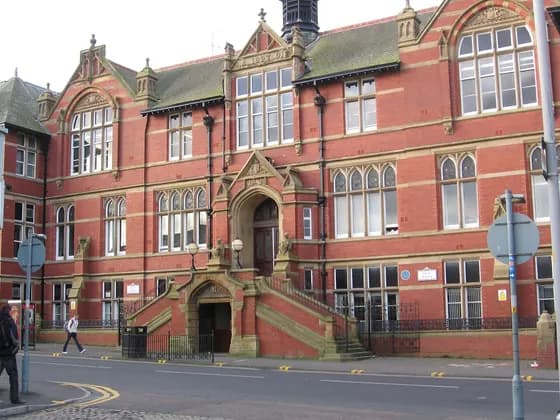
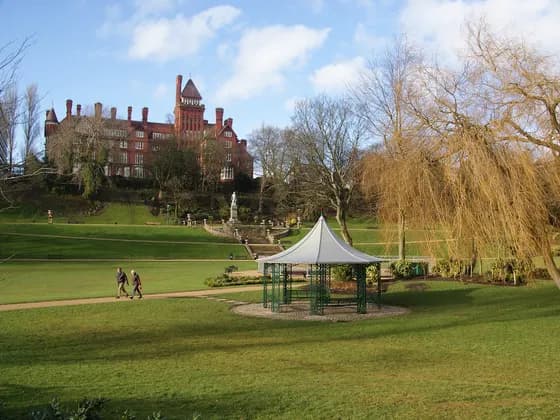

Photo: Galatas · CC BY-SA 2.0 · cropped
Photo: Fetler at English Wikipedia · Public domain · Photo: Bill Boaden · CC BY-SA 2.0 · Photo: Francis C. Franklin · CC BY-SA 3.0
Still deciding where to apply? Hear it from a student who's there
The University of Lancashire (formerly the University of Central Lancashire, UCLan) School of Medicine in Preston runs a five-year MBBS open to international and UK students, with a very limited number of UK places. Selection is via a multiple mini-interview (MMI), usually held at the Preston Campus, with some international interviews held overseas.
UCLan was one of the first UK universities to run a privately-funded medical school open to international students. Years 1 and 2 are largely on the Preston campus; for Years 3–5 students move to the Burnley or Westlakes (Cumbria) campus, with placements at partners including East Lancashire Hospitals NHS Trust, North Cumbria Integrated Care NHS Foundation Trust and GP practices. The cohort blends home and international students, which gives a notably diverse learning environment.
The MMI probes motivation for UCLan specifically and for Lancashire as a place to live and train. International applicants are interviewed on the same MMI structure as home applicants but should be ready for additional questions about their plans after graduation.
University of Central Lancashire (UCLan) interview key facts (2027 entry)
| UK places | Very limited (number not published) |
|---|---|
| Interview locations | Preston Campus; some international interviews overseas (e.g. Dubai) |
| Interview format | MMI |
| Selection test | UCAT (home applicants) |
| Course length | 5-year MBBS |
Interview Format
- MMI, usually six to ten stations
- Stations cover motivation, ethics, communication, role-play and data
- Strong focus on Lancashire identity and regional commitment
- International cohort interviewed on the same MMI structure
- Interviewers include UCLan academics and NHS clinicians
- UCAT used for home applicant shortlisting
- Years 3–5 based at Burnley or Westlakes (Cumbria), with placements across East Lancashire, Cumbria and the North West
- Mixed home and international cohort throughout
Sample Interview Questions
Why UCLan for medicine?
Reference the Preston base, the Lancashire placement network, the mixed home and international cohort, and the school's longer history with international students.
What attracts you to studying in Lancashire?
Be specific — health inequalities, ageing population, mix of urban and rural communities, proximity to the Lake District and Manchester.
Describe how you would work effectively in a cohort with many international classmates.
Show curiosity, cultural humility, and willingness to learn from peers with different healthcare experiences.
Should the UK train more international medical students given the cost to international students themselves?
Engage with both sides — global health workforce, cost to individuals, contribution to the UK economy and NHS.
A new international classmate tells you they are struggling with the English used in clinical placements. (Actor present.)
Active listening, signpost specific support (academic English, personal tutor), offer practical peer help.
Here is a graph showing healthcare access across Lancashire local authorities. What does it tell you?
Describe distribution, comment on deprivation patterns, acknowledge confounders such as urbanisation and population age.
An NHS patient asks why an international student is observing their consultation. How do you respond?
Explain the educational role, reassure on confidentiality, confirm consent, offer the patient the option to decline.
What do you know about Lancashire and South Cumbria NHS Foundation Trust?
Large integrated trust covering mental health and community services. Show genuine reading.
Tell us about a time you communicated across a language or cultural barrier.
Concrete example with reflection. UCLan placements regularly bring you into contact with diverse populations.
Explain to a patient that they need to stop smoking before elective surgery. (Actor present.)
Empathy, explain why clearly, signpost cessation services, agree a concrete next step.
Should foundation programme places be allocated based on need (geographic) rather than performance?
Engage with both sides — workforce equity vs individual merit. Reference current allocation rules.
Why is integrated medical education important?
Combines basic and clinical science, reflects how clinicians actually reason, prepares students for practice from year one.
Describe a time you stayed calm under pressure.
Genuine example with concrete actions and reflection.
Where do you plan to work after qualifying?
Honesty matters. UK Foundation Programme is the standard route. International students should be specific about their realistic plans.
Practise the University of Central Lancashire (UCLan) interview
Rehearse the real format before the day — on demand with our AI interviewers, or live with a tutor.
Sit a mock with photoreal AI interviewers — any time
A timed MMI or panel interview on video — British & international voices — with interviewers who listen, react and press with follow-ups. Rubric-scored feedback and a replay the moment you finish.






Live mocks with a tutor who’s been in the room
A full University of Central Lancashire (UCLan)-style mock with a medic or dentist tutor — honest scoring against real marking criteria, a station-by-station debrief and a written action plan.
Book a mock interviewHow to Prepare
Research UCLan's mixed home and international cohort and reflect on how you will contribute.
Read up on Lancashire health context — deprivation, ex-industrial communities, ageing demographic.
Understand the placement partners — East Lancashire Hospitals NHS Trust and North Cumbria Integrated Care NHS Foundation Trust.
Practise MMI under timed conditions with reset between stations.
Visit Preston or attend a virtual open day so your motivation feels grounded.
International applicants: prepare for questions about post-graduation plans and UK Foundation eligibility.
Be ready to defend "why UCLan" with specifics, not generalities.
Invited to interview at University of Central Lancashire (UCLan)? Say your first answer out loud today with the free two-minute warm-up drill, then sit a timed mock set up for University of Central Lancashire (UCLan).
Common Pitfalls
Frequently Asked Questions
Related guides
Free, evidence-based guides from current UK medical and dental students.
Free Interview Resources
Worked-through MMI stations, ethics scenarios, and panel questions.
Read guideNHS Core Values Guide
The 6 NHS values examiners listen for in every interview answer.
Read guideMedical School Rankings
See interview format (MMI vs panel) for each UK medical school.
Read guideUCAS 2026 Personal Statement
The new three-question format your interviewer will reference.
Read guideContextual Offers for Medicine
Every UK medical school's widening-access scheme in one place.
Read guideSources & official admissions information
We cross-check every interview guide against the school’s own admissions guidance and the UK regulators.
- University of Lancashire — Medicine MBBS course page — Very limited UK places; UCAT for UK applicants; MMI; overseas interview locations; placements and Burnley/Westlakes
- University of Lancashire — How to apply for MBBS (applicant guide) — MMI usually 6–10 stations, Preston, December–April; offers ranked on MMI score
- University of Lancashire — Name change approved by Office for Students — University of Central Lancashire renamed University of Lancashire
- University of Central Lancashire (UCLan) — official admissions page — Programme overview, entry requirements, interview format and timeline straight from the school.
- UCAT Consortium — Official UCAT registration, test format, scoring methodology and free practice materials.
- General Medical Council (GMC) — Statutory regulator. Approved medical schools, the registered-doctor register, and fitness-to-practise standards.
- Medical Schools Council — Selecting-for-excellence guidance, MMI principles, and an A–Z of UK medical schools.
Ready to nail your University of Central Lancashire (UCLan) interview?
Book a mock interview with a current medical student who recently went through the same process, or practise on demand with the AI interviewer.