
The Anglia Ruskin (ARU) Medicine course
What you actually study, and where you will be
Anglia Ruskin's MBChB is a 5-year course with an integrated curriculum, with patient contact from Year 1 and placements in Essex (2027 entry). Essex's first medical school, with clinical placement from the first term and an Anatomy Centre that includes a dissection room and embalming facilities. Placements cover the major Essex hospitals.
- Degree
- MBChB
- Length
- 5 years
- Teaching
- Integrated
- Clinical contact
- Year 1
- UCAS code
- A100

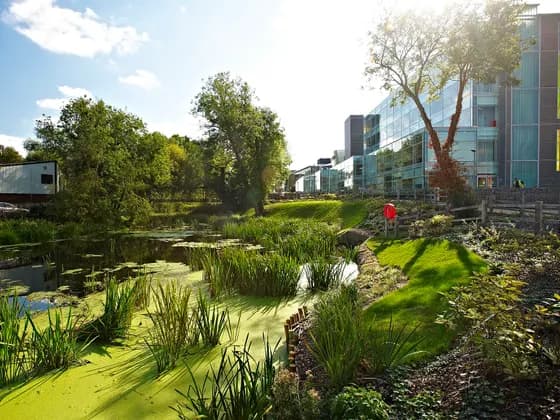
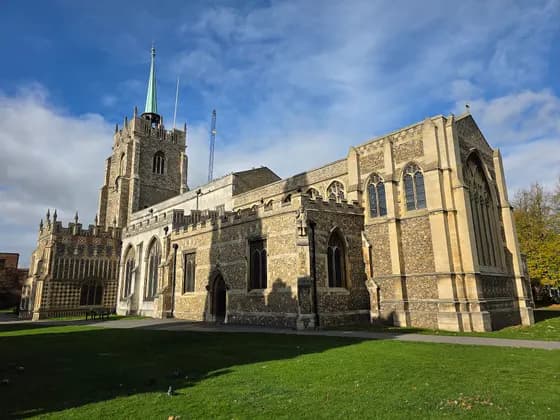
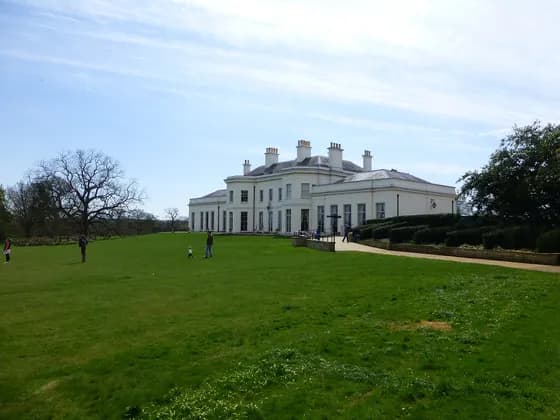
Photo: ARU · CC BY-SA 4.0 · cropped
Photo: Anglia Ruskin University · CC BY 4.0 · Photo: HJ Mitchell · CC BY 4.0 · Photo: PAUL FARMER · CC BY-SA 2.0
The Anglia Ruskin (ARU) medicine course at a glance (2027 entry)
Anglia Ruskin University's MBChB is a five-year medicine degree taught at the School of Medicine on ARU's Chelmsford campus. It is the first undergraduate medical school in Essex. The first 100 students started in September 2018, the first graduates finished in 2023, and year groups are around 100 students.
The course is integrated. That means science and clinical practice are taught side by side, rather than in a separate pre-clinical stage followed by a clinical one. The science is organised into body-system blocks, starting with the lungs, heart and gut in your first year.
It is also a spiral curriculum. You meet the same skills and topics again each year, in more depth and with more responsibility. A GP placement in Year 3, for example, builds on the one you did in Year 1, ideally in the same practice.
Patients appear early. From your first term you go into an Essex hospital one afternoon a week, for five weeks in each of the first three system blocks. You also spend five full days in a GP surgery during Year 1. By Years 4 and 5 you are on placement almost all the time.
Every placement is in Essex, at five acute hospitals, specialist units, more than 60 GP surgeries and mental health services. The school was set up partly to train doctors for a county with some of the highest numbers of patients per GP in the country, and it aims to help graduates build careers locally.
| Degree | MBChB |
|---|---|
| Course length | 5 years |
| UCAS code | A100 |
| Where you study | School of Medicine, Chelmsford campus |
| Year group | Around 100 students a year |
| Teaching style | Integrated, systems-based spiral curriculum |
| Anatomy | Dissection of Thiel-embalmed donor bodies |
| First patient contact | First term, on hospital placement |
| Placements | All in Essex: five acute hospitals and 60+ GP surgeries |
| Final assessments | UK Medical Licensing Assessment and Prescribing Safety Assessment |
What makes Anglia Ruskin (ARU) medicine different
Hospital placement from your first term
In Year 1 you join a small group at one hospital trust for an afternoon a week, for five weeks during each of the respiratory, cardiovascular and gastrointestinal blocks. You practise taking histories, examining patients and recording a 12-lead ECG, the standard tracing of the heart. You also spend five full days in a GP practice.
Dissection on Thiel-embalmed donor bodies
You learn anatomy by dissecting the bodies of people who donated them to medical science, guided by tutors and technicians. Thiel embalming keeps tissue softer and more flexible than traditional methods. The Anatomy Centre adds ultrasound machines, radiology software, a virtual dissector and 3D-printed models made from CT scans.
Every placement is in Essex
Clinical training happens at five acute hospitals, in Colchester, Basildon, Harlow, Southend and Broomfield, plus specialist units such as the St Andrew's Centre for Plastic Surgery and Burns and the Essex Cardiothoracic Centre. The school also works with a large mental health trust and more than 60 GP surgeries, giving a mix of urban and rural settings.
The same GP practice, year after year
In Years 1, 2 and 3 you spend five full days a year in general practice, returning to the same surgery where possible. In the first year you might sit in on clinics, see minor surgery, spend time with nurses, pharmacy and reception, and join a GP on home visits. By Year 3 you deal with patients directly, under supervision.
A final year built around the foundation doctor's job
In Year 5 you shadow foundation doctors, the newly qualified doctors you are about to become. When the General Medical Council (GMC), which regulates doctors and approves medical degrees, reviewed the school in 2022/23, these assistantships were planned in eight-week blocks. After final exams, students were to attend a two-week ward preparation block with mock on-call shifts and ward-based scenarios.
Volunteer patients in the teaching building
The school's Patient Partners are local volunteers. Some act as simulated patients so you can practise consultations, examinations and simple procedures such as taking blood pressure. Others live with long-term conditions and talk to you about their symptoms from the patient's side. Sessions take place in the School of Medicine building.
How Anglia Ruskin (ARU) teaches medicine
The General Medical Council (GMC), which regulates doctors and approves medical degrees, sets the outcomes every UK medical graduate must reach, and ARU's curriculum is built to cover them. The course runs in three phases. Phase 1 lays down the principles of medicine through the respiratory, cardiovascular and gastrointestinal systems. Phase 2 works through the remaining body systems across Years 2 and 3. Phase 3 is the clinical phase, moving through rotations to a foundation assistantship, where you work alongside newly qualified doctors.
You learn in lectures, in labs and on placement. Early on, campus teaching and placements are paired. The Year 1 hospital afternoons happen during the system block you are studying, so you use the skills from campus with real patients during that block.
The balance shifts as you go. In Years 1 to 3 you combine campus teaching with GP days, hospital sessions and a block placement at the end of each year. By Years 4 and 5 you are in hospitals or general practice almost all the time, with simulation teaching on campus supplementing what you learn on the wards.
Some subjects run through all five years as longitudinal themes instead of having a block of their own. These include anatomy and physiology, public health, palliative care and microbiology. Professionalism, ethics and evidence-based medicine are also themes, because every doctor needs them at every stage. In 2024 ARU told the GMC it had introduced a new professionalism syllabus and appointed a Professionalism Support Lead.
You also learn alongside other health professions. At the GMC's 2022/23 visit, the school described Year 5 opportunities to work with district nurses and other professionals, and teaching scenarios shared across professions. It was also building case scenarios on physical and mental health with ARU's nursing and physician associate courses. Physician associates diagnose and treat patients under a doctor's supervision.
The ways you will learn
| Lectures | Part of your learning happens in lectures in the School of Medicine, which has a Harvard-style lecture theatre. That is a tiered, horseshoe-shaped room designed so the lecturer can hold a discussion with the whole group rather than simply talk to it. |
|---|---|
| Dissection in the Anatomy Centre | You dissect donor bodies in a large dissection room with ceiling-mounted screens, led by tutors and technicians. Imaging tools in the same centre help you link what you see on the table with how the body looks on scans. |
| Clinical skills and simulation | Skills laboratories, a GP simulation suite with consultation rooms and a mock hospital ward let you rehearse examinations, consultations and procedures before and alongside placements. Simulation-based teaching continues on campus in Years 4 and 5. |
| Patient Partners sessions | Volunteer simulated patients let you practise consultations, examinations and procedures such as blood pressure measurement. Volunteer clinical patients, who live with a medical condition, talk you through their symptoms so you understand the illness from their point of view. |
| Lab practicals in the SuperLab | The SuperLab is a science laboratory shared with Medical Science and Pharmaceutical Science students. It includes a physiology lab where students run tests on each other, and up to four lecturers can broadcast demonstrations straight to your workstation. |
| Placements and case-based discussion | On placement a lead clinical educator supports you while you work within teams of different health professionals. At the Mid and South Essex hospitals, Year 4 students are encouraged to assess patients on their own and then talk through what they found with clinicians in case-based discussions. |
How anatomy is taught at Anglia Ruskin (ARU)
Anatomy at ARU is taught through dissection. You learn it by dissecting the bodies of people who donated them to medical science, and anatomy tutors and technicians run the sessions. The bodies are Thiel-embalmed, a soft method of preservation that keeps tissue more flexible and lifelike than traditional embalming.
The Anatomy Centre sits inside the School of Medicine. It has a large dissection room with ceiling-mounted computer screens and its own embalming facilities. Alongside the donor bodies you use radiology software, a virtual dissector, 3D-printed models made from CT scans and ultrasound machines.
Anatomy is a longitudinal theme, so you keep returning to it throughout the five years rather than finishing it in Year 1. The theme has its own lead, an anatomy lecturer who also teaches histology (tissues under the microscope) and embryology (how the body develops) and runs dissection sessions. Your anatomy knowledge is tested in anatomy spot examinations.
When you first meet patients at Anglia Ruskin (ARU)
ARU puts you on clinical placement from your first term. In Year 1 you are allocated to one hospital trust and attend in a small group one afternoon a week, for five weeks during each of the respiratory, cardiovascular and gastrointestinal blocks. The aim is to use the basic clinical skills you learn on campus with real patients.
On those afternoons you practise taking a history, which means asking a patient about their symptoms and background, and examining patients. You also try basic procedures such as respiratory function tests, which measure how well the lungs work, and recording and interpreting a 12-lead electrocardiogram (ECG), the standard tracing of the heart's electrical activity.
You spend five full days in a GP practice in Year 1. The patients may be people coming to ordinary surgeries, or expert patients who live with a condition and attend specifically to help teach students. You may also work with practice nurses, observe clinics and minor surgery, see pharmacy, reception and administration, and go on home visits with a GP.
At the end of Year 1 an integration block of hospital placements takes you into general medicine and general surgery. That can mean wards, admissions and observation units, clinics, emergency departments or operating theatres. From there contact keeps building until, in Years 4 and 5, you are in hospitals or general practice almost full time.
Year by year at Anglia Ruskin (ARU)
- Year 1
Phase 1: principles of medicine
Your first year covers the principles of medicine through three body systems: respiratory, cardiovascular and gastrointestinal. Each block pairs campus teaching with weekly hospital afternoons, so you learn how the lungs, heart and gut work while practising on patients. The year ends with a longer hospital block.
- Principles Block covering the respiratory, cardiovascular and gastrointestinal systems
- One hospital afternoon a week for five weeks in each block, in a small group at a single allocated trust
- History taking, examination, respiratory function tests and performing and interpreting a 12-lead ECG
- Five full days in a GP practice, including time with nurses, pharmacy, reception and GP home visits
- An end-of-year integration block in general medicine and general surgery
- Student Selected Components and exams at the end of the year
- Year 2
Phase 2: body systems
Year 2 moves on to a new set of body systems and brings in child and family health. You return to general practice, ideally to the same surgery, and build on your Year 1 skills. Block placements at the end of the year can take you into GP practices or mental health services in Essex.
- Systems teaching in musculoskeletal, endocrine (hormones), child and family, ENT (ear, nose and throat), dermatology (skin), ophthalmology (eyes) and renal (kidneys)
- Five full days in a GP practice, back at the same practice where possible
- End-of-year block placements in GP practices or with the mental health trust in Essex
- Arranged sessions with patients to support what you are learning in each block
- At Mid and South Essex hospitals, Year 2 teaching builds clinical knowledge and skills through one-to-one problem solving
- Year 3
Final systems and the move into clinical training
Year 3 completes the systems teaching and starts the shift into Phase 3, the clinical phase. Hospital time moves to block placements that go deeper into specialties. You are expected to be highly self-directed on placement, as preparation for Years 4 and 5.
- Systems teaching in neurology, psychiatry, haematology (blood), and reproduction and sexual health
- Block hospital placements giving more depth in the specialties, which may not line up exactly with the system blocks
- Five full days in a GP practice, now dealing with patients directly under supervision
- Phase 3 includes a Clinical Induction Block and rotations that span Years 3 and 4
- At Mid and South Essex hospitals, Year 3 students join medical teams on a clerkship programme covering core medical and surgical specialties. On a clerkship you are attached to a team and take part in its daily work.
- Year 4
Phase 3: clinical rotations
In Year 4 you spend virtually all your time in hospitals and general practice. Hospital placements are organised by specialty, and simulation teaching back at the medical school supplements what you learn on the wards. Your portfolio becomes a formally reviewed part of your progress.
- Across Years 4 and 5, placements in medicine and its sub-specialties, surgery and its sub-specialties, paediatrics, obstetrics and gynaecology, and acute and emergency medicine
- Case-based discussions, where a doctor talks through a patient you have seen and gives you feedback, recorded in your portfolio
- Student Selected Components in specialty areas that interest you
- A portfolio of supervised assessments, reflections and supervisor reports
- A single best answer exam of two 100-question papers, set out like the Applied Knowledge Test, the written half of the national licensing exam you sit in Year 5
- Year 5
Foundation assistantship and preparing for practice
The final year refines everything you have learned as you shadow foundation doctors and get ready to become one. It contains the national licensing exams, the Prescribing Safety Assessment, a final Preparation for Practice placement and an elective.
- Foundation Assistantship: working alongside F1 doctors, those in their first year after graduating, for an extended period
- In 2022/23 assistantships were planned in eight-week blocks, giving longer-term responsibility for patients
- The UK Medical Licensing Assessment: the written Applied Knowledge Test, and the Clinical and Professional Skills Assessment, which the GMC approved in 2024 as a 14-station OSCE
- A teaching unit on readiness for your first post, with admin help for foundation applications and GMC registration (as described to the GMC in 2022/23)
- A two-week ward preparation block after finals, with mock on-call and ward-based scenarios (as described to the GMC in 2022/23)
- An elective placement in the UK or overseas
How you are assessed at Anglia Ruskin (ARU)
You are assessed through exams at the end of each year and a portfolio built up across the course. You need to pass each element of a year to progress. When the GMC checked ARU's final written exam in 2024, the school's rules allowed one resit in the same academic year. A student who failed the resit could repeat the whole year, but only once and only if everything else had been passed.
Written exams use single best answer (SBA) questions, where you pick the most appropriate of several options for a clinical scenario. Practical skills are tested in OSCEs (objective structured clinical examinations). These are circuits of timed stations where an examiner watches you take a history, examine or explain something to a simulated patient. Anatomy spot examinations ask you to identify structures on specimens or images.
At the end of the course you sit the UK Medical Licensing Assessment (UKMLA), which every UK medical student must pass as part of their degree to join the medical register. Its written half, the Applied Knowledge Test (AKT), is two computer papers of 100 SBA questions, taken in Year 5 at ARU. Its practical half, the Clinical and Professional Skills Assessment (CPSA), is run by each medical school. ARU also requires the Prescribing Safety Assessment, a national pass or fail test on writing and checking prescriptions and calculating doses safely.
ARU's CPSA is an OSCE in Year 5. In the design the GMC approved in February 2024, it had 14 stations over two consecutive days, using simulated patients (people briefed to play a patient) rather than real ones. Seven stations lasted 7 minutes and seven lasted 10. You had to pass at least 10 of the 14, so a strong station could not make up for a weak one. ARU planned to make all 14 stations 10 minutes long from 2024/25, if its assessment committee agreed.
Year 4 works as a rehearsal for finals, and every year group gets practice SBA questions. The Year 4 summative SBA exam, the one that counts, has two papers of 100 questions drawn from the same question bank as the AKT. The Year 4 practical exam follows the CPSA format, so you will have sat one like it before finals. Computer-based exams are sat in rooms on campus.
In Years 4 and 5 your portfolio records your professional behaviour and practical competencies, and it is formally reviewed. It can include supervised learning events, where a doctor observes you and gives feedback: case-based discussions, direct observation of procedural skills (DOPS) and mini clinical evaluation exercises (mini-CEX). It also holds reflections, supervisor reports, SSC work and your elective report.
Where you will actually be at Anglia Ruskin (ARU)
All ARU placements are in Essex. The school works with five NHS acute hospitals, a large mental health trust and more than 60 GP surgeries, giving you a mix of urban and rural settings. Specialist experience comes from tertiary units, which treat patients referred on from other hospitals, including the St Andrew's Centre for Plastic Surgery and Burns and the Essex Cardiothoracic Centre.
In Year 1 you are allocated to a single hospital trust. Through Years 1 to 3 you combine hospital sessions and GP days with community care, mental health and interprofessional activities, and each year ends with a block placement of several weeks. In Years 4 and 5 you are in the clinical environment almost all the time.
For some placements you make your own travel arrangements, at your own cost, and ARU lists placement travel as an extra course cost. The five hospitals are spread across the county, so it is worth checking journey times from wherever you plan to live.
At the Mid and South Essex hospitals (Basildon, Broomfield and Southend), each site runs teaching programmes tailored to ARU students in every year from 1 to 5. Students on placement there can get mentoring from clinical teaching fellows, doctors in dedicated teaching posts, and are assigned an educational supervisor. The teaching fellows run simulation-based sessions mapped to the curriculum.
The Mid and South Essex hospitals also teach students from other medical schools. Broomfield and Southend take Barts and the London students in Years 3 to 5, and the trust hosts UCL students too, so you may share wards with them.
Run by Mid and South Essex NHS Foundation Trust. St Andrew's, a specialist plastic surgery and burns unit, is based at Broomfield Hospital. Broomfield also runs Tuesday Tea, where students meet teaching fellows to reflect on placement and raise concerns.
- Broomfield Hospital
- St Andrew's Centre for Plastic Surgery and Burns
Run by Mid and South Essex NHS Foundation Trust. The Essex Cardiothoracic Centre, a specialist heart and lung unit, is on the Basildon Hospital site.
- Basildon University Hospital
- Essex Cardiothoracic Centre
Run by Mid and South Essex NHS Foundation Trust, with teaching programmes for ARU students in Years 1 to 5.
- Southend University Hospital
One of the five acute hospitals ARU names for medical student placements.
- Colchester Hospital
Harlow's acute hospital, run by The Princess Alexandra Hospital NHS Trust, which serves West Essex and East Hertfordshire.
- The Princess Alexandra Hospital
More than 60 GP surgeries host students, with five full GP days a year in Years 1 to 3. Mental health experience comes through the mental health trust in Essex, including possible end-of-year block placements in Year 2.
Electives and chosen modules at Anglia Ruskin (ARU)
Student Selected Components (SSCs) run through all three phases. They are parts of the course where you choose the topic and study it in depth. As well as the subject itself, they build skills such as managing information, innovation, teaching, critical thinking and independent learning.
In Years 4 and 5 you choose SSCs in specialty areas you want to explore further. ARU also offers the chance to take part in research, with the potential to publish and present your work. One SSC available is in medical education, and the school's own education researchers are evaluating how students experience it.
You also complete an elective placement, which can be in the UK or overseas. It formed part of the final-year plan described to the GMC in 2022/23, and your elective report goes into your portfolio.
Facilities and support at Anglia Ruskin (ARU)
Where you will learn
You are based in the School of Medicine on ARU's Chelmsford campus, a £20 million building that opened in September 2018. It holds skills laboratories, a mock hospital ward, a GP simulation suite with consultation rooms, a Harvard-style lecture theatre and the Anatomy Centre.
The GP simulation suite lets you practise consultations in a room laid out for them before you do them on placement, and the mock ward lets you rehearse hospital work in a safe setting. Patient Partners volunteers take part in teaching and assessments in this building.
The Anatomy Centre, where you dissect, also has its own embalming facilities and a dissection room with ceiling-mounted computer screens.
You also use the multi-functional SuperLab, a Category 2 laboratory, the safety level used for work with many biological samples, shared with Medical Science and Pharmaceutical Science students. It includes a physiology lab where you run tests on classmates, and demonstrations from up to four lecturers can be broadcast to your workstation.
Support while you study
On placement you are supported by a lead clinical educator. At the Mid and South Essex hospitals you are also assigned an educational supervisor and can get mentoring from clinical teaching fellows. Broomfield runs Tuesday Tea, a wellbeing session where students meet teaching fellows to reflect on placement, voice concerns and give feedback.
The GMC's 2022/23 review described support from the medical school on top of university services. It included clinical Personal Development Tutors for Years 3 to 5: NHS clinicians contracted to give set hours of individual and group sessions to an agreed group of students. The school had also appointed Year Leads for Years 4 and 5.
Before the GMC's November 2022 visit, some students had reported undermining remarks on placement, including from consultants and from students at other medical schools. By that visit the school had simplified its guidance on reporting such problems and discussed the reporting process with trusts on placement visits. The Year 3 and Year 5 students the GMC met raised no new concerns. The GMC kept the issue open to check the changes lasted.
Earlier, students had said placement supervisors did not always know what they could already do. The same 2022/23 report described a clinical passport, now used across all years, that records your competency sign-offs so supervisors can see what stage you have reached.
Is the Anglia Ruskin (ARU) course right for you?
This course may suit you if
- You want hospital placement from your first term and GP days in Year 1, practising examinations on real patients while you learn the science.
- You want to learn anatomy by dissecting donor bodies, backed up by ultrasound, scans and 3D models.
- You like a system-by-system course that brings topics back each year in more depth.
- You would like to train in Essex, with every placement in the county's hospitals, GP surgeries and mental health services.
- You want a final year built around shadowing foundation doctors and rehearsing ward work before you start the job.
Things to think about
- Placements are spread across Essex, from Colchester to Southend and Harlow, and you pay for your own travel to some of them.
- Science and clinical work are mixed from the start, so there is no separate stage of lab science before you see patients.
- It is a young school: the first students started in 2018 and graduated in 2023. At its November 2022 visit the GMC was still monitoring new ways for students to report undermining remarks on placement.
Anglia Ruskin (ARU) medicine course — frequently asked questions
Applying to Anglia Ruskin (ARU)?
How to get into Anglia Ruskin (ARU)
Entry requirements, UCAT, personal statement and interview, step by step.
Open the guide →Anglia Ruskin (ARU) UCAT cut-offs and offers
UCAT cut-offs, A-level offers, interview format and decision dates.
See the requirements →Compare Anglia Ruskin (ARU) with other schools
Put the teaching style, anatomy teaching and placements next to another school.
Open the comparison →Prepare for the Anglia Ruskin (ARU) interview
Format breakdown, school-specific sample questions and prep tips from tutors who interviewed here.
Read the guide →Where this Anglia Ruskin (ARU) course guide came from
This guide was written from 20 official sources — Anglia Ruskin University's own course pages and programme documents, plus the regulator and NHS placement partners where they publish detail — read on 2026-09-13, then checked claim by claim against those sources.
- ARU Medicine MBChB course page: teaching, placements by year, assessment and facilities
- ARU MBChB Medicine curriculum: phases, systems, SSCs, longitudinal themes and clinical placements
- About the ARU School of Medicine: NHS partners and GP surgeries
- ARU School of Medicine home page
- ARU news, May 2023: ARU completes seven-year GMC approval process
- ARU Medicine facilities and the Anatomy Centre
- ARU School of Medicine building development
- ARU Multi-Functional SuperLabs
- ARU School of Medicine Patient Partners
- ARU staff profile: MBChB Anatomy theme lead
- ARU Primary Care Research Centre: medical education theme
- GMC Quality Assurance Report for Anglia Ruskin School of Medicine, 2022/23
- GMC MLA Applied Knowledge Test compliance decision, School of Medicine, Anglia Ruskin University (2024)
- GMC MLA Clinical and Professional Skills Assessment compliance report and decision, School of Medicine, Anglia Ruskin University (February 2024)
- GMC: Medical Licensing Assessment
- Prescribing Safety Assessment (MSC Assessment and British Pharmacological Society)
- Mid and South Essex NHS Foundation Trust: undergraduate medical education
- Mid and South Essex NHS Foundation Trust: hospitals and specialist centres
- Mid and South Essex NHS Foundation Trust: Essex Cardiothoracic Centre
- The Princess Alexandra Hospital NHS Trust
Courses are restructured between cycles. Anything here that decides your application — an anatomy offer, a placement city, a compulsory intercalated year — should be confirmed against the official page for your entry year.
Applying to Anglia Ruskin (ARU)?
We have helped hundreds of applicants turn their UCAT, personal statement and interview prep into offers from Anglia Ruskin (ARU) and other UK medicine schools.