
The Barts and The London (Queen Mary) Medicine course
What you actually study, and where you will be
Barts and The London's MBBS is a 5-year course taught through problem-based learning and team-based learning, with patient contact from Year 1 and placements in East and north-east London, and Essex (2027 entry). Placements start in September of year 1 with fortnightly GP visits in groups of about eight. Core anatomy is taught through prosection, and dissection classes are optional. Hospital rotations from year 3 run at in-firm hospitals in east and north-east London and at out-firm hospitals in Essex (Southend, Colchester and Harlow), where most students stay in hospital accommodation.
- Degree
- MBBS
- Length
- 5 years
- Teaching
- Problem-based learning + Team-based learning
- Clinical contact
- Year 1
- UCAS code
- A100

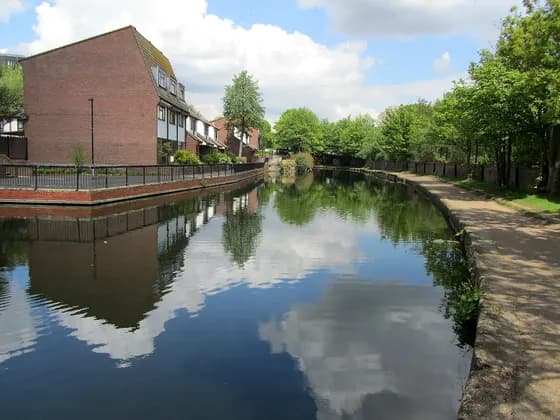
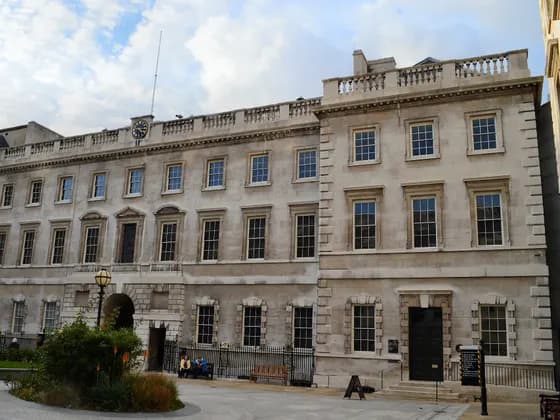
Photo: Paul the Archivist / Wikimedia Commons · CC BY-SA 4.0 · cropped
Photo: Chris Heaton · CC BY-SA 2.0 · Photo: AndyScott · CC0 · Photo: Matt Brown · CC BY 2.0
The Barts and The London (Queen Mary) medicine course at a glance (2027 entry)
Medicine at Queen Mary University of London is a five-year MBBS, which stands for Bachelor of Medicine, Bachelor of Surgery. It is taught by the Faculty of Medicine and Dentistry, whose medical school is known as Barts and The London. The faculty traces back to St Bartholomew's Hospital, which dates from 1123, and The London Hospital Medical College, founded in 1785.
The course runs in three phases. Phase 1 (years 1 and 2) is campus-based and teaches how the body works, one system at a time. Phase 2 (years 3 and 4) moves you mostly into hospitals and general practice (GP) surgeries, with regular campus teaching blocks. Phase 3, the final year, is spent largely as an assistant in the teams you will soon join as a doctor.
The school calls its curriculum spiral. Each body system, such as the heart and lungs, is taught in year 1, revisited in year 2 and met again on placement in year 3 or 4, each time in more depth. About 80 per cent of the course is a shared core. The rest includes student selected components, or SSCs: modules where you choose the topic.
You meet patients from your first term, at a GP surgery. Campus teaching is spread across Queen Mary sites at Whitechapel, Mile End and West Smithfield, plus a satellite campus in Ilford. Clinical placements then take you to hospitals across east and north-east London and out into Essex.
Expect a closely assessed course. Each year's exams are split into sections that must each be passed, and a good deal of the learning is left to you between sessions.
| Degree | MBBS (Bachelor of Medicine, Bachelor of Surgery) |
|---|---|
| Course length | Five years, or six with an intercalated degree |
| UCAS code | A100 |
| Places for 2027 entry | 311 home and up to 24 overseas |
| Main teaching sites | Whitechapel, Mile End and West Smithfield, plus a satellite campus in Ilford |
| Teaching style | Lectures, with team-based learning (TBL) in small groups |
| Anatomy | Prosections, models, bones and scans; dissection classes are optional |
| First patient contact | First term of year 1, at a GP surgery |
| Placement area | East and north-east London, plus hospitals in Essex |
| Intercalation | Optional extra year after year 2, 3 or 4 |
What makes Barts and The London (Queen Mary) medicine different
Patients from your first term
Your first placement starts in September of year 1 at a GP surgery, where a small group meets patients and learns how illness affects their lives. General practice teaching then continues in every year of the course.
Dissection is there if you want it
Core anatomy is taught with prosections, which are body parts already dissected by experts. Dissection classes are optional: the limbs in year 1, and the thorax and abdomen in year 2.
Placements from east London out to Essex
From year 3 you rotate through partner hospitals in blocks of six to ten weeks. Most are in east and north-east London, close enough to commute to each day. Others are further out in Essex, where most students stay in hospital accommodation for that rotation.
Five exam sections, each passed on its own
Each year has five sections, each passed on its own: coursework and professionalism (A), two exams (B and C), an OSCE (D) and your SSCs (E). An OSCE, or Objective Structured Clinical Examination, is a practical exam at timed stations. Section C is a data interpretation exam in years 1 to 3, a second specialty exam in year 4 and a national prescribing exam in year 5.
A final year spent as an assistant
Year 5 is built around assistantships, where you take on part of a junior doctor's role in a team: in surgery, anaesthetics, medicine, emergency medicine, intensive care and, for six weeks, general practice. After finals and your elective you shadow a Foundation Year 1 (FY1) doctor, a doctor in their first paid year, for three weeks.
How Barts and The London (Queen Mary) teaches medicine
In years 1 and 2 most teaching happens on campus, through lectures, team-based learning in small groups, anatomy and physiology practicals, and clinical and communication skills sessions. Each is explained below.
Some sessions use a flipped classroom: you work through videos, podcasts or quizzes online first, then use class time to test and apply what you learned. The year 1 handbook asks for one to four hours a day of self-directed study, and lectures can be revisited on QMplus, the university's online learning platform.
From year 3 the balance flips towards placements. You learn on wards, in clinics and in GP surgeries through ward rounds, case-based learning and supervised practice, with regular campus teaching blocks in between. Communication skills run through all five years, from patient-centred interviewing in year 1 to a course on breaking bad news in the final year.
The ways you will learn
| Team-based learning (TBL) | Used through years 1 and 2, and the small-group method named on the 2027 course pages. You prepare with material given out beforehand, answer questions alone, then answer them again as a team with a facilitator. A subject specialist then goes through the answers and links them to real clinical problems. |
|---|---|
| Lectures | Large-group teaching by faculty and by guest speakers who include doctors, nurses, midwives, physiotherapists, pharmacists and physician associates. In year 1 modules, lectures take up more timetabled hours than any other activity. |
| Anatomy and physiology practicals | Anatomy classes with prosected specimens, models and scans, and physiology classes on equipment that records data digitally, much of it the same kit you later meet on placement. |
| Clinical and communication skills | You learn to take a history, examine patients, explain information and carry out practical procedures. Sessions can involve simulated patients, who are trained actors playing a patient, and the clinical skills laboratory has a whole-body simulator. |
A typical week on the Barts and The London (Queen Mary) course
Year 1 opens with the nine-week Fundamentals of Medicine module, followed by five body-system modules of about three weeks each. The 2024/25 year 1 handbook gives the timetabled hours for every module, which shows what a week looks like.
In 2024/25 the three-week Cardiorespiratory module had 29 hours of lectures, 3 hours each of anatomy and physiology practicals and 3 of clinical skills. On top came 16 hours of Medicine in Society, which includes your GP placement, and 6 hours of protected SSC time. Across the year 1 modules that works out at roughly 18 to 21 timetabled hours a week, including SSC time, before independent study.
Attendance is monitored closely. You tap in with your ID card or scan a code, and anyone arriving more than five minutes after the start is recorded as absent. You need at least 90 per cent attendance, and falling below that leads to professionalism points on your record.
The clinical years look different. In year 3, placement activity usually runs from 8am to 6pm, Monday to Friday, except Wednesday afternoons, with half a day a week kept for self-study. The year 3 handbook advises keeping any paid job to 20 hours a week or less.
During the year 3 GP block you spend one full day a week, six to eight hours, in a practice. A sample day in the 2025/26 GP handbook starts with a supervised student clinic of 30-minute appointments, then a debrief. After lunch comes a tutorial, then time in a nurse's clinic, at practice meetings or on a home visit.
- In 2024/25 most year 1 modules also had problem-based learning (PBL), where a small group researches a case with a tutor who guides rather than teaches. It took 4 to 6 hours in a three-week module and 17 in Fundamentals. The 2027 course pages no longer mention PBL.
- Year 1 in 2024/25 ran from mid-September to early June, in three semesters. Later years can start in August and run into July.
How anatomy is taught at Barts and The London (Queen Mary)
Anatomy is taught in the Turnbull Centre on the Mile End campus. The core method is prosection: studying body parts that experts have already dissected, so you can see the structures clearly without spending hours exposing them yourself. You also use models, bones and radiographic images such as X-rays, CT and MRI scans.
The anatomy laboratory has 20 stations, each with two computers showing images, videos and scans. Classes focus on functional and clinical anatomy, meaning how structures work and why they matter to patients, with clinical demonstrators in every class. The 2024/25 handbook lists 24 hours of anatomy practicals across year 1.
Dissection is optional. You can opt into classes in a dissecting room that holds up to 100 students. These run after the basic practical teaching, so you already know the anatomy before you dissect. Year 1 students dissect the limbs and year 2 students dissect the thorax and abdomen.
Each dissection starts with an introductory lecture, and clinical teaching fellows and surgical trainees demonstrate in every class. Sessions also look at any disease found in the body, not just normal structure.
When you first meet patients at Barts and The London (Queen Mary)
Your first placement starts in September of year 1. A group of six to eight students spends 12 days, on alternate Thursdays through the year, at one GP surgery with a GP tutor. Each day has a theme. You interview patients, doctors and other health professionals to learn what living with illness is like and how social factors shape health.
Your year 1 GP work is assessed in three ways. You write a creative piece on how becoming a medical student may change the way you and others see you, and a reflective case discussion. Your group also makes a poster on health promotion.
In year 2 the GP teaching, called GP2, runs over six days. In 2025/26 three were at the same GP practice in small groups. The other three combined a half day of TBL on campus with a half day of online role play with actors, in groups of 12 to 15.
Year 2 also brings teaching on managing mental illness from psychiatrists at the school's partner mental health trusts, East London Foundation Trust (ELFT) and North East London Foundation Trust (NELFT).
From year 3 you are on clinical placement for most of the week. General practice continues, with one day a week for eight weeks in year 3 and a five-week block in year 4. In the six-week final-year assistantship you see patients on your own, supervised by your GP tutor.
Year by year at Barts and The London (Queen Mary)
- Year 1 (Phase 1)
The healthy body
Year 1 teaches how the normal body works, organised by body system, alongside the social side of health. It is worth 120 credits and you must pass the end-of-year exams to move on. You also start your GP placement and your first three SSCs.
- Fundamentals of Medicine (nine weeks, September to November): biochemistry, pharmacology, microbiology, immunology, cell biology, anatomy and physiology, plus how social, environmental and genetic factors shape health.
- Five system modules of about three weeks each: Cardiorespiratory, Locomotor, Metabolism, Brain and Behaviour, and Human Development.
- Early clinical skills: basic life support, hand washing, and examining the heart, lungs, abdomen, nervous system, elbow and knee.
- SSCs: a group poster (SSC1a) started in the second semester, plus two two-week blocks with topics ranging from dissection to clinical hypnosis.
- Year 2 (Phase 1)
The body in disease
Year 2 returns to the same body systems and looks at what goes wrong in disease. The programme specification also lists cancer and public health in this year. Your GP teaching continues, teaching on mental illness begins, and you take three more SSCs.
- Systems in disease: Brain and Behaviour, Locomotor, Cardiorespiratory, Metabolism and Human Development. Fracture healing, orthopaedics and arthritis, for example, follow on from year 1 Locomotor.
- GP2: six days on themes such as preventing disease, the social causes of ill health, long-term conditions, multimorbidity (living with several conditions at once), medical ethics, and professionalism and burnout.
- Year 3 (Phase 2)
Learning the clinical method
Year 3 moves you onto clinical placement for most of the week. The focus is the clinical method: taking a history, examining, reaching a diagnosis, choosing tests and planning treatment. In 2024/25 the year began in late August. Students on the St Andrews route join the Queen Mary course at this point for their final three clinical years.
- In the 2024/25 timetable the year opened with Fundamentals for Clinical Practice and an Introduction to Clinical Methods, then three integrated placement rotations and a public health block.
- Integrated Clinical Studies, focused on the cardiorespiratory system and metabolism, plus personal and professional development.
- GP3: one full day a week for eight weeks at a practice, in a group of four. You take histories and examine patients with feedback, and get skills and case discussions signed off in your logbook.
- GP3 also includes a group presentation on compassion or generalism, a short individual reflection and two online modules on health equity, meaning fair access to good health.
- GP community diagnosis: using health data, interviews and observation to study a local community's health needs, then giving a five-minute presentation to your peers.
- Practical procedures, first in simulation and then with patients. They include taking blood, inserting a cannula (a thin tube into a vein), recording an ECG (a tracing of the heart), giving injections and scrubbing for theatre.
- An introduction to safe prescribing, including writing prescriptions and calculating doses in simulation.
- Year 4 (Phase 2)
Specialties
Year 4 turns to specialty medicine. The programme specification organises it around the locomotor system, brain and behaviour, and human development, and the year ends with two specialty exams. In the 2024/25 timetable, the blocks opened with introductory teaching weeks.
- Rotations in obstetrics and gynaecology, child health, psychiatry, and neurology with ophthalmology (2024/25 block timetable).
- A locomotor block covering musculoskeletal medicine, care of older people, dermatology and sexual health.
- A placement in one of the school's partner mental health trusts.
- GP4: a five-week block, with four weeks at a practice in a group of four to eight and a week of central teaching. You see year 4 specialty problems as they turn up in general practice, including in supervised clinics you run yourself.
- GP4 adds three online days on health equity. It is assessed through three written patient case reviews, a reflection and an FP10 exercise, which is practice at filling in an NHS prescription form.
- SSCs on clinical topics of your own choosing.
- Year 5 (Phase 3)
Preparing for practice
The final year prepares you to start work as a doctor. In 2024/25 it began in late August, with placements from September to February, finals in March, then the elective and preparation for your first job.
- Hospital Assistantship 1 (eight weeks in 2024/25): surgery and perioperative medicine, meaning care around an operation, including anaesthetics, plus general medicine. It includes a simulation day where, in pairs, you manage an acutely ill patient through six scenarios.
- Hospital Assistantship 2 (four weeks in 2024/25): emergency medicine and one week in intensive care, plus an Intermediate Life Support (ILS) resuscitation course.
- A six-week GP assistantship, three and a half days a week at a practice. You run your own supervised surgeries three or four sessions a week, usually 30 minutes per patient, plus a weekly tutorial with your GP tutor.
- The GP assistantship is assessed through observed consultations, patient feedback forms, a practice project and a significant event analysis, a structured look at an incident in the practice to learn from it.
- SSC5a: a four-week module chosen from the school's catalogue or organised yourself.
- Parallel teaching themes including breaking bad news and doctors as teachers, and three practice prescribing exams before the national Prescribing Safety Assessment.
- After finals: a six-week elective, a preparation for practice week in June, and three weeks shadowing an FY1 doctor in the hospital where you will start work.
How you are assessed at Barts and The London (Queen Mary)
Each year of the MBBS is a single 120-credit block assessed in five sections. Section A is continuous assessment: coursework, portfolios, placement assessments and your professionalism record. Section D is an OSCE, and Section E covers your SSCs.
Sections B and C are end-of-year exams, and what they test changes as you go. In years 1 to 3, B tests applied knowledge and C tests data interpretation, including recognising images. In year 4 they are two specialty exams. In year 5, B is the written finals, now the national knowledge test described below, and C is the Prescribing Safety Assessment (PSA), a national online exam on safe prescribing.
Each section must be passed separately, so a strong result in one cannot make up for a weak one, and Section A must be passed before the rest. The pass mark is 50 per cent, adjusted for how hard each exam was judged to be. The degree is pass or fail, but students who pass every section first time can earn a distinction (typically the top 10 per cent) or a merit (the next 15 per cent).
Written papers use several formats: single best answer questions, where you pick the best of several options, extended matching questions, multiple choice and very short answer questions, where you type a brief answer yourself. Computer-based exams test anatomy, histology (tissue under the microscope) and data interpretation in the first two phases. OSCEs start in year 1.
Continuous assessment includes in-course tests, case write-ups, presentations, logbooks and placement assessments, which supervisors sign off on PebblePad, an online portfolio. The 2027 course pages call the whole approach programmatic assessment. In plain terms, your progress is judged on how you engage across the year as well as on the written and practical exams at the end of it.
In the final year you sit the Medical Licensing Assessment (MLA), often called the UKMLA. Since 2024/25 every UK medical degree has had to include a pass in it. Its written part is the Medical Schools Council's shared Applied Knowledge Test (AKT): two computer-based papers of 100 single best answer questions, each two hours long, on consecutive days. Its practical part, the Clinical and Professional Skills Assessment (CPSA), is the school's own final-year OSCE.
- The General Medical Council (GMC), which regulates doctors, approved the CPSA in 2024. It then had 12 stations of 14 minutes, with one minute of reading time, and you had to pass at least 8. Some stations used real patients.
- The PSA is a two-hour online exam of 60 questions. In 2024/25 you had to pass it to be awarded the MBBS.
- From year 3, practice exams that do not count include questions in the style of the national knowledge test. In the final year, PebblePad records every practical procedure the GMC requires before you start work.
- Resits: you normally get one resit of a failed end-of-year exam, and exceptionally you may repeat a whole year for a third attempt.
- Final-year students who do not pass the CPSA first time are offered a remediation programme with a one-to-one tutor, a further clinical placement and practice sessions.
- If you leave early you can still receive an exit award. That is a Certificate of Higher Education in Medical Sciences after year 1, a Diploma after year 2, or a BSc in Medical Sciences after year 3.
Where you will actually be at Barts and The London (Queen Mary)
Hospital placements start in year 3, when you begin rotating through the school's partner trusts. Placements usually last six to ten weeks, and you come back to campus at regular intervals for teaching blocks.
Hospitals are split into in-firms and out-firms. In-firms are close enough to the university that you are expected to commute every day rather than live on site. They include the Royal London, Homerton, Newham, Whipps Cross, King George and Queen's hospitals.
Out-firms are further away: Southend Hospital, Colchester Hospital and the Princess Alexandra Hospital in Harlow. Because of the distance, most students stay in hospital accommodation while on an out-firm. The 2024/25 final-year handbook also listed hospital contacts at Broomfield Hospital in Chelmsford and at St Bartholomew's Hospital.
Each site has its own local population and specialist services, so your placements will vary from one rotation to the next. Placement providers send you joining instructions and give you an induction to local policies.
Barts Health NHS Trust runs all of these except Homerton.
- The Royal London Hospital
- Newham Hospital
- Whipps Cross Hospital
- Homerton Hospital
Run by BHR University Hospitals NHS Trust (Barking, Havering and Redbridge).
- Queen's Hospital, Romford
- King George Hospital, Ilford
Southend, Colchester and Princess Alexandra are out-firms.
- Southend Hospital
- Colchester Hospital
- Princess Alexandra Hospital, Harlow
- Broomfield Hospital, Chelmsford
Teaching on mental illness in year 2 and a mental health placement in year 4.
- East London Foundation Trust (ELFT)
- North East London Foundation Trust (NELFT)
GP surgeries host you in every year, from small-group visits in year 1 to the final-year assistantship.
Electives and chosen modules at Barts and The London (Queen Mary)
SSCs run in every year and sit in the non-core fifth of the course. They range from basic sciences such as anatomy, physiology and pharmacology to clinical specialties, public health, and ethics and law. Some last two to five weeks and others run across a whole year, and many students set up their own.
Each SSC is graded on a simple scale and builds into a portfolio. You have to pass each year's SSCs to progress, and they can help decide merits.
The elective comes after finals and lasts six weeks, in the UK or abroad. In 2024/25 it fell between the end of March and early June, with a report due at the end of May. If you fail finals first time, you may be asked to give up some or all of it to prepare for resits.
Intercalation at Barts and The London (Queen Mary)
Intercalating means taking a year out of medicine to study for a separate degree, which makes the course six years long. At Queen Mary it is optional and depends on your academic performance. You can apply for an intercalated BSc (iBSc) after year 2, 3 or 4, or for a master's degree after year 3 or 4, as long as you have passed every year so far.
Queen Mary runs eight iBSc programmes: Experimental Pathology, Global Medical Humanities, Global Public Health, Medical Education, Neuroscience, Pharmacology and Innovative Therapeutics, Prehospital Medicine, and Sports and Exercise Medicine. Medical Education is suspended for 2026/27. Each includes a research project supervised by a member of staff.
There is also a list of 12-month master's degrees adapted for intercalation, such as Critical Care, Cancer Sciences and Forensic Medical Science. You study alongside other postgraduate students, and the school warns these courses are demanding.
Every Queen Mary student needs the school's full written permission to intercalate. For courses at other universities, the school expects to give about 20 to 25 students that permission. Places on Queen Mary's own iBSc courses depend on your exam results and an interview. For a research career there is also a three-year MB PhD, which you can join after year 3 or year 4 before returning to finish the MBBS.
Facilities and support at Barts and The London (Queen Mary)
Where you will learn
Teaching is spread across several sites, so expect to move between them. At Whitechapel, year 1 lectures are mainly in the Perrin Lecture Theatre in the Blizard Building. TBL sessions and some physiology practicals are in the Garrod Building, which also houses the MBBS support staff and the student support office.
The Turnbull Centre at Mile End holds the anatomy laboratory, the dissecting room and the Multi-Disciplinary Laboratory for physiology classes. Clinical skills teaching is based at the Robin Brook Centre on the West Smithfield campus, home to St Bartholomew's Hospital. Some teaching also uses the Charterhouse Square campus.
The satellite campus in Ilford has classrooms and a mock ward, a room laid out like a hospital ward for practising clinical care. The programme specification also lists dedicated IT labs, a multimedia anatomy learning centre and pathology museums.
Support while you study
Every student has an Academic Advisor, normally the same one for the whole course. Each advisor looks after around ten students from different year groups. You meet one to one at least three times a year, including at least once a term, to set goals and talk through anything that is worrying you.
Senior Tutors oversee the advisors and handle more complex matters, such as interrupting your studies or transferring course. The programme specification also gives each student a MedPro supervisor in years 1, 2, 4 and 5 to support personal and professional development.
The student support team of the Institute of Health Sciences Education, which runs the MBBS, is based in the Garrod Building. It helps with personal difficulties such as bereavement, health problems and financial crises. Academic help includes a one-week study skills induction in year 1 and the library's Academic Skills service.
In the final year, anyone who struggles on a placement or scores poorly in a practice prescribing exam meets a senior tutor. Senior staff also review every student's progress six times a year.
Outside the timetable, the Barts and The London Students' Association (BLSA) is a students' union just for medical and dental students. Each year group also elects course representatives, who raise issues at staff-student liaison meetings.
Is the Barts and The London (Queen Mary) course right for you?
This course may suit you if
- You want to meet patients from your first term, with general practice teaching in every year.
- You like preparing on your own and then testing your understanding as part of a team, which is how TBL works.
- You would like the option to dissect without it being compulsory.
- You want to train across east London and Essex, where each hospital serves a different population.
- You are comfortable being assessed throughout the year as well as in end-of-year exams.
Things to think about
- Teaching is split across Whitechapel, Mile End, West Smithfield and Ilford, so you will travel between sites.
- An out-firm in Essex usually means living in hospital accommodation for that rotation.
- A strong score in one exam section cannot make up for a weak one, so gaps have to be fixed rather than balanced out.
- Attendance rules are strict, with at least 90 per cent required, and years 3 and 5 started in late August in 2024/25.
Barts and The London (Queen Mary) medicine course — frequently asked questions
Applying to Barts and The London (Queen Mary)?
How to get into Barts and The London (Queen Mary)
Entry requirements, UCAT, personal statement and interview, step by step.
Open the guide →Barts and The London (Queen Mary) UCAT cut-offs and offers
UCAT cut-offs, A-level offers, interview format and decision dates.
See the requirements →Compare Barts and The London (Queen Mary) with other schools
Put the teaching style, anatomy teaching and placements next to another school.
Open the comparison →Prepare for the Barts and The London (Queen Mary) interview
Format breakdown, school-specific sample questions and prep tips from tutors who interviewed here.
Read the guide →Where this Barts and The London (Queen Mary) course guide came from
This guide was written from 22 official sources — Queen Mary University of London's own course pages and programme documents, plus the regulator and NHS placement partners where they publish detail — read on 2026-09-23, then checked claim by claim against those sources.
- Medicine MBBS (A100) overview, Queen Mary University of London
- Medicine MBBS (A100) course structure, Queen Mary University of London
- Medicine MBBS (A100) selection criteria and places for 2027 entry
- Intercalated degrees, Faculty of Medicine and Dentistry, Queen Mary University of London
- Programme specification: Medicine (A100) MBBS, 2025-26
- MBBS Year 1 programme handbook 2024/25
- MBBS Year 3 programme handbook 2024/25
- MBBS Year 5 programme handbook 2024/25
- Year 3 general practice (GP3) student handbook 2025/26
- Year 2 general practice (GP2) tutor handbook 2025/26
- Faculty of Medicine and Dentistry admissions policy 2026 (St Andrews route into year 3)
- Anatomy and Physiology at the Turnbull Centre, Institute of Health Sciences Education
- GMC decision on the Queen Mary MLA Clinical and Professional Skills Assessment, 2024
- GMC decision on the Queen Mary MLA Applied Knowledge Test, 2024
- The Prescribing Safety Assessment, national assessment run by MSC Assessment and the British Pharmacological Society
- Medicine MBBS, 2027 entry course page, Queen Mary University of London
- Year 1 general practice placement (GP1), Community Based Medical Education
- Year 3 general practice placement (GP3), Community Based Medical Education
- Year 4 general practice placement (GP4), Community Based Medical Education
- Year 5 general practice assistantship (GP5), Community Based Medical Education
- MBBS block timetable 2024/25 (draft, published for prospective students)
- About us, BHR University Hospitals NHS Trust
Courses are restructured between cycles. Anything here that decides your application — an anatomy offer, a placement city, a compulsory intercalated year — should be confirmed against the official page for your entry year.
Applying to Barts and The London (Queen Mary)?
We have helped hundreds of applicants turn their UCAT, personal statement and interview prep into offers from Barts and The London (Queen Mary) and other UK medicine schools.