
The Bristol Medicine course
What you actually study, and where you will be
Bristol's MB ChB is a 5-year course taught through case-based learning in an integrated curriculum, with patient contact from Year 1 and placements in South West England (2027 entry). Case-based from year 1, with placements in primary and secondary care starting in the first year and clinical academies carrying year 4. Anatomy is taught on cadaveric prosections rather than by dissection.
- Degree
- MB ChB
- Length
- 5 years
- Teaching
- Case-based learning + Integrated
- Clinical contact
- Year 1
- UCAS code
- A100

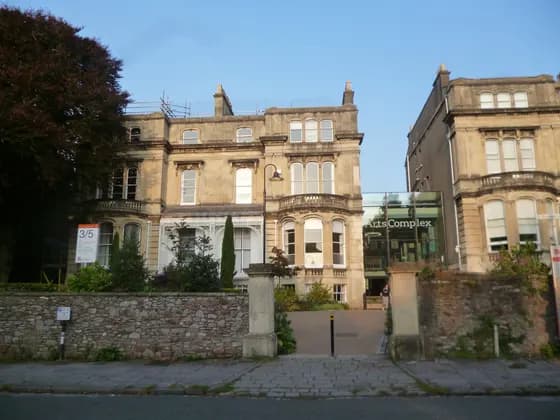
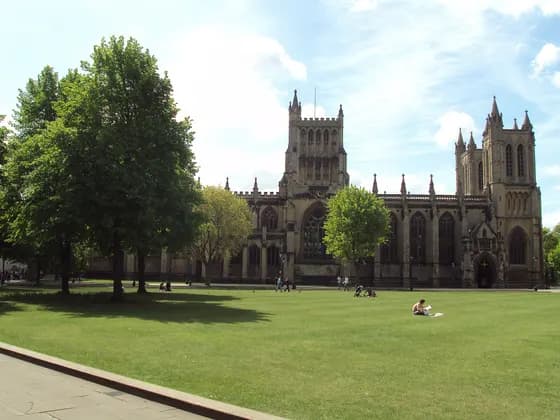

Photo: Suicasmo · CC BY-SA 4.0 · cropped
Photo: AmW22 · CC BY-SA 4.0 · Photo: Rept0n1x · CC BY-SA 3.0 · Photo: John Winder · CC BY-SA 2.0
The Bristol medicine course at a glance (2027 entry)
Bristol's medical degree is the MB ChB, short for Bachelor of Medicine and Bachelor of Surgery. It runs for five years full time, the UCAS code is A100, and the university side of it sits on the Clifton campus in Bristol. It is the university's primary medical qualification and is recognised by the General Medical Council (GMC), the body that regulates doctors across the UK.
Teaching is built around case-based learning, usually shortened to CBL. A patient case runs for a fortnight, and the science, the consulting skills and the clinical skills that belong to it are taught in the same two weeks. In year 1 the cases follow body systems, such as the cardiovascular system. In year 2 they switch to symptoms, such as chest pain or headache.
You meet patients in the first term. From the start of October in year 1 you go out to a general practice in a group of four. From January your clinical contact alternates each fortnight between a GP surgery and a hospital. General practice then stays with you: a student now gets about 167 half-days of it across the five years.
From year 3 most of your learning happens in the Clinical Academies. These are teaching bases inside NHS trusts across the South West, at Southmead and the Bristol Royal Infirmary and then further out in Bath, Gloucester and Cheltenham, Weston-super-Mare, Taunton, Yeovil and Swindon. Each one works like a small campus in its own right.
Finals come at the end of year 4 rather than year 5. That turns the last year into an apprenticeship: it opens with an elective placement you choose, then runs three nine-week rotations in general practice, on the wards, and in acute and critical care. The year group in year 4 is around 300 students.
| Degree | MB ChB |
|---|---|
| Course length | Five years full time |
| UCAS code | A100 |
| University base | Clifton campus, Bristol |
| Teaching style | Fortnightly case-based learning, science and clinical work together |
| First patient contact | A GP practice, in October of year 1 |
| General practice | About 167 half-days across the five years |
| Anatomy | Cadaveric prosections, taught at the Bristol Anatomy Centre |
| Placement network | Seven Clinical Academies across the South West |
| Finals | Sat at the end of year 4 |
| Intercalation | Optional extra year between years 3 and 4 |
What makes Bristol medicine different
Clinical Academies across the South West
From year 3 you are taught in academies inside NHS trusts: North Bristol, South Bristol, Bath, Gloucestershire, North Somerset, Somerset and Swindon. Each one works like a small campus inside the trust. Each is led by an Academy Medical Dean, who is responsible for your supervision and pastoral care.
General practice in all five years
Primary care is not a single block here. It is half-days in years 1 and 2, then alternate Tuesdays consulting under supervision in year 3. Year 4 gives you one day a week in the same practice for 18 weeks, and year 5 a nine-week apprenticeship with your own patient list.
Finals a year early, then an apprenticeship
You sit both the written and the clinical parts of finals at the end of year 4. Year 5 is then spent inside clinical teams rather than revising. That is how the school prepares you for foundation training, the two-year paid job all UK medical graduates start in, whose first year is called F1.
Time set aside for your own interests
The student choice programme gives you a three-week project in year 2 and a six-week project in July of year 3. It can be an audit, a piece of research or a placement you propose. Year 5 then opens with an elective in a setting you choose.
One consultation model, taught from year 1
Consulting is its own thread across all five years, called Effective Consulting. It uses a model called COGConnect, which breaks a consultation into stages and names five values to aim for: compassionate, curious, critical, creative and collaborative. Your GP teacher uses the same language when giving you feedback.
How Bristol teaches medicine
The spine of years 1 and 2 is a two-week case cycle. You get lectures and online pre-learning on the science behind the case. Then comes small-group case-based learning, where your group works the case through with a tutor. A clinical and consulting skills session on the same theme follows, and then a half-day with patients. The biology, the examination and the conversation arrive together rather than years apart.
The balance tips towards the clinical setting from year 3. Year 3 is based in the academies, with alternate Tuesdays in one GP practice. Year 4 splits 36 teaching weeks between two different academies, built from six-week hospital clerkships plus a weekly GP day. Year 5 is worked rather than taught: you join teams in general practice, on the wards and in acute care.
Consulting skills run as their own thread, called Effective Consulting, across the whole degree. In the first term that is one lecture and three small-group sessions, called labs, where you practise on each other and sometimes with an actor. The same skills are then rehearsed with real patients in the GP session a few days later.
A fair amount of the preparation is yours to do alone. Year 3 sets a short online tutorial to finish before each GP day, so that the day itself can be spent with patients. Year 4 expects around an hour of pre-work each week, before the tutorial and skills session. On placement you also learn alongside students training for other health professions.
The ways you will learn
| Case-based learning (CBL) | A small group works through one patient case with a tutor over a fortnight, works out what it needs to learn, then reports back. Year 1 cases follow systems such as the respiratory or endocrine system; year 2 cases follow symptoms such as breathlessness, low mood or collapse. |
|---|---|
| Lectures, plenaries and online pre-learning | Larger teaching sets up the science and clinical reasoning behind each case. In year 1 this covers anatomy, biochemistry, physiology, histology, neuroscience, ethics and law, evidence-based medicine, and behavioural and social sciences. |
| Effective Consulting labs | Small group sessions on consulting, often with an actor playing the patient and a clinical tutor watching. They are timed to the case you are studying that fortnight, so you practise the conversation that goes with the condition you are learning about. |
| Clinical skills and anatomy practicals | Hands-on sessions where you learn examinations and practical procedures, plus anatomy classes at the Bristol Anatomy Centre. The centre's teaching for medicine, dentistry and veterinary science uses dissection, prosection, imaging and applied anatomy. |
| General practice placement days | Half-days in years 1 and 2 and full days from year 3, in a group of four to six with one GP teacher who stays with you for the whole block. Year 3 blocks end with a simulated surgery: telephone consultations with actors, run in your own practice. |
| Hospital clerkships | Attachment to a clinical team in a trust, joining ward rounds, clinics, theatres and delivery suites. Year 2 opens with a three-week clerkship; year 4 is built from six-week clerkships in two academies. |
A typical week on the Bristol course
Bristol publishes the shape of its primary care days in detail, so those give the clearest picture of a week. The hospital side varies with the clerkship you are on, so treat that as the changeable part of your timetable.
A year 1 GP half-day starts at 09:00 with introductions. From 09:20 to 11:00 the practice runs a reduced surgery of three to five patients, with some of the group observing while the others meet a patient at home or at the surgery. It closes with a debrief and some clinical skills practice.
A year 2 half-day is built around two patients. You check in and set learning objectives, interview and examine the first patient, take a break, do the same with the second, then finish with a debrief and feedback from your GP tutor.
- Year 3, alternate Tuesdays: the day opens with a themed consulting workshop of about an hour and a half. Half the group then consults with patients under direct supervision while the other half sits in with another member of the practice team, swapping after lunch.
- Year 3, late afternoon: a group tutorial on the skill of the week and drug of the week, then a workplace-based assessment with one student.
- Year 4, Wednesdays: roughly 09:00 to 16:00 in the practice, including 2.5 hours of protected teaching, student-led surgeries and a tutorial. Some Bristol-area practices run this on a Monday instead.
- Year 5: six half-day sessions a week in practice, of which at least five are your own surgeries and one is a joint surgery watched by your supervisor.
- Year 5, Wednesdays: out of the practice for cluster-based teaching at your academy with four to eight students from nearby practices.
- Year 5: two protected hours a week to plan and run your own project in the practice.
How anatomy is taught at Bristol
Bristol's course page names cadaveric prosections among its anatomy facilities. A prosection is a body part that an expert has already dissected, so that particular structures are exposed clearly and you can see exactly what you are studying.
The teaching is run by the Bristol Anatomy Centre. It teaches medical, dental and veterinary students, and describes that teaching as using dissection, prosection, imaging and applied anatomy. Its medical and veterinary dissecting rooms are committed to undergraduate teaching during term, and are only released to outside courses out of term.
Anatomy starts in the first block of year 1, sitting alongside biochemistry, physiology, histology and neuroscience, and it keeps reappearing. In year 2 your GP teacher is asked to link the examination you are practising back to the anatomy underneath it, for example by drawing an abdomen and asking what lies where.
If you want much more of it, the centre runs an intercalated BSc in Functional and Clinical Anatomy, which medical students can take as their extra year.
When you first meet patients at Bristol
Your first GP session comes within a fortnight or so of starting. The year 1 dates for 2026-27 begin on 1 October. You go in a group of four, sometimes up to six, to a practice in or very close to Bristol, and you keep the same teacher and the same practice through the year.
The first two sessions are about meeting people: everyone in the group interviews a patient at the surgery. In the third, half the group sits in on a reduced surgery while the others visit a patient at home or meet them at the practice to hear about their experience of healthcare.
From January in year 1, clinical contact alternates each fortnight between primary and secondary care, and you also spend time shadowing a healthcare assistant in a Bristol hospital. Year 2 then opens with a three-week attachment to a hospital team, focused on history and examination of the cardiovascular, respiratory and abdominal systems.
Responsibility builds after that. Year 3 has you consulting with unselected patients under direct supervision, in appointments the practice is asked to book at around 30 minutes. Year 4 asks for at least 18 student-led consultations across the GP clerkship. Year 5 gives you your own room and patient list, with a senior review after each patient.
Year by year at Bristol
- Year 1
Foundations, then the body system by system
The year opens with a ten-week block called Foundations of Medicine, which introduces the sciences and the way the course is taught. From January it becomes Human Health and Wellbeing, a run of two-week case cycles through the body systems. Clinical contact starts in the first term and alternates between general practice and hospital from January.
- Foundations of Medicine covers anatomy, biochemistry, physiology, histology, neuroscience, ethics and law, evidence-based medicine, effective consulting and the behavioural and social sciences.
- Three GP sessions in the first term, on patients and health, the doctor and patient relationship, and professionals and health.
- Training and certification in basic life support and the use of an automated external defibrillator.
- The block ends with a conference where groups present a poster, a short talk and a creative piece drawn from something they saw or discussed.
- From January, seven two-week case cycles: musculoskeletal, cardiovascular, respiratory, nervous system and psychology, gastrointestinal, urinary and endocrine.
- Three or four more GP half-days, one per month, each tied to the system being studied, plus a spell shadowing a healthcare assistant in a Bristol hospital.
- Assessment: a written exam at the end of the year. You also log at least three anonymised patient cases for your professional mentor and make a creative piece about a patient you met.
- Attendance in general practice is recorded, but from 2026-27 it no longer forms part of what you must do to pass year 1.
- Year 2
From systems to symptoms
Year 2 begins with two three-week blocks away from the lecture timetable: a hospital clerkship and a student choice project. The case cycles then move from body systems to the symptoms patients actually turn up with, and the GP half-days follow the same themes. It ends with the first clinical exam, which is for practice only.
- The Effective Consulting Clerkship: three weeks attached to a clinical team in a hospital, working on history taking, examination and clinical reasoning.
- A three-week Student Choice Project in September and October, which for some students includes a clinical placement.
- Autumn cases: skin, body defence, pharmacology and therapeutics, and anaemia, blood and clotting.
- Spring cases: chest pain, breathlessness, abdominal symptoms, urinary symptoms and thirst, joint and back pain, low mood, headache and collapse.
- Five or six GP half-days in a group of up to six, each built around two patients with conditions matching the case of the fortnight. One fortnight is spent in a hospital psychiatry setting instead.
- Assessment: two progress tests in October and February, a practice clinical exam in May called the CAPA, and a written exam in June.
- Year 3
Into the clinical academies
Year 3 moves your base out of the university and into the academies, where you meet patients presenting for care and learn how common conditions are managed in the NHS. General practice becomes whole days, on alternate Tuesdays, and you start consulting yourself. The year ends with a written progress test and a clinical exam that you must pass to go on.
- Sixteen Tuesdays in one GP practice, split into two blocks of eight, in groups of up to six and often four.
- A GP day opens with a themed consulting workshop of about an hour and a half, built around role play. You then consult with unselected patients under supervision while the rest of the group sits in with a GP, nurse or healthcare assistant, swapping after lunch.
- Each block closes with a simulated surgery, where you consult with actors by telephone on the conditions the block has covered.
- Weekly clinical themes run from respiratory, gastrointestinal, rheumatology, renal, dermatology, ophthalmology and ENT to cardiovascular, endocrine, neurology, musculoskeletal, urology and diabetes.
- Workplace-based assessments through the year: at least four case-based discussions and four observed patient encounters, judged at the standard expected of a third-year student.
- A six-week student choice project in July. Projects run through primary care in 2026 covered general practice in the most deprived areas, migrant health and women's health.
- Year 4
The lifecycle year, and finals
Year 4 covers care from conception to death, and it is the year you qualify by. Thirty-six teaching weeks are split into two 18-week halves in two different academies, followed by revision and finals. General practice runs right through it as a weekly day in the same practice, rather than as a block.
- Six clerkships: child health; complex medicine in ageing and frailty; mental health; reproductive health and care of the newborn; complex medicine in acute, cancer and palliative care; and primary care and community.
- Hospital clerkships run in six-week blocks. From September 2026 the year was restructured to take a larger year group and to lengthen the mental health clerkship.
- The GP clerkship is longitudinal: every Wednesday in the same practice for 18 weeks, four students at a time, with some Bristol-area practices teaching on a Monday.
- In that GP day: 2.5 hours of protected teaching, at least one student-led consultation each week and 18 across the placement, phlebotomy and flu injections, e-prescribing practice, and an annual learning disability health check.
- Assessments in the GP clerkship: one observed patient encounter, one case-based discussion, and a midpoint and endpoint review with your tutor.
- Finals at the end of the year: the national written Applied Knowledge Test, followed shortly after by the clinical exam.
- The academy structure means a journey of up to an hour and a quarter each way to your GP practice is possible.
- Year 5
Elective, then preparing for practice
With finals behind you, year 5 is an apprenticeship. It starts with an elective placement you choose, then runs three nine-week rotations under the heading Preparing for Professional Practice: primary and community care, ward-based care, and acute and critical care. The work is real: you consult, decide and are reviewed.
- The general practice rotation is a nine-week apprenticeship in a pair, in one of three blocks across the year, with six half-day sessions a week over three or four days.
- You get your own room and patient list, run at least five of your own surgeries a week plus one joint surgery, and have a senior review after each patient.
- Every Wednesday is out of practice for cluster-based teaching at your academy, in a group of four to eight, plus private study.
- Two protected hours a week for a project of your own choosing that is useful to the practice, presented to your tutor or at a practice meeting by the end of the placement.
- Assessment through the year: observed patient encounters and case-based discussions in each rotation, plus a practical skills logbook. There are also entrustable professional activities, tasks a supervisor signs off once they judge you safe to do them unsupervised.
- Also in the year, the Prescribing Safety Assessment: the national online exam in safe prescribing that every UK final-year student sits. Bristol's date for 2026-27 is 28 January 2027, with students out of practice.
- One out-of-hours session with the local urgent care provider is compulsory, except in Gloucestershire, where out-of-hours placements are not currently available.
How you are assessed at Bristol
Written assessment is built on progress tests. These are sat at intervals through the course, and they use the same question blueprint and exam software as the national final written exam. They are mainly formative, which means they do not carry a pass or a fail. Year 2, for example, sits two of them, in October and February.
Alongside those sit summative papers that do count. There are end-of-year written papers that have to be passed to move into the next year, and year 3 ends with a summative written progress test as well as a clinical exam.
The clinical exams are OSCEs. An OSCE, or Objective Structured Clinical Examination, is a circuit of short timed stations where an examiner watches you take a history, examine a patient or carry out a procedure. Year 2 has a practice version called the CAPA, the Clinical and Practical Assessment, which exists purely to give you feedback before the exams that count.
Finals at the end of year 4 are the two parts of the UK Medical Licensing Assessment. The Applied Knowledge Test is set nationally: two computer papers of 100 single best answer questions, sat on consecutive days, two hours each. The pass mark is set at the level of a doctor in their first week of foundation training. At Bristol it replaced the school's own written finals.
The other part, the Clinical and Professional Skills Assessment, is run by the school. Bristol uses two circuits of eight stations over two consecutive days, so 16 stations in all, each ten minutes long with two minutes of reading time, running at several sites at once. Stations use real patients, actors or a manikin, and are pitched at the level of a first-year foundation doctor.
The GMC judged Bristol's clinical exam compliant with its national requirements in November 2023 and its knowledge test arrangements compliant in May 2024. When the GMC looked at the exam in 2023, candidates had to pass 11 of the 16 stations as well as reach the overall pass mark. The school had set that bar at 12 of 16 for 2023-24, and said it would review it again after that.
- Observed patient encounters, known as mini-CEX, and case-based discussions are used from year 3 onwards: one is a short encounter scored by a clinician, the other a structured conversation about a patient you saw.
- Team Assessment of Behaviour gathers feedback from several colleagues about how you work, which you then go through with your mentor.
- An electronic portfolio called MyProgress holds your patient log, your assessments and your skills sign-offs.
- Attendance is recorded on every placement. In years 3 and 4 you need at least 80 per cent of your general practice days to pass the clerkship; in year 5 you are expected at every scheduled session.
- The year 5 portfolio holds 16 entrustable professional activities, judged at the level of a doctor on day one of foundation training. You need 70 sign-offs across the year: 28 by the end of the first block and 56 by the end of the second.
Where you will actually be at Bristol
The Clinical Academies are the thing to understand about placements here. Each one is a teaching base inside an NHS trust, working as a University of Bristol campus away from the main precinct. They have lecture and seminar rooms, a library, IT and a student common room. Postgraduate trainees, nurses and other health professionals use the same facilities, so the learning is shared.
Each academy is led by an Academy Medical Dean, who is responsible for academic leadership, your academic supervision and your pastoral care. Over the clinical years you rotate through most of the network, which is deliberate: it puts you in small rural hospitals and large city teaching hospitals, with different populations and different teams.
Year 4 makes the pattern clearest. Its 36 teaching weeks are split into two 18-week halves in two different academies, drawn from North Bristol, South Bristol, Bath, Swindon, Gloucester, Taunton and Yeovil. Year 5 cluster teaching is then held at your academy: Bath, Weston, the Bristol Royal Infirmary, Southmead, Gloucester, Swindon, Taunton or Yeovil.
General practice is organised differently. In years 1 and 2 you stay close to the university, because teaching practices for those years are in Bristol, North Somerset and South Gloucestershire, or in Bath. From year 3 the practices spread across the region, with dedicated GP leads for Gloucestershire and Somerset.
More than 150 practices across the region take Bristol students, and the amount of general practice in the degree has grown a lot. A student in 2015 had about 67 half-days of it over the five years; the figure for 2026 is 167.
There are also health and conduct requirements to meet. You complete a health questionnaire and a medical examination, and if you are not already immune you are immunised against hepatitis B and tuberculosis. Every medical student also has a Disclosure and Barring Service check, the criminal record check the NHS requires of people who work with patients.
The academy sits in the Learning and Research building, which has teaching rooms, simulation suites for practising clinical situations without a real patient, a library and a common room. It takes up to 200 students from years 2 to 5, and the clinical teaching happens in the 800-bed hospital.
- Southmead Hospital
- Learning and Research building
City-centre teaching, including specialist heart, children's, cancer and eye hospitals. The academy space in Dolphin House is within walking distance of the main university precinct.
- Bristol Royal Infirmary
- Bristol Heart Institute
- Bristol Royal Hospital for Children
- Bristol Haematology and Oncology Centre
- Bristol Eye Hospital
- St Michael's Hospital
- University Hospitals Bristol and Weston Education and Research Centre
- Dolphin House
A 732-bed trust serving around 500,000 people in Bath, north-east Somerset and west Wiltshire. It is 14 miles from Bristol and takes over 100 students at a time, who live on the hospital site for the placement.
- Royal United Hospital Bath
The largest academy outside Bristol, working across two sites, with an education centre, library and teaching and seminar rooms.
- Gloucester
- Cheltenham
A small district hospital in a seaside town, with a two million pound academy building, a library open around the clock and skills rooms. Accommodation is free, close to the hospital, and guaranteed if you do not have accommodation in Bristol.
- Weston General Hospital, Weston-super-Mare
Two busy district general hospitals, with teaching across both acute and community medicine.
- Musgrove Park Hospital, Taunton
- Yeovil District Hospital
Teaches over 200 Bristol students a year across years 2 to 5, alongside students from other schools and other health professions. It is about 40 miles from Bristol.
- Great Western Hospital, Swindon
Electives and chosen modules at Bristol
The elective is a placement at the very start of year 5, and you choose where it happens. Because finals are already behind you, it lands at a point where you can use it to test a specialty you are considering rather than to revise.
Separately, the course has a student choice programme in the earlier years, which is Bristol's version of what many schools call a student selected component. Year 2 has a three-week project in September and October, some of which come with a clinical placement attached. Year 3 has a six-week project in July.
A year 3 project is meant to be a piece of real enquiry: you pick an area, gather data, analyse it and work out what it means for practice, working largely independently. Projects offered through primary care in 2026 covered general practice in the most deprived areas, migrant health and women's health.
Past projects give a sense of the range. They include audits of prescribing in specific patient groups, building e-learning for primary care, work on domestic violence support in community pharmacies, and placements in prison and homeless health services.
Intercalation at Bristol
Intercalating means pausing medicine for a year to take a whole extra degree, then coming back. At Bristol that gap falls between years 3 and 4, it is optional, and it makes the course six years in total.
You can take a BSc, a BA, or a master's level award such as an MSc, an MRes or an LLM. All of them are run by the medical school. The list includes neuroscience, cancer biology and immunology, global health, healthcare ethics and law, medical humanities, functional and clinical anatomy, epidemiology, public health, health sciences research, and artificial intelligence for medicine and health.
Several of the BSc options work by putting you into the third year of an existing three-year degree, so you join that subject's finalists for the year. Students from other medical, dental and veterinary schools also come to Bristol to intercalate, so the cohort is not only Bristol students.
Facilities and support at Bristol
Where you will learn
Anatomy teaching is based at the Bristol Anatomy Centre, which also houses the Vesalius Clinical Training Centre. Vesalius is used mainly for surgical and professional training courses. Its main lab has twelve height-adjustable operating tables, theatre lighting and large screens fed by a camera over the demonstration table, and the centre can store up to 52 donors.
The academies are the other half of the estate, and where you are taught changes as you rotate through them. In central Bristol, the Dolphin House academy space and the University Hospitals Bristol and Weston Education and Research Centre are a walk from the main university precinct. A South Bristol placement therefore keeps you in the city.
Support while you study
You are assigned a mentor who meets you regularly and follows your progress. In the early years that mentor reviews the anonymised patient cases in your portfolio and goes through the multi-source feedback your teachers and colleagues have given you.
On placement, the Academy Medical Dean is responsible for pastoral care as well as academic supervision, and the university's Student Advice Service sits behind that. If a GP teacher has a concern, they can submit a programme support request form, and senior tutors review those at least weekly.
A General Medical Council case study on Bristol's general practice teaching, published with student feedback gathered between 2021 and 2023, describes how the practical side of that works. Student support plans, written with you, are sent to practices in advance so that any learning or medical needs are known. On the first day of a GP placement you have a pastoral check, which means teaching about subjects such as cancer, suicide or miscarriage can be handled carefully if it touches your own experience.
The same case study describes the school inviting feedback a few weeks into a placement rather than only at the end, so problems can be fixed while you are still there. It also describes planning for religious and cultural needs, including prayer and rest arrangements during Ramadan and, where it matters, where a placement is located.
In year 5 the ratio is two students to one GP supervisor. The weekly cluster teaching session doubles as a check-in, because the tutor running it sees the same small group every week and can spot when someone is struggling.
Is the Bristol course right for you?
This course may suit you if
- You want patient contact early: your first GP session is in October of year 1, and clinical contact alternates with hospital visits from January.
- You learn well from cases rather than from long stretches of pure science, since the fortnightly case drives the timetable in years 1 and 2.
- You are interested in general practice, or at least happy to spend around 167 half-days there over five years.
- You like the idea of real responsibility before graduating, up to running your own surgery with a senior review in year 5.
- You would rather get finals over with and spend your last year working in teams than revise through to the end.
Things to think about
- Placements move you around the South West, and can mean living away from Bristol: Bath students live on the hospital site, and Weston offers free accommodation next to its hospital.
- Travel is part of the deal. The school warns that getting to your year 4 GP practice can take up to an hour and a quarter each way.
- You have to clear health and conduct checks: a health questionnaire, a medical examination, hepatitis B and tuberculosis immunisation if you need it, and a criminal record check.
- The heaviest exam pressure lands at the end of year 4, which makes years 3 and 4 the academic crunch rather than year 5.
- The year group is large, around 300 in year 4, although placement teaching happens in groups of four to six.
Bristol medicine course — frequently asked questions
Applying to Bristol?
How to get into Bristol
Entry requirements, UCAT, personal statement and interview, step by step.
Open the guide →Bristol UCAT cut-offs and offers
UCAT cut-offs, A-level offers, interview format and decision dates.
See the requirements →Compare Bristol with other schools
Put the teaching style, anatomy teaching and placements next to another school.
Open the comparison →Prepare for the Bristol interview
Format breakdown, school-specific sample questions and prep tips from tutors who interviewed here.
Read the guide →Where this Bristol course guide came from
This guide was written from 22 official sources — University of Bristol's own course pages and programme documents, plus the regulator and NHS placement partners where they publish detail — read on 2026-09-23, then checked claim by claim against those sources.
- MB ChB Medicine (A100), 2027 entry
- Medicine at Bristol, subject page for 2027 entry
- Why study medicine at Bristol, Bristol Medical School
- Clinical Academies, Bristol Medical School
- Intercalated degrees, Bristol Medical School
- Undergraduate study, Bristol Anatomy Centre
- About the Bristol Anatomy Centre
- Facilities, Vesalius Clinical Training Centre
- Information for GP teachers, Centre for Academic Primary Care
- Student Choice placements, Centre for Academic Primary Care
- Clinical electives for visiting students, with academy locations and distances
- Primary Care Teaching 2026-2027, Centre for Academic Primary Care
- Year 1 GP Teacher Guide 2026-27
- Year 2 GP Teachers Guide 2026-27
- Year 3 GP Teachers Guide 2025-26
- Year 4 GP Teacher Guide 2026-27
- Year 5 GP Teacher Guide 2026-27
- Year 5 GP Appendix Pack 2026-27
- Year 5 Cluster Based Teaching Quick Reference Guide 2026-27
- General Practice clinical placements at Bristol Medical School, GMC case study
- MLA Clinical and Professional Skills Assessment compliance decision, Bristol Medical School, November 2023
- MLA Applied Knowledge Test compliance decision, Bristol Medical School, May 2024
Courses are restructured between cycles. Anything here that decides your application — an anatomy offer, a placement city, a compulsory intercalated year — should be confirmed against the official page for your entry year.
Applying to Bristol?
We have helped hundreds of applicants turn their UCAT, personal statement and interview prep into offers from Bristol and other UK medicine schools.