
The Edge Hill Medicine course
What you actually study, and where you will be
Edge Hill's MBChB is a 5-year course taught through case-based learning and team-based learning, with patient contact from Year 1 and placements in North West England (2027 entry). A hybrid of case-based and team-based learning, and a home trust placement model: for Years 3 to 5 (the clinical years) each student is based at one hospital trust and keeps the same educational supervisor.
- Degree
- MBChB
- Length
- 5 years
- Teaching
- Case-based learning + Team-based learning
- Clinical contact
- Year 1
- UCAS code
- A100

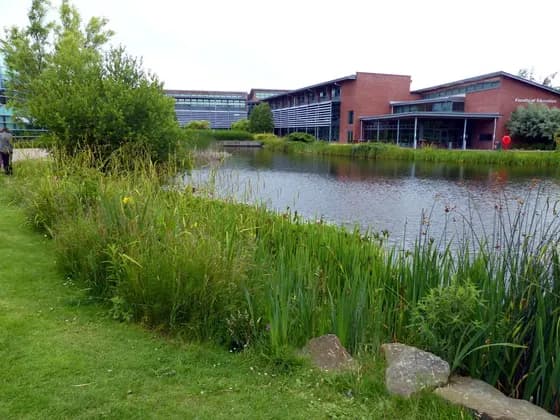
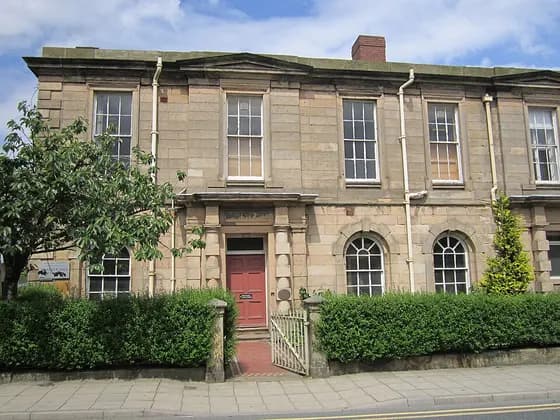
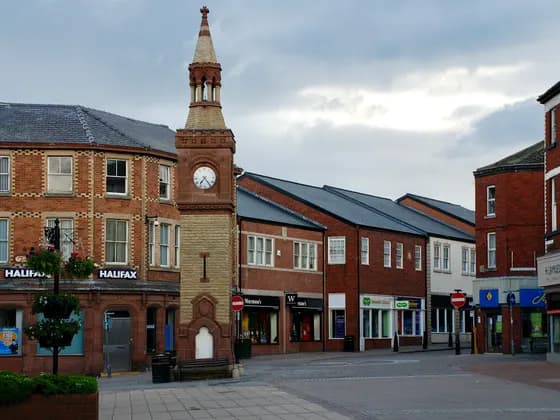
Photo: Bryan Pready / geograph.org.uk · CC BY-SA 2.0 · cropped
Photo: Norman Caesar · CC BY-SA 2.0 · Photo: Rept0n1x · CC BY-SA 3.0 · Photo: Uli Harder · CC BY-SA 2.0
The Edge Hill medicine course at a glance (2027 entry)
Edge Hill University's MBChB is a five-year medical degree taught on the university's campus in Ormskirk, Lancashire, with placements across the North West of England. Edge Hill won government funding in 2018 to open a medical school and train more doctors for the region. The school opened in 2019 and has trained doctors since 2020. Its first students graduated in July 2025.
In April 2025 the General Medical Council (GMC), which regulates doctors and medical schools in the UK, formally approved the school. That means Edge Hill can now award full UK medical degrees in its own right, and its graduates can apply to the GMC for provisional registration as doctors.
Each of the five years has its own theme. You start with the healthy body and the communities people live in, and finish with an apprentice-style year working inside hospital teams. There are no separate modules. Instead, 16 themes such as patient safety, prescribing and communication run through every year. They are mapped to the GMC's Outcomes for Graduates, the national list of what every new doctor must be able to do.
In Years 1 and 2 you learn mainly through case-based and team-based learning in small groups, backed by lectures, science practicals and clinical skills sessions. The course gives real weight to community care and mental health, not only to hospital medicine and surgery. Clinical learning starts in Year 1, in community health settings.
From Year 3 until you graduate you are based at one home trust: either Mersey and West Lancashire Teaching Hospitals (MWL) or Wrightington, Wigan and Leigh Teaching Hospitals (WWL). A trust is the NHS organisation that runs a group of local hospitals and services. The school is small but growing: funded places rose from 30 to 63 a year by 2025/26.
| Degree | MBChB (Bachelor of Medicine, Bachelor of Surgery) |
|---|---|
| Course length | 5 years full time, or 6 with the Foundation Year |
| UCAS code | A100 (A110 for the Foundation Year route) |
| Main campus | Edge Hill University, Ormskirk, Lancashire |
| Places | 63 funded UK medical places from 2025/26, up from 30 |
| Teaching style | Case-based and team-based learning in Years 1 and 2 |
| First patient contact | Clinical learning in community health settings from Year 1 |
| Clinical base | One home trust, MWL or WWL, for Years 3 to 5 |
| Anatomy resources | Faculty skills centre room with 2 Anatomage virtual dissection tables and 2 ultrasound scanners |
| Medical Licensing Assessment (MLA) | National exam all UK medical students must pass; both parts sat in Year 5 |
What makes Edge Hill medicine different
One home trust for all three clinical years
From Year 3 to Year 5 you stay at either MWL or WWL instead of moving hospital for each rotation. You also keep one educational supervisor throughout, a senior doctor who oversees your progress and wellbeing on placement. When the GMC visited in January 2025 it listed this as working well. Clinicians were more invested, they could track each student's progress, and students felt part of the clinical team sooner.
Community and mental health care from the start
Placements focus on community and mental health settings as well as medicine, surgery and other hospital specialties. Year 2 is themed around the different places people receive care. It includes a placement with a voluntary organisation that you find and arrange yourself, to show how health and social care happens outside NHS buildings.
Case-based and team-based learning in a spiral curriculum
In Years 1 and 2 most of your learning happens in small groups working through patient cases and team exercises, with lectures and practicals around them. The curriculum is a spiral: topics come back each year at a deeper level. So the normal body function you learn in Year 1 returns as disease in Year 2, and later as real patients on placement.
Consolidation weeks back on campus between placements
Once most of your time is on placement, you return to the university at regular intervals for consolidation weeks. They cover public health, research methods and professionalism, extra clinical skills and simulation before your next placement, learning with other health students, reflection, careers support and time with your personal tutor.
A simulation centre next to the Medical School
The Clinical Skills and Simulation Centre sits beside the Medical School and is shared with the rest of the faculty, including its nursing, midwifery and social work courses. It has a mock ward, an operating theatre, consultation rooms, a flat for home-care scenarios and full-body simulators that breathe and have pulses. Its anatomy and ultrasound room has two virtual dissection tables and two ultrasound scanners.
How Edge Hill teaches medicine
Teaching combines lectures, seminars, science practicals, clinical skills and simulation sessions, tutorials and placements in local healthcare settings. In Years 1 and 2 the main approach is a hybrid of case-based learning (CBL) and team-based learning (TBL). Both put you in small groups solving problems, so you practise the questioning and reasoning a doctor uses rather than only memorising facts.
The curriculum is non-modular, which means there are no separate modules that you pass one at a time. In Year 1 you still work through the body one system at a time, from the heart and lungs to the gut and brain. A student profiled by Edge Hill says specialist doctors teach their own system, so a cardiologist teaches the heart.
Alongside the body systems, 16 themes run across all five years. They range from applying biomedical science and prescribing safely to safeguarding, which means protecting vulnerable patients from harm. Others cover leadership, the law and how the health services of England, Scotland, Wales and Northern Ireland work.
From Year 3 the balance shifts to placements at your home trust, with consolidation weeks on campus in between. Your teachers include doctors from medical and surgical specialties, mental health and primary care staff, biomedical scientists, psychologists, sociologists, public health specialists, legal experts, nurses and pharmacists. Patients, carers and senior clinicians also teach specialist topics.
You also learn with students from other health courses, which is called interprofessional learning. When the GMC visited in January 2025 it found this well embedded on placement, where students join ward rounds and team meetings with nurses, midwives and other staff. The wider faculty also runs larger joint events on campus, but in 2024/25 changes to the nursing course made these harder to timetable. The school told the GMC it still had work to do here.
The ways you will learn
| Case-based learning (CBL) | Your group works through a realistic patient case and decides what you need to know to understand and manage it. It ties the science to the kind of problem you will later meet on a ward or in a GP surgery. |
|---|---|
| Team-based learning (TBL) | You prepare before the session, take a short test on your own, then take the same test as a team, and finally apply the material to problems together. It rewards steady preparation and working well with others. |
| Lectures and science practicals | Lectures give the framework for each topic, and practical sessions support the science. The biomedical subjects the course lists include anatomy, physiology, biochemistry, genetics, immunology, microbiology, pathology and pharmacology. |
| Clinical skills and simulation | In the skills centre you practise examinations, procedures such as taking blood, and emergencies on simulators before doing them for real. Each scenario is followed by a guided debrief, and classmates watching on screens give feedback. |
| Placements with a supervisor | Short placements in Years 1 and 2 give way to long stretches at your home trust from Year 3. There, the GMC understood placement leads to act as your day-to-day clinical supervisors, overseeing your work on the wards. Some WWL students were unsure about this in 2025, so the GMC asked the school to spell out each role. |
A typical week on the Edge Hill course
Contact hours change from week to week, but you should expect to be in five days a week. Teaching can be timetabled on any day, although Wednesday afternoons are normally kept free for sport and cultural activities.
Your first-week timetable usually arrives at the end of August, and you get the rest of the year's timetable during your first week. From Year 3 most weeks are spent on placement, broken up by consolidation weeks back on campus.
How anatomy is taught at Edge Hill
Year 1 concentrates on the normal structure and function of the whole body, taught system by system. Anatomy then continues as one of the threads that run from Year 1 to Year 5, and a student profiled by Edge Hill says the same teachers take it each year. In its 2024/25 report the GMC noted that the school was strengthening several of these threads, including anatomy, pharmacology, and immunology and microbiology.
The faculty's Clinical Skills and Simulation Centre, which all its health and social care courses use, has an anatomy and ultrasound room with two Anatomage tables. These are 3D visualisation systems that work as virtual dissection tables: you cut through the body layer by layer on screen to reveal each structure. They also hold CT and MRI scans, so you can link anatomy to the images doctors use to spot disease.
The same room has two ultrasound scanners. They show organs such as the liver, gall bladder and pancreas, and moving structures such as tendons and blood flowing through arteries and veins. The centre's own page presents this technology as part of a wider move away from dissection.
When you first meet patients at Edge Hill
Clinical learning starts in Year 1, with an early focus on community health settings. A student profiled on Edge Hill's website describes Year 1 as a series of one-day placements across the health system, from mental health services to home-care services.
Year 2 brings more clinical exposure in general practices and hospitals. The same student describes four one-week placements in general practice, psychiatry, general medicine and general surgery, including a first visit to an operating theatre.
From Year 3 you are mostly on placement at your home trust, caring for specific patient groups in hospital and community settings. By Year 5 you work as an apprentice to the team, taking on more and more responsibility for patients under supervision.
Year by year at Edge Hill
- Year 1
The Person and the Community
Year 1 builds your understanding of the healthy body and of the people and places behind health. You study normal structure and function through seven body systems, with a grounding in public health and social science. The aim is to understand health, normal variation and diversity before you focus on disease.
- Seven core systems: endocrine, musculoskeletal, cardiovascular, respiratory, gastrointestinal, urogenital and neuroscience.
- Public health and social science: how people's circumstances and the places they live shape their health.
- Small-group case-based and team-based learning, with lectures, science practicals and clinical skills sessions.
- Early clinical learning in community health settings, described by one student as a run of one-day placements.
- Year 2
Understanding Where and How People Receive Health Care
Year 2 moves from how the body works to illness and wellbeing, and to the different settings where people get care. Clinical exposure grows to include general practices and hospitals.
- Learning about illness and wellbeing, building on the normal function covered in Year 1.
- Four one-week placements in general practice, psychiatry, general medicine and general surgery, as described by a current student.
- A voluntary organisation placement you research and arrange; past hosts include Cancer Research UK, The Brain Charity, Food Cycle and Gorse Hill Nature Reserve.
- A community-related project.
- Year 3
Integrative Care Within Multi Disciplinary Teams
Year 3 is the first year based mainly at your home trust. You learn about care for specific patient groups in hospital and community settings, and how doctors work with other health and social care professionals to deliver care built around the person.
- Most of the year on placement at your home trust, where you stay until the end of Year 5.
- Consolidation weeks at the university to develop clinical reasoning, with skills and simulation teaching ahead of each placement.
- Two two-hour neurology teaching sessions. That learning is revisited and assessed in Year 4 written exams and Objective Structured Clinical Examinations (OSCEs), timed practical exams with a station for each clinical task.
- Practical procedures recorded in your e-portfolio, your online record of skills and feedback, noting whether you did them under direct or indirect supervision.
- Year 4
The Patient Journey: the Interface Between Primary and Secondary Care
Year 4 has a stronger clinical emphasis across a range of specialties. You look at how care passes between GP surgeries and community services (primary care) and hospitals (secondary care), and think about where each patient is best treated.
- Specialty placements, including palliative care, the care of people whose illness cannot be cured, focused on comfort. Year 4 students described these placements very positively to the GMC in January 2025.
- Another two neurology teaching sessions, then a neurology placement at the end of the year.
- A formative OSCE in January: a practice clinical exam that gives you feedback but does not count towards progression.
- Workplace-based assessments on placement: 13 observed procedures (DOPS) and 13 observed patient encounters (mini-CEX), under the school's 2024 plans.
- Year 5
Preparedness for Practice
Year 5 is an apprentice year. Under supervision you take increasing responsibility for patient care, and you prepare for both parts of the MLA and for your first job as a doctor.
- Student assistantships, where you work as part of a team and take on many of a junior doctor's tasks under supervision.
- A specialist placement and a focus on acute medicine, the urgent assessment and treatment of patients who become suddenly unwell.
- Both parts of the Medical Licensing Assessment: the Applied Knowledge Test and the Clinical and Professional Skills Assessment.
- Another 13 DOPS and 13 mini-CEX under the same 2024 plans, judged at the level expected of a new foundation doctor, a doctor in the first two years after graduating.
- In 2025 the year was planned to end with two weeks of simulation in late June, including a bleep-holding exercise that mimics carrying a junior doctor's pager.
- In January 2025 final-year students told the GMC they had only a week between graduation and starting work as doctors. The GMC advised the school to revisit this timing.
How you are assessed at Edge Hill
You are assessed through research projects and written assignments, written exams and OSCEs. In an OSCE you move through timed stations. Each station sets a task, such as taking a history or examining a patient, while an examiner marks you. Your skills and professionalism are also assessed on placement and through a portfolio.
You must pass every assessment component in a year to move on to the next. Professionalism is assessed throughout the course and recorded on a dashboard reviewed by a Professionalism Assessment Panel. You must pass every part of it, including your workplace-based assessments, before you can sit the final licensing exams.
Since 2024-25, every UK medical graduate has had to pass the GMC's Medical Licensing Assessment (MLA). At Edge Hill you sit both parts in Year 5. The Applied Knowledge Test (AKT) is the national written exam set by the Medical Schools Council: two computer-based papers of 100 single best answer questions, where you pick the most appropriate of several options. Each paper lasts two hours, and you sit them on consecutive days.
The Clinical and Professional Skills Assessment (CPSA) is Edge Hill's own final OSCE. As designed in 2024, when the GMC accepted it before the school had run one, it has 12 stations over two days. Each lasts 12 minutes with two minutes' reading time and uses simulated patients, people trained to play patients. To pass you need a high enough overall score and must pass at least two-thirds of the stations.
Final-year students also take the Prescribing Safety Assessment (PSA), a national online test of safe prescribing. In January 2025 the first final-year students told the GMC they had not felt well prepared for it, because pharmacology from Year 1 had not carried into the clinical years. They said a new pharmacology lecturer had improved things, and also named infectious diseases, dermatology and haematology as thinly covered.
You can normally repeat a year only once in Years 1 to 4. An extra repeat of Year 5 may be allowed to give you two further attempts at the MLA.
Where you will actually be at Edge Hill
All placements are in the North West of England. You pay your own travel and parking costs on placement. In 2024/25 the GMC noted that the university offered students a travel bursary, and that eligible students could claim NHS travel and accommodation support in their fifth year of study. You are given scrubs when a placement calls for them.
Placements are managed through InPlace, the faculty's online placement system, which you can check at any time from on or off campus.
In Years 1 and 2 placements are short and varied, in community services, general practices and hospitals. From Year 3 you are placed at one of two home trusts until you graduate. In January 2025 MWL was hosting 45 Edge Hill students, 11 of them in Year 5, and had committed to taking half of new Edge Hill students in future.
Your home trust is your base, not your only site. You still go to specialist centres for some topics, such as neurology, and to GP surgeries and mental health services. Mental health educators told the GMC that students learn in clinics, on wards and by shadowing in the community.
At MWL each educational supervisor the GMC met looked after up to three Edge Hill students, usually one each from Years 3, 4 and 5. MWL educators said three years on one site gives students time to catch up on anything missed. Final-year students at WWL said their learning outcomes were largely achievable, but that finding the chances to meet them was mostly up to them.
Mersey and West Lancashire Teaching Hospitals NHS Trust (MWL) is one of the two home trusts for Years 3 to 5. Whiston Hospital is where the GMC met final-year Edge Hill students and educators in January 2025, and where a graduate profiled by Edge Hill was based.
- Whiston Hospital
Wrightington, Wigan and Leigh Teaching Hospitals NHS Foundation Trust (WWL) is the other home trust. The GMC met final-year students and educators at the Royal Albert Edward Infirmary.
- Royal Albert Edward Infirmary, Wigan
Shorter specialist placements outside your home trust. The school's clinical lead for neurology is also placement lead at The Walton Centre. A graduate profiled by Edge Hill also describes visiting Alder Hey Children's Hospital.
- The Walton Centre
Mersey Care NHS Foundation Trust runs community and mental health services across Merseyside and parts of Lancashire and Cheshire. The GMC names it as a provider where time to teach Edge Hill students is written into educators' job plans.
- Mersey Care NHS Foundation Trust
GP practices across the region host placements, including some new to teaching medical students. In January 2025 final-year students told the GMC they were still sent to some practices whose teaching they had repeatedly rated as poor. The GMC asked the school to tighten its checks; a planned lead GP for each area was not yet in place.
Examples of organisations that have hosted the Year 2 voluntary organisation placement, which you research and arrange yourself.
- Cancer Research UK
- The Brain Charity
- Food Cycle
- Gorse Hill Nature Reserve
Electives and chosen modules at Edge Hill
The main choice built into the early years is your Year 2 voluntary organisation placement. You research and arrange a placement with a charity or community group, where you work in a team, practise communicating with service users and see how people experience health outside the NHS.
In Years 1 to 3 you can apply for a four-week summer research internship in August, working 37 hours a week with an Edge Hill research team on one of its projects. In 2026 there were ten places, funded by the National Institute for Health and Care Research (NIHR), the government-funded body that pays for health research. Each came with a stipend, a payment to live on, of about £1,889.
To apply you must have passed all of that year's summative assessments, the exams that count towards moving up a year, and have no outstanding professionalism concerns. Students profiled by Edge Hill describe screening studies for systematic reviews, which gather all the research on a question, and analysing data. One project looked at children's experiences of having blood tests.
An elective is a placement you arrange yourself, often abroad. A graduate profiled on Edge Hill's website describes spending her Year 4 elective in primary care on Vancouver Island, Canada.
Intercalation at Edge Hill
Intercalating means taking a year out of your medical degree to earn another qualification. At Edge Hill you can apply to do this between Year 3 and Year 4. You spend 12 months, from September to the end of August, on a master's degree at Edge Hill, then rejoin the MBChB at the start of Year 4.
You can choose a Masters by Research (MRes), which is built around a research project, or one of six other master's courses. These are MSc Public Health Nutrition, MSc Child and Adolescent Mental Health and Wellbeing, MSc Data Science and Artificial Intelligence, and MSc Sport, Physical Activity and Mental Health. The others are MSc Psychology (Conversion) and MA Education (Children and Young People's Mental Health).
To be considered you must have passed all your Year 3 summative assessments and have no outstanding professionalism concerns. Places are limited. Edge Hill says every successful applicant receives a stipend of £19,162 over the 12 months, paid monthly and funded by the NIHR.
You rejoin Year 4 whatever the result of your master's. The final deadline is the end of August and Year 4 starts in the first week of September, so the school advises finishing by mid-August to get a break. You can apply for both an intercalation and a summer internship, but only one can succeed, and the intercalation takes priority.
Facilities and support at Edge Hill
Where you will learn
The £14m Faculty of Health and Social Care building in Ormskirk has ten teaching rooms, an 860-seat lecture theatre and social learning spaces. A student profiled on Edge Hill's site says her lectures are held there.
The Clinical Skills and Simulation Centre recreates settings from a patient's home to an operating theatre. It has a ward with piped air that acts as oxygen for deteriorating-patient scenarios, and an operating theatre used for teamwork and communication scenarios. There are also consultation rooms and a large skills space. Its trainers cover airway care, taking blood, abdominal examination and arterial blood gases, a blood sample from an artery that shows how well the lungs are working.
Twelve small debrief rooms let several scenarios run at once. Students watching on screens then join a guided debrief with those who took part. Full-body simulators of all ages breathe and have pulses and heart and lung sounds, and staff voice them from a control room. The first floor has eight OSCE bays and five consultation rooms for exams.
The Better at Home suite is a flat used for home-care scenarios. It was built in collaboration with Alder Hey Children's Hospital for the WellChild charity, to teach parents how to care for children after they leave hospital. Members of the public and service users play patients in sessions, adding realism and feedback.
The centre is busy. In January 2025 the GMC heard that rising student numbers across the faculty had pushed the simulated skills suite past capacity. The Medical School was looking at other sites to ease the pressure.
Support while you study
In Years 1 and 2 your main academic and pastoral contact is a personal academic tutor on campus. From Year 3 the educational supervisor at your home trust takes over, and stays with you until you graduate. The GMC expected this change to help with placement problems that campus tutors could not always solve. The course page still lists contact with your personal tutor as part of the consolidation weeks on campus.
The school has a Senior Academic Lead for Student Wellbeing and Support. It has separated its health and wellbeing committee from its conduct committee, which staff told the GMC had increased students' attendance and engagement. Its October 2023 admissions supplement also names a Disability Liaison Lead and an Equality, Diversity and Inclusion Lead.
When the GMC visited in January 2025, a 24/7 student helpline and a flexible leave policy for medical students were about to be introduced. Final-year students also had a voluntary MLA club: twice-weekly evening revision sessions on Microsoft Teams, recorded and shared online. Students said it had helped their learning a great deal.
Is the Edge Hill course right for you?
This course may suit you if
- You want to settle at one hospital trust for your three clinical years and get to know its staff, rather than moving site for every rotation.
- You are interested in general practice, community care and mental health as well as hospital medicine and surgery.
- You learn well by working through cases in small groups and preparing ahead for team sessions.
- You want a campus course where the simulation centre is next to the Medical School and the year group is around 63 funded places.
- You are from the North West, or want to be, and like the idea of training in the communities you may later serve.
Things to think about
- Placements are spread across the North West and you pay your own travel and parking. In 2024/25 the GMC noted that the university offered students a travel bursary, and that eligible students could claim NHS travel support in their fifth year of study.
- Your home trust is fixed for Years 3 to 5, so most of your hospital experience comes from one trust, with specialist visits elsewhere.
- It is a young school. In 2025 the GMC asked it to improve its OSCEs, OSCE feedback and the sequencing of teaching. Final-year students felt underprepared for the prescribing exam, though a new pharmacology lecturer had helped, and found dermatology and haematology thinly covered.
- Places have more than doubled, from 30 to 63, and in 2025 the GMC noted that the skills centre was over capacity and regional placements were congested.
- Learning in the clinical years can be self-directed. In January 2025, final-year students at the Wigan trust (WWL) told the GMC that their learning outcomes were largely achievable but that finding the chances to meet them was mostly up to them.
- The quality of GP placements can vary. In 2025 final-year students told the GMC that their poor ratings of some practices had not been acted on, and the GMC asked the school to tighten its checks.
Edge Hill medicine course — frequently asked questions
Applying to Edge Hill?
How to get into Edge Hill
Entry requirements, UCAT, personal statement and interview, step by step.
Open the guide →Edge Hill UCAT cut-offs and offers
UCAT cut-offs, A-level offers, interview format and decision dates.
See the requirements →Compare Edge Hill with other schools
Put the teaching style, anatomy teaching and placements next to another school.
Open the comparison →Prepare for the Edge Hill interview
Format breakdown, school-specific sample questions and prep tips from tutors who interviewed here.
Read the guide →Where this Edge Hill course guide came from
This guide was written from 23 official sources — Edge Hill University's own course pages and programme documents, plus the regulator and NHS placement partners where they publish detail — read on 2026-09-24, then checked claim by claim against those sources.
- Medicine MBChB (A100) course page, Edge Hill University
- Medicine with Foundation Year MBChB (A110) course page, Edge Hill University
- Undergraduate Medicine subject page, Edge Hill University
- Medical School department page, Edge Hill University
- Voluntary organisation placement, Edge Hill University Medical School
- Clinical Skills and Simulation Centre facilities, Edge Hill University
- Faculty of Health, Social Care and Medicine placements (InPlace), Edge Hill University
- Academic Regulations 2025/26, Edge Hill University
- MBChB and MBChB with Foundation Year Admissions and Selection Supplement, October 2023
- Medical School granted GMC approval, Edge Hill University news, April 2025
- First cohort of medical students graduate, Edge Hill University news, August 2025
- Medicine: A Gateway to Global Opportunities, Edge Hill University, March 2025
- Government awards Edge Hill additional medical places, Edge Hill University news, May 2024
- Ellena Briggs, Medicine MBChB graduate profile, Edge Hill University
- Eleni Liami, Medicine with Foundation Year student profile, Edge Hill University
- Ellie Middleton, MBChB research internship student profile, Edge Hill University
- GMC Quality Assurance Report for Edge Hill University Medical School, 2024/25 (visits January 2025)
- GMC MLA Applied Knowledge Test compliance decision, Edge Hill, June 2024
- GMC MLA Clinical and Professional Skills Assessment compliance decision, Edge Hill, May 2024
- MBChB Undergraduate Intercalations, Edge Hill University
- MBChB Undergraduate summer research internship placements, Edge Hill University
- Integrated Clinical Academic Training Office, Edge Hill University
- Who we are, Mersey Care NHS Foundation Trust
Courses are restructured between cycles. Anything here that decides your application — an anatomy offer, a placement city, a compulsory intercalated year — should be confirmed against the official page for your entry year.
Applying to Edge Hill?
We have helped hundreds of applicants turn their UCAT, personal statement and interview prep into offers from Edge Hill and other UK medicine schools.