
Edge Hill Medicine Interview
Format, Questions & Prep Tips
Edge Hill medicine interviews for 2027 entry are multiple mini interviews (MMI). Published figures: Selection test UCAT ranking for interview; SJT Band 4 rejected; First cohort 2020.
- Institution
- Edge Hill University
- Interview (2027 entry)
- Not yet published for 2027 entry (interview details TBC)
- Decisions (2027 entry)
- Offers to top-ranked candidates soon after interviews (dates not published)

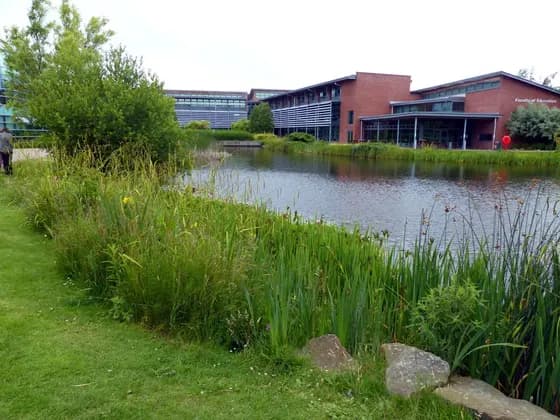

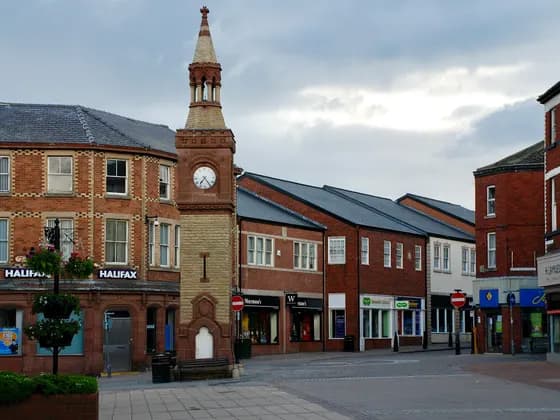
Photo: Bryan Pready / geograph.org.uk · CC BY-SA 2.0 · cropped
Photo: Norman Caesar · CC BY-SA 2.0 · Photo: Rept0n1x · CC BY-SA 3.0 · Photo: Uli Harder · CC BY-SA 2.0
Still deciding where to apply? Hear it from a student who's there
Edge Hill University Medical School in Ormskirk admitted its first MBChB cohort in 2020. Selection for 2027 entry is via multiple mini-interviews (MMIs) after UCAT ranking; Edge Hill currently lists interview details as to be confirmed, so check the course page for format and dates.
Edge Hill is built around a clear widening-participation mission. The school actively recruits from Lancashire, Merseyside and Greater Manchester, with placements across Mersey and West Lancashire Teaching Hospitals, Wrightington, Wigan and Leigh, and a wide GP network.
The MMI probes the school’s core values directly: commitment to the region, ability to communicate across socio-economic difference, and motivation for a newer school that is shaping its identity around access. Interviewers tend to be friendly but probing — they want to know whether you will commit to Edge Hill rather than treat it as a route of last resort.
Edge Hill interview key facts (2027 entry)
| Interview format | MMI |
|---|---|
| Selection test | UCAT ranking for interview; SJT Band 4 rejected |
| First cohort | 2020 |
Interview Format
- Multiple mini-interviews (MMIs); each station is scored and scores are combined to rank applicants
- Attributes assessed include motivation for Edge Hill, communication, integrity, teamwork, empathy, ethics, prioritisation and interpretation of data
- Strong widening-participation ethos throughout the assessment
- Selectors include people from health, clinical, academic and lay backgrounds
- UCAT ranking decides interview invitations; threshold extended for widening-participation and WAM applicants
- Placements across Mersey and West Lancashire, Wrightington, Wigan and Leigh
- Interview format and dates listed as "TBC" for 2027 entry — confirm on the course page and your invite
Sample Interview Questions
Why Edge Hill for medicine?
Reference the widening-participation mission, the small cohort, the Lancashire/Merseyside placement network, and the school's newer identity.
What attracts you to a newer medical school with a smaller cohort?
Closer faculty contact, peer support, fresh curriculum design — but acknowledge the trade-off of a less established alumni network.
Should medical schools actively prioritise applicants from areas of low participation in higher education?
Engage with both sides — fairness, evidence on academic potential, NHS workforce needs. Edge Hill's identity is built around this.
You are a peer mentor. A first-year student from a non-traditional background tells you they feel they don't belong at medical school. (Actor present.)
Active listening, normalising imposter feelings, signposting wellbeing and personal tutor, sharing without minimising.
Describe a time you helped someone overcome a barrier to opportunity.
Concrete example. Show what you did and what you learned. Edge Hill values demonstrated commitment to access.
Here is data on UCAT scores by school type. What does it suggest, and what limitations does it have?
Describe trends, comment on prep access, acknowledge the role of contextual offers in mitigating bias.
A patient in a deprived area refuses smoking-cessation support repeatedly. Should the NHS withdraw it?
Engage with autonomy, evidence on repeated offers, the role of trust and the cost-effectiveness of cessation services.
What do you know about the Edge Hill MBChB curriculum?
Integrated five-year programme, early clinical contact, regional placements. Show you have read the prospectus.
Tell us about a time you adapted your communication for a younger or older audience.
Specific example with reflection. Edge Hill placements span ages and demographics widely.
Explain to a worried family member why their elderly relative is being discharged from hospital today. (Actor present.)
Empathy, plain language, address specific concerns, signpost community support and follow-up.
A friend offers you their old A-Level notes to help you revise. Their school is known for very high grades. Is this fair?
Engage with fairness, your own preparation, and the wider question of resource access in education.
Why does early clinical contact matter for medical students?
Builds context for basic science, develops professional identity, exposes students to chronic care and community medicine.
Tell us about a time you handled criticism well.
Real example with reflection. Small cohorts mean feedback is frequent and personal.
Would you stay and practise in the North West after qualifying?
Honest answer. Edge Hill values graduates likely to remain in the region but does not punish honesty.
Practise the Edge Hill interview
Rehearse the real format before the day — on demand with our AI interviewers, or live with a tutor.
Sit a mock with photoreal AI interviewers — any time
A timed MMI or panel interview on video — British & international voices — with interviewers who listen, react and press with follow-ups. Rubric-scored feedback and a replay the moment you finish.




Live mocks with a tutor who’s been in the room
A full Edge Hill-style mock with a medic or dentist tutor — honest scoring against real marking criteria, a station-by-station debrief and a written action plan.
Book a mock interviewHow to Prepare
Research the widening-participation mission carefully and reflect on your own background.
Understand Lancashire and Merseyside health context — deprivation, coastal communities, ex-industrial demographics.
Practise MMI stations under timed conditions, with full reset between.
Prepare concrete examples for resilience, teamwork and access.
Visit Ormskirk or attend a virtual open day so your motivation feels grounded.
Be ready to defend "why Edge Hill" with specifics, not generalities.
Read up on contextual offers and how Edge Hill uses them.
Invited to interview at Edge Hill? Say your first answer out loud today with the free two-minute warm-up drill, then sit a timed mock set up for Edge Hill.
Common Pitfalls
Frequently Asked Questions
Related guides
Free, evidence-based guides from current UK medical and dental students.
Free Interview Resources
Worked-through MMI stations, ethics scenarios, and panel questions.
Read guideNHS Core Values Guide
The 6 NHS values examiners listen for in every interview answer.
Read guideMedical School Rankings
See interview format (MMI vs panel) for each UK medical school.
Read guideUCAS 2026 Personal Statement
The new three-question format your interviewer will reference.
Read guideContextual Offers for Medicine
Every UK medical school's widening-access scheme in one place.
Read guideSources & official admissions information
We cross-check every interview guide against the school’s own admissions guidance and the UK regulators.
- Edge Hill University — Medicine MBChB (September 2027 start) — Selection stages: academic screen, UCAT ranking, SJT Band 4 rejected; interview and scoring 'Details TBC'
- Edge Hill University Medical School — Supplement to Admissions Policy (PDF) — MMI attributes, station scores combined and ranked, offers soon after interviews
- UCAT Consortium — Official UCAT registration, test format, scoring methodology and free practice materials.
- General Medical Council (GMC) — Statutory regulator. Approved medical schools, the registered-doctor register, and fitness-to-practise standards.
- Medical Schools Council — Selecting-for-excellence guidance, MMI principles, and an A–Z of UK medical schools.
Ready to nail your Edge Hill interview?
Book a mock interview with a current medical student who recently went through the same process, or practise on demand with the AI interviewer.