
The Hertfordshire Medicine course
What you actually study, and where you will be
Hertfordshire's MBBS is a 5-year course taught through case-based learning and problem-based learning, with patient contact from Year 1 and placements in Hertfordshire and Bedfordshire (2027 entry). A brand-new school whose first cohort starts in September 2026, delivered with support from City St George's. Note the entry restriction: initially the MBBS is open to international students only, with around 70 places a year.
- Degree
- MBBS
- Length
- 5 years
- Teaching
- Case-based learning + Problem-based learning
- Clinical contact
- Year 1
- UCAS code
- A100

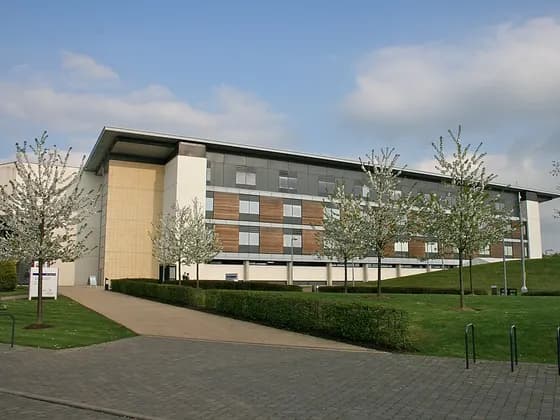
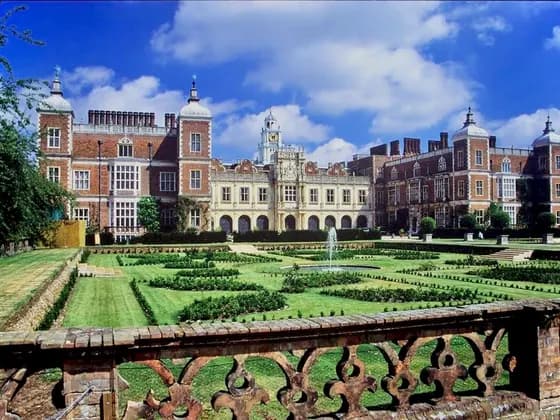
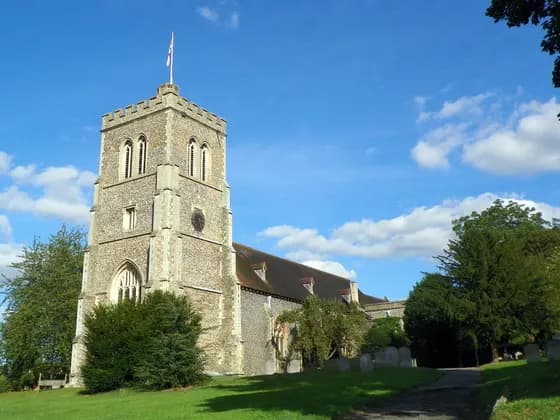
Photo: CybJubal / Wikimedia Commons · CC BY-SA 4.0 · cropped
Photo: Photograph by Mike Peel ( www.mikepeel.net ). · CC BY-SA 4.0 · Photo: Allan Engelhardt · CC BY-SA 2.0 · Photo: AnemoneProjectors - Peter O'Connor ( talk ; Flickr ) · CC BY-SA 2.0
The Hertfordshire medicine course at a glance (2027 entry)
Medicine at Hertfordshire is a five-year MBBS, short for Bachelor of Medicine, Bachelor of Surgery. It is taught by Hertfordshire Medical School, part of the university's School of Health, Medicine and Life Sciences, on the College Lane campus in Hatfield. The university describes it as the first medical school in Hertfordshire.
The course is brand new: the first students arrived for a three-week induction on 14 September 2026, and teaching started on 5 October. For 2026 and 2027 entry it is open to international applicants only, with up to 70 places a year in this phase. The university says it will admit UK students once government funding for extra medical school places is secured.
City St George's, University of London, supports the course. The General Medical Council (GMC), which regulates doctors and approves medical degrees, checks every new UK medical school each year. It follows a new school's first cohort from Year 1 to graduation, and only then can it approve the school to award medical degrees. For Hertfordshire that point is expected in 2031. If approval were not given, students would transfer to City St George's, the contingency partner, to finish their degree.
Years 1 and 2 teach the core sciences, such as anatomy, physiology and biochemistry, through a different clinical case each week. This is case-based learning (CBL): a small group works through a structured patient case that comes with defined learning goals. Year 3 alternates problem-based learning (PBL) units on campus with placements. In PBL the group decides for itself what it needs to learn from a patient problem. Years 4 and 5 are built around clinical placements.
You are patient-facing from the second term of Year 1, and placements grow from short blocks in Years 1 and 2 to most of Years 4 and 5, mainly in Hertfordshire and Bedfordshire. On campus you practise in a six-bed simulated ward and learn anatomy from a virtual dissection table and preserved human specimens. You also share some teaching with students on the university's other health courses.
| Degree | MBBS (Bachelor of Medicine, Bachelor of Surgery) |
|---|---|
| Course length | 5 years full time (6 with an intercalated MSc) |
| UCAS code | A100 (institution code H36) |
| Who can apply | International applicants only for 2026 and 2027 entry; UK places depend on government funding |
| Cohort size | Up to 70 a year in the current international-only phase |
| Main campus | Hertfordshire Medical School building, College Lane campus, Hatfield |
| Teaching style | Case-based learning in Years 1–2; problem-based learning units in Year 3 |
| Anatomy | Anatomage virtual dissection table, models and 107 plastinated specimens |
| First patient contact | Patient-facing from the second term of Year 1 |
| Placement area | Mainly Hertfordshire and Bedfordshire; also Essex and Cambridgeshire |
| GMC status | New school under GMC review; first graduates expected 2031 |
What makes Hertfordshire medicine different
Patient-facing from the second term of Year 1
Years 1 and 2 include three two-week clinical attachments, one of them in general practice, the family doctor service. The school says first-year students are already observing GP consultations and taking patient histories. The skills you practise on campus are used with real patients long before the placement-heavy final years.
Anatomy through virtual dissection and plastinated specimens
Anatomy uses an Anatomage table, a table-sized touchscreen showing real human bodies that you can take apart on screen, layer by layer, alongside 107 plastinated specimens, which are real human tissue preserved with plastic. Anatomical models and 3D printing are also used.
A Transition Year that eases you onto the wards
In Year 3, three five-week PBL units on campus alternate with five-week placements in medicine, surgery and general practice. You move onto the wards in stages rather than all at once.
Learning alongside other health professions
Medical students learn with students from the university's other health courses. Pharmacy students might explain how a drug works while you explain a patient's condition, and later mixed groups work through realistic cases with staff steering the discussion.
A final year built around assistantships
Final-year assistantships in medicine, surgery and general practice pair you one-to-one with a Foundation doctor, meaning a doctor in the first two years after graduating, or with a GP. Short blocks in emergency medicine and in anaesthetics and critical care give you experience with patients who are suddenly or seriously ill before you start work as a doctor.
How Hertfordshire teaches medicine
In Years 1 and 2, the Clinical Science years, each learning week is built around one clinical case. The case ties together three strands that the school calls curriculum themes: Basic Clinical Sciences, Professional Skills, and Patients, Populations and Society. The names describe the science, the practical skills, and the patient and public-health side of each case.
The curriculum is spiral. Key ideas and skills come back several times over the five years, each time in more depth and with more complex patients, which helps you remember them. Alongside group work there are lectures, expert tutorials, anatomy sessions, clinical and communication skills workshops and simulation. Separate sessions cover medical law and ethics, public health and evidence-based practice, and professionalism.
From Year 3 the balance shifts towards the workplace. Year 3 alternates PBL units on campus with clinical blocks, and each block includes a transition to practice element that continues the workplace learning begun in Years 1 and 2. In Years 4 and 5 you learn mainly on placement, supervised and assessed by clinicians at the placement sites. Each Year 4 block includes introductory lectures at the university.
Your teachers include practising doctors, bioscientists, medical researchers and other health professionals, as well as specialists in healthcare ethics, technology and education. Actors trained to play patients help you rehearse consultations, and real patients come in to talk about living with their conditions. Patients and members of the public, whom the school calls service users, are involved throughout the programme.
The ways you will learn
| Case-based learning (CBL) | The main format in Years 1 and 2. Your small group works through the week's clinical case, which comes with defined learning goals. The case gives the week's science a patient to hang on, so what you learn in lectures and the anatomy lab links to a clinical problem. |
|---|---|
| Problem-based learning (PBL) | Used in three five-week units in Year 3. The group is given a patient problem, works out what it needs to find out, researches it independently and then pools what it has learned. It asks you to set more of your own direction than CBL does. |
| Clinical and communication skills sessions | Workshops where you practise taking a history, examining patients and carrying out procedures. You rehearse with classmates, mannequins and simulated patients, who are actors trained to play patients, before doing the same with real patients on placement. |
| Simulation | Sessions in the six-bed simulated ward and the two immersive rooms, which recreate hospital settings. You build clinical and decision-making skills in a realistic but safe setting before using them with real patients. Virtual reality and artificial intelligence software support interactive, team-based exercises. |
| Interprofessional learning | Sessions shared with students from the university's other health courses, which include nursing, midwifery, paramedic science, pharmacy, occupational therapy, radiography and radiotherapy. You learn what each profession contributes to a patient's care and practise the teamwork and shared decision-making that NHS care depends on. |
| Clinical placements | Time in hospitals, GP surgeries and community services in every year of the course. It starts with two-week attachments in Years 1 and 2 and grows to most of Years 4 and 5. You join clinical teams and are assessed on what you do with patients. |
A typical week on the Hertfordshire course
On average you will have 20 to 25 contact hours a week. Contact hours are timetabled teaching such as lectures, group sessions, skills classes and tutorials. Independent study and placement time come on top of this.
The university expects a full-time student to spend about 1,200 hours a year on study, and it publishes how that time splits in each year. The figures show a sharp change after Year 2, from a timetable led by taught sessions to one led by placement and self-directed work.
- Year 1: about 54% lectures, seminars, tutorials and practicals, 42% independent study and 3% placement.
- Year 2: about 54% taught sessions, 38% independent study and 6% placement.
- Year 3: about 15% taught sessions, 52% independent study and 32% placement.
- Year 4: about 6% taught sessions, 21% independent study and 71% placement.
- Year 5: about 1% taught sessions, 48% independent study and 49% placement.
How anatomy is taught at Hertfordshire
Anatomy is part of the core science of Years 1 and 2. On the digital side you use the Anatomage table, a table-sized touchscreen built from real human bodies. You can remove tissue layer by layer on screen, explore structures in 3D and look at disease, such as a diseased lung.
You also study real human anatomy from plastinated specimens. Plastination replaces the water and fat in body tissue with plastic, so a specimen keeps its true structure and can be examined closely. The school holds 107 of them under a licence from the Human Tissue Authority, which regulates the use of human tissue for teaching in England, Wales and Northern Ireland.
Anatomical models and 3D printers complete the set-up. An organ scanned in the lab can be printed as a physical model for detailed study. Anatomy sessions count towards the small-group attendance you need to progress each year.
When you first meet patients at Hertfordshire
The university says students are patient-facing from the second term of Year 1. Year 1 includes the first block of what the school calls Early Years Clinical Experience (EYCE), and the programme specification sets out one two-week clinical attachment that year. Year 2 includes EYCE Blocks 2 and 3, with two further two-week attachments.
One of these early attachments is a two-week placement in general practice, taken in either Year 1 or Year 2. The school says first-year students observe GP consultations and take patient histories, which means asking patients about their symptoms, background and medicines. This replaced an earlier plan for separate three-day GP visits in each of Years 1 and 2.
Before and alongside these attachments you practise on campus with simulated patients and in the simulated ward. From Year 3, placements take up a much larger share of each year, as the placements section below sets out.
Year by year at Hertfordshire
- Year 1
Clinical Science: the foundations
Year 1 is a single 120-credit module, MBBS Year 1 (Clinical Science). It lays the scientific foundations through a new clinical case each week, alongside early communication and examination skills. You start with an induction period and become patient-facing in the second term.
- Subject areas in Year 1: Introduction to Medicine, Life Support, Genomics and Life Maintenance.
- Core sciences including anatomy, physiology and biochemistry, with training in taking a history and examining a patient.
- Early Years Clinical Experience Block 1, with one two-week clinical attachment during the year.
- A Student Selected Component (SSC), a piece of work on a clinical area of your choosing.
- Written exams and a practical assessment. Your Year 1 grade for professionalism and workplace learning (the Becoming a Doctor domain, explained under assessment) now counts towards whether you progress, rather than being feedback only.
- You need your own stethoscope from Year 1.
- Year 2
Clinical Science: building depth
Year 2 is the 120-credit module MBBS Year 2 (Clinical Science). It keeps the case-a-week approach and works through six more subject areas, with more time in clinical settings than Year 1.
- Subject areas in Year 2: Life Protection, Life Control, Life Structure, Life Cycle, Population Health and Evidence-Based Practice.
- Early Years Clinical Experience Blocks 2 and 3, with two two-week clinical attachments.
- The two-week general practice attachment falls in either Year 1 or Year 2.
- A second Student Selected Component, called SSC1.
- Written exams and two practical assessments.
- Year 3
T Year: the Transition Year
Year 3 is the Transition Year, the 120-credit module MBBS Year 3 (T Year). It bridges campus-based science and full-time clinical work. After a shared three-week foundation, you rotate between academic blocks on campus and clinical blocks on placement.
- A three-week foundation for clinical practice at the start of the year.
- Three five-week PBL units on campus, alternating with clinical blocks.
- Five-week placements in medicine, in surgery and in general practice.
- A transition to practice element in each block, plus theme-based teaching in learning weeks.
- Year 4
P Year: specialist placements
Year 4 is the 120-credit module MBBS Year 4 (P Year). You rotate through specialist clinical attachments grouped into four blocks, each including introductory lectures at the university. Placements fill around 40 weeks of the year.
- Five weeks each in obstetrics and gynaecology (pregnancy, birth and women's health), paediatrics (children), neurology (the brain and nerves) and psychiatry. The course page says the neuro attachments also cover neurosurgery (operations on the brain and spine) and neurorehabilitation (recovery after brain or nerve injury).
- Senior medicine: five weeks of medicine, three of geriatrics, which is care of older people, and two of cardiology (the heart).
- Two weeks each in general practice and musculoskeletal medicine, which covers bones, joints and muscles.
- One week each in surgery, plastics and dermatology (skin), palliative care, ear nose and throat, and ophthalmology (eyes). Palliative care focuses on comfort and quality of life for people with serious illness.
- Year 5
F Year: preparing for practice
Year 5 is the 120-credit module MBBS Year 5 (F Year). It prepares you for work as a Foundation doctor and for the national licensing assessment. The year is almost all placement, elective and student-selected work, with teaching on public health.
- A three-day Advanced Clinical Practice Course.
- Five-week assistantships in medicine, surgery and general practice, working one-to-one with a Foundation doctor or a GP.
- Four weeks in emergency medicine and four in anaesthetics and critical care.
- A two-week public health attachment.
- A five-week elective and a five-week final Student Selected Component, called SSC F.
- The Medical Licensing Assessment and the Prescribing Safety Assessment, the national exams you must pass to graduate, explained under assessment below.
How you are assessed at Hertfordshire
Each year of the course is a single 120-credit module, assessed in three domains, or areas: Professional Knowledge, Professional Skills and Becoming a Doctor. Exams and practical assessments are pass or fail, and the Becoming a Doctor domain is graded Acceptable, Borderline, Cause for Concern or Unacceptable. The MBBS carries no degree classification, such as a first or a 2:1. As the GMC requires, good marks elsewhere cannot make up for a failed module.
Professional Knowledge is tested by online written exams. Professional Skills is tested by Clinical Competency Assessments (CCAs), practical exams of your clinical and professional skills. Pass marks for both are set afresh each year using an internationally recognised standard-setting method, which takes account of how hard each exam is.
Becoming a Doctor covers professionalism and learning in the workplace. It draws on your attendance, a professional behaviour assessment, your SSCs and elective, and a portfolio of workplace-based assessments. These include case-based discussions, where you talk a supervisor through a patient you have seen, and the mini clinical evaluation exercise (Mini-CEX), where you are watched with a patient and given feedback. Direct observation of procedural skills (DOPS) checks practical procedures.
In Year 5 you take the Medical Licensing Assessment (MLA), which every UK medical graduate must pass to join the medical register. It has two parts, both run by your school to GMC requirements: the Applied Knowledge Test (AKT), an on-screen multiple-choice exam, and the Clinical and Professional Skills Assessment (CPSA), a practical exam. You must also pass the Prescribing Safety Assessment (PSA), a national online exam that checks you can prescribe medicines safely, for example by writing prescriptions and calculating doses.
Attendance is part of the Becoming a Doctor domain. You must attend at least 80% of small-group teaching, such as CBL and PBL groups, skills sessions, anatomy, tutorials, clinical seminars and placements, and at least 50% of each type. Falling short of 80% can lead to a Cause for Concern grade, where a panel reviews your case, or an Unacceptable grade, which means repeating the year.
If you have not passed everything after the resit period, the Board of Examiners, the panel that confirms results, can let you repeat the year. You retake every assessment, including ones you passed. Repeating is allowed only once in the whole course and gives you one further attempt at the module. If any domain is still graded Unacceptable on that third attempt, you are withdrawn, possibly with an interim award (see the FAQs). Missing required placement hours can also mean repeating the year or leaving the course.
- A Borderline grade in Becoming a Doctor lets you progress once in the whole course. A second Borderline means repeating the year.
- A Cause for Concern grade in Becoming a Doctor at the end of the year means resitting assessments in the resit period.
- An Unacceptable grade in Becoming a Doctor means repeating the year and retaking the assessments in every domain.
Where you will actually be at Hertfordshire
Clinical placements are arranged by the university, and the MBBS programme team decides who goes where. Most placements are in Hertfordshire and Bedfordshire. The programme specification says they can also be in Essex and Cambridgeshire, and the university warns that locations may widen as the programme progresses, so you need to be flexible.
Placement time rises steeply: about 2 weeks in Year 1, 4 in Year 2, 15 in Year 3 and 40 in Year 4. Year 5 has about 35 weeks, a figure that includes the student selected component. The number of placement days a week varies with the setting, your stage and the rota. Some placements involve early starts, evenings, nights or weekends.
Most placement sites can be reached by public transport, but journey times vary. The university estimates travel will cost up to an average of £1,000 a year. In Years 3 to 5 some placements are further away. If you cannot reach one from home in reasonable time, you are expected to find temporary accommodation nearby; the university's example budget is £50 a night, or £1,250 for a five-week block.
Students with a disability, as defined by the Equality Act 2010, get reasonable adjustments and priority arrangements in placement allocation. On placement you are supported by the university's clinical lead, academic placement lead and clinical link tutors, and by educational and clinical supervisors at the placement providers.
Named by the university among the NHS partners behind the school. East and North Hertfordshire Teaching NHS Trust says it is working with the university to establish the school.
- East and North Hertfordshire Teaching NHS Trust
- West Hertfordshire Teaching Hospitals NHS Trust
- Hertfordshire Community NHS Trust
- Hertfordshire Partnership University NHS Foundation Trust
Named by the university as an NHS partner. The trust runs Bedford Hospital and Luton and Dunstable University Hospital. With Hertfordshire, Bedfordshire is where most placements are expected to take place.
- Bedfordshire Hospitals NHS Foundation Trust
Listed in the programme specification as further placement areas, alongside Hertfordshire and Bedfordshire.
A primary care network is a group of neighbouring GP practices that work together. The university says its placements include both urban hospitals and rural practices.
- Up to 30 GPs and local primary care networks
Electives and chosen modules at Hertfordshire
Student Selected Components (SSCs) are parts of the course where you choose the topic, so you can explore an area that interests you in more depth. You complete one in Year 1, one in Year 2 (called SSC1) and a five-week SSC F in Year 5. They are assessed within the Becoming a Doctor domain.
The elective is a five-week placement in Year 5, again shaped around your interests. It can be taken abroad if you are eligible and choose to. You would then pay for travel, accommodation, vaccinations, insurance and any passport or visa costs, and some host institutions charge an administration fee. The university's rough estimate for final-year SSC and elective costs is £1,000.
Intercalation at Hertfordshire
Intercalating means taking an extra year out of the medical course to study for another qualification. At Hertfordshire it is optional. Once you have passed Years 1 to 3, you can apply to spend an extra year between Years 4 and 5. You would study for an MSc, a master's degree, in any subject area at the University of Hertfordshire.
Intercalating would make your time at medical school six years instead of five, and you would return to join the final year afterwards.
Facilities and support at Hertfordshire
Where you will learn
You will be based in the Hertfordshire Medical School building on the College Lane campus in Hatfield. It is an existing university building of about 2,000 square metres, refurbished for medicine between autumn 2025 and autumn 2026. It has classrooms and tutorial spaces for group work, and you also have access to the university's lecture theatres.
The simulated ward has six beds, high-fidelity mannequins and critical care equipment. High-fidelity mannequins are life-size models that can mimic signs such as breathing and heart sounds. Two immersive skill rooms can recreate settings such as an operating theatre or an emergency department, and the building also has virtual and augmented reality equipment.
The building also has a virtual anatomy lab, and its digital anatomy facilities include the Anatomage table. College Lane has a Learning Resources Centre open 24 hours a day, a 24-hour gym and student halls. A new Health Building for the university's other health courses is due to open on College Lane in 2028.
Support while you study
You get a personal tutor who stays with you through to graduation and is an important point of contact for understanding the course and the school. There is an induction at the start of the programme and at the start of each year; in 2026 it ran for three weeks to give new students extra support. International students also get an overseas orientation and an enhanced induction programme.
Each year of the course has its own academic lead, clinical skills lead, communication lead and SSC lead. The School of Health, Medicine and Life Sciences has an Academic Skills Unit, and the university runs Student Success Hubs, including a maths drop-in centre. You keep a Personal Development Plan, a record of your progress and goals, throughout the course.
The school has its own safeguarding lead. Student representatives sit on the programme's academic experience group, where students feed back on the course. Medical students are guaranteed campus accommodation for all five years, as long as they meet application deadlines and their personal needs can be met.
Is the Hertfordshire course right for you?
This course may suit you if
- You want to meet patients early: you are patient-facing from the second term of Year 1, with three short clinical attachments across Years 1 and 2.
- You learn well by working through a patient case in a small group each week, with the science tied to that case.
- You would like a gradual move onto the wards, through a Transition Year that alternates PBL on campus with placement blocks.
- You want to learn anatomy through virtual dissection, plastinated specimens, models and 3D printing.
- You want to train alongside students heading for other health professions.
Things to think about
- The course is brand new. Its first students started in September 2026, and GMC approval to award degrees is not expected until they graduate in 2031, with City St George's as the contingency partner.
- Placements spread across Hertfordshire and Bedfordshire and possibly Essex and Cambridgeshire. Expect commutes, shift patterns and, in Years 3 to 5, possibly paying for temporary accommodation.
- Attendance rules are strict: you need at least 80% attendance at small-group teaching, falling short can mean a panel review or repeating the year, and you can repeat a year only once.
- If dissecting a body yourself matters to you, ask at an open day. The school describes its anatomy teaching through virtual dissection, models and plastinated specimens.
Hertfordshire medicine course — frequently asked questions
Applying to Hertfordshire?
How to get into Hertfordshire
Entry requirements, UCAT, personal statement and interview, step by step.
Open the guide →Hertfordshire UCAT cut-offs and offers
UCAT cut-offs, A-level offers, interview format and decision dates.
See the requirements →Compare Hertfordshire with other schools
Put the teaching style, anatomy teaching and placements next to another school.
Open the comparison →Prepare for the Hertfordshire interview
Format breakdown, school-specific sample questions and prep tips from tutors who interviewed here.
Read the guide →Where this Hertfordshire course guide came from
This guide was written from 15 official sources — University of Hertfordshire's own course pages and programme documents, plus the regulator and NHS placement partners where they publish detail — read on 2026-09-24, then checked claim by claim against those sources.
- Medicine MBBS course page, University of Hertfordshire
- Medicine courses overview, University of Hertfordshire
- Programme specification: Medicine (MBBS), full time, version 2.4 (June 2026), for 2026-27
- Medicine (MBBS) clinical placement information and approximate travel costs
- Building Hertfordshire's Medical School, University of Hertfordshire
- Hertfordshire Medical School welcomes its first cohort of future doctors (September 2026)
- Interview with the Head of Anatomy on early patient contact and anatomy teaching (September 2026)
- Hertfordshire Medical School to train next generation of doctors: NHS partners and cohort size (August 2025)
- New MBBS degree launched at Herts: GMC approval timeline (March 2025)
- Transforming Health and Medicine at Herts: Medical School and Health Building
- GMC: new schools and programmes under review
- GMC: UK students guide to the MLA, taking the MLA
- East and North Hertfordshire Teaching NHS Trust: becoming a teaching hospital
- Bedfordshire Hospitals NHS Foundation Trust: home page
- Prescribing Safety Assessment: about the assessment
Courses are restructured between cycles. Anything here that decides your application — an anatomy offer, a placement city, a compulsory intercalated year — should be confirmed against the official page for your entry year.
Applying to Hertfordshire?
We have helped hundreds of applicants turn their UCAT, personal statement and interview prep into offers from Hertfordshire and other UK medicine schools.