
Hertfordshire Medicine Interview
Format, Questions & Prep Tips
Hertfordshire medicine interviews for 2027 entry are multiple mini interviews (MMI), held November 2026 – April 2027 (2027 entry). Published figures: First cohort September 2026 — up to 70 places, international only; Home (UK) places None for 2027 entry — awaiting government funding for places; Interview format Automated recorded MMI (SAMMI) — 7 questions × 4 minutes, ~50 minutes.
- Institution
- University of Hertfordshire
- Interview (2027 entry)
- November 2026 – April 2027 (2027 entry)
- Decisions (2027 entry)
- After interview — no published timescale

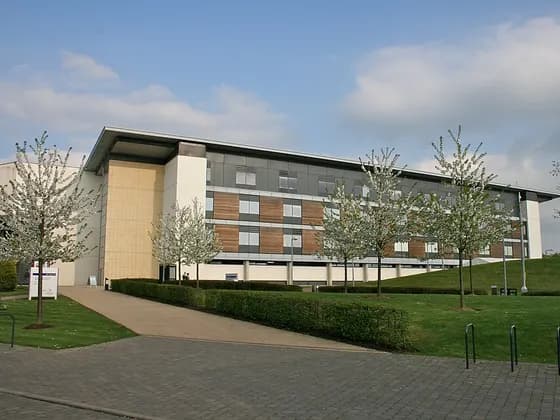
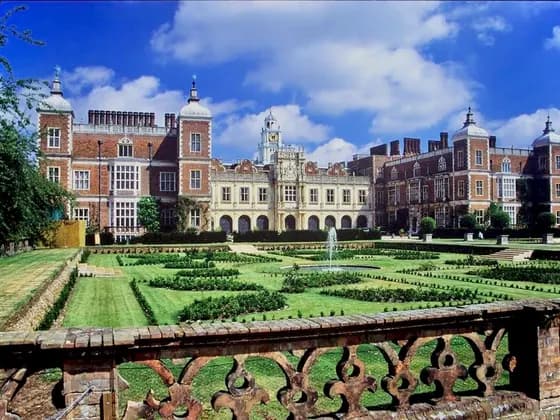

Photo: CybJubal / Wikimedia Commons · CC BY-SA 4.0 · cropped
Photo: Photograph by Mike Peel ( www.mikepeel.net ). · CC BY-SA 4.0 · Photo: Allan Engelhardt · CC BY-SA 2.0 · Photo: AnemoneProjectors - Peter O'Connor ( talk ; Flickr ) · CC BY-SA 2.0
Still deciding where to apply? Hear it from a student who's there
Hertfordshire Medical School — the county's first — welcomes its inaugural MBBS cohort in September 2026, delivered with support from City St George's, University of London. The first cohort is **international applicants only** (up to 70 places): September 2027 entry is international-only too, and Herts says it will open to UK students only once government funding for additional medical school places is secured, so UK applicants should verify before building a UCAS strategy around it.
The interview is an automated, recorded multiple mini interview on the SAMMI platform: seven questions, four minutes each with a one-minute break between, roughly 50 minutes in a single unpausable sitting, self-scheduled within a 14-day window. Questions are read aloud and shown on screen, your answers are recorded to camera and assessed afterwards, and the integrity rules are explicit — no scripts, no off-camera help, no AI-generated answers. Shortlisting for that interview is a pure UCAT rank among academically qualified applicants (AAA including Chemistry AND Biology): the school states outright that it has no cut-off and will not indicate a score, because it varies with each year's field.
Expect the interview to probe motivation, communication and problem-solving — and be ready to discuss your personal statement and your work experience, both of which Hertfordshire says will come up even though the statement itself is not scored. The school's mission is unambiguous: Hertfordshire has around 0.5 GPs per 1,000 patients against roughly 2.8 nationally, and the school exists to train doctors who stay.
Hertfordshire interview key facts (2027 entry)
| First cohort | September 2026 — up to 70 places, international only |
|---|---|
| Home (UK) places | None for 2027 entry — awaiting government funding for places |
| Interview format | Automated recorded MMI (SAMMI) — 7 questions × 4 minutes, ~50 minutes |
| Scheduling | Self-scheduled within a 14-day window; one unpausable sitting |
| UCAT | Required (July–September before applying) — rank-based, no cut-off published |
| Academic bar | AAA including Chemistry AND Biology (IB 36; grads 2:1 any discipline) |
| Support partner | City St George's, University of London (also the contingency school) |
Interview Format
- Automated multiple mini interview delivered online via SAMMI: seven questions, four minutes each, one-minute breaks — about 50 minutes total
- Each question is read aloud by a recorded interviewer and displayed on screen; your responses are recorded and assessed afterwards
- You choose your moment within a 14-day window, but once started you must finish in one sitting — no pausing or re-entry
- A built-in practice question and tech check (Wi-Fi, webcam, microphone) runs before the real thing
- Assesses motivation for medicine, communication skills and problem-solving; expect your personal statement and work experience to be discussed
- Explicit integrity rules: reading from scripts, off-camera help, multiple devices or AI-generated answers are treated as dishonesty
- Shortlisting is a straight UCAT ranking of applicants meeting the academic requirements — no cut-off exists, and the school refuses to estimate one
- Reasonable adjustments must be requested by email within seven days of the interview invitation
Sample Interview Questions
Why medicine — and what in your work experience tested that motivation?
Hertfordshire requires research or actual/virtual work experience and says plainly you will discuss it at interview. Pick one or two moments that changed your understanding of the job, not a list of placements.
Why join a medical school's very first cohort?
Answer with the real trade-offs: brand-new simulation facilities and close staff attention against a school still earning GMC accreditation (first graduates 2031), with City St George's as both support partner and contingency. Knowing that mechanism calmly is exactly the maturity the question screens for.
Hertfordshire has roughly 0.5 GPs per 1,000 patients against about 2.8 nationally. Why does that gap exist, and what does it have to do with you?
The school's founding statistic. Discuss workforce distribution, why doctors settle where they train, and your honest relationship with training in an underserved area — international students included.
Record a four-minute answer: explain to an anxious relative why their father has been moved to a different ward overnight.
Four minutes to a camera with no interviewer reacting — structure is survival. Acknowledge the worry, explain simply, say what happens next, and close before the timer does. Practise with a stopwatch.
Your friend asks you to describe the MMI questions you have just recorded, since their 14-day window ends next week. What do you do?
The self-scheduled format makes this a live integrity scenario, and Hertfordshire's rules name unfair advantage explicitly. Fairness to the field, what your word is worth before you even start medicine, and how to refuse a friend without cruelty.
Is it acceptable to use AI to help prepare — or deliver — your medical school interview answers?
Hertfordshire treats AI-generated answers in the MMI as dishonesty. Distinguish legitimate preparation (practice, feedback, research) from delegated authenticity, and connect to probity in clinical practice.
(Recorded scenario) A fellow first-year, far from home, tells you they haven't left their room in days. Speak as if to them.
A realistic scenario for a pioneering international cohort. Warmth to a lens is a skill: listen (even rhetorically), normalise, suggest one concrete step together, and know the university support routes you'd signpost.
(Possible station) You are shown GP-per-patient ratios for Hertfordshire against national figures. What would you check before drawing conclusions, and what would you do about it?
Problem-solving is a named assessment area. Interrogate definitions (headcount vs full-time-equivalent), demographics and list sizes, then reason toward workforce and training responses — the school's own answer being one.
Tell us about a time you explained something complicated to someone who disagreed with you.
One story, real disagreement, genuine listening. The recorded format rewards candidates who can show a conversation's shape inside a monologue.
A patient on your first-year placement asks you to check a mole "while you're here". What do you do?
Hertfordshire places students clinically from year one. Know your limits, be honest about your role, hand over to the right person, and keep the patient's confidence in the team intact.
You'll learn alongside nursing, midwifery, paramedicine and pharmacy students. What does interprofessional education actually teach a doctor?
The first cohort studies amid Hertfordshire's established health programmes. Go past "teamwork is good": role clarity, respect for others' expertise, safer handovers, flatter hierarchies when it counts.
What will be hardest for you about moving to the UK to study, and what is your plan for it?
An honest question for an international cohort. Homesickness, finances, a new health system — name yours and pair it with concrete preparation, including the guaranteed on-campus accommodation and support services you have actually read about.
Your personal statement says you value resilience. Give us the story behind that sentence.
Hertfordshire doesn't score the statement but says you should be ready to discuss it. Re-read yours before interview day; every claim in it is fair game for a four-minute deep-dive.
Should new medical schools be allowed to recruit students before full GMC accreditation?
The question your own application answers. Weigh the safeguards (annual GMC review, the City St George's contingency guaranteeing a recognised qualification, MLA at the end) against the uncertainty, and land on an informed position.
(Possible station) Case-based learning gives you a patient vignette with three abnormal observations. Talk through how you would approach it.
The curriculum is a hybrid of case-based and problem-based learning. You aren't expected to diagnose — show structured thinking: what you notice, what you'd ask, what you'd look up, who you'd involve.
Practise the Hertfordshire interview
Rehearse the real format before the day — on demand with our AI interviewers, or live with a tutor.
Sit a mock with photoreal AI interviewers — any time
A timed MMI or panel interview on video — British & international voices — with interviewers who listen, react and press with follow-ups. Rubric-scored feedback and a replay the moment you finish.






Live mocks with a tutor who’s been in the room
A full Hertfordshire-style mock with a medic or dentist tutor — honest scoring against real marking criteria, a station-by-station debrief and a written action plan.
Book a mock interviewHow to Prepare
Sit the UCAT in the July–September before you apply and treat it as the entire shortlist — ranking is pure UCAT among qualified applicants, no cut-off exists, and the school explicitly won't estimate one.
Rehearse the exact SAMMI rhythm: seven answers of four minutes into a webcam with one-minute breaks. Record yourself, watch it back, and fix pacing before the real sitting.
Plan the sitting like an exam within the 14-day window: tested Wi-Fi, webcam and mic, quiet room, one unpausable ~50-minute block at your best time of day.
Re-read your personal statement and organise your work-experience reflections — both are explicitly discussable at interview even though the statement isn't scored.
Prepare the mission: Hertfordshire's GP shortage, the East of England placement network, and why the school says doctors stay where they train.
Know the accreditation story cold: GMC annual review until the 2031 first graduation, City St George's support and contingency, and the MLA — informed answers beat nervous ones.
Request any reasonable adjustments within seven days of your invitation, and use the built-in practice question seriously rather than as a tech formality.
UK applicants: September 2027 entry is also international-only, and home places await government funding — check the school's pages before spending a UCAS choice, and note the UCAT bursary if test fees are a barrier.
Invited to interview at Hertfordshire? Say your first answer out loud today with the free two-minute warm-up drill, then sit a timed mock set up for Hertfordshire.
Common Pitfalls
Frequently Asked Questions
Related guides
Free, evidence-based guides from current UK medical and dental students.
Free Interview Resources
Worked-through MMI stations, ethics scenarios, and panel questions.
Read guideNHS Core Values Guide
The 6 NHS values examiners listen for in every interview answer.
Read guideMedical School Rankings
See interview format (MMI vs panel) for each UK medical school.
Read guideUCAS 2026 Personal Statement
The new three-question format your interviewer will reference.
Read guideContextual Offers for Medicine
Every UK medical school's widening-access scheme in one place.
Read guideSources & official admissions information
We cross-check every interview guide against the school’s own admissions guidance and the UK regulators.
- University of Hertfordshire — Medicine (MBBS) course page — 2027 entry international-only; MMIs Nov 2026–Apr 2027; UCAT ranking, no cut-off; online MMIs; £47,500 (2027/28) fee.
- University of Hertfordshire — Medicine interview guidance — SAMMI MMI: 7 questions × 4 minutes + 1-minute breaks, ~50 minutes, 14 days, one sitting, integrity rules.
- University of Hertfordshire — Applications open for Medicine (news, Sept 2025) — Up to 70 places for September 2026, international only for the first cohort.
- UCAT Consortium — Official UCAT registration, test format, scoring methodology and free practice materials.
- General Medical Council (GMC) — Statutory regulator. Approved medical schools, the registered-doctor register, and fitness-to-practise standards.
- Medical Schools Council — Selecting-for-excellence guidance, MMI principles, and an A–Z of UK medical schools.
Ready to nail your Hertfordshire interview?
Book a mock interview with a current medical student who recently went through the same process, or practise on demand with the AI interviewer.