
The Imperial College London Medicine course
What you actually study, and where you will be
Imperial College London's MBBS/BSc is a 6-year (BSc built in) course taught through case-based learning and team-based learning, with patient contact from Year 1 and placements in West and central London (2027 entry). A six-year course where the BSc is not optional — year 4 is a full research year with a supervised project, chosen from fifteen pathways. Teaching is case-based with flipped classrooms and team-based learning, and the placement network covers a large slice of west and central London.
- Degree
- MBBS/BSc
- Length
- 6 years (BSc built in)
- Teaching
- Case-based learning + Team-based learning
- Clinical contact
- Year 1
- UCAS code
- A100
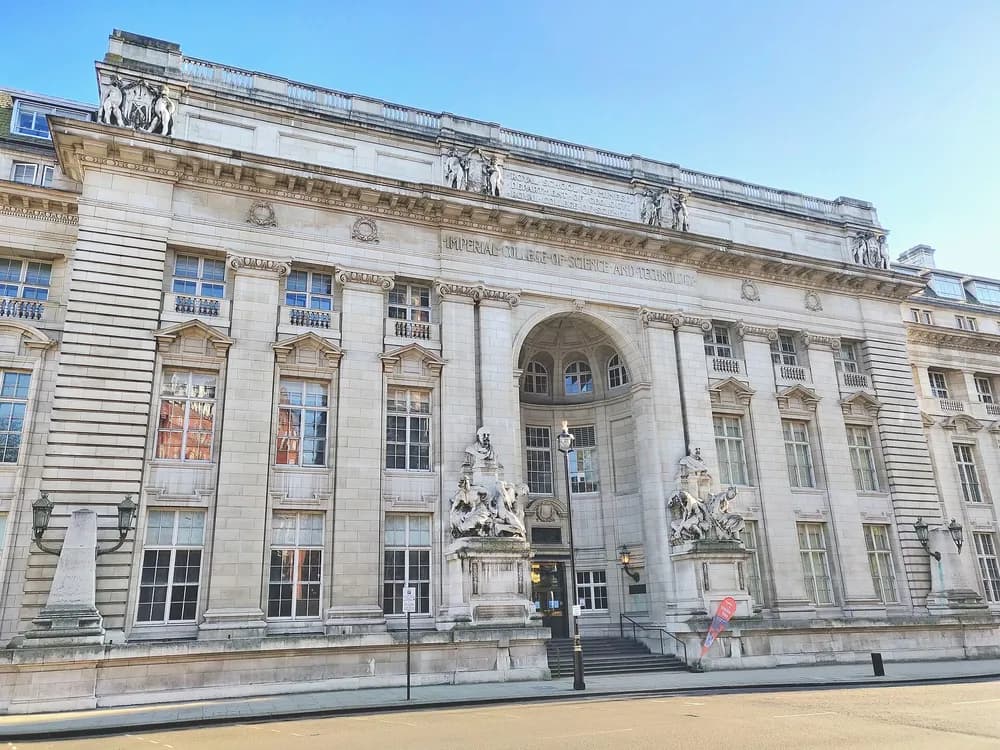
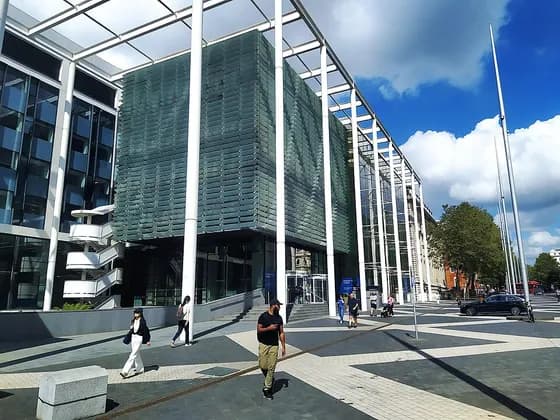
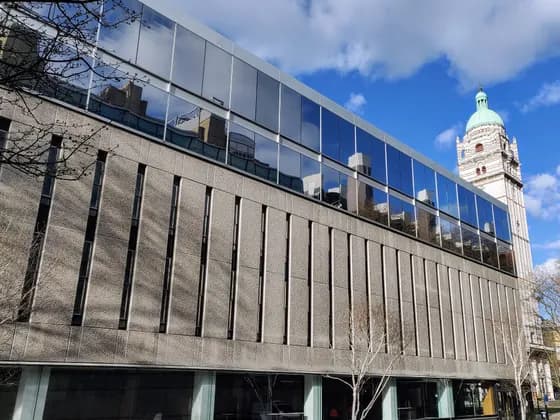
Photo: Shadowssettle · CC BY-SA 4.0 · cropped
Photo: Radosław Botev · CC BY 3.0 pl · Photo: Shadowssettle · CC BY-SA 4.0 · Photo: John Myers · CC BY-SA 2.0
The Imperial College London medicine course at a glance (2027 entry)
Medicine at Imperial College London is a six-year course, UCAS code A100, run by the School of Medicine. Every student graduates with two degrees: a Bachelor of Science (BSc), awarded at the end of Year 4, and the MBBS, which stands for Bachelor of Medicine and Bachelor of Surgery. You also receive the Associateship of the Imperial College School of Medicine (AICSM). The science year is not an optional extra here. It is part of the six years for everyone.
The course is split into three phases. Phase 1 (Years 1 to 3) combines the science of how the body works with clinical skills, communication and professional behaviour, and Year 3 is spent mostly on placements. Phase 2 (Year 4) is the BSc, built around research. Phase 3 (Years 5 and 6) covers the specialties and your final exams. After final exams you spend a period working inside a clinical team to prepare for your first job as a doctor, and the course ends with an elective placement you organise yourself.
The General Medical Council (GMC) regulates doctors and medical schools in the UK. It sets out what every new doctor must be able to do under three headings: professional values and behaviours, professional skills, and professional knowledge. Imperial calls these domains and threads them through all six years, while the subject content is taught in modules, blocks of teaching that are each assessed separately.
Campus teaching happens mainly at South Kensington, Imperial's main campus, and at Charing Cross in Hammersmith, which is built around Charing Cross Hospital. Placements take you to hospitals and general practice (GP) surgeries across west and north-west London. You meet patients in a GP surgery in your first term, and by Year 3 you run supervised consultations of your own.
| Degree | MBBS/BSc, plus the AICSM associateship |
|---|---|
| Course length | 6 years, with a compulsory BSc in Year 4 |
| UCAS code | A100 |
| Year group | About 360 students start Year 1 |
| Main campuses | South Kensington and Charing Cross, London |
| Teaching style | Case-based learning, flipped classrooms and team-based learning |
| First patient contact | GP surgery days in Year 1, from October |
| BSc year | 16 pathways listed for 2026-27, one still awaiting approval |
| Placement area | West and north-west London, plus a Year 6 GP block outside London |
| Elective | Eight weeks in the UK or abroad, after final exams |
What makes Imperial College London medicine different
A research BSc built into every student's course
Year 4 is a compulsory BSc year, with 16 pathways listed for 2026-27, from Remote Medicine to Humanities, Philosophy and Law. One of the 16, Multisystem Disorders and Therapies, is still awaiting university approval. On School of Medicine pathways you spend 14 weeks on a supervised research project; Management and Biomedical Engineering have a group project instead. The MBBS is pass or fail.
Running your own GP clinics in Year 3
In the Medicine in the Community Apprenticeship (MICA) you spend eight or nine weeks in a London GP surgery with one other student. You hold consultations of your own in a separate room from your supervising GP. You may also visit patients at home, and you complete a Community Action Project meant to make a real difference locally.
Final clinical exams split across two years
Imperial's final practical exam, which it calls PACES, is a circuit of stations using both real patients and simulated patients, who are trained actors playing a role. In the version the GMC approved in April 2024, obstetrics and gynaecology, paediatrics, psychiatry and general practice were examined in Year 5. Medicine and surgery followed in Year 6, set at the same standard: that of a brand-new doctor.
A four-week GP placement outside London
In Year 6 the General Practice Senior Assistantship places you at a practice deliberately chosen outside London, so you see general practice in a different setting. You hold your own supervised clinics and carry out prescribing tasks, as practice for managing patients on your own. You also complete a short quality improvement project, a small piece of work to make one part of the practice's care work better.
An optional PhD inside the medical degree
Students who meet the academic conditions can apply to pause the MBBS after Year 4 for three years of PhD research, then return for Years 5 and 6. The route takes nine years and ends with both an MBBS and a PhD. Places are competitive and need funding.
How Imperial College London teaches medicine
In Years 1 and 2 you are taught through a mix of interactive large-group sessions and small-group work. Much of it follows a flipped classroom model, and the timetable runs on a repeating pattern, so professional knowledge, clinical skills and professional values each get regular slots. Some teaching is built around patient cases that make you combine science and clinical knowledge from different modules, and simulation prepares you for your first placements.
Clinical communication and anatomy are both led by the Department of Surgery and Cancer and are woven through the course. The Human Anatomy Unit itself teaches MBBS students in Years 1, 2, 4 and 5. You are taught by people at every level, from professors to PhD students, and some sessions are led by fellow students or outside specialists.
In Year 3 the teaching moves mainly onto placements, with campus teaching blocks in between, and Year 4 returns you to a university setting for the BSc. In Years 5 and 6 you are placed inside hospital and community clinical teams. Structured teaching and simulation sessions put you in unfamiliar situations so you can practise making decisions when the answer is not clear. You will also work some out-of-hours shifts on placement.
The ways you will learn
| Flipped classroom | You work through online material, such as videos, reading and quizzes, before a session. The face-to-face time is then spent discussing the topic, solving problems and checking your understanding, rather than hearing the material for the first time. |
|---|---|
| Team-based learning | A structured format for small teams. You prepare in advance, answer questions first on your own and then with your team, and finish by working through applied problems together. Imperial runs these sessions, and some tests, on an online platform called LAMS. |
| Clinical and Scientific Integration cases | In Years 1 and 2 you work through realistic patient cases with your small group of five or six. The cases train your clinical reasoning, the step-by-step thinking that gets from a patient's symptoms to a diagnosis. Some of this group work is assessed. |
| Communication skills sessions | For some sessions your small group is split in half, into groups of about three, so everyone gets a turn to practise. Charing Cross has a set of rooms, numbered CXLB 1107A to J, set up for communication skills teaching. |
| Laboratory, anatomy and clinical skills classes | Scientific practicals run in teaching laboratories, anatomy in the Human Anatomy Unit at Charing Cross, and practical clinical skills are taught early in the course. Laboratory and anatomy sessions begin with a compulsory safety briefing, so if you arrive late you are likely to be turned away. |
| Guided and live online learning | Guided online sessions sit on your timetable but can be done in your own time, using materials on the Canvas platform. Anything marked as part one of a series must be finished before the next part. Live online sessions run on Microsoft Teams or Zoom, often with breakout groups, and you are expected to keep your camera on. |
A typical week on the Imperial College London course
Medicine at Imperial is a full working week. The programme specification says you can normally expect timetabled teaching from 8am to 6pm, Monday to Friday, with Wednesday afternoons kept free for sport, clubs and other activities. Time for preparation, consolidation and independent study is built in around the scheduled sessions.
The groups you belong to stay the same all year. The whole year of about 360 meets for lectures and exams. Each of the four cohorts, labelled A to D, has about 90 students, and many sessions bring one or two cohorts together. Your small group of five or six is the one you work with most closely: you complete some group assessments together and share an Academic Tutor.
GP placement days break up the campus weeks, falling on Thursdays in Year 1 and Tuesdays in Year 2. So a week in Years 1 and 2 is mostly campus teaching with one day out in a practice.
By Year 3 a week looks very different. During MICA you spend seven sessions a week at the practice. Four are clinics, one of which may be an experience session with staff such as nurses or pharmacists, or in a specialist clinic such as diabetes or asthma. The other three are a tutorial, a visiting session, which may be used for home visits to patients with long-term conditions, and a session for your community project.
How anatomy is taught at Imperial College London
Anatomy, the study of the body's structure, is taught in the Human Anatomy Unit at the Charing Cross Campus, part of the Department of Surgery and Cancer. The unit teaches MBBS students in Years 1, 2, 4 and 5. It is licensed by the Human Tissue Authority, the body that regulates how donated bodies and tissue are used.
The unit has a dissection room, an anatomy skills laboratory and a pathology museum. The dissection room is a large, naturally lit space holding potted specimens, bones, models and prosections. Prosections are body parts an expert has already dissected, so the structures are laid out ready for you to study.
Imperial lists what the unit can offer medical students as whole body dissection, prosections, skeletal material, anatomical models and living anatomy classes. The Department of Surgery and Cancer describes it as providing cadaver anatomy and pathology resources. Living anatomy means working on a living person, usually a volunteer or a classmate, feeling for bones, pulses and other landmarks under the skin. That is a list of what the unit provides, not a statement of how much dissecting MBBS students do themselves.
The unit aims to teach anatomy in a way that connects directly to clinical practice. Its teaching team includes anatomists, biomedical scientists and surgical demonstrators.
When you first meet patients at Imperial College London
Imperial says you have direct contact with patients from your first term. Your first visits are to general practice, through the Year 1 Patients, Communities and Healthcare module. In a group of four or eight, you spend eight days at a GP surgery between October and March. The core activities are conversations with patients, sitting in on GP clinics, a community survey project and group tutorials. Year 1 also includes a hospital placement in May.
In Year 2 you return to a GP surgery for five days between November and March. This is the first placement where you take histories, meaning you ask patients structured questions about their symptoms and background. You also learn health coaching, which helps patients make changes to their own health. Two-week hospital placements in early December and early March let you practise simple bedside tests and procedures on the wards.
Your clinical skills are assessed from your very first placement, through workplace-based assessments in which a healthcare professional observes you with a patient and records how you did. In Year 3, and again in Years 5 and 6 after the BSc year, most of your time is spent in clinical settings, building up to the full range of specialties.
Year by year at Imperial College London
- Year 1
Phase 1: how the body works, and your first patients
Year 1 introduces the key ideas of health and disease and teaches the main body systems, alongside clinical, research and communication skills. Before you arrive you complete an online Principles of Medicine primer. For the 2026-27 intake, teaching begins on 28 September, and every student receives an Imperial iPad in the first week.
- Principles of Medicine, in the autumn term: the core concepts of health and disease, taught in integrated classes that also build research and clinical skills.
- Bioregulatory Systems, the largest Year 1 module: areas such as neurology, endocrinology (hormones), dermatology (skin), heart and lung biology, and gastroenterology (the digestive system).
- Clinical and Scientific Integration: developing clinical reasoning through realistic patient cases worked on with your small group.
- Patients, Communities and Healthcare: how biological, psychological and social factors interact to shape illness, taught partly through your GP days and a hospital placement in May.
- Lifestyle Medicine and Prevention: evidence-based ways of helping patients change their behaviour, including the communication skills that needs.
- Assessment through in-class questions, group work, written exams, workplace-based assessments on placement and a spot test, which also runs in Year 2.
- Year 2
Phase 1: deeper science and your first ward work
Year 2 takes the same core modules further and adds your first real research experience. Patient contact grows, with more GP days and two short hospital placements. You also take a module from outside medicine, studied alongside students from other Imperial courses.
- Bioregulatory Systems and Clinical and Scientific Integration continue, now focusing on how complex body systems interact and how that science applies to clinical care.
- Patients, Communities and Healthcare: GP days with a community collaboration project, plus two-week hospital placements in December and March.
- Lifestyle Medicine and Prevention, which adds how the social conditions people live in shape the lifestyle choices open to them.
- Clinical Research and Innovation, in the summer term: research experience and integrated classes, with research experiences offered in London and elsewhere in the UK.
- I-Explore: a compulsory module chosen from subjects outside medicine, such as business or languages. Management modules are excluded because their timetables clash with medicine.
- A Clinical Practical Assessment, a practical exam of your clinical skills with examiners watching, taken once for practice and once for real, alongside written exams and another spot test.
- Year 3
Phase 1: the first clinical year
Year 3 moves you into mainly clinical settings. It is one large module, Patients, Communities and Healthcare, delivered through three eight-week rotations, each followed by two weeks of campus teaching. There are no normal university terms: for 2026-27 the year runs from 12 September to 11 June.
- An induction before the first rotation. In the 2023-24 placement map, the most recent published, this was two weeks of central induction and one week at your placement site.
- An eight-week placement with a hospital medical team and another with a hospital surgical team.
- MICA: eight or nine weeks in a London GP surgery reachable by bus or train, which you are expected to travel to unless health or welfare reasons prevent it.
- The order of the three rotations depends on your group, so you might start in medicine, surgery or general practice.
- A summative Objective Structured Clinical Examination (OSCE): a circuit of timed stations, each testing a clinical or communication task while an examiner watches.
- Year 4
Phase 2: the BSc research year
Year 4 is the compulsory BSc. You follow one pathway, with your preferences considered when places are allocated, and the year concentrates on research skills you can use anywhere rather than memorising a specialist subject. For 2026-27 it runs from 21 September to 21 May, with results published at the end of June.
- Module 1 (12 weeks): taught content for your pathway in three blocks, each with three weeks of teaching and a consolidation week for revision, assessment and feedback.
- Module 2 (from 4 to 29 January in 2026-27): group work producing a literature review, including practice at submitting an article, peer review and responding to reviewers.
- Science in Context: you follow a patient or a virtual clinical case linked to your subject and present what you find as a scientific poster.
- Module 3 (14 weeks, February to May): a supervised research project in a laboratory or clinical setting, with project titles allocated in the autumn term.
- Assessments include a project report, an oral presentation of your project, scientific abstracts and writing for the public, such as a press release.
- You study alongside medical, dental and veterinary students from other universities who join Imperial just for this year.
- The three modules above apply to School of Medicine pathways. Management and Biomedical Engineering are run by the Business School and the Department of Bioengineering. They follow standard Imperial term dates and have a group project instead.
- Year 5
Phase 3: the clinical specialties
The BSc project is handed in in late May and Year 5 starts in early July, so the break between them is short: the Year 5 cohort for 2026-27 started on 9 July 2026. The year runs to late June. You rotate with a group through the major specialties alongside a pathology course. The block lengths below come from the 2023-24 Year 5 course map, the latest the school has published, so details may have changed.
- A two-day introductory course, then six-week blocks in obstetrics and gynaecology, child health and mental health.
- A combined block of emergency medicine, critical care, and trauma and orthopaedics (injuries and conditions of bones and joints).
- Two-week blocks in oncology and palliative care, infectious diseases and sexual health, and dermatology.
- General Practice and Primary Health Care: three weeks with 21 sessions in a practice, consulting with patients yourself under supervision and completing a patient project.
- A three-week Specialty Choice Placement in an area you pick.
- Pathology: using patterns of disease, test results and laboratory investigations to reach a diagnosis, plan care and judge how a patient is progressing.
- Clinical exams in obstetrics and gynaecology, paediatrics, psychiatry and general practice, which in 2024 used the same PACES format as the final-year exam.
- Year 6
Phase 3: finals and preparing for practice
Year 6 starts in July too, on 18 July for 2026-27. You complete clinical attachments and sit your final exams, including the national Medical Licensing Assessment that UK medical graduates must pass to register as doctors (explained under Exams and assessment). You then finish with the Preparedness for Practice module. That module must be passed before you can graduate.
- Clinical attachments, which may be at Imperial campuses such as Charing Cross, Chelsea and Westminster, Hammersmith, Royal Brompton or St Mary's.
- The General Practice Senior Assistantship: four weeks at a practice outside London, run five times between August and December. The first and last days are spent at Imperial's primary care department for group teaching, with online webinars in between.
- During it you complete a short quality improvement project, two prescribing tasks, two case-based discussions and two mini clinical evaluation exercises. In a case-based discussion you talk a real patient's case through with a supervising doctor; in a mini clinical evaluation exercise a GP watches you consult and gives feedback.
- Final exams in medicine and surgery, plus the Applied Knowledge Test and Prescribing Safety Assessment (national exams explained under Exams and assessment).
- A Pre-Foundation Assistantship in the last part of Year 6, after your final exams, working inside a local clinical team: organising ward rounds, writing notes, recommending prescriptions, making referrals and carrying out core procedures. Imperial calls this period Term 3, although Year 6 itself runs straight through.
- An eight-week elective that you organise yourself, in the UK or abroad.
How you are assessed at Imperial College London
Imperial uses programmatic assessment. Rather than resting everything on one exam, the school gathers many pieces of evidence across the year, from written papers to observed clinical work, and gives you regular feedback through a tutor. Progress tests are on its published list of assessment methods too: papers that sample the whole course rather than the block you have just finished. At the end of each year the exam board reviews everything before letting you progress. Outside the BSc year, pass marks are set separately for each exam rather than fixed at 40 per cent.
In Years 1 and 2, knowledge is tested with single best answer questions, where you choose the best of several options, and very short answer questions, where you write a word or short phrase. Short answer questions are marked by you against model answers and then discussed with a tutor. Group projects and a spot test also count. Clinical skills are assessed on placement from Year 1, then in a Clinical Practical Assessment in Year 2 and the OSCE in Year 3. Modules in Years 1 to 3 and Year 6 carry a mix of pass/fail and graded assessments, even though the MBBS as a whole is pass or fail.
Some assessments are gateways required by the GMC. They include Directly Observed Procedural Skills (DOPS), where a clinician watches you carry out a practical procedure on placement. You can repeat a DOPS until you pass, but you cannot sit end-of-year exams until your placements and gateways are complete. Other assessments normally allow two attempts. Failing both without accepted mitigating circumstances normally means leaving the course.
Your BSc class depends only on Year 4. For pathways run by the School of Medicine, the project report is worth 35 per cent and the group literature review 15 per cent. The project presentation and Science in Context poster are worth 10 per cent each, and three Module 1 tasks make up the other 30 per cent. A first needs 70 per cent overall. The MBBS itself is not classified: you pass or fail.
To be registered to practise, UK graduates must pass both parts of the GMC's Medical Licensing Assessment (MLA). The Applied Knowledge Test (AKT), sat in Year 6, uses papers supplied centrally by the Medical Schools Council. In the design the GMC approved in 2024, it was two computer-based papers of 100 single best answer questions, two hours each, on consecutive days. At the time of that 2024 review, students sat it on their Imperial iPads. Under the 2025-26 programme specification you get up to four attempts, no more than two a year.
The Clinical and Professional Skills Assessment (CPSA) is the practical part, run by Imperial as PACES. In the version the GMC approved in April 2024, you first had to complete all your DOPS and an oxygen prescribing task. You then moved through 12 ten-minute stations in one day, such as heart and lung examinations, histories and acute care. To pass you needed at least half the stations and 50 per cent in each of four areas. You must also pass the Prescribing Safety Assessment, an online exam on prescribing medicines safely.
Where you will actually be at Imperial College London
Most campus teaching is at South Kensington and Charing Cross, but you go off campus in every year, and the main clinical attachments away from campus are in Years 3, 5 and 6. Imperial gives its list of teaching hospitals only as a guide and says it also works with healthcare providers inside and outside London. Imperial College Healthcare NHS Trust alone offers more than 3,000 placements a year to Imperial medical students.
GP placements in all six years are run by Imperial's Undergraduate Primary Care Education Unit, which works with more than 150 host practices. It aims to allocate practices so that your travel time and costs stay low. Its map of usual placement areas covers most of west and north-west London, roughly from Uxbridge and Harefield in the west to Paddington, Hampstead and Chelsea in the east.
You commute to placements from wherever you live. Travel is a cost you have to budget for, although the programme specification says some of it is covered by the NHS Bursary in Years 5 and 6. The school says students alternate between nearer and further placements so the long journeys are shared out. University accommodation is only offered in Year 1, so from Year 2 you rent privately.
Hospitals have their own support for students. Imperial College Healthcare NHS Trust runs undergraduate education centres at Hammersmith, St Mary's and Charing Cross hospitals, which welcome students, handle administration and offer pastoral care. At Chelsea and Westminster Hospital, an Undergraduate Medicine Office coordinates your teaching, and three full-time education fellows add tutorials, from one-to-one sessions to group teaching, and mentoring.
The trust trains students across all five hospitals. Charing Cross, Hammersmith and St Mary's each have an undergraduate education centre and are also Imperial campuses.
- Charing Cross Hospital, Hammersmith
- Hammersmith Hospital, East Acton
- St Mary's Hospital, near Paddington
- Queen Charlotte's and Chelsea Hospital
- Western Eye Hospital
Both are also Imperial campuses. Royal Brompton is part of Royal Brompton and Harefield, a specialist heart and lung service whose second site is Harefield Hospital near Uxbridge.
- Chelsea and Westminster Hospital, Fulham Road
- Royal Brompton Hospital
Northwick Park is a five-minute walk from Northwick Park Underground station on the Metropolitan line. Imperial's published hospital list still uses the trust's former name, without University in it.
- Northwick Park Hospital, Harrow
- Ealing Hospital
Both are on Imperial's guide list of teaching hospitals where you can expect to do clinical attachments.
- Hillingdon Hospital
- West Middlesex University Hospital
Used for GP placements in Years 1, 2, 3 and 5, and for some Year 5 Specialty Choice Placements.
- More than 150 host practices
Chosen deliberately outside London so you experience general practice in a different setting from your earlier placements.
- GP practices hosting the Year 6 General Practice Senior Assistantship
Electives and chosen modules at Imperial College London
In Year 5 every student does a three-week Specialty Choice Placement (SCP). You can use it to go deeper into a specialty you have enjoyed or to try something the main curriculum does not cover. Some SCPs are hosted by GP practices with a special interest, usually for about seven sessions a week.
The elective comes at the very end of the course, after your final exams and the licensing assessment, as part of the Preparedness for Practice module. You organise your own eight-week placement, in the UK or abroad. Travel and accommodation costs depend on where you go, and the school says these may be subsidised in some circumstances if you apply.
There is choice earlier too. In Year 2 you pick your I-Explore module, and in Years 1 and 4 you can take extracurricular Horizons modules, Imperial's programme of courses in languages, culture and communication. Years 3, 5 and 6 are too placement-based for Horizons. The programme specification also lists optional research project opportunities at the Institute of Science Tokyo.
Intercalation at Imperial College London
Intercalating means taking an extra degree during a medical course. At Imperial it is not a separate decision, because the BSc is built into Year 4 for everyone. You study one of the pathways below, and your preferences are taken into account when places are allocated. The title of your BSc reflects your pathway. In certain circumstances it may be possible to take an intercalated BSc at another UK university instead.
The list changes over time. Multisystem Disorders and Therapies is listed as new for 2026-27. Imperial's own BSc guide for that year says it is still waiting for university approval, so fifteen pathways are settled and this one is not yet. The 2025-26 programme specification also included Molecular and Translational Haematology, and Immunity and Infection.
Each pathway also takes visiting medical, dental and veterinary students from other universities, from two places on Gastroenterology and Hepatology to 40 on Management.
If you want to go further into research, you can apply for the MBBS/PhD during your third or fourth year. You need satisfactory results in the early years, normally no exam resits and at least a 2:1 (an upper second-class degree) in your BSc. With permission, you then apply for a funded MB/PhD advertised in the Faculty, or secure funding for the three years with your proposed supervisor. You formally interrupt the MBBS during the PhD, and places are not guaranteed.
- Anaesthesia and Critical Care; Biomedical Engineering; Cancer Frontiers; Cardiovascular Sciences
- Endocrinology; Gastroenterology and Hepatology; Global Health; Humanities, Philosophy and Law
- Management; Multisystem Disorders and Therapies (new for 2026-27 and still awaiting university approval); Neuroscience and Mental Health; Pharmacology
- Remote Medicine; Reproductive and Developmental Sciences; Surgical Design, Technology and Innovation; Translational Respiratory Medicine
Facilities and support at Imperial College London
Where you will learn
In Year 1 your face-to-face teaching is split between South Kensington and Charing Cross. In the autumn term that includes the anatomy dissecting room and anatomy laboratory at Charing Cross, alongside lecture theatres, seminar rooms and collaborative learning suites for group work.
The Pathology Museum, on the 11th floor of the Charing Cross Laboratory Block, has about 1,600 specimens on display, dating back to 1888, each showing the effects of a disease. It has individual bays for self-study and small groups, and a seminar room for larger workshops. It also holds an Anatomage table, a large touchscreen that shows full male and female anatomy and many examples of disease, built from real patient data.
Every student receives an Imperial iPad in the first week, set up for the platforms you use daily. MedLearn holds your dashboard and e-portfolio, Canvas your course materials and Panopto recordings of teaching sessions. Sofia maps the learning outcomes of every module and topic, and SparkForms is where workplace-based assessments are recorded on placement.
Support while you study
When you join you are assigned an Academic Tutor, who normally looks after up to 12 students from two linked small groups. In the first three years you have scheduled tutor group sessions and an individual meeting each term. Your tutor reviews your exam results and feedback, gives careers advice, writes references and advises on BSc and elective choices. They are also your first point of contact if personal problems affect your studies.
In the later years you are allocated a Clinical Tutor, typically a consultant (a senior hospital doctor) at one of the teaching hospitals, whom you meet at least once a term. Because they know you, they can support you on placement and complete paperwork for your elective and Foundation Programme applications. The Foundation Programme is the training new UK doctors start in.
Each year group has at least one Senior Tutor for health and wellbeing matters. They handle medical support, discuss how reasonable adjustments can work on a medicine course, make sure exam arrangements are in place and advise on financial help. They can refer you to the Imperial College Health Centre, Occupational Health or counselling and mental health services.
The School of Medicine has its own Welfare Team, offering confidential one-to-one meetings and help with mental health, money, including the school's hardship support, and accommodation. In 2024 the GMC's review of the final practical exam noted that students who failed it were offered meetings with the welfare team, a senior tutor and the heads of assessment and year. After these meetings a personal plan was drawn up to help each student improve.
Medical students also have their own students' union, the Imperial College School of Medicine Students' Union (ICSMSU), with more than 70 clubs and societies. Its academic societies run tutorials, lecture series and mock exams, so a good deal of revision help comes from students in the years above you.
Is the Imperial College London course right for you?
This course may suit you if
- You want a classified science degree and real research experience: every student spends Year 4 on a BSc, and most pathways include a 14-week research project.
- You learn well by preparing on your own and then working through problems with a team, as flipped classrooms, team-based learning and group cases shape Years 1 and 2.
- You want patient contact from Year 1 and the chance to run supervised consultations of your own in Year 3.
- You are seriously interested in research and might want to add a PhD to your medical degree.
- You want to train in London across a spread of hospitals and GP surgeries in west and north-west London.
Things to think about
- The course takes six years for everyone, because the BSc year cannot be skipped.
- Years 3, 5 and 6 have no normal university terms. The BSc project goes in in late May and Year 5 starts in early July, so the break is short: the 2026-27 Year 5 cohort started on 9 July 2026.
- Timetabled teaching normally runs from 8am to 6pm on weekdays, with only Wednesday afternoons kept free.
- You commute to placements across London and need to budget for travel, and the four-week Year 6 GP assistantship is based at a practice outside London.
- A year group of about 360 means large lectures, even though much of your work happens in cohorts of about 90 and groups of five or six.
Imperial College London medicine course — frequently asked questions
Applying to Imperial College London?
How to get into Imperial College London
Entry requirements, UCAT, personal statement and interview, step by step.
Open the guide →Imperial College London UCAT cut-offs and offers
UCAT cut-offs, A-level offers, interview format and decision dates.
See the requirements →Compare Imperial College London with other schools
Put the teaching style, anatomy teaching and placements next to another school.
Open the comparison →Prepare for the Imperial College London interview
Format breakdown, school-specific sample questions and prep tips from tutors who interviewed here.
Read the guide →Where this Imperial College London course guide came from
This guide was written from 37 official sources — Imperial College London's own course pages and programme documents, plus the regulator and NHS placement partners where they publish detail — read on 2026-09-20, then checked claim by claim against those sources.
- Imperial College London: Medicine MBBS/BSc course page, 2027 entry
- Imperial College London: MBBS/PhD intercalated PhD option for medical students
- Programme specification 2025-26: A100 MBBS/BSc Medicine
- Welcome to Imperial College School of Medicine: Year 1 guide 2026-27
- Term date variations for undergraduate medicine programmes 2026-27
- Phase 3a Year 5 course map 2023-24
- Phase 1 placements course map 2023-24
- Imperial intercalated BSc guide for 2026-27 entry
- Provisional BSc dates and course structure 2026-27
- Undergraduate Primary Care Education: map of usual GP placement areas
- Imperial College School of Medicine: Medicine (MBBS) programmes
- Imperial College School of Medicine: intercalated BSc programme
- Imperial College School of Medicine: intercalated BSc Management pathway
- Department of Bioengineering: intercalated BSc Biomedical Engineering
- Imperial College School of Medicine: intercalated BSc Multisystem Disorders and Therapies pathway
- Imperial College School of Medicine: Induction Hub for new MBBS students
- Undergraduate Primary Care Placements by year
- Undergraduate Primary Care Education Unit
- Imperial GP Teaching blog: Patients, Communities and Healthcare 1 and 2 reflections
- I-Explore handbook: clinical placements for medical students
- Imperial College School of Medicine: MBBS virtual open day
- Imperial College School of Medicine: MBBS virtual open day FAQs
- Human Anatomy Unit
- Human Anatomy Unit: education and training
- Human Anatomy Unit: facilities and services
- Human Anatomy Unit: about
- Human Anatomy Unit: Pathology Museum
- Department of Surgery and Cancer: undergraduate teaching
- Faculty of Medicine: campus information
- Imperial campuses: North West London Hospitals
- Imperial College School of Medicine: electives and clinical attachments, partner NHS hospitals
- GMC: MLA clinical and professional skills assessment compliance decision, Imperial College School of Medicine, April 2024
- GMC: MLA applied knowledge test compliance decision, Imperial College School of Medicine, June 2024
- Imperial College Healthcare NHS Trust: undergraduate medical education
- Imperial College Healthcare NHS Trust: medicine education
- Chelsea and Westminster Hospital NHS Foundation Trust: undergraduate medical education
- London North West University Healthcare NHS Trust
Courses are restructured between cycles. Anything here that decides your application — an anatomy offer, a placement city, a compulsory intercalated year — should be confirmed against the official page for your entry year.
Applying to Imperial College London?
We have helped hundreds of applicants turn their UCAT, personal statement and interview prep into offers from Imperial College London and other UK medicine schools.