
The Lincoln Medical School Medicine course
What you actually study, and where you will be
Lincoln Medical School's MBChB is a 5-year course taught through case-based learning, with patient contact from Year 1 and placements in Lincolnshire (2027 entry). Founded in 2018 specifically to keep doctors in Lincolnshire, and the placements reflect that — three county hospitals plus care homes, health charities and social prescribing settings.
- Degree
- MBChB
- Length
- 5 years
- Teaching
- Case-based learning
- Clinical contact
- Year 1
- UCAS code
- A100
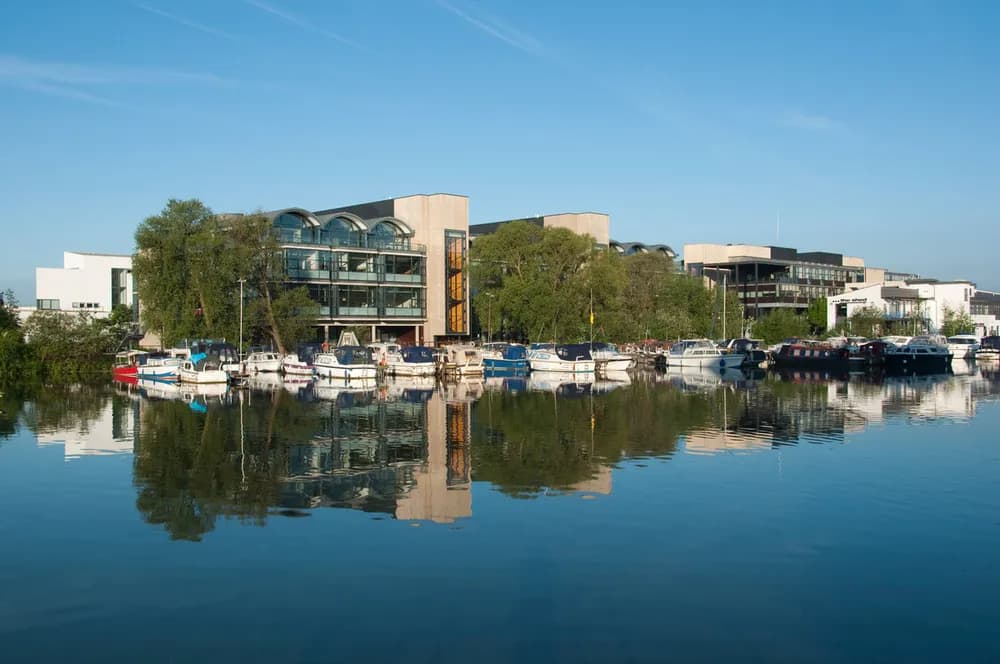
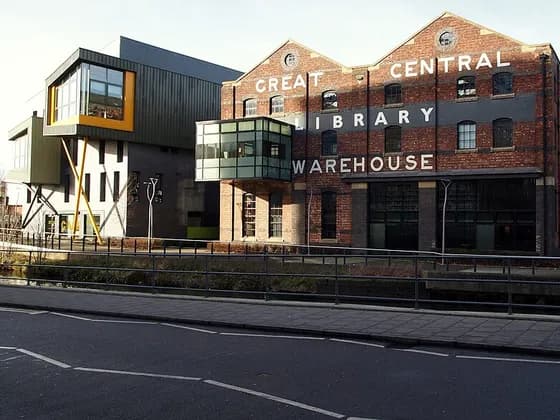

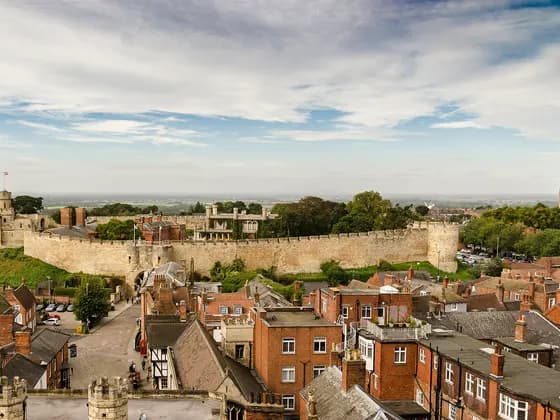
Photo: Chris Goddard · CC BY 3.0 · cropped
Photo: David Hallam-Jones · CC BY-SA 2.0 · Photo: Richard Humphrey · CC BY-SA 2.0 · Photo: Julian P Guffogg · CC BY-SA 2.0
The Lincoln Medical School medicine course at a glance (2027 entry)
Lincoln Medical School's MBChB (Bachelor of Medicine, Bachelor of Surgery) is a five-year medicine degree taught on the University of Lincoln's Brayford Pool Campus, in the centre of Lincoln. It is a new course. It replaces the degree the school used to teach in partnership with the University of Nottingham, and it is the University of Lincoln's own curriculum. The first students start Year 1 of the new MBChB on 21 September 2026.
The school was set up in 2018, as a joint project between the universities of Lincoln and Nottingham, to help Lincolnshire recruit and keep doctors. The university points out that the county had been the largest in England without its own medical school. Its first students started in September 2019 on Nottingham's BMBS, which is also a Bachelor of Medicine, Bachelor of Surgery degree. They graduated in July 2024.
Because the MBChB is new, it is still going through approval by the General Medical Council (GMC), the body that regulates doctors and medical degrees in the UK. Every new medical school goes through this. The GMC makes its final decision when the first year group reaches its final year. The University of Nottingham is the back-up, known as the contingency school. If approval did not come through, you would graduate with a Nottingham BMBS degree instead.
Teaching is built around case-based learning, where each block of the year is organised around example patient cases. Years 1 and 2 are mostly on campus, but you visit GP surgeries and hospitals regularly from your first year. From Year 3 most of your learning happens on clinical placements, with regular teaching days back on campus.
The course has a clear local focus. It aims to build your understanding of public health in a rural and coastal setting, alongside research and leadership skills. Your placements are across Lincolnshire, in hospitals in Lincoln, Grantham and Boston, in general practice and in community settings such as care homes.
| Degree | MBChB, University of Lincoln (subject to final GMC approval) |
|---|---|
| Course length | 5 years (6 years on the Gateway Year route, A106) |
| UCAS code | A100 |
| Places | 80 direct-entry places planned for 2026, plus 20 on the Gateway Year route |
| Main campus | Brayford Pool Campus, Lincoln |
| Teaching style | Case-based learning in blocks of patient cases |
| Anatomy | Prosection, plus models and bones |
| First patient contact | Regular GP and hospital visits from Year 1 |
| Placement hospitals | Lincoln County, Grantham and District, and Pilgrim (Boston) |
| Back-up awarding body | University of Nottingham (BMBS) if GMC approval is not given |
What makes Lincoln Medical School medicine different
Public health in a rural and coastal county
Alongside core medicine, the course sets out to build your skills in research and leadership and your understanding of public health in a rural and coastal setting. Public health is the part of medicine that looks at the health of whole communities rather than one patient at a time. Training across Lincolnshire gives that learning a real local setting.
Placements in care homes, charities and social prescribing
Your placements are not only in hospitals and GP surgeries. They also include community settings such as care homes, health charities and social prescribing services. Social prescribing links people with non-medical support in their community, such as groups, activities or advice. These settings show you how much of a person's health is shaped outside the consulting room.
A month inside a clinical team in Year 3
After your Year 3 exams you spend four weeks on an Integrated Clinical Experience (ICE) placement. You are embedded in a clinical team and start using what you learned on your medicine, surgery and primary care placements. You also learn with and about the other professionals in the team, and work alongside more senior medical students.
An elective and an assistantship to finish
After your final exams in Year 5, the course ends with two six-week blocks. One is an elective, a placement you choose yourself. The other is an assistantship. You work as part of a clinical team and take on many of the tasks of a new doctor under supervision, to get ready for your first job.
Patients and clinical skills from Year 1
You do not wait for the later years to meet patients. From your first year you go on regular placements in general practices and hospitals, and you start learning clinical skills at the same time. That early contact means the science you study on campus is linked to real people from the start.
How Lincoln Medical School teaches medicine
The course uses case-based learning (CBL). Instead of studying anatomy, physiology and disease as separate subjects, you work through example patient cases, grouped into blocks of teaching across the year. Where it fits, each case has a biological side, a psychological side and a social side. So one case can teach you how an organ works, how illness affects a person's mind and how their circumstances affect their health.
Everything you learn sits in three modules that run through every year: Professional Knowledge, Professional Skills, and Professional Values and Behaviour. Broadly, the first covers medical science, the second covers clinical and communication skills, and the third covers your professional attitudes and behaviour. Because Professional Values and Behaviour is a module in its own right, your conduct is assessed every year, alongside your knowledge and skills.
The 2026-27 version of the course page names eight themes that run through all five years. They are clinical and communication skills, clinical reasoning, health equity, health education, public health, medical and healthcare leadership, medical ethics and law, and research and quality improvement. Clinical reasoning means working out what is wrong with a patient from the evidence in front of you. Health equity means fair access to good health for every group in society.
The balance shifts as you go. In Years 1 and 2 most learning is on campus, with some early clinical visits and teaching in clinical and communication skills. From Year 3 most of your learning happens on placement with local healthcare providers, and you return to campus for regular central teaching days on the theory. In the final year you sit the Medical Licensing Assessment (MLA), the national exam every UK medical degree must now include, and prepare to start work as a doctor.
The school's independence project pages say all teaching on the new course will be mapped to the GMC's Outcomes for Graduates. These are the standards every new UK doctor must meet. Teaching will also be mapped to the MLA content map, which lists the topics and skills the MLA can test.
The ways you will learn
| Case-based learning | Your teaching in Years 1 and 2 is organised around example patient cases, grouped into blocks that each cover one or more body systems. The anatomy, physiology and disease you study are applied to these cases, so each piece of science links back to a patient. |
|---|---|
| Clinical and communication skills sessions | From Year 1 you learn how to talk with patients about their symptoms and background and how to examine them. You also learn how to work out what is wrong and plan treatment, and you study ethical decisions and patient safety. These skills build step by step as you move through the course. |
| Simulation | Simulation means practising clinical situations in a safe, mocked-up setting, such as the consultation rooms of the clinical skills suite, which are set up like a hospital. In its plans for the new course, the school said simulation would back up placements in Years 3 and 4, both on campus and in clinical settings. |
| Inter-professional learning | Doctors work in teams, so the course teaches you to work with nurses, pharmacists and other health professionals. On the Year 3 Integrated Clinical Experience placement you get extra chances to learn from and about them. You work in a multidisciplinary team, meaning a team made up of several professions. |
| Clinical visits and placements | Regular visits to GP surgeries and hospitals start in Year 1. From Year 3, placements in hospitals, general practice and the community become the main way you learn. |
How anatomy is taught at Lincoln Medical School
Anatomy at Lincoln is taught through prosection, in the Anatomy Suite of the Ross Lucas Medical Sciences Building. A prosection is a part of a human body that a specialist has already dissected to show particular structures. You learn by studying these prepared specimens rather than dissecting a body yourself.
Alongside the specimens, the school has a collection of models of human body parts and a collection of bones, which you use throughout the course. Anatomy is not taught as a separate subject. Like physiology and disease, it is applied to the patient cases you work through in each block.
When you first meet patients at Lincoln Medical School
You meet patients from your first year. Years 1 and 2 are mostly on campus, but you make regular placement visits to general practices and hospitals. You also learn from scientists and practising doctors, and can question them about clinical outcomes and what their working lives are like.
Alongside the visits, you start learning clinical skills on campus from the beginning, such as talking with patients and examining them. You practise these in the clinical skills suite of the Ross Lucas Medical Sciences Building.
Year 3 is the turning point. You move from mostly university-based learning to mostly clinical learning, starting with ten-week placements in medicine, surgery, and primary and community care. By the end of Year 5 you are doing an assistantship, where you work as part of a clinical team and take on many of the tasks of a new doctor under supervision.
Year by year at Lincoln Medical School
- Year 1
Foundations and the first body systems
Year 1 lays the foundations of knowledge, skills and professional behaviour that the rest of the course builds on. Most of it is on campus, working through blocks of patient cases on the body's main systems. You also start regular visits to GP surgeries and hospitals.
- Semester A, the first half of the year, is planned to open with one or two weeks of induction activities.
- Four weeks of foundational cases follow, then six weeks of cases on the cardiovascular and respiratory systems: how the heart, circulation and lungs work and their most common diseases.
- Semester B covers the gastrointestinal (digestive) system and the reproductive and endocrine (hormone) systems, again through cases.
- Teaching in clinical and communication skills on campus, alongside early clinical visits.
- Assessment across the three modules, including written assignments, multiple-choice exams and practical clinical exams.
- Year 2
More body systems and complex patients
Year 2 applies the same case-based approach to the remaining body systems. It then moves on to patients whose problems cross several systems at once. Learning is still mostly on campus, with continued early clinical visits.
- Semester A covers the renal and urinary system, including fluid and electrolyte balance and metabolic control.
- Semester A also covers the central nervous system and the head and neck, including some ENT (ear, nose and throat) content.
- Semester B covers the musculoskeletal system, meaning the bones, joints and muscles.
- The year ends with cases on multimorbidity (living with several long-term conditions at once), frailty and end-of-life care.
- Cancer, imaging, dermatology (skin) and mental health are woven into the cases across this stage rather than taught as separate blocks.
- Year 3
The move into clinical learning
Year 3 is when you move from mostly university-based learning to mostly clinical learning. You rotate through three long placements and sit the year's exams. You then spend four weeks on a topic you choose and four weeks embedded in a clinical team.
- Three ten-week placements, taken in rotation: medicine, surgery, and primary and community care.
- Regular central teaching days on campus, which continue through Years 4 and 5.
- Knowledge and skills exams once the three placements are finished.
- A four-week Student Selected Component (SSC), a block where you choose a topic to study in more depth.
- A four-week Integrated Clinical Experience (ICE) placement in a clinical team, working with other professionals and more senior students.
- Year 4
Specialty placements
Year 4 takes you through four major areas of medicine in shorter blocks. The order you do them in is decided at random. The year ends with an exam and two more blocks you choose.
- Four seven-week placements: child health, women's health, mental health and long-term conditions.
- A knowledge and skills exam after the four placements.
- Two four-week SSCs, one of which must be clinical.
- Year 5
Getting ready to work as a doctor
The final year aims to take you from a student learning to act as a professional to a doctor ready to start work. After three more placements and your final exams, including the MLA, you finish with an elective and an assistantship.
- Three six-week placements, in random order: acute medicine, surgery and perioperative medicine, and primary care.
- Perioperative medicine is the care of patients before, during and after an operation.
- Final knowledge and skills exams, which include the two parts of the MLA.
- A six-week elective, a placement of your own choosing.
- A six-week assistantship, working as part of a clinical team to prepare for your first job as a Foundation Year 1 (FY1) resident doctor. FY1 is the first year of the UK Foundation Programme, the two-year paid training programme that new UK medical graduates normally start on.
How you are assessed at Lincoln Medical School
Each year you are assessed in the same three modules that organise your teaching: Professional Knowledge, Professional Skills, and Professional Values and Behaviour. The assessment methods below are the ones set out on the 2026-27 version of the course page. They change as you move from campus to placements.
In Years 1 and 2, assessment includes written assignments, multiple-choice exams, skills sign-offs and integrated structured clinical exams (ISCEs). A skills sign-off is when a tutor confirms you can carry out a particular skill correctly. An ISCE is a structured practical exam of your clinical skills, such as taking a history or examining a patient. Your professional attitudes are judged through portfolio work and through your engagement and conscientiousness.
In Years 3 to 5, your knowledge is tested through Applied Knowledge Tests, exams that check how you apply medical knowledge to patient problems. Your skills are tested through ISCEs and workplace-based assessments, where a clinician assesses how you work with real patients on placement. Your values and behaviour are judged through portfolio work and how you engage with placement activities.
From Year 3, each year's knowledge and skills exams come after that year's placement blocks. They are summative, which means they count towards whether you pass the year. Life support is the set of skills used when someone's breathing or heart stops. It is developed and assessed in a skills lab every year, with scenarios that grow more complex over the five years.
Both strands build up to the MLA in your final year. It has two parts. The Applied Knowledge Test (AKT) is a computer-based exam of single best answer questions, where you pick the best of several options. The Clinical and Professional Skills Assessment (CPSA) is a practical exam of your clinical skills. Since the 2024-25 academic year, a UK medical degree must include a pass in the MLA to count as a medical qualification.
Where you will actually be at Lincoln Medical School
Your clinical training happens across Lincolnshire, through the school's links with local NHS trusts and with primary and community care. The three hospitals the school names as current placement sites are Lincoln County Hospital, Grantham and District Hospital, and Pilgrim Hospital in Boston. All three are run by United Lincolnshire Teaching Hospitals NHS Trust.
In Years 1 and 2 you make regular visits to GP surgeries and hospitals. From Year 3 placements take up most of your time, in the rotating blocks set out in the year-by-year section, with regular teaching days back on campus.
Many of the school's first graduates, who trained through the Nottingham partnership, did the clinical part of their course in Lincolnshire hospitals. When they graduated in 2024, some were due to start their careers as doctors in Lincolnshire hospitals, including Lincoln County Hospital.
The trust describes Lincoln County Hospital as a district general hospital serving the city of Lincoln and the North Lincolnshire area, with all major specialties and a 24-hour emergency department.
- Lincoln County Hospital (United Lincolnshire Teaching Hospitals NHS Trust)
- Brayford Pool Campus, for central teaching days
Serves Grantham and the surrounding area.
- Grantham and District Hospital (United Lincolnshire Teaching Hospitals NHS Trust)
Serves south and south-east Lincolnshire, with all major specialties and a 24-hour emergency department.
- Pilgrim Hospital, Boston (United Lincolnshire Teaching Hospitals NHS Trust)
Primary and community care placements, including settings outside hospitals and GP surgeries.
- General practices
- Care homes
- Health charities
- Social prescribing services
Electives and chosen modules at Lincoln Medical School
You get several blocks of study you choose yourself. In Year 3, after your exams, there is one four-week SSC. In Year 4 there are two more four-week SSCs, and one of the two must be a clinical SSC, based in a clinical setting.
In Year 5, after your final exams, you spend six weeks on an elective, a placement of your own choosing. It sits alongside the six-week assistantship at the end of the course.
Facilities and support at Lincoln Medical School
Where you will learn
Most of your campus teaching happens in the Ross Lucas Medical Sciences Building on the Brayford Pool Campus, which sits on the Brayford Pool waterfront in the centre of Lincoln. The building was completed in March 2021 and cost £21 million. It has solar panels and a living wall, which is a wall covered in growing plants.
Inside are lecture theatres, laboratories, the prosection Anatomy Suite and a clinical skills suite. The clinical skills suite has consultation rooms set up to simulate a hospital, so you can practise talking to and examining patients in a realistic setting. The school's guidance for new students says you wear surgical scrubs in clinical skills sessions and on clinical visits, and a lab coat in the laboratories.
The first floor holds the building's library, which the university calls both the Ross Library and the Bio-Medical and Health Sciences Library. It brings together the university's collections in medicine, life sciences, pharmacy, chemistry, nursing, and allied health and social care, and has its own library staff. Study spaces include group rooms, booths, individual study desks called carrels, and quiet areas.
Support while you study
The school's guidance for new students says every student is given a personal tutor for the whole course. You meet them regularly to review your progress and set goals. In the early years you also keep a reflection portfolio for these meetings, a record of what you have learned and how you are developing.
The school also runs peer mentoring for all first-year students. Your mentor is a student at least a year ahead of you, trained to help you settle in and point you to the right support. On top of this, the course page lists regular feedback on your progress, structured development of your clinical skills, support on placement and the university's wellbeing services.
The school's guidance for new medical students explains how you can shape the course. Each year group has places for two student representatives, who sit on school committees. A Student Staff Forum, where representatives and staff discuss feedback, meets three times a year, and you can complete an anonymous survey on each module.
The Gateway Year route is a six-year version of the course that starts with an extra year, Year 0. It is open only to applicants from widening participation backgrounds, meaning groups less likely to go to university. That year comes with dedicated academic tutors, study skills support and structured feedback, to help you make the move into the full degree.
Is the Lincoln Medical School course right for you?
This course may suit you if
- You learn best by working through patient cases that link the science to real people, rather than studying each subject on its own.
- You are curious about health in rural and coastal communities, and about care outside hospitals, in places such as care homes and charities.
- You would like to train in Lincolnshire, at a school set up specifically to help the county recruit and keep doctors.
- You would like a year group of up to about 100 students. For 2026 entry the school planned 80 places on the five-year course, and students who pass the Gateway Year join Year 1 too, with 20 Gateway places planned.
- You want to meet patients and start learning clinical skills from your first year, not only in the later years.
Things to think about
- The MBChB is brand new, with its first Year 1 students in September 2026. There are no graduates of this curriculum yet, and the GMC makes its final decision in the first cohort's final year.
- Anatomy is taught through prosection, so you study specimens that have already been dissected rather than dissecting a body yourself.
- The placement hospitals are in Lincoln, Grantham and Boston, so some of your clinical blocks may be in a different town from the campus.
- In Years 4 and 5 the order of your placements is decided at random, so you cannot choose when you do each specialty.
Lincoln Medical School medicine course — frequently asked questions
Applying to Lincoln Medical School?
How to get into Lincoln Medical School
Entry requirements, UCAT, personal statement and interview, step by step.
Open the guide →Lincoln Medical School UCAT cut-offs and offers
UCAT cut-offs, A-level offers, interview format and decision dates.
See the requirements →Compare Lincoln Medical School with other schools
Put the teaching style, anatomy teaching and placements next to another school.
Open the comparison →Prepare for the Lincoln Medical School interview
Format breakdown, school-specific sample questions and prep tips from tutors who interviewed here.
Read the guide →Where this Lincoln Medical School course guide came from
This guide was written from 19 official sources — University of Lincoln's own course pages and programme documents, plus the regulator and NHS placement partners where they publish detail — read on 2026-09-23, then checked claim by claim against those sources.
- Medicine MBChB course page, University of Lincoln
- Medicine MBChB course page, 2026-27 version with How You Study and How You are Assessed (archived April 2026)
- Medicine MBChB (with Gateway Year) course page, University of Lincoln
- Lincoln Medical School home page
- Lincoln Medical School Independence Project and FAQs
- Lincoln Medical School facilities
- Course related information for new medicine students, University of Lincoln
- New medicine students, University of Lincoln
- Supporting your studies for new medicine students, University of Lincoln
- The Library, including the Ross Library, University of Lincoln
- Lincoln Medical School building project, University of Lincoln Estates
- University takes important step towards medical school independence (June 2025)
- Lincoln Medical School celebrates first cohort of medicine graduates (July 2024)
- GMC: new schools and programmes under review
- GMC: list of awarding bodies and new schools
- GMC: MLA compliance decisions by medical school
- GMC: MLA CPSA compliance decision, University of Nottingham (May 2025)
- GMC: MLA AKT compliance decision, University of Nottingham (June 2024)
- United Lincolnshire Teaching Hospitals NHS Trust: our hospitals
Courses are restructured between cycles. Anything here that decides your application — an anatomy offer, a placement city, a compulsory intercalated year — should be confirmed against the official page for your entry year.
Applying to Lincoln Medical School?
We have helped hundreds of applicants turn their UCAT, personal statement and interview prep into offers from Lincoln Medical School and other UK medicine schools.