
How to get into Liverpool Medicine
Your 2027 Entry step-by-step guide
University of Liverpool in Liverpool asks 2027-entry medicine applicants for AAA at A-level. It publishes no fixed UCAT cut-off; NextGen MedPrep's TrueScore model predicts 1900+ for an interview invitation (home tier, 2027 entry). Liverpool holds multiple mini interviews (MMI): December 2026 - February 2027. Decisions for 2027 entry: March 2027 onwards.
- Interviews (2027 entry)
- December 2026 - February 2027
- Decisions (2027 entry)
- March 2027 onwards




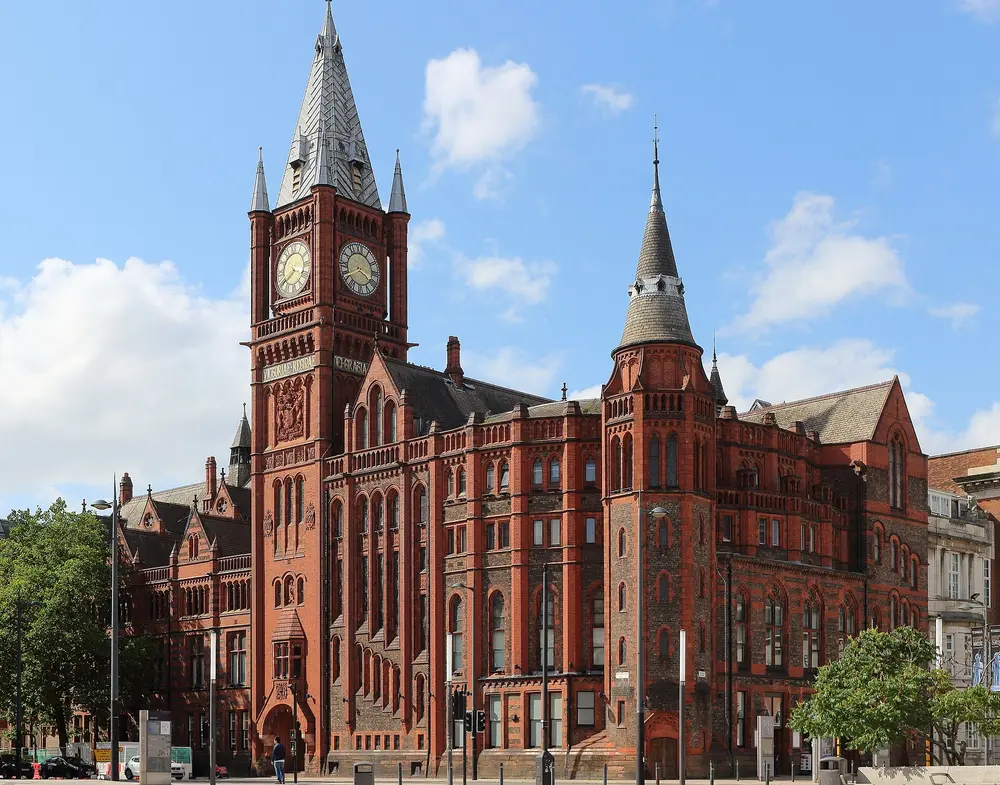
Photo: Rodhullandemu / Wikimedia Commons · CC BY-SA 4.0 · cropped
Photo: Colin Park · CC BY-SA 2.0 · Photo: calflier001 · CC BY-SA 2.0 · Photo: Colin Park · CC BY-SA 2.0
Still deciding where to apply? Hear it from a student who's there
Liverpool requires AAA at A-level with Chemistry plus Biology, Physics or Mathematics. A*AB also accepted with A*A including Chemistry plus one of Biology / Physics / Mathematics. No use of predicted grades. at A-Level for Medicine (MBBS) and interviews by Multiple Mini Interviews (MMI) for 2027 Entry.
Places are limited and the bar is high, so treat those grades as a threshold to clear rather than a target to aim at.
This guide is written for 2027 Entry applicants and updated annually before each UCAS cycle. Sources include University of Liverpool's official course page, UCAS, the UCAT Consortium, and direct conversations with current students. Read time: ~12 minutes.
Checked field-by-field against University of Liverpool's official course page on 11 September 2026.
Liverpool at a glance
| A-level offer | AAA |
|---|---|
| Interview format | Multiple Mini Interviews (MMI) |
| Interviews (2027 entry) | December 2026 - February 2027 |
| Decisions (2027 entry) | March 2027 onwards |
| NGMP TrueScore | 1900+ · home |
Liverpool entry requirements
Liverpool requires AAA at A-level with Chemistry plus Biology, Physics or Mathematics. A*AB also accepted with A*A including Chemistry plus one of Biology / Physics / Mathematics. No use of predicted grades. at A-Level. Most successful applicants achieve these grades on first sitting, with strong predicted grades supplied by their school.
Standard UK-domiciled applicants at Liverpool
Predicted UCAT for interview
Methodology
Liverpool publishes specific decile guidance: home 4th-6th decile (1810-1920) and international 7th-9th (1980-2170). 2024 entry cut-offs were 1935 home, 2108 international. Multi-year FOI history confirms stable bands. Predicted 2027 cut-offs apply small upward bias on the 2024 floor.
Caveat
Liverpool requires both UCAT and GCSE cut-offs to be met independently. 2022/2023 UCAT cut-offs were inflated by teacher-assessed grades during COVID; the 2024 figures are more representative. SJT B4 rejected for home; international accepts any band. Low post-interview success rate (33% home, 16% international).
NextGen MedPrep TrueScore methodology
Liverpool's TrueScore is 1900. Build a week-by-week UCAT plan that works back from your test date — free for the first two weeks.
The UCAT is a 2-hour computer-based aptitude test of Verbal Reasoning, Decision Making, Quantitative Reasoning and a separately-banded Situational Judgement Test. It is taken between July and early September of the year you apply. Most successful applicants prepare for 3-6 months - see our free UCAT guides for a structured prep plan, or 1-to-1 UCAT tutoring for prices and tutors.
Resit policy
No A-Level prediction requirement; resit applicants accepted. Achieved-grade applicants need only 12 GCSE points (vs 15 for predicted-grade applicants).
International qualifications
IB: 36 points overall, 6,6,6 at Higher Level including Chemistry plus one of Biology, Physics or Mathematics.
Contextual offers (widening participation)
Liverpool has used contextual data in medicine admissions since the 2015-16 cycle to give extra consideration at specific stages of the process. It does not publish a separate contextual UCAT threshold.
Eligibility for contextual consideration typically requires evidence of: state-funded secondary education in a deprived postcode (POLAR4 Q1-2), eligibility for free school meals, being care-experienced, or first-in-family university entry. Check University of Liverpool's contextual policy directly and submit supporting evidence on time.
How Liverpool actually selects
Applicants must clear the academic criteria, then are ranked on overall UCAT score, with the top scorers progressing. Home and overseas applications are considered in separate pools because the competition within each differs, so the two can end up with different interview thresholds. Liverpool publishes no cut-off in advance. Around 3,350 people applied to A100 for 2026 entry.
The personal statement
From 2026 entry the UCAS personal statement is structured into three answers (your reasons for applying, your preparation, your key skills/experiences) sharing one 4,000-character total - split it roughly equally, about 1,300 characters each. Treat each prompt as a discrete short-answer question, not a continuous essay.
The three structured prompts share one 4,000-character total (spaces and punctuation count) - split it roughly equally, about 1,300 characters (around 220 words) per prompt. First drafts are always too long, so plan to edit down.
Five things that win
Four things that lose
Worked-example opener (do not copy — for shape only)
"At 14, watching the geriatrician on my Saturday placement explain a Do Not Resuscitate decision to a frightened daughter, I realised that medicine is as much about clarity in language as it is about clinical knowledge. The conversation lasted nine minutes; the silence afterwards lasted longer. Since then I have spent…"
Notice: a specific scene rather than a cliché, a precise detail (the nine-minute conversation), and a closing sentence that bridges to the next paragraph. We have a step-by-step personal statement service if you want a tutor to help shape yours.
The MMI interview at Liverpool
Liverpool uses Multiple Mini Interviews (MMI). For 2027 entry, interviews typically take place in December 2026 - February 2027. Final decisions are released March 2027 onwards.
At Liverpool, expect the following from the MMI. Multiple Mini Interviews - typically 6-10 stations of 5-8 minutes each, often with reading time before each station. Stations rotate; assessors do not see your performance at previous stations, so a poor station does not derail the rest.
How the Liverpool MMI actually runs
MMI with stations testing communication, ethical reasoning, motivation and global-health awareness. Two separate cut-offs (GCSE and UCAT) must both be met before invitations go out.
What they assess
What Liverpool assessors are scoring: MMI assessors score against a structured rubric for each station - usually a 4-5 point scale per skill (communication, empathy, ethical reasoning, scientific knowledge). You don't need to be perfect; you need to demonstrate you can think on your feet, listen, and reflect honestly.
Common station / question themes
- Motivation for medicine (why this career, why now, why this school)
- Ethical scenarios (consent, capacity, end-of-life, resource allocation)
- Role play (often with an actor - break difficult news, support a distressed peer)
- Communication & teamwork (describe a time you led, follow instructions to assemble something)
- Data interpretation (read a graph, justify a clinical decision)
- Personal-statement deep dive at one station
- Knowledge of the NHS / hot topics (workforce, AI, health inequalities)
- Reflection on work experience
Sample questions you might face at Liverpool
Why medicine rather than another health-care career?
Describe a time you worked in a team - what was your contribution?
A patient refuses life-saving treatment. How would you respond?
Discuss a recent NHS news story you've read.
Walk me through what you observed during your work experience and what you learned.
If you had to choose between two patients for a single ICU bed, how would you decide?
Tell me about a non-academic interest and what it has taught you.
What concerns you about a career in medicine?
Model-answer guidance: “Why medicine?”
Our MMI prep programme covers ethics frameworks (SPIES, the four pillars), structured behavioural answers (STAR), and live mock interviews with admissions specialists.
Practise the Liverpool interview
Rehearse the real format before the day — on demand with our AI interviewers, or live with a tutor.
Sit a mock with photoreal AI interviewers — any time
A timed MMI circuit or panel interview on video, with interviewers who listen, react and press with follow-ups. Rubric-scored feedback and a replay the moment you finish.






Live mocks with a tutor who’s been in the room
A full Liverpool-style mock with a medic or dentist tutor — honest scoring against real marking criteria, a station-by-station debrief and a written action plan.
Book a mock interviewMonth-by-month timeline for 2027 Entry
The cycle runs roughly January 2025 (start of prep) through October 2026 (UCAS deadline) to September 2027 (course start). Here are the milestones you cannot miss.
Decide and start work experience
Confirm medicine or dentistry as your career direction. Start booking work experience - at least one NHS placement (volunteering with vulnerable adults / hospital work) and ideally a private/non-clinical role to triangulate your motivation.
Open UCAT prep window
Begin Quantitative Reasoning, Decision Making and Verbal Reasoning practice. Most successful applicants start ~6 months out, but consistent low-volume early prep beats last-minute cramming.
UCAT booking opens
Book your UCAT slot for July or August (do not delay - popular slots fill within days of release). At £80 (UK) the test is non-refundable.
UCAT testing window opens
Take the UCAT. Allow 1 retake window if your first attempt under-performs (rare, and competitive applicants book early to leave room).
UCAT results + UCAS
Receive your UCAT score (immediate). Finalise your UCAS form, school reference, and personal statement. UCAS opens for submission early September.
TrueScore · for invitation to interview at Liverpool in 2027 entry: 1900+ (home tier).
UCAS deadline - 15 October
Submit by 6pm. Late = automatic rejection from medical/dental schools. Make sure your reference is uploaded by your school.
Interview invites
Most schools start sending invites Nov-Dec. Some (Cambridge) do all interviews in December; Oxford in mid-December.
Interviews begin
Interview season runs Dec - Mar depending on school. Prepare for MMI / Panel / Traditional formats based on the school's known approach.
First offers / waitlists
Oxford and Cambridge release decisions in early January. Other schools roll offers from January through March.
Reply by UCAS deadline
If you have offers, reply with firm and insurance choices by the UCAS reply deadline (typically early-mid May).
A-Level results day
Mid-August. Meet your offer = secured place. Miss your offer = university decides whether to honour it (rare for medicine/dentistry - call admissions immediately).
Course start
Term begins late September / early October. Welcome week, anatomy lab introductions, and first lectures.
What makes Liverpool different
Historic medical school known for tropical medicine and global health. GCSE-heavy scoring (top 9 GCSEs counted). Personal statement not normally used in shortlisting but reserved for borderline cases. Low post-interview success rate compared with peers.
Notable research areas
Curriculum (Integrated)
Five-year MBChB with integrated theory and clinical practice. Strong NHS placement breadth across Liverpool University Hospitals NHS Foundation Trust and Cheshire & Merseyside.
Intercalation
Optional intercalated BSc/MRes between Years 3 and 4 (selective).
Location: Liverpool, UK
Founded in 1881. Whether the city suits you matters - five or six years is a long commitment. Visit on an open day if you can; current students will be the most honest assessors of culture and clinical placement quality.
Read the full Liverpool course profile — spiral + integrated + case-based learning, 5 years, with placements in Merseyside, Cheshire and Warrington, with some placements in the Blackpool area and north Wales.
Application statistics for Liverpool
Liverpool intake
~280 home + ~30 international places per year (A100 Standard Entry Medicine).
How Liverpool selects, at a glance
Source: University of Liverpool admissions data; UCAT consortium published deciles; recent FOI responses.
Six mistakes that derail medicine applications
Liverpool — frequently asked questions
Sources for this Liverpool guide
Apply to Liverpool with confidence
We have helped hundreds of applicants turn their UCAT, personal statement and interview prep into offers from Liverpool and other UK medicine schools.