
The Nottingham Medicine course
What you actually study, and where you will be
Nottingham's BMBS (Hons) is a 5-year course taught through case-based learning in an integrated, spiral curriculum, with patient contact from Year 2 and placements in Nottinghamshire and Derbyshire (2027 entry). A course co-created with students, staff and practitioners, with weekly primary-care teaching from year 2 and a placement estate that spans Nottinghamshire and Derbyshire. The MLA is embedded in the degree rather than sat separately.
- Degree
- BMBS (Hons)
- Length
- 5 years
- Teaching
- Integrated + Spiral + Case-based learning
- Clinical contact
- Year 2
- UCAS code
- A100

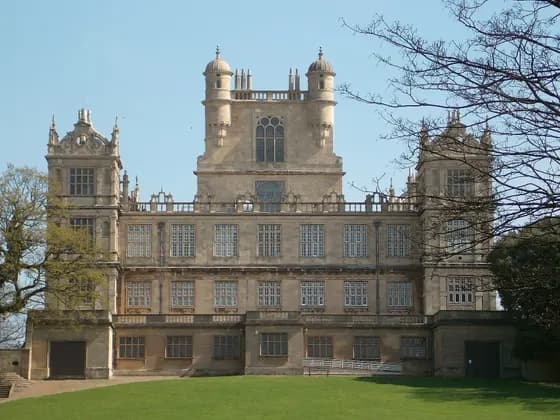


Photo: Clem Rutter, Rochester, Kent (www.clemrutter.net) · CC BY-SA 3.0 · cropped
Photo: Acabashi · CC BY-SA 4.0 · Photo: JimmyGuano · CC BY-SA 4.0 · Photo: Smashman · Public domain
The Nottingham medicine course at a glance (2027 entry)
Medicine at the University of Nottingham is a five-year course leading to the BMBS (Hons), short for Bachelor of Medicine, Bachelor of Surgery. It is the same primary medical degree that other universities call the MBBS or MBChB. The UCAS code is A100. Your home base is the Medical School, which is built into Queen's Medical Centre (QMC), a Nottingham University Hospitals NHS Trust hospital right next to the University Park campus.
The course is new. Nottingham redesigned all of its medicine courses for 2026 entry, and the university says students, staff and doctors helped shape the new version. If you apply for 2027 entry, the redesigned course is the one you will take. Older guides describing a built-in BMedSci science degree are describing the course it replaced.
The five years follow a path from the Art of Medicine, through the Science of Medicine, to the Practice of Medicine and Surgery. Year 1 teaches how to talk to and examine patients, plus the science behind common symptoms. Year 2 goes deeper into the science that medicine rests on. Years 3 to 5 are mainly clinical rotations in hospitals, GP surgeries and community settings across Nottinghamshire and Derbyshire.
Two ideas run through the whole course. The first is a spiral curriculum: topics come back again and again, each time in more depth and closer to real patients. The second is a set of Entrustable Professional Activities (EPAs). These are clearly defined tasks, such as interviewing or examining a patient, that you must be able to do on your own by the time you graduate.
Day to day, years 1 and 2 are mostly campus-based, with around 14 to 20 timetabled hours a week. From year 3 most of your week is spent on placement. The redesign also brings students from the standard, graduate-entry and foundation-year routes onto one shared course, although they join it at different points.
| Degree | BMBS (Hons), Bachelor of Medicine, Bachelor of Surgery |
|---|---|
| Course length | 5 years full-time |
| UCAS code | A100 |
| Curriculum | Redesigned for 2026 entry: spiral, case-based, built around EPAs |
| Places | About 200 home and 20 international places |
| Main base | Medical School at Queen's Medical Centre, beside University Park |
| First regular patient contact | Year 2: one day a week in general practice |
| Placement area | Hospitals and GP practices across Nottinghamshire and Derbyshire |
| Anatomy | Taught in year 2 Science of Medicine; the Medical School has an anatomy suite |
| Final exams | UK Medical Licensing Assessment built into final-year exams |
What makes Nottingham medicine different
A brand-new curriculum built around a new doctor's tasks
The course that starts in 2026 is organised around the EPAs, the tasks a new doctor must be trusted to do alone. You start on simple EPA milestones in year 1, such as basic patient interviews, and log them in an electronic portfolio. In the clinical years you get regular feedback on your progress towards them.
A day a week in general practice in year 2
Throughout year 2 you spend one day each week in primary care, the part of the NHS that patients usually reach first, such as GP surgeries. Campus teaching that year follows a new presenting symptom each week, meaning the problem a patient comes in with, such as chest pain. The primary care day is where you apply that science with real patients.
A medical school inside a working hospital
The Medical School building is part of Queen's Medical Centre (QMC), one of the hospitals on the course's placement list. A footbridge over the A52 links it to University Park, so your main teaching base and the rest of the university sit side by side.
A new simulation centre on University Park
Alongside the new course, the university is opening a Clinical Teaching Centre on University Park with immersive simulation suites. Simulation means practising procedures and emergencies on manikins and in mocked-up clinical settings, where a mistake harms no one. The university says simulation is built into the course from the start.
Your own project across years 3 and 4
The year 3 Enrichment module lets you pick a clinical or non-clinical topic that interests you. In year 4 the Project module lets you carry that work on in more depth, or start a quality improvement project instead. A quality improvement project measures a problem in how care is delivered, tests a change and checks whether it helped.
A final year that rehearses the foundation doctor job
Year 5 is built around becoming a foundation doctor, the first paid training job after graduation. The Assistantship places you with resident doctors, meaning qualified doctors who are still in training and were once called junior doctors, and the wider team. Transition to Practice covers ward work and out-of-hours duties, with supervised practice of the procedures the General Medical Council (GMC), the UK regulator for doctors, expects of new doctors.
How Nottingham teaches medicine
Because the curriculum is spiral, you meet each topic several times rather than once, with more clinical detail and responsibility each time. Science and clinical skills are taught together from the start, so the science behind a symptom such as chest pain sits alongside learning how to ask a patient about it and examine them.
In years 1 and 2 most teaching happens on University of Nottingham campuses. Alongside lectures, the science is also taught through integrated case-based learning (CBL), where a small group works through a patient case and learns the science needed to understand it. The typical week below shows how the hours split between lectures, small-group work, skills and simulation sessions, and structured personal study.
From year 3 the balance flips, and most of your learning happens on clinical placement. Placement blocks alternate with time back on campus, where academic teaching continues. As you get closer to graduating you are expected to set more of your own learning goals and direct more of your own study.
Throughout the course you have regular meetings with an educational supervisor, who helps you plan your learning and reviews how you are getting on. Your progress towards the EPAs goes into an electronic portfolio that you build from year 1. By the final year it is a running record of the skills you have practised.
The ways you will learn
| Lectures | Mainly in years 1 and 2. Lectures introduce the core science, such as physiology, anatomy, biochemistry and pharmacology, which you then apply in small groups and practical sessions. |
|---|---|
| Case-based learning groups | Small group sessions in years 1 and 2. Your group works through cases built around common symptoms, such as breathlessness or abdominal pain, and in year 2 revisits earlier topics in integrated case-based discussions. |
| Simulation and clinical skills sessions | A regular part of the week in years 1 and 2. You practise consultations, history-taking (asking a patient structured questions about their symptoms, health and background) and physical examination before doing them with real patients. Simulation lets you rehearse situations, such as a patient becoming acutely unwell, that you could not safely practise on a real person. |
| Clinical attachments | From year 3 you join hospital, GP and community teams for blocks of several weeks. Supervisors give regular feedback on your progress towards the EPA milestones, and you take on more of the work as the years go on. |
A typical week on the Nottingham course
For years 1 and 2 the university publishes the typical make-up of a week, adding up to around 14 to 20 contact hours. Outside these sessions you are expected to keep learning on your own: preparing for workshops, reading, completing portfolio tasks, working on presentations and revising for exams.
From year 3 there is no standard campus week. Your timetable follows the hospital or GP team you are attached to on placement.
- Four to six hours of lectures.
- Two to four hours of small group work.
- Two to four hours of simulation and clinical skills sessions.
- Six to eight hours of structured personal study.
- In year 2, one full day a week of primary care clinical teaching.
- Up to one hour a month of one-to-one meetings with your educational supervisor.
How anatomy is taught at Nottingham
Anatomy is named as a core part of year 2's Science of Medicine module. You study it alongside physiology, biochemistry and pharmacology, working through the body systems, such as the heart and circulation or the lungs.
The Medical School building at QMC houses an anatomy suite, which the School of Medicine's facilities page describes as a suite for full-body dissection.
The bodies used to teach anatomy come from people who chose to leave their body to the university after death. The university accepts these donations under a licence from the Human Tissue Authority, the national regulator for the use of human tissue.
When you first meet patients at Nottingham
In year 1 you learn the basics of working with patients: how a consultation works, how to take a history and how to carry out a physical examination. You practise these through realistic scenarios, and you log your first EPA milestones, such as basic patient interviews, in your portfolio.
Regular contact with real patients starts in year 2, when you spend one day every week in primary care. The university lists NHS primary care providers across Nottinghamshire and Derbyshire as part of where years 1 and 2 are taught.
From year 3 clinical work becomes the main part of your week, first in hospital medicine, surgery and specialties, then in year 4 in areas such as child health, women's health and general practice. The 2027 course overview also names emergency medicine among the clinical areas you rotate through. Each rotation asks more of you than the last.
Year by year at Nottingham
- Year 1
The Art of Medicine
Year 1 lays the groundwork: how to consult with patients, how to examine them, and the science behind the symptoms they most often bring. It is mainly campus-based and is designed to build your ability to learn independently. There are two core modules.
- Art of Medicine runs all year and covers consultation skills, basic sciences and introductory clinical skills.
- Integrated case-based learning groups work through the science behind common symptoms, including breathlessness, chest pain and abdominal pain.
- You meet your first EPA milestones, such as basic patient interviews and physical examinations, and record and reflect on them in your electronic portfolio.
- Reflective Practice looks at how illness affects patients' lives and how they use the health system, through weekly group tutorials and self-directed study.
- Within Reflective Practice you can choose to focus on topics such as medical humanities, patient journeys or reading literature about patients' experiences.
- Year 2
The Science of Medicine
Year 2 goes deeper into the science that underpins medical practice. Each week centres on a different presenting symptom, and the cases grow more complex as the year goes on.
- Science of Medicine is a year-long module covering clinically relevant physiology, anatomy, biochemistry and pharmacology across the body systems.
- One day a week of primary care teaching, where you apply your knowledge with real patients.
- Integrated case-based discussions revisit year 1 topics, so earlier learning keeps coming back.
- Individual meetings with your educational supervisor help you plan and direct your own learning.
- Interprofessional Learning is group project work on a topic you choose from sustainable health goals, ethics and law, or global health.
- Year 3
The Practice of Medicine and Surgery 1
Year 3 is your first full clinical year. You rotate through three 10-week clinical blocks, followed by a block of teaching on research skills. You also get your first whole module chosen by you.
- The three blocks cover Medicine, Surgery and Integrated Specialities. Integrated Specialities may include dermatology (skin), ophthalmology (eyes), ear, nose and throat, mental health and sexual health.
- Teaching continues on campus as well as in hospitals, GP surgeries and community settings.
- The Enrichment module lets you choose a clinical or non-clinical experience, with options including neurosurgery, thoracic surgery, emergency medicine, sustainability and global health.
- Research Skills and Critical Appraisal covers research methods and evidence-based medicine. Critical appraisal means judging whether a study is sound enough to trust, practised through literature reviews, data exercises and critiquing papers.
- Year 4
The Practice of Medicine and Surgery 2
Year 4 focuses on how illness shows up in different groups of patients, such as children and women. You move through four placement blocks and handle more complex cases, with ongoing educational supervision to keep you on track.
- Clinical attachments are likely to include Child Health, Women's Health, Mental Health, Primary Care and Long Term Conditions.
- Long-term conditions are illnesses that people live with for years, such as diabetes, where care is about ongoing management rather than a one-off cure.
- A Student Selected Module gives you another choice, from options including languages for medics, neurosurgery, thoracic surgery, emergency medicine, sustainability and global health.
- The Project Student Selected Module is either a new quality improvement project or a deeper continuation of the research you began in year 3 Enrichment.
- You are encouraged to set more of your own learning goals as graduation approaches.
- Year 5
The Practice of Medicine and Surgery 3
The final year prepares you to work as a foundation doctor. You revisit medicine, surgery and perioperative medicine, and primary care in three six-week blocks before your final assessments. Two further modules focus on the job itself.
- Perioperative medicine is the care of patients before, during and after an operation. You also help manage patients with acute and long-term conditions.
- You receive regular formative feedback, meaning feedback that does not count towards a mark, on your progress towards the EPA milestones you need by graduation.
- The Assistantship is an extended placement working alongside resident doctors and the wider multidisciplinary team of nurses, pharmacists, therapists and others.
- Transition to Practice covers a foundation doctor's ward work and out-of-hours duties, with supervised practice of the key procedures set out in GMC guidance.
- You may have the chance to take an elective: a period of study in the UK or abroad, in a different healthcare setting or in research.
How you are assessed at Nottingham
You are assessed through written, practical and oral exams, which may include computer-based tests and clinical skills exams. You also build and maintain an electronic portfolio that evidences the skills and knowledge you gain, including your EPA milestones.
In your final year you sit the UK Medical Licensing Assessment (MLA), overseen by the GMC. Since 2024-25 every UK medical degree has had to include a pass in the MLA. At Nottingham it is built into your final assessments, so there is no separate exam to sit after the degree.
The MLA has two parts. The Applied Knowledge Test (AKT) is a computer-based exam of medical knowledge applied to patients: two papers of 100 single best answer questions, each lasting two hours, sat on consecutive days. In a single best answer question you choose the one best option from a list.
The Clinical and Professional Skills Assessment (CPSA) is an Objective Structured Clinical Examination (OSCE). You move round a circuit of timed stations, each testing a task such as examining a patient, explaining a diagnosis or carrying out a procedure, with an examiner marking each one.
When the GMC checked Nottingham's finals for the MLA in 2024, it found both parts met its requirements. The OSCE then had 15 ten-minute stations, including a rest station, over two days, with trained actors in consultation and professionalism stations and plans to use real patients with physical signs. Those details describe the course before the 2026 redesign, and the new course may organise its exams differently.
Under that previous course, year 4 also had a knowledge exam and an OSCE that you had to pass to progress. Final-year students sat the Prescribing Safety Assessment (PSA), a national online test of safe prescribing, although passing it was not a condition of graduating. Every new doctor must still pass the PSA by the end of the first foundation year.
Where you will actually be at Nottingham
Your placements take place on campus and in hospitals, GP surgeries and community services across Nottinghamshire and Derbyshire. The School of Medicine says its medicine courses use more than 200 GP surgeries across the region. The course page names the hospitals below, plus the Nottinghamshire and Derbyshire healthcare trusts.
From year 3 your academic year starts in mid-August. You spend an average of 36 hours a week on placement, which can include shifts and weekends, and blocks of placement alternate with time back on campus.
The School of Medicine's placement map for all its medicine courses also shows hospitals in Lincolnshire, but the A100 course page lists only the Nottinghamshire and Derbyshire sites below.
The course page reminds you to budget for living costs such as travel and accommodation, and for smart clothes to wear in clinical settings.
The Medical School is part of the QMC site, beside University Park, so your main hospital is also your campus base.
- Queen's Medical Centre (Nottingham University Hospitals NHS Trust)
- Nottingham City Hospital (Nottingham University Hospitals NHS Trust)
- Highbury Hospital (Nottinghamshire Healthcare NHS Foundation Trust)
The university has an Education Centre at King's Mill Hospital.
- King's Mill Hospital, Sutton-in-Ashfield (Sherwood Forest Hospitals NHS Foundation Trust)
- Nottinghamshire Healthcare Trust services in Mansfield
Royal Derby Hospital has a University of Nottingham Education Centre with teaching facilities and social and administrative space for students.
- Royal Derby Hospital (University Hospitals of Derby and Burton NHS Foundation Trust)
- Derbyshire Healthcare Trust
- Chesterfield Royal Hospital, Calow (Chesterfield Royal Hospital NHS Foundation Trust)
More than 200 GP surgeries take students on the university's medicine courses. Primary care teaching starts in year 2 and returns as a placement area in years 4 and 5.
Electives and chosen modules at Nottingham
Student selected components are the parts of a medical course where you choose the topic. At Nottingham they start as choices inside core modules in years 1 and 2. In years 3 and 4 they become whole modules: Enrichment in year 3, then a Student Selected Module and a Project Student Selected Module in year 4.
Enrichment and the year 4 Student Selected Module can each be clinical or non-clinical. Because a project started in Enrichment can continue into the year 4 Project module, you can spend parts of two years on one research question.
In the final year you may have the opportunity of an elective, a placement of your choosing in the UK or abroad. It can be in a different healthcare setting, in another area of professional development or in research, and is a chance to see how medicine is practised elsewhere.
Facilities and support at Nottingham
Where you will learn
The Medical School opened in 1970 as part of Queen's Medical Centre and is the School of Medicine's main hub. It sits across the A52 from University Park, joined by a pedestrian footbridge. Inside are lecture theatres, seminar rooms, labs, computer suites, the anatomy suite, a medical imaging unit and the Greenfield Medical Library.
The Clinical Skills Centre is on D floor of QMC, in the link corridor between the Medical School and the hospital's South Block. It is used to teach and assess clinical skills and is shared by students of medicine, nursing, midwifery, pharmacy, physiotherapy and dietetics.
For the new course the university announced a Clinical Teaching Centre on University Park in July 2025. It was costed at £15.3m and due to open in summer 2026, with 2,900 square metres of immersive simulation suites, clinical skills zones, interactive classrooms and study and social space. The 2027 course page also lists a newly designed clinical examination centre.
Support while you study
You have a personal tutor who supports your academic and personal development and can point you to specialist help. In the early years, senior tutors are there for anything you would rather not raise with your tutor. In the clinical years, clinical sub-deans take on that role and can help with academic, pastoral or placement problems.
Counsellors and wellbeing officers are based at clinical sites across the region, so help is close by while you are on placement. A director of student wellbeing oversees welfare across the school and steps in for complex situations.
The student-run Medics Society (MedSoc) pairs each new student with a mentor from the year above through its Medic Parents scheme. It also runs a wider peer support scheme and peer-led teaching and revision sessions, and its committee includes a welfare officer and an international students officer.
If you have a disability or health condition, the school works with the university's disability support team on a support plan. It sets out reasonable adjustments, such as extra time, and you get a key contact in the School of Medicine. International students get named staff contacts and a targeted induction course.
For the course that ran before the 2026 redesign, the school told the GMC in 2024 that it held practice exams with feedback before the real ones. Students who struggled in them were invited to a one-to-one meeting with its remediation team to agree a personal action plan.
Is the Nottingham course right for you?
This course may suit you if
- You want a mixed week in years 1 and 2, with a few hours each of lectures, small-group case work and clinical skills or simulation, plus 6 to 8 hours of structured personal study.
- You want regular time in general practice early on: one day every week in year 2, before hospital rotations begin.
- You want your medical school inside a working hospital, with the Medical School at QMC a footbridge away from University Park.
- You are interested in research or in improving how care is delivered, since one project can run across the year 3 Enrichment and year 4 Project modules.
- You want a final year designed around doing the foundation doctor job, through the Assistantship and Transition to Practice modules.
Things to think about
- You would be among the first year groups on a brand-new curriculum. The exam formats the GMC reviewed belong to the old course, and the university warns that course details can change.
- Year 1 is mainly campus teaching and skills practice, so it may not suit you if you want to be on placement from your first term.
- From year 3 the academic year starts in mid-August and placements average 36 hours a week, sometimes with shifts and weekends, so summers are shorter.
- Placements spread across Nottinghamshire and Derbyshire, including Sutton-in-Ashfield, Derby and Chesterfield, so some blocks can mean travelling out of Nottingham.
- Year groups are large: A100 alone has about 220 places, foundation-year students join in year 1, and from 2027 entry graduate-entry students join in year 2.
Nottingham medicine course — frequently asked questions
Applying to Nottingham?
How to get into Nottingham
Entry requirements, UCAT, personal statement and interview, step by step.
Open the guide →Nottingham UCAT cut-offs and offers
UCAT cut-offs, A-level offers, interview format and decision dates.
See the requirements →Compare Nottingham with other schools
Put the teaching style, anatomy teaching and placements next to another school.
Open the comparison →Prepare for the Nottingham interview
Format breakdown, school-specific sample questions and prep tips from tutors who interviewed here.
Read the guide →Where this Nottingham course guide came from
This guide was written from 21 official sources — University of Nottingham's own course pages and programme documents, plus the regulator and NHS placement partners where they publish detail — read on 2026-09-23, then checked claim by claim against those sources.
- Medicine BMBS (Hons), University of Nottingham course page, 2027 entry
- Medicine BMBS (Hons), University of Nottingham course page, 2026 entry
- Medicine at the University of Nottingham, School of Medicine course overview and FAQs
- Medicine course changes for 2026 entry, University of Nottingham
- Medicine degree course redesign, University of Nottingham news, July 2025
- Clinical placements, University of Nottingham School of Medicine
- Medicine student support, University of Nottingham School of Medicine
- Applying to Medicine, University of Nottingham (course codes and places)
- School of Medicine facilities, University of Nottingham
- Medical School campus page, University of Nottingham
- Clinical Skills Centre, Faculty of Medicine and Health Sciences, University of Nottingham
- Healthcare and medical sites, University of Nottingham
- Body bequest, University of Nottingham
- GMC MLA clinical and professional skills assessment compliance decision, School of Medicine, University of Nottingham
- GMC MLA applied knowledge test compliance decision, School of Medicine, University of Nottingham, June 2024
- Graduate Entry Medicine BMBS (Hons), University of Nottingham course page, 2027 entry
- Graduate Entry Medicine course changes, University of Nottingham School of Medicine
- Medicine with a Foundation Year BMBS (Hons), University of Nottingham course page, 2026 entry
- Course changes affecting 2025 entry, University of Nottingham School of Medicine
- Prescribing Safety Assessment, UK Foundation Programme
- UKFP 2027 application timeline, UK Foundation Programme
Courses are restructured between cycles. Anything here that decides your application — an anatomy offer, a placement city, a compulsory intercalated year — should be confirmed against the official page for your entry year.
Applying to Nottingham?
We have helped hundreds of applicants turn their UCAT, personal statement and interview prep into offers from Nottingham and other UK medicine schools.