
The Pears Cumbria (GEM) Medicine course
What you actually study, and where you will be
Pears Cumbria's MBBS (awarded by Imperial College London) is a 4-year (graduate entry) course with an integrated curriculum, with patient contact from Year 1 and placements in North and south Cumbria (2027 entry). A four-year graduate-entry course delivered in Cumbria but awarded by Imperial College London — you study in Carlisle and graduate with an Imperial degree. The emphasis is community-based learning across north and south Cumbria.
- Degree
- MBBS (awarded by Imperial College London)
- Length
- 4 years (graduate entry)
- Teaching
- Integrated
- Clinical contact
- Year 1
- UCAS code
- A102



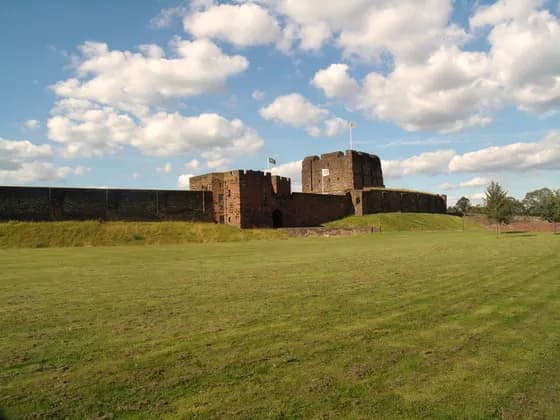
Photo: Tom Edwards · Public domain · cropped
Photo: Euan Nelson · CC BY-SA 2.0 · Photo: Colin Park · CC BY-SA 2.0 · Photo: Euan Nelson · CC BY-SA 2.0
The Pears Cumbria (GEM) medicine course at a glance (2027 entry)
This is a four-year medicine course for people who already hold a degree, known as graduate entry. It is taught by the Pears Cumbria School of Medicine (PCSM) on the University of Cumbria's Fusehill Street campus in Carlisle. Imperial College London runs the programme together with the University of Cumbria and awards the degree. You graduate with an Imperial MBBS (Bachelor of Medicine and Bachelor of Surgery), but you study in Cumbria, not London.
The school is new. It opened on 26 August 2025 with 58 students, set up with a £5 million gift from the Pears Foundation, a charity. Its purpose is to train doctors in Cumbria, for Cumbria, a county with a long-standing shortage of doctors. The first year group is due to qualify in 2029.
Because the programme is so new, the General Medical Council (GMC), which regulates doctors and medical degrees in the UK, lists it among the new schools and programmes it is still reviewing. New programmes go through a long period of GMC checks, in stages, before the GMC adds them to its approved list. The course page says the MBBS is under ongoing GMC quality assurance.
The local purpose shapes what you learn. Alongside medical science and clinical skills, a separate strand on preventing illness and on how healthcare is delivered runs through your first two years. As the school develops, it also plans to teach you how digital tools such as large data models and artificial intelligence (AI) are used in healthcare.
Day to day, this is not a problem-based learning (PBL) course, where small groups learn mainly by working through patient cases on their own. You get a mix of interactive lectures, small-group work, practical classes, simulation and team-based learning, in which you prepare beforehand and then answer questions with your team. You meet patients from Year 1. Over the four years, roughly half your time is on campus and half on clinical placements around the county, with the placement share rising each year.
| Degree | MBBS, awarded by Imperial College London |
|---|---|
| Course length | 4 years full time, graduate entry |
| UCAS code | A102 (Imperial College London, institution code I50) |
| Cohort size | 58 students in the first intake (August 2025) |
| Main campus | University of Cumbria, Fusehill Street campus, Carlisle |
| Teaching style | Lectures, small groups, team-based learning and cases; not PBL |
| Anatomy | Models, digital anatomy, clinical imaging, videos and living anatomy |
| First patient contact | Year 1; the first cohort's first hospital week was December 2025 |
| Placement area | North and south Cumbria, including Carlisle and Barrow-in-Furness |
| Campus and placement split | About half and half across the four years |
What makes Pears Cumbria (GEM) medicine different
A small first year group with local roots
The first intake, in August 2025, was 58 students. The school reports that 45% came from widening participation backgrounds, meaning groups that are under-represented in medicine. Just over half (57%) were from the North of England and one in seven (14%) from Cumbria itself. If you join in the next few years, you will be in one of the school's first year groups.
A course built around one county's health needs
The curriculum was designed around Cumbria, a rural county with a scattered population. It stresses prevention, community care and working across GP, community and hospital services in remote areas. You learn to recognise and treat common mental health problems in GP settings, and you train alongside physiotherapists, occupational therapists and paramedics, as you would in a real care team.
Prevention has its own modules and a project
Two modules, Prevention and Healthcare Delivery 1 and 2, span Years 1 and 2. They cover the social, psychological and behavioural causes of ill health, population health, and how research and health data can improve care. They include a community project lasting about 18 months, in teams of five or six. You rank a shortlist of projects proposed by local NHS and community hosts, and the school allocates them.
Clinical placements from early in Year 1
Clinical placements and simulation start early in Year 1. The first year group, who began in late August 2025, spent a week at the Cumberland Infirmary in Carlisle that December. Before the end of that year they had also been on placement at Furness General Hospital in Barrow-in-Furness.
A tutor with local clinical experience for four years
Every student is given a Professional Development Tutor (PDT) who has clinical experience in Cumbria. Your PDT mentors you from the start of the course to your final year, and links you into the county's healthcare networks as well as supporting your studies.
How Pears Cumbria (GEM) teaches medicine
Years 1 and 2 each have three modules running side by side: Medical Sciences, Clinical Skills and Professional Practice, and Prevention and Healthcare Delivery. The timetable sets aside specific times for scientific knowledge, clinical skills and professional practice, so you focus on each in turn. Years 3 and 4 are each a single clinical module.
Much of the teaching in the first two years is interactive, in both large and small groups. Some sessions ask you to prepare beforehand, so the time together goes on using what you have learned rather than hearing it for the first time. The school describes its approach as active learning: you practise applying knowledge and thinking critically, for example about preventing disease.
Learning moves steadily onto the wards. From Year 2, campus teaching is used to consolidate what you saw on placement. In Years 3 and 4 you are embedded in clinical teams, with structured teaching and simulation sessions that put you in unfamiliar situations and let you practise making decisions when the answer is uncertain.
You are taught by academic staff from Imperial and the University of Cumbria, by NHS staff and by specialists from outside both universities. You may also be taught by other students, known as peer teaching.
The community project sits within the Prevention and Healthcare Delivery modules. These modules cover public health, quality improvement (changing how a service works so that care gets better), leadership and education, models of healthcare and health inequalities. In a team of five or six, you work on a real health problem with a local NHS or community organisation that hosts and supervises the project. It runs for about 18 months from October of Year 1, with at least 150 hours set aside for each student.
Host organisations propose the projects, which can be anywhere in Cumbria or just over the border in the Lancaster district. In your first weeks you rank a shortlist, and the school shares out the projects in a way that keeps overall disappointment as low as possible. The first year group's projects include the causes of lower-limb amputation in people with diabetes, childhood eczema in Cumbria and helping smokers quit in the emergency department.
The ways you will learn
| Interactive lectures and flipped classroom | Teaching for the whole year group, designed for you to take part rather than just listen. Some sessions use a flipped classroom: you work through material before the session, then use the session itself to apply it. |
|---|---|
| Team-based learning | A structured group format in which you prepare in advance and then answer questions with your team. It is also used for assessment in Years 1 and 2, where your group works together on a set of questions. |
| Case studies | Some teaching is built around patient cases that involve several health professions. They help you connect scientific and clinical knowledge across GP, hospital and community settings. |
| Simulation | Practice in realistic scenarios on campus, where a mistake cannot harm a patient. It runs through all four years, alongside placements from Year 1, and is used to build practical, clinical and communication skills. |
| Clinical placements | The school calls this situational learning: learning by being in real clinical settings. Depending on the year, these include patients' own homes, GP surgeries, hospitals and community health services. |
| Reflective practice | Thinking back over an experience, such as a conversation with a patient, to work out what went well and what you would do differently. It is a listed teaching method, and self-awareness and reflection are among the skills the course expects you to show by the end. |
A typical week on the Pears Cumbria (GEM) course
Most workload details come from Imperial's programme specification, the official outline of the course. The latest one published is for 2025-26 entry and was written for the first intake, so some details may change for later year groups. It describes medicine as intensive. You can normally expect timetabled teaching between 08:00 and 18:00, Monday to Friday, with independent study on top. Where possible, Wednesday afternoons are left free of teaching.
The balance shifts each year. In Year 1, about 40% of your time is scheduled teaching, such as lectures, tutorials, anatomy and clinical skills sessions and placements. The other 60% or so is independent and guided study. In Year 2, placements rise to about a third of your time. In Years 3 and 4 you spend most of your time on placement, with time set aside to consolidate.
While on placement you are expected to do some out-of-hours shifts. The school warns that time for part-time work is very limited. Each year is worth 60 credits under the European Credit Transfer and Accumulation System (ECTS), and one credit stands for about 25 hours of study, around 1,500 hours a year. The specification calls these credits notional: MBBS degrees do not usually use credits, so the figures are only a rough guide to workload.
How anatomy is taught at Pears Cumbria (GEM)
Anatomy is taught with a clinical focus from the start. You learn the structure of the body so that you can understand how particular diseases show themselves and how they are diagnosed and treated. It sits within the Medical Sciences 1 module, which covers the anatomy and physiology of the major organ systems.
The school lists its anatomy resources as models, digital anatomy software, clinical imaging, videos and living anatomy. Living anatomy means learning structures by looking at and feeling them on living people rather than on specimens.
When you first meet patients at Pears Cumbria (GEM)
You meet patients from early in Year 1. The school describes patient contact in a range of settings: people's own homes, general practice (GP surgeries), hospitals and community health services. Alongside this you practise on campus in simulation, so skills are rehearsed before you use them with patients.
For the first year group, the first hospital placement was a one-week introduction at the Cumberland Infirmary in Carlisle in December 2025. It was run by North Cumbria Integrated Care NHS Foundation Trust (NCIC), which describes it as supervised early contact with patients and with teams made up of different professions. Near the end of Year 1, students went to Furness General Hospital, where one student described a mix of ward rounds and clinical teaching.
Contact builds from there. Year 2 brings longer placements in primary care, meaning GP and community services, and in secondary care, meaning hospital medicine and surgery, plus mental health. In Years 3 and 4 you are part of clinical teams, and the final year includes an assistantship in which you take on the work of a new doctor.
Year by year at Pears Cumbria (GEM)
- Year 1
Bringing science and clinical practice together
Year 1 combines medical science with clinical knowledge while you start to build the values and behaviours expected of a doctor. Short clinical placements and simulation begin early, in settings across north and south Cumbria. There is a particular focus on how research is used to improve the way healthcare is delivered.
- Medical Sciences 1, the largest module at 30 credits: the anatomy and physiology of the major organ systems, and how disease processes (pathophysiology) cause illness.
- Clinical Skills and Professional Practice 1 (20 credits): clinical, communication and practical skills, and the roles and responsibilities of a medical student and a doctor.
- Prevention and Healthcare Delivery 1 (10 credits): the social, psychological and behavioural factors that affect health and how care is delivered.
- The community project starts in October of your first term. In Year 1 your team researches the problem, reviews the published evidence and designs a change, with a plan for measuring whether it works.
- Your first hospital placements, which for the first year group were at the Cumberland Infirmary and Furness General Hospital.
- A compulsory field trip; the programme specification lists up to two weeks of living costs as an extra you pay.
- At least one assessment in each module that counts towards passing the year, including clinical and professional skills assessments.
- Year 2
Long-term conditions and longer placements
Year 2 goes deeper into the medical sciences, now aimed at patients who live with several long-term conditions at once. Clinical learning in GP and hospital settings grows to about a third of your time. You also finish the community project you started in Year 1.
- Medical Sciences 2 (15 credits, taught in terms 1 and 2): building on Year 1 to take an evidence-based approach to patients with multiple long-term conditions.
- Clinical Skills and Professional Practice 2 (35 credits, the biggest module this year): placements across the region in general practice, community and mental health services, and hospital medicine and surgery.
- Prevention and Healthcare Delivery 2 (10 credits): social sciences and population health, and the practical side of using research and health data to improve outcomes.
- The second half of the community project. Your team aims to put its planned change into practice, measure its effect and report what it found, though the school accepts that not every plan will go ahead.
- Campus teaching that consolidates what you learned on placement.
- Year 3
Clinical placements across specialties
Years 3 and 4 prepare you to work as a Foundation doctor, on the two-year Foundation Programme that follows medical school in the UK. Year 3 is a single 60-credit module, Clinical Skills and Professional Practice 3, delivered mainly through placements in hospital and community settings across the region.
- Placements in medicine, surgery and a range of other clinical specialties, in both community and hospital care.
- Working as part of clinical teams, with structured teaching and simulation on unfamiliar situations and decisions under uncertainty.
- Workplace-based assessments, where a clinician assesses a skill or procedure you carry out, in simulation or with real patients.
- An applied knowledge test and a clinical and professional skills assessment at the end of the year.
- Year 4
Preparing for practice
The final year is another single 60-credit module, Clinical Skills and Professional Practice 4. It builds the knowledge and skills tested by the Medical Licensing Assessment (MLA), the national exam you must pass to be registered with a licence to practise. After the MLA comes a preparation-for-practice component, then your elective.
- Further clinical placements that build the knowledge, skills and professional abilities the MLA tests.
- The MLA, the Prescribing Safety Assessment (an exam of safe prescribing) and workplace-based assessments.
- A pre-foundation assistantship: you join a local clinical team with a defined role and do work similar to a newly qualified doctor's.
- An elective: an extended placement you organise yourself, in the UK or abroad.
- Support from the school to apply for a Foundation Year 1 post through the UK Foundation Programme.
How you are assessed at Pears Cumbria (GEM)
Every assessment on this course is marked pass or fail, and the MBBS itself is not given a class. You normally have to pass each year to move on, and in Years 1 to 3 you must pass every module. Pass marks are not fixed. Each exam is standard set, a process that adjusts the pass mark to how hard that particular exam was.
In Years 1 and 2, every module has at least one summative assessment, the kind that counts towards passing the year. Formats include single best answer questions, where you pick the best of several options, short written answers, prescribing tasks and team-based learning tests. The community project has its own tasks, which the school calls provisional. In Year 1 these are two 2,000-word literature reviews, a 1,500-word project plan and a poster for the public. In Year 2 you defend a conference poster in a viva (a spoken exam), teach first-year students, write a reflection and are marked by your teammates.
You also sit clinical and professional skills assessments. These test history taking, physical examination, choosing and interpreting tests, planning treatment, practical procedures and communication. Your result comes from several examiners across a series of stations, which are short timed tasks. At least one internal and one external examiner rotate through the stations, and you cannot fail on a single station or one examiner's judgement.
Formative assessments, which do not count, give you regular feedback so you can track your progress. You get spoken feedback straight away during clinical teaching. On placement you get clinical encounter forms, a clinician's written feedback on a patient you saw. After timed exams you receive your marks with a breakdown by topic. Assessments may be in class or online, and open or closed book.
In Year 4 you must pass the MLA, the Prescribing Safety Assessment and your workplace-based assessments. The MLA has two parts, both run by your medical school to requirements the GMC sets. The Applied Knowledge Test (AKT) is an on-screen, multiple-choice exam on applying medical knowledge. The Clinical and Professional Skills Assessment (CPSA) is a practical exam of clinical and professional skills. Every student graduating from a UK medical school must pass the MLA as part of their degree before joining the medical register.
Resits come at the end of each year, before the next one starts. Because summer holidays are short, the exam board may let you start the next year while you wait for a resit, as long as the reassessment falls within its first eight weeks. If you fail the reassessment, you cannot carry on as normal and must either be reassessed again or withdraw.
Where you will actually be at Pears Cumbria (GEM)
Your base is the Fusehill Street campus in Carlisle, but a large part of the course happens in partner NHS organisations across Cumbria. Placements cover community, primary and secondary care, including mental health. Over the four years you are expected to do placements in both north and south Cumbria, which may mean travelling or staying in temporary accommodation.
A draft student timetable, which the school published for community project hosts, shows how this works for the year group that started in autumn 2026. Students are based mainly in Carlisle until February of Year 2, during the second term. Half the year group then moves to south Cumbria for clinical placements. The timetable is marked as subject to change.
The school allocates placements so that you see a range of healthcare settings and specialties. Where it can, it groups placements together so that you stay in one area for longer rather than moving about. Some placements are in rural parts of the county, and the school says a driving licence will be an advantage. It says it is working to make sure students have suitable travel and accommodation options.
Travel to and from placements is a compulsory cost. The programme specification says some of it is covered by the NHS Bursary, and the amount depends on where you live and where you are placed.
The placement network is still growing along with the first year group. So far the school and its NHS partners have named two hospitals, one at each end of the county. Placements also take in GP surgeries and community hospitals.
The first year group's one-week introductory hospital placement took place here in December 2025. The trust says it looks forward to its first doctors from the school joining it when they qualify from 2029.
- Cumberland Infirmary, Carlisle (North Cumbria Integrated Care NHS Foundation Trust)
First used for placements in summer 2026, near the end of the first year group's Year 1.
- Furness General Hospital, Barrow-in-Furness (University Hospitals of Morecambe Bay NHS Foundation Trust)
Placements also take place in GP surgeries, community hospitals, community and mental health services, and patients' own homes.
Electives and chosen modules at Pears Cumbria (GEM)
The elective comes at the end of Year 4, after the MLA, and is the final part of your training. You organise your own extended placement, in the UK or abroad, so you can spend time in a setting you choose.
Travel and accommodation costs depend on where you go and are optional extras. The programme specification says they may be subsidised in some circumstances if you apply.
Facilities and support at Pears Cumbria (GEM)
Where you will learn
The Fusehill Street campus is about a 10-minute walk from Carlisle city centre. The site has a long link with local healthcare: it was a workhouse in the 1800s, then a wartime hospital, and Carlisle's City Maternity Hospital until 2000. You share the campus with University of Cumbria students on many other courses.
The Clinical Skills Lab is fitted with the same equipment you will meet in clinical settings. It is where you practise assessing patients, procedures, infection control and communication under supervision. The Simulation Lab is laid out like a hospital ward, for practising teamwork and decisions in realistic scenarios.
The Immersive Room uses technology, physical props, soundscapes and actors to recreate clinical situations. The campus also has science laboratories and radiology rooms, with X-ray machines of the same type used in NHS hospitals, so you get used to imaging before you meet it on placement.
The library offers study space and help from library staff, and the nearby Learning Gateway is open 24 hours a day for individual or group study. There is also a sports hall and fitness suite, a Students' Union and a multi-faith chapel.
Support while you study
Your Professional Development Tutor (PDT) is the centre of your support. Through regular one-to-one meetings, they help with study strategies, clinical skills, academic and professional goals, wellbeing and work-life balance. They also help you learn to use feedback well, and encourage you to take part in research, quality improvement and reflection.
Drawing on their own clinical experience in the county, PDTs introduce you to healthcare networks in Cumbria. They work with careers services on your plans, and you can also use the Imperial medical school careers team. It offers one-to-one appointments, talks from doctors in different specialties, skills sessions, networking events and careers fairs.
As a PCSM student you are an affiliated student of the University of Cumbria and can use its services. Disability support comes from the University of Cumbria, which draws up a learner support plan with you and shares it with your programme tutor. Its Skills@Cumbria team helps with library, academic and digital skills.
First-year accommodation is guaranteed if PCSM is your first choice on UCAS and you apply for housing by 30 June. Options include 85 en-suite rooms on campus and 249 rooms at Denton Holme Student Village, a 20-minute walk away. Medical students' contracts cover Christmas and Easter, so you do not have to move out, and summer extensions can usually be arranged.
For Years 2 to 4, the university will try to house you, subject to availability. Where you live may change during Year 2: under the school's draft timetable, half of the 2026 intake moves to south Cumbria in February of that year.
Is the Pears Cumbria (GEM) course right for you?
This course may suit you if
- You already have, or will soon have, a degree in a relevant bioscience or healthcare subject and want to qualify as a doctor in four years with an Imperial MBBS.
- You are drawn to rural and community medicine and want a course built around prevention and the health needs of one county.
- You prefer lectures, small groups and team-based learning to a problem-based course where groups teach themselves from cases.
- You want clinical placements from early in Year 1 (the first year group spent a week at the Cumberland Infirmary in their first term) rather than after two years of classroom study.
- You would value a small year group, 58 in the first intake, and a tutor with local clinical experience for all four years.
Things to think about
- Placements run across both north and south Cumbria, so you will travel and may need temporary accommodation. A driving licence helps for rural placements.
- The school is new and still under GMC review. The first students are not due to qualify until 2029, and the placement network is still being built.
- Anatomy is taught with models, digital anatomy software, clinical imaging, videos and living anatomy, with a clinical focus from the start. If you want to compare this with anatomy teaching elsewhere, ask about it at an open day.
- The timetable runs from 08:00 to 18:00 on weekdays with short summer holidays, and the school says there is little time for paid work.
- It is a graduate-entry course, so as a school leaver you would first need a degree in a relevant bioscience or healthcare subject (the school's entry requirements give examples).
Pears Cumbria (GEM) medicine course — frequently asked questions
Applying to Pears Cumbria (GEM)?
How to get into Pears Cumbria (GEM)
Entry requirements, UCAT, personal statement and interview, step by step.
Open the guide →Pears Cumbria (GEM) UCAT cut-offs and offers
UCAT cut-offs, A-level offers, interview format and decision dates.
See the requirements →Compare Pears Cumbria (GEM) with other schools
Put the teaching style, anatomy teaching and placements next to another school.
Open the comparison →Prepare for the Pears Cumbria (GEM) interview
Format breakdown, school-specific sample questions and prep tips from tutors who interviewed here.
Read the guide →Where this Pears Cumbria (GEM) course guide came from
This guide was written from 17 official sources — University of Cumbria - Pears Medical School's own course pages and programme documents, plus the regulator and NHS placement partners where they publish detail — read on 2026-09-24, then checked claim by claim against those sources.
- Medicine (Graduate Entry) course page, Pears Cumbria School of Medicine
- Medicine (Graduate Entry) (MBBS 4YFT), 2027 entry, Imperial College London
- Programme Specification 2025-26, MBBS Graduate Entry Medicine (A102), Imperial College London
- Frequently Asked Questions, Pears Cumbria School of Medicine
- Our location and campus facilities, Pears Cumbria School of Medicine
- Professional Development Tutors, Pears Cumbria School of Medicine
- New Medical School Opens This Week in Cumbria (August 2025)
- Parliamentary reception for the Pears Cumbria School of Medicine (March 2026)
- First cohort placements at Furness General Hospital (July 2026)
- Students launch a Teddy Bear Hospital (January 2026)
- Cumberland Infirmary welcomes Pears Cumbria School of Medicine students, North Cumbria Integrated Care NHS Foundation Trust
- New schools and programmes under review, General Medical Council
- Reports on newly approved medical schools, General Medical Council
- The Medical Licensing Assessment explained, General Medical Council
- Taking the MLA: what the assessment involves, General Medical Council
- Student Community Research Projects, Pears Cumbria School of Medicine
- Year 1 and 2 Medical Student Community Research Project brief for supervisors and hosts, with draft student timetable, Pears Cumbria School of Medicine (August 2026)
Courses are restructured between cycles. Anything here that decides your application — an anatomy offer, a placement city, a compulsory intercalated year — should be confirmed against the official page for your entry year.
Applying to Pears Cumbria (GEM)?
We have helped hundreds of applicants turn their UCAT, personal statement and interview prep into offers from Pears Cumbria (GEM) and other UK medicine schools.