
Pears Cumbria (GEM) Medicine Interview
Format, Questions & Prep Tips
Pears Cumbria medicine interviews for 2027 entry are multiple mini interviews (MMI). Published figures: Degree awarded by Imperial College London (apply via Imperial, UCAS A102); Eligibility Home fee status only; 2:1 in Biosciences/Allied Healthcare; First cohort August 2025 — 58 places, 11:1 applications per place.
- Institution
- University of Cumbria - Pears Medical School
- Interview (2027 entry)
- Not published for 2027 entry (UCAS deadline 15 October 2026)
- Decisions (2027 entry)
- Not published



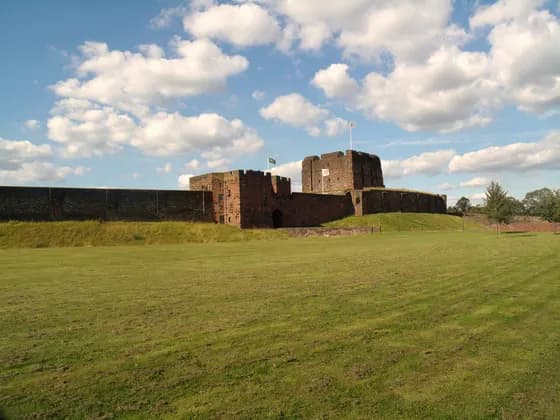
Photo: Tom Edwards · Public domain · cropped
Photo: Euan Nelson · CC BY-SA 2.0 · Photo: Colin Park · CC BY-SA 2.0 · Photo: Euan Nelson · CC BY-SA 2.0
Still deciding where to apply? Hear it from a student who's there
The Pears Cumbria School of Medicine is an unusual construction worth understanding before you apply: a graduate-entry MBBS **awarded by Imperial College London**, delivered in Carlisle at the University of Cumbria's Fusehill Street campus, built to train doctors "in Cumbria, for Cumbria". You apply through Imperial on UCAS (A102), the Cumbria-based team reviews applications, and the **multiple mini interviews are held in person in Carlisle** (Imperial's 2027-entry listing adds that they may be run in a blended format). The first cohort of 58 started in August 2025 at 11 applicants per place — and the course is **home students only**.
Entry is deliberately stripped back: a 2:1 in a Biosciences or Allied Healthcare degree (around 27 listed subjects, from nursing to psychology), no GCSE or A-level requirements at all, and either GAMSAT or UCAT above a threshold that is set by ranking each year and only published afterwards — for 2026 entry it landed at UCAT 1960 (1910 contextual) and GAMSAT 59 (53 contextual). If you sit both tests, whichever ranks you better is used.
The MMI assesses six published areas: commitment to medicine and understanding the doctor's role; potential to contribute to the medical school and the region; teamwork and leadership; ethics; empathy; and resilience and adaptability. That second area is the one applicants underestimate — Cumbria's rural and coastal health challenges are explicitly assessed, and the school says plainly that local knowledge enhances your chances at interview even though there is no residency requirement.
Pears Cumbria (GEM) interview key facts (2027 entry)
| Degree awarded by | Imperial College London (apply via Imperial, UCAS A102) |
|---|---|
| Eligibility | Home fee status only; 2:1 in Biosciences/Allied Healthcare |
| First cohort | August 2025 — 58 places, 11:1 applications per place |
| Interview | In-person MMI in Carlisle |
| Admissions test | GAMSAT or UCAT (best-ranking score used) |
| 2026-entry thresholds | UCAT 1960 (1910 contextual) · GAMSAT 59 (53 contextual) |
| School qualifications | No GCSE or A-level requirements |
Interview Format
- Multiple mini interviews conducted in person at the Carlisle campus (Imperial's listing notes a blended format is possible)
- Six published assessment areas: commitment to medicine and the doctor's role; contribution to the school and region; teamwork and leadership; ethics; empathy; resilience and adaptability
- Understanding of, and interest in improving, health outcomes for the people of Cumbria is explicitly assessed
- Interviewers are staff and students experienced in admissions, with decisions ratified by the admissions tutors
- Work experience with service users is strongly recommended and assessed at interview alongside the personal statement
- Shortlisting is a pure rank on GAMSAT/UCAT among academically qualified applicants — the cut-off floats each year and is published retrospectively
- Contextual applicants (Imperial's criteria) face lower minimum test thresholds
- Rejected-after-interview applicants may apply up to two further times
Sample Interview Questions
Why medicine after your healthcare or bioscience degree — and what does your first profession lose or gain by it?
The eligible-degree list spans nursing, physiotherapy, psychology and the biosciences, so panels meet many career-changers. Be honest about what you are leaving, what transfers, and the moment the decision crystallised.
This school exists to train doctors who will stay and serve Cumbria. What is your honest relationship with that mission?
"Potential to contribute to the medical school and the region" is a published MMI area, and the school says local knowledge enhances your chances. You do not need to be Cumbrian — but you need a considered, truthful answer about rural and coastal medicine, not tourism nostalgia.
What do you actually know about the health of Cumbria's population?
The school cites Cumbria as one of the UK's places with below-average life expectancy, with longstanding recruitment problems in rural and coastal areas. Read about the region's geography of access — two acute trusts, long distances, an ageing population — before interview day.
A rural patient needs specialist care only available ninety minutes away, and cannot drive. Who is responsible for solving this?
Ethics meets the region's reality. Discuss the system's duty (transport schemes, outreach clinics, remote consultation), the clinician's advocacy role, and the limits of individual responsibility — structured, not sentimental.
Your close friend is rejected after their MMI and asks you, in detail, what stations to expect next year. What do you do?
Integrity under a scheme that allows re-application (up to two further attempts after an interview rejection). Fairness to the field, what confidentiality agreements mean, and how to be a good friend without cheating for them.
(Possible station) A fellow student on placement at the Cumberland Infirmary is overwhelmed and talking about dropping out. Talk with them.
Empathy and teamwork are both published MMI areas. Listen first, normalise the struggle of a small pioneer cohort far from home, signpost real support, and agree one concrete next step.
Explain to an 82-year-old farmer why he is being asked to travel to Furness General for a scan he feels fine without.
Plain language, respect for a way of life where time off a farm is costly, genuine exploration of his reluctance, and shared decision-making rather than compliance-chasing.
Tell us about a time you led a team through something difficult.
"Teamwork and leadership" is one published area, and most of the cohort brings professional experience. Pick leadership with stakes, name what you did badly as well as well, and show what you took forward.
(Possible station) You are shown emergency admission rates for coastal west Cumbria against the England average. Interpret them.
Describe before explaining; then reason through deprivation, distance decay, workforce gaps and an older population. Tie it back to why a Carlisle medical school exists at all.
Is it right that this course has no GCSE or A-level requirements?
The school frames it explicitly as widening participation — the degree and admissions test carry the academic evidence. Argue the fairness case both ways (second chances, non-traditional routes versus comparability) and land somewhere reasoned.
How will you handle a curriculum that is roughly half placement from early on, split across north and south Cumbria?
The campus-placement split is about 50–50 across the four years, with placements from Carlisle to Barrow that may require travel and temporary accommodation — and a driving licence helps. Show you have planned for the geography, not just the workload.
What does being in a school's first cohorts mean to you?
The first 58 arrived in 2025; you would join while the GMC's quality-assurance of the new programme continues, with Imperial awarding the degree throughout. Informed enthusiasm — shaping culture, close staff contact, extra scrutiny — beats naive pioneering romance.
A patient tells you they trust you more than the doctors because "you're a nurse, you actually listen". Respond.
Tailor-made for the allied-health entrants this school recruits. Honour the compliment, defend your future colleagues without dismissing the patient's experience, and reflect on what your first profession will bring to your doctoring.
Should medical schools assess commitment to a region when the NHS cannot make graduates stay?
The school assesses regional commitment at MMI while its policy explicitly sets no residency restriction. Explore workforce evidence on where graduates settle, the ethics of selecting for intention, and the honest limits of prediction.
Beyond medicine, what will you bring to a 58-person cohort in Carlisle?
Small schools feel every member. Music, sport, organising energy, mentoring — concrete contributions, offered without grandiosity, fit the "contribution to the medical school" assessment area directly.
Practise the Pears Cumbria (GEM) interview
Rehearse the real format before the day — on demand with our AI interviewers, or live with a tutor.
Sit a mock with photoreal AI interviewers — any time
A timed MMI or panel interview on video — British & international voices — with interviewers who listen, react and press with follow-ups. Rubric-scored feedback and a replay the moment you finish.






Live mocks with a tutor who’s been in the room
A full Pears Cumbria (GEM)-style mock with a medic or dentist tutor — honest scoring against real marking criteria, a station-by-station debrief and a written action plan.
Book a mock interviewHow to Prepare
Apply to the right institution: the UCAS application is to Imperial College London (A102) — Cumbria reviews it and hosts the in-person MMI in Carlisle.
Confirm eligibility before investing: home fee status only, and a 2:1 in one of the listed Biosciences/Allied Healthcare degrees — work experience and postgraduate study cannot substitute for the 2:1.
Choose your test tactically: GAMSAT (valid two years) or UCAT (same year), and if you sit both, the better-ranking score counts. Recent cut-offs — UCAT 1960/GAMSAT 59, contextual 1910/53 — are a planning guide, not a promise.
Check Imperial's contextual-admissions criteria early; qualifying lowers the test threshold meaningfully.
Prepare each of the six published MMI areas explicitly — they are the closest thing to a station list any new school publishes.
Do real Cumbria homework: the region's life-expectancy gap, rural and coastal recruitment problems, the north–south placement geography, and what the Pears Foundation-backed school is for. Regional understanding is assessed.
Get work experience with service users if you can — the school recommends it strongly and assesses it at interview, though it is not an eligibility bar.
Plan logistics like a Cumbrian: placements span north and south Cumbria, travel and temporary accommodation may be needed, and a driving licence is an advantage.
Invited to interview at Pears Cumbria (GEM)? Say your first answer out loud today with the free two-minute warm-up drill, then sit a timed mock set up for Pears Cumbria (GEM).
Common Pitfalls
Frequently Asked Questions
Related guides
Free, evidence-based guides from current UK medical and dental students.
Free Interview Resources
Worked-through MMI stations, ethics scenarios, and panel questions.
Read guideNHS Core Values Guide
The 6 NHS values examiners listen for in every interview answer.
Read guideMedical School Rankings
See interview format (MMI vs panel) for each UK medical school.
Read guideUCAS 2026 Personal Statement
The new three-question format your interviewer will reference.
Read guideContextual Offers for Medicine
Every UK medical school's widening-access scheme in one place.
Read guideSources & official admissions information
We cross-check every interview guide against the school’s own admissions guidance and the UK regulators.
- Imperial College London — Medicine (Graduate Entry) MBBS, 2027 course information — A102, home students only, 11:1 applications per place (2025), rank by GAMSAT/UCAT, MMI areas, blended/in-person MMIs
- Pears Cumbria School of Medicine — Our Programme — 2026-entry UCAT/GAMSAT thresholds (home and contextual), Carlisle campus, home-only eligibility
- Pears Cumbria School of Medicine — How to apply — MMIs conducted in person at the Carlisle campus; work experience assessed at interview
- Imperial College London — Imperial and Cumbria — Programme opened August 2025 with a cohort of 58 graduate-entry students
- UCAT Consortium — Official UCAT registration, test format, scoring methodology and free practice materials.
- General Medical Council (GMC) — Statutory regulator. Approved medical schools, the registered-doctor register, and fitness-to-practise standards.
- Medical Schools Council — Selecting-for-excellence guidance, MMI principles, and an A–Z of UK medical schools.
Ready to nail your Pears Cumbria (GEM) interview?
Book a mock interview with a current medical student who recently went through the same process, or practise on demand with the AI interviewer.