
The Southampton Medicine course
What you actually study, and where you will be
Southampton's BMBS is a 5-year course with an integrated curriculum, with patient contact from Year 1 and placements in Wessex (2027 entry). Clinical experience starts in the first few weeks. Southampton's placements cover the Wessex region, including urgent care centres and ambulance services alongside hospitals and GP surgeries.
- Degree
- BMBS
- Length
- 5 years
- Teaching
- Integrated
- Clinical contact
- Year 1
- UCAS code
- A100

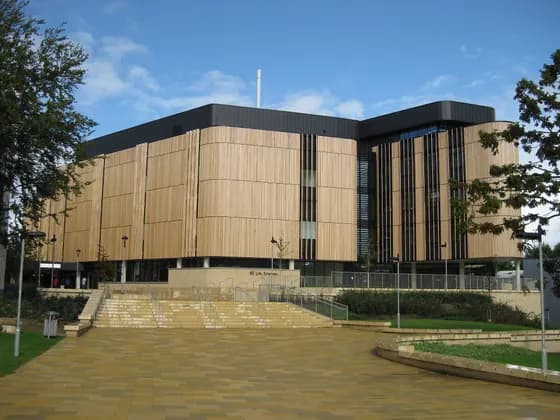

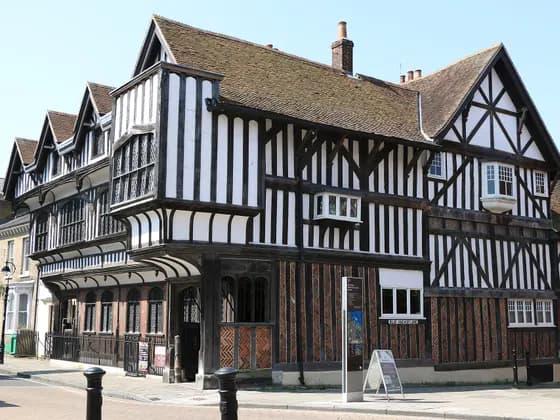
Photo: Roger Davies / Geograph Britain and Ireland · CC BY-SA 2.0 · cropped
Photo: Chemical Engineer · CC BY-SA 3.0 · Photo: Michael Coppins · CC BY-SA 4.0 · Photo: Twotonetoo · CC BY-SA 4.0
The Southampton medicine course at a glance (2027 entry)
BM5 is the University of Southampton's five-year, full-time medicine course. It leads to the BMBS, which stands for Bachelor of Medicine, Bachelor of Surgery, and its UCAS code is A100. The General Medical Council (GMC), which regulates doctors in the UK, accredits the degree. Graduates can register provisionally with the GMC and apply for the Foundation Programme, the two-year paid training scheme that new UK doctors start straight after medical school. Its first year is called Foundation Year 1 (F1).
The course lists three Southampton sites: the Highfield campus, the City Centre campus and the University Hospital Southampton campus at Southampton General Hospital. The university says most of your learning takes place on the hospital campus. It also runs a four-year graduate-entry course (BM4) and a six-year widening participation course (BM6). This guide covers BM5 only.
The curriculum is integrated and spiral. Integrated means the sciences are not taught as separate subjects: anatomy, physiology, pharmacology, psychology and public health are brought together around real clinical problems. Spiral means you meet the same topics more than once, first on campus in years 1 and 2 and then in more depth on placement. The school says it wants you to understand concepts rather than memorise facts, and to learn to direct your own study.
This version of BM5 is new. It began with the students who started in 2025, and the university says it gives more time in clinical settings and builds research into the modules. To make room, it dropped the year 3 research project and the BMedSc, a medical science degree that came built into the old course, so older descriptions that mention them are out of date. Two year 2 science modules, Applied Knowledge 5 and 6, are still being updated as part of the university's course review.
Patients appear early. From your first weeks you have a weekly clinical afternoon, which includes regular visits to a GP surgery. Across years 1 and 2 you also visit a family living with dementia. In year 1 you observe a shift in an emergency department or maternity unit, and in year 2 you work 24 hours as a healthcare support worker on a hospital team.
From year 3 the course is built around clinical placements, first with partner trusts including Portsmouth, Winchester and Southampton. In years 4 and 5 you can be placed anywhere in Wessex, the NHS's name for its training area in central southern England around Southampton. The final year includes finals and a six-week assistantship as an apprentice F1 doctor. It also has a student selected unit, a block where you choose what to do, such as an elective placement in the UK or abroad.
| Degree | BMBS (Bachelor of Medicine, Bachelor of Surgery) |
|---|---|
| Course length | 5 years, full-time |
| UCAS code | A100 (institution code S27) |
| Teaching sites | Mostly University Hospital Southampton, plus Highfield and City Centre campuses |
| Teaching style | Integrated, spiral curriculum built around clinical topic weeks |
| First patient contact | Weekly clinical afternoon from your first weeks: GP visit, seminar or skills |
| Anatomy | Prosected specimens, models and potted specimens in the Anatomical Sciences Laboratory |
| Year 3 | Three nine-week placements; partner trusts include Portsmouth, Winchester, Southampton |
| Years 4 and 5 | Placements anywhere across the Wessex region |
| Intercalation | Optional, between year 3 and year 4 |
What makes Southampton medicine different
A clinical afternoon every week from the start
From your first weeks you have a clinical afternoon every week. In year 1 about 21 hours of it are spent in GP practices meeting patients, two years before the placement blocks of year 3 begin.
Eighteen months with a family living with dementia
Through the Time for Dementia programme you are matched, in a pair or a three, with a family in which someone has dementia. You visit them several times across years 1 and 2, ideally the same family throughout. You see how the condition changes a person's life, and their family's, over time rather than in a single appointment.
Shifts as a healthcare support worker
In year 2 you work 24 hours as a healthcare support worker, one of the ward staff who help patients with everyday care alongside nurses. Working as a junior member of a ward team, you see how a ward runs and how the different professions fit together, then reflect on what you learned.
Three nine-week placement blocks in year 3
Year 3 is built on three nine-week placements: general practice and long-term conditions, medicine and elderly care, and surgery and orthopaedics. Shorter modules in mental health and in public and planetary health run alongside.
Arts and humanities as part of medicine
The year 2 Medical Humanities module has you study an area of medicine through a subject such as film, creative writing, music, philosophy or the history of medicine. You make a creative piece, alone or in a small group, such as a podcast, short story, drawings or a performance, and write a reflective essay on it.
Placements beyond the hospital ward
In years 4 and 5 your placements across Wessex can go beyond hospitals and GP surgeries into urgent care, ambulance and community services. You see how patients are cared for outside hospital buildings too.
How Southampton teaches medicine
The course has four phases. Fundamentals of Medicine covers years 1 and 2. Progression into Clinical Practice is year 3. Developing Clinical Practice runs through year 4 and the first half of year 5, ending with finals. Preparing for Independent Practice fills the rest of year 5 until graduation. Every module is compulsory, but several let you choose your own topic or project.
In years 1 and 2 the science sits in Applied Knowledge modules, organised as clinical topic weeks. Each topic is a condition, such as head and neck cancer or hypothyroidism, and specialists teach the relevant anatomy, physiology, pharmacology, pathology, psychology, sociology and public health around it. The order is mostly by body system. Applied Knowledge 1 is 200 hours of study: 54 hours of lectures, 27 of tutorials, 18 of seminars and 9 of practical classes, with the rest spent preparing and following up.
The balance shifts sharply as you go. In year 1, 32% of your time is scheduled teaching, 67% independent study and 1% placement. In year 3, each nine-week placement block counts for 300 hours of study, and 192 to 200 of those hours are spent on placement, about two-thirds. By year 4 placement is 52% of your time and scheduled teaching only 5%, and year 5 is half placement, 40% independent study and 10% teaching.
Years 1 and 2 mostly follow the university semester calendar. After that the course runs to its own timetable, with shorter holidays and some teaching and exams outside normal university dates. The dates are published well in advance in the undergraduate handbook.
The ways you will learn
| Lectures and symposia | Whole-cohort sessions that set out the core knowledge for each topic. In year 3 the Clinical Teaching Series uses interactive symposia to cover subjects you may not meet on placement, such as reading blood tests and scans, prescribing and palliative care. |
|---|---|
| Tutorials and team-based learning | Small-group sessions where you work through the week's topic with a tutor. Team-based learning, used in Applied Knowledge 1 and the Clinical Teaching Series, means you prepare in advance and then solve clinical problems as a team during the session. |
| Practical classes | Hands-on sessions, including anatomy in the Anatomical Sciences Laboratory. The end-of-year exam has two papers covering all of year 1: a multiple-choice paper and an Integrated Practical paper. The two marks are combined, so a strong mark in one can make up for a weaker mark in the other. |
| Clinical skills sessions | Skills training that forms part of the weekly clinical afternoon. In year 1 you learn how to make a first assessment of a patient, take basic clinical observations, record an ECG (a tracing of the heart's electrical activity) and test a urine sample. |
| GP placements and primary care seminars | Visits to a GP practice where you meet patients and practise taking histories and examinations, alternating with campus seminars led by a GP facilitator. Primary care means the GP and community services people use outside hospital. |
| Portfolios and reflection | You keep a learning portfolio that records clinical skills, research activity and experiences. Several modules ask for reflective work, including presenting an image that sums up something you learned about professionalism. |
A typical week on the Southampton course
In years 1 and 2 a week is shaped by that week's clinical topic. Lectures, tutorials, seminars and practicals look at the same condition from different angles, so the anatomy, drugs and psychology you study connect to one patient story.
One afternoon a week is clinical, rotating between a GP practice, a campus seminar with a primary care facilitator and a clinical skills session. In year 1 this adds up to about 21 hours in GP practices, 21 hours of seminars and 9 hours of skills practice. Wednesday afternoons are usually kept free for sport in years 1 to 3.
How anatomy is taught at Southampton
Anatomy starts in year 1 as one of the specialist subjects taught inside the Applied Knowledge topic weeks. It is run by the Centre for Learning Anatomical Sciences (CLAS), a small team whose academic staff also hold roles in running BM5, such as year coordinator and module coordinator.
Classes take place in the Anatomical Sciences Laboratory on the hospital campus, which has one large teaching laboratory and a smaller space that can be split into three rooms. Its teaching collection includes prosected specimens, meaning body parts that experts have already dissected to show particular structures. It also has anatomical models and potted specimens, which are normal and diseased organs preserved in sealed containers. You need your own white coat for the lab.
The CLAS team says it introduces radiological anatomy, how body structures look on scans, very early in the course. It also treats surface anatomy, working out where structures lie from the outside of the body, as a core skill.
When you first meet patients at Southampton
You meet patients in your first weeks through the Clinical Practice 1 module. In the GP part of your weekly clinical afternoon you learn to take a history, a structured conversation about a patient's symptoms, background and concerns. By the end of year 1 you should be able to examine the joints and muscles, the lungs and the heart and circulation.
Year 1 also includes a four-hour observation shift in an emergency department, a maternity unit or a similar area, where you see how care runs somewhere busy and start talking to patients. Your Time for Dementia visits begin the same year.
In year 2, Clinical Practice 2 keeps the weekly clinical afternoon and adds three teaching sessions with a clinician at University Hospital Southampton, so you can compare hospital care with general practice. You learn to examine more systems, including the brain and nerves, the digestive system and the hormone (endocrine) system. From year 3, most of your time in each placement block is spent with clinical teams.
Year by year at Southampton
- Year 1
Fundamentals of Medicine, part 1
Year 1 opens the Fundamentals of Medicine phase. You learn how the body works through clinical topics, begin meeting patients, and build research and professional skills. The year ends with a synoptic exam, one exam that tests everything from the year together.
- Applied Knowledge 1 to 4: topic weeks that start with head and neck cancer (weeks 1 and 2), then early and secondary breast cancer, obesity and hypothyroidism. Later topics include allergic disorders, COPD (a long-term lung disease), high blood pressure, heart valve disease, osteoarthritis and rheumatoid arthritis.
- Clinical Practice 1: the module behind your weekly clinical afternoon. Your GP and seminar facilitator grade you as Fail, Bare Pass, Clear Pass or Excellent.
- Personal and Professional Development 1: professionalism, study skills, resilience and digital professionalism, including the safe use of generative AI. It holds the Time for Dementia visits and the observation shift, and you present an image showing an aspect of professionalism you met.
- Health Improvement: in a group you choose a local health issue and a target group, research the evidence and design an intervention for a setting such as a GP surgery, school or charity. You present it as an academic poster.
- Research as Applied to Medicine 1: judging research papers, basic statistics and literature searching, assessed by a written assignment and an oral presentation. You keep a research portfolio for the rest of the course.
- End-of-year exam: a multiple-choice question (MCQ) paper and an Integrated Practical paper. Year 1 assessment overall is 48% written exams, 33% coursework and 19% practical exams.
- Year 2
Fundamentals of Medicine, part 2
Year 2 completes the Fundamentals of Medicine phase. The topic weeks move on to the gut, hormones, the brain and mental health, and your clinical work extends into the hospital. Passing every module takes you into the clinical years.
- Applied Knowledge 5 to 8: topics include liver failure, inflammatory bowel disease, type 1 and type 2 diabetes, ectopic pregnancy, stroke, epilepsy and depression. Modules 7 and 8 centre on the nervous system, and the last two weeks of module 8 cover the medicine of ageing.
- Clinical Practice 2: the weekly clinical afternoon plus three hospital teaching sessions. To pass you must sit a practice OSCE (Objective Structured Clinical Examination), a practical exam in which you move round timed stations, each testing a clinical task.
- Personal and Professional Development 2: 24 hours as a healthcare support worker in an acute hospital, and more Time for Dementia visits. It focuses on teamwork, professional identity and recognising your own biases.
- Medical Humanities: a creative piece exploring medicine through the arts or humanities, marked alongside a reflective essay.
- Research as Applied to Medicine 2: more critical appraisal, and how to design a research study.
- Year 2 assessment is 63% written exams, 5% coursework and 32% practical exams.
- Year 3
Progression into Clinical Practice
Year 3 is the second phase and the first year built around clinical placement blocks. Three nine-week placements form the core, with shorter modules alongside. The year ends with an MCQ knowledge test and an OSCE.
- Primary Medical Care and Long Term Conditions: most of the block in one or more GP practices, about 192 hours, plus small-group seminars. You complete an audit, which checks care against an agreed standard, and present a patient with a long-term condition such as diabetes, COPD or dementia.
- Medicine and Elderly Care: wards and outpatient clinics in general and geriatric (older people's) medicine. You practise taking blood, inserting cannulas (thin tubes into a vein) and placing ECG leads. You are assessed by Assessments of Clinical Competence (ACCs): a clinician watches you take a history and examine a patient.
- Surgery and Orthopaedics: named clinical tutors in general surgery and specialties such as orthopaedics (bones and joints), urology and vascular surgery. You learn on wards, in theatres, in endoscopy (camera examinations) and in clinics, including emergency work, and write up one patient's journey from ward into theatre.
- Mental Health: how people function psychologically, as distinct from year 4 psychiatry. It covers the mental state examination (a structured check of mood, thinking and behaviour), trauma, addiction, neurodiversity and your own wellbeing. One of its weeks sits inside the nine-week surgery block.
- Population and Planetary Health: public health, global health (including refugee and migrant health) and planetary health, meaning how environmental change affects health and how healthcare can be more sustainable. You submit an audio or video presentation.
- Clinical Teaching Series: whole-cohort sessions on topics including heart disease, diabetes, cancer, nutrition and acute presentations in medicine and surgery.
- Year 3 assessment is 8% written exams, 17% coursework and 75% practical exams.
- Year 4
Developing Clinical Practice
Year 4 runs for 37 weeks and takes you through the specialties a newly qualified doctor needs to know, with about half your time on placement. Assessment includes the year 4 Applied Knowledge Test, two MCQ papers at the end of the year, and a Clinical Professional Skills Assessment.
- Acute Care: the knowledge and skills an F1 doctor needs when patients are suddenly and seriously unwell.
- Child Health, Psychiatry, and Obstetrics and Gynaecology (pregnancy, childbirth and women's health) with Genitourinary Medicine (sexual health), each a major block of the year.
- Specialty weeks in dermatology (skin), head and neck, neurosciences and ophthalmology (eyes).
- Medical Ethics and Law: runs through the whole year, with its activities built into the hours of your other placements rather than taught as a separate block.
- Year 4 assessment is 25% written exams, 41% coursework and 34% practical exams.
- Year 5
Finals, then Preparing for Independent Practice
The first half of year 5 finishes the Developing Clinical Practice phase with placements in medicine, surgery and primary care, ending in finals. After finals you move into the last phase, Preparing for Independent Practice. It leads to graduation and the start of the Foundation Programme in August.
- Medicine, Surgery and Primary Medical Care (Final): placements that prepare you to work in each area as a newly qualified doctor.
- Finals: three assessment modules covering applied knowledge, clinical and professional skills, and workplace-based assessment. The assessment section explains each one.
- Assistantship: a six-week placement in medicine and surgery in the last six months of the course. You work as an apprentice F1 doctor, as a bridge into your first job.
- Student selected unit: an elective placement in the UK or abroad, a local clinical placement, or a research or education project.
- Personal and Professional Development (final year): putting the GMC's Good Medical Practice 2024 guidance into practice in everyday clinical work.
- An Intermediate Life Support course, a resuscitation course for healthcare staff, and sign-off in a set list of practical procedures required by the GMC and the school.
- Year 5 assessment is 1% written exams, 19% coursework and 80% practical exams.
How you are assessed at Southampton
You must pass every module to move on, and a failed module is retaken at the next opportunity, which can mean repeating the whole year. Before each type of summative assessment, the kind that counts, you sit a formative version, a practice run that does not count, and get feedback on it.
The early years lean on written exams, built around MCQ papers that test how you apply knowledge to clinical problems. From year 3 the weight moves to practical and placement-based assessment. On placement you are judged through end-of-placement evaluations by your tutors, your learning portfolio and ACCs. Practical procedures are signed off in an online portfolio.
From 2024-25 every UK medical degree must include a pass in the Medical Licensing Assessment (MLA), which the GMC requires before it will register a new graduate with a licence to practise. The MLA has two parts: the Applied Knowledge Test (AKT) and the Clinical and Professional Skills Assessment (CPSA). At Southampton both sit inside finals, alongside a third part, the workplace-based assessment.
The AKT is an MCQ exam shared with other UK medical schools through the Medical Schools Council (MSC), so much of it is set nationally. The workplace-based assessment gathers the ACCs from your year 4 and 5 placements. In the design the school described to the GMC in 2022, that meant 18 observed assessments in clinical settings. If you were not clearly at the level of a new F1, 6 to 12 more consultations were assessed.
The CPSA is Southampton's own final OSCE. In the design the school submitted in 2022, which the GMC approved in April 2024, you had to pass all the other elements of final-year assessment before sitting it. It was a sequential OSCE of up to 20 stations, run at a single site: everyone sat ten nine-minute stations, each with two minutes' reading time. Those who passed at least eight stations and reached a high enough overall score stopped there, and the rest sat a second sequence of ten two to three weeks later.
You also sit the Prescribing Safety Assessment (PSA), a national exam on safe prescribing, and you are expected to travel to Southampton for it and most other exams, even when placed elsewhere. Students who score consistently highly across all five years can graduate with a BMBS with distinction, and distinctions are also given for individual phases.
Where you will actually be at Southampton
In years 1 and 2 you are mostly on campus, going out to a GP practice as part of your weekly clinical afternoon. Year 2 adds three teaching sessions at University Hospital Southampton and your healthcare support worker hours.
Year 3 placements are with partner trusts including Portsmouth, Winchester and Southampton. Each nine-week block is spent in one or more partner trusts or, for the primary care block, one or more GP practices. Student groups rotate through the blocks at different times.
In years 4 and 5, placements can be anywhere across the Wessex region. Settings include hospital trusts, GP surgeries, urgent care centres, the ambulance service and third-sector organisations, meaning charities and voluntary groups in the community. The school expects some placement work in the evenings, at night and at weekends, to prepare you for the shift patterns doctors work.
Because placement learning depends on which patients are there, the school promises the same broad opportunities rather than identical experiences. It expects you to spot gaps in your learning and seek out the cases and skills you need. You pay your own travel and parking costs for teaching and placements.
The hospital campus where most of your learning takes place, and the setting for your year 2 hospital teaching sessions. Southampton is also one of the named year 3 placement areas.
- University Hospital Southampton (Southampton General Hospital)
Named by the university as one of the year 3 partner trust areas.
Named by the university as one of the year 3 partner trust areas.
Years 4 and 5 placements across the region.
Electives and chosen modules at Southampton
There are no optional modules, but choice runs through the course. In Health Improvement your group picks a local health issue, and in Medical Humanities you choose the art form and subject you work with. The school also points to public, global and planetary health as areas where you can follow your own interests.
The main chosen block is the student selected unit (SSU) in the second half of year 5. You can take an elective placement in the UK or abroad, a local clinical placement, or a research or education project.
You pay for any travel and accommodation your SSU needs. If you go abroad you also pay for insurance, medical insurance and any vaccinations. An SSU in the UK may need its own enhanced DBS check, the criminal record check needed to work with children and vulnerable adults.
Intercalation at Southampton
Intercalating means pausing medicine to study for a separate degree, then returning to the course. At Southampton it is optional and happens between year 3 and year 4, so it adds time to your studies.
You can apply for a Master of Medical Science (MMedSc) or an MSc at Southampton, or for an intercalated BSc (iBSc) or MSc at another university. The course page features BM5 students currently intercalating in an MMedSc. Because the new course no longer includes a built-in BMedSc, intercalating is now the way to add a second degree to your BMBS. If you would rather not add time, the final-year SSU also lets you choose a research project.
Facilities and support at Southampton
Where you will learn
Most of your learning happens on the hospital campus at Southampton General Hospital. Lecture theatres, research labs and practice rooms are in the hospital's South Academic Block. The clinical skills rooms are set up like the wards of a modern hospital, so you practise common procedures somewhere that looks like where you will later work.
The Centre for Learning Anatomical Sciences and its anatomy teaching laboratories are on the same campus. So is the Health Services Library, a medical and health sciences library in the hospital's academic block, run with the hospital trust and the NHS. The faculty also has computer suites and refurbished lecture theatres, and you can use the university's life sciences facilities.
There are no sports or entertainment facilities on the hospital site. For those you use the university's other campuses, and Highfield, home of the students' union, is about a 20-minute bus ride away.
The GMC's 2024-25 annual review recorded the school's plans to expand simulation-based learning, where you practise clinical situations on manikins or with actors in a safe setting. It noted that a new medical school building is planned with better facilities for this.
For clinical work you are given two pairs of scrubs in year 1 and buy your own stethoscope, which is on sale at induction. Wristwatches are not allowed in clinical areas, so the school suggests a fob watch that pins to your clothing.
Support while you study
You are given a personal academic tutor when you arrive, normally a member of academic staff in medicine or a related subject, who offers one-to-one support for the whole course. Behind them sit a faculty senior tutor team, peer support and mentoring.
The Personal and Professional Development modules in years 1 and 2 teach resilience and when to ask for help, especially on placement.
The GMC's 2024 report on the CPSA describes what happens if you fail it. You are invited to meet an academic, usually one to one, to go through examiner comments without seeing station details. Your personal tutor receives your marks so they can offer personal and wellbeing support, and senior tutors contact unsuccessful students directly.
Students also help shape the course. A staff-student liaison committee meets four times a year with representatives from years 1 to 5 and from MedSoc, the medical students' society. The GMC found it well run in its 2024-25 review. Other feedback routes include mid-placement meetings and regular meetings with module and placement leads, though the GMC noted some students seemed unaware of, or reluctant to use, some of them.
Is the Southampton course right for you?
This course may suit you if
- You want regular patient contact from your first weeks, through a weekly clinical afternoon that includes regular GP visits, rather than waiting for the clinical years.
- You like learning science through real cases, with each topic week built around a condition such as breast cancer or stroke.
- You want to see care beyond the doctor's role, through 18 months with a family living with dementia and shifts as a healthcare support worker.
- You have interests outside science, such as the arts or climate and health, which the course builds into compulsory modules.
- You are comfortable directing your own learning, since independent study is about two-thirds of year 1.
Things to think about
- Placements in years 4 and 5 can be anywhere in Wessex, and you pay your own travel and parking.
- From year 3 the course leaves the university calendar, with shorter holidays and some evening, night and weekend placement work.
- There are no optional modules. Your choices come within modules and in the final-year SSU.
- Placement experiences vary between students, and the school expects you to go and find the learning you need.
- A failed module is retaken at the next opportunity, which can mean repeating a whole year.
Southampton medicine course — frequently asked questions
Applying to Southampton?
How to get into Southampton
Entry requirements, UCAT, personal statement and interview, step by step.
Open the guide →Southampton UCAT cut-offs and offers
UCAT cut-offs, A-level offers, interview format and decision dates.
See the requirements →Compare Southampton with other schools
Put the teaching style, anatomy teaching and placements next to another school.
Open the comparison →Prepare for the Southampton interview
Format breakdown, school-specific sample questions and prep tips from tutors who interviewed here.
Read the guide →Where this Southampton course guide came from
This guide was written from 29 official sources — University of Southampton's own course pages and programme documents, plus the regulator and NHS placement partners where they publish detail — read on 2026-09-23, then checked claim by claim against those sources.
- Medicine BM5 (BMBS) course page, University of Southampton
- BM5 Medicine Course Description Document (programme specification), 2026-27
- Clinical Practice 1 (MEDI1041) module, 2027-28
- Applied Knowledge 1 (MEDI1036) module, 2027-28
- Personal and Professional Development 1 (MEDI1042) module, 2027-28
- Health Improvement (MEDI1043) module, 2027-28
- Research as Applied to Medicine 1 (MEDI1037) module, 2027-28
- Clinical Practice 2 (MEDI2057) module, 2027-28
- Personal and Professional Development 2 (MEDI2051) module, 2027-28
- Medical Humanities (MEDI2052) module, 2027-28
- Primary Medical Care and Long Term Conditions (MEDI3059) module, 2027-28
- Surgery and Orthopaedics (MEDI3060) module, 2027-28
- Medicine and Elderly Care (MEDI3065) module, 2027-28
- Mental Health (MEDI3062) module, 2027-28
- Population and Planetary Health (MEDI3063) module, 2027-28
- Clinical Teaching Series (MEDI3061) module, 2027-28
- Applied Knowledge Assessment (Final) (MEDI5015) module, 2027-28
- Clinical Professional Skills Assessment (Final) (MEDI5016) module, 2027-28
- Workplace Based Assessment (Final) (MEDI5019) module, 2027-28
- GMC compliance decision on the University of Southampton MLA clinical and professional skills assessment, April 2024
- GMC compliance decision on the University of Southampton MLA applied knowledge test, June 2024
- GMC Annual Quality Assurance Summary for the University of Southampton, May 2024 to May 2025
- Faculty of Medicine facilities, University of Southampton
- Centre for Learning Anatomical Sciences, who we are
- Anatomical Sciences Laboratory facilities, Centre for Learning Anatomical Sciences
- Centre for Learning Anatomical Sciences, medical education research
- Bachelor of Medicine International Transfer (BM(IT)) page, with the 2025 BM5 curriculum change, University of Southampton
- University Hospital Southampton campus page, University of Southampton
- Applied Knowledge 5 (MEDI2053) module, 2027-28
Courses are restructured between cycles. Anything here that decides your application — an anatomy offer, a placement city, a compulsory intercalated year — should be confirmed against the official page for your entry year.
Applying to Southampton?
We have helped hundreds of applicants turn their UCAT, personal statement and interview prep into offers from Southampton and other UK medicine schools.