
The St Mary's Twickenham Medicine course
What you actually study, and where you will be
St Mary's Twickenham's MBBS is a 5-year course taught through case-based learning in a spiral curriculum, with patient contact from Year 1 and placements in London, Surrey, Hampshire and Berkshire (2027 entry). A new London school with patients from year 1 in general practice and a curriculum aligned to the UN Sustainable Development Goals. Like Hertfordshire, it currently accepts international students only.
- Degree
- MBBS
- Length
- 5 years
- Teaching
- Spiral + Case-based learning
- Clinical contact
- Year 1
- UCAS code
- A100

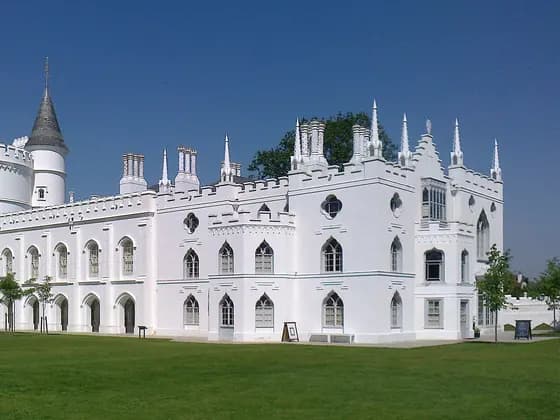
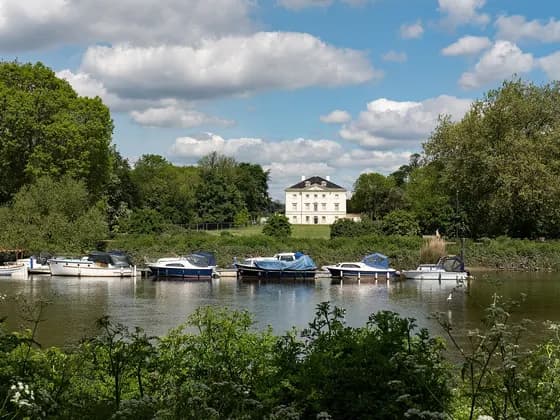
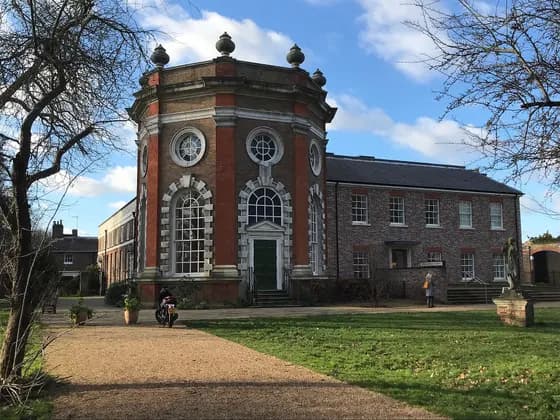
Photo: Peter Trimming / Geograph (via Wikimedia Commons) · CC BY-SA 2.0 · cropped
Photo: Chiswick Chap · CC BY-SA 3.0 · Photo: Jim Osley · CC BY-SA 2.0 · Photo: Matt Brown · CC BY 2.0
The St Mary's Twickenham medicine course at a glance (2027 entry)
St Mary's University, Twickenham teaches a five-year MBBS, the Bachelor of Medicine and Bachelor of Surgery, at its new School of Medicine in south-west London. You are based in the Centenary Building on the university's Strawberry Hill campus in Twickenham. For 2027 entry the course is open only to international (non-UK) students, in a year group of 50 to 70. St Mary's expects to open it to UK home students in future.
Because the school is so new, it is still going through approval by the General Medical Council (GMC), the body that regulates doctors and decides which UK universities can award medical degrees. The GMC cleared St Mary's to begin teaching its first students in September 2026. It now reviews the school every year until that first group graduates, and makes its final decision during the group's last year.
The course runs in two phases. Phase 1 (Years 1 and 2) is mainly campus teaching in the science behind medicine, the social side of health, and clinical and communication skills. Alongside it you spend regular half days in a GP (general practice) surgery and with community partners. Phase 2 (Years 3 to 5) is spent mostly on clinical placements in blocks, working in hospitals, GP practices and community services.
The school's guiding idea is what it calls social accountability. This means that what it teaches, researches and does should be aimed at the most pressing health needs of the communities around it, and that it should answer for whether it achieves that. The founding Executive Dean, Professor Sonia Kumar, spent more than 20 years as a GP in deprived communities in south London.
Day to day, Year 1 is mostly on campus, in lectures, workshops, small-group case-based tutorials and simulation sessions. Classes are small, and you are taught by academics, practising clinicians and patients. The balance shifts every year, so by Year 5 lectures have tailed off and most of your time is spent on placement, preparing to work as a junior doctor.
| Degree | MBBS (Hons), Bachelor of Medicine and Bachelor of Surgery |
|---|---|
| Course length | 5 years, full time, starting in September |
| UCAS code | A100 |
| Year group | 50 to 70 students in 2027/28, all international |
| Main base | Centenary Building, Strawberry Hill campus, Twickenham |
| Curriculum | Spiral: core subjects return each year in more depth |
| First patient contact | Year 1, GP practice placements from January |
| Placement region | London, Surrey, Hampshire and Berkshire |
| Intercalation | Optional one-year degree after Year 3 |
| GMC status | New school under GMC review; cleared to start teaching September 2026 |
What makes St Mary's Twickenham medicine different
Year 1 placements with a GP and a music charity
From January of Year 1 you alternate half days between a local GP practice and Intergenerational Music Making, a charity that provides music therapy. St Mary's also names health coaching, patient advocacy and social action projects among the ways you learn in the community. St Mary's says this model is meant to reflect how housing, employment and access to services shape people's health.
A year-long GP clerkship in Year 4
Alongside the Year 4 specialty blocks, you spend a half day a week from September to June in a set role at an allocated GP practice. This longitudinal integrated clerkship (LIC) is built on continuity: you follow a defined group of patients as they move between GP and hospital care (primary and secondary care). It is where you begin to manage a caseload in primary care.
A teaching week on campus after each placement block
In Year 3 each of the four placement blocks lasts eight weeks and is followed by an intensive teaching week on campus. In Year 4 the four blocks last nine weeks, and the final week of each is a timetabled teaching week at Twickenham. The science, society and clinical strands carry on inside these blocks, so classroom teaching continues through your clinical years.
A framework shaped with local communities
In April 2026 St Mary's launched a Social Accountability Framework. It followed a roundtable with community organisations, National Health Service (NHS) partners and local people with lived experience, such as carers and a patient support group chair. It guides how and where students train, with a focus on health inequalities across south-west London. Community members are to keep contributing to decisions on teaching and placements as the school grows.
Simulating a patient's journey from home to hospital
In the simulation suites you follow a patient's journey from home, to the GP, to hospital. The aim is to understand continuity of care: how a patient's care carries on as they move between services, and what that means for them and their family.
A curriculum taken from an established medical school
St Mary's developed its course from the MBBS curriculum of the University of Central Lancashire, now the University of Lancashire, whose medical school has trained doctors since 2015. That university is also St Mary's contingency partner. If St Mary's did not gain GMC approval, you would be transferred there to finish your studies, and passing all your assessments would still lead to a GMC-recognised degree.
How St Mary's Twickenham teaches medicine
The course is a spiral curriculum: core subjects come back every year, each time in more depth and with more clinical context. Anatomy, physiology, pharmacology, microbiology, immunology and haematology all appear in both Year 1 and Year 2, for example. Each year is worth 120 credits, 600 over the five years, and every year is organised around the same three strands.
Integrated Applied Science and Clinical Medicine (IASCM) covers how the body works and what goes wrong, applied to real patient conditions. Medicine and Society (MedSoc) covers the psychology and sociology of health, epidemiology (how diseases affect whole populations), statistics, law, ethics and research skills. Clinical and Professional Practice (CPP) covers clinical skills, communication, professional behaviour and your placements.
Across the five years you spend about 6,440 hours learning. About a third (2,089.5 hours) is contact time with teachers and 40% (2,604 hours) is placement, with the rest split between guided study (833 hours) and independent study (913.5 hours). Lectures are most frequent in Year 1 and tail off by Year 5, while placement time rises steadily. Simulation is most prominent in the early years.
From Year 3 the three strands stop being separate campus subjects and are taught within your clinical placements, with campus teaching weeks between blocks. You also learn alongside students from other health professions, and take part in clinical audits, research projects and critical appraisal (judging how reliable a piece of research is). You must attend 100% of clinical placements and at least 80% of other taught sessions.
The ways you will learn
| Lectures and keynote sessions | Large-group sessions that deliver core scientific knowledge and medical theory, from cell biology to pharmacology (how medicines work in the body). |
|---|---|
| Case-based and problem-based learning | In small groups you work through patient cases, discussing what might be going on and what you need to find out. St Mary's uses both case-based learning (CBL) and problem-based learning (PBL), where a case, rather than a lecture, drives what you learn. Its course page describes these as reflective tutorials in small, personalised groups. |
| Simulation and clinical skills sessions | Simulation sessions on campus build technical skills, such as examinations and procedures, and non-technical ones such as teamwork and communication. They range from low-fidelity practice with simple equipment in a clinical skills lab to high-fidelity scenarios that feel real, such as emergencies, and include virtual reality (VR). |
| Anatomy demonstrations | Anatomy is a key topic in both Year 1 and Year 2, taught on campus partly through anatomy demonstrations, where teachers show and explain the structures of the body. Radiology, the reading of X-rays and scans, is also a key topic in Year 1 and, together with pathology, in Year 2. |
| Placements and bedside teaching | From Year 1 you learn in GP practices and community settings, and later on hospital wards and in clinics. Bedside teaching means a clinician teaches you with a real patient, so you practise examining, working towards a diagnosis and communicating in person. |
| Self-directed and online learning | Structured study tasks, virtual patients (cases you work through on screen) and digital learning platforms support your independent study and build the habit of learning on your own. |
When you first meet patients at St Mary's Twickenham
You first work with patients in Year 1. Over 16 weeks from January to May, you spend eight half days in a local GP practice, alternating with eight half days at Intergenerational Music Making. Each GP afternoon is split between watching consultations or taking patient histories and working on your CPP 1 GP Project.
Year 2 builds on this with 12 half days in a local GP practice between October and May, plus a Social Action Project, a piece of project work in the local community. You also take your first student-selected component (SSC), a placement or project you choose yourself, described under Electives below.
Across the course the settings widen to include NHS hospitals, hospices (which care for people with terminal illness), charities, local schools and private health providers. Placements get longer and more intensive each year, and from Year 3 they take up most of the year.
Year by year at St Mary's Twickenham
- Year 1
Foundations of science, society and clinical skills
Year 1 (module MBB4000, 120 credits) is mostly campus-based. The three strands run across all three teaching blocks of the year, and each key topic is marked pass or fail. From January you add your first placements in general practice and the community.
- Science (IASCM 1): anatomy, physiology, embryology and development, cell and molecular biology, microbiology, immunology, haematology (blood), biochemistry and biophysics, radiology and pharmacology.
- Medicine and Society (MedSoc 1): psychology and sociology of health and illness, epidemiology and population health, medical biostatistics, medical law and ethics, and evidence-based medicine and research skills.
- Core clinical skills: infection control and personal protective equipment (PPE), manual handling, and basic life support (BLS) and first aid. You also cover nutrition and body mass index (BMI), urine testing, and injections into muscle and under the skin.
- Checking and examining patients: measuring vital signs and using an early warning score to spot a patient getting worse. You also learn heart and lung examination, and how to record and read an electrocardiogram (ECG), a tracing of the heart's electrical activity.
- Communication skills in five three-week blocks: listening, taking a medical history (past illnesses, operations, medicines, family and social life), record keeping and explaining things to patients, ending with a block that brings these together.
- CPP 1 placements from January to May, in general practice and with the music charity described above.
- Year 2
Deeper science and a wider set of examinations
Year 2 (MBB5000, 120 credits) revisits the Year 1 sciences in more depth and widens your clinical skills. Clinical skills are taught in 17 one-week blocks and communication in six three-week blocks. Placements and your first SSC run from October to May.
- Science (IASCM 2): anatomy, physiology, pharmacology, microbiology, immunology, haematology and cell and molecular biology at a deeper level, plus radiology and pathology (how disease changes the body's tissues).
- Medicine and Society (MedSoc 2): epidemiology and public health, biostatistics, the psychology and the sociology of health and illness, medical ethics and medical law.
- Examinations of the breast, testicles, hernias, rectum, eyes, ears, nose and throat (ENT), musculoskeletal system and peripheral vascular system (blood flow to the limbs), plus venepuncture (taking blood).
- The ABCDE approach to a deteriorating patient, which checks airway, breathing, circulation, disability and exposure in turn, with basic life support and infection control covered again.
- Communication: history taking and advice giving, communicating with people who have hearing or visual impairment, a learning disability or dementia, sharing significant information, clinical histories and systems review. The last of the six blocks is for revision.
- CPP 2 placements (October to May): 12 half days in a local GP practice, your CPP 2 Social Action Project and SSC2.
- Year 3
Generalism
Year 3 (MBB6000) is the first year of Phase 2. St Mary's calls it Generalism, meaning the broad medicine every doctor needs. You rotate through four blocks, each eight weeks on placement followed by a one-week intensive teaching week on campus. Science, society and clinical practice are now taught within the placements.
- General Medicine, September to November.
- Care and Community, November to January (the course page lists urgent care among the Year 3 rotations instead).
- Surgery, January to April.
- General Practice, April to June, with SSC3 built into the block.
- At the end of the year you can apply to intercalate before starting Year 4.
- Year 4
Specialism
Year 4 (MBB7000) moves into specialties. It has four nine-week placement blocks, each ending with a timetabled teaching week on campus, and a longitudinal integrated clerkship that runs through the whole year.
- Speciality Medicine and Surgery (September to November): areas such as musculoskeletal medicine, medicine for older people, endocrinology (hormone conditions such as diabetes), neurology and dermatology.
- Mind and Body (November to January): mental health, and cancer care and end-of-life care.
- Women's Health and Urology (February to April); urology covers the kidneys, bladder and urinary tract.
- Paediatrics, the care of children (April to June).
- Longitudinal integrated clerkship (September to June): one half day a week in a GP practice, following the same group of patients through the year.
- SSC4, which focuses on quality improvement in healthcare.
- Year 5
Transition to clinical practice
Year 5 (MBB7001) prepares you to start work as a doctor. It is made up of six core blocks, each four weeks long, followed by an elective in May.
- Front Door Medicine (September): the care of patients as they arrive in hospital.
- General Practice (October) and Mental Health (November).
- Research (December to January).
- Assistantship (January to February): an assistantship, where you work as an assistant to a junior doctor and take on defined duties under supervision.
- A choice block (March to April) chosen from a list of options, then the elective (May). The course page sums up the final-year rotations as emergency medicine, mental health, and GP and hospital assistantships.
How you are assessed at St Mary's Twickenham
Every key topic and placement block in the programme specification is marked pass or fail. St Mary's uses both formative assessments, which give you feedback on how you are doing, and summative ones, which decide whether you progress. Pass marks and progression rules are set out in the university's academic regulations and the MBBS Programme Handbook.
Every student graduating from a UK medical school must pass the Medical Licensing Assessment (MLA) as part of their degree before joining the GMC's medical register. It has two parts, both taken at your own medical school: an applied knowledge test (AKT), an on-screen exam of multiple choice questions, and a clinical and professional skills assessment (CPSA), a practical exam. The GMC sets the requirements both must meet, and St Mary's says all its students will sit the MLA.
Knowledge is tested in written exams made of single best answer (SBA) questions, where you pick the one best option for a clinical scenario. You also sit regular progress tests through each year, some using MLA-style questions, which track how your knowledge grows over time.
Practical skills are tested in Objective Structured Clinical Examinations (OSCEs). An OSCE is a circuit of short, timed stations with simulated patients, who are trained actors, where you might take a history, examine someone or explain a diagnosis.
On placement, supervisors assess you through workplace-based assessments. In a mini clinical evaluation exercise (mini-CEX) someone watches you with a patient and gives feedback. Direct observation of procedural skills (DOPS) does the same for practical procedures. In a case-based discussion (CBD) you talk a senior through a patient you have seen, and multi-source feedback (MSF) collects views from colleagues.
You also keep logbooks and an e-portfolio, an online record of your clinical experience and reflections that is reviewed at regular appraisals, as in postgraduate training. Other assessed work includes reflective writing, group projects and presentations, SSC projects and research portfolios, and an ongoing appraisal of your professional behaviour. Feedback on assessments is due within 15 working days.
Where you will actually be at St Mary's Twickenham
Placements are spread across London, Surrey, Hampshire and Berkshire. St Mary's works with a network of providers rather than a single NHS trust, the kind of organisation that runs local hospitals or health services. In November 2024 St Mary's signed an agreement with Circle Health Group, a network of independent (private) hospitals, to provide placements for its medical students. The announcement names no individual hospitals.
Other partners include NHS trusts, GP practices, charities and hospices, among them Meadow House, Royal Trinity Hospice and Princess Alice Hospice. The Circle announcement also lists refugee medicine and international healthcare among the settings students will gain experience in.
Phase 1 placements are in general practice and community settings. Phase 2 adds rotations such as general medicine, surgery, paediatrics and mental health. The school says it places students in community settings in areas of need.
The School of Medicine placements team organises all placements and tells you your individual allocation. Most students are allocated by the school. If you have reasonable adjustments, meaning changes agreed because of a disability or health condition, you are asked for placement preferences, which are taken into account.
In Phase 2 some placements may be more than an hour's commute from Twickenham station. You can then either commute and have your travel reimbursed, or stay in accommodation offered at the host hospital site. If you are placed more than an hour away in Year 3, you get priority for a closer placement in Year 4.
Years 1 and 2 GP half days are at a local practice. The music charity placement is part of Year 1.
- Local GP practices
- Intergenerational Music Making (music therapy charity)
West London NHS Trust runs mental health and community health services, including secure psychiatric wards and Broadmoor, a high-secure hospital in Berkshire. Practice Plus Group Hospital, Ilford, in east London, does planned surgery for NHS and private patients, including bone and joint, eye and general surgery. St Mary's lists both as hospital placement providers.
- West London NHS Trust
- Practice Plus Group Hospital, Ilford
- Royal Trinity Hospice, Clapham Common
- Princess Alice Hospice, Esher
St Mary's names the trust as a partner. The trust runs Basingstoke and North Hampshire Hospital, Royal Hampshire County Hospital in Winchester and Andover War Memorial Hospital.
- Hampshire Hospitals NHS Foundation Trust
Placement agreement signed with St Mary's in November 2024.
- Circle Health Group (no individual hospitals named)
Electives and chosen modules at St Mary's Twickenham
Student-selected components (SSCs) let you follow your own interests. SSC2 in Year 2 is chosen from experiences in allied health, such as physiotherapy or occupational therapy, or related settings outside the NHS. SSC3 sits inside the Year 3 general practice block and teaches clinical audit: checking whether a service's care meets an agreed standard.
SSC4 in Year 4 builds on that audit work with a focus on quality improvement, which means testing changes that make care safer or better. SSCs are assessed through project work, presentations and research portfolios.
In Year 5 you pick a four-week choice block from a list of options, taken in March and April. The course then ends with an elective in May, a clinical placement of your own choosing.
Intercalation at St Mary's Twickenham
Intercalating means taking a year out of the medicine course to study for a separate degree, then coming back. At St Mary's it is optional. You can apply once you have successfully completed Year 3. You then spend one year on a BSc, MSc or MRes (a research master's) at St Mary's or another approved institution, and rejoin the MBBS in Year 4. You pay tuition fees for the extra year.
Facilities and support at St Mary's Twickenham
Where you will learn
The medical school is based in the new Centenary Building on the Twickenham campus, which holds lecture rooms, quiet study spaces and the clinical teaching areas. The Integrated Skills and Simulation Centre is where you practise clinical skills and simulated scenarios. The building also has a teaching ward, set up like a hospital ward for practice, and an assisted living teaching space.
Teaching also covers technology, artificial intelligence (AI) and digital health. The university library has more than 500 study places.
Support while you study
Each student has a Personal (Academic) Tutor from the School of Medicine, who gives academic guidance, helps with concerns and helps you set goals. Staff keep an open-door policy for questions on module content, research and assessments. The Director of Undergraduate Medicine can help with study strategies and point you towards university services.
The Head of Professional Development and Practice and the Student Education and Welfare Manager link you, the university and placement providers. They also support students going through the school's professionalism processes, including fitness to practise, the procedure used when there are concerns about a student's conduct or health. The school stresses stepping in early, before problems escalate.
On placement you have a nominated educational supervisor, a clinical supervisor and placement coordinators, with regular check-ins and feedback. Away from campus you can still use the university's virtual learning environment (VLE) and Togetherall, an online wellbeing support service open 24 hours a day.
If you experience bullying, harassment or misconduct, a Report and Support channel lets you get help or make a formal report. Concerns about patient safety or the learning environment go through a separate raising-a-concern process.
Is the St Mary's Twickenham course right for you?
This course may suit you if
- You want contact with patients and communities in your first year, including time with a music therapy charity as well as a GP practice.
- You are drawn to general practice and continuity of care: GP placements appear in every year, and Year 4 includes a year-long GP clerkship.
- You care about health inequalities and like the idea of a school whose teaching and placements are shaped with local communities.
- You would like to keep coming back to campus in your clinical years, with a teaching week after every placement block in Years 3 and 4.
- You want to study in a year group of 50 to 70 students, with small classes.
Things to think about
- St Mary's is still under GMC review. The GMC cleared it to start teaching in September 2026 but has not yet published a report on it, and its final decision comes only in the first group's last year.
- Nobody has completed the course yet, so there is no track record of how St Mary's students do in the MLA or in the later years.
- In Phase 2 some placements can be more than an hour from Twickenham, which means a long commute or staying in hospital accommodation for that block.
- For 2027/28 every place is for an international student, so your year group will not include UK home students.
- Attendance rules are strict: 100% for clinical placements and 80% for other teaching.
St Mary's Twickenham medicine course — frequently asked questions
Applying to St Mary's Twickenham?
How to get into St Mary's Twickenham
Entry requirements, UCAT, personal statement and interview, step by step.
Open the guide →St Mary's Twickenham UCAT cut-offs and offers
UCAT cut-offs, A-level offers, interview format and decision dates.
See the requirements →Compare St Mary's Twickenham with other schools
Put the teaching style, anatomy teaching and placements next to another school.
Open the comparison →Prepare for the St Mary's Twickenham interview
Format breakdown, school-specific sample questions and prep tips from tutors who interviewed here.
Read the guide →Where this St Mary's Twickenham course guide came from
This guide was written from 26 official sources — St Mary's University Twickenham's own course pages and programme documents, plus the regulator and NHS placement partners where they publish detail — read on 2026-09-24, then checked claim by claim against those sources.
- MBBS Medical Degree course page, St Mary's University
- MBBS Medicine FAQs, St Mary's University
- Programme Specification: MBBS (Hons) Bachelor of Medicine and Bachelor of Surgery 2026/27
- St Mary's London School of Medicine landing page
- Social Accountability Framework, St Mary's School of Medicine
- Information for partners and media, St Mary's School of Medicine
- St Mary's University announces plans to open School of Medicine (October 2024)
- St Mary's London School of Medicine to open in September 2026 (September 2025)
- St Mary's University sets out community-led model for new London School of Medicine (April 2026)
- St Mary's University will welcome its first cohort of medical students this September (July 2026)
- University of Central Lancashire MBBS curriculum to be taught at St Mary's new School of Medicine
- GMC: new schools and programmes under review
- GMC: new schools and programmes process
- GMC: reports on newly approved medical schools
- GMC: the Medical Licensing Assessment explained
- GMC: taking the MLA
- Hampshire Hospitals NHS Foundation Trust: about us
- Royal Trinity Hospice
- Princess Alice Hospice
- St Mary's University and Circle Health Group sign partnership agreement (November 2024)
- Care Quality Commission: West London NHS Trust services and locations
- Care Quality Commission: Broadmoor Hospital inspection (June 2022)
- Practice Plus Group Hospital, Ilford
- Medical Training (Prioritisation) Act 2026
- GMC: student assistantships
- GMC: provisional registration guide
Courses are restructured between cycles. Anything here that decides your application — an anatomy offer, a placement city, a compulsory intercalated year — should be confirmed against the official page for your entry year.
Applying to St Mary's Twickenham?
We have helped hundreds of applicants turn their UCAT, personal statement and interview prep into offers from St Mary's Twickenham and other UK medicine schools.