
St Mary's Twickenham Medicine Interview
Format, Questions & Prep Tips
St Mary's Twickenham medicine interviews for 2027 entry are multiple mini interviews (MMI). Published figures: First cohort September 2026, 50–70 students; Interview format Asynchronous online MMI (SAMMI) — 8 stations × 5 minutes in the first cycle; Interview window January – April, rolling (first cycle: 26 Jan – 3 Feb).
- Institution
- St Mary's University Twickenham
- Interview (2027 entry)
- January – April on a rolling basis (June–July rounds only if places remain); first-cycle window ran 26 January – 3 February
- Decisions (2027 entry)
- Rolling — qualifications are verified after a successful interview, then offers issued

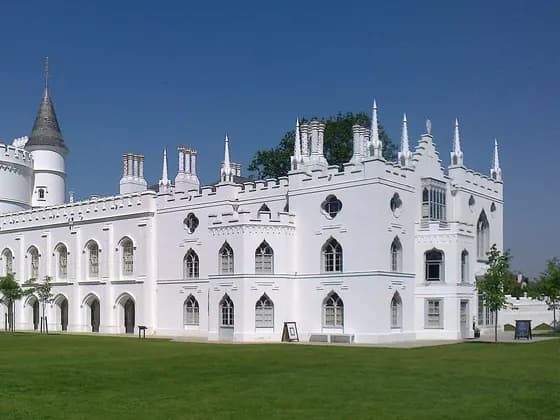

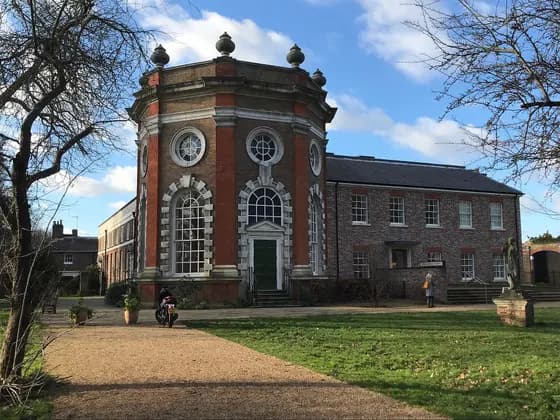
Photo: Peter Trimming / Geograph (via Wikimedia Commons) · CC BY-SA 2.0 · cropped
Photo: Chiswick Chap · CC BY-SA 3.0 · Photo: Jim Osley · CC BY-SA 2.0 · Photo: Matt Brown · CC BY 2.0
Still deciding where to apply? Hear it from a student who's there
St Mary's University, Twickenham welcomes its first MBBS cohort in September 2026 — and for now the course is **exclusively for international students** (a 50–70 strong cohort). Home applicants are not just unranked: the admissions policy states that an applicant assessed as Home at any stage is withdrawn. The school expects to open to home students in the future, but has published no date.
The interview is unlike almost any other UK medical school's: a fully **asynchronous online MMI** run through SAMMI (Scalable Automated Multiple Mini Interviews). In the first cycle it ran as 8 stations of 5 minutes each, taking roughly 90 minutes in one unpausable sitting — questions are pre-recorded and read aloud on screen, your answers are recorded to camera and assessed afterwards against criteria aligned to the GMC, Medical Schools Council, NHS Constitution and St Mary's own CARE values (Compassion, Ambition, Readiness, Excellence). There is no interviewer to build rapport with; the skill is delivering structured, warm answers to a lens under exam conditions: laptop only, no notes, nobody else in the room.
St Mary's is working with the GMC towards accreditation, with the University of Lancashire as contingency partner — students would transfer there for a GMC-recognised degree in the unlikely event accreditation isn't achieved. Placements run from year 1 across south-west and west London, Surrey and Berkshire, and no place is offered without interview.
St Mary's Twickenham interview key facts (2027 entry)
| Home (UK) places | None yet — international only; Home applications withdrawn |
|---|---|
| First cohort | September 2026, 50–70 students |
| Interview format | Asynchronous online MMI (SAMMI) — 8 stations × 5 minutes in the first cycle |
| Sitting rules | One unpausable sitting; laptop only; no notes or other people |
| UCAT | Compulsory — first attempt only, no published cut-off |
| Interview window | January – April, rolling (first cycle: 26 Jan – 3 Feb) |
| Scholarships | 10 × £3,000/yr — awarded on MMI performance |
Interview Format
- Fully virtual, asynchronous MMI via SAMMI (Sammi-Select): pre-recorded questions, recorded answers, assessed after the event
- First cycle ran 8 stations at 5 minutes each, taking about 1.5 hours in a single sitting with no pause or re-entry
- Assesses values and attributes aligned to the GMC, Medical Schools Council, NHS Constitution and St Mary's CARE values
- Skills assessed include communication, empathy, ethical reasoning, problem-solving, teamwork and professionalism
- Marked against pre-determined criteria (not published) by a trained, diverse assessor pool — academics, local GPs, clinical partners, lay assessors — with double-marking for a proportion of candidates
- Strict conditions: laptop or PC only, webcam and mic required, no Safari, no notes or prompts, no one else in the room, face and torso visible
- A candidate number is only issued once a confidentiality agreement is signed; adjustments are requested via a form in the invitation email
- Offers depend on interview success — no place is offered without interview
Sample Interview Questions
Why medicine, and why begin it at a brand-new school?
You will answer this to a camera, not a person — practise exactly that. Cover your motivation with evidence, then engage with the first-cohort reality: small pioneer community, annual GMC review, and the University of Lancashire contingency protecting the qualification.
St Mary's values are Compassion, Ambition, Readiness and Excellence. Which do you find hardest, and why?
The CARE principle is the school's published values framework and the MMI is explicitly values-aligned. Choosing the "hardest" honestly — with an example of working on it — reads far stronger than claiming all four.
Record a two-minute answer: explain to a worried patient why their operation has been postponed.
Asynchronous stations mean nobody nods along mid-answer. Structure aloud: acknowledge, explain plainly, say what happens next, close warmly. Practise pacing to a timer so 5 minutes never cuts you off mid-thought.
A fellow student posts a photo from a clinical placement on social media. No patients are visible. What issues arise?
Professionalism is a named assessment domain. Cover confidentiality beyond faces (context identifies people), trust in the profession, GMC social-media expectations, and the collegial first step — talk to them, then escalate if needed.
Is it fair that international students pay £48,000 a year for the same course home students may later take at UK rates?
A live issue at a school currently admitting only international students. Discuss how UK medical places are funded and capped, cross-subsidy, and informed choice — a balanced answer beats a grievance or a defence.
(Recorded scenario) Your team-mate has missed two group deadlines. Speak to the camera as if beginning that conversation with them.
SAMMI-style stations can ask you to address the lens directly. Open with curiosity, name specific behaviours not character, offer support, agree a plan. Warmth on camera takes deliberate practice.
Describe a time you showed compassion under pressure.
One story, told with the structure the assessors can mark: situation, what you did, what the person needed, what you learned. Compassion is the C in the school's own values — expect it probed somewhere.
(Possible station) You are shown a chart of A&E attendances rising while GP appointments fall. What might explain it?
Problem-solving is a listed skill. Describe before interpreting, offer multiple hypotheses (access, demographics, incentives), and say what data you would want next. Reasoning aloud suits recorded formats well.
What will be hardest about moving to London to study medicine, and how have you prepared?
A realistic question for an international first cohort. Homesickness, cost, a new health system — pair each with concrete preparation. The school's placements run from year 1, so early clinical readiness matters too.
A patient asks you, a first-year student on GP placement, for medical advice in the waiting room. What do you do?
Year 1 at St Mary's includes regular GP half-days, so this is a plausible scenario. Know your limits, be honest about your role, hand over safely, stay kind.
Tell us about a time you worked with people very different from you.
Teamwork and professionalism are assessed, and the school foregrounds inclusion. Concrete story, what was genuinely hard, what you changed — avoid the humble-brag version.
Why does early patient contact improve medical education?
The programme puts students in GP practices and community settings from year 1 and 40% of the course is placement-based. Connect early contact to motivation, communication skills and integrating science with practice.
Should medical schools use automated, recorded interviews rather than live ones?
A self-aware question worth preparing for the format you are actually sitting. Fairness and standardisation versus rapport and follow-up questions; note the mitigations St Mary's uses — trained assessor pools, double-marking, moderation.
Where do you see yourself practising in ten years, and how does a UK degree fit that plan?
International cohorts have varied plans and honesty is fine. Show you understand the UK pathway — MLA, foundation training — whether you intend to stay in the NHS or take the qualification home.
Explain the NHS to someone who has never lived in the UK.
The MMI is aligned to the NHS Constitution, and most of the cohort will be new to the system. Free at the point of use, funded by taxation, GP gatekeeping — clear, structured, no jargon.
Practise the St Mary's Twickenham interview
Rehearse the real format before the day — on demand with our AI interviewers, or live with a tutor.
Sit a mock with photoreal AI interviewers — any time
A timed MMI or panel interview on video — British & international voices — with interviewers who listen, react and press with follow-ups. Rubric-scored feedback and a replay the moment you finish.






Live mocks with a tutor who’s been in the room
A full St Mary's Twickenham-style mock with a medic or dentist tutor — honest scoring against real marking criteria, a station-by-station debrief and a written action plan.
Book a mock interviewHow to Prepare
Rehearse to a webcam, alone, under timed conditions — the entire interview is recorded with no interviewer present, and candidates who have only practised live MMIs consistently over- or under-run.
Do a full tech rehearsal in advance: laptop or PC only (phones are not permitted), Chrome/Edge/Opera rather than Safari, working webcam and mic, good lighting with face and torso visible.
Plan the sitting like an exam: about 90 minutes in the first cycle (current FAQs say up to one hour), one sitting, no pausing, no notes, no one else in the room — clear your space and your schedule before you press start.
Build answers around the published value frameworks: the NHS Constitution, the MSC core values, and St Mary's CARE principle (Compassion, Ambition, Readiness, Excellence).
Sit the UCAT once and well — St Mary's accepts first attempts only, taken in the year of application (July–September 2026 for 2027 entry), and considers subtest scores and SJT band in a gathered-field review.
Make your personal statement explicitly about medicine — the school warns that statements which do not show clear interest in medicine end the application.
Apply early: St Mary's operates rolling admissions and closes once places fill, and the first cycle also ran a late round for strong candidates who sat the UCAT in July.
Invited to interview at St Mary's Twickenham? Say your first answer out loud today with the free two-minute warm-up drill, then sit a timed mock set up for St Mary's Twickenham.
Common Pitfalls
Frequently Asked Questions
Related guides
Free, evidence-based guides from current UK medical and dental students.
Free Interview Resources
Worked-through MMI stations, ethics scenarios, and panel questions.
Read guideNHS Core Values Guide
The 6 NHS values examiners listen for in every interview answer.
Read guideMedical School Rankings
See interview format (MMI vs panel) for each UK medical school.
Read guideUCAS 2026 Personal Statement
The new three-question format your interviewer will reference.
Read guideContextual Offers for Medicine
Every UK medical school's widening-access scheme in one place.
Read guideSources & official admissions information
We cross-check every interview guide against the school’s own admissions guidance and the UK regulators.
- St Mary's University — MBBS interview information — SAMMI asynchronous MMI, 8 stations × 5 min, ~1.5 hours, one sitting, 26 Jan–3 Feb 2026 window, sitting rules.
- St Mary's University — Admissions Policy (Appendix A: MBBS) — Interviews January, rolling to April; June/July only if offers unfilled; Home withdrawn; UCAT first attempt; double-marking.
- St Mary's University — MBBS Medicine degree — Sept 2027 applications open, international only; online MMIs; 10 × £3,000 scholarships; £48,000 (2026) fee; Lancashire contingency.
- St Mary's University — MBBS FAQs — Cohort of 50–70 international students; online MMI designed to last no longer than one hour.
- UCAT Consortium — Official UCAT registration, test format, scoring methodology and free practice materials.
- General Medical Council (GMC) — Statutory regulator. Approved medical schools, the registered-doctor register, and fitness-to-practise standards.
- Medical Schools Council — Selecting-for-excellence guidance, MMI principles, and an A–Z of UK medical schools.
Ready to nail your St Mary's Twickenham interview?
Book a mock interview with a current medical student who recently went through the same process, or practise on demand with the AI interviewer.