
The University of Central Lancashire (UCLan) Medicine course
What you actually study, and where you will be
University of Central Lancashire's MBBS is a 5-year course with a spiral curriculum, with patient contact from Year 1 and placements in Lancashire and Cumbria (2027 entry). A spiral curriculum with three vertical themes. The thing to plan for is geography: years 1 and 2 are based in Preston, and from year 3 you move away from Preston into partner trusts across Lancashire and Cumbria.
- Degree
- MBBS
- Length
- 5 years
- Teaching
- Spiral
- Clinical contact
- Year 1
- UCAS code
- A100
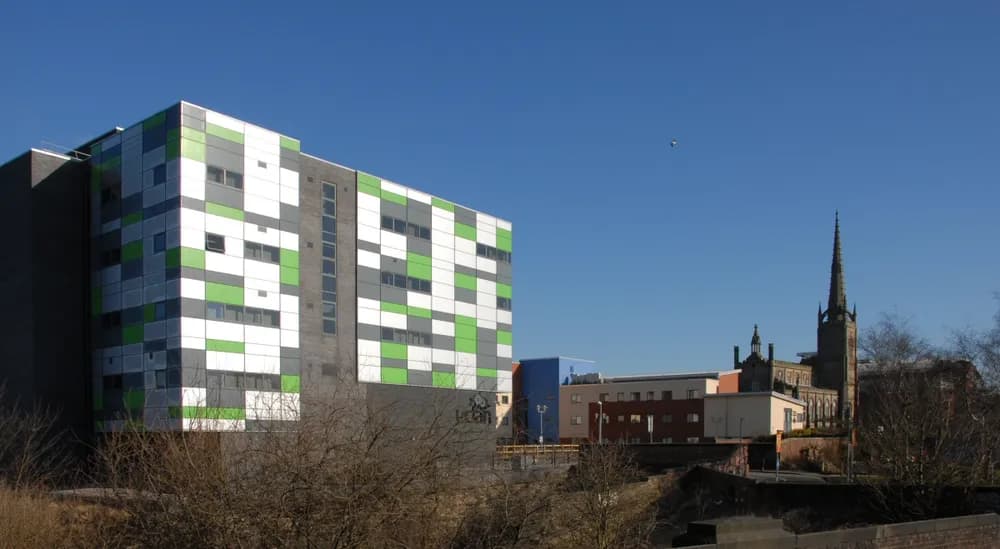
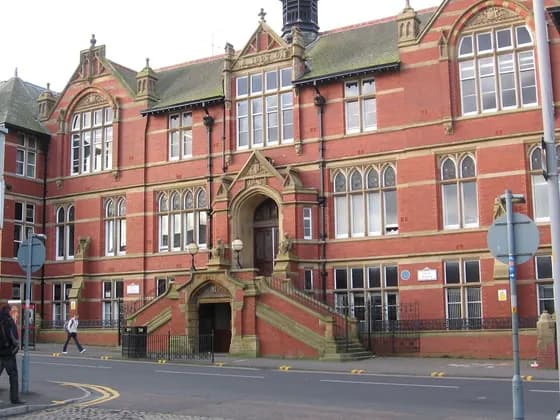
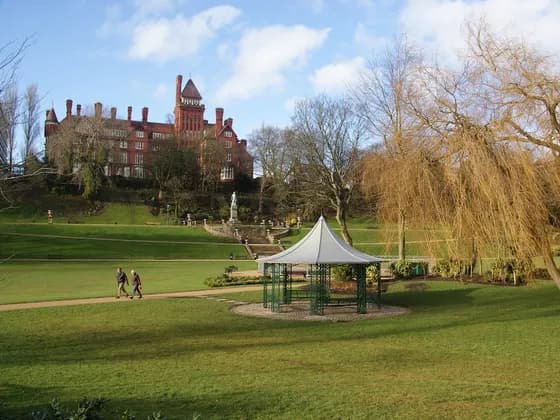

Photo: Galatas · CC BY-SA 2.0 · cropped
Photo: Fetler at English Wikipedia · Public domain · Photo: Bill Boaden · CC BY-SA 2.0 · Photo: Francis C. Franklin · CC BY-SA 3.0
The University of Central Lancashire (UCLan) medicine course at a glance (2027 entry)
The MBBS (Bachelor of Medicine, Bachelor of Surgery) at the University of Central Lancashire, known as UCLan, is a five-year medical degree. The university changed its name to the University of Lancashire in December 2024, so you will see both names. You spend Years 1 and 2 on the Preston campus, then move to the Burnley or Westlakes campus for Years 3 to 5.
The School of Medicine opened in 2015 with 36 students, and that first group graduated in 2020. In February 2020 the General Medical Council (GMC), which regulates doctors and medical schools in the UK, added the university to its list of bodies that can award UK medical degrees. The school's placement information says it has around 800 medical students across the five years, most of them international students. The course page says over 40 countries are typically represented.
The course is a spiral curriculum. Topics come back more than once, each time in more depth and closer to real patients. Three themes run through every year: the science of health and disease, the evidence and population side of medicine, and clinical and communication skills. In Year 5 they merge into a single module that prepares you to work as a junior doctor.
Patients appear early. In Year 1 you have one placement in a GP practice (a family doctor's surgery) and one in community clinics, and Year 2 adds 12 more days of placement, including time in a hospital. From Year 3 most of your learning happens on supervised placements with GP practices and NHS trusts, the organisations that run local hospitals and health services. You still spend one day a week back on campus for teaching.
You also sit both parts of the Medical Licensing Assessment (MLA), often called the UKMLA, during the course. The MLA is the national assessment that every UK medical student graduating from 2024-25 onwards must pass before joining the medical register, so you graduate with it done.
| Degree | MBBS (Bachelor of Medicine, Bachelor of Surgery) |
|---|---|
| Course length | 5 years, full time |
| UCAS code | A100 |
| Years 1 and 2 | Preston Campus |
| Years 3 to 5 | Burnley (East Lancashire) or Westlakes (West Cumbria) campus |
| Medical students | Around 800 across five years, mostly from overseas (school's placement pages) |
| Curriculum | Spiral, with three themes running through all five years |
| First patient contact | GP practice and community clinic placements in Year 1 |
| Medical Licensing Assessment | Knowledge test end of Year 4; clinical exam end of Year 5 |
| Intercalation | Optional master's year after Year 4, offered to high performers |
What makes University of Central Lancashire (UCLan) medicine different
Clinical years based in East Lancashire or West Cumbria
For Years 3 to 5 you move from Preston to Victoria Mill on the Burnley campus or to the National Centre for Remote and Rural Medicine at Westlakes in West Cumbria. Most of your clinical training then happens in the hospitals, GP practices and communities around that base, so where you are placed shapes your last three years.
General practice from your first year to your last
You go to GP practices in Years 1 and 2, spend a nine-week module in general practice in Year 3 and do at least a four-week general practice block in Year 5. Your role grows each time, from watching clinics and taking short histories in Year 1 to running your own supervised student surgery in Year 5.
A weekly campus day through the clinical years
Even when most of your learning is on placement, you keep coming back to campus. In Years 3 and 4 you spend one day a week at the Burnley or Westlakes campus for extra teaching. In Year 5 the campus day falls on a Monday or a Thursday. This keeps structured teaching running alongside your ward and GP work.
Three themes that run through all five years
Science and clinical medicine, evidence-informed practice and medical skills each have their own module every year. The science theme becomes Medicine in Clinical Practice once you reach placements in Year 3. The evidence theme covers epidemiology, public health and the psychology and sociology of illness. In Year 5 all three merge into one module, Transition to Clinical Practice.
The licensing exam's written half done in Year 4
The national Applied Knowledge Test is the final written paper of your Year 4 clinical module. The practical half, the Clinical and Professional Skills Assessment, comes at the end of Year 5. Year 5 prepares you for Foundation Year 1 (FY1), the first year of the Foundation Programme. That is the two years of paid training that new UK doctors normally start with.
Volunteer patients in teaching and exams
The school recruits people with conditions such as Parkinson's disease, heart failure, asthma or diabetes to take part in teaching and assessment. They let students take their medical histories and sometimes examine them. Final-year exam stations use either these volunteer patients or simulated patients, who are people trained to play a patient role. In earlier-year exams the simulated patients also help mark you.
How University of Central Lancashire (UCLan) teaches medicine
Years 1 and 2 form Phase 1 of the course and are taught on the Preston campus. Your timetable is busy, with large-group lectures, tutorials, clinical skills and anatomy workshops, and small-group communication skills sessions. There is a strong emphasis on the basic medical sciences alongside communication and clinical skills. You also learn how to weigh up clinical and scientific evidence.
You do not learn only with medical students. The school runs inter-professional sessions, where you learn alongside students on other healthcare courses, including pharmacy and nursing. The aim is to get you used to working in a team of different health professionals, which is how patients are looked after in practice.
From Year 3 the balance flips. Most of your learning becomes work-based, on supervised placements in hospitals, GP practices and community services, with one campus day a week. Case-based learning runs through Years 3 and 4, with exam-style questions built into the sessions. Self-directed study time is written into your placement timetable.
Throughout the course you keep an e-portfolio on a platform called PebblePad. You use it to log attendance, reflections, clinical case logs and the forms from meetings with your supervisors. The portfolio is part of your formal assessment, not just a record.
The ways you will learn
| Lectures | Large-group teaching on campus, which makes up a big part of the busy early-year timetable alongside smaller-group sessions. |
|---|---|
| Tutorials, seminars and workshops | Smaller groups where you work through topics with a tutor. Anatomy is taught partly through workshops, and you also give oral and poster presentations, which feature in the end-of-year assessments. |
| Case-based learning (CBL) | In Years 3 and 4 you work through realistic patient cases in groups. Single best answer questions, where you choose the one best option from a list, are built into these sessions to get you used to the style of the written exams. |
| Clinical skills and simulation | Practical sessions in skills labs set up like hospital wards, homes and GP surgeries. You practise examinations, procedures and resuscitation on manikins and part-task trainers, which are models of one body part used for practising a procedure, before doing them with patients. |
| Communication skills sessions | Small-group sessions where you practise talking with patients, from open and closed questions in Year 1 to breaking bad news in Year 2. Your Year 1 reflective piece is about talking to a simulated patient. |
| Work-based learning on placement | Supervised time in GP practices, hospitals and community services. It starts in Year 1 and becomes the main way you learn from Year 3. You take histories, examine patients, present cases to doctors and log what you see in your portfolio. |
A typical week on the University of Central Lancashire (UCLan) course
The school says medicine has no single typical week, because the pattern changes as you move through the course. In Years 1 and 2 most of your week is on the Preston campus: lectures, tutorials, clinical skills and anatomy workshops, and small-group communication sessions, with placements at set points in the year.
A Year 1 GP placement runs over four days of about eight hours each, for example 9am to 5pm. The school's sample timetable has you sitting in reception, watching GP and practice nurse clinics, taking observations in a healthcare assistant's clinic, taking a structured history from a patient and joining home visits. You also spend time with the clinical pharmacist and the practice management team.
On the Year 3 general practice module, a week is built from six half-day placement sessions, one campus day and two half-days of self-directed learning. The practice can timetable sessions on any day of the week, including evenings, or as a long shift of up to about 12 hours, mirroring Foundation Year 1 work. At least one weekend day stays free. The sample week puts the campus day on Tuesday and a home study day on Friday.
In Year 5, placement blocks average three days a week and can include nights and weekends. In general practice the sample timetable has you running your own student clinics in the mornings and afternoons, with supervised home visits in between. You also have one campus day each week, on a Monday or a Thursday.
How anatomy is taught at University of Central Lancashire (UCLan)
Anatomy is taught in the early years through anatomy workshops on the Preston campus. A central tool is the Anatomage table, a virtual dissection table that displays 3D male and female anatomy built from real patient scans or cadavers. Instead of a scalpel, you use your hands on the 3D model to cut through it and reveal structures such as organs and muscles.
The Preston campus has two of these tables in the Anatomage Suites in the Greenbank Building. The Burnley campus has its own Anatomage suite, and a virtual dissection table is also listed in the clinical skills kit at Victoria Mill. At Westlakes, one of the clinical skills rooms doubles as a human anatomy resource centre, with a wide selection of anatomical models and an Anatomage table.
The university's medicine pages also describe Human Anatomy Resource and Learning Centres, which hold anatomical models for learning how the body is built and works. The equipment those pages list includes virtual dissection tables and virtual reality (VR) headsets. One course page photo shows an MBBS student using VR simulation equipment, and others show medical students working with microscopes in an anatomy lab and using ultrasound equipment.
When you first meet patients at University of Central Lancashire (UCLan)
You meet patients in Year 1, with one placement in a GP practice and one in community clinics. Your primary care placement falls in the second semester. In Years 1 and 2 the focus is on how primary care works and on its multidisciplinary team, meaning the GPs, nurses, pharmacists, receptionists and other staff who look after patients together.
The tasks are specific. In Year 1 you take a focused history that explores the patient's ideas, concerns and expectations. You also carry out a supervised examination and feel the pulse at the wrist of five patients, noting its rate, rhythm and volume. In Year 2 you present a history to your GP supervisor, do at least two supervised examinations and take full sets of observations, including a manual blood pressure, from five stable patients.
Year 2 also brings a hospital placement, as part of 12 days of placement designed to prepare you for Year 3. On GP placements from Year 3 you are expected to act as a member of the practice team with your own caseload. That means clerking patients, which is taking a full history and examination and writing it up, and presenting cases to doctors.
By Year 5 you are expected to consult on your own under supervision. In general practice you run a student surgery, with patients booked in directly with you. You take the history, examine where appropriate, work out the possible diagnoses and a plan, write the notes and present to your supervisor, who then reviews the patient. Some of these may start as supervised phone or video consultations.
Year by year at University of Central Lancashire (UCLan)
- Year 1
Science, evidence and first patients
Year 1 is spent mainly on the Preston campus, learning the biomedical science behind medicine together with the social side of health. You start clinical and communication skills straight away and go out on a GP placement and a community clinic placement. You also start the e-portfolio you will keep for all five years.
- Integrated Science and Clinical Medicine 1 (UM1011): the biomedical science medicine is built on, and how to learn it through self-directed study.
- Evidence Informed Practice of Medicine 1 (UM1021): social science, statistics, epidemiology and humanities in healthcare, and how research data shapes disease prevention and health policy.
- Medical Skills and Quality Care 1 (UM1030): professional behaviour, communicating with patients, carers and colleagues, and your first practical procedures and clinical skills.
- Examinations you learn: cardiovascular, respiratory, abdominal, cranial nerve and neck.
- Communication skills: open and closed questions, signposting and summarising, heart, chest, gut and pain histories, the rest of the medical history, and closing a consultation.
- A primary care placement in the second semester with a workbook of tasks, plus one reflective piece on talking to a simulated patient.
- Year 2
Deeper science and more time with patients
Year 2 continues the three themes on the Preston campus at a deeper level. Your clinical and communication skills widen, and your placements grow to include a hospital placement. It is the last year of Phase 1, and its 12 days of placement are there to prepare you for learning mainly on placement in Year 3.
- Integrated Science and Clinical Medicine 2 (UM2010), Evidence Informed Practice of Medicine 2 (UM2021) and Medical Skills and Quality Care 2 (UM2030).
- Two more examinations added to the Year 1 list: the peripheral nervous system and the peripheral vascular system.
- Communication skills: the systems review, lifestyle histories and simple lifestyle advice, communicating with patients who have sensory impairments, an introduction to breaking bad news, and specialist histories such as a sexual history.
- Community, GP and hospital (secondary care) placements, totalling 12 days of clinical placement.
- A primary care workbook on consultation styles and managing long-term conditions, three clinical case logs and one assessed reflective piece on communicating with a patient.
- Year 3
Moving to Burnley or Westlakes: clinical modules begin
Year 3 is part of Phase 2 and starts your three years at the Burnley or Westlakes campus. After an induction week you rotate through four clinical modules, learning on placement with one campus day a week. You apply the science from Years 1 and 2 to real patients: how common conditions arise, present, are investigated and are managed.
- Introduction to Clinical Practice week: induction on campus and in hospital, meeting the Year 3 staff, and briefings on teaching methods, assessments, the Year 3 portfolio and student selected components (SSCs). SSCs are pieces of work where you choose or shape the topic yourself.
- Four clinical modules: general medicine, care and community, surgery, and general practice.
- Medicine in Clinical Practice 1 (UM3010), Evidence Informed Practice of Medicine 3 (UM3020) and Medical Skills and Quality Care 3 (UM3030).
- The nine-week general practice module includes a teaching week in week three. Your SSC on this module is a clinical audit, which checks whether the practice's care meets an agreed standard.
- On the GP module you clerk at least three patients and present one case each week to a doctor in at least their second foundation year (FY2). You also do two mini clinical evaluation exercises (mini-CEX): an assessor watches and scores you taking a history or examining a patient.
- Two clinical case logs per nine-week module, eight across the year, assessed by your academic advisor.
- Year 4
More specialties and the national knowledge exam
Year 4 continues supervised placements from your Burnley or Westlakes base, with one campus day a week. The clinical module revisits some specialties from Year 3 in more depth and introduces others for the first time. The year ends with the Applied Knowledge Test, the written half of the MLA.
- Medicine and Clinical Practice 2 (UM4010), Evidence Informed Practice of Medicine 4 (UM4020) and Medical Skills and Quality Care 4 (UM4030).
- Placements with clinical partners in primary and secondary care, such as East Lancashire Hospitals NHS Trust, North Cumbria Integrated Care NHS Foundation Trust and GP practices.
- Case-based learning with built-in exam-style questions, plus practice questions for each clinical module across Years 3 and 4.
- Mock papers on the same computer platform as the national exam, to get you used to its format.
- The Applied Knowledge Test at the end of the year, which is the final written paper of your clinical module.
- High-performing students may then be offered an extra year to study for a master's degree.
- Year 5
Transition to Clinical Practice
Year 5 prepares you to start work as a Foundation Year 1 doctor. It is a single module, Transition to Clinical Practice (UM4080), built around 20 core capabilities based on the Foundation Year 1 programme. The course page describes three six-week apprenticeships and a student assistantship, where you act as a junior doctor's assistant and work more independently under close supervision. The school's guidance for placement supervisors instead describes four-week blocks averaging three days a week.
- Compulsory blocks in front door medicine (the acute areas where patients first arrive at hospital), research and mental health, plus the student assistantship.
- At least one four-week block in general practice, with the option of a second.
- Specialty blocks you choose, either in an area you are considering as a career or in one you have not seen before.
- Across the year: four mini-CEX and four case-based discussions (CBDs), where you talk an assessor through a patient you have looked after. You also do nine direct observations of procedural skills (DOPS), where you are watched doing a practical procedure such as taking blood.
- Other assessments include clinical and prescribing logs, reflective reports, a portfolio review and multi-source feedback, where several colleagues who have worked with you give feedback on how you work.
- One campus day a week, on a Monday or a Thursday.
- The Clinical and Professional Skills Assessment, the practical half of the MLA, at the end of the year.
How you are assessed at University of Central Lancashire (UCLan)
You are assessed through a mix of continuous assessment and regular exams. There is formative assessment, which gives you feedback without counting towards your result, at the end of the first semester and informally through the year. End-of-year exams include computer-based knowledge tests, oral and poster presentations, and Objective Structured Clinical Examinations (OSCEs). You must pass every module in a year to move on to the next.
An OSCE is a practical exam where you move round a series of timed stations, each testing a clinical task such as examining a patient or explaining a diagnosis. Written papers mainly use single best answer (SBA) questions and constructed response questions, where you write your own short answers. Professionalism is assessed throughout the course.
Your e-portfolio counts too. In Years 1 and 2 it is assessed formatively mid-year and summatively at the end of the year, and you must complete every part of it to graduate.
On placement you complete workplace-based assessments, where a trained assessor watches you with real patients. These are the mini-CEX, the direct observations of procedural skills (DOPS) and the case-based discussions described in the year-by-year section. Your supervisor also judges whether each placement was satisfactory, and on Year 3 modules a not yet satisfactory grade may mean retaking the module.
The Applied Knowledge Test (AKT) is a national computer-based exam produced by the Medical Schools Council, the body that represents UK medical schools. The GMC's 2024 decision on the school describes it as two papers of 100 SBA questions, each lasting two hours, sat on consecutive days. It is set at the standard of a new doctor in the first week of Foundation Year 1. You sit it at the end of Year 4 and can be reassessed once in the same year.
The Clinical and Professional Skills Assessment (CPSA) is an OSCE at the end of Year 5. In 2024 the school told the GMC it was moving from 16 stations over two days to 15 stations of 15 minutes each over three days, starting in 2024-25. To pass you must meet the overall standard and also pass at least 11 stations, so strong stations cannot cover for too many weak ones. The GMC found in April 2024 that the exam met its requirements, with no mandatory changes.
Where you will actually be at University of Central Lancashire (UCLan)
In Years 1 and 2 you are based at the Preston campus and go out on short placements in GP practices, community clinics and, in Year 2, a hospital. Before any placement you need an enhanced Disclosure and Barring Service (DBS) check, which the university arranges. You also complete e-learning for your year that includes safeguarding adults and children and resuscitation.
For Years 3, 4 and 5 you must relocate. You are based near either the Burnley campus in East Lancashire, at Victoria Mill, or the Westlakes campus in Cumbria, home to the school's National Centre for Remote and Rural Medicine. The school tries to take your preference into account, but it may allocate your campus. Placements are in the area around your base, in both primary care (GP practices and community services) and secondary care (hospitals).
The two bases are quite different places to live. The university's Sandygate Hall in Burnley has 136 en-suite rooms in 29 flats, a short walk from Victoria Mill. Westlakes sits on a science and technology park three miles from Whitehaven, with free parking, its own student support team and public transport into town. The Lake District is nearby.
Placements are run like a job. The school expects 100% attendance, and each half-day on placement is signed off by the staff member you were with in a paper logbook, as well as on your e-portfolio timesheet. If you cannot attend, you tell the placement provider directly before your start time. You also attend a health and safety induction at each placement.
Your base for Phase 1, with short placements in GP practices, community clinics and, in Year 2, a hospital.
- Preston Campus
One of the two clinical-year bases. You come back to the campus one day a week for teaching and do placements in the surrounding area. The trust and practices listed are the partners the school names for East Lancashire.
- Victoria Mill, Burnley Campus
- East Lancashire Hospitals NHS Trust
- GP practices in East Lancashire
The other clinical-year base, on the Westlakes Science and Technology Park. Clinical skills teaching is in the John Fyfe Building. In 2021 North Cumbria Integrated Care, the NHS trust for the area, said students placed at Westlakes train at West Cumberland Hospital in Whitehaven and at local GP practices.
- National Centre for Remote and Rural Medicine, Westlakes Campus
- West Cumberland Hospital, Whitehaven
- North Cumbria Integrated Care NHS Foundation Trust
- GP practices in Cumbria
Also named by the school as clinical education partners for the MBBS. The school works with GP practices, voluntary sector and other community healthcare providers too.
- Blackpool Teaching Hospitals NHS Foundation Trust
- University Hospitals of Morecambe Bay NHS Foundation Trust
- Bridgewater Community Healthcare NHS Foundation Trust
- Mersey Care NHS Foundation Trust
- Alder Hey Children's NHS Foundation Trust
Electives and chosen modules at University of Central Lancashire (UCLan)
You complete student selected components (SSCs), the pieces of work where you choose or shape the topic, in each year. They are how the course builds your research skills over the five years.
In Year 3 your SSC is a clinical audit carried out during the nine-week general practice module. An audit checks whether care in the practice meets an agreed standard. You confirm your topic, criteria and standards by the end of week two. Three placement sessions are set aside for planning and data collection, and the rest is done in your home study time.
Year 5 includes a compulsory research block and specialty blocks that you choose, either to explore a possible career or to try an area you have not seen yet. Your Year 5 assessments include written reports on your SSC work.
Intercalation at University of Central Lancashire (UCLan)
Intercalating means taking a year out of the medical course to study for another degree. Here it is optional and selective: after Year 4, high-performing students may be offered an additional year to gain a master's degree.
The School of Medicine and Dentistry runs a 12-month full-time MRes in Medical Sciences, which it describes as designed partly for intercalating medical students who want to pursue research. The school also supports the National Institute for Health and Care Research (NIHR) integrated clinical academic training programme, which offers funded research opportunities to undergraduates as well as to newly qualified doctors.
Facilities and support at University of Central Lancashire (UCLan)
Where you will learn
On the Preston campus, the Clinical Skills Suite in the Harrington Building is a large simulated ward with 21 bays and beds. It has medium-fidelity manikins, basic life support manikins and many part-task trainers for practising procedures. Fidelity means how closely a manikin behaves like a real patient. Every bed space has a camera, so examinations and simulation sessions can be filmed and recorded.
The Simulated Hospital Environment is a second ward-style lab with eight bays and beds, simulated oxygen and suction at each bed, and three medium-fidelity Juno manikins. It is used for larger-group training such as resuscitation, drug administration and asepsis, the techniques that keep procedures free of germs. The Patient Assessment rooms in the Greenbank Building include two rooms set up as GP consulting rooms and a small simulated flat for scenarios set in a patient's home.
At Burnley, the clinical skills labs in Victoria Mill have CAE Ares and Juno patient simulators and airway, catheterisation and cannulation manikins. They also have a 12-lead electrocardiogram (ECG) machine, which records the heart's electrical activity, and an Anatomage table.
At Westlakes, the John Fyfe Building has a high-fidelity simulation suite. Its two computer-controlled adult simulators can be programmed to react realistically to your treatment, and the room has a cardiac arrest trolley with a defibrillator and ceiling cameras. The building also has a small-group room for practising injections, taking blood and suturing.
Support while you study
In Years 1 and 2 you have a named portfolio tutor for each year, who reads your e-portfolio entries regularly and gives feedback. In the clinical years an academic advisor assesses your clinical case logs. If you fail the knowledge exam, your module lead and academic advisor give you personal support to catch up. On the Year 3 general practice module you meet your named GP supervisor at the start, midpoint and end.
A workplace-based skills tutor helps you arrange and complete your assessments on placement, and there are Year 5 skills facilitators at both Burnley and Westlakes. A team of GP tutors oversees general practice placements and talks to the practice if students raise important concerns about it.
The school has a Professionalism, Wellbeing and Safety Tutor, and placement staff can report a wellbeing or safety concern about a student through a formal form, as well as positive feedback. The GMC noted in 2024 that the school also offers course-specific pastoral support all year, especially around the release of high-stakes exam results. The school works with disability placement leads to make reasonable adjustments on placement.
You have a say in how the course runs. You complete an evaluation at the end of every clinical module, a Staff Student Liaison Committee meets each term, and an online platform called Unitu lets you raise issues and suggest solutions. The school reports back on changes in You Said, We Did sessions twice a year. Medical student societies also run talks, suturing workshops, peer mentoring and teaching.
Is the University of Central Lancashire (UCLan) course right for you?
This course may suit you if
- You want to meet patients in Year 1, with set tasks such as taking a history and checking pulses on a GP placement.
- You are happy to spend your clinical years in the towns and rural communities of East Lancashire or West Cumbria.
- You are interested in general practice, which runs from your first year to your last and ends with you running a supervised student surgery.
- You would rather learn mainly on placement with a weekly campus day from Year 3 than stay in lecture-based teaching.
- You would enjoy training in an international year group, with students from over 40 countries.
Things to think about
- You have to move after Year 2 for three years, and the school may place you at Burnley or Westlakes whatever your preference.
- If you are allocated to Westlakes, near Whitehaven in West Cumbria, you spend Years 3 to 5 in a rural area near the Lake District rather than a city.
- Most of the school's roughly 800 medical students come from overseas, so your year group will be very international.
- The school expects 100% attendance, and placements can fall on evenings and weekends, with night shifts possible in Year 5.
- The anatomy resources the school describes are virtual dissection tables, anatomical models and VR headsets, so ask at an open day if hands-on work with human specimens matters to you.
University of Central Lancashire (UCLan) medicine course — frequently asked questions
Applying to University of Central Lancashire (UCLan)?
How to get into University of Central Lancashire (UCLan)
Entry requirements, UCAT, personal statement and interview, step by step.
Open the guide →University of Central Lancashire (UCLan) UCAT cut-offs and offers
UCAT cut-offs, A-level offers, interview format and decision dates.
See the requirements →Compare University of Central Lancashire (UCLan) with other schools
Put the teaching style, anatomy teaching and placements next to another school.
Open the comparison →Prepare for the University of Central Lancashire (UCLan) interview
Format breakdown, school-specific sample questions and prep tips from tutors who interviewed here.
Read the guide →Where this University of Central Lancashire (UCLan) course guide came from
This guide was written from 23 official sources — University of Central Lancashire School of Medicine's own course pages and programme documents, plus the regulator and NHS placement partners where they publish detail — read on 2026-09-24, then checked claim by claim against those sources.
- Medicine and Surgery Degree, MBBS (course page)
- School of Medicine and Dentistry
- Information for all year groups about medicine placements
- Phase 1 medicine placements supervisor information (Years 1 and 2)
- Year 3 medicine placements supervisor information
- Year 5 medicine placements supervisor information
- Training the future medical workforce of Lancashire and Cumbria (GP placement recruitment)
- GMC compliance decision on the school's MLA Clinical and Professional Skills Assessment (April 2024)
- GMC compliance decision on the school's MLA Applied Knowledge Test (June 2024)
- GMC list of awarding bodies and new schools
- Anatomage Suites (Preston)
- Anatomage Suite (Burnley Campus)
- Simulated Hospital Environment
- Clinical Skills Suite (Harrington Building)
- Clinical Skills (Burnley Campus)
- Clinical Skills (Westlakes Campus)
- Patient Assessment rooms
- Westlakes Campus
- Burnley Campus
- Study Medicine at the University of Lancashire (subject page)
- Human Anatomy and Learning Suite
- Increase of medical students studying in west Cumbria (North Cumbria Integrated Care, June 2021)
- Medical Training (Prioritisation) Act 2026
Courses are restructured between cycles. Anything here that decides your application — an anatomy offer, a placement city, a compulsory intercalated year — should be confirmed against the official page for your entry year.
Applying to University of Central Lancashire (UCLan)?
We have helped hundreds of applicants turn their UCAT, personal statement and interview prep into offers from University of Central Lancashire (UCLan) and other UK medicine schools.