
The Worcester Medical School Medicine course
What you actually study, and where you will be
Worcester Medical School's MBChB is a 4-year (graduate entry) course taught through problem-based learning, with patient contact from Year 1 and placements in Worcestershire, Herefordshire and Gloucestershire (2027 entry). Three Counties Medical School runs a problem-based curriculum with small groups facilitated by practising doctors, and you meet patients in general practice in your first weeks.
- Degree
- MBChB
- Length
- 4 years (graduate entry)
- Teaching
- Problem-based learning
- Clinical contact
- Year 1
- UCAS code
- A101
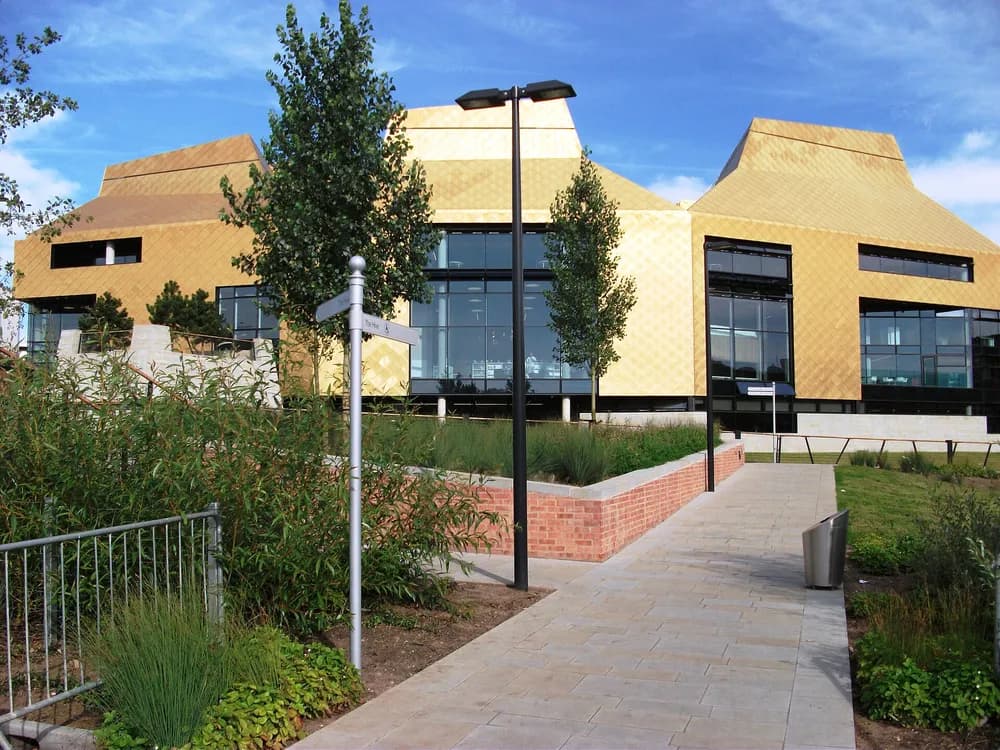
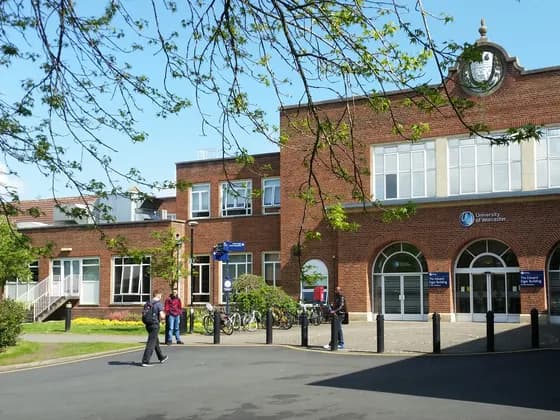

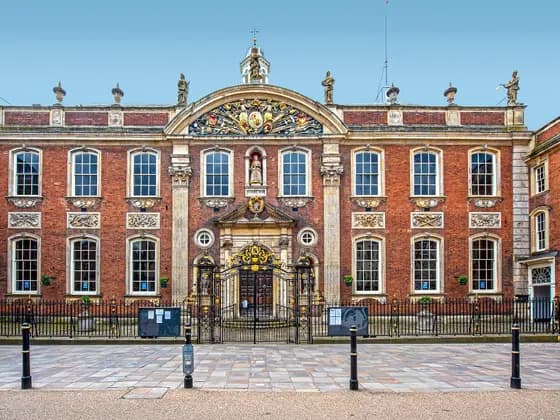
Photo: JanetMackinnon · CC BY-SA 3.0 · cropped
Photo: Jonathan Billinger · CC BY-SA 2.0 · Photo: Colin Park · CC BY-SA 2.0 · Photo: David James · CC BY-SA 4.0
The Worcester Medical School medicine course at a glance (2027 entry)
Medicine at Worcester is a four-year MBChB, short for Bachelor of Medicine, Bachelor of Surgery, taught by the Three Counties Medical School (TCMS) at the University of Worcester. It is a graduate-entry course, open only to people who already hold a degree, which can be in any subject. If you are still at school, you would need to finish a first degree before you could start it. The UCAS code is A101.
The three counties are Worcestershire, Herefordshire and Gloucestershire, and the school aims to train doctors for them, especially in rural and under-served areas. Its first students started in September 2023. Like every new UK medical school, it is still being checked by the General Medical Council (GMC), which regulates doctors and medical degrees. The course was developed with Swansea University Medical School. Swansea is also Worcester's contingency partner: if GMC approval stopped, it would let students already on the course finish and still gain a UK medical degree.
Teaching is based on problem-based learning (PBL). Each week centres on one patient case, and that case sets what your small group needs to learn. A practising doctor guides the group as you work through it together, and you then study on your own. The curriculum is spiral, which means topics come round again in later years, each time in more clinical depth. Anatomy is taught with models and medical images, not by dissecting bodies.
Patients appear from your first weeks, through regular days at a GP (general practitioner, or family doctor) surgery and full-time hospital blocks in Years 1 and 2. Year 3 is a longitudinal integrated clerkship (LIC). Instead of a series of short rotations, you spend the year based in one GP practice, following key patients as they move through hospital and specialist care. Year 4 is spent mainly on hospital wards, preparing for your first job.
In Years 1 and 2 most of your time is spent at the Elizabeth Garrett Anderson Building in Worcester, which medical students share with students of other health professions. In Years 3 and 4 you are out on placement full time. The timetabled year runs for 45 weeks, with about five weeks of planned holiday and two weeks of study leave.
| Degree | MBChB (Bachelor of Medicine, Bachelor of Surgery) |
|---|---|
| Course length | 4 years full time, for graduates of any subject |
| UCAS code | A101 |
| Medical school | Three Counties Medical School, University of Worcester |
| Main base | Elizabeth Garrett Anderson Building, Severn Campus, Worcester |
| Teaching style | Problem-based learning in small groups led by practising doctors |
| Anatomy | Models and medical images; no dissection |
| First patient contact | GP surgery days from your first weeks, about every third week |
| Year 3 | Longitudinal integrated clerkship based in a GP practice |
| Placement area | Worcestershire, Herefordshire and Gloucestershire |
What makes Worcester Medical School medicine different
A Year 3 based in one GP practice
Rather than a string of short specialist rotations, you spend Year 3 attached to a GP practice and follow the same patients as they are referred into hospital. You see how one person's care fits together over time.
Regular GP days from the start
From your first weeks, about one day in every three weeks is spent with a local GP. You are observed with real patients as you use the consultation skills practised on campus, so classroom learning and clinical practice move forward together rather than in separate stages.
Designed for graduates from any background
The programme was built to widen who becomes a doctor. It sets out to attract graduates who did not study pure science, including people already working in health or social care who bring that experience with them. Teaching staff in Years 1 and 2 come from sociology, psychology and public health as well as the biological and clinical sciences.
Anatomy from models and images, not dissection
There are no dissection rooms. You learn anatomy in small groups from lifelike models and medical images, tied to each week's patient case.
A final year that rehearses your first job
Years 3 and 4 build up to a senior assistantship, in which you ideally shadow the job you will start as a newly qualified doctor. Year 4 also includes a placement you choose yourself, in the UK or abroad.
Learning alongside other health professions
The medical school's building on the Severn Campus is shared with students training for other health careers. It was designed for interprofessional learning, with a large open-plan learning space and cafe where students from different courses meet. The programme also includes interdisciplinary learning on placements.
How Worcester Medical School teaches medicine
Years 1 and 2 make up Phase 1, and they run in learning weeks. Each week is built around one clinical problem or patient presentation. Lectures set the scene, and the week's patient case sets what your PBL group needs to learn. You work through it together and then study on your own. Campus teaching happens in theory weeks, which mix face-to-face sessions with online activities.
Around the PBL case, you study the relevant anatomy, physiology (how the body works), radiology (medical imaging) and pathology (how disease changes the body) in small groups. You also practise consultation skills: taking a history (asking a patient about their symptoms and background), examining them and reasoning towards a diagnosis. Public health, psychology, social science, ethics and law are taught through the same weekly topic rather than as separate courses.
The school uses a flipped classroom: recorded material is available so you can prepare beforehand, and time together is spent discussing and applying it. Self-directed learning is timetabled every week. The school is clear that some of the most useful learning is unplanned, when a patient turns up with a relevant problem, so you are expected to be flexible and seek out those chances.
Years 3 and 4 make up Phase 2, and almost all of your learning happens on placement. Your teachers are now mostly practising clinicians, such as GPs, hospital consultants and their teams. The emphasis is on broad clinical skills that every new doctor needs, as set out by the GMC, rather than detailed knowledge of narrow specialties.
In Phase 2 you keep practising clinical skills, and this can include examining each other. The school says this helps you learn what a healthy body looks like and how to put a patient at ease. It has arrangements to keep these sessions safe, private and comfortable for everyone.
The ways you will learn
| PBL groups | A small group works through a hypothetical patient case. Every PBL facilitator, the tutor who guides the group, is a doctor. You sharpen your thinking by challenging others and being challenged. The week's case sets the learning outcomes for your other sessions. On campus your group can also use what the school calls a Resource Carousel, a collection of learning aids. |
|---|---|
| Lectures and recorded material | Lectures and introductory sessions give you signposts: what matters this week and where to look. Recorded material and online resources let you prepare before group work. |
| Consultation skills sessions | In small groups you practise taking histories and examining patients. You role-play with classmates, work with simulated patients (actors trained to play patients) and use simulation. The building also has a simulated GP surgery with its own set of consultation rooms. |
| Clinical placements | On placement you join the clinical team. You talk with patients, practise examination and practical procedures, and work in teams that include other health professionals, guided by the learning outcomes you need to meet. |
| Teaching from the wider health team | Much of your teaching comes from practising clinicians and senior academics, with technicians supporting practical sessions. Nurses, midwives, paramedics, physician associates and other health professionals also teach you, because NHS care is delivered by mixed teams. |
| Simulation | Simulations put you in charge of a patient's care in realistic, high-pressure scenarios, and some are organised by students. In November 2025 the university described a student-run accident and emergency (A&E) exercise based on a major road crash with ten seriously injured patients. Students, including first-years, took turns as doctors, patients and receptionists. The school's usual, staff-led simulations are supported by teachers who also hold clinical and A&E roles. |
A typical week on the Worcester Medical School course
In Phase 1, each week follows the learning-week pattern described above: lectures and PBL work on the week's clinical problem, small-group anatomy and science, consultation skills practice and timetabled self-directed learning.
Teaching takes up to 24 hours a week, in group work and face-to-face sessions on campus or on placement. A further 4 to 8 hours of self-directed study are timetabled. On top of that you are expected to do around 10 hours a week of your own study, such as reading journal articles and books, library research, coursework and exam preparation.
On placement, core hours are 9am to 5pm, but you are also expected to gain some experience of on-call and emergency work outside those hours, as qualified doctors do. Placements can include evenings and weekends. The school points out that weekends on the wards can bring more teaching from junior doctors and more time with patients.
Timetabled teaching is compulsory and can fall on any day of the week, with some sessions in the evening. The university describes the pace as fast and the days as busy. It also warns that most students can fit in very little paid work alongside the course.
How anatomy is taught at Worcester Medical School
Worcester does not use dissection. The medical school has no laboratories for cadaveric dissection, the dissection of bodies donated to medical science. Instead you study anatomy through models and medical images, in small groups, alongside physiology, radiology and pathology for the same week's topic.
The Elizabeth Garrett Anderson Building has an anatomy skills room equipped with high-fidelity models, meaning detailed, lifelike replicas of the body. They are used to show not only normal anatomy but also physiology and pathology, so you can see how the body works and how disease changes it.
Anatomy is examined in an anatomy spotter in each of Years 1 and 2. A spotter is a practical exam in which you identify structures or their functions in answer to a series of questions, set across two papers. Anatomy also comes up in the data and image interpretation exams in Years 1 to 3.
When you first meet patients at Worcester Medical School
You meet patients in general practice from your first weeks. About every third week you spend a day with a local GP at their surgery, watching how they deal with patients. You learn about and from the rest of the primary care team: the GP practice staff and community services that are most people's first contact with the NHS. You are also observed with patients yourself. Across Years 1 and 2 these GP days add up to about four weeks.
Hospital time starts in Phase 1 too. Across Years 1 and 2 you spend around 14 to 15 weeks on full-time hospital placements (the programme specification gives 4 weeks in Year 1 and 10 in Year 2). These blocks are not about learning a specialty. They get you used to how a hospital works and what doctors actually do.
In Phase 2 you become part of clinical teams and take more responsibility for patients' care as you go, leading up to the senior assistantship in Year 4.
Year by year at Worcester Medical School
- Year 1
Foundations of Medicine 1
Year 1 is the first half of Phase 1 and is taken as a single 150-credit module, Foundations of Medicine 1 (TCMS2001). Each learning week starts from a patient problem worked through in PBL, with science, anatomy and consultation skills taught around it. Your clinical time comes from GP days and your first hospital placements.
- Weekly PBL cases, with small-group anatomy and science sessions and consultation skills practice with classmates and simulated patients.
- A day at a local GP surgery about every third week.
- About 4 weeks of full-time hospital placements.
- A Student Selected Project on a topic you choose, and Case Study 1, an assessed written case study.
- Work on two long-running patient projects that span Years 1 and 2, described under Electives and options below.
- Assessment through three knowledge tests (multiple-choice papers), an anatomy spotter, a data and image interpretation exam, the project, the case study and your portfolio.
- At least four meetings with your Personal Academic Tutor.
- Year 2
Foundations of Medicine 2
Year 2 completes Phase 1 with Foundations of Medicine 2 (TCMS3001), another 150-credit module. The weekly PBL pattern continues, with earlier topics revisited in more depth. You spend more time in hospital and sit your first OSCE, or Objective Structured Clinical Examination. This is a practical exam made up of stations, at each of which you carry out a set clinical task in front of an examiner.
- About 10 weeks of full-time hospital placements.
- Case Study 2, a second assessed written case study.
- Assessment through two knowledge tests, your first OSCE, an anatomy spotter, a data and image interpretation exam, the case study and your portfolio.
- Year 3
Practice of Medicine 1: the longitudinal integrated clerkship
Year 3 opens Phase 2 and is your first mainly clinical year, studied as Practice of Medicine 1 (TCMS4001). It is the LIC described above. You spend the whole year on long placements in the community, in both primary care (your GP practice) and secondary care, meaning hospital and specialist services.
- Following key patients from your GP practice as they are referred for hospital and specialist treatment.
- Hospital (secondary care) placements, which the school calls LIC Events, alongside your GP base.
- A quality improvement project that you design and carry out yourself, described under Electives and options below.
- Eight workplace-based assessments, which check how you carry out defined clinical tasks in real clinical settings and give you feedback.
- Assessment through two knowledge tests, an OSCE, a data and image interpretation exam and your portfolio.
- A named educational supervisor who oversees your clinical learning and acts as your personal tutor.
- Year 4
Practice of Medicine 2: preparing for practice
Year 4, Practice of Medicine 2 (TCMS4002), prepares you to start work as a doctor. Most of it is spent in one of the region's acute hospitals, the main hospitals that treat sudden and serious illness and injury, working as an assistant on medical and surgical wards. The year's final exams are the two parts of the Medical Licensing Assessment (MLA), the national assessment every UK medical student must pass.
- A senior assistantship, in which you ideally shadow the post you will take up once you qualify.
- An Independent Preparation for Practice placement that you choose, described under Electives and options below.
- Knowledge tests, the last of them being the MLA Applied Knowledge Test (AKT).
- A final OSCE, which is the MLA Clinical and Professional Skills Assessment (CPSA).
- Eight more workplace-based assessments, recorded in your portfolio.
How you are assessed at Worcester Medical School
Each year is one module, and each module is made up of several assessment elements of equal weight. You must pass every element separately, so a strong result in one cannot make up for a failed one. The pass mark for graded work is 50 per cent. Merits and distinctions are awarded each year for scores of 60 and 80 per cent in that year's graded assessments.
Knowledge tests use single best answer questions. Each gives a short clinical scenario and a question with five options, and you pick the most plausible answer. You sit three knowledge tests in Year 1 and two in each later year. The data and image interpretation exam, in Years 1 to 3, is a computer-based paper on clinical signs, images, test results, research data and relevant anatomy.
OSCEs run from Year 2 onwards. Most stations model all or part of a consultation with a real or simulated patient. The knowledge tests, OSCEs, anatomy spotters and data interpretation exams are standard set, which means a recognised method is used to fix each paper's pass mark. Written projects and case studies are marked against the university's grade descriptors, and the marking is checked for consistency. Presentations, posters and online activities are also among the assessment formats.
At Worcester your last Year 4 knowledge tests form the written part of the Medical Licensing Assessment, the Applied Knowledge Test (AKT). Your final OSCE forms its practical part, the Clinical and Professional Skills Assessment (CPSA). Every UK graduate must pass both before joining the medical register. You will also sit the Prescribing Safety Assessment (PSA), a national online test of safe prescribing run by the British Pharmacological Society and MSC Assessment, part of the Medical Schools Council. Every new doctor must pass it by the end of their first year of work.
Your electronic portfolio runs through all four years and records your progress towards the GMC's Outcomes for Graduates, which set out what every new UK doctor must be able to do. Your Personal Academic Tutor reviews it twice a year for feedback, and each part has a deadline. Missing portfolio records stop you progressing.
If you fail an element, you resit it in the summer reassessment period, and a passed resit is capped at a pass. After that, the next chance is to retake the year, which the exam board only allows if you have passed at least four of your assessment elements. If you leave early, the credits you have passed can lead to a Certificate or Diploma of Higher Education, or a BSc, in Medical Studies.
- Clinical logbook: each practical procedure is signed off by a qualified assessor, in simulation and, where appropriate, on placement.
- A report from your supervisor at the end of each placement, based on watching you work. It covers your attendance and timekeeping, how keen you are to learn and how your clinical skills are developing.
- At least one reflective piece of about 500 words for each clinical placement, which a member of staff answers in writing.
- Multi-source feedback: anonymous, combined feedback on your professional behaviour, discussed in a compulsory meeting with your tutor or clinical mentor.
- Integrated consultation skills assessments (iCSA) twice a year during community sessions, where you are watched taking a history from and examining patients.
- Records of the learning opportunities you have had in clinical settings in Years 1 and 2, and eight workplace-based assessments in each of Years 3 and 4.
Where you will actually be at Worcester Medical School
Your clinical training takes place in NHS services across Worcestershire, Herefordshire and Gloucestershire. Placements can be anywhere in the three counties, including the GP days and hospital blocks of Years 1 and 2. The course page warns that this can mean a lot of travel around the region. In Phase 2 about half your time is in community attachments, mostly but not only in general practice. The other half is in hospital (secondary) care in the local hospitals of the three counties.
The course page describes the settings you can expect. In the community they include GP practices, outreach clinics (specialist clinics held away from the main hospital), community hospitals and care facilities. In hospitals they include medical and surgical wards, cancer treatment centres, psychiatric in-patient units, labour wards and research laboratories.
Each placement has an educational supervisor, and each major hospital site has a member of the school's administrative team as your point of contact. The major hospitals have their own teaching facilities, and electronic learning resources are available on every clinical site. The school names five NHS trusts as its partners, and the areas below list the main hospitals those trusts run. The school also says it makes full use of community hospitals as places for students to train.
The GMC's 2024/25 report found that Clinical Teaching Fellows, doctors in dedicated teaching roles at partner sites, understood the curriculum and taught effectively. It noted new NHS partnerships set up for the Year 3 clerkships, in GP practices and hospitals. It also asked the school to keep checking that clerkships give students a range of specialties and a real place in hospital teams.
At Worcestershire Acute Hospitals NHS Trust, placements for TCMS students run through the trust's Undergraduate Academy, which also teaches students from the Universities of Birmingham and Warwick. Depending on the placement, you may train at one or more of the trust's three hospitals. Formal teaching is mostly held in the Charles Hastings Education Centre at Worcestershire Royal Hospital, which has a simulation centre.
At that trust your educational supervisor is a senior doctor who signs off your end-of-placement report. Teaching includes bedside sessions, tutorials, clinical skills workshops and simulation, with virtual reality practice where appropriate. Students there have a common room, library services and on-call accommodation, meaning rooms for when you are working on call.
Run by Worcestershire Acute Hospitals NHS Trust, a partner of the school, whose Undergraduate Academy confirms that TCMS students train at these three hospitals. Worcestershire Royal Hospital has an oncology (cancer) centre that provides local radiotherapy. Herefordshire and Worcestershire Health and Care NHS Trust, also a partner, provides community nursing, therapy and mental health services and runs seven community hospitals.
- Worcestershire Royal Hospital, Worcester
- Alexandra Hospital, Redditch
- Kidderminster Hospital and Treatment Centre
Run by Wye Valley NHS Trust, a partner of the school. The trust also runs community hospitals in Ross-on-Wye, Leominster and Bromyard and community services for Herefordshire and its borders. Since April 2020, Herefordshire and Worcestershire Health and Care NHS Trust has run the county's mental health and learning disability services.
- Hereford County Hospital, Hereford
Run by Gloucestershire Hospitals NHS Foundation Trust, a partner of the school, which also runs Stroud Maternity Hospital. Its specialists see patients in community hospitals including Stroud, Berkeley Vale, Forest of Dean, Tewkesbury, North Cotswolds and Cirencester. Gloucestershire Health and Care NHS Foundation Trust, also a partner, provides community and hospital services for physical health, mental health and learning disabilities.
- Gloucestershire Royal Hospital, Gloucester
- Cheltenham General Hospital, Cheltenham
Electives and chosen modules at Worcester Medical School
Two long-running patient projects run through Years 1 and 2, so you get to know the same people over a long period. In the Family Case Study you visit a family with a new baby in their home. You learn about childbirth and child development, and about the public health, psychological and social side of family life.
In Living with a Diagnosis you are given a patient who has a long-term condition, and you learn how it affects them and their family while building your communication and clinical skills. You can name an area that interests you, such as neurology, psychiatry, cardiology or oncology (cancer care), and your GP tutor will try to find a patient to match.
You also choose your own topic for the Student Selected Project in Year 1. In Year 3 you design and run a quality improvement project. Quality improvement means spotting a problem in how care is delivered, testing a change and measuring whether it makes care safer or better.
In Year 4 you have an Independent Preparation for Practice period. You pick a placement yourself, with guidance from the school, and it can be in the UK or overseas. The aim is to fill gaps in your experience or follow an interest before you start work as a doctor.
Facilities and support at Worcester Medical School
Where you will learn
The medical school's home is the Elizabeth Garrett Anderson Building, which the university calls its Three Counties Centre for Health and Wellbeing. It cost £16 million and stands on the St John's bank of the River Severn in Worcester, on the university's Severn Campus. It was designed for students of different health professions to learn together, and it also hosts training for people already working in the region's health service.
- An anatomy skills room with high-fidelity models for studying anatomy, pathology and physiology.
- A simulated GP surgery with a suite of consultation rooms.
- Technology for observing sessions, and a space for feedback.
- Rooms that can easily be divided into stations for OSCEs.
- Computer access, small-group study spaces and a large open-plan learning area with a cafe.
- The university's existing clinical simulation suites and simulated hospital environment.
- The Hive in Worcester, a combined university and public library with around a quarter of a million books.
Support while you study
Every student has a Personal Academic Tutor (PAT), who supports your academic progress and points you to welfare services when you need them. You meet your PAT at least four times in Year 1 and at least three times in each later year. In Phase 2, your educational supervisor on placement takes on the PAT role.
The school has a Student Support and Guidance Lead who coordinates support for medical students and, with the lead for PBL, guides the tutors. You also have dedicated careers support and occupational health, the service that looks after health matters affecting your clinical work, as well as the university's student services and Disability and Dyslexia Service.
In its 2024/25 review, the GMC reported that students in both year groups felt a sense of belonging, that the school acted promptly on student feedback and that induction was supportive. It also asked for more evidence on how students' pastoral and wellbeing needs are met while they are out on clerkship placements.
Is the Worcester Medical School course right for you?
This course may suit you if
- You already have a degree, perhaps outside science, and want a course built to bring in graduates from different backgrounds, including health and social care.
- You learn well by working through patient cases in a small group and then studying independently.
- You want regular time with patients in general practice from your first weeks.
- You are drawn to general practice, community or rural medicine: the course aims to produce doctors with a generalist approach, and Year 3 is based in a GP practice.
- You would like to train in Worcestershire, Herefordshire or Gloucestershire, and perhaps work there afterwards.
Things to think about
- The school is new. Its first students started in 2023, no year group has graduated yet, and the GMC is still reviewing it. If approval were stopped, Swansea University Medical School would let students already on the course finish their degree.
- There is no dissection, so you will not learn anatomy from donated bodies.
- The timetabled year is 45 weeks long, leaving about five weeks of planned holiday.
- Placements, including early ones in Years 1 and 2, can be anywhere in the three counties, and the course page warns of a lot of travel. The university suggests planning how you will get around; some students bring cars or car-share.
- PBL puts a lot of responsibility on you: around 10 hours a week of your own study sits on top of the timetable.
- Timetabled teaching is compulsory and can fall on any day, including some evenings, and placements can include weekends, so most students can fit in little paid work.
Worcester Medical School medicine course — frequently asked questions
Applying to Worcester Medical School?
How to get into Worcester Medical School
Entry requirements, UCAT, personal statement and interview, step by step.
Open the guide →Worcester Medical School UCAT cut-offs and offers
UCAT cut-offs, A-level offers, interview format and decision dates.
See the requirements →Compare Worcester Medical School with other schools
Put the teaching style, anatomy teaching and placements next to another school.
Open the comparison →Prepare for the Worcester Medical School interview
Format breakdown, school-specific sample questions and prep tips from tutors who interviewed here.
Read the guide →Where this Worcester Medical School course guide came from
This guide was written from 18 official sources — University of Worcester Medical School's own course pages and programme documents, plus the regulator and NHS placement partners where they publish detail — read on 2026-09-24, then checked claim by claim against those sources.
- Medicine (Graduate Entry) MBChB: University of Worcester course page
- Programme specification for the MBChB, 2025/26 onwards
- Three Counties Medical School: vision and course overview
- Three Counties Medical School facilities
- Three Counties Medical School NHS partnerships
- Three Counties Medical School admissions strategy and outreach
- University of Worcester allocated 50 medical places (news, 2023)
- More government funded places for new medical students allocated to Worcester (news, May 2024)
- Student-led A&E simulation at the Three Counties Medical School (news, November 2025)
- Medical Schools Council course entry: MBChB Medicine Graduate Entry (A101)
- GMC annual quality assurance summary: Three Counties Medical School, 2024/25
- Worcestershire Acute Hospitals NHS Trust: early careers and the Undergraduate Academy
- Worcestershire Acute Hospitals NHS Trust Undergraduate Academy
- GMC: new schools and programmes under review
- GMC: new schools and programmes process
- GMC: reports on newly approved medical schools
- GMC: the Medical Licensing Assessment
- Prescribing Safety Assessment: British Pharmacological Society and MSC Assessment
Courses are restructured between cycles. Anything here that decides your application — an anatomy offer, a placement city, a compulsory intercalated year — should be confirmed against the official page for your entry year.
Applying to Worcester Medical School?
We have helped hundreds of applicants turn their UCAT, personal statement and interview prep into offers from Worcester Medical School and other UK medicine schools.