
Worcester Medical School Medicine Interview
Format, Questions & Prep Tips
Worcester Medical School medicine interviews for 2027 entry are a panel interview. Published figures: Degree requirement 1st/2:1 any subject, or 2:2 + Masters/Doctorate; Indicative shortlist scores Most shortlisted: GAMSAT 50+ or UCAT 1870+ (no hard cut-off); First cohort September 2023 (~24 students).
- Institution
- University of Worcester Medical School
- Interview (2027 entry)
- Not published — apply by 15 October and watch for shortlisting and CASPer instructions
- Decisions (2027 entry)
- Not published — offers follow the combined SJT + interview ranking
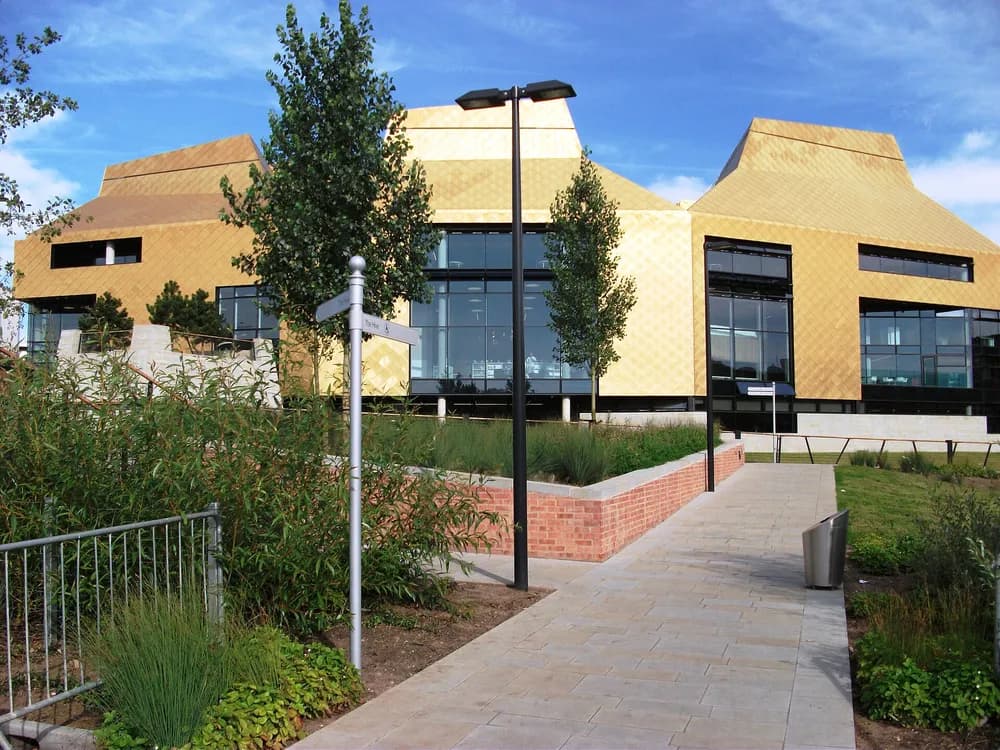
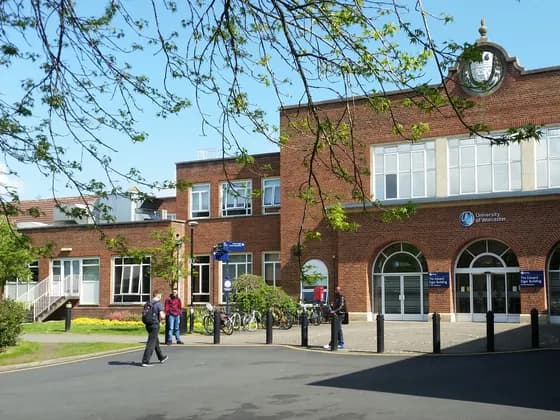

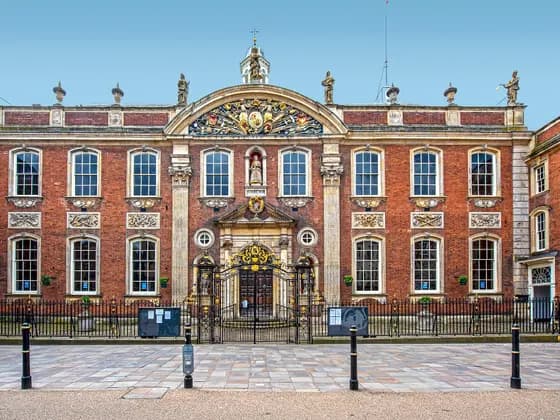
Photo: JanetMackinnon · CC BY-SA 3.0 · cropped
Photo: Jonathan Billinger · CC BY-SA 2.0 · Photo: Colin Park · CC BY-SA 2.0 · Photo: David James · CC BY-SA 4.0
Still deciding where to apply? Hear it from a student who's there
Worcester's Three Counties Medical School does not run an MMI. Shortlisted applicants to the four-year graduate-entry MBChB complete the **CASPer online situational-judgement test and two panel interviews**, with SJT and interview performance combined into a single ranking from which offers go to the top candidates. Selection is aligned to Health Education England's values-based recruitment framework, and the school expects applicants to arrive knowing the NHS, the NHS Constitution and the GMC's expectations of medical students.
The route in is deliberately broad: a 1st or 2:1 in any subject (or 2:2 plus a Masters or doctorate), GCSE Maths and English at grade 4, and UCAT, GAMSAT or (new for 2027 entry) MCAT — your choice. There is no hard test cut-off; the school's own guidance says most shortlisted applicants have scored above roughly GAMSAT 50 or UCAT 1870, with the threshold set by each year's field. Personal statements are not scored. Preference in the holistic assessment goes to applicants with real links to Worcestershire, Herefordshire and Gloucestershire — childhood or current addresses, NHS experience, first-in-family status and other published criteria — though you can apply from anywhere.
Founded with a pioneer cohort in September 2023 and built in association with Swansea (its contingency school), TCMS exists to grow the three counties' own NHS workforce: problem-based learning on the £16m Severn campus, placements that can reach anywhere across the three counties, and NHS part-funding of home fees after year 1.
Worcester Medical School interview key facts (2027 entry)
| Interview format | CASPer SJT + two panel interviews — no MMI |
|---|---|
| Offers | Combined SJT + interview score, ranked; top candidates receive offers |
| Degree requirement | 1st/2:1 any subject, or 2:2 + Masters/Doctorate |
| Admissions test | UCAT, GAMSAT or MCAT — applicant's choice |
| Indicative shortlist scores | Most shortlisted: GAMSAT 50+ or UCAT 1870+ (no hard cut-off) |
| First cohort | September 2023 (~24 students) |
| Regional preference | Three Counties links weigh in holistic assessment |
Interview Format
- Two panel interviews for every shortlisted applicant, plus the CASPer online situational-judgement test
- CASPer is run by Altus: 11 scenarios across video-response and typed-response sections, typically 65–85 minutes, sat only after the school confirms you are shortlisted
- Interview assesses enthusiasm for medicine and problem-solving ability; SJT and interview scores are combined and applicants ranked
- Selectors come from health, clinical, academic and lay backgrounds, all trained in procedure and equality and diversity
- The admissions process aligns to Health Education England's values-based recruitment framework and the MSC's Selecting for Excellence principles
- Applicants are expected to know the NHS, the NHS Constitution and GMC requirements of medical students
- Shortlisting: academic screen, then ranking by UCAT/GAMSAT/MCAT with a threshold set per year — widening-participation criteria can extend the threshold
- Personal statements and references are not scored — they are checked for predicted grades and qualification clarity
Sample Interview Questions
Why medicine as a second career, and why now?
TCMS explicitly courts career-changers from health and social care. Tell the real story: what your first career taught you, what medicine adds that it cannot, and the concrete steps that tested the decision.
Why the Three Counties — and would you stay after foundation training?
The school's founding purpose is the Gloucestershire–Herefordshire–Worcestershire workforce, and its published preference criteria reward genuine regional links. Be honest, but grounded: name the local trusts, the rural-access challenges, and the foundation schools its graduates feed.
What does your background bring to a small, close-knit cohort?
With a pioneer-scale school, panels care about who joins the room. Real experience from work or caring roles, evidence you lift teams, and comfort with the visibility of a small cohort.
A rural patient must travel ninety minutes each way for a fifteen-minute outpatient appointment. What issues does this raise?
Rural access is the three counties' daily reality. Discuss equity, travel burden on older and poorer patients, remote-consultation trade-offs, and the workforce answer the school itself embodies.
The NHS Constitution says patients should be at the heart of everything the NHS does. Give an example of where the system fails that, and what you would change.
TCMS says outright that applicants should know the NHS Constitution. Pick one concrete failure — waiting lists, discharge delays, access inequality — and reason to a proportionate, realistic change.
Tell us about a time you used experience from your previous career to help someone in difficulty.
The panel format rewards depth over station-hopping breadth: one story, told with structure and reflection, connecting your past professional identity to the doctor you intend to be.
A colleague on your ward placement seems overwhelmed and close to tears at handover. What do you do?
Values-based recruitment listens for compassion turned into action: a private check-in, practical load-sharing, signposting support, and escalation only when needed. Show the instinct and the judgement.
You are shown health-outcome data for Gloucestershire, Herefordshire and Worcestershire against the England average. How would you approach interpreting it?
Structure first: what is measured, over what population, with what confounders (age profile, rurality, deprivation pockets). Panels probe problem-solving explicitly — narrate your method, not just conclusions.
Should medical schools give preference to local applicants?
TCMS does, in its holistic assessment — so argue it properly: workforce retention evidence and community connection against fairness to outsiders, and note the school's own balance (preference, not restriction; anyone can apply).
Explain problem-based learning to someone considering this course, including its demands.
The curriculum is PBL in small facilitated groups. Show you know what that asks of you — preparation, self-direction, contribution — and why it suits graduates in particular.
You suspect a fellow student completed their CASPer test with help from someone else. What do you do?
Probity questions travel well at a school using a remote SJT. Fairness to the cohort, patient-safety logic of honest selection, and the graduated response: facts first, then the school, not gossip.
How will you cope with a 45-week academic year alongside the rest of your life?
The MBChB timetables 45 weeks a year for four years — heavier than most degrees your cohort will have known. Realistic planning, support networks, finances and honest self-knowledge about pace.
What did you learn from your work with patients, service users or the public?
Caring experience weighs in values-based selection. Go specific: one patient or service user, what changed in your understanding, and how it shaped your view of good care.
A patient asks why they keep seeing different doctors and none of them know their story. Respond.
Continuity is a live issue in stretched rural systems. Empathise genuinely, explain team-based care honestly, and show what you personally would do to close the gap — read the notes, hand over well.
Is it right that the NHS part-funds your tuition while some classmates pay international fees of nearly £50,000?
Engage with how UK medical training is funded, the workforce return the NHS expects, and international students' position — balanced, informed, non-defensive.
Practise the Worcester Medical School interview
Rehearse the real format before the day — on demand with our AI interviewers, or live with a tutor.
Sit a mock with photoreal AI interviewers — any time
A timed MMI or panel interview on video — British & international voices — with interviewers who listen, react and press with follow-ups. Rubric-scored feedback and a replay the moment you finish.



Live mocks with a tutor who’s been in the room
A full Worcester Medical School-style mock with a medic or dentist tutor — honest scoring against real marking criteria, a station-by-station debrief and a written action plan.
Book a mock interviewHow to Prepare
Prepare for panels, not stations: two conversations with follow-up questions reward depth, consistency and a coherent narrative far more than rehearsed two-minute set pieces.
Book CASPer promptly once shortlisted — it is 11 scenarios (video and typed responses) over roughly 65–85 minutes, and it carries real weight because it is combined with your interview score.
Practise typed-response situational judgement under time pressure as well as speaking to camera — CASPer uses both.
Read the NHS Constitution and the GMC's student-facing guidance properly; TCMS names them as expected preparation.
Choose your admissions test strategically: TCMS accepts UCAT, GAMSAT or MCAT with no hard cut-off — most shortlisted applicants have cleared roughly GAMSAT 50 or UCAT 1870, so pick the test that suits your strengths.
Map your genuine Three Counties and NHS links against the published preference criteria before you apply — they can extend the interview threshold in your favour.
Ground yourself in the region: the five partner trusts, rural access challenges across the three counties, and the two foundation schools graduates progress into.
Budget and plan for a 45-week year; panels respect graduates who show they understand exactly what they are signing up for.
Invited to interview at Worcester Medical School? Say your first answer out loud today with the free two-minute warm-up drill, then sit a timed mock set up for Worcester Medical School.
Common Pitfalls
Frequently Asked Questions
Related guides
Free, evidence-based guides from current UK medical and dental students.
Free Interview Resources
Worked-through MMI stations, ethics scenarios, and panel questions.
Read guideNHS Core Values Guide
The 6 NHS values examiners listen for in every interview answer.
Read guideMedical School Rankings
See interview format (MMI vs panel) for each UK medical school.
Read guideUCAS 2026 Personal Statement
The new three-question format your interviewer will reference.
Read guideContextual Offers for Medicine
Every UK medical school's widening-access scheme in one place.
Read guideSources & official admissions information
We cross-check every interview guide against the school’s own admissions guidance and the UK regulators.
- University of Worcester — Medicine (Graduate Entry) MBChB — Shortlisted applicants sit the Casper SJT and attend two panel interviews.
- Three Counties Medical School — MBChB application FAQs (2027 entry) — Accepts UCAT, GAMSAT or MCAT; no hard cut-off; Casper only for shortlisted applicants; 15 October 2026 deadline.
- Three Counties Medical School — Casper test — Casper: 11 scenarios across video and typed sections, typically 65–85 minutes.
- UCAT Consortium — Official UCAT registration, test format, scoring methodology and free practice materials.
- General Medical Council (GMC) — Statutory regulator. Approved medical schools, the registered-doctor register, and fitness-to-practise standards.
- Medical Schools Council — Selecting-for-excellence guidance, MMI principles, and an A–Z of UK medical schools.
Ready to nail your Worcester Medical School interview?
Book a mock interview with a current medical student who recently went through the same process, or practise on demand with the AI interviewer.