
Indiana University School of Dentistry Interview
Format, Questions & Prep Tips
Indiana University School of Dentistry dentistry interviews for 2027 entry are a traditional interview, held October 2026 through February 2027. Published figures: Annual DDS class size ~115–125; Tuition (2025–26) ~USD 45,345 (in-state) / USD 101,985 (out-of-state) (Fall 2025).
- Institution
- Indiana University School of Dentistry
- Interview (2027 entry)
- October through February
- Decisions (2027 entry)
- Rolling decisions; Indiana resident preference; waitlist through spring

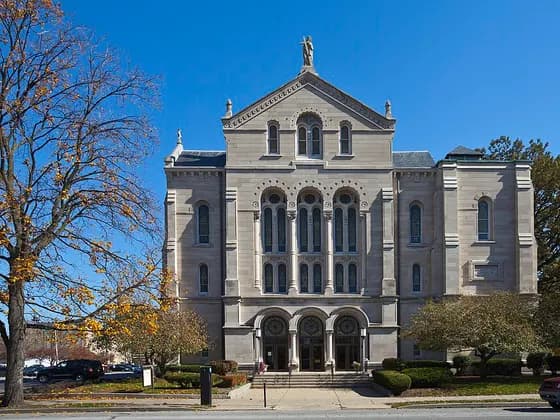
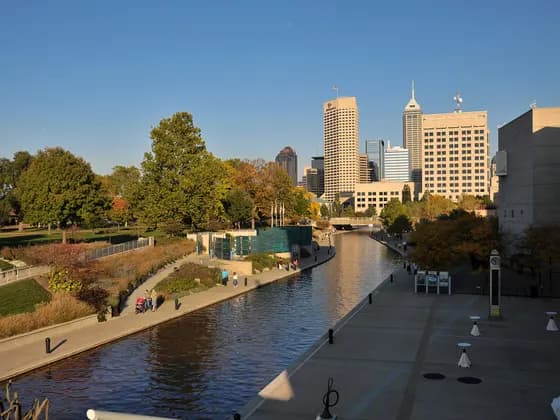
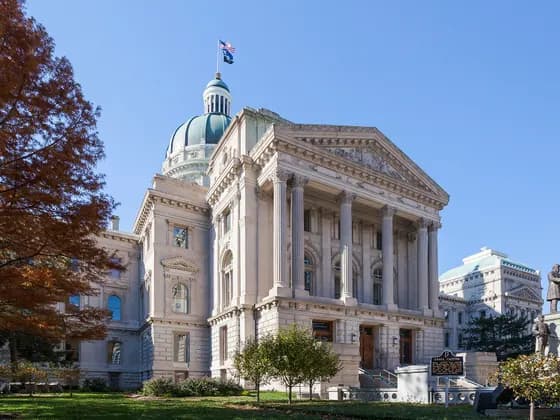
Photo: IndyTaylor · CC BY-SA 4.0 · cropped
Photo: Diego Delso · CC BY-SA 3.0 · Photo: Serge Melki · CC BY 2.0 · Photo: Diego Delso · CC BY-SA 3.0
How to get into Indiana University School of Dentistry (DDS) dentistry
Step-by-step: entry requirements, admission tests, personal statement, interview format and the key deadlines.
Open the guide →Indiana University School of Dentistry (DDS) entry requirements
Admission profile, interview format, decision dates and what makes Indiana University School of Dentistry (DDS) different.
See the profile →The Indiana University School of Dentistry (DDS) dentistry interview
Indiana University School of Dentistry uses a traditional one-on-one interview format at its Indianapolis IUPUI campus. IUSD is the only dental school in Indiana and one of the highest-volume dental training programs in the United States, with over 200,000 patient visits per year.
IUSD co-locates with IU School of Medicine — interprofessional health education with medical students is a genuine program feature. Interviewers probe the oral-systemic health connection and collaborative care values.
All applications via ADEA AADSAS; DAT required. Strong Indiana resident preference (~80–85% of each class).
Indiana University School of Dentistry (DDS) interview at a glance (2027 entry)
| Annual DDS class size | ~115–125 |
|---|---|
| Interview format | Traditional — one-on-one faculty sessions |
| DAT required | Yes — via ADEA AADSAS |
| Tuition (2025–26) | ~USD 45,345 (in-state) / USD 101,985 (out-of-state) (Fall 2025) |
| Application system | ADEA AADSAS primary + IUSD secondary |
| Interview window | October–February |
Interview format
- One or two one-on-one faculty sessions; ~30–45 minutes each.
- Clinic tour and program overview included — IUSD's high-volume clinic is a genuine showcase.
- No MMI.
Sample interview questions
IUSD has over 200,000 patient visits per year — one of the highest clinical volumes of any US dental school. How does that scale of clinical training shape the DDS experience?
High volume accelerates competence building; broader case variety; adaptability to different patient populations. The trade-off of high volume (busier clinic, faster pace) vs. lower-volume programs is worth addressing honestly.
Indiana has rural counties with significant dental access barriers. As an IUSD graduate, how might you contribute to addressing the rural dental workforce shortage?
What they are listening for:
- NHSC loan repayment for rural practice
- community health center dentistry
- teledentistry
- practicing in shortage areas
Show genuine awareness of Indiana's oral health geography.
IUSD is on the same campus as IU School of Medicine. Describe a situation where a dentist's recognition of systemic disease signs in the mouth led to better patient outcomes.
What they are listening for:
- Oral manifestations of HIV
- diabetes
- Sjögren's syndrome
- leukemia
- eating disorders
The dentist as a screening clinician who refers appropriately to medical colleagues.
You are a dental student and a patient gifts you a substantial present after a successful procedure. How do you handle this under ADA ethics?
ADA non-exploitation principle. Small tokens of appreciation vs. gifts of value that could compromise professional objectivity. Gracious refusal of significant gifts; guidance from supervisors.
Describe your manual dexterity background and how it translates to the technical demands of dentistry.
Specific activity — instrument repair, art, carving exercises, lab work. Connect to precision in Class II composite restorations, endodontic file placement, crown preparation.
How does poorly controlled diabetes affect periodontal treatment outcomes, and how would you manage a diabetic patient in your clinic?
Hyperglycaemia impairs neutrophil function and healing; periodontal treatment can improve HbA1c; physician coordination; blood glucose monitoring; modified healing expectations.
Why IUSD — and why train at a high-volume school specifically?
What they are listening for:
- Clinical confidence through volume
- specialty program breadth
- Indianapolis's diverse patient population
- interprofessional IU Health campus
Show genuine program research.
Do you see yourself in general practice, a specialty, or academic dentistry? How did your shadowing inform that direction?
Specific and honest. IUSD has strong specialty programs — if interested in specialization, show awareness of IUSD's advanced education offerings.
In IUSD's high-volume clinic you are double-booked and a walk-in arrives with facial swelling and a possible spreading dental infection. How do you triage your morning?
Recognize potential cellulitis/airway risk as the priority over scheduled routine care; assess, escalate, and arrange urgent management. Communicate transparently with the bumped patient. High-volume training tests triage judgment specifically.
IUSD reports very high annual patient-visit volume. What are the genuine educational advantages and the real risks of training in such a high-throughput environment, and how would you protect quality?
Advantages:
- case variety
- speed
- confidence
Risks: rushed care, supervision strain, burnout. Mitigation: not cutting standard-of-care steps, asking for help, reflective practice. A balanced, honest read rather than pure enthusiasm.
A patient asks you to extract a restorable tooth simply because it is cheaper and faster than saving it. How do you handle the request?
ADA non-maleficence and informed consent vs. autonomy and cost reality. Explain the trade-offs honestly, document, and respect an informed choice while not pushing unnecessary extraction. Discuss financing options before defaulting to extraction.
A medical resident on the shared IU campus pages you about a hospitalized patient with oral bleeding on anticoagulants. How do you structure your response and recommendation?
Concise consult: relevant history, local vs. systemic cause, what you can manage bedside, what needs the medical team. Demonstrates the IU Medicine co-location as functioning interprofessional practice.
IUSD has unusually broad specialty (advanced education) offerings. Even if you intend general practice, how would exposure to those programs shape your training?
What they are listening for:
- Learning from residents
- earlier exposure to complex cases
- informed referral decisions
- keeping specialization as an option
Shows you researched IUSD beyond the headline volume figure.
A patient presents with multiple oral ulcers, fatigue, and easy bruising. What systemic conditions would you consider, and what would you do as the dentist?
Consider hematological causes (e.g. leukemia), nutritional deficiencies, and immune conditions; recognize the dentist's role in spotting systemic disease and making a prompt medical referral — credible given IUSD's IU Medicine co-location.
A patient in the student clinic is frustrated that a trainee is treating them and asks to 'just see a real dentist.' How do you respond?
Acknowledge the concern without defensiveness, explain the close faculty supervision and your role, and offer reassurance. De-escalation and transparency about how a high-volume teaching clinic actually works.
Practise the Indiana University School of Dentistry (DDS) interview
Rehearse the real format before the day — on demand with our AI interviewers, or live with a tutor.
Sit a mock with photoreal AI interviewers — any time
A timed MMI or panel interview on video — American & international voices — with interviewers who listen, react and press with follow-ups. Rubric-scored feedback and a replay the moment you finish.






Live mocks with a tutor who’s been in the room
A full Indiana University School of Dentistry (DDS)-style mock with a medic or dentist tutor — honest scoring against real marking criteria, a station-by-station debrief and a written action plan.
Book a mock interviewHow to prepare for the Indiana University School of Dentistry (DDS) interview
Common pitfalls to avoid
Indiana University School of Dentistry (DDS) interview — frequently asked questions
Sources & official admissions information
Ready to nail your Indiana University School of Dentistry (DDS) interview?
Book a mock interview with a tutor who knows the US interview formats, orpractice unlimited stations from our interview question bank.