
The Renaissance School of Medicine at Stony Brook University MD program
What you actually study, and where you will be
Renaissance School of Medicine at Stony Brook University's MD is a 4-year program with an integrated curriculum, with patient contact from Year 1 and clinical rotations in Long Island, from Nassau County to the East End (2027 entry). The program follows the LEARN curriculum, beginning with an 18-month pass/fail foundational phase that runs from cadaver dissection in the first fall to organ-system courses. Clerkships, the core clinical rotations, fill 12 months from January of year 2 at Stony Brook University Hospital and affiliates across Long Island. The last 16 months hold study for the Step licensing exams, electives you choose and a sub-internship, where you work close to the level of a first-year resident. A three-year track is also offered.
- Degree
- MD
- Length
- 4 years
- Teaching
- Integrated
- Clinical contact
- Year 1

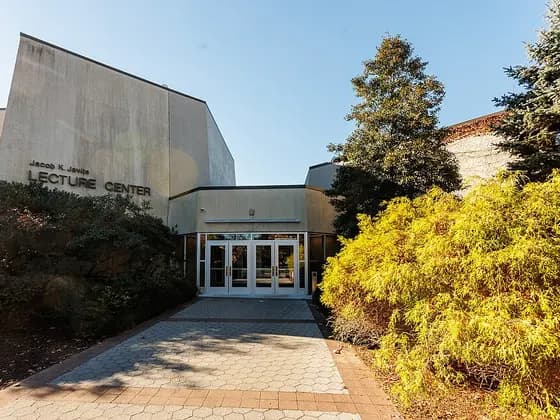
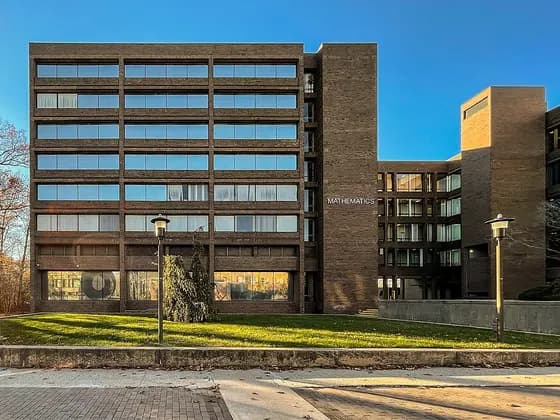

Photo: Kenneth C. Zirkel · CC BY 4.0 · cropped
Photo: Kenneth C. Zirkel · CC BY 4.0 · Photo: Kenneth C. Zirkel · CC BY-SA 4.0 · Photo: Andre Carrotflower · CC BY-SA 4.0
The Renaissance School of Medicine at Stony Brook University MD program at a glance (2027 entry)
The Renaissance School of Medicine at Stony Brook University (RSOM), Stony Brook's medical school on Long Island, New York, awards the MD after four years. Established in 1971, it is a public school within Stony Brook University, part of the State University of New York (SUNY), and 136 students started in August 2026. The Liaison Committee on Medical Education (LCME), which accredits MD programs in the United States, has accredited it since 1971 and next visits in March 2027.
Since August 2014 the program has followed the LEARN curriculum, named for learning-centered, experiential, adaptive, rigorous and novel. Its three phases last 18, 12 and 16 months. The faculty, students and administrators who designed it from 2011 wanted more active learning, early professional identity formation, integrated teaching and earlier clinical clerkships.
Phase I, the pre-clerkship phase, is pass/fail. Four foundational courses, the Biomedical Building Blocks, cover anatomy by dissection, molecular science, infection and immunity, and disease mechanisms. Five Integrated Pathophysiology courses then work through the organ systems. Clinical skills, ethics and themes of patient care run alongside, and you meet standardized patients, people trained to portray patients, in the eight-day opening course.
Phase II, from January of year 2, is a year of clerkships at Stony Brook University Hospital and affiliated hospitals across Long Island. Phase III then opens with a 12-week block for the United States Medical Licensing Examination (USMLE) Step 1 and Step 2 Clinical Knowledge (CK) exams. The rest of Phase III is flexible: a sub-internship, electives and residency applications.
You can also apply for 3YMD, a three-year track that leads into a Stony Brook residency program, or add a PhD or a master's degree. Another option is a scholarly concentration, a mentored project in one of five tracks.
| Degree | MD, four years; optional three-year 3YMD track |
|---|---|
| Class size | 136 first-year students in August 2026 (Class of 2030) |
| Main campus | Stony Brook University, Stony Brook, Long Island, New York |
| Curriculum | LEARN: 18-month foundational, 12-month clerkship and 16-month advanced clinical phases |
| Teaching style | Integrated organ-system courses; lectures, small-group cases, team-based learning, simulation |
| Anatomy | Cadaveric dissection in The Body, August to November of year 1 |
| First patient contact | Year 1: standardized patients in the opening course, then bedside teaching |
| Clerkships | From January of year 2, four 12-week blocks, sites assigned by lottery |
| Clinical sites | Stony Brook University Hospital and affiliates from Nassau County to the East End |
| Step 1 timing | After clerkships; on the current schedule, by early April 2030 for 2027 entrants |
| Grading | Phase I pass/fail; core clerkships Honors, High Pass, Pass, Low Pass, Fail |
What makes the Renaissance School of Medicine at Stony Brook University MD program different
A full clerkship year from January of year 2
After 18 months of foundational courses you spend a year on clerkships. The school's curriculum principles note that Step 1 includes more questions that integrate clinical knowledge, and place it after that clinical year.
A 16-month final phase built around your choices
Phase III gives you 16 months for 40 weeks of credit, leaving room for Step study, research, residency interviews and away rotations, meaning electives at other schools. Of those 40 weeks, 26 are electives, and up to 20 weeks can be spent away.
A three-year MD tied to a Stony Brook residency
Through 3YMD, a limited number of admitted students finish in 133 weeks instead of 147, with a directed pathway into the Stony Brook residency program they choose. You can move back to the four-year track at any time.
MD/PhD training with two research laboratories
The Medical Scientist Training Program, founded in 1981 and run with Cold Spring Harbor Laboratory and Brookhaven National Laboratory, has had continuous funding from the National Institutes of Health (NIH) since 1992. About nine students join each year, and the program generally takes eight years.
Ethics and the humanities across all four years
Medicine in Contemporary Society uses small-group cases, reflective writing and elective seminars to explore illness, ethics and the doctor-patient relationship in year 1. Professional identity work continues through reflections during clerkships, and you can add a medical humanities scholarly track or an MD/MA.
How Renaissance School of Medicine at Stony Brook University teaches medicine
LEARN makes you responsible for your own learning, with faculty acting as facilitators and mentors who recommend resources. The school's 2025 newsletter calls this a flipped classroom: you learn content on your own, then apply it in class. The hardest concepts are meant to be taught actively, through team-based, problem-based or case-based learning, simulations, labs and clinical pathologic conferences, case sessions that link a patient's clinical story to the disease found. The welcome message from the vice dean in charge of the MD program says the curriculum uses iPads and brings bedside ultrasound training and artificial intelligence into your learning.
After the four Biomedical Building Blocks courses, each Integrated Pathophysiology course takes one group of organs and teaches its physiology, disease, histology and drug treatment together. You practice reading patient histories, test results and treatment choices for that system.
Three longitudinal courses run through Phase I. Introduction to Clinical Medicine teaches clinical skills, Medicine in Contemporary Society covers ethics and the experience of illness, and Themes in Medical Education ties science to themes of patient care. The social determinants of health, the conditions in which people live and work that shape their health, are threaded through these courses. Through the Center for Interprofessional Innovation you also learn alongside nursing, dental, social welfare, health professions and public health students.
From Phase II you learn on hospital and clinic teams, following patients, presenting them on rounds and joining conferences and teaching sessions. Electronic cases and materials add to what you see on the wards.
The ways you will learn
| Lectures | Most Phase I science courses list lectures as one format among several, and the school supplies e-lectures or e-modules you can study online. Where possible, lecturers use audience response questions, which you answer during the session. In The Body, lectures outline how each region is organized and point out clinical links, while the lab stays the focus. |
|---|---|
| Small-group cases | In courses such as Pathogens and Host Defense, Gastrointestinal/Nutrition and Medicine in Contemporary Society, you work through patient cases or ethical problems in small groups. |
| Team-based learning | You prepare before class, then solve problems with your team in the session. It features in The Body, Themes in Medical Education and Transition to Residency in year 4. |
| Pathology labs and conferences | Basic Mechanisms of Disease uses gross and microscopic pathology labs and clinical pathologic conferences. |
| Standardized patients and simulation | In the Clinical Simulation Center you interview and examine standardized patients, who give you written and verbal feedback, and rehearse emergencies and procedures on manikins and task trainers. |
A typical week on the Renaissance School of Medicine at Stony Brook University program
In Phase I, the school's work-hours policy caps instructor-led teaching at five hours a day and 25 a week, generally scheduled from 9 a.m. to noon and from 1 to 3 p.m. Teaching plus assigned independent work, such as readings, recorded lectures and homework, is capped at 50 hours a week. You also get five hours of scheduled review time in the 24 hours before each unit, midterm or final exam.
Year 1 has a one-week spring break in mid-March. Phase III has no scheduled winter or spring break: the 2025-26 calendar gave eight holidays off instead, including Thanksgiving, Christmas and New Year's Day. From the clerkships on, the school follows the limits the Accreditation Council for Graduate Medical Education (ACGME) sets for residents. That means no more than 80 hours a week averaged over four weeks, shifts of 24 hours at most, eight hours off between shifts and one day in seven free.
How anatomy is taught at Renaissance School of Medicine at Stony Brook University
Anatomy is taught by cadaveric dissection in The Body, a required 14-week course from August to November of year 1. The anatomy department describes it as lecture and lab work centered on dissection of the entire human body, covering functional and topographic anatomy, clinical correlations and an introduction to radiology.
You work region by region, studying every aspect of one part of the body before moving on and focusing on where structures lie in relation to each other. That matters clinically, because closeness shapes how infection and cancer spread and which complications follow an injury. Lectures, some team-based learning sessions, imaging and digital media support the lab.
You dissect in the Gabor Inke Anatomy Laboratory, renovated in 2007 and later fitted with digital dissection guides and high-definition monitors. It is shared with students from the School of Dental Medicine and the School of Health Technology and Management, more than 300 a year in all.
The bodies come through a body donation program that has supported dissection-based teaching for over 40 years and accepts donors from Long Island and New York City. Medical and dental students host an annual Donor Remembrance Ceremony. Taking photographs of donors with no educational purpose is unprofessional behavior that is referred to the Committee on Academic and Professional Progress (CAPP).
Anatomy returns in the organ-system courses, such as the anatomy and embryology of the heart, lungs and kidneys in Cardiovascular/Pulmonary/Renal.
When you first meet patients at Renaissance School of Medicine at Stony Brook University
Your first patient encounters come in Transition to Medical School, the eight-day opening course, in sessions with standardized patients and patients-as-teachers, patients who help with teaching.
Introduction to Clinical Medicine teaches interviewing, examination, clinical reasoning, documentation and case presentation. You practice on standardized patients, learn telehealth and ultrasound, and have bedside teaching with clinical preceptors, and every Phase I clinical experience is directly supervised. Themes in Medical Education adds longitudinal family cases, patient presentations and site visits.
Outside the curriculum you can volunteer at the Stony Brook Health Outreach and Medical Education (SB HOME) clinic, which offers free care to underserved people in Suffolk County. The school lists early clinical exposure and working alongside attending physicians among the benefits.
Full-time clinical work begins in January of year 2. Sensitive examinations and procedures needing extra patient consent are always directly supervised; others may be done under indirect supervision when your supervising physician judges you ready.
The Renaissance School of Medicine at Stony Brook University curriculum, year by year
- Phase IA: year 1, August to February
Transition and the Biomedical Building Blocks
Phase I opens with Transition to Medical School, an eight-day hybrid course of online modules and in-person sessions on how LEARN works, bias, privilege and health disparities, and study and wellness habits. The 24-week Biomedical Building Blocks (B3) sequence follows: two courses side by side in the fall, then two more from December to February.
- The Body (14 weeks, August to November): gross anatomy, taught mainly through cadaveric dissection.
- Molecular Foundations of Medicine (12 weeks, alongside The Body): biochemistry, cell biology, genetics and pharmacology, applied to patient histories, lab results and genetic tests.
- Pathogens and Host Defense (12 weeks): immunology, microbiology, inflammation and infectious disease, through lectures, labs and case-based small groups.
- Basic Mechanisms of Disease (12 weeks, alongside Pathogens and Host Defense): histology, general pathology, neoplasia (tumors), hematology and dermatology.
- One-week Themes in Medical Education units cover five themes: patient and family-centered care, evidence-based care, patient safety and quality, ethical and professional care, and health promotion and prevention. They also teach biostatistics, epidemiology and research design.
- Medicine in Contemporary Society runs through year 1; Introduction to Clinical Medicine continues through Phase I.
- Phase IB: March of year 1 to December of year 2
Integrated Pathophysiology: the organ systems
Cardiovascular/Pulmonary/Renal, the first of the five Integrated Pathophysiology courses, fills the spring of year 1, before a 10-week summer break. The other four run from August to December of year 2. Phase I ends with the Introduction to Clinical Medicine final OSCE (objective structured clinical examination), a circuit of timed stations.
- Cardiovascular/Pulmonary/Renal: how the heart, lungs and kidneys keep the body in balance and what happens when that fails, with separate cardiac, pulmonary and renal unit exams.
- Mind/Brain/Behavior (7 weeks, from August of year 2): the nervous system, drawing on neurobiology, neurology, psychiatry, ophthalmology and pathology, with patient presentations.
- Endocrine/Reproductive (4 weeks): hormone systems, reproduction, pregnancy and the postpartum period, breast health, and gynecologic and urologic conditions.
- Gastrointestinal/Nutrition: the digestive tract and the part nutrition plays in health and disease.
- Musculoskeletal/Rheumatology (December): bones, joints, muscles and connective tissue, including joint fluid analysis and imaging, with live demonstrations.
- In year 2, each organ-system course and Themes in Medical Education ends with a comprehensive exam.
- Scholarly Concentrations students spend at least eight weeks of the summer full time on their projects.
- Phase II: January of year 2 to January of year 3
Primary clinical clerkships
Phase II opens with Transition to Clinical Care, two weeks on communication, documentation, case presentation, life support, reporting mistreatment and what clerkships expect. Four 12-week clerkship blocks follow in rotating order. Blocks 1 to 3 each end with a wellness week for rest or self-directed activities, and dedicated Step study follows block 4.
- You need Basic Life Support (BLS) and Advanced Cardiac Life Support (ACLS) certification before starting.
- Medicine block: internal medicine (8 weeks) on general and subspecialty services, and the Primary Care Clerkship (4 weeks) in outpatient practice.
- Mother-child block: pediatrics (6 weeks), with inpatient, outpatient and newborn nursery rotations, and obstetrics and gynecology (6 weeks), with exposure to subspecialties such as high-risk obstetrics.
- Acute care block: surgery (8 weeks), with operating room experience and procedural skills training, plus two-week mini-clerkships in anesthesiology and emergency medicine.
- Mind-brain block: psychiatry (6 weeks), neurology (4 weeks) and a two-week radiology mini-clerkship of daily lectures and image review.
- Each core clerkship lists clinical skills and conditions you must log electronically. It ends with a National Board of Medical Examiners (NBME) subject exam, or shelf exam, a standardized national test in that specialty.
- The Clinical Performance Exam (CPX), a summative clinical skills exam you must pass, comes during block 4.
- Phase III: mid-January of year 3 to May of year 4
Step exams, sub-internship and electives
Phase III's 16 months open with 12 weeks of dedicated study for Step 1 and Step 2 CK, from mid-January to early April. You plan the other 40 weeks of credit with a specialty advisor you must meet first. They fit around residency applications, interviews from November to January and Match Day in March, when you learn where you will train. Graduation is in May.
- Selective (4 weeks, April of year 3): you choose one of seven topics; the 2025-26 calendar named topics including addiction and pain, compassion, the acute patient, lifestyle, telehealth and therapeutics.
- Sub-internship (4 weeks), where you gather histories, plan care and reassess patients with growing independence. Options: anesthesiology, emergency medicine, family medicine, internal medicine, obstetrics and gynecology, orthopedics, pediatrics, plastic surgery, psychiatry, surgery or urology.
- Advanced Clinical Experience (2 weeks): an individualized learning plan in a specialty you pick, such as emergency medicine, neurology, pathology or radiology.
- Transition to Residency (4 weeks, January to April of year 4): two general weeks and two specialty weeks, with procedure labs, high-fidelity simulation and BLS and ACLS recertification.
- Electives: 26 weeks, at least 14 of them clinical.
- The school's curriculum schematic sets September 15 of year 4 as the target for your Electronic Residency Application Service (ERAS) application and Medical Student Performance Evaluation (MSPE), the school's letter to residency programs. Programs start reviewing both on the national ERAS date in late September (September 23 in 2026).
How you are assessed at Renaissance School of Medicine at Stony Brook University
Every Phase I course is pass/fail. In the foundational and organ-system courses you need an overall score of at least 70, and any unit or final exam below 70 must be remediated. Unit exams are in-house or customized NBME exams; the NBME co-sponsors the USMLE with the Federation of State Medical Boards (FSMB).
Exams make up no more than 60 percent of a course grade. Quizzes and midterms are formative: they give you feedback, and a low score need not be made up. Small-group facilitators in the three longitudinal courses also write narrative comments that go into your MSPE.
You must pass the Introduction to Clinical Medicine final OSCE, remediating by the end of the first clerkship block if needed, and the CPX in the last clerkship block. Clerkship OSCEs are held in the Clinical Simulation Center.
Core clerkships are graded Honors, High Pass, Pass, Low Pass or Fail. Clinical performance counts for 40 to 60 percent, the shelf exam for 20 to 30 percent and other assignments for 10 to 30 percent. You need the 5th national percentile on the shelf exam to pass and the 50th to be eligible for Honors. Honors and High Pass are each meant for no more than 30 percent of the class.
Step 1 tests the sciences behind medical practice and has been reported only as pass or fail since January 26, 2022. Step 2 CK tests the clinical knowledge needed for supervised patient care and still gets a three-digit score. LCME accreditation makes the school's students eligible to sit the USMLE, and you must pass both exams to graduate. You sit Step 1 within 12 weeks of finishing the last clerkship block, before any Phase III course, and Step 2 CK by August 1 of Phase III.
In August 2026 the USMLE program announced a move to designated testing dates from January 2029, with Step exams offered less often each year. Its June 2026 announcement had named 2028. On the current schedule, projected from the school's USMLE policy effective April 10, 2026, an August 2027 entrant would start clerkships in January 2029. Step 1 would then be due by early April 2030, at the end of a 12-week study period from mid-January, about a year after the switch, and Step 2 CK by August 1, 2030.
- Mini-clerkships, transition courses, the Selective, the Advanced Clinical Experience and two-week electives are pass/fail; sub-internships and four-week clinical electives use the five tiers.
- A failed first shelf attempt gives a temporary Z grade, and passing the retake caps that clerkship at Pass.
- Many students take Step 2 CK in the same 12-week block, as the school strongly recommends; others take four weeks for it in the summer of Phase III.
- MD/PhD students take Step 1 after Phase I and before the PhD; 3YMD students take both exams within 10 weeks of finishing Phase II.
- Missing a Step deadline means a mandatory leave of absence noted on your transcript and MSPE.
Renaissance School of Medicine at Stony Brook University clinical rotations: where you will actually train
Stony Brook University Hospital is the main teaching hospital and hosted every clerkship in the 2025-26 calendar; the emergency medicine mini-clerkship runs only there. That year internal medicine also used Mather Hospital, Nassau University Medical Center (NUMC) and the Northport Veterans Affairs (VA) Medical Center, and surgery used NUMC and Northport. Psychiatry used NUMC, primary care used Northport and Stony Brook Southampton Hospital, and obstetrics and gynecology used NUMC, Mount Sinai South Nassau and Southampton.
In the Primary Care Clerkship you join a family physician, general internist or geriatrician in practice, from office visits and hospital rounds to nursing home and home visits. Neurology also uses affiliated community practices.
Sites are assigned by lottery and are generally within a 45-mile commute of the Stony Brook campus. You can ask the Associate Dean for Student Affairs for another site if extenuating circumstances affect you, and a disability that makes a commute unduly difficult can be grounds for reassignment.
You arrange and pay for your own transport, including fuel, tolls and parking. Without an approved accommodation, transport problems are not accepted as an excuse for lateness. The school's housing page says a car may be an important consideration because public transportation in the area is limited. In the first two years most students live on campus or nearby, often sharing houses.
A 628-bed hospital that describes itself as the region's only tertiary care center and a regional trauma center. Stony Brook Children's Hospital is part of it and is Suffolk County's only Level 1 pediatric trauma center.
- Stony Brook University Hospital
- Stony Brook Children's Hospital
Both are campuses of Stony Brook University Hospital. Southampton runs the South Fork's only hospital-based 24/7 emergency department. The 70-bed Eastern Long Island Hospital serves the North Fork and Shelter Island, though no core clerkship was assigned there in 2025-26.
- Stony Brook Southampton Hospital, Southampton
- Stony Brook Eastern Long Island Hospital, Greenport
A VA teaching hospital affiliated with Stony Brook, whose health system also runs five community-based outpatient clinics on Long Island.
- Northport VA Medical Center
NUMC is a 530-bed teaching hospital and Level I trauma center that has served Nassau County since 1935. Mount Sinai South Nassau is a 455-bed acute-care teaching hospital on the South Shore.
- Nassau University Medical Center, East Meadow
- Mount Sinai South Nassau, Oceanside
Mather Hospital takes internal medicine students, and community practices host the Primary Care Clerkship.
- Mather Hospital
- Community-based primary care practices
Electives, selectives and away rotations at Renaissance School of Medicine at Stony Brook University
Phase III requires 26 elective weeks, at least 14 of them clinical, in electives of one to four weeks, with no more than four in any one specialty. Research electives last at least four weeks; Scholarly Concentrations students take eight weeks, and others may take up to eight.
In Phase I you may take only electives that do not clash with required courses, apart from some longitudinal electives. Up to four weeks of them, taken at Stony Brook, count toward the elective weeks you need to graduate.
Away electives are capped at 20 weeks, with no more than three in one specialty. New York State liability coverage needs an affiliation agreement with the host; otherwise you may buy your own insurance. International electives need approval from the Director of Global Medical Education.
The Office of Global Medical Education lists formal agreements with programs in Thessaloniki, Buenos Aires, Cartagena, Guayaquil, Lima, Izmir, Tokyo, Atahualpa and Dublin, plus Sights on Health in Ecuador, Central America and South Dakota. Its electives include Medical Spanish, international research and clinical electives, and language immersion.
The August 2025 newsletter listed new electives including Business in Medicine, Lifestyle Medicine, Critical Care and Longitudinal Pediatric Continuity Practice. The emergency medicine ultrasound division offers a two-week point-of-care (bedside) ultrasound elective in year 4, where you scan with its faculty and fellows and are treated as a sub-intern. It also runs a yearly ultrasound course within Transition to Residency for students interested in emergency medicine, critical care or anesthesiology.
Dual degrees and research years at Renaissance School of Medicine at Stony Brook University
The Scholarly Concentrations Program is an optional four-year track in basic, translational and clinical research; global health; medical humanities and ethics; medical education; or medical innovation and technology. You apply by March 31 of year 1 with a full-time faculty mentor, and selected projects may be funded. The school reported 60 students enrolled across the tracks in 2025.
Projects take at least six months: two months in the summer after year 1, then at least eight weeks of project electives in Phase III. You also complete 10 hours of track training and summer and final reports, present at Research Day in late April or early May of year 4, and receive a certificate at graduation.
The MD/PhD Medical Scientist Training Program (MSTP) trains physician-scientists. You complete Phase I and Step 1, spend three to four years on a PhD, then return for at least 17 months of clinical training. Summer research rotations help you choose a thesis lab before graduate classes start in the fall of year 3. MD/PhD students can do thesis research at Cold Spring Harbor Laboratory or Brookhaven as well as on campus.
The MD/MPH adds the 54-credit Master of Public Health. The recommended route takes five years, with a one-year leave between two phases, and four public health courses count for 8 to 10 weeks of electives. The MD/MBA with the College of Business adds a 48-credit MBA, mostly completed before or after medical school, for a management career in health care.
The MD/MA adds 18 credits from the master's in Medical Humanities, Compassionate Care and Bioethics, together with the medical humanities scholarly track, within four years. The MD/MSECR adds a 33-credit master's in Epidemiology and Clinical Research, and the 2026-27 policies list an MD/MSBMI in Biomedical Informatics as pending approval.
In 3YMD you apply to the track, name the Stony Brook residency program you want and interview with it. You take four weeks of credit before Phase I and ten weeks in that program the summer after year 1, plus a two-week Teaching in Medicine course, then a shortened Phase III. If you meet the graduation standards, the program ranks you favorably in the residency match.
- 3YMD students must pass every Phase I course and clerkship, and every shelf exam and Step exam at the first attempt; otherwise they move to the four-year track and lose the residency pathway.
- 3YMD students give up the Phase I summer break and cannot take a research year or a joint degree.
- After Phase II you can request a leave of absence for research, but not after July 1 of Phase III.
- Scholars for Medicine is an eight-year bachelor's and MD route for high school students, who take part in medical school classes and activities as undergraduates.
Facilities and support at Renaissance School of Medicine at Stony Brook University
Where you will learn
The Clinical Simulation Center, on Level 2 of the Health Sciences Center (HSC), opened in 2006 with 20 exam rooms, three simulation labs and video recording of encounters for feedback. Its page lists adult, child and newborn manikins, task trainers for skills such as central lines, lumbar puncture and intubation, and about 100 standardized patients. Gynecological and male teaching associates teach intimate examinations, and the center runs BLS, ACLS and pediatric life support courses.
Support while you study
Advising runs through Pathways to Success. In Phase I you belong to an Advising POD, a small group that meets faculty and peer advisors for academic and early career advice, well-being and professional identity, with free lunch. Success coaches help with study strategies and time management, and fourth-year students tutor Phase I courses.
The Academic Success Program is an early warning system. Two failed exams in the fall of year 1 lead to a meeting with the Associate Dean for Student Affairs. Four failed exams in year 1 mean a required Summer Success Program before year 2. Participation is not reported on your transcript or MSPE.
The CAREERS program offers specialty advisors and guides, events and meetings with the deans who write MSPEs, and you must meet a specialty advisor before registering for Phase III. Each class has town halls with the dean's office four times a year.
Counseling and Psychological Services is free and confidential, with a satellite office on Level 3 of the HSC, and TimelyCare offers 24/7 telehealth. MeSH, a wellness group founded by students and faculty, runs social events, and Group Reflections is a confidential, student-led peer support group on Thursday evenings.
Professional identity formation runs from the White Coat Ceremony at the start of year 1 to the oath at graduation, including organized reflections during clerkships. It traces back to founding dean Edmund Pellegrino, and Medicine in Contemporary Society was introduced under Dean Jordan Cohen (1988 to 1994).
Is the Renaissance School of Medicine at Stony Brook University program right for you?
This program may suit you if
- You want a full clerkship year from January of year 2, with Step 1 after it rather than before.
- You want to dissect: The Body puts you in the anatomy lab with a donated body from your first August.
- You are sure of your specialty and want a three-year MD with a directed pathway into a Stony Brook residency.
- You want structured research or scholarship, from a five-track scholarly concentration to an MD/PhD with Cold Spring Harbor or Brookhaven.
- Ethics and the humanities matter to you: Medicine in Contemporary Society, professional identity work and an MD/MA are all on offer.
Things to think about
- Clerkship sites are assigned by lottery, and you pay for your own travel to them.
- From the clerkships on, grades are tiered, with shelf exams counting for 20 to 30 percent and Honors meant for no more than 30 percent of the class.
- On the current schedule you would sit Step 1 about a year after the USMLE's switch to designated testing dates, when Step exams are offered less often each year.
- 3YMD means choosing a specialty before you start, giving up the Phase I summer break and forgoing a research year or joint degree.
Renaissance School of Medicine at Stony Brook University MD program — frequently asked questions
Applying to Renaissance School of Medicine at Stony Brook University?
How to get into Renaissance School of Medicine at Stony Brook University
Prerequisites, MCAT, AMCAS personal statement, secondaries and interview, step by step.
Open the guide →Renaissance School of Medicine at Stony Brook University admissions profile
MCAT and GPA profile, acceptance rate, interview format and key dates.
See the profile →Compare Renaissance School of Medicine at Stony Brook University with other schools
Put the teaching style, anatomy teaching and clinical sites next to another school.
Open the comparison →Prepare for the Renaissance School of Medicine at Stony Brook University interview
Format breakdown, school-specific sample questions and prep tips from tutors who interviewed here.
Read the guide →Where this Renaissance School of Medicine at Stony Brook University program guide came from
This guide was written from 54 official sources — Renaissance School of Medicine at Stony Brook University's own program pages and curriculum documents, plus the accreditor and the hospitals and health systems the school trains students in where they publish detail — read on 2026-10-31, then checked claim by claim against those sources.
- MD Program: The LEARN Curriculum
- Welcome to UGME: message from the Vice Dean for Undergraduate Medical Education
- LEARN Curriculum: Phase I (Foundational, 18 months)
- LEARN Curriculum: Phase II (Primary Clinical, 12 months)
- LEARN Curriculum: Phase III (Advanced Clinical, 16 months)
- The Curriculum (admissions summary of LEARN and USMLE timing)
- Academic Policies and Procedures 2026-27, Office of Undergraduate Medical Education
- Academic Policies and Procedures (landing page, updated August 25, 2026)
- LEARN Curriculum Schematic
- Three-Year MD (3YMD) Curriculum Track schematic
- Phase I Academic Calendar, Class of 2028
- Phase II Clinical Calendar 2025-26, Class of 2027
- Phase III Clinical Calendar 2025-26, Class of 2026
- Stony Brook University Spring 2027 Health Sciences Catalog: MD/MBA Program
- The Three-Year MD Program (3YMD)
- 3YMD: Frequently Asked Questions
- Scholarly Concentrations Program
- Combined and Dual Degree Programs
- Medical Scientist Training Program (MSTP)
- MSTP Curriculum
- SBU News: RSOM's MD/PhD Program Receives New Five-Year Grant from the NIH (September 2025)
- Program in Public Health: Combined 5-Year MD/MPH Degree Program
- Center for Medical Humanities, Compassionate Care and Bioethics: MA program requirements and MD/MA
- Scholars for Medicine Program
- About Stony Brook University Hospital
- Stony Brook Children's Hospital
- Stony Brook Southampton Hospital Facts
- About Stony Brook Eastern Long Island Hospital
- Nassau University Medical Center
- About Us: VA Northport Health Care
- Mount Sinai South Nassau
- Housing (admissions)
- Clinical Simulation Center: About Us
- Clinical Simulation Center: Standardized Patient Program
- Department of Anatomical Sciences: Anatomy Courses
- Gabor Inke Anatomy Laboratory
- Body Donation program
- Professional Identity Formation (PIF)
- Academic and Career Advising: Pathways to Success
- Medical Student Health, Safety and Well-Being
- Global Medical Education: International Opportunities
- Global Medical Education: Curriculum
- Emergency Medicine Ultrasound Division: Medical Student Education
- VITALS newsletter, August 2025, Office of Undergraduate Medical Education
- SBU News: Renaissance School of Medicine Welcomes 136 First-year Medical Students (September 2026)
- Our LCME Accreditation Process
- LCME Directory of Accredited Programs
- USMLE Designated Testing Dates Information Hub
- USMLE: Updated Timeline for Designated Testing Dates, Transition in January 2029 (August 6, 2026)
- USMLE Step 1 Transition to Pass/Fail Only Score Reporting
- USMLE: Examination Results and Scoring
- USMLE: Step 1
- USMLE: Step 2 CK
- AAMC: 2027 ERAS Residency Timeline
Curricula are restructured between cycles. Anything here that decides your application — how anatomy is taught, a clinical campus assignment, a required research year — should be confirmed against the official page for your entry year.
Applying to Renaissance School of Medicine at Stony Brook University?
We help US applicants with MCAT strategy, the AMCAS personal statement, secondary essays and interview prep — everything you need for a competitive Renaissance School of Medicine at Stony Brook University application.