
The NYU Grossman Long Island School of Medicine MD program
What you actually study, and where you will be
NYU Grossman Long Island School of Medicine's MD is a 3-year (accelerated) program with an integrated curriculum, with patient contact from Year 1 and clinical rotations in Mineola, Long Island, and nearby outpatient practices (2027 entry). This is a three-year MD for students set on primary care. You apply to an internal medicine, pediatrics, or obstetrics and gynecology track. Once admitted, you are offered a directed pathway: the NYU Langone Hospital—Long Island program in your track will rank you in the residency Match, provided you keep satisfactory academic progress and professional standards. Year one pairs organ-system courses with clinical skills and a monthly outpatient rotation. Year two brings the core clinical rotations; year three adds study courses for the licensing exams, advanced rotations and electives.
- Degree
- MD
- Length
- 3 years (accelerated)
- Teaching
- Integrated
- Clinical contact
- Year 1

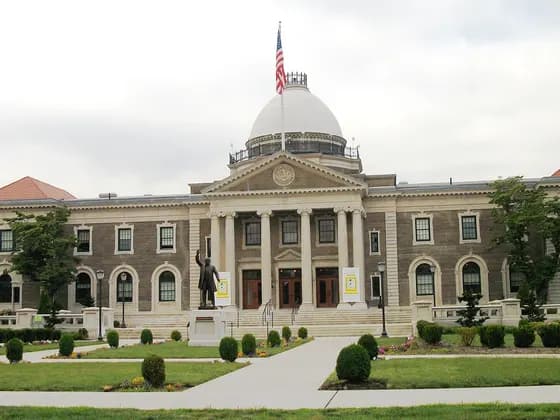
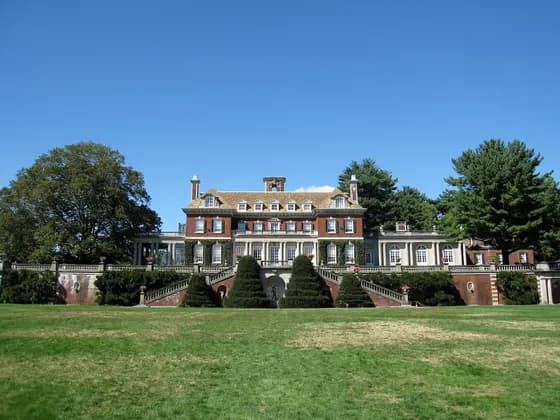
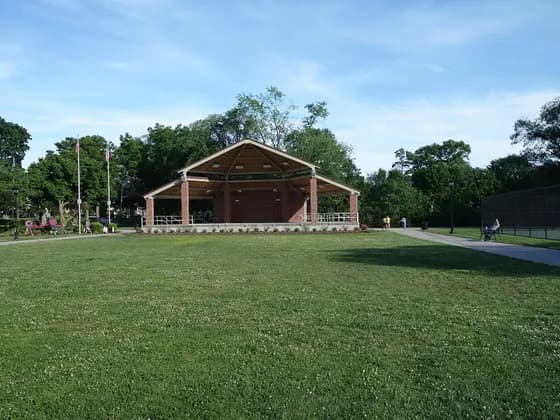
Photo: Tdorante10 · CC BY-SA 4.0 · cropped
Photo: DanTD · CC BY-SA 3.0 · Photo: Gryffindor · CC BY-SA 3.0 · Photo: Tdorante10 · CC BY-SA 4.0
The NYU Grossman Long Island School of Medicine MD program at a glance (2027 entry)
NYU Grossman Long Island School of Medicine (NYU Long Island for short, or NYU GLISOM in the school's own abbreviation) runs a three-year accelerated MD program for future primary care physicians. Part of NYU Langone Health, it sits in Mineola, a village in Nassau County on Long Island, 17 miles from New York City. The school says its curriculum condenses four years into three, so you start your career a year earlier.
The school opened in 2019 as NYU Long Island School of Medicine, graduated its first class in 2022 and took its current name in 2023. That year the Liaison Committee on Medical Education (LCME), which accredits MD programs in the United States, granted it full accreditation. The LCME's directory lists its next survey for 2027-28.
The program runs in three phases of about a year each. Phase One is 46 weeks of pre-clerkship (pre-clinical) courses, taught one organ system at a time. Phase Two is 45 weeks of clerkships, the core clinical rotations. Phase Three opens with seven weeks of study for Step 1 and Step 2 CK (Clinical Knowledge), the first two exams of the United States Medical Licensing Examination (USMLE). It then moves to advanced rotations, electives and preparation for residency.
Everything is built around primary care, and the school calls the program its Three-Year MD Directed Residency Pathway. When you apply you choose a track in internal medicine, pediatrics, or obstetrics and gynecology. The school says applicants interested in family medicine may apply through the internal medicine track. You can change track, but the directed pathway may not be available in your new field.
Each entering class is capped at 24 students. You are taught in the Research and Academic Center and across the street at NYU Langone Hospital—Long Island, a 591-bed hospital that is the main site for clinical education. From Phase One you also join an outpatient practice in your field, and the school says you will need a car to reach most outpatient experiences.
| Degree | MD |
|---|---|
| Program length | Three years, in three phases |
| Class size | Capped at 24 students per entering class |
| Main campus | Research and Academic Center, Mineola, across from the hospital |
| Residency tracks | Internal medicine, pediatrics, or obstetrics and gynecology, each with a directed pathway |
| Teaching style | Integrated organ-system courses in large and small active-learning groups |
| First patient contact | Phase One: monthly outpatient sessions in your field (CAPE) and inpatient bedside teaching |
| Clinical sites | NYU Langone Hospital—Long Island and nearby outpatient practices |
| Step 1 and Step 2 CK | Both after Phase Two, following study courses that open Phase Three |
| Grading | Pass/No Credit (pass/fail) in Phase One; tiered Honors to No Credit later |
What makes the NYU Grossman Long Island School of Medicine MD program different
A directed pathway into residency at the same hospital
When you are accepted, you are told that the residency program in your track at NYU Langone Hospital—Long Island will rank you. This happens in your final year, through the National Resident Matching Program (NRMP), the national residency Match. It depends on satisfactory academic progress and professional standards, and you can still rank programs elsewhere.
An outpatient practice in your field from year one
The Continuity Ambulatory Practice Experience (CAPE) spans all three phases and assigns you to an outpatient physician in your chosen residency field. You start mostly by observing and take on more of each visit as your skills grow. In Phase Three you spend a block devoted solely to your CAPE practice.
Health systems science in every phase
HSS-SHEP (Health Systems Science, Social Sciences, Humanities, Ethics, and Professionalism) spans all three phases. Health systems science studies how care is delivered, how clinicians work together and how to make care safe and good value. Topics run from health equity in Phase One and moral distress in Phase Two to medical error and leadership in Phase Three, which also brings a capstone project.
Four clerkship tracks of six students
In April of Phase One you rank four clerkship tracks, each with six places, in an online lottery called SOLARIS. Your clerkship track sets the order of your Phase Two rotations for the whole year, but the class still meets once a week for the longitudinal courses, which run alongside the clerkships.
Rehabilitation and pain management as a core rotation
Phase Two includes a required two-week rotation in Rehabilitation Medicine and Pain Management. It introduces physical medicine and rehabilitation (PM&R), which helps people with physical impairments or disabilities gain function and independence. It also covers the doctor's role in managing acute and chronic pain.
How NYU Grossman Long Island School of Medicine teaches medicine
Phase One is organized by organ system. Each course teaches how one system works alongside its diseases and their treatment, and the school says the aim is to tie basic science to clinical reasoning. In Cardiology, for example, morning seminars draw in infectious disease, pharmacology, genetics and embryology alongside heart failure, murmurs and the electrocardiogram.
Teaching mixes large-group sessions with small groups and is built around active learning, meaning you work through problems rather than only listen. Phase One formats include problem-based learning, small group seminars, lectures, workshops, clinical skills sessions, simulations and bedside teaching. The year opens with Language Acquisition, which pairs core science with case-based clinical exercises.
Three longitudinal courses run alongside. Practice of Medicine teaches clinical skills through Phase One. HSS-SHEP, taught through case discussions, interactive lectures and guided small-group work, spans all three phases, and so does CAPE. A Longitudinal Radiology Curriculum adds imaging teaching in every year.
From Phase Two, most learning happens on clerkships. The school says these and the Phase Three rotations follow the Core Entrustable Professional Activities (Core EPAs). These are an Association of American Medical Colleges (AAMC) list of tasks every new resident should be able to do, such as taking a history, presenting a patient and handing over care.
The ways you will learn
| Problem-based learning (PBL) | A small group works through a patient case, decides what it needs to learn and researches it, with a faculty facilitator. PBL is one of the Phase One formats and returns in Phase Two as one of the weekly longitudinal sessions. |
|---|---|
| Clinical skills and standardized patients | Practice of Medicine covers the medical interview, adult and pediatric physical and mental status examination, and reasoning toward a differential diagnosis, a ranked list of possible diagnoses. Formats include skills workshops, panel discussions and objective structured clinical examinations (OSCEs) with standardized patients, people trained to portray a patient in a consistent way. |
| Simulation | Phase One skills sessions in the Simulation Center include physical exam practice and task training. Phase Two clerkships add high-fidelity manikin and task-training workshops, and the Transition to Clinical Care and Transition to Residency courses also use the center. |
A typical week on the NYU Grossman Long Island School of Medicine program
The course descriptions give the outline of a Phase One week. Most organ-system courses describe daily morning sessions. The Bulletin's course entries put labs for Morphology of Medicine (M4), the thread that teaches anatomy, histology, pathology and radiology, on Monday and Thursday mornings. The research page says first-year students' Tuesday and Thursday afternoons fall outside scheduled class time, which is when you can do extracurricular research.
CAPE meets monthly in Phase One, according to the course descriptions, so about once a month you spend time in your outpatient practice. The Phase One schedule sets aside an exam week for Practice of Medicine and HSS-SHEP at the end of the fall and again at the end of the year.
In Phase Two your week is built around your current clerkship. The curriculum page says the longitudinal courses meet once a week on a rotating schedule: an ambulatory primary care clinic, problem-based learning, health systems science, ethics and humanities, and radiology. The radiology department adds weekly RadsRounds during the internal medicine and surgery clerkships, small-group sessions where a radiologist reviews the imaging of patients you have seen.
How anatomy is taught at NYU Grossman Long Island School of Medicine
Anatomy is taught in Morphology of Medicine, also called M4, a thread through all 46 weeks of Phase One. It covers the four morphological sciences: anatomy, histology (tissue under the microscope), pathology and radiology. M4 is built into Language Acquisition and each organ-system course, so you study each system's structure, tissues, diseases and imaging together.
In M4 labs, pathologists, anatomists and a radiologist teach together. The current course description lists three kinds of material: plastinated anatomy models, made from real specimens preserved with plastic; skeletal models, both assembled and in separate pieces; and surgical and autopsy specimens. Anatomy is taught both region by region and system by system.
Two radiology faculty members teach in M4, usually two days a week. The radiology department says imaging is used alongside the identification of structures on cadaveric material. Radiology images also appear on practical exams, to check how well you can assess a patient's anatomy with different imaging methods.
Histopathology labs use microscopes, archived slides and virtual microscopy, and the organ-system courses include teaching on whole organs from anatomical and autopsy specimens. The pathology department's page adds that students dissect pig hearts under the supervision of an anatomist and a pathologist, and take part in autopsy services through the department. You also make and read your own blood smears and can tour the clinical hematology laboratory.
A one-week Regional Anatomy course at the end of the fall covers the head and neck. It combines embryology, anatomy and radiology through lectures, labs, a skills lab and case-based learning.
When you first meet patients at NYU Grossman Long Island School of Medicine
Patient contact starts in Phase One. Practice of Medicine includes inpatient bedside teaching sessions and OSCEs with standardized patients. The Phase One Renal course also includes patient encounters and bedside teaching focused on patients with kidney disease.
CAPE pairs you with a preceptor, an ambulatory care physician in your chosen residency field. The 2026-2027 Bulletin describes how it builds. At first you mainly watch your preceptor build rapport, take a history, examine and agree on a plan with patients. Then you take on more of the history and examination yourself, under supervision. In Phase Two, CAPE expects complete, organized encounters, written up with a summary statement, a differential diagnosis and a management plan.
Full-time clinical work begins with Phase Two, after a week-long Transition to Clinical Care course. Outside the curriculum, you can volunteer at the student-run WiSH Clinic in Hempstead, a partnership of NYU Langone Hospital—Long Island and RotaCare. Students see uninsured and underinsured patients there with family medicine attendings and run the clinic day to day.
The NYU Grossman Long Island School of Medicine curriculum, year by year
- Phase One (year 1)
Foundations: organ systems and clinical skills
Phase One is 46 instructional weeks of pre-clerkship courses, from July to June, and every student follows the same timeline. After a week of orientation and the eight-week Language Acquisition course, you study eight organ systems in turn, with Practice of Medicine, HSS-SHEP and CAPE alongside.
- Transition to Medical School (1 week, July): you meet faculty, coaches and classmates, tour the school and hospital and learn its policies. The week ends with a white coat ceremony.
- Language Acquisition (8 weeks): molecular biology, genetics, biochemistry, cell biology, pathology, microbiology, immunology and pharmacology, which you must master before the organ systems.
- Fall: Cardiology (4 weeks), Pulmonary (4) and Renal (3), an exam week, then Regional Anatomy (1).
- Spring: Gastrointestinal (4 weeks), Endocrine–Reproductive (5), Musculoskeletal, Rheumatology, and Dermatology (5), Brain, Mind, and Behavior (6) and Hematology–Oncology (2).
- Topics range from heart murmurs and asthma to Crohn's disease, pregnancy, lupus, stroke, schizophrenia, opioid use disorder and leukemias.
- A one-week elective in April, chosen by lottery in February.
- Practice of Medicine: interviewing, including motivational interviewing, adult and pediatric examination, presenting patients, clinical reasoning and teamwork with other professions.
- HSS-SHEP I, with topics such as health equity, informed consent, organ transplantation, reproductive ethics, quality improvement, health policy and economics, clinical informatics and artificial intelligence.
- CAPE I meets monthly. In April you enter the clerkship track lottery and meet your academic coach and advisors about specialty plans.
- Phase Two (year 2)
The clerkship year
Phase Two is 45 weeks of core clerkships, from late July to mid-June, at NYU Langone Hospital—Long Island and its ambulatory training sites. Your clerkship track sets the order of your rotations, with a winter break midway. The year ends with the comprehensive clinical skills exam.
- Transition to Clinical Care (1 week): a skills review, meeting clerkship faculty, electronic record training, and Basic Life Support (BLS) and Advanced Cardiovascular Life Support (ACLS) training.
- Internal medicine (8 weeks): adult inpatients on a team of residents (house staff), an attending preceptor's small group, and required case discussion and simulation sessions.
- Surgery (6 weeks): three weeks on general surgery, following patients from assessment through their operation to discharge, then areas such as bariatric surgery, surgical oncology and robotic surgery.
- Pediatrics (6 weeks): newborns to adolescents, common procedures and Epic electronic health records, with a weekly faculty preceptor and a teaching resident on the inpatient unit.
- Obstetrics and gynecology (6 weeks): inpatient care plus outpatient offices in general obstetrics and gynecology, maternal–fetal medicine, urogynecology, reproductive endocrinology and gynecologic oncology.
- Psychiatry (6 weeks): assessments and follow-ups with psychiatrists, psychologists or clinical social workers across the hospital, an outpatient office and an adult emergency setting.
- Neurology (4 weeks): the neurologic history and examination, and how common neurologic diseases present and are worked up and treated.
- Primary care (4 weeks): one-on-one with an attending preceptor at the hospital's ambulatory primary care sites, plus home visits in hospice care settings and dental care education.
- Rehabilitation Medicine and Pain Management (2 weeks) and a two-week elective, placed by your clerkship track.
- CAPE II and HSS-SHEP II, whose topics include decisional capacity, conscientious objection, systemic racism, moral distress and professional identity formation.
- Phase Three (year 3)
Step exams, advanced rotations and residency
Phase Three runs for 42 weeks, from early July to mid-May. It opens with two study courses for USMLE Step 1 and Step 2 CK, followed by 35 weeks of advanced clinical work, electives and longitudinal courses. You apply for residency during the year, and the phase ends with a month-long Transition to Residency course.
- Capstone 1 (4 weeks) for Step 1 and Capstone 2 (3 weeks) for Step 2 CK. In each you plan study around your own knowledge gaps, schedule self-assessment exams and report weekly to your academic coach.
- Emergency medicine (4 weeks) at NYU Langone Hospital—Long Island: adult and pediatric patients, common procedures, resuscitation, and deciding whether patients are admitted, transferred or discharged.
- Critical care (4 weeks) in a medical, surgical, pediatric or neonatal intensive care unit (ICU) at the hospital, chosen to fit your career plans.
- A four-week sub-internship in internal medicine, pediatrics, obstetrics and gynecology or surgery, in which you take on the patient-care duties of an intern (a first-year resident) under supervision. In internal medicine you pre-round, present patients, write notes and orders, and admit patients.
- Twelve weeks of electives in two- or four-week blocks.
- A CAPE block given over to your outpatient practice, covering billing and coding, quality improvement, patient safety and how a primary care office runs.
- HSS-SHEP III, with topics such as medical error and patient safety, research ethics, scarce resource allocation, end-of-life ethics and leadership, plus the HSS-SHEP capstone project.
- Transition to Residency (4 weeks): simulation, case-based diagnosis review, pain management, antibiotic stewardship, procedures and X-ray interpretation, ending with a week focused on your chosen residency.
- On the June 2024 advising timeline, residency applications go in through the Electronic Residency Application Service (ERAS) in late September. Match Day is in March and graduation in May.
How you are assessed at NYU Grossman Long Island School of Medicine
Phase One courses and the longitudinal courses are graded Pass/No Credit. Clerkships and other courses in Phases Two and Three are tiered as Honors, High Pass, Pass or No Credit, except electives and the Rehabilitation Medicine and Pain Management rotation. Each course's syllabus sets out its own grading elements.
You must pass every course in a phase to move on, completing any permitted reassessment if you fall short. A Student Progress/Promotion Committee reviews academic, clinical and professional performance and decides when you are ready to advance and to graduate.
Clinical skills are tested in OSCEs with standardized patients in the Simulation Center. Phase One has Practice of Medicine OSCEs, health systems science has its own, and clerkships use practice and graded OSCEs. Phase Two ends with the comprehensive clinical skills exam (CCSE), a series of simulated patient encounters testing communication, history taking, examination and clinical reasoning. You must pass it to graduate.
Step 1 and Step 2 CK are both graduation requirements, taken after Phase Two. Step 1 centers on the basic science behind health and disease, and has been reported only as pass or fail for exams taken on or after January 26, 2022. Step 2 CK tests whether you can apply clinical science to patient care under supervision.
Phase Three opens with four weeks of Capstone 1 for Step 1, then three weeks of Capstone 2 for Step 2 CK. On the 2026-27 calendar, Phase Three began on July 6 and the first elective block on August 24, leaving those seven weeks in between. The Office of Student Affairs advising timeline, revised in June 2024, puts Step 1 in July and Step 2 CK in August.
In August 2026 the USMLE program announced a move to designated testing dates from January 2029, with Step exams offered less often each year. Its June 2026 announcement had named 2028. On the current schedule, a student starting in July 2027 would finish Phase Two and begin Phase Three in mid-2029. Step 1 and Step 2 CK would then both fall in mid-2029, a few months after the switch.
- The projection for 2027 entrants carries forward the pattern of the published 2026-27 and 2027-28 calendars. The USMLE says it will publish its testing dates more than a year ahead of each calendar year.
- Graduation also requires the Phase Two elective, at least 12 weeks of Phase Three electives, a four-week sub-internship, a four-week critical care clerkship and the Transition to Residency course.
NYU Grossman Long Island School of Medicine clinical rotations: where you will actually train
Your training is concentrated in Mineola. Classes are in the Research and Academic Center at 101 Mineola Boulevard. It sits across the street from NYU Langone Hospital—Long Island at 259 First Street, the main site for clinical education. The hospital runs a New York State-designated Level 1 Trauma Center. More than 5,000 babies are born each year in its New Life Center, and it has a Level 3 neonatal intensive care unit.
The hospital opened in 1896 as Nassau Hospital, which the NYU Bulletin calls Long Island's first voluntary hospital. It was renamed Winthrop-University Hospital in 1985 and merged with NYU Langone Health in 2017.
Phase Two clerkships take place at the hospital and its ambulatory training sites. Internal medicine and pediatrics are at the hospital, as is all inpatient obstetrics and gynecology, with outpatient time in the department's ambulatory offices. The Primary Care Clerkship uses the hospital's ambulatory primary care sites, and the neurology department names NYU Langone Ambulatory Care East Meadow as its outpatient training site.
The school says ambulatory experiences take place in community-based outpatient practices in all three years, and you will need a car for most of them. The family medicine department's electives and selectives use four sites. They are NYU Langone Medical Associates in Carle Place and in Valley Stream, NYU Langone Primary Care Clinic—Mineola and NYU Langone Ambulatory Care Bethpage.
In June 2026 NYU Langone announced plans for an academic medical center in Melville, in western Suffolk County, that would also include the school. The multiyear project needs state and local approvals, and NYU Langone says it will keep a strong presence in Mineola.
Your base in all three phases: classes, simulation, and the hospital's clerkships and Phase Three rotations. The Primary Care Clinic is a family medicine training site.
- NYU Langone Hospital—Long Island
- Research and Academic Center, including the Simulation Center
- NYU Langone Primary Care Clinic—Mineola
Named by the family medicine department for its electives and selectives, and by the neurology department for its clerkship.
- NYU Langone Medical Associates—Carle Place
- NYU Langone Medical Associates—Valley Stream
- NYU Langone Ambulatory Care Bethpage
- NYU Langone Ambulatory Care East Meadow
The student-run free clinic where students volunteer alongside family medicine attendings.
- WiSH Clinic, 175 Fulton Street
The elective catalog lists Community Health-Medicine-Brooklyn, and Phase Three away electives can be at other U.S. medical schools or teaching hospitals.
Electives, selectives and away rotations at NYU Grossman Long Island School of Medicine
Electives come in all three phases and are allocated by lottery. Phase One has one week in April, meant to help you explore your chosen primary care field. The Bulletin's one-week options cover subjects such as family medicine, palliative care, sports medicine, allergy and immunology, rheumatology, radiology, nutrition and pathology, plus a laboratory research project.
Or you can design that week as a Preceptorship in Primary Care with a clinician in your residency department. You and your preceptor submit a proposal at least six weeks ahead for committee approval. A two-week Advanced Preceptorship works the same way later on.
Phase Two includes one two-week elective, placed by your clerkship track. Phase Three has 12 weeks of electives in two- or four-week blocks, chosen by lottery in April of Phase Two. You can drop, add or change them up to 30 days before each starts.
The current catalog lists 60 topics. They run from dermatology for primary care, geriatrics, palliative medicine and sleep medicine to newborn nursery, complex family planning, point-of-care ultrasound, clinical informatics, healthcare simulation and medical Spanish. Surgical options range from breast to vascular surgery.
Away electives are possible in Phase Three. You apply through the AAMC's Visiting Student Learning Opportunities (VSLO) system with help from the Office of Registration and Student Records. The associate dean of students or a designee must approve each one. The Bulletin lists two- and four-week Away Elective courses, in which you work as a near-intern under supervision.
The school says electives typically align with your residency track and there is little time to explore beyond the core primary care fields. It adds that the calendar leaves too little time for the research and final-year electives subspecialty residencies expect, and advises applicants unsure about primary care to look elsewhere.
Dual degrees and research years at NYU Grossman Long Island School of Medicine
The admissions FAQ says that, because the three-year curriculum is so tightly integrated, the school offers no combined or dual degree programs. Nor does it allow a leave of absence to pursue one. It adds that a leave for subspecialty research is not feasible, and that global health programs are not practical while enrolled, given the limited time between years.
The school encourages research early on. You can start extracurricular research after Language Acquisition, outside scheduled class time, with permission from the Office of Student Affairs, ethics training and a mentor–mentee agreement. The school says stipends are not available for it, but travel is usually reimbursed when your work is accepted at a meeting.
The admissions FAQ lists quality improvement, population health, health services, and clinical or translational research as options, and says basic science research is limited by the accelerated schedule. The director of the medical student research program is your first contact, and research workshops run twice a year.
Within the curriculum there are research electives, such as Basic and Translational Research, and the option of a research-based capstone project. You can present at the school's Research Day each spring, which has more than 100 poster presentations, and at regional and national meetings.
Facilities and support at NYU Grossman Long Island School of Medicine
Where you will learn
The Research and Academic Center at 101 Mineola Boulevard holds the MD program's main teaching spaces on its first three floors. It is open from 6 a.m. to 10 p.m. on weekdays, with round-the-clock badge access. Its spaces include the Student Learning Studio, with classrooms, group study rooms and a relaxation lounge; the Structures Lab for foundational science lectures; and the William C. Hollis Health Sciences Library.
The 5,000-square-foot Simulation Center moved into the building in 2015. Its multipurpose room can be set up as an operating room, intensive care unit, trauma bay or multi-patient room, with untethered manikins from infant to adult. Four exam rooms with audio and video recording host standardized patient encounters, and a classroom is used for skills such as lumbar puncture, suturing and IV placement.
In May 2026 the center added an Epic electronic health record module, so you can practice in patient charts that behave like real ones but are fictitious. The first scenario was a pediatric patient whose parents had questions about vaccinations.
At the hospital, students have a clinical locker room and a lounge for study and breaks between shifts. A computer lab at 211 Station Road is used for exams.
Support while you study
Each student is assigned an academic coach and a departmental advisor for all three years. You meet your coach one-on-one to review your performance and set academic and wellness plans. On the 2024 advising timeline these meetings are monthly in your first fall and every other month that spring. Your advisor links you to your primary care department and helps with careers, electives, research and residency applications.
If you struggle, your coach and the course or clerkship director draw up an improvement plan, with tutoring or extra Simulation Center sessions if needed. Learning specialists help with test-taking, test anxiety and organization, and senior students run peer tutoring.
Workshops each fall cover time management, study habits and test-taking; later ones cover research presentations, electives, personal statements and the Match. A workshop on the Medical Student Performance Evaluation (MSPE), the school's summary letter for residency applications, runs in the spring of the clerkship year. A primary care career night is held each January.
The Student Health Center offers primary care and behavioral health by appointment on weekdays, free except for certain immunizations. Behavioral health includes eight free counseling sessions a year. Elected wellness representatives from each class help plan an annual Wellness Retreat.
You are guaranteed a housing offer when you first enroll. The admissions FAQ describes below-market-rate apartments, from studios to shared two-bedroom units, a few blocks from the school and hospital. It says these are guaranteed to single students, and that housing for couples and families may be available.
Is the NYU Grossman Long Island School of Medicine program right for you?
This program may suit you if
- You are sure you want primary care in internal medicine, pediatrics, or obstetrics and gynecology, and would like a directed pathway into residency at the hospital where you trained.
- You want to finish medical school in three years and start your career a year sooner.
- You want a small class: entering classes are capped at 24, and clerkship tracks hold six students.
- You are curious about how health care is delivered, since health systems science and ethics run through all three phases.
- You would value a continuing outpatient rotation in your field that runs from your first year to your last.
Things to think about
- The school advises applicants unsure about primary care, or drawn to a subspecialty, to look elsewhere. It says its calendar leaves too little time for the research and electives subspecialty residencies expect.
- Family medicine is not a directed-pathway field; the school says applicants interested in it may apply through the internal medicine track. If you change track, the directed pathway may not be available in your new field.
- The admissions FAQ rules out dual degrees and a leave of absence to pursue one.
- You will need a car for most outpatient experiences.
- Step 1 and Step 2 CK fall in consecutive months on the 2024 advising timeline, after four- and three-week study courses. For a 2027 entrant both are projected for mid-2029, after the USMLE switch to designated testing dates.
NYU Grossman Long Island School of Medicine MD program — frequently asked questions
Applying to NYU Grossman Long Island School of Medicine?
How to get into NYU Grossman Long Island School of Medicine
Prerequisites, MCAT, AMCAS personal statement, secondaries and interview, step by step.
Open the guide →NYU Grossman Long Island School of Medicine admissions profile
MCAT and GPA profile, acceptance rate, interview format and key dates.
See the profile →Compare NYU Grossman Long Island School of Medicine with other schools
Put the teaching style, anatomy teaching and clinical sites next to another school.
Open the comparison →Prepare for the NYU Grossman Long Island School of Medicine interview
Format breakdown, school-specific sample questions and prep tips from tutors who interviewed here.
Read the guide →Where this NYU Grossman Long Island School of Medicine program guide came from
This guide was written from 47 official sources — NYU Grossman Long Island School of Medicine's own program pages and curriculum documents, plus the accreditor and the hospitals and health systems the school trains students in where they publish detail — read on 2026-10-31, then checked claim by claim against those sources.
- NYU Grossman Long Island School of Medicine: home page
- NYU Grossman Long Island: MD Degree
- NYU Grossman Long Island: MD Curriculum, with Phase One, Two and Three sample schedules
- NYU Grossman Long Island: MD Course Descriptions
- NYU Grossman Long Island: MD Student Academic Calendars, 2026-27 and 2027-28
- NYU Grossman Long Island: MD Student Lotteries
- NYU Grossman Long Island: MD Student Elective Catalog, 2026-27
- NYU Grossman Long Island: MD Registration and Student Records
- NYU Grossman Long Island: MD Student Advising, with the Office of Student Affairs advising timeline revised June 2024
- NYU Grossman Long Island: MD Admissions, three-year curriculum and directed pathway to residency
- NYU Grossman Long Island: MD Admissions Commonly Asked Questions
- NYU Grossman Long Island: 2027 Application Cycle Timeline (program start date)
- About NYU Grossman Long Island School of Medicine
- NYU Grossman Long Island: MD Student Research Opportunities
- NYU Grossman Long Island: Research Day
- NYU Grossman Long Island: Simulation Center
- NYU Grossman Long Island: Standardized Patient and Participant Program
- NYU Bulletins 2026-2027: Medicine (MD), NYU Grossman Long Island School of Medicine
- NYU Bulletins 2026-2027: Course Inventory, NYU Grossman Long Island School of Medicine
- NYU Bulletins 2026-2027: Academic Policies
- NYU Bulletins 2026-2027: Student Services
- NYU Bulletins 2026-2027: Facilities
- NYU Bulletins 2026-2027: About NYU Grossman Long Island School of Medicine
- NYU Grossman Long Island: Department of Family Medicine
- NYU Grossman Long Island: Radiology Medical Student Training
- NYU Grossman Long Island: Pathology Medical Student Education
- NYU Grossman Long Island: Department of Foundations of Medicine
- NYU Grossman Long Island: Department of Neurology
- NYU Grossman Long Island: MD Student Health Services
- NYU Grossman Long Island: Transitioning to Medical School Week
- NYU Grossman Long Island: Housing
- NYU Grossman Long Island: Community Initiatives and the WiSH Clinic
- NYU Langone Hospital—Long Island
- NYU Langone Primary Care Clinic—Mineola
- NYU Langone Medical Associates—Carle Place
- NYU Langone Medical Associates—Valley Stream
- NYU Langone Ambulatory Care Bethpage
- NYU Langone Ambulatory Care East Meadow
- NYU Langone News, February 22, 2023: NYU Long Island School of Medicine granted full accreditation
- NYU Langone News, July 27, 2026: white coats for the entering class of 2029
- NYU Langone News, September 18, 2026: Epic training in the Simulation Center
- NYU Langone News, June 2, 2026: plans for an academic medical center in Melville
- LCME: Accredited Programs directory
- USMLE Designated Testing Dates Information Hub
- USMLE: Updated Timeline for Designated Testing Dates, Transition in January 2029
- USMLE Designated Testing Dates FAQs
- USMLE Step 1 Transition to Pass/Fail Only Score Reporting
Curricula are restructured between cycles. Anything here that decides your application — how anatomy is taught, a clinical campus assignment, a required research year — should be confirmed against the official page for your entry year.
Applying to NYU Grossman Long Island School of Medicine?
We help US applicants with MCAT strategy, the AMCAS personal statement, secondary essays and interview prep — everything you need for a competitive NYU Grossman Long Island School of Medicine application.