
The Southern Illinois University School of Medicine MD program
What you actually study, and where you will be
Southern Illinois University School of Medicine's MD is a 4-year program taught through problem-based learning in an integrated curriculum, with patient contact from Year 1 and clinical rotations in Springfield, Carbondale and communities across central and southern Illinois (2027 entry). SIU's MD starts with a year of problem-based tutor groups, cadaver anatomy and clinical skills in Carbondale, with trained actors playing patients from week 1. Years 2 to 4 are in Springfield: a second organ-system year ending in the Step 1 licensing exam, eight four-week clinical rotations, 15 weeks of clinical courses you choose, then a year of electives. Eight students a year instead take the Lincoln Scholars Program, a rural track based in Carbondale for all four years.
- Degree
- MD
- Length
- 4 years
- Teaching
- Problem-based learning + Integrated
- Clinical contact
- Year 1



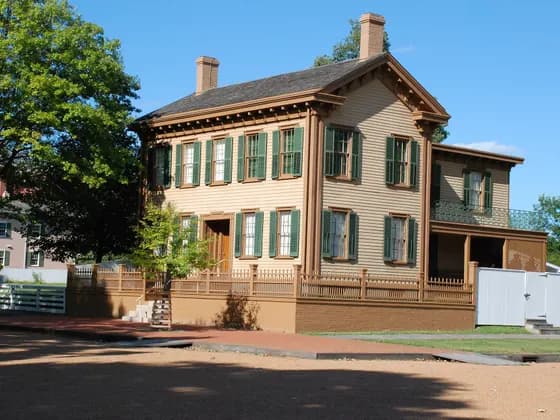
Photo: MemorialPR · CC BY-SA 4.0 · cropped
Photo: Carol M. Highsmith · Public domain · Photo: Shadow2700 at en.wikipedia · Public domain · Photo: George Longenecker · CC BY-SA 4.0
The Southern Illinois University School of Medicine MD program at a glance (2027 entry)
Southern Illinois University School of Medicine (SIU School of Medicine) awards the MD, normally after four years. Founded in 1970 to serve downstate Illinois, it focuses on the health of the people of central and southern Illinois. Standard-track students spend Year 1 on the SIU Carbondale campus and Years 2 to 4 in Springfield, the state capital, where most of the school's facilities are. SIU Medicine is the name of the school's clinical practice.
Teaching in the first two years is built on problem-based learning (PBL), in which a small tutor group works through real patients' cases and decides for itself what it needs to learn. The school says Howard Barrows, a pioneer of PBL, worked at SIU until he retired.
Standardized patients, people trained to portray a real patient's history and symptoms, arrive in your first week. You sit Step 1 of the United States Medical Licensing Examination (USMLE) at the end of Year 2, before the clerkships, the core clinical rotations of Year 3. After them comes a 14-case clinical skills exam you must pass to graduate.
Year 3 is eight four-week clerkships, then a 15-week Personalized Education Plan in which you choose short clinical courses called selectives. Year 4 is mostly electives. About 80 students start each year: 72 on the standard track and 8 in the Lincoln Scholars Program, a rural track based in Carbondale for all four years.
| Degree | MD, fully accredited by the Liaison Committee on Medical Education (LCME) |
|---|---|
| Program length | 4 years; the MD/MPH takes 5 and the MD/JD 6 |
| Class size | About 80 a year: 72 standard track, 8 Lincoln Scholars Program |
| Campuses | Standard track: Year 1 in Carbondale, Years 2 to 4 in Springfield |
| Teaching style | Problem-based tutor groups in organ-system units, Years 1 and 2 |
| Anatomy | Cadaver dissection labs through Year 1, in Carbondale |
| First patient contact | Standardized patients in week 1; real patients with a mentor soon after |
| Grading | Pass/fail for Year 1 and 2 units, clerkships and electives |
| Step 1 timing | Standard track: end of Year 2; about mid-2029 for 2027 entrants, projected |
| Clinical sites | Springfield Memorial, HSHS St. John's and SIU Medicine clinics in Springfield |
What makes the Southern Illinois University School of Medicine MD program different
A rural track based in Carbondale for all four years
The Lincoln Scholars Program, launched in summer 2020, takes eight students a year. They see patients within months and do clerkships in Year 2, before Step 1.
Standardized patients from your first week onward
SIU has used standardized patients in teaching and assessment since the late 1970s. They feature in about a fifth to a quarter of your patient cases in Years 1 and 2, and in every performance exam in those years. By graduation you will have had more than 50 such encounters, with feedback from faculty and from the patients themselves.
Fifteen weeks to shape the end of Year 3
After the core clerkships and summative exam, the Personalized Education Plan (PEP) gives you 15 weeks, from late March to June, to explore or strengthen specialties through short clinical selectives. Up to three weeks can be vacation.
Video cases that train your clinical reasoning
The Critical Clinical Competencies are online cases built around 12 common complaints, mapped to 144 diagnoses across the first three years. You watch a physician examine a standardized patient, record your possible diagnoses at set points, then compare them with a panel of physicians from different specialties discussing the same findings.
Medical humanities built into the clinical years
The Department of Medical Humanities runs a required one-week clerkship in Year 3, on the physician-patient relationship, and another in Year 4, on society, law and the physician's role. In Year 4 your class writes a shared oath and you write your own. The department also hosts the MD/JD and offers electives such as Literature and Medicine.
How Southern Illinois University School of Medicine teaches medicine
In Years 1 and 2, each unit covers a group of organ systems. The sciences, from anatomy and biochemistry to pharmacology and population health, are learned through patient cases rather than separate discipline courses. Clinical skills run alongside, so while you study the heart, lungs and kidneys in Year 1 you also learn to take histories and examine those systems.
Year 1 cases focus on normal function and the mechanisms of disease. Doctoring, the clinical skills strand that runs through all four years, starts with normal history and examination findings. In Year 2, harder cases add pathology, microbiology, pharmacology and radiology, and Doctoring turns to abnormal findings, basic procedures, electronic health records and difficult conversations.
From Year 3, teaching moves to wards and clinics, where clerkship faculty stress direct observation and targeted feedback. The schedules say small-group case discussions of basic science continue through Years 3 and 4. Each Year 2 unit has a nurse educator, an experienced nurse who teaches clinical skills. Nurse educators also score some clerkship exams.
The ways you will learn
| Tutor groups | About six to eight students and a faculty tutor work through a case over several sessions, listing possible diagnoses and learning issues, researching them alone, then reporting back. Many cases are electronic problem-based learning modules (ePBLMs), built from real patient records, in which you can question the patient and order tests in any sequence. The tutor mostly asks questions. |
|---|---|
| Resource sessions and case wraps | Faculty experts present key or difficult topics in resource sessions, usually after you have studied them yourself. A case wrap follows each case, with a physician pulling the findings together and describing typical and unusual presentations. |
| Clinical skills sessions | Each unit schedules sessions on history taking, physical examination, using instruments and presenting a case aloud, often with standardized patients and with faculty on hand to coach you. |
| Physician mentors | In Years 1 and 2 you spend set hours in an assigned physician's practice, taking histories, examining real patients and writing up what you find. |
| Clerkships | Four-week clinical rotations in which you join a hospital team or work one-on-one with a supervising physician, called a preceptor. You take on patients under supervision and meet the clerkship director halfway through for feedback. |
A typical week on the Southern Illinois University School of Medicine program
In Year 1 a case usually runs over three tutor-group sessions, according to the 2023-24 Year 1 overview. On day one the group reads the problem, suggests diagnoses and lists learning issues. On day two members report back and work further into the case, and on day three the group resolves it and gives each other feedback.
Between sessions you study on your own and attend resource sessions, anatomy and histology labs, clinical skills sessions and mentor visits. That edition set at least 8 mentor hours in the first unit and 12 in each of the others. In Year 2 in Springfield, small groups meet twice a week for two to three hours, alongside case-based and single-discipline sessions, radiology and clinical skills.
How anatomy is taught at Southern Illinois University School of Medicine
Anatomy is taught in Year 1 by the anatomy faculty in Carbondale, through gross, microscopic, neuro and developmental anatomy lectures and labs. Histology and gross anatomy labs run across all three units. Every unit's exams include a gross anatomy practical, with neuroanatomy practicals added in the neural unit.
The 2023-24 Year 1 overview, the most recent public edition, describes the labs as hands-on cadaver dissection in which every student is expected to take part. It asks you to treat your cadaver as your first patient. You follow lab guides alongside X-ray, CT and MRI images, discuss the clinical relevance of each body region, and have nearly unrestricted access to the lab for self-study.
The bodies come through SIU's Anatomical Gift Program, which says Lincoln Scholars also learn from donors. Each spring, first-year medical students help lead a memorial service honoring the donors, with their families invited. In Year 4 you can return for an elective in advanced neuro and gross anatomy dissection.
When you first meet patients at Southern Illinois University School of Medicine
Your first patients are standardized patients, in the first week of Year 1. In clinical skills sessions you take their histories and practice examinations, from vital signs to heart, lung, abdominal and neurological exams, with faculty supervising.
The 2024-25 catalog says real patients follow in the fourth week, under a physician mentor. You generally keep that mentor all year. Clinical field experiences, such as observing an endoscopy, and elective clinical sessions with SIU faculty add more. When you move to Springfield for Year 2 you are paired with a physician preceptor instead.
Year 2 brings more supervised patient care: focused examinations, basic procedures and order writing. Full immersion starts with the Year 3 clerkships in July; Lincoln Scholars start theirs in Year 2.
The Southern Illinois University School of Medicine curriculum, year by year
- Year 1
Carbondale: three organ-system units
Year 1 on the Carbondale campus runs from a three-day orientation in mid-August to early June, with 38 weeks of teaching in three units. Tutor-group cases cover how the body works and how disease begins, with anatomy, histology, biochemistry, physiology, genetics, pharmacology and behavioral science learned through them.
- Cardiovascular, Respiratory, Renal (CRR): 14 weeks, from mid-August to November.
- Neural, Muscular, Behavioral (NMB): 12 weeks, from December to early March, around a two-week winter break.
- Endocrine, Reproduction, Gastrointestinal (ERG): 12 weeks, from mid-March to early June, including nutrition.
- Doctoring: clinical skills, standardized patients, a physician mentor, geriatrics, genetics, and peer and self-assessment.
- Optional summer: the eight-week Mentored Professional Enrichment Experience (MPEE) research project, or at least 120 hours of clinical or research work registered through CARE, the Clinical and Research Experience.
- Year 2
Springfield: the systems again, then Step 1
You move to Springfield for a nine-month year with a two-week winter break. Four units revisit the body systems through more complex cases, adding pathology, pharmacology, microbiology, immunology and radiology. Threads such as population science and policy, genetics and neoplasia run through them. Classes end in early May, leaving time to prepare for Step 1.
- Hematology, Immunology and Infection (HII): 8 weeks from late August.
- Cardiovascular, Respiratory and Renal (CRR): 9 weeks to mid-December.
- Neuromuscular and Behavior (NMB): 9 weeks from January, in musculoskeletal, neurology and behavioral sub-units.
- Endocrine, Reproduction and Gastrointestinal (ERG): 9 weeks ending in early May.
- Doctoring adds prescription and order writing, telehealth, end-of-life care and patient safety.
- After the last unit, the schedule sets aside a USMLE preparation week and a remediation period.
- Year 3
Core clerkships, then your own plan
Year 3 runs from early July to late June. With a small group, you rotate through eight four-week blocks on an assigned schedule, though you can request particular rotations. A three-week intersession follows, then the 15-week PEP. Work hours are capped at an average of 80 a week.
- Family medicine: four weeks with a community preceptor chosen from an approved list, or with faculty from SIU's family medicine residency programs.
- Internal medicine: four weeks on an inpatient team with an attending, a senior resident, two interns and two or three students. Two weeks of outpatient clinic share a block with a two-week neurology clerkship.
- Surgery: one faculty preceptor, assigned at random from ten specialties such as neurosurgery, urology or trauma, sets your days. You scrub in on at least four operations.
- Pediatrics: inpatient, general and specialty care, with about 30 half-days of clinic. Obstetrics and gynecology includes a week on labor and delivery.
- Emergency medicine includes one nursing shift, and psychiatry combines inpatient and outpatient work.
- Intersession: a one-week Medical Humanities clerkship, a week of Doctoring with the Summative Clinical Competency Exam (SCCX), and a week of vacation.
- Doctoring: you mentor a first-year student and study how aging affects fall risk and independence.
- Year 4
Electives and residency preparation
Year 4 runs from July to graduation in May and centers on 30 weeks of elective credit. It leaves time for residency interviews and for the Match in March, the national process that places graduates in residency programs. Electives last one to eight weeks or run on Thursday afternoons in five-week blocks, and each is graded satisfactory or unsatisfactory.
- A consecutive four-week Intensive Clinical Experience (ICE), SIU's equivalent of a sub-internship. Under SIU faculty you work at the level of an intern (a first-year resident), at least half of it inpatient, with call if the service has it.
- At least four weeks of basic science electives.
- At least four weeks in each of three core departments, such as surgery, pediatrics or emergency medicine.
- If you earned green, the top progress rating, in every Year 1 and 2 unit, you can ask to skip the ICE, basic science and core-department requirements. The humanities clerkship and elective totals still apply.
- To qualify you also need a first-time Step 1 pass and every SCCX case passed, with no remediation or repeated year and at most one deferred clerkship.
- A one-week Medical Humanities clerkship on society, law and health care.
- Doctoring: mentoring a Year 2 student, a geriatrics program and seminars on teaching.
- Lincoln Scholars Program
Four years in Carbondale
The Lincoln Scholars Program, part of SIU's Rural MD Program, takes eight students a year. They train year-round in Carbondale and nearby rural communities, starting in May or June. The program's graduation objectives match the standard track's. Primary care is emphasized, but there is no requirement to enter it or practice rurally.
- From your first months you see patients at a weekly clinic with a rural physician mentor you keep for all four years, and train in care teams at the Interdisciplinary Family Care Clinic.
- Extras include a rural health skills lab, summer rural hospital experiences, leadership and public speaking, and team learning with physician assistant, nursing, pharmacy and behavioral health students.
- Year 1: five organ-system units of nine or ten weeks, from hematology, gastrointestinal and cardiology to renal, endocrine, metabolism and nutrition, learned with physician assistant students.
- After Year 1, the schedule sets aside six weeks for CARE, the clinical and research experience.
- Year 2: seven six-week clerkships (emergency medicine, internal medicine, neurology, obstetrics and gynecology, pediatrics, psychiatry and surgery) plus a year-long family medicine clerkship.
- Year 3: a Step 1 board course from July to December and a Step 2 course in January and February, then clinical selectives.
- Year 4: clinical selectives, then electives through graduation in May.
How you are assessed at Southern Illinois University School of Medicine
Grading is pass/fail, with one transcript notation for each of Years 1 and 2. The school says students are not evaluated in competition with each other. Core clerkships are graded pass or fail on clinical skills and professionalism. Each clerkship evaluation also gives an overall RIME rating, which places you as a reporter, interpreter, manager or educator depending on how much of your patients' care you can take on. These evaluations feed the Medical Student Performance Evaluation (MSPE), the letter the school sends to residency programs.
Year 1 exams come at the middle and end of each unit, though the last unit's midpoint tests clinical skills only. They include computer-based basic science exams, gross anatomy and histology practicals, and a Clinical Competency Examination (CCX). In a CCX you take a history from a standardized patient and examine them, then list findings, order and interpret tests and justify your diagnosis on a computer. Year 2 has end-of-unit exams and a CCX in every unit.
Each clerkship sets its own mix. In internal medicine, narrative comments from your clinical coaches make up half of the clinical grade, alongside a skills exam with standardized patients, ambulatory cases and EKG and chest X-ray reading. Pediatrics and psychiatry end with a CCX, and psychiatry adds a mental status exam you type in 15 minutes after watching a recorded interview. Neurology uses write-ups, case presentations and an observed exam, while surgery has no final exam and relies on faculty and resident comments.
During the Year 3 intersession you take the SCCX: 14 standardized patient cases testing reasoning, differential diagnosis, history and examination, management planning and communication. You must pass it to graduate, and failing it means a remediation course during the PEP.
The USMLE is the exam series state medical boards use in licensing doctors. Step 1 has been reported pass/fail only since January 26, 2022, and Step 2 CK tests clinical knowledge. SIU gives you six weeks of dedicated study for Step 1, which you must sit before starting clerkships and pass to graduate. You must also record a Step 2 score before graduating.
In August 2026 the USMLE program announced a move to designated testing dates from January 2029, with Step exams offered less often each year. Its June 2026 notice had named 2028. On the current schedule, a standard-track student entering in August 2027 would sit Step 1 between early May and early July 2029. Step 2 CK would follow around the end of Year 3, in spring or summer 2030. A 2027 Lincoln Scholar would take Step 1 by about December 2029 and Step 2 CK in early 2030.
- All of these dates fall after the switch, and they are projections from the latest schedules the school has posted: the Class of 2029, the 2026-27 year and the Lincoln Scholars Class of 2028.
- The 2023-24 Year 1 overview also lists objective structured clinical exams (OSCEs), short timed stations testing examination skills, after the first two units, and a final head-to-toe exam.
- The Longitudinal Performance Assessment, a multiple-choice test of clinical reasoning that SIU has used since 2005, opens each of your four years so your growth can be tracked.
- The LCME accredits MD programs in the United States. Its directory, updated October 14, 2026, lists SIU as fully accredited, first accredited in 1972, with its next survey in 2030-31.
- For MD students, attending an LCME-accredited school is what makes you eligible for Step 1 and Step 2 CK. Students at osteopathic (DO) schools, and at eligible schools outside the United States, qualify through other routes.
Southern Illinois University School of Medicine clinical rotations: where you will actually train
On the standard track you spend Year 1 at Lindegren Hall on the SIU Carbondale campus, then move to Springfield for Years 2 to 4. Springfield is a regional health care hub. The 2024-25 catalog says teaching there is based at SIU's clinics, Springfield Memorial Hospital (Memorial Medical Center, its former name), HSHS St. John's Hospital and other locations.
Emergency medicine runs shifts at Springfield Memorial and St. John's and at Memorial hospitals in Lincoln, Jacksonville and Taylorville. For family medicine you can choose a preceptor from a list of more than 160 board-certified family physicians in rural and urban practices across Illinois. You join in their office work, night call, and nursing home and home visits.
The school's March 2026 list names further affiliated hospitals, shown below. SIU also runs family medicine residencies in Springfield, Decatur, Quincy, Alton and Carbondale. The school says it has no on-campus housing for medical students in Springfield, so plan on finding your own.
Lincoln Scholars train in and around Carbondale, with clinical work in neighboring rural communities. Their program runs from a joint family medicine and physician assistant building on the Memorial Hospital campus. They can take electives in Springfield during the PEP and Year 4.
Base for Years 2 to 4 of the standard track and most core clerkships; Vibra Hospital and Lincoln Prairie appear on the school's March 2026 affiliate list.
- Springfield Memorial Hospital
- HSHS St. John's Hospital
- SIU Medicine clinics, including the SIU Internal Medicine Clinic
- Vibra Hospital
- Lincoln Prairie Behavioral Health Center
Memorial Health hospitals where the emergency medicine clerkship schedules shifts. The school's March 2026 affiliate list still uses Jacksonville Memorial Hospital's former name, Passavant Area Hospital.
- Lincoln Memorial Hospital
- Jacksonville Memorial Hospital
- Taylorville Memorial Hospital
Year 1 of the standard track, and all four years for Lincoln Scholars.
- Lindegren Hall, SIU Carbondale
- Memorial Hospital
- Interdisciplinary Family Care Clinic
The family medicine clerkship can place you with one of these physicians for about four weeks, in the office and the hospital.
- More than 160 board-certified family physicians in the community preceptor program
Listed as affiliated hospitals in the school's March 2026 facts and figures.
- Memorial Hospital and St. Mary's Hospital, Decatur
- Blessing Hospital, Quincy
- St. Anthony's Memorial Hospital, Effingham
- St. Francis Hospital, Litchfield
- Carlinville Area Hospital
- Illini Community Hospital, Pittsfield
- Community Memorial Hospital, Staunton
Electives, selectives and away rotations at Southern Illinois University School of Medicine
In the PEP at the end of Year 3 you must complete at least 12 of its 15 weeks, in full-time selectives of one to four weeks. All except medical humanities selectives are clinical. Options include cardiology, nephrology, critical care, inpatient obstetrics, gynecologic surgery and emergency medicine. Family medicine offers geriatrics, procedures, prompt care, hospitalist medicine and a rural experience.
Longitudinal selectives meet one afternoon a week for 5, 10 or 15 weeks. You can design your own clinical selective, as long as it is within SIU. The Year 3 policies allow no away rotations, meaning rotations at other institutions, during the PEP. The PEP is also when any deferred clerkship or remediation is made up.
You plan Year 4 with an Elective Advisor you choose by early April of Year 3, and electives can be full-time or half-time. One is the emergency medicine sub-intensive, which gives you primary responsibility for emergency patients and suits students seeking a standardized letter of evaluation for residency. Obstetrics electives range from maternal-fetal medicine to a residency readiness boot camp.
If you are in good academic standing, you can take extramural electives at other LCME-accredited schools, or design your own with non-SIU faculty or in military or other health care settings. At least 20 of your 30 elective weeks must stay under SIU faculty. Electives abroad need a meeting with the Associate Dean for Student Affairs at least six weeks ahead.
Dual degrees and research years at Southern Illinois University School of Medicine
The six-year MD/JD, run with SIU Simmons Law School, starts with two years of law school in Carbondale, including two summer sessions and a concentration in health law. You then take Year 1 of medicine in Carbondale and Years 2 and 3 in Springfield. In your final year, a 14-week set of law, medicine and health policy electives counts toward both degrees.
The five-year MD/MPH, run with SIU Carbondale, opens with three semesters of public health before Year 1 of medicine in Carbondale and three more years in Springfield, the last combining both degrees. It is open only to students already accepted to the MD, before they start. The 2024-25 catalog says three are admitted a year. Year 4 includes 15 weeks of public health electives, among them a six-week practicum in a community agency.
In the summer after Year 1 you can apply for the MPEE, an optional eight-week research project of roughly 40 hours a week. You design it with a faculty mentor, work in Carbondale, Springfield or another approved site, and present it at the school's trainee research symposium in Year 2.
The optional Research Scholars Pathway adds four years of mentored research: summer research after Year 1, an abstract presented in each later year and six weeks of research electives in Year 4. Completing it is noted in your residency application and your MSPE. If you want a research degree as well as the MD, the student handbook directs you to the Associate Dean for Student Affairs.
The Medical Education Pathway builds a teaching portfolio across all four years and requires a peer-reviewed presentation or publication plus 8 weeks of medical education electives in Year 4. When you complete it, your residency application lists you as an SIU Medical Education Scholar. Other pathways cover the humanities (HEALER Scholars), health advocacy, leadership development and interprofessional complex care, in which student teams support patients with complex needs from September to March.
Facilities and support at Southern Illinois University School of Medicine
Where you will learn
In Carbondale, Year 1 is based in Lindegren Hall, home to the tutor rooms, the gross anatomy and histology labs, and the Medical Resource Center. That library serves medical and physician assistant students, among others, lending books, microscopes, slides, models and laptops. SIU Carbondale's main Morris Library is next door.
In Springfield, Year 2 tutor rooms, the student lounge and a computer lab are in the 801 N. Rutledge building, with the Medical Library on its fourth floor. Students have round-the-clock access to the library's main collaborative space. The school's Professional Development Laboratory has eight examination rooms around a central observation room, where faculty watch standardized and real patient encounters through one-way glass, with a computer lab next door.
The Memorial Center for Learning and Innovation, also called the Memorial Learning Center, is a 72,000-square-foot Springfield building with a medical simulation center and the J. Roland Folse, MD, Surgical Skills Laboratory. The neurology clerkship starts there with practice in a simulated patient care room. The Department of Medical Humanities also runs the Pearson Museum of medical history, housed since 1977 at 801 N. Rutledge in space designed as a teaching museum.
Support while you study
In Year 1 you have a faculty advisor, whom the 2023-24 overview says you meet after every unit. In Year 3 you meet an assigned Year Three Advisor monthly during the clerkships. Peer mentoring pairs first-year students with third-years and second-years with fourth-years.
The Office of Student Affairs runs a four-year career planning program based on Careers in Medicine, from the Association of American Medical Colleges (AAMC) and the American Medical Association. It covers budgeting, specialty choice, USMLE and Match planning, and a review of your MSPE. Lincoln Scholars also have retreats on self-care, group dynamics and community involvement.
In Springfield, student primary care is at the SIU Center for Family Medicine, and confidential mental health care comes through the SIU Behavioral Health Program. Their providers play no part in assessing you. All students get free, round-the-clock virtual medical and mental health care through TimelyCare. Disability accommodations are arranged through a confidential Americans with Disabilities Act (ADA) representative.
Is the Southern Illinois University School of Medicine program right for you?
This program may suit you if
- You learn best by working through cases in a small group and teaching yourself, rather than following a lecture timetable.
- You want standardized patients from week 1, a physician mentor in Year 1 and more than 50 practice encounters before you graduate.
- You value pass/fail grading and want 15 weeks at the end of Year 3 to explore specialties.
- You are drawn to rural medicine in downstate Illinois and would like a small, four-year cohort in Carbondale through the Lincoln Scholars Program.
- You are interested in medicine's links with the humanities, law or public health, given the required humanities clerkships and the MD/JD and MD/MPH.
Things to think about
- Standard-track students move from Carbondale to Springfield after Year 1, and the school has no on-campus housing for medical students in Springfield.
- Self-directed study is the core of Years 1 and 2, and resource sessions usually come after you have tackled a topic, which takes adjusting to.
- Away rotations are not allowed during the PEP, and at least 20 of your 30 Year 4 elective weeks must be under SIU faculty.
- The Lincoln Scholars schedule runs year-round, with only seven classmates and Step 1 not until Year 3.
Southern Illinois University School of Medicine MD program — frequently asked questions
Applying to Southern Illinois University School of Medicine?
How to get into Southern Illinois University School of Medicine
Prerequisites, MCAT, AMCAS personal statement, secondaries and interview, step by step.
Open the guide →Southern Illinois University School of Medicine admissions profile
MCAT and GPA profile, acceptance rate, interview format and key dates.
See the profile →Compare Southern Illinois University School of Medicine with other schools
Put the teaching style, anatomy teaching and clinical sites next to another school.
Open the comparison →Prepare for the Southern Illinois University School of Medicine interview
Format breakdown, school-specific sample questions and prep tips from tutors who interviewed here.
Read the guide →Where this Southern Illinois University School of Medicine program guide came from
This guide was written from 93 official sources — Southern Illinois University School of Medicine's own program pages and curriculum documents, plus the accreditor and the hospitals and health systems the school trains students in where they publish detail — read on 2026-10-24, then checked claim by claim against those sources.
- SIU School of Medicine: MD programs (MD, Lincoln Scholars, MD/JD, MD/MPH)
- SIU School of Medicine Academic Catalog 2024-2025 (November 2024)
- Medical Education Year 1
- Medical Education Year 2
- Medical Education Year 3
- Medical Education Year 4
- Four-year curriculum schedule, Class of 2029 (updated January 13, 2026)
- Curriculum schedule, academic year 2026-2027
- Lincoln Scholars Program four-year schedule, Class of 2028
- Empower course catalog, 2026-27 year (Year 1, Year 2 and Lincoln Scholars courses)
- Y1 Overview Document, 2023-24 edition
- Mentored Professional Enrichment Experience (MPEE)
- MPEE student flyer 2026-27
- MPEE mentor responsibilities 2026-27
- Clinical and Research Experience (CARE)
- Carbondale Standardized Patient Program
- Year Two Units and Streamers
- Year Two: Hematology, Immunology and Infection unit
- Year Two: Cardiovascular, Renal and Respiratory unit
- Year Three policies and procedures (revised May 20, 2024)
- Year Four policies and procedures (revised April 2024)
- SIU School of Medicine student handbook
- Doctoring curriculum
- Critical Clinical Competencies
- Standardized Patient Program and Professional Development Laboratory
- CCX assessments
- Problem-Based Learning at SIU
- Department of Medical Education: Innovations
- ExamSoft guidelines for Year 1 and Year 2 exams
- Emergency Medicine Clerkship: Year 3
- Emergency Medicine: Year 4 Sub-Intensive
- Family and Community Medicine Clerkship
- Family and Community Medicine: Community preceptor program
- Internal Medicine Clerkship: Structure
- Internal Medicine Clerkship: Evaluation
- Neurology Clerkship: Structure
- Neurology Clerkship: Evaluation
- Obstetrics and Gynecology Clerkship
- Obstetrics and Gynecology Clerkship: Structure
- About the Pediatric Clerkship
- Psychiatry Clerkship: Evaluation
- Surgery Clerkship: Structure
- Surgery Clerkship: Evaluation
- Department of Medical Humanities: Education, clerkships and electives
- MD/JD Dual Degree Program
- Pearson Museum
- Lincoln Scholars Program
- Lincoln Scholars Program Curriculum (track comparison)
- About the Lincoln Scholars Program
- Research Scholars Pathway
- Medical Education Pathway
- Educational Pathways
- Interprofessional Complex Care Collaborative (Hotspotting) Scholars Program
- Anatomy and Neurobiology
- Anatomical Gift Program: Frequently Asked Questions (2025)
- Career planning
- Housing information
- Springfield health resources
- TimelyCare
- Student accommodations
- About the Medical Resource Center, Carbondale
- Surgical Skills Center facilities
- Our community: Springfield
- Facts and figures (March 2026)
- The history of SIU School of Medicine
- Students Celebrated at 2026 White Coat Ceremony
- SIU Carbondale 2026-2027 Academic Catalog: School of Medicine
- Memorial Health: Springfield Memorial Hospital
- Memorial Health: history and hospital locations
- Memorial Health: Community Health Needs Assessments (current and former hospital names)
- Memorial Health blog: Memorial Health Celebrates 125 Years (April 26, 2022; Jacksonville Memorial Hospital history)
- HSHS St. John's Hospital, Springfield
- LCME directory of accredited programs (updated October 14, 2026)
- USMLE: Updated timeline for designated testing dates, transition in January 2029 (August 6, 2026)
- USMLE Designated Testing Dates Information Hub
- USMLE: Transition to limited testing dates (June 23, 2026 notice)
- USMLE Step 1 transition to pass/fail only score reporting
- USMLE Bulletin of Information: Eligibility
- Curriculum calendars (index of posted schedules)
- Year Two: Neuromuscular and Behavior unit
- Year Two: Endocrine, Reproductive and Gastrointestinal unit
- Family Medicine Clerkship (department page)
- Psychiatry Clerkship: Structure
- Surgery Clerkship
- Surgery Clerkship: Goals and required experiences
- Student Progress System
- Anatomical Gift Program
- Advantages of SIU School of Medicine
- Student Affairs FAQ
- About SIU School of Medicine
- Our campuses
- Year Two Policies and Procedures, 2022-23 edition
- About the Office of Education and Curriculum (tutor roles)
Curricula are restructured between cycles. Anything here that decides your application — how anatomy is taught, a clinical campus assignment, a required research year — should be confirmed against the official page for your entry year.
Applying to Southern Illinois University School of Medicine?
We help US applicants with MCAT strategy, the AMCAS personal statement, secondary essays and interview prep — everything you need for a competitive Southern Illinois University School of Medicine application.