
The Loyola University Chicago Stritch School of Medicine MD program
What you actually study, and where you will be
Loyola University Chicago Stritch School of Medicine's MD is a 4-year program taught through a traditional, lecture-led structure, with patient contact from Year 1 and clinical rotations in the Chicago area, Naples, Florida, and Mishawaka, Indiana (2027 entry). Stritch's MD spends two preclinical years on science courses, from anatomy to pharmacology, alongside Patient Centered Medicine (PCM), a clinical skills course that runs through all four years. After Step 1 at the end of Year 2, you take seven core clerkships in an order set by lottery earlier that year. They run at Loyola University Medical Center and affiliated Chicago-area hospitals, with a few places in Florida and Indiana. Year 4 adds two sub-internships, emergency medicine, a four-week PCM-4 block, a Transition to Residency course and electives.
- Degree
- MD
- Length
- 4 years
- Teaching
- Traditional / lecture-led
- Clinical contact
- Year 1

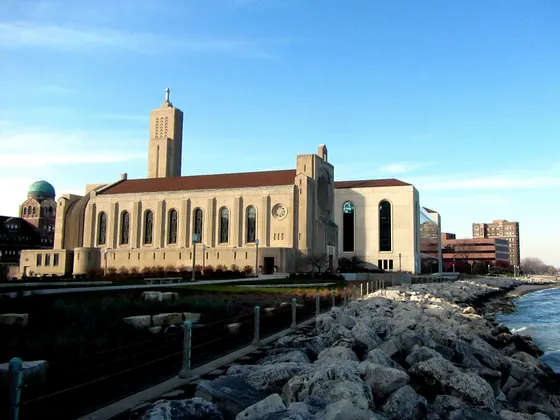
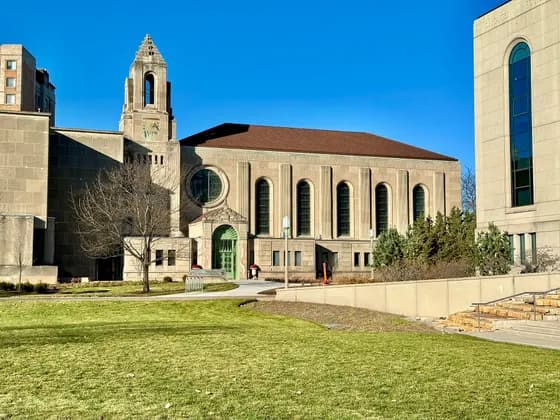
Photo: Luwolf · CC BY-SA 3.0 · cropped
Photo: Bohao Zhao · CC BY 3.0 · Photo: w_lemay · CC BY-SA 2.0 · Photo: Teemu008 from Palatine, Illinois · CC BY-SA 2.0
The Loyola University Chicago Stritch School of Medicine MD program at a glance (2027 entry)
Loyola University Chicago Stritch School of Medicine (Loyola Stritch, or SSOM) runs a four-year MD program on Loyola's Health Sciences Campus in Maywood, Illinois, directly west of Chicago. It describes itself as Chicago's Jesuit Catholic medical school. Teaching is based in the Cuneo Center, next to Loyola University Medical Center (LUMC) and the Edward Hines Jr. VA Hospital. The class that started in July 2026 has 171 students.
The school calls Years 1 and 2 the preclinical phase. You take two science courses at a time, such as Structure of the Human Body (anatomy) or Mechanisms of Human Disease, alongside Patient Centered Medicine (PCM). PCM is a four-year course in history taking, examination and communication that also tackles subjects such as end-of-life care and physician burnout. From Year 1 it puts you in front of standardized patients, people trained to play patients.
Year 3 starts in late April, once you have sat Step 1 of the United States Medical Licensing Examination (USMLE). A lottery gives you one of 48 tracks, each setting the order of your seven core clerkships (the main clinical rotations) and a four-week elective. Year 4 adds two sub-internships, in which you take on many of a first-year resident's duties, plus emergency medicine and electives, including away rotations at other schools.
The school says its Jesuit values, including cura personalis (care for the whole person), shape the curriculum. First-year students shadow a hospital chaplain, anatomy opens and closes with blessing ceremonies, and every student writes a Year 3 paper on spiritual care and the death of a patient. Optional programs include Ignatian Service Immersion trips, the Physician's Vocation Program on faith and medicine, and three honors programs.
| Degree | MD (Doctor of Medicine) |
|---|---|
| Program length | 4 years, from orientation in late July to graduation in May |
| Class size | 171 in the class that started in July 2026 |
| Main campus | Cuneo Center, Health Sciences Campus, Maywood, Illinois |
| Teaching style | Science courses beside a four-year Patient Centered Medicine course |
| Anatomy | Faculty-prosected donors in daily labs; voluntary dissection (2025-26 syllabus) |
| First patient contact | Year 1: standardized patients, physician preceptors and chaplain shadowing |
| Clinical sites | Loyola University Medical Center, Hines VA, Cook County Health System and others |
| Step 1 timing | End of Year 2, after six weeks of independent study |
| Grading | Honors, High Pass, Pass and Fail scale; some courses pass/fail |
What makes the Loyola University Chicago Stritch School of Medicine MD program different
Patient Centered Medicine runs through all four years
PCM starts in Year 1 with standardized patients, physical exam workshops, clinical skills exams called OSCEs and physician preceptors, and continues with a clinical preceptor in Year 2. In Year 3 it brings the class back on nine seminar days, with reflection groups led by the faculty advisor you met in Year 1. PCM-4 is largely asynchronous and timed for interview season.
Out-of-state clerkships with a travel stipend and an apartment
The school created rotations away from Chicago after students reported crowded clerkships and too narrow a mix of patients. Two students a month spend 3 to 4 weeks of internal medicine in Naples, Florida, and two per rotation take family medicine in Mishawaka, Indiana.
Spiritual care is part of clinical training
Since the early 1990s, first-year students have shadowed a trained hospital chaplain for two hours, then written a two-page reflection and joined a small-group debrief. In spring of Year 3 every student writes a pass/fail paper of at least five pages about a patient who died or was dying, including how the team met their spiritual needs.
A final year built to rehearse residency
Year 4 requires ward and intensive care sub-internships, four weeks each, with six-day weeks and duties such as writing orders, plus four weeks of emergency medicine. The track grid keeps no more than one required rotation in the usual interview months, and Transition to Residency ends with a week for your chosen specialty.
Global health, from service trips to a year in Bolivia
Ignatian Service Immersion trips, begun in 1993, run as a 10-month process of preparation, travel and reflection. The Community and Global Health Honors Program adds 16 seminar events, 150 hours of field experience, a scholarly or quality improvement project and at least four weeks of eligible electives. Its Global Health Scholars spend a fellowship year in Palacios, Bolivia, between Years 3 and 4.
How Loyola University Chicago Stritch School of Medicine teaches medicine
In Years 1 and 2 you take two science courses at a time, with PCM alongside all year. Anatomy lectures are prerecorded, to be watched the night before each lab so you come prepared.
PCM rests on the idea that the patient sits at the center of the care team. Its 2024-25 introduction describes lectures, small-group discussions and hands-on work: mentor and shadowing programs, simulated patients, real patient encounters, reflection papers and skills workshops.
Some topics, which the school calls vertically integrated curricula (VICs), are taught in sessions spread across several courses and clerkships rather than in a single block. The school's 2026-27 Academic Policy Manual gives point-of-care ultrasound, radiology, end-of-life care and personal and professional development as examples, and the 2026-27 curriculum map also lists a Nutrition VIC. Your transcript reports them together as Topics in Clinical Medicine (TCM). In Year 1, for instance, you attend five ultrasound labs and sit a radiology exam on topics from anatomy.
From Year 3, most learning happens on clerkships. The emergency medicine clerkship, for example, adds four education days with simulation, ultrasound training and case discussions. PCM-3 brings the class back on nine seminar days, with representative topics such as end-of-life care, interprofessional teamwork, the opioid epidemic and caring for immigrant neighbors.
The ways you will learn
| Lectures and small groups | In Year 2, Mechanisms of Human Disease, for example, combines lectures with small-group sessions, labs, review sessions and workshops. In anatomy, faculty run open-lab reviews and USMLE-style question sessions on most Fridays. |
|---|---|
| Anatomy lab | Daily 55-minute small-group sessions in the lab on the Cuneo Center's lower level, working through a list of structures on prosected donors, specimens and models, with optional sign-up dissection in the 2025-26 syllabus. |
| Standardized patients | In the Selfridge Clinical Skills Center you interview and examine standardized patients, who give you immediate feedback, and encounters can be watched live or reviewed later. Clinical skills are assessed there too, including in the Year 3 Capstone Exercise. |
How anatomy is taught at Loyola University Chicago Stritch School of Medicine
Structure of the Human Body covers gross anatomy, neuroanatomy and embryology. It runs in the fall of Year 1, from October to December on the 2026-27 curriculum map, alongside Health Systems Science and PCM-1.
The latest posted syllabus, for 2025-26, puts you in a section of 60 students and a study group of six. Each section spends 55 minutes in the lab every day, at 8:30, 9:30 or 10:30 am, switching slots after each exam. Groups find the structures on that day's list using bones, models, seven whole-body donors prosected by faculty, prosected and plastinated specimens and digital images, with faculty on hand to check.
In that syllabus, dissection is voluntary. You can sign up to dissect the region for the next exam with a group of six or seven, for 5 to 10 hours. Supervised sessions are usually on Thursday and Friday afternoons, and the lab is open 24 hours. In 2024-25, by contrast, every student had been assigned to a dissection group.
There are five exams, each mixing vignette-style multiple-choice questions with identification questions on images of the donors and specimens. Ultrasound questions are included because ultrasound training is paired with the course. The course is pass/fail, with a pass at 70 percent.
Donors come through the Anatomical Gift Association of Illinois. Required blessing ceremonies open and close the course. You also write a pass/fail reflection on how learning from a donor shaped you, which goes into a book made available to donors' families.
When you first meet patients at Loyola University Chicago Stritch School of Medicine
Patient contact starts in Year 1. In PCM-1 you interview standardized patients, and the interviews are recorded so your facilitator can review them. You also practice in physical exam workshops and sit a physical exam OSCE and combined history and physical OSCEs. An OSCE (Objective Structured Clinical Examination) is a series of timed encounters scored by examiners.
Outside the classroom, first-year students join the M1 Physician Preceptor Program and the M1/M3 Student Mentor Program, which pairs them with third-year students. The school also points to student organizations linked to free and reduced-cost clinics, and to Loyola Street Medicine, which brings faculty, residents and students to people experiencing homelessness.
In Year 2, the PCM-2 preceptor program takes you to patients. In the 2022 course description, students met a preceptor in clinic or on the wards about every other week from September to April and wrote up five full histories and physical exams.
The Loyola University Chicago Stritch School of Medicine curriculum, year by year
- Year 1
Science foundations and first patients
Year 1 runs from orientation in late July to late May, in two 20-week semesters. The summer that follows can go to research, such as the Student Training in Approaches to Research (STAR) program.
- August to September: Molecular Cell Biology & Genetics and Behavioral Medicine & Development.
- October to December: Structure of the Human Body (anatomy) and Health Systems Science.
- January to May: Function of the Human Body, with Host Defense until February and then Host Pathogens.
- PCM-1 all year, including standardized patients, OSCEs, a physician preceptor, a third-year mentor and chaplain shadowing.
- Topics in Clinical Medicine 1: a resilience, emotional intelligence and mindfulness session, five ultrasound labs, a radiology exam and a personal and professional development elective, taken in Year 1 or 2.
- Year 2
Disease, drugs and Step 1
Year 2 runs from early August to mid-April: a 20-week fall semester and about nine weeks of spring classes. It ends with six weeks of independent study for USMLE Step 1 (March 8 to April 16 in 2027), which you sit before Year 3 begins.
- Mechanisms of Human Disease I, II and III from August to February, with Pharmacology & Therapeutics I and II.
- PCM-2: clinical skills workshops, OSCEs and a clinical preceptor, plus three point-of-care ultrasound workshops.
- Topics in Clinical Medicine 2: five radiology exams, a chest X-ray workshop and ultrasound case discussions.
- Two Ethics Grand Rounds, case discussions run by the Neiswanger Institute for Bioethics; four are required by the end of Year 3.
- Comprehensive Basic Science Exams from the National Board of Medical Examiners (NBME) in January and February, then self-assessments in March and April that decide when you are ready for Step 1.
- Year 3 (from late April)
The core clerkship year
Year 3 opens with a mandatory orientation and clinical skills week in late April, and clerkships begin in early May. Your lottery track sets the order of seven core clerkships and a four-week elective over 48 weeks; no clerkship is a prerequisite for another.
- Medicine and Surgery, 8 weeks each; Pediatrics, Obstetrics & Gynecology, Family Medicine and Psychiatry, 6 weeks each; Neurology, 4 weeks.
- A four-week elective taken at Loyola, from options such as anesthesiology, dermatology, radiology and research.
- PCM-3 on nine seminar days, plus nine personal and professional development sessions.
- Two more Ethics Grand Rounds and the Ethics Case Analysis Paper, due in the spring (March 17 in 2027).
- Topics in Clinical Medicine 3: an end-of-life OSCE and a capstone exam on ultrasound, radiology and end-of-life care, with a pass above 70 percent in each part.
- The M3 Capstone Exercise in late March or early April, a graduation requirement passed by taking part: acute-care visits with standardized patients, each followed by a write-up and one-to-one faculty feedback.
- Year 4
Sub-internships, electives and residency applications
Year 4 runs in twelve four-week periods from early May to the end of April, with graduation in mid-May. A second lottery assigns one of 11 tracks that spreads the required rotations across the year, leaving the rest for electives, interviews and USMLE Step 2 CK (Clinical Knowledge).
- Sub-I Wards and Sub-I ICU (intensive care unit), four weeks each, with six-day weeks. One may be done at another school, but its exam and OSCE are taken at Loyola.
- Emergency Medicine, four weeks at the LUMC emergency department plus Hines VA or MacNeal, on day, evening, overnight and weekend shifts.
- PCM-4, a four-week, mostly asynchronous course in November or December on value-based care, professional development and a quality improvement project.
- Transition to Residency, two weeks in February, March or April: a week of general intern topics, then a week geared to your specialty.
- At least 12 weeks of clinical electives (see Electives).
- Step 2 CK by December 31, residency applications through the Electronic Residency Application Service (ERAS) from late September, and Match Day in March.
How you are assessed at Loyola University Chicago Stritch School of Medicine
The grading scale runs Honors, High Pass, Pass, Pass in a pass/fail course, Remediated Pass, Unsatisfactory and Fail. Anatomy (pass at 70 percent in the 2025-26 syllabus), Topics in Clinical Medicine and each of its VICs, PCM-4 and the ethics paper are graded pass/fail. Electives use Honors to Fail unless noted.
Class rank comes from a numerical score in each required course and clerkship, weighted by clock hours. It places you in the upper, middle or lower third, released in July of Year 4 and considered in your Medical Student Performance Evaluation, the dean's letter for residency applications. A final ranking sets Latin honors: summa cum laude for the top 5 percent, magna cum laude for 6 to 10 percent and cum laude for 11 to 20 percent.
The USMLE is the national licensing exam, taken in three steps, with Step 3 during residency. Step 1 has been reported only as pass or fail since January 26, 2022, while Step 2 CK is still reported as a three-digit score. Stritch requires you to sit Step 1 before Year 3 orientation and to pass it to continue in clerkships.
Readiness is judged on NBME practice exams: everyone sits the Comprehensive Basic Science Exam in January and self-assessments in March and April. Reaching the school's benchmark score clears you to sit Step 1 before Year 3. Anyone still short after the April self-assessment follows an individual plan and a Step Prep elective in May and June, delaying Year 3. All students must sit Step 1 by July 1, whatever their practice scores, and pass by December 31.
Step 2 CK follows Year 3 and must be sat by December 31 of Year 4, with a pass at least two months before graduation. Stritch allows three attempts at each Step.
In August 2026 the USMLE program announced a move to designated testing dates from January 2029, with Step exams offered less often each year. A June 2026 notice had named 2028. On the current schedule, a 2027 entrant would sit Step 1 in about March or April 2029 and Step 2 CK by December 31, 2030, so both would fall under the new model. Calendars from 2027-28 onward are not yet posted, and the school's Step 1 policy already notes that timing may depend on available USMLE testing dates.
- Courses and clerkships use their own mix of exams, OSCEs, projects, presentations, lab work, small-group work and clinical evaluations. To pass, you must also meet the minimum standard in every competency a course assesses, out of eight that run from medical knowledge to personal and professional development.
- OSCEs run from Year 1, with an end-of-life OSCE in Year 3 and a final exam and OSCE in each sub-internship. Students at the Florida and Indiana sites return to campus in their final week for the clerkship OSCE and NBME shelf exam, a standardized end-of-rotation test.
- The Liaison Committee on Medical Education (LCME) accredits MD programs in the United States. Its directory, updated October 14, 2026, lists Loyola University Chicago Stritch School of Medicine (Maywood) as Full, with its next survey in 2026-27. Initial accreditation is given as on or prior to 1942, the year the LCME was founded.
- For MD students, enrollment in an LCME-accredited program is what makes you eligible to sit the USMLE; osteopathic (DO) students and international graduates qualify through other routes.
Loyola University Chicago Stritch School of Medicine clinical rotations: where you will actually train
All required clerkships take place at Loyola University Medical Center or another site the school designates. LUMC, next to the medical school in Maywood, is the flagship and primary teaching site. It is a Loyola Medicine hospital, part of Trinity Health, with 547 licensed beds, a Level 1 trauma center, a burn center, a comprehensive stroke center and a children's hospital.
Loyola Medicine's other hospitals are Gottlieb Memorial Hospital, a community hospital in Melrose Park with 247 licensed beds, and MacNeal Hospital, a teaching hospital in Berwyn with 374 licensed beds. Edward Hines Jr. VA Hospital, 12 miles west of downtown Chicago, has 483 beds and names Stritch as its primary affiliation.
The school also lists West Suburban Medical Center in Oak Park as an internal medicine clerkship site. When this guide was checked in October 2026, the hospital's own website said it had temporarily suspended some patient care services.
Sites are assigned separately from your track, four to six weeks before each clerkship. Surgery, Neurology, Pediatrics, Psychiatry and Family Medicine use site lotteries, apart from sites that require fluent Spanish, while OB/GYN and Medicine sites are assigned directly rather than by lottery. Assignments are binding, and some services at some sites expect weekend work. Year 4 sub-internship services come from a lottery run in reverse order of your track lottery number.
A few students rotate out of state, on internal medicine in Naples, Florida, or family medicine in Mishawaka, Indiana. Both come with a travel stipend, a furnished apartment and Zoom teaching alongside local conferences. After tracks are set, a survey asks who wants to go; if places remain, a lottery fills them, and students who cannot travel must say so and meet Student Affairs.
The school recommends a driver's license and a car, especially in the clinical years, because sites are spread across Chicagoland, Florida and Indiana and daily schedules may not allow carpooling.
- Clinical hours are capped at 80 a week averaged over four weeks, with one day in seven free. In-house call comes no more than every fourth night and lasts at most 24 hours. The school reimburses a taxi or rideshare if you are too tired to drive after call.
The flagship, its two sister hospitals and the VA hospital. Emergency medicine runs at LUMC plus Hines VA or MacNeal.
- Loyola University Medical Center, Maywood
- Gottlieb Memorial Hospital, Melrose Park
- MacNeal Hospital, Berwyn
- Edward Hines Jr. VA Hospital
A safety-net system, a psychiatric center, a children's hospital for medically complex children, a site for general and specialty surgery and a freestanding children's hospital for pediatric inpatient rotations.
- Cook County Health System
- John J. Madden Mental Health Center
- La Rabida Children's Hospital
- Resurrection Medical Center
- St. Alexius Medical Center
Internal medicine for 3 to 4 weeks, two students a month. The November 2025 fourth-year slides said Naples would become an emergency medicine site from June 2026.
- Naples Community Hospital (Naples Community Healthcare System)
The six-week family medicine clerkship, two students per rotation. The school lists a Level II trauma center and a primary stroke center there.
- St. Joseph's Hospital (Saint Joseph Health System)
Electives, selectives and away rotations at Loyola University Chicago Stritch School of Medicine
Electives are rotations you choose. The 2026-27 Academic Policy Manual (revised August 2026) and the Class of 2027 graduation requirements (updated September 24, 2026) set a minimum of 20 weeks of elective credit. From the Class of 2028 on, which includes students entering in 2027, the personal and professional development VIC counts as one week of it. Required Year 4 rotations, PCM-4 and Transition to Residency do not count toward the total.
Within that, you need at least 12 weeks of full-time clinical electives in Year 4, which excludes research and online courses. No more than 12 weeks in one specialty count, and the school recommends four to eight. You must also be enrolled full time for at least 12 weeks in the final five periods, December to April.
Your first elective is the four-week block in Year 3, which must be taken at Loyola. In Year 4 up to 12 weeks can be away rotations, also called extramural electives, at other medical schools. You usually apply through Visiting Student Learning Opportunities (VSLO), a service of the Association of American Medical Colleges.
Part-time electives add limited credit: up to two weeks from Years 1 and 2 and four from Years 3 and 4. Options include Medical Spanish and Medical Polish, Healer's Art, Clinical Reasoning, Introduction to Osteopathic Medicine and Medical Teaching, in which fourth-year students lead PCM-2 small groups. The 2026-27 Academic Policy Manual also lists a fourth-year Medical Teaching Elective in its Year 4 curriculum.
Community and global health electives include the Street Medicine Consult Service, at LUMC and a Blue Line train station in Forest Park, and two weeks with The Night Ministry in March. Others offer primary care with the Navajo Nation in Chinle, Arizona, or the Oglala Lakota Nation.
International electives through the Center for Community and Global Health (CCGH) are open to fourth-year students in good academic standing, for 4 to 8 weeks of credit. Sites with long-standing ties to Loyola, in Bolivia, Vietnam, Peru and Ghana, offer four-week rotations supervised by local doctors. Some funding may be available as reimbursement, but it does not cover the full cost.
Dual degrees and research years at Loyola University Chicago Stritch School of Medicine
The MD/PhD aims to finish both degrees in seven to eight years: the first two years of medical school, three to four years of PhD research, then the last two years of the MD. The PhD is in one of six tracks of the Integrated Program in Biomedical Sciences. They are Biochemistry, Molecular and Cancer Biology; Cell and Molecular Physiology; Integrative Cell Biology; Microbiology and Immunology; Molecular Pharmacology and Therapeutics; and Neuroscience. Students sit Step 1 in spring of Year 2 and present their work at monthly MD/PhD meetings.
The five-year MD/MPH (Master of Public Health), with Loyola's Parkinson School of Health Sciences and Public Health, takes up to 10 students a year. You complete 11 MPH courses (33 credits) in an extra year before Year 1, which the program calls M0. Six credits transfer from Year 3 or 4 electives, and a two-credit capstone fits in a research elective or discretionary time. Tracks are Epidemiology, Policy and Management, and Global Health Equity.
The MD/MA in Bioethics & Health Policy, run with the Neiswanger Institute for Bioethics, is studied online alongside the MD. Students usually start in the second semester of Year 1 and finish in about three and a half years. They complete 30 credits (five required and five elective courses) and write a publishable-quality capstone paper.
For research, STAR is an eight-week summer program after Year 1 with a mentor you choose. Selected projects win scholarships, backed by a National Institutes of Health (NIH) T35 training grant, and you present at St. Albert's Day, the fall research forum. STAR leads into the Research Honors Program: monthly seminars in Year 2, a four-week research elective and an original manuscript submitted to a peer-reviewed journal. STAR cannot be combined with the Community and Global Health Honors Program.
The Bioethics & Professionalism Honors Program is a three-year portfolio program ending in a capstone project, and the Community and Global Health Honors Program runs four years. Its students can apply in Year 3 to become Global Health Scholars, adding a fellowship year at a clinic in Palacios, Bolivia, before Year 4. The Academic Policy Manual also allows a leave for research or advanced study.
The Physician's Vocation Program is an optional four-year program for students who want to explore how faith and medicine meet. It offers a course on Jesuit, or Ignatian, spirituality and medicine in Year 1 and one on religion and medicine in Year 2. In Year 3 you work through the Spiritual Exercises of St. Ignatius, a structured program of prayer and reflection, with a spiritual director alongside your clerkships. A fourth-year service elective closes the program.
Facilities and support at Loyola University Chicago Stritch School of Medicine
Where you will learn
The Cuneo Center, the medical school's building since 1997, holds the anatomy lab on its lower level and the three student Communities around a central atrium. The Health Sciences Library runs a 24-hour Information Commons in the nursing school building and lends anatomical models and bone boxes.
The Center for Simulation Education runs the campus simulation spaces. The Frederick M. Selfridge Clinical Skills Center, in the Cuneo Center, has 14 rooms set up as clinic exam rooms for recorded encounters with standardized participants, as the center calls them. The Walgreen Family Virtual Hospital, on the third floor of the nursing school, has six simulation bays with control and debriefing rooms. Fourth-year emergency medicine students join monthly team simulations there with nursing and pharmacy students.
The Stamm Procedural Training Center lets you practice basic procedures on models, and the Advanced Procedure Education Center adds laparoscopic and virtual reality training. Students are automatic members of the 62,000-square-foot Loyola University Center for Fitness next door.
Support while you study
Advising is built into PCM. Your faculty academic advisor facilitates your PCM-1 small group and meets you one to one at least once a semester in Year 2. The same advisor then leads your PCM-3 reflection group and helps with residency applications. Career advisors work alongside them, and every October brings Career Development Month, with CV workshops and mock interviews.
The Academic Center for Excellence (ACE) offers study plans, peer tutoring, test-taking strategies and preparation for Steps 1 and 2. Students Advising Students, a group of third- and fourth-year students, advises on boards, clerkships, OSCEs and residency applications.
Each student belongs to one of three Communities in the Cuneo Center: Curie, de Porres or Osler. Each holds a third of every class, with mailboxes, lockers, seating and a study area open 24 hours, so students from all four years mix. The campus Wellness Center, opened in January 2023, offers medical and counseling visits at no cost and 24-hour crisis support. Health Sciences Campus Ministry offers reflection groups, retreats and spiritual direction to students of any background.
Is the Loyola University Chicago Stritch School of Medicine program right for you?
This program may suit you if
- You want clinical skills from the start: PCM-1 puts you with standardized patients, a physician preceptor and a third-year mentor in Year 1.
- You would like faith, ethics and reflection built into training, from chaplain shadowing to the Year 3 paper on spiritual care and a patient's death.
- You want a final year that rehearses residency, with two sub-internships, emergency medicine and a specialty-specific Transition to Residency week.
- You are drawn to global or community health: service trips, an honors program, Street Medicine and a possible fellowship year in Bolivia.
Things to think about
- Step 1 is a firm gate: NBME benchmarks decide when you sit, you must pass to continue in clerkships, and a delay past July can push graduation back six months to a year.
- Clerkship order and sites come from lotteries and binding site assignments across the Chicago area, so plan on a car; if Florida and Indiana places go unfilled, a lottery assigns them.
- If you want to dissect as a core part of anatomy, the latest posted syllabus makes dissection a voluntary sign-up, region by region.
- Class rank still counts: weighted scores from required courses and clerkships place you in thirds, and that rank feeds your dean's letter.
Loyola University Chicago Stritch School of Medicine MD program — frequently asked questions
Applying to Loyola University Chicago Stritch School of Medicine?
How to get into Loyola University Chicago Stritch School of Medicine
Prerequisites, MCAT, AMCAS personal statement, secondaries and interview, step by step.
Open the guide →Loyola University Chicago Stritch School of Medicine admissions profile
MCAT and GPA profile, acceptance rate, interview format and key dates.
See the profile →Compare Loyola University Chicago Stritch School of Medicine with other schools
Put the teaching style, anatomy teaching and clinical sites next to another school.
Open the comparison →Prepare for the Loyola University Chicago Stritch School of Medicine interview
Format breakdown, school-specific sample questions and prep tips from tutors who interviewed here.
Read the guide →Where this Loyola University Chicago Stritch School of Medicine program guide came from
This guide was written from 83 official sources — Loyola University Chicago Stritch School of Medicine's own program pages and curriculum documents, plus the accreditor and the hospitals and health systems the school trains students in where they publish detail — read on 2026-10-19, then checked claim by claim against those sources.
- Stritch School of Medicine: Curriculum, the four-year course list
- Stritch School of Medicine: Doctor of Medicine
- Stritch School of Medicine: Learning Outcomes (eight competency domains)
- SSOM Curriculum Schedule 2026-2027 (curriculum map)
- Stritch Academic Policy Manual 2026-2027, revised August 2026
- Stritch School of Medicine Student Handbook 2026-2027
- Stritch: Academic Calendars (index of posted years)
- First Year Academic Calendar 2026-2027
- Second Year Academic Calendar 2026-2027
- Third Year Academic Calendar 2026-2027 (Schedule A)
- Fourth Year Academic Calendar 2026-2027
- Second Year Academic Calendar 2025-2026 (previous year)
- Graduation Requirements at a Glance, Class of 2027 (updated 09/24/2026)
- General Information, Clerkship Track System, Class of 2028
- M3 Tracks, Class of 2028 (Schedule A and B track grids)
- Class of 2028 Introduction to the Third Year (Office of Student Affairs slides, January 2026)
- 2026-2027 Clerkship Track System, Fourth Year (Class of 2027)
- General Information, Clerkship Track System, Class of 2027 (Fourth Year)
- Intro to M4 Year Series, Session 1, Class of 2027 (slides)
- Topics in Clinical Medicine: Vertically Integrated Curricula, requirements and assessments
- Structure of the Human Body 2025-2026 course information (syllabus)
- Structure of the Human Body 2024-25 course information (earlier syllabus)
- Patient Centered Medicine 1: Introduction (2024-25)
- Patient Centered Medicine 2 course description (May 2022)
- Stritch Office of Educational Affairs (course and clerkship coordinators)
- Stritch: Why Choose Loyola?
- Stritch: Clinical Opportunities (early patient interaction and affiliations)
- Stritch: Community Service Opportunities (pre-clinical phase, M1-M2, and clinical phase, M3-M4)
- Stritch: Academic medical partner, Loyola Medicine (Trinity Health)
- Stritch: Campus Life and Culture
- Stritch: Mission
- Stritch: History
- Stritch: Welcome Class of 2030
- Stritch Department of Emergency Medicine: Education (clerkship)
- Stritch Elective Catalog: Elective Clerkship Policies
- Stritch Elective Catalog: Course Catalog and elective descriptions
- Stritch Elective Catalog: Part-Time Electives
- Stritch Elective Catalog: M3 Full-Time Electives
- Stritch Department of Medical Education: Medical Education Electives
- CCGH: Medical Language Electives
- CCGH: International Electives
- CCGH: Community and Global Health Honors Program
- CCGH: Global Health Scholars Program
- CCGH: Loyola Street Medicine
- Health Sciences Campus Ministry: Ignatian Service Immersion
- Health Sciences Campus Ministry: Chaplain Mentor Program
- Neiswanger Institute for Bioethics: Medical Education requirements
- Neiswanger Institute for Bioethics: Ethics Requirements (Ethics Grand Rounds)
- Neiswanger Institute for Bioethics: Ethics Paper
- Neiswanger Institute for Bioethics: Physician's Vocation Program
- Stritch: Honors Programs
- Stritch: Dual-Degree Programs
- Stritch: MD Dual-Degree Programs Application Guide (partner schools)
- Stritch MD/PhD Program: Overview
- Stritch MD/PhD Program: Timeline
- Stritch: Areas of Study (MD/PhD tracks)
- Loyola 2026-2027 Academic Catalog: MD/PhD (six IPBS tracks)
- Loyola 2026-2027 Academic Catalog: Medicine/Public Health (MD/MPH)
- Parkinson School of Health Sciences and Public Health: MD/MPH
- Stritch: MD/MA in Bioethics & Health Policy
- Health Sciences Campus Research Services: STAR Program
- Health Sciences Campus Research Services: Research Honors Program
- Stritch Advising Program
- Stritch Advising Program: Academic Advisor's Role
- Stritch Academic Center for Excellence (ACE)
- Medical Student Union: Students Advising Students
- Stritch: Wellness
- Loyola Center for Simulation Education
- Center for Simulation Education: Selfridge Clinical Skills Center
- Center for Simulation Education: Standardized Participant Program
- Center for Simulation Education: Walgreen Family Virtual Hospital
- Center for Simulation Education: Stamm Procedural Training Center
- Center for Simulation Education: Advanced Procedure Education Center
- Health Sciences Campus I-TIE: Interprofessional simulation experiences
- VA Hines Health Care: About Us (Edward Hines Jr. VA Hospital)
- West Suburban Medical Center: An Important Announcement
- LCME: Accredited Programs directory (updated October 14, 2026)
- LCME: About School Directory
- USMLE Designated Testing Dates Information Hub (lists the August 6, 2026 announcement)
- USMLE: Updated Timeline for Designated Testing Dates, transition in January 2029
- USMLE: Transition to Limited Testing Dates Starting in 2028 (June 23, 2026, since updated)
- USMLE: Step 1 pass/fail score reporting implementation date
- USMLE Bulletin of Information: Eligibility
Curricula are restructured between cycles. Anything here that decides your application — how anatomy is taught, a clinical campus assignment, a required research year — should be confirmed against the official page for your entry year.
Applying to Loyola University Chicago Stritch School of Medicine?
We help US applicants with MCAT strategy, the AMCAS personal statement, secondary essays and interview prep — everything you need for a competitive Loyola University Chicago Stritch School of Medicine application.