
The Carle Illinois College of Medicine MD program
What you actually study, and where you will be
Carle Illinois College of Medicine's MD is a 4-year program taught through problem-based learning and team-based learning, with patient contact from Year 1 and clinical rotations in Urbana-Champaign and Bloomington-Normal, central Illinois (2027 entry). Carle Illinois builds engineering and innovation into a four-year MD. Its pass/fail Foundational Science courses run on small-group patient cases, with weekly clinic sessions from your first weeks. Clerkships at Carle Health hospitals in Urbana and Normal begin in March of Year 2, alongside projects with engineering partners. A long final year then adds a sub-internship, electives and a capstone or data science project.
- Degree
- MD
- Length
- 4 years
- Teaching
- Problem-based learning + Team-based learning
- Clinical contact
- Year 1

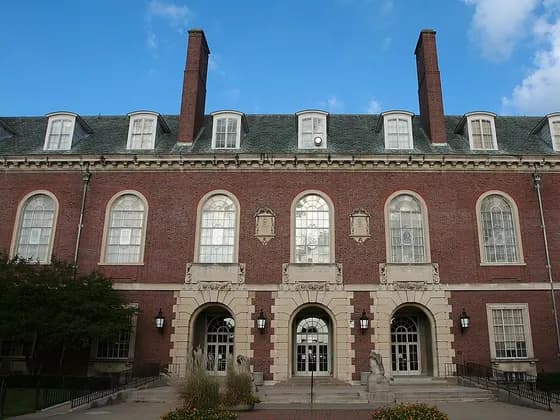
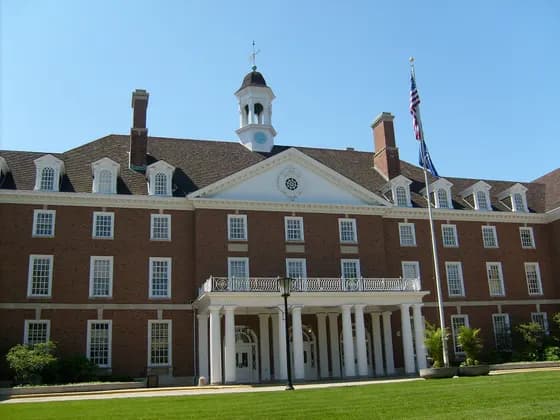
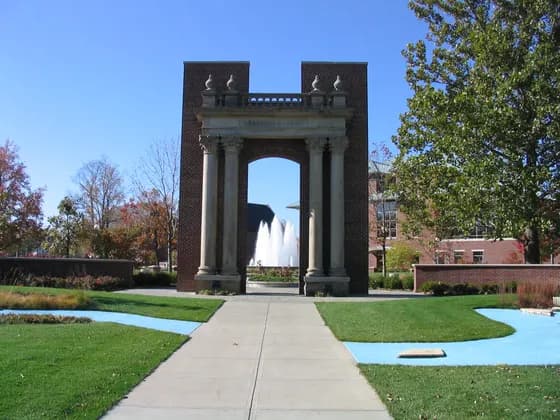
Photo: Beyond My Ken · CC BY-SA 4.0 · cropped
Photo: Dori · CC BY-SA 3.0 us · Photo: Raymond Cunningham · CC BY 2.0 · Photo: Dori · CC BY 2.0
The Carle Illinois College of Medicine MD program at a glance (2027 entry)
Carle Illinois College of Medicine, usually called Carle Illinois or CI MED, offers a four-year MD program on the University of Illinois Urbana-Champaign campus. It was created in 2015 as a partnership between the university and Carle Health, the Urbana-based health system, and its first class of 32 arrived in July 2018. It is a separate school from the University of Illinois College of Medicine, which the Liaison Committee on Medical Education (LCME) lists as its own program in Chicago.
The curriculum, which the school calls the Illinois Model for Medical Education, rests on three pillars: basic sciences, clinical sciences, and engineering and innovation. Five threads run through all four years: bioethics and medical humanities, engineering and innovation, health systems, lifespan health, and the social and structural determinants of health. In the 64-student class that entered in July 2026, 56 percent were engineers.
Foundational Science, the pre-clerkship (pre-clinical) phase, runs from July of Year 1 until early March of Year 2. Its organ-system courses are pass/fail and built around small-group patient cases. The phase ends with your deadline for Step 1, the first of the three United States Medical Licensing Examination (USMLE) exams. Patients come early: Introduction to Clinical Practice takes you into clinic weekly from your first weeks, and from Year 2 you see your own patients one evening a week in a family medicine clinic.
Clerkships, the core clinical rotations on hospital and clinic teams, start in March of Year 2. They fill a 12-month Clinical Immersion year at Carle Foundation Hospital in Urbana and Carle BroMenn Medical Center in Normal. Alongside them, the IDEA (Innovation, Design, Engineering and Analysis) course has you turn problems from the wards into projects with engineering partners. The final year of about 14 months adds a sub-internship, where you work like a first-year resident, plus electives, away rotations (electives at other institutions) and a capstone or data science project.
| Degree | MD |
|---|---|
| Program length | 4 years (twelve semesters), with graduation in May |
| Curriculum | Illinois Model for Medical Education: basic science, clinical science, engineering |
| Class size | 64 in the class that entered in July 2026 |
| Teaching style | Problem-based learning in groups of eight, plus team-based learning |
| Anatomy | Lab with online dissection guides, table tests and practicals |
| First patient contact | First weeks of Year 1, in Introduction to Clinical Practice |
| Clinical sites | Carle Foundation Hospital, Urbana; Carle BroMenn Medical Center, Normal |
| Step 1 timing | Year 2, before clerkships: late February or early March 2029 on current schedule |
| Grading | Pass/fail before clerkships; clerkships graded Honors, Satisfactory or Unsatisfactory |
What makes the Carle Illinois College of Medicine MD program different
Scientists, clinicians and engineers design the courses together
The school says its courses are designed and co-directed by teams that include a basic scientist, a clinician and an engineer. In Medical Engineering Discovery and Innovation (MEDI) sessions you study a medical topic through engineering, such as blood pressure and modeling in a 2023 sample week.
Innovation projects that start on the wards
In the IDEA course you meet engineering partners during clerkships to turn problems you see into ideas. One can become your capstone, for which you recruit and lead Grainger College of Engineering students and Gies College of Business consultants to build a prototype. Teams in 2026 built an assisted-birth tool and a cooling wrap for oxygen-deprived newborns.
Your own continuity patients from Year 2
From the start of Year 2 to the end of the clinical immersion year, about 20 months, you act as a supervised primary care physician for your own panel of patients. Following the same people's chronic conditions over time is the point of the Family Medicine Continuity Clinic.
Clerkships start in March of Year 2
Because clerkships begin right after the Step 1 deadline, you finish all seven by March of Year 3, leaving a final year of about 14 months.
A pod of eight for all four years
You join an Innovation Pod of eight students that stays together for all four years, mentored by basic science, clinical and engineering faculty.
How Carle Illinois College of Medicine teaches medicine
Teaching draws on faculty from 10 colleges of the University of Illinois Urbana-Champaign and on Carle Health clinicians. Most Foundational Science courses are organized by organ system, so physiology, anatomy and pharmacology are learned together around a patient's case. The school's example: while you learn how the heart works, you also learn to examine a heart, read the data and follow a patient into cardiac rehab.
Problem-based learning is the backbone of these courses. Each week your small group works through one or two real cases and decides together what it needs to learn. After student feedback, the school cut these sessions from three to two a week and reduced the learning issues and assignments attached to them. Team-based learning runs in most courses, alongside active learning labs, flipped classrooms and lectures.
Engineering runs through the program: MEDI sessions, the engineering and innovation thread, and the IDEA course, which starts in Year 1 on the 2026-27 calendar and runs through the clinical immersion year. Interprofessional simulations put you alongside other health professionals, for example in emergencies or surgical teams.
The ways you will learn
| Problem-based learning (BiCEP) | BiCEP stands for Basic Science Integrated with Clinical, Engineering and Professionalism. One facilitator leads your group of eight through each case and scores your knowledge, skills and behavior on a rubric. Attendance is required. |
|---|---|
| Team-based learning | You prepare in advance, take a readiness test alone and then as a team, and finish with an ungraded application exercise. Your score is 60 percent individual and 40 percent team. |
| Lectures, mini-cases and integrated sessions | Hour-long lectures cover topics such as EKGs and antiarrhythmic drugs, and mini-case sessions apply them. Integrated sessions join disciplines, and some courses add simulation workshops and escape rooms. |
| Clinical skills and standardized patients | In Introduction to Clinical Practice (ICP) you learn history taking and examination in clinic and with standardized patients, people trained to portray a patient and assess your performance. You may meet a case first in your problem-based learning group, then the patient in the simulated clinic, then again in a later case. |
| Simulation | At the Jump Simulation Center you train on manikins, task trainers and virtual reality. In 2026 a student-built electronic health record, Project EHR, was piloted with first- and second-year students, who placed orders during simulated cases. |
A typical week on the Carle Illinois College of Medicine program
The school's Second Look page links two sample weeks of cardiovascular teaching from autumn 2023. They show the rhythm of a pre-clerkship week, though timetables change from year to year.
Mornings held the classroom work: BiCEP from 8 to 10 on Mondays and Wednesdays, plus hour-long lectures and mini-cases. Each half of the class had one anatomy lab a week, on Tuesday or Thursday; in the first sample week the other half took an EKG session at the same time. Afternoons from Monday to Thursday were set aside for physical diagnosis in ICP, and Friday afternoons were left open.
School policy caps scheduled contact hours at 32 a week, and contact hours plus required preparation at 50, for classroom courses, ICP and Career Boot Camp. Each week must also keep at least two four-hour blocks free for self-directed learning.
- Wednesday: BiCEP, a mini-case session and a pharmacology lecture on antiarrhythmic drugs.
- Friday: lectures on pericardial disease and on how blood vessels regulate blood pressure, an anatomy table test, then Innovation Grand Rounds over lunch.
How anatomy is taught at Carle Illinois College of Medicine
Anatomy is part of the Foundational Science courses rather than a course of its own. Most courses include an anatomy lab practical, and practicals run into Year 2: the 2025-26 exam schedule has one in Human Development and Reproductive Health. Weekly table tests are formative, meaning practice with feedback, and cannot be made up if you miss one.
The school lists online dissection guides with images among its curriculum updates, along with a longer anatomy ethics discussion in the Foundations course. Older news adds detail: a 2022 story said the lab begins within the first month, and a 2021 essay by a member of the first class described a year and a half of dissection.
Each class has held a memorial service for its donors at the end of its anatomy teaching, organized largely by students, with music, writing and art (school news, 2021 and 2022). Advanced Anatomy offers intensive cadaver dissection tied to your clinical interest, and Advanced Anatomy for Teaching trains you to teach in the lab. A virtual reality elective pairs dissection of a region you choose with VR.
When you first meet patients at Carle Illinois College of Medicine
ICP starts in your first weeks and runs until December of Year 2; on the 2026-27 calendar its first day was July 20, 2026, two weeks after orientation began. It opens with the basics of clinical work, such as taking a simple history and vital signs, understanding the team and talking with patients. It builds to full histories and physical exams, preoperative assessments and routine physicals. In Year 1 you practice physical diagnosis in clinic each week with the same physician preceptor.
From the start of Year 2 you also join the Family Medicine Continuity Clinic at Carle Champaign on Curtis, one evening a week, and stay until the end of the clinical immersion year. Under supervision, with responsibility growing over time, you do the work of a primary care physician for a panel of patients, managing chronic and acute problems. Missed sessions must be made up on your usual clinic weekday.
The Discovery Learning period at the end of Year 1 offers a Clinical Immersion option. It lets you spend time in one specialty, seeing how its doctors work and how patients experience care.
The Carle Illinois College of Medicine curriculum, year by year
- Year 1
Foundations and the first organ systems
Year 1 opens with a week of orientation to the profession and a five-week Foundations course. Six organ-system courses follow, with ICP running alongside, and the year ends in June with the six-week Discovery Learning period, which runs into July.
- Foundations covers genetics, behavioral health, biochemistry, molecular and cell biology, histology, physiology, microbiology, immunology, pathology, pharmacology, anatomy and embryology, and epidemiology, with clinical context for each.
- Cardiovascular (6 weeks), an intersession week for study and assessment, Respiratory (5 weeks) and Renal (6 weeks, including fall break).
- After winter break: Clinical Neuroscience (8 weeks), which also covers psychotic, mood and anxiety disorders; Musculoskeletal and Integumentary System (8 weeks, with spring break); and Digestion, Nutrition and Metabolism (6 weeks).
- Cases center on common conditions, such as heart failure in Cardiovascular or asthma in Respiratory.
- OSCEs (Objective Structured Clinical Examinations) have you rotate through timed stations, each testing one clinical task. You sit a formative practice OSCE in August, mini-OSCEs near the end of most courses, and ICP OSCEs in January and May to June.
- Two ungraded progress tests from the National Board of Medical Examiners (NBME), in December and May.
- Year 2 (July to March)
The last courses, then Step 1
Year 2 finishes Foundational Science and prepares you for USMLE Step 1. The Family Medicine Continuity Clinic starts at the beginning of the year.
- Foundations, Part II (4 weeks), then Human Development and Reproductive Health (9 weeks with an intersession week): genetics, reproductive endocrinology, development across the life cycle, and sexual and reproductive health.
- Hematology, Oncology, Infection and Immunity (9 weeks, including fall break), covering common cancers, anemias, leukemias and lymphomas, and infections from pneumonia to HIV.
- Multisystem Conditions (3 weeks), where small groups tackle complex conditions you may meet in clinic.
- Synthesis and Summary (4 weeks), a review of the basic sciences organized by organ system, then two weeks of dedicated Step 1 study before the deadline (March 3 in 2027).
- ICP OSCEs 3 and 4 in September and November, and the third progress test in the fall.
- Clinical Immersion (March of Year 2 to March of Year 3)
Seven core clerkships
This 12-month year runs in ten five-week blocks, with your clerkship order set by lottery. You work on hospital and clinic teams, keep your continuity clinic evening and meet engineering partners in the IDEA course alongside each block.
- Internal medicine (10 weeks): ward work with residents and attending physicians, daily rounds and admitting new patients with the team.
- Surgery (10 weeks): caring for patients before and after operations, and assisting in the operating room.
- Five weeks each of family medicine, pediatrics (split between inpatient and outpatient care), obstetrics and gynecology, neurology and psychiatry.
- A 2025 school story described drug court, forensic psychiatry and brain stimulation (TMS) in the psychiatry clerkship, with outpatient addiction medicine added from March 2025.
- A five-week block for electives, IDEA, continuity clinic and vacation; during clerkships, electives normally fit only in that block.
- Each clerkship ends with an NBME shelf exam, a national subject exam in that specialty, with a practice shelf halfway through; each block also ends with an OSCE.
- Duty hours are capped at 80 a week averaged over four weeks, with at most 16 hours in a row on required clerkships and one day off in seven.
- Final Year (March of Year 3 to May of Year 4)
Sub-internship, electives and your project
The final year starts in March of Year 3, straight after clerkships, and lasts about 14 months until graduation in early May. Most of it is five-week elective blocks, built around the requirements below.
- The Gateway OSCE, a clinical skills exam in the first elective blocks, with dates still to be set; you must pass it to graduate.
- Step 2 CK, the USMLE's clinical knowledge exam, by July 31.
- At least one four-week sub-internship, and 30 credit hours of electives, at least 20 of them clinical, at Carle Illinois or away.
- Residency applications through ERAS, the Electronic Residency Application Service, are due in September, and Match Day, when you learn where you will do residency (specialty training), comes in March.
- A Capstone Project or Data Science Project, due March 31 during Innovation Week.
- Career Boot Camp (2 weeks) in late April and early May, with workshops and simulation to prepare you for residency, plus career planning.
- Advanced Cardiac Life Support (ACLS) or Pediatric Advanced Life Support (PALS) certification valid through graduation.
How you are assessed at Carle Illinois College of Medicine
Foundational Science courses are graded Satisfactory or Unsatisfactory, which is pass/fail. Honors exists only in the required clerkships, where each clerkship sets its criteria so that about 20 percent of students earn it. Electives and sub-internships are pass/fail. A grade of Satisfactory after Remediation (SR) shows you passed after making up a failure.
Where a foundational course uses quizzes, they count toward your grade, with three attempts and the best score kept. Every course ends with a written exam on its last Friday, and courses longer than six weeks add a midterm. These run through NBME's Customized Assessment Services or another platform under NBME proctoring rules, with an individual performance report afterward.
The three NBME progress tests are Comprehensive Basic Science Examinations: ungraded, with an individual report each time. For summative OSCEs, the high-stakes ones that count, you must pass every skill tested, with up to three attempts per station. Each clerkship block ends with an OSCE, and the Gateway OSCE follows the clinical immersion year.
Each clerkship's NBME shelf exam counts toward your grade. You need to score at or above the national 5th percentile, and the shelf score needed for Honors can rise across the year. Faculty also add written comments, and you get formal feedback midway through every required course or clerkship of four weeks or more.
The USMLE is the exam series state medical boards use in licensing. Step 1, on the basic sciences, has been pass/fail since January 26, 2022, and Step 2 CK tests clinical knowledge; Carle Illinois requires you to pass both to graduate. Step 1 is due by a deadline before the Clinical Immersion year (March 4 in 2026, March 3 in 2027), and Step 2 CK by July 31, early in the final year.
In August 2026 the USMLE program announced a move to designated testing dates from January 2029, with Step exams offered less often each year. Its June 2026 notice had named 2028. On the current schedule, a student entering in July 2027 would face a Step 1 deadline in late February or early March 2029, just after the switch. The Step 2 CK deadline would fall around July 31, 2030, with both dates projected from the 2025-26 and 2026-27 calendars, the two the school has posted.
- Fail a summative written exam and you get one retake. If that fails, a remediation plan follows; success earns SR, and an unsuccessful plan goes to the Student Progress and Promotions Committee.
- Miss the Step 1 deadline and you can still start clerkships, but you must pass Step 1 to enter the final year, and graduation may be delayed.
- You must pass Step 1 within three years of starting, and complete the MD, including Step 2 CK, within six years.
- The USMLE program has asked schools to review rules that restrict when students take Step exams, so these deadlines may change.
- The LCME accredits MD programs in the United States. For MD students, LCME accreditation is what makes you eligible to sit the USMLE; DO students and international graduates qualify through other routes.
- The LCME directory, updated October 14, 2026, lists Carle Illinois as fully accredited, first accredited in 2017, with its next survey in 2027-28. Full accreditation came in March 2025, after provisional accreditation in 2021.
Carle Illinois College of Medicine clinical rotations: where you will actually train
Carle Health, the school's founding clinical partner, serves nearly 2 million people across Illinois and western Indiana and provides the clinical experiences in all seven clerkship specialties. Its flagship, Carle Foundation Hospital in Urbana, has 489 beds. It is a Level I Trauma Center, the highest level of trauma care, and a certified Comprehensive Stroke Center.
Carle BroMenn Medical Center in Normal, described in 2022 as a 200-bed Level II trauma center, became a second clerkship site in 2023. The directors page lists BroMenn leads for internal medicine, surgery, obstetrics and gynecology, neurology and psychiatry, and Urbana leads for all seven clerkships. In the clinical year that began in March 2023, 17 of 44 students were scheduled to do at least one clerkship at BroMenn.
A 2022 article said students at BroMenn would keep their continuity clinic patients, and the school has since added study and lounge space for them there. Clinical sites may be up to an hour's drive each way, and you arrange your own transport, so plan on a car.
Your clerkship order is set by lottery. You can ask to change your clerkship track, but approval is not guaranteed, and a change can push a clerkship into the final year and affect away-rotation eligibility.
Other sites appear in dated sources. A March 2025 story placed psychiatry students at OSF HealthCare's inpatient clinic or on Carle Health's psychiatric consult service. A May 2024 list of contacts for reporting exposures at affiliated clinical sites names Gibson Hospital, OSF HealthCare, Christie Clinic, Promise Health Care and Sarah Bush Lincoln alongside Carle locations. It is a contact list, not a rotation schedule.
Home base, with Urbana leads for all seven clerkships and the continuity clinic from Year 2.
- Carle Foundation Hospital, Urbana
- Family Medicine Continuity Clinic, Carle Champaign on Curtis
Clerkships in internal medicine, surgery, obstetrics and gynecology, neurology and psychiatry since 2023.
- Carle BroMenn Medical Center, Normal
Final-year electives and sub-internships, once you have passed every required clerkship.
- Host institutions in the US and abroad, through the Visiting Student Learning Opportunities (VSLO) system or direct arrangement
Electives, selectives and away rotations at Carle Illinois College of Medicine
Discovery Learning gives you six weeks at the end of Year 1 for electives, immersion experiences or vacation. The school's Discovery Learning page lists four options: Global Studies, ending in the Global Community Immersion Program; Clinical Immersion in a specialty; Research Immersion with university researchers; and Self-designed Study with a mentor.
Newer school sources use another name. The school's research updates page says Discovery Learning has been revamped as MORE3, with expanded opportunities, and its away-rotation policy calls these weeks the More3 period, into which any outside research must fit. The 2026-27 calendar still labels them Discovery Learning electives and/or vacation.
The final year centers on electives: 30 credit hours, at least 20 of them clinical, with the rest open to research, engineering or other approved work. You can take standing Carle Illinois electives, design your own with a faculty supervisor, or go elsewhere. The 2026-27 university catalog runs from Rural Surgery at a smaller community hospital and Addiction Medicine, including drug court in Champaign County, to Medical Device Product Development and Artificial Intelligence in Health.
You need at least one four-week sub-internship; extra ones count as electives, up to two in any specialty. The catalog lists sub-internships in general surgery, internal medicine, pediatrics, family medicine, neurology, obstetrics and gynecology, urology, anesthesiology, and inpatient and consult-liaison psychiatry.
Away rotations are arranged through VSLO, run by the Association of American Medical Colleges (AAMC), or directly with the host. Hosts can be in the US or abroad. To go, you must be in good standing and have passed every required clerkship, and the school needs an affiliation agreement with the host. A sub-internship can be done away if the host lists it as one and it meets the school's core features.
Dual degrees and research years at Carle Illinois College of Medicine
The MD/PhD Medical Scholars Program combines the Carle Illinois MD with a PhD from any doctoral program at the University of Illinois Urbana-Champaign. Fields go beyond the biomedical sciences to engineering, the physical sciences, humanities and social sciences. You can apply once you are in the MD program. In Year 1 the Medical Scholars Program advises interested students as they explore PhD programs and potential advisors, and applications follow around the end of Year 1 or early in Year 2.
You finish the pre-clerkship curriculum and pass Step 1 before starting graduate work, then return for the Clinical Immersion year and final year. Up to 12 credit hours of medical coursework can count toward the PhD, and depending on your thesis the school may waive the capstone or data science requirement.
School policy also covers other degrees. If you start and finish a master's, PhD or similar degree after enrolling, from any institution, and it requires a thesis or similar deliverable, you can petition to waive the non-clinical elective requirement.
You must pass Step 1 before starting the degree, and leave taken for it, or for a graduate certificate, does not count toward the six-year limit. Carle Illinois helps run an online graduate certificate in Healthcare Innovation, Design, and Entrepreneurship (HIDE): three courses, from spotting needs to launching ventures, aimed at graduate students in medicine and others.
Every student completes a scholarly project: the Capstone Project, which grows out of the IDEA course, or the Data Science Project. In the data science route you pose a data-driven clinical question, find and analyze clinical or molecular data, and learn the rules on human subjects protection and data privacy. A 2026 team analyzed language in radiology reports to see whether it predicted complexity in orthopedic trauma.
Research support includes funding beyond the two projects, a REDI program with statistician support, a Director of Student Research and a yearly mentor-matching session at the MEdX conference. Clinical research mentors, physicians from a range of specialties, can guide your research and offer clinical projects; the school lists ten in October 2026. Each new student also receives a Healthmaker Coin, a restricted $10,000 endowment for research, innovation and prototyping (school news, July 2026).
Facilities and support at Carle Illinois College of Medicine
Where you will learn
Simulation happens at the Jump Simulation Center, in the lower level of Everitt Laboratory at 1406 W. Green Street, Urbana, also home to the Department of Bioengineering. Launched with a $10 million gift from Jump Trading, it provides all of the college's simulation training.
It has an ICU room with a working ventilator and code carts, and an operating room with a scrub station and surgical lights. There are also four patient rooms for adult or pediatric cases, a skills lab of task trainers, and four virtual reality stations for intubation, ECMO (a form of life support), sepsis and virtual anatomy. Exam rooms have two video cameras, so sessions can be watched live or reviewed later from your own computer.
Problem-based learning rooms are in the Learning Resource Center of the Medical Sciences Building, 506 S. Mathews Avenue, Urbana, which also has the MSB MakerSpace for early prototyping. You can also use the Siebel Center for Design, MechSE Makerworks, the Health Maker Lab network and the AxisMed Biomedical Pre-Incubator. Students have study and lounge space at Carle's Forum, and a workstation on wheels is reserved for them on Labor and Delivery.
Support while you study
Innovation Pods work like learning communities: small groups built for support and mentoring. You join a pod of eight students at the start, and it stays together for all four years, meeting regularly. Pod Mentors come from basic science, clinical and engineering faculty.
Each pod also has assigned clinical and student support advisors, and access to student, resident and retired faculty advisors. Pods are named after people linked to the university, such as Paul Lauterbur, whose work made MRI possible.
Thrive is a weekly, student-led 50-minute wellness session covering test-taking, career development, burnout prevention and stress management. In the clinical immersion year you also get three wellness days, no more than one per clerkship, and the calendar includes a fall Wellness Retreat.
A Director of Student Wellness, a licensed clinical social worker, offers emergency triage, case management and free therapy. Therapy is mostly short term but has no fixed session limit, and the therapist plays no part in assessing students. Referrals for psychiatric care go to providers where medical students are not rotating, to protect your privacy.
Peer Educators, current students at various stages of training, run group and one-to-one tutoring in foundational sciences, clinical skills and study skills. Academic support staff add time-management modules and a Step 1 roadmap, and the school extended students' UWorld question bank subscription for Step 2 CK and shelf study from 180 to 360 days.
Clinical career advisors and intranet specialty profiles, which list recommended electives and a Carle Health specialist to contact, help you plan for residency. A confidential Ombudsperson, who reports to the dean, holds office hours at Carle's Forum.
Is the Carle Illinois College of Medicine program right for you?
This program may suit you if
- You want engineering, design and data built into your MD, with project work running from the IDEA course to a final-year capstone or data science project.
- You learn well by working through patient cases in a group of eight, with team-based learning, rather than mainly from lectures.
- You want clinical work early: weekly clinic in Year 1, your own continuity patients from Year 2 and clerkships from March of Year 2.
- You would like a class of about 64 and a pod of eight that stays with you for four years.
- You want a final year of about 14 months for a sub-internship, electives and away rotations in the US or abroad.
Things to think about
- You need your own transport: clinical sites can be up to an hour's drive each way, and some clerkships may be in Bloomington-Normal.
- Step 1 comes early, before clerkships in Year 2: on the current schedule, late February or early March 2029 for a 2027 entrant, just after the USMLE's switch to designated testing dates.
- Clerkships are not pass/fail: each sets Honors criteria for about 20 percent of students, and NBME shelf exams count toward your grade.
- Project work comes on top of clinical learning, from the IDEA course to the capstone or data science project.
- Your clerkship order is set by lottery, and requests to change it are not guaranteed.
Carle Illinois College of Medicine MD program — frequently asked questions
Applying to Carle Illinois College of Medicine?
How to get into Carle Illinois College of Medicine
Prerequisites, MCAT, AMCAS personal statement, secondaries and interview, step by step.
Open the guide →Carle Illinois College of Medicine admissions profile
MCAT and GPA profile, acceptance rate, interview format and key dates.
See the profile →Compare Carle Illinois College of Medicine with other schools
Put the teaching style, anatomy teaching and clinical sites next to another school.
Open the comparison →Prepare for the Carle Illinois College of Medicine interview
Format breakdown, school-specific sample questions and prep tips from tutors who interviewed here.
Read the guide →Where this Carle Illinois College of Medicine program guide came from
This guide was written from 70 official sources — Carle Illinois College of Medicine's own program pages and curriculum documents, plus the accreditor and the hospitals and health systems the school trains students in where they publish detail — read on 2026-10-19, then checked claim by claim against those sources.
- Carle Illinois: MD Curriculum (Illinois Model for Medical Education)
- Carle Illinois: Program Schedule
- Carle Illinois Academic Calendar AY2026-2027 (revised July 9, 2026)
- Carle Illinois Academic Calendar AY2025-2026, with exam schedules (revised November 14, 2025)
- University of Illinois Urbana-Champaign 2026-2027 Academic Catalog: MD - Doctor of Medicine
- University of Illinois Urbana-Champaign 2026-2027 Academic Catalog: Medical Scholars Program (MD-PhD)
- Carle Illinois: Academics
- Carle Illinois: Active Learning Environment
- Carle Illinois: Clerkship
- Carle Illinois: Innovation Opportunities (IDEA, Data Science and Capstone projects)
- Carle Illinois: Discovery Learning
- Carle Illinois: Faculty Course and Clerkship Directors
- Carle Illinois: Curricular Threads
- Carle Illinois: Standardized Patient Program
- Carle Illinois: Tutoring
- Carle Illinois: Healthcare Innovation, Design, and Entrepreneurship (HIDE) Graduate Certificate
- Carle Illinois: Overview
- Carle Illinois: Partnerships (Carle Health)
- Carle Illinois: LCME Accreditation
- Carle Illinois: Curricular Updates (You Said, We Did)
- Carle Illinois: Student Affairs and Academic Affairs Updates
- Carle Illinois: Student Spaces Updates
- Carle Illinois: Research Updates (Discovery Learning renamed MORE3)
- Carle Illinois: MD/PhD Medical Scholars Program
- Carle Illinois: FAQ (transport to clinical sites)
- Carle Illinois: Jump Simulation Center
- Carle Illinois: Jump Simulation Center spaces and suites
- Carle Illinois: Facilities for Innovation and Entrepreneurship
- Carle Illinois: Opportunities to Innovate
- Carle Illinois: Student Research
- Carle Illinois: Clinical Research Mentors (ten listed, October 2026)
- Carle Illinois: Wellness Program (Innovation Pods and Thrive)
- Carle Illinois: Innovation Pods
- Carle Illinois: Wellness Services and Resources
- Carle Illinois: Office of the Ombudsperson
- Carle Illinois: Capstone Innovations
- Carle Illinois: More 2026 Capstone Innovations
- Carle Illinois: Greeley Problem-Based Learning Room (dedicated January 2023)
- Carle Illinois news: Clinical reach expands to Carle BroMenn (December 13, 2022)
- Carle Illinois news: Expansion of clerkships to BroMenn (July 31, 2023)
- Carle Illinois news: Addiction medicine and rural psychiatry experience (March 6, 2025)
- Carle Illinois news: Class of 2025 cadaver donor ceremony (October 31, 2022)
- Carle Illinois news: Heart Inlets, a student essay on the anatomy lab (May 11, 2021)
- Carle Illinois news: Class of 2030 begins (July 7, 2026)
- Carle Illinois news: Full LCME accreditation (March 7, 2025)
- Carle Illinois news: Student-designed electronic health record in simulation training (January 14, 2026)
- Carle Illinois: Sample Weeks Schedule (sample weeks from autumn 2023)
- Carle Illinois College of Medicine 2025 Annual Report
- Carle Illinois: Clinical Site Exposure Contacts list (May 2024)
- Carle Illinois policy APS-31: USMLE Step 1 and Step 2 Examinations (effective July 6, 2026)
- Carle Illinois policy APS-16: Assessment, Assessment Completion, and Grading (effective July 1, 2026)
- Carle Illinois policy APS-6: Promotion and Graduation Requirements (effective July 6, 2026)
- Carle Illinois policy APS-30: Elective and Selective (effective March 16, 2026)
- Carle Illinois policy APS-37: Away Rotation/Externship Eligibility (effective September 4, 2024)
- Carle Illinois policy APS-17: Reassessment and Remediation (revised July 16, 2025)
- Carle Illinois policy APS-36: Elective Credit for Advanced Degrees (effective June 17, 2026)
- Carle Illinois policy APS-33: MD Degree Time Limitations (effective September 20, 2023)
- Carle Illinois policy APS-48: Student Contact Hours and Workload (effective February 7, 2024)
- Carle Illinois policy APS-49: Student Clinical Duty and Educational Hours (effective February 7, 2024)
- Carle Illinois policy APS-7: Attendance, Absence, and Vacation (effective March 9, 2026)
- Carle Illinois policy APS-12: Formative Feedback (revised September 20, 2023)
- Carle Illinois policy APS-18: Narrative Assessment (revised August 18, 2021)
- Carle Illinois policy SWH-4: Counseling and Wellness (effective April 3, 2026)
- Carle Illinois policy SWH-8: Preventing Health Services Providers from Academic Assessment of Medical Students (effective August 22, 2024)
- LCME: Accredited Programs directory (updated October 14, 2026)
- USMLE: Updated Timeline for Designated Testing Dates, transition in January 2029 (August 6, 2026)
- USMLE: Designated Testing Dates Information Hub
- USMLE: Transition to Limited Testing Dates Each Year Starting in 2028 (June 23, 2026 notice, since updated)
- USMLE: Step 1 Transition to Pass/Fail Only Score Reporting
- USMLE Bulletin of Information: Eligibility
Curricula are restructured between cycles. Anything here that decides your application — how anatomy is taught, a clinical campus assignment, a required research year — should be confirmed against the official page for your entry year.
Applying to Carle Illinois College of Medicine?
We help US applicants with MCAT strategy, the AMCAS personal statement, secondary essays and interview prep — everything you need for a competitive Carle Illinois College of Medicine application.