
The University of Georgia School of Medicine MD program
What you actually study, and where you will be
University of Georgia School of Medicine's MD is a 4-year program taught through case-based learning in an integrated curriculum, with patient contact from Year 1 and clinical rotations in Athens, Northeast Georgia, Atlanta and rural southwest or southeast Georgia (2027 entry). The University of Georgia's new MD program took its first class, 64 students, in July 2026 on the Health Sciences Campus in Athens. In years 1 and 2 you learn the science through clinical cases in small groups, dissect in the anatomy lab and care for patients at Athens Free Clinic sites from your first weeks. The clerkship years are still being developed, with most rotations planned in Northeast Georgia, Atlanta and Athens, plus a rural rotation in year 3.
- Degree
- MD
- Length
- 4 years
- Teaching
- Integrated + Case-based learning
- Clinical contact
- Year 1


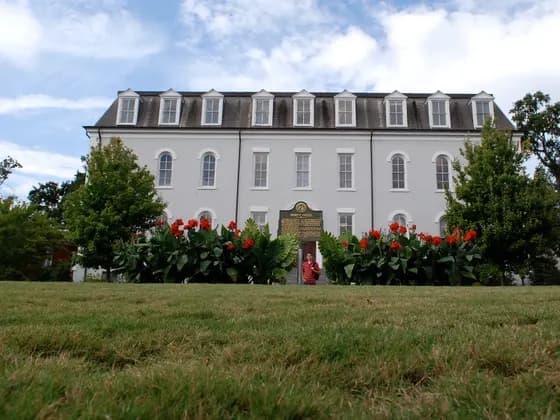

Photo: Quaerens-veritatem · CC BY-SA 4.0 · cropped
Photo: Michael Rivera · CC BY-SA 3.0 · Photo: Josh Hallett from Winter Haven, FL, USA · CC BY-SA 2.0 · Photo: DXR · CC BY-SA 4.0
The University of Georgia School of Medicine MD program at a glance (2027 entry)
The University of Georgia School of Medicine (UGA School of Medicine) offers a four-year Doctor of Medicine (MD) program on UGA's Health Sciences Campus in Athens, Georgia. It is a new, independent school, authorized by the University System of Georgia Board of Regents in February 2024. Its first class, the Class of 2030, has 64 students and began orientation on July 27, 2026, so if you enter in 2027 you join its second class.
The Liaison Committee on Medical Education (LCME), which accredits MD programs in the United States, granted the school preliminary accreditation on February 13, 2026. Preliminary is the first accredited stage for a new program, and a school may admit students only once it is granted. The LCME directory, updated October 14, 2026, lists the program as Preliminary, initial year 2026, with its next survey in 2027-28, the LCME's review for provisional accreditation. It lists the Medical College of Georgia at Augusta University as a separate program.
The first two years are the pre-clerkship (pre-clinical) phase: integrated organ-system courses in which you learn the science and clinical reasoning together through patient cases worked on in small groups. You dissect a human body donor with a team. Clinical Skills and Community and Population Health (CPH) run alongside every course, and CPH places you at an Athens Free Clinic site within the first few weeks.
Years 3 and 4 are the clerkship years. Clerkships are the core clinical rotations in the main specialties, where you learn as part of a clinical team. The school's clerkship page, last updated in August 2026, describes this phase as still being developed. Most rotations are planned in Northeast Georgia, Atlanta and in and around Athens, plus one rural rotation in year 3.
You must pass Step 1 of the United States Medical Licensing Examination (USMLE) to start year 3, and Step 2 Clinical Knowledge (CK) to graduate. The USMLE is the exam series used for medical licensure in the United States.
| Degree | MD, a four-year program: two pre-clerkship years, then two clinical years |
|---|---|
| Class size | 64 in the first class, the Class of 2030, which began in July 2026 |
| Main campus | Health Sciences Campus, Prince Avenue, Athens, Georgia |
| Teaching style | Integrated organ-system courses built around small-group clinical cases |
| Anatomy | Team-based dissection of a human body donor in years 1 and 2 |
| First patient contact | Year 1: Athens Free Clinic sites within the first few weeks |
| Clinical sites | Partners in Northeast Georgia, Atlanta and Athens, plus one rural rotation |
| Step 1 timing | End of year 2, in a six-week study period; pass before year 3 |
| Grading | Satisfactory/Unsatisfactory in years 1 and 2; A, B, C or F in clerkships |
| Accreditation | LCME Preliminary, initial year 2026; next survey 2027-28 |
What makes the University of Georgia School of Medicine MD program different
Community clinic work from your first weeks
Within weeks of starting, CPH puts you on a team led by physician faculty at one of the Athens Free Clinic's 12 community sites. You return to the same site every year, caring for people with complex health needs and barriers to care. Your team also designs, carries out and presents a research or advocacy project with that community.
A rural clerkship planned for every student
The school plans for each student to spend four to six weeks of year 3 at a rural partner, rotating through all the hospital's services. The aim is to see how different specialties are practiced in a rural setting. The named partner is Crisp Regional Medical Center in Cordele, in southwest Georgia; a southeast site is still to be determined.
A three-day road trip across Georgia at orientation
Orientation starts and ends on campus in Athens, with a three-day tour of the state in between, paid for by the school. In July 2026 the first class visited hospitals and colleges in Macon, Thomaston, Warner Robins, Dublin and Sandersville, meeting hospital leaders, physicians and community partners to learn about health disparities and outcomes.
Houses named for regions of Georgia
A House Reveal on the first day of orientation places you in one of five Houses, each named for a region of Georgia. Your House is your home base for all four years, led by Head of House faculty who mentor you throughout. Older students mentor newer ones, and the Houses compete in end-of-year House Games for the House Cup.
How University of Georgia School of Medicine teaches medicine
The pre-clerkship courses are integrated organ-system courses, with anatomy, small groups, clinical skills and community health built into each. Year 1 covers how the healthy body works, taught in a clinical context, while you start on clinical reasoning and skills. Year 2 turns to how disease develops and how it is diagnosed and managed. In years 3 and 4, learning on clinical teams takes over, and you are expected to work when your team works.
In year 1 your small group usually works through one case a week, with prompts that push you to explore everything from genes to society. In year 2 you typically take on two, moving faster and reasoning more independently. Large-group sessions support the small groups through lectures, workshops, panel discussions and flipped classrooms (you prepare first, then apply it in class). Most are optional unless marked required, but their content is tested.
Six curricular threads, each with a faculty lead, run through all four years inside courses and clerkships. They are evidence-based medicine; ethics, professionalism and professional identity formation; systems-based practice; technology in medicine; team-based healthcare; and serving Georgia and beyond. Technology in medicine, for example, covers digital tools, health information systems and artificial intelligence.
UGA Today, the university's news site, reported in July 2026 that students will also explore nine Georgia health challenges through the curriculum, research, service and clinical care. They are cardiovascular disease, diabetes and metabolic disease, cancer, maternal and infant mortality, mental and cognitive health, trauma, the health workforce shortage, infectious and zoonotic (animal-borne) disease, and respiratory health.
The ways you will learn
| Small-group learning (SGL) | Groups of seven to eight, each with a basic science facilitator and a clinical facilitator, work through a patient case revealed in segments across the week. You identify what you need to learn, study it and apply it to the next segment. Attendance is required, and faculty assessment of your contribution counts toward your grade. |
|---|---|
| Clinical skills sessions | Practice from week one in communication, history-taking, examination, clinical reasoning, documentation and presenting patients. In year 1 you work in groups of four with one preceptor, a clinician who teaches and supervises you. Sessions also cover basic procedures and ultrasound. |
| Standardized patients | People trained to portray a real patient's case consistently, giving the history and simulating signs such as pain or a cough. You interview and examine them as in a clinic. Some give feedback or score you, and graded encounters count toward course grades. |
| Simulation | Team scenarios with patient manikins, task trainers (models for practicing procedures), simulated clinical rooms and ultrasound, followed by a debrief, to prepare you for acutely ill patients. |
A typical week on the University of Georgia School of Medicine program
A typical pre-clerkship week has 20 to 32 hours of scheduled activities, 14 to 18 of them required. School policy caps scheduled work, including assignments done outside class, at 32 hours a week averaged over a course. No single out-of-class assignment should take more than 60 minutes.
In the school's sample year 1 week, small groups meet from 8 to 10am on Monday, Wednesday and Friday, with large-group sessions on most other mornings. Clinical skills come on Tuesday afternoon and anatomy lab on Thursday afternoon, in scheduled groups. Simulation takes place a couple of times a semester, on Thursday mornings. One Monday afternoon a month you work at your CPH clinic site, and Friday brings a weekly quiz and a quiz review.
The rest is unscheduled study time, alongside 1 to 6 hours of recordings and readings, which the school calls self-paced activities (SPAs).
How anatomy is taught at University of Georgia School of Medicine
Anatomy runs through the organ-system courses of years 1 and 2, using large-group sessions, self-paced activities, clinical correlation sessions, imaging, models and dissection. A director of anatomy oversees the curriculum, the lab and the human donor program.
In the lab you dissect a human body donor with a team. Each session opens with a short faculty introduction to the day's dissection, then faculty circulate to help while you identify key structures. The school notes that the donor is often one of your first teachers in medicine, and the lab teaches respect for the body and privacy for donors and, later, patients.
Fundamentals covers the back, breast and pectoral region, and Musculoskeletal the deep back, gluteal region, shoulder and both limbs. Brain & Behavior covers the head and neck, including the brain, spinal cord, skull and face. All three use Grant's Dissector, a dissection manual.
Lab practical exams, where you answer questions on specimens, count for 4% of the Fundamentals grade, 20% in Musculoskeletal and 12% in Brain & Behavior. Quiz and exam questions also test anatomy.
When you first meet patients at University of Georgia School of Medicine
Clinical skills teaching begins in your first week. Alongside history-taking, year 1 covers responding to patients' emotions, motivational interviewing (helping patients find their own reasons to change) and physical examination matched to each course's anatomy. In Musculoskeletal, the second course, you take vital signs on standardized and real patients.
Within the first few weeks, CPH takes you to the Athens Free Clinic. This primary care teaching clinic gives free care to the Athens community through 12 mobile clinic sites and the Clarke Middle Health Center. Each year you work 7 to 8 half-day clinics at your assigned site under supervision, prepared by CPH classes on topics such as trauma-informed care and health disparities.
Year 2 adds hospital encounters with real patients. You learn advanced examination and communication skills, including sensitive (intimate) examinations, and write up full histories and physicals (H&P write-ups) from your hospital visits. After Step 1 and a week of clinical orientation, year 3 puts you on clinical teams full time.
The University of Georgia School of Medicine curriculum, year by year
- Year 1
How the healthy body works
Year 1 runs from orientation in late July to mid-May, in five organ-system courses on normal structure and function, with Clinical Skills and CPH alongside. On the 2026-27 calendar, the only one the school has posted, classes run from August 3 to May 7, followed by a 10-week summer break.
- Fundamentals (MEDI 5151, 4 weeks, 9 credit hours): cell biology, homeostasis, histology and primers in genetics, microbiology, immunology, pharmacology and nutrition, with cases on burns and breast cancer. It includes a graded contribution to the class oath.
- Musculoskeletal (MEDI 5156, 7 weeks, 15 credit hours): the back and limbs, biomechanics and bone and muscle metabolism, with histories and examinations on standardized patients.
- Brain & Behavior (MEDI 5161, 8 weeks, 15 credit hours): the nervous system and behavioral health, from vision and hearing to sleep, mood and mental health disorders. You learn neurologic examination and how to work out where in the nervous system damage lies.
- Renal/Cardiopulmonary I (MEDI 5168) and GI/Endocrine/Reproductive (MEDI 5179), each 9 weeks and 20 credit hours.
- An end-of-year Objective Structured Clinical Examination (OSCE), a clinical skills exam set out as a series of stations, which you must pass.
- Your CPH team writes its project proposal and, where needed, seeks approval from an institutional review board (IRB), the committee that oversees research involving people.
- The Class of 2030 recited an oath it wrote itself at its White Coat Ceremony on August 29, 2026.
- Year 2
Disease, diagnosis and management
Year 2 turns to how disease develops and how it is diagnosed and managed, and clinical skills add hospital encounters with real patients. It ends with six weeks of dedicated study for USMLE Step 1, then a week of clinical orientation before clerkships.
- Hematology/Oncology (5 weeks, 11 credit hours), then Genitourinary System and Cardiopulmonary II (7 weeks, 15 credit hours each). Digestive & Endocrine Systems and Behavior & Brain follow (6 weeks, 12 credit hours each), then Multi-System Disorders (6 weeks, 11 credit hours).
- Behavior & Brain covers psychiatric conditions and diseases of the nervous system; Multi-System Disorders adds diseases of the skin and musculoskeletal system.
- Your CPH team carries out and evaluates its project, then presents it as a scholarly poster.
- You sit the Comprehensive Basic Science Examination (CBSE) twice to gauge your Step 1 readiness, and the school provides a practice exam voucher.
- A must-pass end-of-year OSCE.
- Year 3
Required clerkships, still being developed
The school describes year 3 as still being developed. On its four-year overview, required clerkships run from July, with a winter break, and the year closes with a Clinical Exploration block from about mid-May. Each student's sites and specialty order will vary.
- Required clerkships in specialties such as internal medicine, surgery, obstetrics and gynecology, psychiatry, family medicine, neurology and pediatrics.
- A planned rural clerkship of four to six weeks at a rural partner.
- Time for career exploration electives, rotations you choose to explore a specialty.
- In each clerkship, clinical performance evaluations and a National Board of Medical Examiners (NBME) subject exam, known as a shelf exam, count toward your grade; some add OSCEs or oral exams.
- Must-pass OSCEs, including an end-of-year OSCE you need to pass to start year 4.
- Clinical Skills and CPH continue through years 3 and 4 on the four-year overview.
- Year 4
Step 2 CK, electives and the Match
Like year 3, year 4 is still being designed. It opens with USMLE Step 2 CK, then combines required rotations with electives that prepare you for your chosen specialty. You also apply for residency, the specialty training that follows medical school. The school says years 3 and 4 aim to prepare students for a wide range of careers, from rural medicine and primary care to competitive residency programs and subspecialty training.
- Residency interviews, in a block before the winter break.
- Match Week, when the national Match places graduating students in residency programs.
- Transition to Residency, the capstone course after the Match that prepares you for internship, the first year of residency.
- To graduate you must pass all required clerkships and selectives (rotations chosen from a set of options), complete the elective minimum and pass Step 2 CK.
How you are assessed at University of Georgia School of Medicine
In years 1 and 2, courses are graded Satisfactory or Unsatisfactory, and grading is criterion-based, not on a curve. To pass, you need a final course score of at least 70% and a final exam score of at least 65%, with no rounding. An internal Honors designation needs 90% on both and an average rating of at least Proficient in the course's clinical skills and CPH activities. It appears in your Medical Student Performance Evaluation (MSPE), the summary sent with residency applications, but not on your transcript.
Each syllabus sets the weights: in Fundamentals, the final exam is 55% of the grade, small-group learning 20% and weekly quizzes 15%. Quizzes have about 30 questions and course exams usually 80 or more. Both use mostly NBME-style multiple-choice questions from the school's own bank, and exams are pitched for an average of 80% to 82%.
Clinical skills are also judged across each semester through evaluation rubrics and the OSCE, whose stations may use standardized patients, task trainers or simulation. CPH is judged through a portfolio of your team project, reflections, evaluations and a clinical log. To move up each year, you must pass every course, the OSCE and the portfolio, and meet proficiency standards in clinical skills and CPH.
Clerkships and clinical electives are graded A, B, C or F on your transcript, shown in the MSPE as Honors, Near Honors, Satisfactory and Unsatisfactory. An A needs a clerkship score of at least 90% and a shelf exam at or above the 75th national percentile. A B needs 80% and the 50th percentile, and a passing C needs 70% and the 5th.
USMLE Step 1 has been reported only as pass or fail since January 26, 2022. You take it in the six-week dedicated period after year 2 classes, and must pass it to begin year 3. You may be allowed to start clerkships with a score pending, but a fail takes you out until you pass. Step 2 CK comes at the start of year 4 and must be passed to graduate.
In August 2026 the USMLE program announced a move to designated testing dates from January 2029, with Step exams offered less often each year. Its June 2026 notice had named 2028. On the current schedule in the school's four-year overview, a 2027 entrant would sit Step 1 between mid-May and late June 2029 and Step 2 CK around July 2030. Both would fall after the change. The USMLE will publish each year's dates over a year ahead, will not offer Step 2 CK in certain months and encourages schools to review Step timing rules, so these dates could shift.
- In courses of four weeks or more, instructors who teach your small group of 10 or fewer for at least three sessions write a narrative assessment, a written account of your performance. Required clerkships include one on the final grade form.
- A shelf exam scored below the 5th percentile can be retaken after study; passing caps the clerkship grade at C, and a second fail means repeating the clerkship.
- Step 1 must be passed within 12 months of the end of the dedicated period, in at most three attempts. The school provides Boards and Beyond and First Aid for Step 1 to prepare.
- Alpha Omega Alpha is the national medical honor society. Once the school's chapter is recognized, students with Honors in at least 30% of pre-clerkship courses and a clerkship grade point average of at least 3.5 can apply.
University of Georgia School of Medicine clinical rotations: where you will actually train
In years 1 and 2 you are based in Athens, with clinical work at Athens Free Clinic sites and hospital visits in year 2. From year 3, clerkships and fourth-year electives follow a distributed model. Rather than training at one main hospital, you will rotate through partner hospitals and health systems in several parts of Georgia.
The school names five regions as central to its mission: North Georgia, Metro Atlanta, Piedmont, Southwest and Southeast. Most rotations are planned in three of them, at partners in Northeast Georgia, Atlanta, and in and around Athens. These include Northeast Georgia Health System in Gainesville, Piedmont Healthcare in Athens and Atlanta, St. Mary's Health Care System in Athens, and Northside Hospital and Children's Healthcare of Atlanta.
Each student will also do a year 3 rural rotation with a partner in the Southwest, where Crisp Regional Medical Center in Cordele is named, or the Southeast. The clerkship page, last updated in August 2026, says the school has partners in all five regions, though its map still shows the Southeast rural site as to be determined. It adds that more partners are under development.
The clinical affiliates page, updated in June 2026, lists 12 affiliates. Besides the six partners above, it names Elbert Memorial Hospital, Landmark Hospital of Athens, Ridgeview Institute of Monroe, Shepherd Center, Stephens County Hospital and Union General Health System.
Your base for years 1 and 2, and one of the three main clerkship regions.
- Piedmont Healthcare (Athens)
- St. Mary's Health Care System
- Athens Free Clinic community sites
One of the three main clerkship regions.
- Northeast Georgia Health System
One of the three main clerkship regions.
- Piedmont Healthcare (Atlanta)
- Northside Hospital
- Children's Healthcare of Atlanta
A site for the required year 3 rural rotation.
- Crisp Regional Medical Center
The other region for the rural rotation; the partner site is still to be determined.
Electives, selectives and away rotations at University of Georgia School of Medicine
Year 3 will include time for career exploration electives, rotations you choose to explore a specialty or gain experience in the one you have picked. The four-year overview ends the year with a block labeled Clinical Exploration. If you delay Step 1 by less than six weeks after clinical orientation, you may still graduate with your class, but you give up career exploration elective time.
Year 4 will mix required rotations with electives, and you need at least 12 weeks of electives to graduate. They are graded A, B, C or F. Grading exceptions for a course, such as an away elective at another institution, need approval from the Curriculum Oversight Committee. Your core specialty advisor helps you choose senior electives and away rotations.
Dual degrees and research years at University of Georgia School of Medicine
Research is part of the required curriculum. Through CPH, every student completes a community health scholarly project with a team and a community partner, developing an intervention for a local health problem over years 1 and 2. Teams may go on to present or publish their work at state, regional or national conferences.
Beyond that, the Office of Research supports projects from year 1 through four phases: explore, develop, discover and disseminate. The Medical Student Scholars Program (MSSP; the Medical Scholars Program in the handbook) offers students in good academic standing 8 to 10 weeks of research in the summer between years 1 and 2. You can work in Athens or elsewhere in the United States or abroad, then present at a research symposium.
The Georgia Clinical and Translational Science Alliance (GA-CTSA) links Emory University, Morehouse School of Medicine, the Georgia Institute of Technology and UGA. Through it you can earn a Master of Science in Clinical Research (MSCR), a one-to-two-year program, and graduate with a combined MD/MSCR. The school's FAQ also describes an optional research year between years 3 and 4.
On other dual degrees, the FAQ says the school is exploring the possibility and considering an MD/MPH and an MD/MBA. You would apply at the end of year 2 or start of year 3, take a leave of absence after year 3 for the second degree, then return for year 4.
A July 2026 UGA Today article describes a planned four-year capstone project. Each student will be assigned to one of five Georgia regions, which the article names as Appalachia, Metro Atlanta, Piedmont, Wiregrass and Coastal. Each regional group will explore its region and work with the community to find a real gap or need in health care. The group will develop a solution that draws on several fields, to be showcased at the end of year 4.
Facilities and support at University of Georgia School of Medicine
Where you will learn
The school is on UGA's Health Sciences Campus on Prince Avenue in Athens, shared with the UGA College of Public Health. The site was the State Normal School, an early teachers' college, from 1891 to 1932 and a U.S. Navy Supply Corps School from 1953 to 2005.
Russell Hall, built in 1974, holds classrooms, small-group and clinical skills rooms, a gross anatomy lab, a medical library and faculty offices. George Hall, the campus's only auditorium, hosts large lectures, and Carnegie Library is now a student center and digital library.
The new Medical Education and Research Building, 93,000 square feet, is planned as the school's main teaching building. Plans include active-learning classrooms, an anatomy lab, a simulation center, a clinical skills center, study and well-being spaces and a student lounge, with nearly a third of the space for biomedical research. It is scheduled for completion in December 2026, according to the school's campus page and UGA Today reports from July and August 2026. The school says the building will let it grow to 120 students per class.
The Medical School Library, part of UGA Libraries, is open 24 hours a day with a UGA ID, with databases such as PubMed, ClinicalKey and UpToDate.
Support while you study
Each student belongs to one of five Houses, named for regions of Georgia that the school's map labels Appalachia, Metro, Piedmont, Coastal and Wiregrass. In your first semester you meet one-on-one with the associate dean for student affairs, the academic success and financial aid teams, and your Head of House. The Dean of Students then holds individual sessions with you across the preclinical and clinical phases.
Before clerkships you are paired with a core specialty advisor, who later guides your residency application, from personal statements to interviews. The UGA Mentor Program pairs you with practicing physicians from UGA's alumni and community network, and the school gives its student-to-faculty ratio as three to one.
The Academic Success Program offers learning specialists and Step 1 preparation support, alongside near-peer tutoring. If you hit difficulty, a progress team can place you on extra support, an internal status that does not affect your academic standing. UGA's Counseling and Psychiatric Services (CAPS) can be reached around the clock, as can a Student Affairs team member on an emergency cell phone.
Students run a Student Leadership Council of five elected officers and can propose new clubs. The school is applying for chapters of the Alpha Omega Alpha and Gold Humanism honor societies, expecting recognition before its first class enters the clinical phase.
Is the University of Georgia School of Medicine program right for you?
This program may suit you if
- You want to care for patients within weeks of starting, at the same community clinic site through years 1 and 2.
- You learn well by working through cases in a small team guided by a scientist and a clinician.
- You want rural experience: every student is planned to spend four to six weeks at a rural partner in year 3.
- You want training focused on Georgia, from an orientation tour of the state to a planned capstone on a region's health needs.
- You would like to join a new school's second class, where students can propose new clubs and elect a five-officer Student Leadership Council while honor society chapters are being set up.
Things to think about
- The clinical years are still being planned: the school describes its clerkships as being developed, its partner list as growing and each schedule as subject to change.
- Accreditation is preliminary. The next LCME survey, listed for 2027-28, is the review for provisional accreditation, typically held when the school's first class is in year 2. Full accreditation is typically reviewed in that class's final year.
- Clerkships carry A, B, C or F letter grades on your transcript, and an A needs a shelf score at or above the 75th national percentile.
- Rotations are planned across Gainesville, Atlanta and Athens, plus a rural rotation in southwest or southeast Georgia, so expect to move between sites.
- Dual degrees are still being explored; if an MD/MPH or MD/MBA is central to your plans, check where things stand.
University of Georgia School of Medicine MD program — frequently asked questions
Applying to University of Georgia School of Medicine?
How to get into University of Georgia School of Medicine
Prerequisites, MCAT, AMCAS personal statement, secondaries and interview, step by step.
Open the guide →University of Georgia School of Medicine admissions profile
MCAT and GPA profile, acceptance rate, interview format and key dates.
See the profile →Compare University of Georgia School of Medicine with other schools
Put the teaching style, anatomy teaching and clinical sites next to another school.
Open the comparison →Prepare for the University of Georgia School of Medicine interview
Format breakdown, school-specific sample questions and prep tips from tutors who interviewed here.
Read the guide →Where this University of Georgia School of Medicine program guide came from
This guide was written from 55 official sources — University of Georgia School of Medicine's own program pages and curriculum documents, plus the accreditor and the hospitals and health systems the school trains students in where they publish detail — read on 2026-10-19, then checked claim by claim against those sources.
- UGA School of Medicine: Curriculum
- UGA School of Medicine: Four-Year Program Overview (PDF, updated October 2026)
- UGA School of Medicine: Pre-Clerkship Curriculum
- UGA School of Medicine: Year 1 and Year 2 course schedule (PDF)
- UGA School of Medicine: Typical Week for Year 1 (PDF)
- UGA School of Medicine: Year 1 Assessment Schematic (PDF)
- UGA School of Medicine: Clerkship Curriculum (updated August 2026)
- UGA School of Medicine: Curricular Threads
- UGA School of Medicine: Student Progress and Promotion
- UGA School of Medicine: Education FAQs
- UGA School of Medicine: Standardized Patient Program
- UGA School of Medicine: Curriculum Leadership, Staff, and Contacts
- UGA School of Medicine: Clinical Affiliates (updated June 2026)
- UGA School of Medicine: Accreditation
- UGA School of Medicine: Our Campus
- UGA School of Medicine: About
- UGA School of Medicine: Why Choose Us
- UGA School of Medicine: Student Research and Scholarship
- UGA School of Medicine: Resources, including the 2026-27 academic calendar
- UGA School of Medicine: Office of Student Affairs, Support and Houses
- UGA School of Medicine: Career Advising
- UGA School of Medicine: Professional Growth
- UGA School of Medicine: Celebrations, including orientation and the Georgia Road Trip
- UGA School of Medicine: Student Organizations and Honor Societies
- UGA School of Medicine: Meet the Office of Student Affairs Team
- UGA School of Medicine Student Handbook: Research and Scholarship
- UGA School of Medicine Student Handbook: Student Health, Well-being and Safety
- UGA School of Medicine: Student Academic and Professionalism Progress Flowchart (image)
- UGA School of Medicine: Grading Policy (approved April 2026)
- UGA School of Medicine: Pre-Clerkship Exam Assessment Policy
- UGA School of Medicine: Promotion and Graduation Policy (version of August 2026)
- UGA School of Medicine: Narrative Assessment Policy
- UGA School of Medicine: Monitoring Student Academic Workload (Pre-Clerkship Hours) Policy
- UGA School of Medicine: Attendance and Excused Absence Policy
- UGA School of Medicine: Remediation and Consideration of Suspension or Dismissal Policy
- UGA Bulletin 2026-2027: MEDI 5151 Fundamentals of Medicine
- MEDI 5151 Fundamentals syllabus, Fall 2026
- UGA Bulletin 2026-2027: MEDI 5156 Musculoskeletal System
- MEDI 5156 Musculoskeletal syllabus, Fall 2026
- UGA Bulletin 2026-2027: MEDI 5161 Brain and Behavior I
- MEDI 5161 Brain and Behavior syllabus, Fall 2026
- UGA Libraries: Medical School Library
- UGA Today: UGA School of Medicine granted preliminary accreditation (February 13, 2026)
- UGA Today: UGA School of Medicine welcomes inaugural class (July 28, 2026)
- UGA Today: UGA School of Medicine celebrates inaugural White Coat Ceremony (August 29, 2026)
- UGA Today: Progress continues on UGA School of Medicine (August 9, 2024)
- We Are Georgia (UGA): The Road to a Better Georgia, on the first class's orientation tour (August 2026)
- LCME: Accredited Programs directory (updated October 14, 2026)
- LCME: Accreditation Process Overview
- USMLE: Updated Timeline for Designated Testing Dates, transition in January 2029 (August 6, 2026)
- USMLE: Designated Testing Dates Information Hub (dates the January 2029 announcement August 6, 2026)
- USMLE: Transition to Limited Testing Dates Each Year Starting in 2028 (June 23, 2026 notice, since updated)
- USMLE: Designated Testing Dates FAQs (updated August 6, 2026)
- USMLE: Step 1 Transition to Pass/Fail Only Score Reporting
- USMLE Bulletin of Information: Eligibility
Curricula are restructured between cycles. Anything here that decides your application — how anatomy is taught, a clinical campus assignment, a required research year — should be confirmed against the official page for your entry year.
Applying to University of Georgia School of Medicine?
We help US applicants with MCAT strategy, the AMCAS personal statement, secondary essays and interview prep — everything you need for a competitive University of Georgia School of Medicine application.