
The Rush Medical College of Rush University Medical Center MD program
What you actually study, and where you will be
Rush Medical College of Rush University Medical Center's MD is a 4-year program taught through case-based learning in an integrated curriculum, with patient contact from Year 1 and clinical rotations in Chicago's Illinois Medical District and the wider Chicago area (2027 entry). Rush's MD has no lectures in its first two years: in courses built mainly around organ systems, you prepare from notes and videos, then work through patient cases in teams. You start working with patients within the first few weeks. After Step 1, core clerkships run mainly at Rush University Medical Center, Cook County's Stroger Hospital and Rush sites across Chicagoland.
- Degree
- MD
- Length
- 4 years
- Teaching
- Case-based learning + Integrated
- Clinical contact
- Year 1



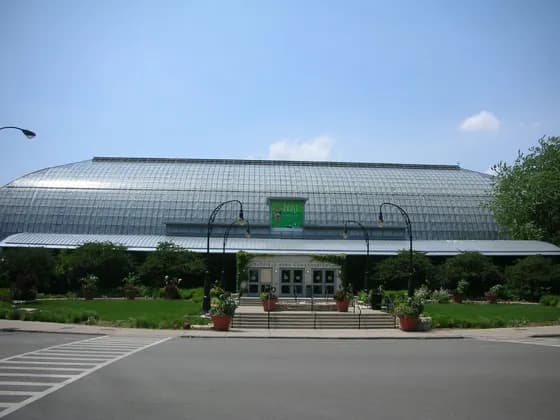
Photo: Nathan Hicks · CC BY 3.0 · cropped
Photo: Paul Sableman · CC BY 2.0 · Photo: An Errant Knight · CC BY-SA 4.0 · Photo: Richie D. · CC BY 2.0
The Rush Medical College of Rush University Medical Center MD program at a glance (2027 entry)
Rush Medical College of Rush University Medical Center, usually called Rush Medical College (RMC) or simply Rush, runs a four-year MD program on Chicago's Near West Side. The college shares a campus in the Illinois Medical District with Rush University Medical Center, where its faculty practice as physicians. John H. Stroger, Jr. Hospital of Cook County stands in the same district.
The first two years are the preclerkship phase, the mostly classroom-based part of medical school, which at Rush runs from late June of year 1 to spring of year 2. Courses are built mainly around organ systems, such as Vital Fluids (the heart and kidneys) and Food to Fuel (digestion and metabolism). Teaching uses a flipped classroom with no lectures: you learn the content from notes and videos beforehand, and class time goes on solving patient cases in teams.
Patients come early: Rush says you start working with patients within the first few weeks of year 1. The EXPLORE Rush program (Experiential Learning Opportunities for Preclerkship Students) adds clinical, research or advocacy experiences with faculty preceptors, and Bedside Clinical Skills sessions take you to hospitalized patients before clerkships.
Years 3 and 4 are the clerkship phase. Clerkships are required clinical rotations, each in one specialty. Before the core clerkships start, you must take Step 1 of the United States Medical Licensing Examination (USMLE), the first national licensing exam. The fourth year adds emergency medicine, a sub-internship (four weeks working much as an intern, or first-year resident, would) and at least 24 weeks of electives. A Clinical Bridge course then prepares you for residency, the specialty training after medical school.
Rush Medical College was chartered in 1837 and opened on December 4, 1843, with 22 students enrolled in a 16-week course. It suspended teaching in 1942 and reopened in 1971 as part of the medical center. Today two selective four-year tracks, in family medicine and in health equity, run alongside the core program.
The Liaison Committee on Medical Education (LCME) accredits MD programs in the United States. Its directory, updated October 14, 2026, lists the program's accreditation as full, first granted on or before 1942, the year the LCME was founded, with the next survey due in 2028-29. For MD students, LCME accreditation is what makes you eligible to sit the USMLE; DO students and those from medical schools outside the United States qualify by other routes.
| Degree | MD |
|---|---|
| Program length | 4 years; 2027 entrants start June 29, 2027, expected to graduate 2031 |
| Class size | 156 first-year students received white coats in August 2026 |
| Main campus | Armour Academic Center, Rush campus, Illinois Medical District, Chicago |
| Teaching style | Flipped classroom with no lectures; team work on patient cases |
| First patient contact | Within the first few weeks of year 1 |
| Clinical sites | Mainly Rush University Medical Center, Stroger Hospital and Rush sites across Chicagoland |
| Step 1 timing | Before core clerkships, after dedicated preparation at the end of year 2 |
| Grading | No GPA reported; Honors and High Pass used only in select courses |
| Accreditation | LCME: full accreditation (directory updated October 14, 2026); next survey 2028-29 |
What makes the Rush Medical College of Rush University Medical Center MD program different
No lectures in the first two years
Years 1 and 2 have no traditional lectures: you learn the content beforehand and spend class time applying it to patient cases in teams.
Core clerkships at Cook County's safety-net hospital
As well as Rush University Medical Center and Rush sites around Chicagoland, core clerkships run at John H. Stroger, Jr. Hospital of Cook County. It is the main hospital of Cook County Health and a safety-net hospital, where many patients are uninsured or underinsured.
EXPLORE: early experiences you choose yourself
After a first-fall skills course, you choose clinical, research or advocacy experiences with faculty preceptors, up to five over the first two years.
Four-year tracks in family medicine and health equity
The Family Medicine Leadership Program takes a select group of entering students, who apply once accepted to Rush. Each gets a family medicine practice as a clinical home base for all four years and completes a project for a West Side community. The Health Equity and Social Justice Leadership Program begins with classroom and community work and a community-partner project, followed later by seminars and an equity-focused elective.
Restorative justice circles built into the curriculum
Restorative justice, rooted in Indigenous traditions, builds community and repairs harm through group discussion. Rush Medical College introduced it in 2014, and community-building and team-building circles are now core parts of the preclerkship and clerkship years. It is also a routine way to resolve conflict.
How Rush Medical College of Rush University Medical Center teaches medicine
Rush describes its curriculum as learner-centered and competency-based, integrating all basic science and clinical components in a flipped classroom without lectures. Before each session you read course notes and watch prepared videos; in class you work in teams on problems within patient cases, guided by basic science and clinical faculty. Rush introduced the format with the class that started in 2017.
Most preclerkship courses take one part of the body, or one stage of life, through its normal function and its diseases. The catalog describes most of them as combining the science with diagnostic tests, drug treatment, building a differential diagnosis (the list of possible causes) and the history and exam for that system. The curriculum also covers biostatistics, ethics, health care economics, humanism in medicine, personal wellness and the social determinants of health.
Clinical experiences, workshops, labs and simulation supplement the case work. Behavioral sciences faculty teach patient communication in years 1 and 2, with intensive training, high-fidelity simulation and feedback on an increasingly complex series of tasks.
Rush's program objectives are organized around six roles a physician plays (advocate, communicator, leader, practitioner, professional and scholar) plus medical knowledge. Every session objective links to a course objective, and every course objective to one of these program objectives. In years 3 and 4 learning moves to wards and clinics, and a year-long course in each year returns to the roles. Students also sit on curriculum committees, including a student-only advisory committee.
The ways you will learn
| Flipped-classroom case sessions | The main class format in years 1 and 2: team work on patient cases, with faculty guiding, once you have studied the notes and videos. |
|---|---|
| Anatomy lab sessions | Six organ-system courses use the Human Anatomy Laboratory, which teaches with donated bodies, so anatomy is taught within those courses rather than on its own. |
| Simulation and standardized patients | You practice communication, history taking, examination and documentation with standardized patients, actors trained to play patients. Later you use manikins and task trainers, for example to deliver a baby or perform a spinal tap. |
| Interprofessional team course | IPE 502 puts you in teams with students from other Rush University programs through the fall and spring of year 1. |
How anatomy is taught at Rush Medical College of Rush University Medical Center
Anatomy comes inside the organ-system courses, six of which use the Human Anatomy Laboratory on the fifth floor of the Armour Academic Center. Vital Fluids and Vital Gases use it in the fall of year 1. Later that year come Food to Fuel, Movement and Mechanics, and Brain, Behavior and Cognition. Sexuality and Reproduction, at the start of year 2, completes the set. The lab also serves Rush's other health professions programs and hosts 20 to 25 workshops a year where device companies demonstrate surgical techniques to doctors.
The lab teaches with whole bodies donated for medical education and research, which the Anatomical Gift Association of Illinois prepares and distributes to Rush and other Illinois institutions. Each year Rush University students organize a memorial service to honor the donors. Rush's Section of Anatomy Education, whose faculty teach gross anatomy, histology, embryology and neuroscience, says most of its gross anatomy teaching happens in the lab.
If you are heading for a surgical specialty, the fourth-year Surgical Anatomy elective offers advanced training in anatomy and surgical skills through cadaveric dissection, teaching assistantships, online modules and independent study. It has to be taken in person on campus.
When you first meet patients at Rush Medical College of Rush University Medical Center
Rush says you start working with patients within the first few weeks of your first year. EXPLORE pairs you with clinical, research or advocacy experiences that reinforce classroom learning. It begins in the fall of year 1 with EXPLORE Essentials, which covers taking patient histories and presenting them aloud, along with mentoring and career exploration.
After EXPLORE Essentials, you are matched with a faculty preceptor and spend 20 hours with them over the semester, on or off campus. You can choose a new experience each term, up to five in two years, or keep one going for two or more semesters.
Bedside Clinical Skills, a required part of the preclerkship phase, lets you practice on real hospitalized patients before clerkships begin. You take histories, examine patients, develop differential diagnoses, assessments and plans, give oral presentations and write up notes, with feedback from clinical faculty. It also teaches the standard structure for presenting a patient, aloud and in writing, that you will use throughout clerkships.
Students in the Family Medicine Leadership Program join the care team at their home practice from the first few weeks of year 1. Outside the curriculum, the Rush Community Service Initiatives Program (RCSIP) runs student volunteer services. They include a free Community Health Clinic, DermConnect skin care for uninsured patients and Rush Street Medicine, which works with the Night Ministry to bring care to people experiencing homelessness.
The Rush Medical College of Rush University Medical Center curriculum, year by year
- Year 1 (M1)
Foundations and the first organ systems
Year 1 starts on June 29, 2027, in the summer term, and runs until the following summer. After an introduction to how the curriculum works, it moves through infection and immunity, the heart, kidneys and lungs, digestion and metabolism, the musculoskeletal system and the nervous system.
- The Foundation of Medical Practice (2 credits, summer) explains how the preclerkship curriculum and its physician roles work. Host Defense and Host Response (6 credits, summer) covers infection and the immune system, including antibiotics, antivirals and biologic drugs.
- Vital Fluids (9 credits, fall) covers the heart, blood vessels and kidneys and how blood pressure is regulated. Vital Gases (5 credits, fall) covers the lungs and how the blood carries oxygen.
- Food to Fuel (6 credits, spring) covers the digestive system and the metabolism of carbohydrates, amino acids and fats. Movement and Mechanics (6 credits, spring) covers the musculoskeletal system.
- Brain, Behavior and Cognition comes in two parts, A in spring and B the following summer (4 credits each). It covers the nervous system, the neurologic exam and how to trace abnormal findings to a part of the nervous system.
- IPE 502, Interprofessional Person Centered Teams, runs through fall and spring. Team-building activities with students from other professions come first, then three telehealth sessions in which your team helps an adult volunteer with a chronic condition set a wellness goal and plan.
- EXPLORE Essentials in the fall, then a faculty preceptor; one professional development course (2 credits); and optional electives in medical Spanish, humanities or research.
- Year 2 (M2)
Reproduction to complex cases, then Step 1
Year 2 begins in early July 2028. Three courses take you through reproduction, the life span, and blood and cancer, and the spring course on complex cases ends with dedicated preparation for USMLE Step 1. Required practice exams come in the middle and at the end of the year.
- Sexuality and Reproduction (5 credits, summer) covers human sexuality, the reproductive systems, fetal development and kidney function.
- Health Across the Life Span (5 credits, fall) follows health and disease from newborns to old age, including how to talk with patients, families and older adults, and ethical issues raised by its cases.
- Introduction to Hematology and Oncology (8 credits, fall) covers the blood and cancer, from molecular mechanisms to diagnosis and drug treatment.
- Complex Cases and Transition to Clerkship (12 credits, spring 2029) first works through cases involving several organ systems. Its second segment is focused Step 1 preparation, using a National Board of Medical Examiners (NBME) self-assessment, online question banks and a study plan that faculty and staff monitor.
- Three professional development courses, 10 credits in all, at set points in the year, alongside further EXPLORE experiences.
- Year 3 (M3)
Core clerkships
The third year starts in the summer term with Clinical Resources and Skills for the Hospital (CRASH), an orientation course, and you must have taken Step 1 before core clerkships begin. The clerkships fill three super-blocks of 16 weeks each: 42 weeks of required rotations, with room for electives in two of the blocks.
- CRASH reinforces your preclerkship skills and adds new ones, including basic life support, advanced communication and reading electrocardiograms (ECGs) and X-rays.
- Internal medicine (eight weeks) shares a block with psychiatry and neurology (four weeks each). Pediatrics (eight) shares one with primary care (four) and four elective weeks. Surgery (eight) shares the third with obstetrics and gynecology (six) and two elective weeks.
- Primary care places you in a family medicine or internal medicine office, where you evaluate patients yourself under a primary care preceptor.
- Elective weeks are optional and open only to students who are eligible.
- Rush Integrated Clinical Experiences (RICE) meets once a month all year, each session on one of the physician roles as it relates to patient care.
- Simulation continues in the clerkships, from delivering a baby in obstetrics and gynecology to a spinal tap in neurology.
- Year 4 (M4)
Sub-internship, electives and the move to residency
The fourth year runs from the summer of 2030 to commencement, which the registrar's calendar lists for May 3, 2031. It totals at least 48 weeks and includes Step 2 Clinical Knowledge (CK), the second licensing exam, and your residency applications.
- A required four-week emergency medicine core clerkship.
- A four-week sub-internship, also called an acting internship, in family medicine, internal medicine, obstetrics and gynecology, pediatrics or general surgery.
- At least 24 weeks of electives, 20 of them in direct patient care.
- Transition to Residency meets every other month all year. It covers the physician roles, residency applications, interviews and the Match, the national system that pairs graduates with residency programs. It includes mock interviews and gives you time to study for and take Step 2 CK.
- Clinical Bridge, a four-week boot camp in March just before graduation, uses small-group case discussions to sharpen your skills for the first day of residency.
How you are assessed at Rush Medical College of Rush University Medical Center
The 2026-27 Rush University catalog says Honors and High Pass grades are used only for select medical-student coursework and that no grade point average (GPA) is reported for Rush medical students. The interprofessional course IPE 502 is graded pass or no pass, and the catalog's description of the dermatology elective gives final grades of honors, high pass, pass or fail.
If you miss the passing standard on a first attempt, you may get a Deferred designation, a temporary mark while you are reassessed. In years 1 and 2 this applies only to your first two such courses; in clerkships, only to the first clerkship whose NBME subject exam, often called a shelf exam, you fail. After that, a first-attempt miss is recorded as a Fail.
Reassessments are normally due by the end of the academic year; a Deferred from a spring clerkship in year 3 can be cleared by the end of the summer term of year 4. A passed reassessment becomes a Pass and a failed one a Fail. The promotions committee, the Committee on Student Evaluation and Promotion (COSEP), can set remediation plans and must vote to approve your graduation.
USMLE Step 1 has been reported only as pass or fail since January 26, 2022. For 2027 entrants, the 2026-27 catalog sets the rule: take Step 1 before core clerkships, and pass it to graduate. Rush's curriculum page repeats this and refers you to the catalog for the most up-to-date curriculum information. The preclerkship page puts it more strictly, saying you must take and pass Step 1 before third-year clerkships. Step 2 CK follows in year 4, and you must pass both exams by deadlines the college sets.
In August 2026 the USMLE program announced a move to designated testing dates from January 2029, with Step exams offered less often each year. Its first notice, in June 2026, had named 2028.
On the current schedule, a student starting in June 2027 would reach the dedicated Step 1 preparation late in the spring 2029 term, which runs from January to April. Step 1 would then come before clerkships start that summer, a few months after the switch, and Step 2 CK, in 2030-31, would also fall under the new model.
- To graduate you must also pass all core clerkships and be scheduled for your 24 elective weeks by deadlines the college sets, and finish within 58 months of active enrollment, not counting leave.
- Clinical skills are tested in Objective Structured Clinical Examinations (OSCEs), where you rotate through stations, each testing a task such as interviewing or examining a patient. Each third-year clerkship has an OSCE, and a fourth-year OSCE checks that you have the skills you will need as a resident.
- Rush says passing Step 1 and Step 2 before graduation makes you eligible for Step 3, the last licensing exam. The USMLE recommends taking it once you have completed, or nearly completed, a year of residency training.
- A Medical Student Performance Evaluation (MSPE) letter is included when Rush sends your transcript for residency applications.
- In its licensing disclosure, last updated in July 2026, Rush says the curriculum meets the educational requirements for medical licensure in every US state.
Rush Medical College of Rush University Medical Center clinical rotations: where you will actually train
You are based on the Rush campus on Chicago's Near West Side, in the Illinois Medical District, not far from the Loop, Chicago's downtown. Rush University Medical Center, a 671-bed hospital for adults and children, shares the campus; its butterfly-shaped Tower building opened in 2012.
Core clerkships are offered mainly at Rush University Medical Center, at Rush sites across Chicagoland and at John H. Stroger, Jr. Hospital of Cook County, in the same district. Stroger, a 450-bed teaching hospital, is the main hospital of Cook County Health and the safety-net hospital for many Chicago-area residents who are uninsured or underinsured.
Cook County Health says Stroger's emergency room treats about 120,000 adults and children a year. It also has a Level I trauma center, the designation for hospitals that treat the most severe injuries.
The four-week primary care clerkship uses outpatient sites across the Chicago area. The family medicine department says it prefers community clinics to university ones where it can, since most US health care happens outside universities, and some students rotate at family medicine residency sites alongside residents. Its student education page, which carries no date, lists the sites below, along with four hospitals for the family medicine sub-internship.
Your base for all four years. Core clerkships run mainly here and at Rush sites across Chicagoland, and Stroger is also on the department's list for the family medicine sub-internship.
- Rush University Medical Center
- John H. Stroger, Jr. Hospital of Cook County
- Rush University Family Physicians, TOB (on campus)
Family medicine sites for the primary care clerkship, plus two family medicine sub-internship hospitals, from the department's undated list.
- Rush University Physicians - Lincoln Park
- Rush University Physicians - South Loop
- Rush University Physicians - Oak Brook
- Cook County Family Medicine Residency - Englewood
- Macneal Family Medicine Residency
- Hinsdale Family Medicine Residency
- La Grange Family Medicine Residency
- Advocate Illinois Masonic Medical Center
- Advocate Christ Medical Center
Rush's hospital in Aurora, listed by the family medicine department for the primary care clerkship and the family medicine sub-internship.
- Rush Copley Medical Center
- Rush Copley Family Medicine Residency
Electives, selectives and away rotations at Rush Medical College of Rush University Medical Center
First-year electives run alongside the required courses, and you can preview one before committing. The options are Basic or Intermediate Spanish for Medical Professionals, taught in Spanish; Humanities in Medicine, with museum visits, movement and acting exercises and literature; and Basic Biomedical Research. They do not count toward the elective weeks needed to graduate, and students in the two leadership programs cannot take them.
Professional development courses are a required strand you design: one in year 1 (2 credits) and three in year 2 (10 credits in all). With your academic adviser you plan work in one of four areas: academic enrichment, such as concentrated study or tutoring; clinical experience; community service; or research, from a proposal to a poster or manuscript.
In year 3, if eligible, you can use up to six weeks for electives within two of the three super-blocks, including Careers in Medicine electives for trying out a specialty. Only fourth-year electives count toward the graduation requirement.
Year 4 needs at least 24 weeks of electives, 20 of them in direct patient care and no more than 16 in one subspecialty. Rush offers over 80 electives across its departments, or you can design one with a Rush faculty member. Many students spend four weeks on a non-patient-care elective, such as a research elective or a medical education elective, in which you design curriculum and help clinician educators teach preclerkship students.
Catalog electives range from Medical Toxicology and Emergency Medicine Ultrasound to Palliative Care and Immersive Artificial Intelligence Exploration. Up to 12 weeks can be away rotations at another institution accredited by the LCME or the Accreditation Council for Graduate Medical Education (ACGME), which accredits residency programs. About 60% of Rush fourth-years currently take one, applying through the Visiting Student Learning Opportunities (VSLO) service of the Association of American Medical Colleges (AAMC).
Through the Office of Global Health, fourth-years can take a global health elective: mostly self-study on social determinants, ethics and tackling infectious and chronic disease, plus service learning at an endorsed site. Rush teams make regular primary care and surgical trips to the Dominican Republic; the 2026-27 schedules list six primary care trips and eight surgical and specialty trips. Fourth-years can join them for credit through that elective or as volunteers on vacation time.
Dual degrees and research years at Rush Medical College of Rush University Medical Center
Research is open from year 1. The Basic Biomedical Research elective gives you a mentored research experience in a clinical setting: you learn to evaluate medical literature critically, write a research proposal and present your work. Summer Research Fellowship recipients take it in the summer term.
The fellowship is paid, competitive and runs in the summer between the first and second preclerkship years. You find a faculty mentor and write a proposal modeled on a National Institutes of Health (NIH) training grant; Rush says it funded every applicant last year. In year 4, a research elective in a specialty of your choice starts with a plan setting out a hypothesis, study design, timeline and your role.
For a longer break, the 2026-27 catalog allows up to 12 months of voluntary leave, which can be extended by petition to two years. In approved situations you can request a third year. Examples include study for another degree, such as a master's in business (MBA), public health (MPH) or public policy (MPP), or a PhD, at Rush or elsewhere. Research also qualifies, including formal programs such as the NIH Medical Research Scholars Program, and leave does not count toward the 58 months you have to finish.
Facilities and support at Rush Medical College of Rush University Medical Center
Where you will learn
The Armour Academic Center is the hub of student life. It holds classrooms, laboratories, the McCormick Educational Technology Center, Rush Medical College's offices and the Library of Rush University Medical Center. The library has about 20,000 square feet of study space, open to students 24 hours a day by badge, and online access to more than 120 databases.
The Rush Center for Clinical Skills and Simulation, founded in 2002, occupies 20,000 square feet on campus and is accredited by the American College of Surgeons and the Society for Simulation in Healthcare. It has 12 exam rooms with audio and video recording for standardized patient encounters, a four-bay multi-patient room and copies of real hospital rooms, from a pediatric procedure room to an anesthesia operating room.
High-fidelity manikins, from premature babies to adults, have heartbeats, breathe and respond to treatment. Task trainers cover skills such as IV placement, lumbar puncture, central lines and chest tubes. A surgical skills lab has touch-feedback trainers for laparoscopic and cardiovascular procedures, and debriefing rooms play back recordings of your work.
Support while you study
Medical Student Affairs (MSA) is a team just for medical students, separate from the university's student affairs office. From orientation to graduation you have a faculty adviser, a Rush attending physician who acts as a role model and sounding board. You also join one of six advising communities, groups that mix students from every class year with their own peer advisers, much like the learning communities at other schools.
The communities are named Brainard, Eckenfels, Goodman, Hedger, Herb and Peck, after figures from Rush's history. Among them are founder Daniel Brainard and Isabella Herb. In 1909 Herb became the first woman appointed to the staff of Presbyterian Hospital, which the college had founded in 1883 to give its students clinical training. She served as chief anesthetist there until 1941. Peck honors David Jones Peck, the first African American man to earn a medical degree from a US medical school.
Academic support comes in three tiers: general help for everyone, enhanced support for students identified by an Early Intervention Committee, and remediation for anyone reassessing a block or clerkship. Student support managers advise on study skills, time management and self-care. Second- to fourth-year students teach in the Peer Education Program, and about 14 residents run the Resident Education Program, with strategies for each clerkship and shelf exam preparation.
Career advising runs through all four years, from learning about options for your first summer in year 1 to a year-long interviewing course in year 4. More than 15 student-led career interest groups, each with a faculty liaison, run events.
MSA also runs Doc Talks, where Rush physicians and alumni share successes and struggles, social hours every term, and morning meditation and afternoon yoga twice a month. Rush Wellness offers free, confidential therapy with no cap on sessions, and its team can be paged around the clock, with a reply within 60 minutes. Alumni donations make the White Coat Ceremony possible: in August 2026 they ensured each of the 156 new students received a white coat, a stethoscope and a note of encouragement.
Is the Rush Medical College of Rush University Medical Center program right for you?
This program may suit you if
- You learn best by working through problems with classmates, since the first two years replace lectures with team work on patient cases you prepare for in advance.
- You want a say in your early clinical time, choosing EXPLORE experiences each term and planning professional development courses with your adviser.
- You want clerkships at a county safety-net hospital as well as an academic medical center.
- You already lean toward family medicine or health equity work and would value a four-year track with its own practice or community project.
- You want to volunteer in student-run services on Chicago's West Side, from street medicine to free skin care for uninsured patients.
Things to think about
- The flipped classroom depends on preparation: you learn the content from notes and videos before class, because class time is for applying it.
- Year 1 starts on June 29, 2027, so plan for a short summer before medical school.
- Step 1 is a gate: you must sit it before core clerkships start, and pass it to graduate.
- After two Deferred designations in years 1 and 2, any further first-attempt miss is recorded as a Fail.
- Family medicine sites on the department's list reach out to Oak Brook and Rush Copley in Aurora, so some rotations may mean a commute.
Rush Medical College of Rush University Medical Center MD program — frequently asked questions
Applying to Rush Medical College of Rush University Medical Center?
How to get into Rush Medical College of Rush University Medical Center
Prerequisites, MCAT, AMCAS personal statement, secondaries and interview, step by step.
Open the guide →Rush Medical College of Rush University Medical Center admissions profile
MCAT and GPA profile, acceptance rate, interview format and key dates.
See the profile →Compare Rush Medical College of Rush University Medical Center with other schools
Put the teaching style, anatomy teaching and clinical sites next to another school.
Open the comparison →Prepare for the Rush Medical College of Rush University Medical Center interview
Format breakdown, school-specific sample questions and prep tips from tutors who interviewed here.
Read the guide →Where this Rush Medical College of Rush University Medical Center program guide came from
This guide was written from 51 official sources — Rush Medical College of Rush University Medical Center's own program pages and curriculum documents, plus the accreditor and the hospitals and health systems the school trains students in where they publish detail — read on 2026-10-24, then checked claim by claim against those sources.
- Rush Medical College: MD curriculum, program objectives and graduation requirements
- Rush Medical College: Doctor of Medicine (MD) program
- Rush Medical College: Preclerkship curriculum
- Rush Medical College: Clerkship curriculum and third-year super-block diagram
- Rush Medical College: Family Medicine Leadership Program
- Rush Medical College: Health Equity and Social Justice Leadership Program
- Rush Medical College: Research opportunities for students
- Rush Medical College: Professional licensing disclosure (updated July 23, 2026)
- Rush Medical College: MD admission requirements (curriculum description)
- Rush Medical College home page
- Rush University Catalog 2026-2027 (PDF): MD course of study, graduation requirements, grading and leave policies, course descriptions, calendar, history and campus
- Rush University Catalog 2026-2027 (web): Doctor of Medicine program
- Rush University Office of the Registrar: Academic calendars 2025-26 to 2031-32
- Rush Medical College: Medical Student Affairs
- Rush Medical College: Advising and the six advising communities
- Rush Medical College: Academic support services
- Rush Medical College: Career and professional development
- Rush Medical College: Student well-being and restorative justice
- Rush Medical College: About the college, enrollment and entering class
- Rush University: Human Anatomy Laboratory
- Rush Medical College: Section of Anatomy Education
- Rush Department of Anatomy and Cell Biology: Body donation and the annual memorial service
- Rush Medical College: Division of Behavioral Sciences education offerings
- Rush Medical College: Family and Preventive Medicine student education (primary care clerkship and sub-internship sites)
- Rush Department of Family and Preventive Medicine: Family Medicine Leadership Program
- Rush Center for Clinical Skills and Simulation
- Rush Center for Clinical Skills and Simulation: About
- Rush Center for Clinical Skills and Simulation: Facilities
- Rush Center for Clinical Skills and Simulation: Equipment
- Rush Center for Clinical Skills and Simulation: The learner experience
- Rush University: Office of Interprofessional Education and IPE 502
- Rush Community Service Initiatives Program
- Rush Community Service Initiatives Program: Access programs
- Rush Global Health: Opportunities for students
- Rush Global Health: Primary care service trips
- Rush Global Health: Surgical service trips
- Rush University: Rush Wellness for students
- Rush University: Our location
- Rush University news, August 20, 2026: M1s at Rush Medical College receive white coats
- Rush University news, August 14, 2017: Rush Medical College implements flipped curriculum
- Rush news, March 10, 2022: Pioneering women physicians at Rush
- Rush: About our system
- Rush: Hospital locations
- Cook County Health: John H. Stroger, Jr. Hospital of Cook County
- LCME: Accredited programs directory (updated October 14, 2026)
- LCME: About the school directory (what LCME accreditation covers and USMLE eligibility)
- USMLE: Designated Testing Dates information hub
- USMLE, August 6, 2026: Designated testing dates transition will take place in January 2029
- USMLE, June 23, 2026: Transition to limited testing dates starting in 2028 (since updated)
- USMLE: Step 1 transition to pass/fail only score reporting
- USMLE Bulletin of Information: Eligibility
Curricula are restructured between cycles. Anything here that decides your application — how anatomy is taught, a clinical campus assignment, a required research year — should be confirmed against the official page for your entry year.
Applying to Rush Medical College of Rush University Medical Center?
We help US applicants with MCAT strategy, the AMCAS personal statement, secondary essays and interview prep — everything you need for a competitive Rush Medical College of Rush University Medical Center application.