
The UConn School of Medicine MD program
What you actually study, and where you will be
UConn School of Medicine's MD is a 4-year program taught through team-based learning in an integrated curriculum, with patient contact from Year 1 and clinical rotations in Farmington, Hartford and affiliated hospitals elsewhere in Connecticut (2027 entry). UConn's MDelta curriculum opens with about 18 months of pre-clerkship study in Farmington, taught mainly through team-based learning in five 10-week blocks, each followed by a two-week assessment period. From your first year you also spend half a day a week with a physician in an outpatient practice. Clerkships follow at UConn John Dempsey Hospital and affiliated hospitals, then sub-internships, emergency medicine and electives.
- Degree
- MD
- Length
- 4 years
- Teaching
- Team-based learning + Integrated
- Clinical contact
- Year 1


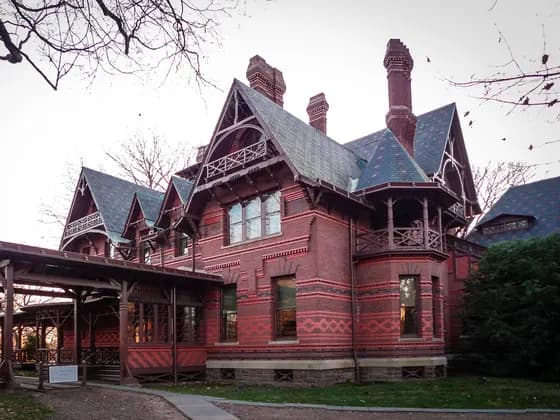

Photo: Ragesoss · CC BY-SA 4.0 · cropped
Photo: Daderot · CC BY-SA 3.0 · Photo: Kenneth C. Zirkel · CC BY-SA 3.0 · Photo: 12019 · CC0
The UConn School of Medicine MD program at a glance (2027 entry)
The University of Connecticut School of Medicine, known as UConn School of Medicine, awards the MD after a four-year program based on the UConn Health campus in Farmington, about 8 miles from Hartford. It was established in 1961 on a then-new 160-acre campus, admitted its first class in 1968 and granted its first medical degrees in 1972. Through 2026 it had graduated 55 classes, 4,402 students in all.
Students follow the MDelta curriculum, which began with the graduating class of 2020. The school's 2026 Academic Policies and Procedures (APP) Manual expands the name as Making a Difference in Education, Learning, Teaching and Assessment. After a short Launch, Stage 1, which the school calls the Exploration Stage, is the pre-clerkship (pre-clinical) phase of about 18 months. Stage 2 brings the core clerkships, the required clinical rotations, and Stage 3 readies you for residency, the specialty training that follows medical school.
Team-based learning is the main teaching method: you prepare before class, then work through patient cases with your team while faculty facilitate. After each 10-week block comes a two-week Learning Enhancement and Assessment Period (LEAP), when you are examined and then either work on gaps with your coach or take a short elective.
Patients come early. From your first year, CLIC, the Clinical Longitudinal Immersion in the Community course, gives you a weekly half-day with a physician in an outpatient practice.
Clerkships take place at UConn John Dempsey Hospital on the Farmington campus and at affiliated hospitals such as Hartford Hospital and Connecticut Children's. Stage 3 adds sub-internships, where you take on the role of an intern, a first-year resident, under supervision. A mentored Capstone scholarly project runs through all four years.
| Degree | MD |
|---|---|
| Program length | 4 years; MD/PhD 8, MD/MPH 5 to 6, MD/MCTR 5 |
| Class size | 117 students entered in August 2026 (Class of 2030), 6 of them MD/PhD |
| Curriculum | MDelta, from the Class of 2020: Launch, then Stages 1 to 3 |
| Main campus | UConn Health, Farmington, Connecticut, about 8 miles from Hartford |
| Teaching style | Team-based learning, plus problem-based cases in Clinical Reasoning |
| Anatomy | Cadaveric dissection, with Anatomage tables, radiology workstations and ultrasound |
| First patient contact | Weekly CLIC half-day in an outpatient practice, from year 1 |
| Clinical sites | UConn John Dempsey, Hartford Hospital, Connecticut Children's, Saint Francis and others |
| Step 1 timing | After Stage 1, before clerkships; on the current schedule, spring 2029 for 2027 entrants |
| Grading | Pass/fail in Stage 1; Honors available in most clerkships |
What makes the UConn School of Medicine MD program different
A weekly half-day in an outpatient practice
CLIC starts in your first year and runs for at least three years, so a working practice stays part of your week into the clerkship year.
Team-based learning instead of a lecture-heavy timetable
Case Oriented Essentials (COrE), the case-based science course in each Stage 1 block, is taught through team-based learning. Stage 1 averages 22 required contact hours a week.
Two weeks after every block to catch up or explore
Each LEAP starts with an integrated exam. You and your coach then plan the rest: faculty time and sometimes a reassessment to close a gap, or, if you are cleared, a five-day Individualized Learning Opportunity (ILO). Past topics include Graphic Medicine and Advanced Spanish for Healthcare Providers.
A public health certificate built into the MD
Every student earns the Certificate in Social Determinants of Health and Disparities, required since the Class of 2021. Its content, equal to four graduate public health courses (12 credits), is taught in your first two years. It covers how health and health care are distributed across populations and how to tackle disparities.
An urban service track with other health professions
The Urban Service Track/AHEC Scholars Program, run by the Connecticut Area Health Education Center (AHEC) Network, selects 60 scholars a year. They come from UConn's schools of medicine, dental medicine, nursing, pharmacy and social work, and from Quinnipiac University's physician assistant program. They train in federally qualified health centers, which are federally funded community clinics.
How UConn School of Medicine teaches medicine
MDelta is built on active learning. The APP Manual calls team-based learning (TBL) the primary pedagogy and the curriculum tightly integrated, with basic, clinical, behavioral and social sciences taught together. It also names problem-based learning (PBL), where a small group works through a case to decide what it needs to learn. The curriculum page says MDelta relies less on lectures.
In TBL you prepare before class, then apply that knowledge with a diverse team. Teams explain their reasoning and weigh other teams' decisions, facilitators keep groups on track, and content experts step in on the hardest topics. Preparation is supported by remote active learning materials, which the school calls ReALM.
Each COrE course builds on the last, using index cases and virtual patients to cover foundational science, organ system physiology and disease, pharmacology, biostatistics and epidemiology, law and ethics, and clinical medicine. Health Systems Science, on health policy, how care is delivered, population health and health equity, began with the class that entered in fall 2024, combining two earlier programs.
In Stage 2 you learn on clerkship teams alongside residents and fellows. Health Systems Science continues as what the school calls a clerkship within other clerkships, and radiology is taught alongside the rotations.
The ways you will learn
| Team-based learning (COrE) | The main Stage 1 method: team work on patient-centered cases that link basic science to symptoms, disease mechanisms and treatment. |
|---|---|
| Problem-based learning (Clinical Reasoning) | A Stage 1 course bridging the sciences and the clerkships. You analyze multi-system cases, present patients as you would on ward rounds, and agree assessments and plans as a team. Health Systems Science also uses problem-based sessions and interprofessional education. |
| Labs (FabLab) | The Fabric of Anatomy and Biology Lab covers gross anatomy, virtual anatomy, histology, early radiology and ultrasound, plus physiology, neuroanatomy and microbiology labs, to inform your examination skills and clinical reasoning. |
| Clinical skills (DoCC) | In Delivery of Clinical Care, small groups learn history taking, examination and communication, with feedback from a physician, an allied health professional and a senior student. You practice and are assessed in the Clinical Skills Center with patient instructors, members of the public trained to play patients. |
| Clerkship teams | From Stage 2 you learn by caring for patients in hospital and clinic teams. In Stage 3 sub-internships you act as the intern with supervision, including on a critical care rotation. |
A typical week on the UConn School of Medicine program
In Stage 1 you are assigned to one of three learning communities, labeled A, B and C, which sets your weekly timetable. Each schedule has 22 contact hours, and attendance at every scheduled session is mandatory. The APP Manual expects 50 to 60 hours of academic work a week in all, so more than half your week falls outside scheduled sessions.
In the school's sample first-year timetables from 2025-26, Learning Community A has COrE on Monday, Wednesday and Friday, labs on Monday and Tuesday, and Health Systems Science on Tuesday. DoCC and Scholarship and Discovery, the research skills course, fall on Wednesday, and Thursday is the CLIC half-day.
Health Systems Science takes two to four hours depending on the week. The other communities arrange the same sessions on different days, and the first two weeks of Block A follow a different schedule.
How anatomy is taught at UConn School of Medicine
Anatomy sits in FabLab, which has a course in each Stage 1 block. It covers gross anatomy, virtual anatomy and histology, the study of tissue under the microscope, plus early radiology and ultrasound.
Gross anatomy is taught by cadaveric dissection in the Human Anatomy Lab (HAL), meaning students dissect donated bodies themselves. The Virtual Anatomy Lab (VAL) lets you correlate what you see in dissection with X-ray, CT, MRI and ultrasound images.
In the VAL, Anatomage virtual cadaver tables show life-size bodies in axial, sagittal and coronal slices. Sixteen radiology workstations, one for each team in the learning community, open a library of de-identified patient scans that teams can share with the class.
Ultrasound sessions on classmates and patient instructors cover musculoskeletal, cardiac, lung, abdominal and pelvic anatomy. The curriculum uses the Butterfly iQ, a hand-held ultrasound device that plugs into a cell phone. The VAL also hosts physiology labs on EKGs, lung function, electromyography, exercise physiology and evoked visual potentials.
Bodies come from UConn Health's Anatomical Donation Program, which accepts donors who die in Connecticut. They are embalmed, stored securely and never sold or loaned. Afterward the remains are cremated at UConn Health's expense and the ashes returned to the family. Each academic year ends with a memorial service attended by students, faculty and donors' families.
When you first meet patients at UConn School of Medicine
In CLIC, students are paired with a physician in an outpatient practice for half a day each week, with a focus on primary care. The curriculum page and APP Manual say it begins within a month of starting medical school, and the admissions FAQ says one month after. The About Us page says students meet their first patient on the first day.
CLIC is where you use the skills you learn in DoCC on real patients. It lasts at least three years. In the final six months of third year you may move to a subspecialty site, and you can continue CLIC in fourth year as an elective.
Health Systems Science adds time with patients living with chronic illness, visits to local communities and observing other health professionals. Clinical shadowing is not allowed until you complete Block A and its LEAP.
Outside the curriculum, students run free clinics. Five students and an attending physician staff the South Park Inn Medical Clinic at a Hartford homeless shelter on Tuesday and Thursday evenings. Students also volunteer at the Migrant Farm Workers Clinic.
The UConn School of Medicine curriculum, year by year
- Stage 1, year 1
Exploration: Launch, then Blocks A to C
Launch orients you to the school and curriculum and includes a mini-course in history taking and physical examination. The APP Manual describes it as two weeks; the 2026-27 calendar shows one week, August 10 to 14, followed by a 12-week Block A. Blocks B and C run 10 weeks, and each block is followed by a LEAP.
- In the 2026-27 calendar, Block A runs August 17 to November 6, Block B November 30 to February 19 and Block C March 15 to May 21.
- Scholarship and Discovery workshops, seven in Stage 1 including Launch, lead to your Capstone proposal.
- Attendance at the Medical and Dental Student Research Day is required.
- You must pass Blocks A, B and C to move on to Blocks D and E.
- A 12-week summer break follows, June 7 to August 27 in the 2026-27 calendar, with optional mentored research.
- Stage 1, year 2
Exploration: Blocks D and E, then Step 1
Blocks D and E complete Stage 1, each followed by a LEAP. Stage 2 then opens with flexible time for board study, electives, scholarship or vacation. This is when you sit Step 1 of the United States Medical Licensing Examination (USMLE), the national licensing exam series.
- DoCC ends with a final Clinical Skills Assessment in Block E.
- Summer researchers present at Research Day, typically in late February or early March.
- Promotion to Stage 2 is decided at the end of Block E. It requires a pass in every Stage 1 course, including Clinical Reasoning, and taking Step 1, which you cannot sit with a pending Conditional or Fail grade.
- The APP Manual's MD/PhD section puts this board-study period in March and April, with clerkships from May. The MD-PhD curriculum page describes a four-month flex period, March to June, for both MD and MD-PhD students.
- Stage 2 (third year)
Clinical Immersion: the core clerkships
A one-week Kickoff prepares you for clerkships, which then run in four 12-week blocks the school calls PODs. You keep your CLIC half-day and return for two Homeweeks. Most clerkships end with an NBME shelf exam, a national subject test from the National Board of Medical Examiners.
- Kickoff includes five one-hour diagnostic radiology sessions.
- Pediatrics and neurology: four weeks each of ambulatory pediatrics, inpatient pediatrics and neurology, with one inpatient week in the emergency department and the newborn nursery or neonatal intensive care unit.
- Internal medicine: four weeks ambulatory, six inpatient and two for an elective or vacation.
- Family medicine and psychiatry: six weeks each, with geriatrics threaded through, including weekly half-days with a geriatrician and a home visit to an older person.
- Obstetrics and gynecology and surgery: six weeks each, with shared surgical skills teaching and radiology conferences.
- Homeweeks: fall on palliative care, spring on advanced skills for Stage 3. Radiology quizzes and ten Required Clinical Observations for Health Systems Science run through the year.
- Advanced Clinical time, after the spring Homeweek, is for electives, clerkships, board study, fourth-year rotations, scholarship or vacation. It lasts eight weeks in the APP Manual, the Stage 2 page and the M Delta page's Stage 2 section, but 12 weeks in that page's Stage 1 text.
- Stage 2 ends with a comprehensive clinical skills assessment on more than a dozen scenarios with patient instructors, followed by USMLE Step 2.
- Third- and fourth-year clinical hours are capped at 80 a week averaged over four weeks, with one day off in seven. In-house overnight call is no more often than every third night, except on night float or labor and delivery.
- Stage 3 (fourth year)
Transformation: sub-internships and electives
Stage 3 is built around three required four-week rotations, two weeks of Transition to Residency and the rest of your 20 weeks of electives, while you finish your Capstone and apply for residency.
- Critical Care: a sub-internship in an adult medical or surgical intensive care unit (ICU), a combined coronary care and ICU, or a pediatric ICU.
- Emergency Medicine: teaching on common complaints, then 14 shifts in the emergency department, with procedures such as suturing, splinting and IV placement.
- Advanced Inpatient Experience: a sub-internship in family medicine, surgery, internal medicine or pediatrics.
- Transition to Residency, in the spring, on applying what you know to the problems interns face.
- Health Systems Science shelf exam by the end of September.
- Your Medical Student Performance Evaluation (MSPE), the school's summary of your record for residency programs, is uploaded by late September. Match Day, when residency places are announced, is in March.
How you are assessed at UConn School of Medicine
Stage 1 is pass/fail. During each LEAP you sit an integrated exam across your courses. A Block Assessment Review Committee reviews results without seeing names and sets reassessment or enhancement plans, then course grading committees assign grades. For each exam you see your score, the class mean and the pass mark, and small-group courses add written narrative feedback.
From Stage 2, most clerkships add Honors to Pass and Fail: in family medicine, internal medicine, obstetrics and gynecology, pediatrics, psychiatry, surgery, neurology and radiology, and in each Stage 3 core rotation. Each clerkship sets in advance how its evaluation, exam and assignments count, and everyone who reaches the Honors mark receives it.
Stage 2 shelf exams, used in every clerkship except radiology and geriatrics, need a score at or above the 5th percentile. A first failure means a retake, an In Progress grade and no Honors, with the second attempt noted in your MSPE. A second exam failure takes you out of clinical work to remediate unless the Academic Advancement Committee decides otherwise. The end-of-Stage-2 clinical skills assessment resembles the Objective Structured Clinical Examinations (OSCEs) other schools use, where you are scored on a series of patient encounters.
On the USMLE, Step 1 covers the sciences behind medicine and has been pass/fail since January 26, 2022. Step 2 Clinical Knowledge (CK) covers clinical medicine and is scored, with a passing score of 218 from July 1, 2025. You must pass each Step within three attempts.
Step 1 must be taken by Kickoff, which the APP's Step policy treats as the official start of Stage 2, and a failure means stepping out of clerkships until you pass. Step 2 CK follows Stage 2.
On the current schedule, a student starting in August 2027 would finish Stage 1 around February 2029, sit Step 1 in spring 2029 and start clerkships in about May. Step 2 CK would follow once Stage 2 ends in 2030, and any delay past March 1, 2031 must be requested in writing.
- In August 2026 the USMLE program announced a move to designated testing dates from January 2029, with Step exams offered less often each year. Its June 2026 notice had named 2028. For an August 2027 entrant, both Step 1 and Step 2 CK would fall after the change.
- The USMLE program has encouraged schools to review rules that tie progression to when students sit the exams.
- Delaying Step 1 past Kickoff means weekly meetings with a learning specialist and losing your first clerkship; delays beyond six weeks need the Academic Advancement Committee's approval.
- Stage 3 rotations end with exams too, except the pediatrics sub-internship; emergency medicine and the surgery sub-internship add an oral exam.
- Graduation also requires logged procedures, such as three IV placements and three observed pelvic exams, 15 hours of community service and the Clinical Skills Assessment Program, all within six years.
- Your MSPE quartile combines clerkship honors with professional honors in two of three areas: leadership, scholarship and service.
- The Liaison Committee on Medical Education (LCME), which accredits MD programs in the United States, lists the program as fully accredited, with its next survey in 2025-26 (directory updated October 14, 2026). The school's LCME page, written before the visit, says that survey was scheduled for March 23-25, 2026.
- For MD students, LCME accreditation is what makes you eligible to sit the USMLE; DO students and international graduates qualify through other routes.
UConn School of Medicine clinical rotations: where you will actually train
Stage 1 is based on the UConn Health campus in Farmington, apart from your CLIC half-day in a community or university practice. For Stages 2 and 3, the school assigns sites in advance by lottery and/or by availability of suitable sites. If an assignment clashes with significant personal circumstances, you can ask the clerkship coordinator about a slot elsewhere.
Formal hardship requests, such as for ongoing local treatment or caring for dependents, go to the Assistant Dean for Clinical Medical Education at least 12 weeks ahead. A decision comes within 15 business days, and a move needs spare capacity without disrupting other students.
School sources list the main hospitals differently. The 2026 APP Manual's opening section names UConn Health, Hartford HealthCare (Hartford Hospital and the Hospital of Central Connecticut), Saint Francis Hospital, Manchester Memorial Hospital, Middlesex Hospital and Connecticut Children's. The affiliated-hospitals page describes Connecticut Children's, Hartford Hospital and the Institute of Living, UConn John Dempsey Hospital, the Hospital of Central Connecticut, the Hospital for Special Care and Saint Francis.
The APP's contact table for needlestick and other exposures at affiliated hospitals also lists Backus, Bristol, St. Mary's, St. Vincent's, Waterbury and Windham hospitals. A 2022 neurology clerkship page gave five primary sites, including Charlotte Hungerford and Middlesex Hospital.
The hospital shares the campus with the medical and dental schools, labs and library, and is the primary clinical base for full-time faculty.
- UConn John Dempsey Hospital
Hartford Hospital, which describes itself as an 867-bed regional referral center, takes third- and fourth-year students in all major disciplines. The Institute of Living treats psychiatric and addiction patients, and students rotate in all disciplines at the Hospital of Central Connecticut.
- Hartford Hospital
- Institute of Living
- The Hospital of Central Connecticut
Rotations in all major disciplines, with family medicine at Asylum Hill and ambulatory medicine and pediatrics at Burgdorf.
- Saint Francis Hospital and Medical Center
- Mount Sinai Hospital campus
- Asylum Hill Family Practice Center
- Burgdorf/Bank of America Health Center
Connecticut Children's describes itself as a 230-bed children's hospital in Hartford and the school's primary pediatric teaching hospital. All inpatient pediatric rotations are there, on the campus shared with Hartford Hospital and the Institute of Living.
- Connecticut Children's
The APP Manual's security policy names the Veterans' Administration among the school's major affiliated hospitals. VA Connecticut lists the UConn School of Medicine among its affiliations, and its West Haven VA Medical Center is a teaching hospital.
- West Haven VA Medical Center
- Manchester Memorial Hospital
- Middlesex Hospital
- Hospital for Special Care
- Charlotte Hungerford
- Backus, Bristol, St. Mary's, St. Vincent's, Waterbury and Windham hospitals
Electives, selectives and away rotations at UConn School of Medicine
During each of the five LEAPs, students cleared to do so take an ILO, a five-day immersion in a faculty-designed topic, including humanities options. Topics change each LEAP; past examples include 3D Printing Technology, Introduction to Immigrant Health, Point-of-Care Ultrasound and UConn Migrant Farm Workers Training.
Clinical electives total 20 weeks across Stages 2 and 3, in any specialty or subspecialty, and you can design your own. You can take them within the UConn system or as away rotations at any other LCME-accredited school, through VSLO (Visiting Student Learning Opportunities), the Association of American Medical Colleges (AAMC) application service.
Global health experiences can count as electives. Taking vacation instead of a third-year elective means making up the weeks in fourth year. Stage 3 offers longitudinal teaching electives, and with the Academic Advancement Committee's approval you can start some Stage 3 rotations or an away elective before finishing Stage 2.
The Primary Care Leadership Track, run by the Office of Primary Care, is a multi-year program for students committed to internal medicine, family medicine or pediatrics. It offers grounding in education, research and leadership, primary care mentorship and room for interests such as disparities, disabilities care and teaching, with the aim of practicing in Connecticut.
The Urban Service Track is a formal two-year curriculum on top of the MD, taking eight to twenty scholars per school. Its FAQ, last updated in 2019, lists seven four-hour learning retreats, a yearly Clinical Skills Boot Camp and two service outreach activities a semester. It adds that scholars are placed at community health centers for their weekly continuity practice where possible, and that no primary care commitment is required. In 2026, applications ran from May 11 to July 3.
Dual degrees and research years at UConn School of Medicine
Research is built in through the Scholarship and Discovery course and its Capstone Scholarly Project, a mentored project running from first year to fourth. You write a proposal in Stage 1, then carry out the project during eight required weeks in Stages 2 and 3, extendable by four elective weeks. Dual-degree students are usually exempt.
A Capstone can be bench or clinical research, advocacy, the humanities or medical education, provided it fits at least one of Boyer's scholarship domains: discovery, integration, application or teaching and learning. You submit an abstract, scored with a rubric, plus a mentor attestation, a critical reflection and proof of, or a plan for, dissemination. It is graded Pass, Conditional or Fail.
Optional research starts in the summer after first year: protected time for a mentored project of 8 to 10 weeks, not for credit. A Scientific Review Panel judges proposals on merit and announces awards by mid-May, and students on unpaid projects can receive a stipend.
The Scholarly Year, which the APP Manual calls Mentored Scholarly Enrichment, is a leave for up to a year of full-time academic work outside the dual degrees. It opens after you complete Stage 1 and Step 1, usually between stages or after Stage 3, and needs a proposal and a faculty advisor's letter. In most cases it can exempt you from the Capstone. One option is the paid, year-long Post-Sophomore Pathology Fellowship, with autopsies, case sign-outs and laboratory rotations.
The MD/PhD takes eight years in the APP Manual. You join the MD class for Stage 1, adding two eight-week summer research rotations, graduate coursework and a Monday-evening Research Club. Sources differ on the MD/PhD Step 1 deadline: May 1 in the APP, or the end of the four-month flex period on the MD-PhD curriculum page.
The PhD in Biomedical Science takes four years on average, with a monthly CLIC half-day. Thesis research can be done with Jackson Laboratory faculty who hold Graduate School appointments, on the Farmington campus. A January-to-April reintegration with a clinical skills refresher leads into clerkships from May.
- MD/MPH, with a Master of Public Health (5 to 6 years in the APP Manual): in the 2026-27 Graduate Catalog, the public health certificate gives 12 credits of advanced standing. You add six required courses, three to five electives and either a nine-credit thesis or a three-credit capstone.
- MD/MCTR, the MD with a Master of Science in Clinical and Translational Research (5 years): in the 2026-27 catalog, the master's takes one full-time year after three years of medicine. It combines core courses, nine credits of mentored research and electives, and its manuscript, grant proposal and oral defense replace the MD Capstone.
- The APP Manual says the MD/MBA is no longer a combined degree, though you can apply separately to UConn's MBA program.
Facilities and support at UConn School of Medicine
Where you will learn
The Clinical Skills Assessment Program has a ground-floor suite on the Farmington campus set up like a doctor's office. Each exam room has a hospital bed, routine exam equipment, a camera and a microphone, and recordings of your encounters are kept so you can review your progress.
Its 72 patient instructors portray cases, score you and give feedback on communication, history taking and examination. Specially trained patient instructor models teach pelvic, rectal and breast examination with a clinician instructing, and sessions also cover counseling, giving bad news, discussing medical errors and using interpreters.
The Clinical Simulation Center's page, last updated in 2022, describes 4,500 square feet with three simulation rooms and an open bay that can become an emergency department, delivery suite or operating room. You practice procedures such as suturing, intubation and lumbar puncture on task trainers, and scenarios on manikins that breathe, blink, sweat, bleed and seize.
Every medical student is given a new laptop to keep after graduation. The UConn Health Sciences Library has study rooms open 24 hours to students, and librarians help with research, systematic reviews and clinical rounds. A free 24-hour Wellness Center gym sits off the Academic Lobby, near the student-run Husky Harvest food pantry.
Support while you study
Each student is assigned a coach at matriculation, and the relationship lasts all four years. In Stage 1 your coach meets you during each block and each LEAP, reviews your results and evaluations, and helps you set goals. In Stages 2 and 3 you meet at Kickoff and the Homeweeks, and coaches help with mock residency interviews.
Learning specialists help with study skills and time management in all three stages. The Office of Medical Student Affairs offers personal and career advising, compiles your MSPE, supports residency applications and funds summer research and conference travel. The Associate Dean for Health Career Opportunity Programs advises underrepresented minority students.
Career advising starts in Launch and continues in mandatory LEAP sessions built on the AAMC's Careers in Medicine resources. Each clerkship opens with an overview of its specialty, a career fair runs in the fall of third year, and in spring you choose a lead career advisor.
At orientation each first-year is randomly paired with a second-year big brother or big sister, a scheme running since the early 1990s, and trained student volunteers run a Peer Support Group. Confidential counseling through the Student Behavioral Health Service is free, offered off the main campus or by telehealth, by clinicians who do not teach or assess students.
Is the UConn School of Medicine program right for you?
This program may suit you if
- You learn best by working through cases with a team, since team-based learning is the main Stage 1 method.
- You want patients early: a weekly half-day in an outpatient practice from your first year, for at least three years.
- You are drawn to primary care or underserved communities, with CLIC's primary care focus, the Primary Care Leadership Track and the Urban Service Track to build on.
- You want to dissect a donor body and connect what you find to CT, MRI and ultrasound in the same lab program.
Things to think about
- Expect less lecture-style teaching: team-based learning means preparing before every class and reasoning aloud with your team.
- Clerkship sites are assigned by lottery and/or availability, so you will not always choose where you train.
- Step 1 comes before clerkships: delaying it past Kickoff costs you your first clerkship, and failing it means stepping out of Stage 2 until you pass.
UConn School of Medicine MD program — frequently asked questions
Applying to UConn School of Medicine?
How to get into UConn School of Medicine
Prerequisites, MCAT, AMCAS personal statement, secondaries and interview, step by step.
Open the guide →UConn School of Medicine admissions profile
MCAT and GPA profile, acceptance rate, interview format and key dates.
See the profile →Compare UConn School of Medicine with other schools
Put the teaching style, anatomy teaching and clinical sites next to another school.
Open the comparison →Prepare for the UConn School of Medicine interview
Format breakdown, school-specific sample questions and prep tips from tutors who interviewed here.
Read the guide →Where this UConn School of Medicine program guide came from
This guide was written from 48 official sources — University of Connecticut School of Medicine's own program pages and curriculum documents, plus the accreditor and the hospitals and health systems the school trains students in where they publish detail — read on 2026-10-18, then checked claim by claim against those sources.
- UConn School of Medicine: M Delta Curriculum
- UConn School of Medicine: Stage 2 (Clinical Immersion)
- UConn School of Medicine: M Delta Frequently Asked Questions
- UConn School of Medicine: M Delta Curriculum for MD-PhD Students
- UConn School of Medicine: Academic Policies and Procedures (APP) Manual 2026, updated September 2026
- UConn School of Medicine: Academic Calendar 2026-2027, Stage 1
- UConn School of Medicine: Example of Weekly Schedule (Learning Communities A, B and C)
- UConn School of Medicine: 2026 Curriculum Chart
- UConn School of Medicine: Overview of Clinical Rotations, Stage 2 and Stage 3 courses (2026)
- UConn Health Department of Public Health Sciences: MD/MPH Dual Degree flyer (2026)
- University of Connecticut 2026-2027 Graduate Catalog: Dual Degree Programs
- UConn Health Graduate School: Clinical and Translational Research programs, including the MD/MCTR
- UConn Master of Public Health: Dual Degrees
- UConn School of Medicine: MD-PhD Program
- UConn Health Department of Public Health Sciences: Education and Training
- UConn School of Medicine: Affiliated Hospitals and Clinical Sites
- UConn School of Medicine: About Us
- UConn School of Medicine: Fast Facts
- UConn Today: Class of 2030 White Coat Ceremony, 117 new medical students (August 14, 2026)
- UConn School of Medicine: Admissions FAQs
- UConn School of Medicine: Second Look 2026
- UConn School of Medicine: Office of Assessment and Evaluation
- UConn School of Medicine: Clinical Skills Assessment Program
- UConn School of Medicine: Clinical Simulation Center
- UConn School of Medicine: Virtual Anatomy Lab
- UConn School of Medicine: Anatomical Body Donation
- UConn School of Medicine: Primary Care Leadership Track
- UConn School of Medicine: Urban Service Track
- Connecticut AHEC Network: Urban Service Track/AHEC Scholars Program, How to Apply and FAQs
- UConn School of Medicine: Pathology Fellowship
- UConn School of Medicine: Mentoring Programs
- UConn School of Medicine: Office of Medical Student Affairs
- UConn School of Medicine: Community Programs
- UConn Health Department of Medicine: Undergraduate Medical Education
- UConn Health Department of Neurology: Neurology Clerkship (page last modified 2022)
- UConn Health Academic IT Services: Student Laptops
- UConn School of Medicine: LCME accreditation page
- LCME: Accredited Programs directory (updated October 14, 2026)
- LCME: About School Directory
- USMLE: Designated Testing Dates Information Hub
- USMLE: Updated Timeline for Designated Testing Dates, transition in January 2029 (August 6, 2026)
- USMLE: Transition to Limited Testing Dates Each Year Starting in 2028 (June 23, 2026)
- USMLE: Designated Testing Dates FAQs
- USMLE: Examination Results and Scoring
- Hartford Hospital: About Hartford Hospital
- Connecticut Children's: About Us
- VA Connecticut Health Care: About Us
- Trinity Health Of New England: About Us
Curricula are restructured between cycles. Anything here that decides your application — how anatomy is taught, a clinical campus assignment, a required research year — should be confirmed against the official page for your entry year.
Applying to UConn School of Medicine?
We help US applicants with MCAT strategy, the AMCAS personal statement, secondary essays and interview prep — everything you need for a competitive UConn School of Medicine application.