
The CU Anschutz Medical Campus MD program
What you actually study, and where you will be
CU Anschutz Medical Campus's MD is a 4-year program taught through case-based learning in an integrated curriculum, with patient contact from Year 1 and clinical rotations in Aurora, Denver, Colorado Springs, Fort Collins and rural Colorado (2027 entry). CU Anschutz's Trek Curriculum spends year 1, the Plains, on ten pass/fail courses organized by body system, each week framed by one patient complaint, with a clinical preceptorship alongside. Year 2, the Foothills, is an 11-month longitudinal integrated clerkship: you follow your own patients across seven specialties in one clerkship program, from Aurora and Denver to Colorado Springs, Fort Collins or rural Colorado. Years 3 and 4 open with advanced science and Step 1, then an individualized schedule; a three-year Peak-to-Peak option starts in 2027.
- Degree
- MD
- Length
- 4 years
- Teaching
- Integrated + Case-based learning
- Clinical contact
- Year 1
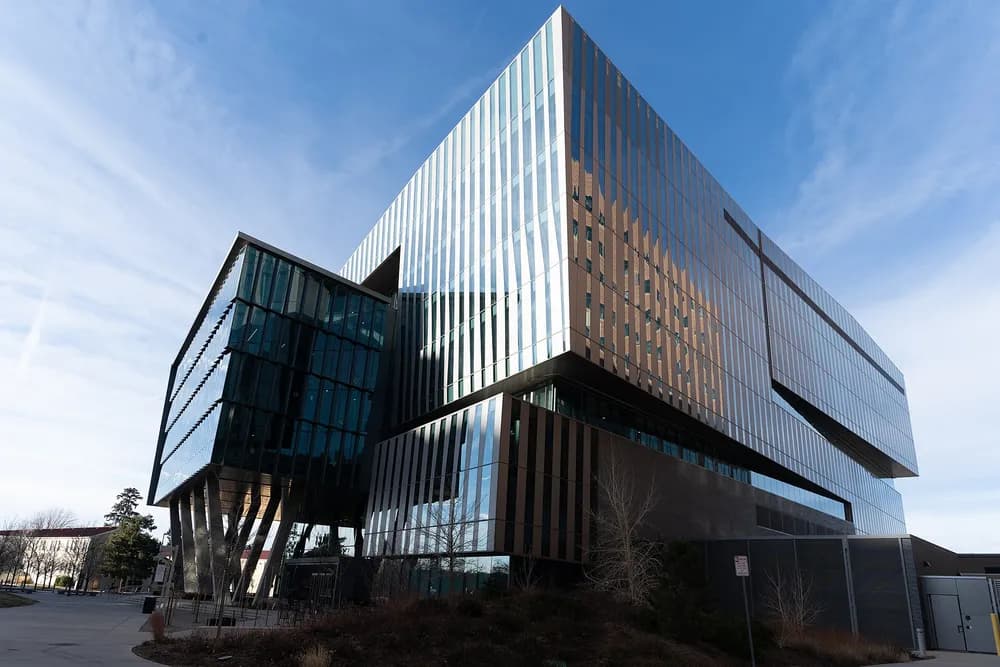
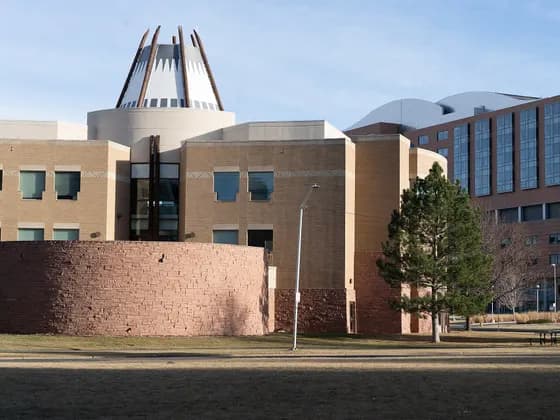
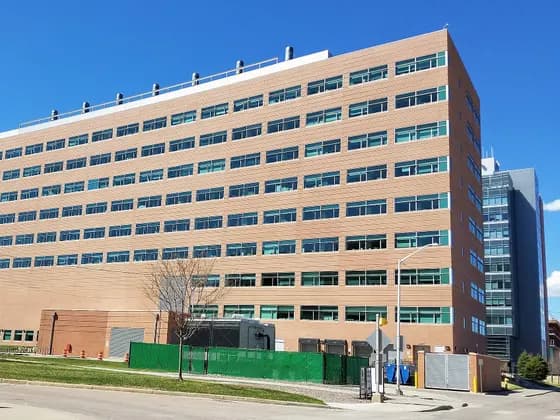
Photo: Jesse James · CC BY 4.0 · cropped
Photo: Jesse James · CC BY 4.0 · Photo: Vladsinger · CC BY-SA 4.0 · Photo: Xnatedawgx · CC BY-SA 4.0
The CU Anschutz Medical Campus MD program at a glance (2027 entry)
The University of Colorado School of Medicine, known as CU School of Medicine and part of CU Anschutz, runs a four-year MD program. It is based on the Anschutz Medical Campus in Aurora, Colorado, at the eastern edge of the Denver metro area. Its curriculum, Trek, launched in July 2021 and names its phases after a mountain climb.
Year 1, the Plains, is the pre-clerkship (pre-clinical) phase: 52 weeks of pass/fail courses organized by body system. Each week is framed by a chief concern, the main complaint a patient brings, so science, clinical skills and the social side of health are taught through one case. A preceptorship with a practicing physician, part of the Developing Our Clinical Skills (DOCS) course, brings your first clinical interactions.
Year 2, the Foothills, is the clerkship year of core clinical rotations. Instead of block rotations, several weeks on one specialty at a time, every student spends 11 months in one longitudinal integrated clerkship (LIC), usually based in one health system. You work with the same preceptor in each of seven specialties and follow your own patients all year.
Years 3 and 4, Alpine-Summit, open with three Advanced Science Courses and then Step 1 of the United States Medical Licensing Examination (USMLE), the national licensing exam series MD students take. An individualized schedule follows, built around acting internships, in which you work like an intern, a first-year resident. Critical care, a four-week science selective, electives and a leadership Trail complete it, with a four-year Mentored Scholarly Activity alongside.
The Fort Collins Regional Medical Campus at Colorado State University (CSU) admits 14 a year for all four years. The Colorado Springs LIC Program and the Rural Program take students outside the Denver area for year 2. From summer 2027 the Peak-to-Peak Pathway offers a three-year MD.
| Degree | MD |
|---|---|
| Program length | 4 years; three-year Peak-to-Peak Pathway from summer 2027 |
| Curriculum | Trek: Plains (year 1), Foothills (year 2), Alpine-Summit (years 3-4) |
| Class size | 184 positions (admissions FAQ); 188 began in the Class of 2030 (school news) |
| Main campus | Anschutz Medical Campus, Aurora; four-year regional campus in Fort Collins |
| Teaching style | Integrated courses by body system, each week framed by one chief concern |
| First patient contact | Year 1 DOCS preceptorship; full-time clinical work in year 2's LIC |
| Clerkship model | 11-month longitudinal integrated clerkship; 16 programs in 2026-27 |
| Step 1 timing | After the year 3 Advanced Science Courses, by early January |
| Grading | Year 1 pass/fail; six clerkships graded Honors, High Pass, Pass or Fail |
| Accreditation | Liaison Committee on Medical Education (LCME): Full; next survey 2032-33 |
What makes the CU Anschutz Medical Campus MD program different
A whole clerkship year with the same preceptors
You follow a panel of your own patients to visits, admissions, procedures and deliveries, working one-on-one with the same preceptor in each specialty. Shortened inpatient immersions add hospital work, and unstructured time is kept for following patients.
Advanced science after the clerkship year
Trek moves advanced science later, into the context of patient care. In the fall of year 3, Advanced Immunology, Advanced Neurosciences and Cardiology Connections pair classroom teaching with advanced clinical experiences and overlap with Step 1 preparation.
A four-year campus at Colorado State University
The Fort Collins Regional Medical Campus teaches the same Trek Curriculum to 14 students a year, with classroom learning in small groups and a core group of CSU faculty. A One Health thread links human, animal and environmental health, including a street clinic where medical and veterinary students treat homeless people and their pets.
A clinical year in Colorado Springs or a rural town
The Colorado Springs LIC Program moves students south for year 2, into a mix of private, corporate, military, nonprofit and public organizations. Rural Program students spend most of the year in one rural Colorado community or neighboring towns, typically one or two learners per site, which the school says brings extensive hands-on experience and procedures.
A three-year MD linked to Colorado residencies
The Peak-to-Peak Pathway takes its first eight students in summer 2027, one or two in each of five pathways: pediatrics, family medicine, rural family medicine, internal medicine primary care and internal medicine/infectious diseases. The core curriculum matches the four-year program, minus some electives, career preparation and interview time, and a directed pathway leads into a linked Colorado residency.
How CU Anschutz Medical Campus teaches medicine
Trek teaches three pillars together in every phase: medical sciences, clinical sciences, and health and society, which covers communication, health systems, equity and advocacy. The school designed it to move away from two years of basic science followed by two clinical years. Twelve science content areas, from gross anatomy to genetics, run through all four years.
In the Plains, each week is organized around a chief concern presentation that frames the week's teaching within a patient's experience. Case-based clinical reasoning sessions use diagnostic schemas, flowcharts of possible diagnoses for a chief concern, to link the science to skills taught in DOCS.
Attendance is required at small groups, group labs or dissections, clinical skills and interprofessional sessions; other events are optional but strongly encouraged. Selected lectures and large-group sessions are recorded. Two interprofessional courses put you in teams with other health professions students, on healthcare ethics and health equity and on collaborative practice.
From year 2, preceptors teach you one-on-one in the clinic, backed by a weekly small-group series on core clinical topics. Basecamps, courses of one to four weeks at each major transition, prepare you for clerkships, advanced rotations and residency. In years 3 and 4, an individualized learning plan built with a specialty advisor and your COMPASS Guide, the faculty coach assigned to you on entry, shapes your schedule.
The ways you will learn
| Chief-concern weeks | Each Plains week ends with an End of Week Checkpoint and a facilitated review. You may miss up to four Checkpoints across the Plains, with make-ups arranged. |
|---|---|
| Team-based learning | You prepare before class, take a short test alone and again with your team, then work through cases together. A 2023 faculty abstract describes Monday lectures and Tuesday team sessions on anemia, bleeding and clotting, and immunodeficiency in Hematologic and Lymphatic Systems, the first systems course. Clerkship-year seminars also use team-based learning. |
| DOCS small groups | The course teaches clinical reasoning, communication and physical examination in small groups with a DOCS coach and standardized patients, people trained to portray patients. Each student has an assigned role, and post-clerkship students can take electives to help coach. |
| Preceptors | In year 1 you join a practicing physician's clinic. In the LIC each specialty preceptor acts as clinical teacher, mentor and coach and writes the periodic assessments behind your grades. |
| Simulation at CAPE | The Center for Advancing Professional Excellence (CAPE) runs simulation and interprofessional team training, and the clerkship year includes CAPE sessions such as an emergency medicine simulation. |
A typical week on the CU Anschutz Medical Campus program
In year 1, scheduled hours plus required work outside class, such as the DOCS preceptorship and COMPASS meetings, are capped at 32 a week, averaged across the year. At least two half-days a week stay unstructured for independent study.
The school's 2025 introduction for LIC preceptors shows a sample clerkship week: a half-day in each of the seven specialties, a half-day learning seminar and two half-days of extended learning time. Clinical hours are capped at 80 a week averaged over a course, with at least 10 hours off between shifts.
How anatomy is taught at CU Anschutz Medical Campus
Anatomy is taught within the courses organized by body system, with gross anatomy, embryology, histology and radiology among the twelve science content areas. The handbook's Plains rules list group labs or dissections among the sessions all students must attend, and an Anatomy Practical among the Plains exams.
The Anatomy Dissection Laboratory in Education Building 1 has 38 dissection humidors, a skeletal collection and more than 50 plastinated organs. Donors give their bodies to the Colorado State Anatomical Board, which says most are used to teach medical, dental, physical therapy and physician assistant students. The school honors donors and their families each year at the Anatomical Donor Memorial.
In a 2022 school news story, a first-year student described gathering with classmates around their donor. Later options include Advanced Anatomy, a four-week dissection selective on anatomy key to surgical and interventional specialties, and an Advanced Dissection elective in Fort Collins.
When you first meet patients at CU Anschutz Medical Campus
The DOCS preceptorship brings your first clinical interactions: you apply classroom science with patients, grow comfortable with them and learn from a physician who can be a role model and mentor. A December 2022 Family Medicine document described one to three half-days a month with a Denver-metro preceptor, a primary care physician when possible. The year-long Traverse course, built around five assessment and coaching weeks, also counts direct patient care with preceptors among its activities.
By the end of the Plains you have learned a patient-centered interview, a physical examination of a healthy adult, including sensitive exams, and how to write up a full history and physical. Once you have passed the courses through Gastrointestinal System, you may arrange extra career exploration time with a physician, usually up to 16 hours, with Office of Student Life approval.
In the LIC you observe a few visits, then quickly take the lead. The Foothills guidebook expects that by mid-year you are seeing patients independently, pending orders, writing all your notes and calling patients with results. Each cohort patient, says the school's 2025 preceptor introduction, needs at least three encounters with you.
The CU Anschutz Medical Campus curriculum, year by year
- Year 1
The Plains: courses by body system
The Plains runs 52 weeks from July, with breaks at Thanksgiving, in winter and in spring. Ten courses of 3 to 6 weeks weave the sciences together with clinical skills and health and society. Five Traverse weeks sit between them for comprehensive assessments, coaching and preparation for the LIC.
- First Course (1 week) and Foundational Principles (5 weeks), then Hematologic and Lymphatic Systems (3), Gastrointestinal System (4) and Pulmonary and Cardiovascular Systems (6, split by Thanksgiving).
- Spring: Renal and Urinary Systems (3 weeks), Nervous System (5), Musculoskeletal and Integumentary Systems (4) and, after spring break, Mind and Behavior (3).
- Summer: Endocrine and Metabolic Systems and Reproductive System and Life Cycle (4 weeks each), ending with Traverse 5 in mid-July.
- Mentoring and Scholarly Activity all year: COMPASS groups and coaching, and the launch of your Mentored Scholarly Activity, including a meeting with one of its associate directors by November 1.
- The CBSE, a National Board of Medical Examiners (NBME) exam that simulates Step 1, in Traverse weeks 3 and 5.
- A summer break, including an optional Discovery period for electives, research and track projects.
- Year 2
The Foothills: a longitudinal integrated clerkship
After the two-week Foothills Basecamp, the LIC runs about 11 months from September. Internal medicine, pediatrics, obstetrics and gynecology (OB/GYN), psychiatry, surgery with anesthesia and family medicine count 12 credits each and emergency medicine 6, all running at once. A separate LIC course carries your patient cohort, project and reflection work.
- Shortened inpatient immersions in surgery, medicine, labor and delivery, gynecology, pediatrics and psychiatry. The psychiatry department says its immersion lasts one to two weeks in most LICs; emergency medicine asks for 10 emergency department shifts.
- A panel of cohort patients from every specialty, followed through clinics, hospital stays and the emergency department, and a log of core clinical conditions, reviewed with your LIC director at mid-year.
- A weekly small-group learning seminar and your LIC's concentration project, in themes such as advocacy, inquiry or public and population health.
- Shelf exams, national NBME subject tests, in medicine, OB/GYN, pediatrics, psychiatry and surgery, on five of eight offered dates. The CCSE, a practice exam for USMLE Step 2 Clinical Knowledge (CK), closes the year.
- Year 3
Alpine: advanced science, Step 1, then your own schedule
Year 3 opens with the Advanced Science Courses from mid-August to mid-November, then a protected Step 1 study period and the exam, sat before the January Trail immersions. A two-week Trail immersion and the two-week Alpine Basecamp follow, and individualized coursework starts in February.
- Advanced Immunology, Advanced Neurosciences and Cardiology Connections; in Fort Collins's sample week, Monday classroom sessions alternate among the three and clinical blocks fill Tuesday to Friday.
- The CBSE again at the end of the courses; below 55 means a meeting with the Office of Student Life about your study plan.
- Trail Immersion 1 starts eight weeks of leadership training, finished with a second immersion in year 4 and distributed work. The five Trails are Bioethics and Humanities, Medical Education, Health Systems and Community Leadership, Research and, in Fort Collins, One Health.
- Spring and summer are the main season for acting internships, letters of recommendation and, from June, optional away rotations at other teaching hospitals.
- Step 2 CK by the late-July deadline: July 23 for the Class of 2028.
- Year 4
Summit: residency applications and transition
Year 4 continues your individualized schedule while you apply to residency. The second Trail immersion comes in late September. Interview requests can start in mid-October, so the school advises flexible research or longitudinal courses in the fall.
- Between February of year 3 and May of year 4 you schedule a four-week acting internship and Alpine Critical Care or an intensive care unit (ICU) rotation. An Integrated Science Selective and 28 weeks of other coursework complete the requirements.
- The Mentored Scholarly Activity's final paper and capstone poster.
- The four-week Transition to Residency Basecamp in April and May, with specialty tracks from anesthesia to surgery.
- Match Day in March and commencement in late May: May 22, 2028 for the Class of 2028.
- Peak-to-Peak (3 years)
The accelerated route, from summer 2027
The three-year pathway compresses the same phases, according to the timeline on its web page. It opens with a Summer Pathway Immersion in June before First Course, and year 2 starts with a Summer Trails Experience before the September LIC.
- A year 1 preceptorship in your pathway's specialty: family medicine or internal medicine at Denver Health, pediatrics at Children's Hospital Colorado, or family medicine for the rural pathway.
- A guaranteed LIC at Denver Health or Children's Hospital Colorado, or the Rural LIC in the community where you have a directed residency match.
- Year 3: you apply to residency in a directed pathway through the National Resident Matching Program (NRMP). The Advanced Science Courses run August to November, then Step 1 and Step 2 CK together in about December.
- January to May: Alpine Basecamp, an acting internship, critical care, a science selective, Match Day in March, then Transition to Residency and advanced electives before May graduation.
How you are assessed at CU Anschutz Medical Campus
Every Plains course is pass/fail, with a grading committee deciding final grades. Exams include End of Course exams, Anatomy Practicals and the DOCS Clinical Skills Assessment. Clinical skills are also judged by preceptors and in Objective Structured Clinical Examinations (OSCEs), timed stations where you interview or examine a standardized patient while observed.
The CBSE works as a progress test, but the end-of-year sitting has a cut-off. Score below 44 and you retake it before the Foothills Basecamp; falling short again sends you to the Student Promotions Committee.
Clerkship grades work differently. Six specialties are graded Honors, High Pass, Pass or Fail, while emergency medicine and the LIC course are pass/fail. Grades rest mainly on supervisors' assessments, judged by de-identified grading committees against set criteria, so honors are not capped and you do not compete with classmates. Shelf exams carry only a pass mark, but failing one at the first attempt rules out honors.
In years 3 and 4, most two-week courses, all away electives and research electives are pass/fail, while other courses can award Honors or High Pass. The Medical Student Performance Evaluation (MSPE), the dean's letter sent with residency applications, does not rank students or use quartiles.
Step 1 of the USMLE tests the science behind medicine and has been pass/fail only since January 26, 2022; Step 2 CK keeps a numeric score. You must pass both to graduate. You book Step 1 only after passing all Plains and Foothills coursework. Step 2 CK is due within 12 months of Step 1, by the last Friday of the second summer block, typically July 15 to 25.
In August 2026 the USMLE program announced a move to designated testing dates from January 2029, with Step exams offered less often each year. Its June 2026 notice had named 2028. No calendar is posted yet for the class entering in July 2027. On the current schedule, four-year entrants would sit Step 1 by early January 2030 and Step 2 CK by late July 2030, and Peak-to-Peak students both around December 2029.
- The Liaison Committee on Medical Education (LCME) accredits MD programs in the United States, and its accreditation is what makes students here eligible for the USMLE. Students of osteopathic (DO) schools and international graduates qualify by other routes.
- The LCME directory, updated October 14, 2026, lists the program's status as Full, its initial accreditation as on or before 1942, the year the LCME was founded, and its next survey as 2032-33. The school dates its first accreditation to 1938 and its latest review to March 2025.
- Fail Step 1 and you take at least four weeks of study leave before the retake, and you cannot start new Alpine courses until you pass.
- Graduation also requires a service-learning milestone, which you can start from the spring of year 1: a non-clinical service experience with a community organization. It focuses on communication, the social factors that shape health, allyship and reflecting on your values and biases. You have at most six years of enrollment to finish unless the Student Promotions Committee approves more.
CU Anschutz Medical Campus clinical rotations: where you will actually train
Year 1 is on the Anschutz Medical Campus, or in Fort Collins for regional campus students. Midway through the Plains you meet the LICs at an LIC Fair and rank them in a survey; a match algorithm assigns places, which are final with rare exceptions. Fort Collins, Colorado Springs LIC Program and Rural Program students have their LIC set by their program.
Every student is told at acceptance that the clerkship year may be outside the Denver/Aurora area. All LICs involve travel between sites, so you need reliable transportation and may relocate in year 2. Close-to-Home status, which keeps your clerkship sites within 30 miles of campus, is usually granted for significant caregiving responsibilities in Denver/Aurora.
The 2026-27 Foothills guidebook lists 16 LICs: three at University of Colorado Hospital, Children's Hospital Colorado (Advocacy), the Veterans Affairs LIC (Arts and Humanities), two at Denver Health and Kaiser Permanente (Inquiry). The rest are Community Health (Advocacy), Highlands Ranch (Longevity and Wellness), three in Colorado Springs, Longmont/Boulder, Northern Colorado and the Rural LIC.
The handbook names the primary clinical affiliates as the UCHealth system, Denver Health Medical Center, Children's Hospital Colorado and the Rocky Mountain Regional VA Medical Center. In the Plains and Alpine phases preceptors can be up to 40 miles from your campus, and LIC sites up to 40 miles from the LIC's primary site. The Colorado Area Health Education Center (AHEC) program houses students placed farther away.
University of Colorado Hospital and Children's Hospital Colorado are on the Anschutz Medical Campus, and the VA medical center is in Aurora; Denver Health is in Denver. The OB-GYN department lists St. Joseph's among its three Denver-area teaching hospitals.
- UCHealth University of Colorado Hospital
- Children's Hospital Colorado
- Rocky Mountain Regional VA Medical Center
- Denver Health Medical Center
- St. Joseph's, Denver
Students also train in Pueblo, Monument, Woodland Park and Cañon City, in systems including CommonSpirit, Kaiser, Optum, the VA and military health. The program took 24 students in 2016 and now accepts 30 a year; an older subpage still says 24.
- Memorial Hospital (UCHealth)
- Children's Hospital Colorado, Golisano Children's Hospital, Colorado Springs
- Peak Vista Community Health Centers
- Diversus Mental Health
Fort Collins students take the Northern Colorado LIC, joined by two Anschutz students. The campus's first four-year class, 12 students, began in July 2021. The campus's sample LIC schedule lists inpatient immersions in OB/GYN, pediatrics, psychiatry, internal medicine and surgery of two weeks to a month.
- Poudre Valley Hospital
- Medical Center of the Rockies
- Greeley Hospital
- UCHealth outpatient specialty clinics
- Salud Clinic
- Sunrise Community Health
- Fort Collins VA Clinic
- Estes Park Health
The Rural Program accepts up to 20 students per class; the school's 2025 preceptor introduction showed 18 rural LIC places. Students live in one rural community or several neighboring towns for most of the year, and the program places them by fit and availability.
Electives, selectives and away rotations at CU Anschutz Medical Campus
Year 1 electives are optional and do not count toward graduation. They run every semester, including the summer Discovery period, from introductions to surgery, urology and orthopedics to Clinical Medical Spanish, Food Systems and Health and track electives.
The required acting internship is a four-week hospital rotation in which you take primary responsibility for patients and take call, as interns do. The Class of 2028 guidebook's options run from medicine at Denver Health, University of Colorado Hospital, the VA or St. Joseph's to family medicine in Greeley, Grand Junction, Pueblo, Wray and Sterling.
Critical care means two weeks in an adult medical, adult surgical or pediatric ICU with teaching sessions, or a four-week ICU rotation. Integrated Science Selectives are four-week courses combining basic, clinical and health systems science. The 2027 list of ten includes Nutrition and Culinary Medicine, Climate Change and Environment, The Frontier of AI and Medicine, Cancer Biology and Advanced Anatomy.
You schedule through lotteries after building your individualized learning plan. Away rotations, usually booked through the Association of American Medical Colleges' Visiting Student Learning Opportunities (VSLO) service, are capped at 16 weeks. Outside the Global Health Track, international electives go through one course, applied for at least 90 days ahead.
Fort Collins adds One Health options, such as a One Health in Communities elective with CSU students and the City of Fort Collins. You can also shadow at CSU's Animal Teaching Hospital and take a comparative oncology elective with veterinary oncologists.
Dual degrees and research years at CU Anschutz Medical Campus
Every student completes the Mentored Scholarly Activity (MSA), a four-year project with a University of Colorado faculty mentor, unless the Research Track or the MD/PhD program covers it. Topics range from laboratory and clinical research to bioethics, humanities, global health, public health and health policy. You finish with a 10- to 25-page paper, or a published paper, and a capstone poster presented during the Transition to Residency Basecamp.
The competitive Research Track, applied for in year 1, adds half a day a week of research that year, four full-time summer weeks and two four-week research electives. You present at the Western Student Medical Research Forum in Carmel, California, and submit a first-author manuscript by February 1 of year 4. The Global Health Track takes 20 first-year students a year, and only its students can do MSA or research projects abroad.
The Medical Scientist Training Program (MSTP) has run the MD/PhD route since 1983, with National Institutes of Health (NIH) funding since 1993. Its undated home page says it takes about 10 students a year. You take MSTP courses and lab rotations alongside the Plains, the LIC and the Advanced Science Courses. Step 1 comes in the fall of year 3 and Step 2 by the end of January. About four years of PhD research follow.
The 2026-27 handbook lists five other formal dual degrees: an MPH, an MS in Bioengineering, an MBA in one calendar year, an MD/JD and an MD/MS in Aerospace Engineering Sciences. The MPH is with the Colorado School of Public Health, and the five-year aerospace degree includes a year at CU Boulder studying bioastronautics. Counting the MSTP, the catalog lists four such programs and the school's joint-degree page five.
The handbook's approved exit point for an extra degree comes after the year 3 Step exams and spring coursework, delaying year 4; the aerospace degree starts a semester earlier. A Scholar's Year gives up to six students a year one academic year of research while staying enrolled. You need a defined project and mentor and must have passed the LIC year, the Advanced Science Courses and Step 1; you start in the summer of year 3 and graduate a year later.
Facilities and support at CU Anschutz Medical Campus
Where you will learn
CAPE fills 30,000 square feet of the Anschutz Health Sciences Building. Its 30 patient examination rooms and five simulation rooms, which can become an operating room, emergency room, hospital room, ICU or labor and delivery suite, all record video and audio. The simulation rooms have two-way mirrors into control rooms, and there are eight debriefing rooms.
The campus also has the Strauss Health Sciences Library and the Health and Wellness Center. In Fort Collins the medical campus occupies the fourth floor of the CSU Health and Medical Center, opened in 2017.
Support while you study
Your COMPASS Guide, a clinician-educator, coaches the same group from orientation to graduation. In year 1 the group meets weekly on health and society, professional identity formation and career navigation, with one-on-one coaching at set intervals. You also join one of six advisory colleges spanning all four years, named after Colorado 14ers, peaks of 14,000 feet or more, such as Pikes Peak and Quandary Peak.
Senior students called Navigators welcome you on the first day of orientation and offer near-peer mentoring. The Trek Progress Committee reviews every student twice a year and meets monthly about anyone struggling. Its discussions stay off your permanent record, and you can request a Success Team meeting yourself.
In the Office of Student Life, two assistant deans work as learning coaches, one for study skills and Step and shelf preparation and one directing clinical remediation. Career advising starts at orientation, with specialty advisors in each department. A confidential Associate Dean for Student Advocacy can act as your advocate, and campus mental health services often see new students within the same week.
Is the CU Anschutz Medical Campus program right for you?
This program may suit you if
- You want continuity: a whole clerkship year with the same preceptor in each specialty and your own panel of patients.
- You would like a smaller cohort outside Denver, such as Fort Collins's 14 a year with its One Health thread, or Colorado Springs.
- You see yourself in rural practice and want to live in a rural Colorado community for most of year 2, typically one or two learners per site.
- You are committed to pediatrics, family medicine or internal medicine in Colorado and want to finish in three years.
- You like returning to the science in depth after clinical work, with the Advanced Science Courses right before Step 1.
Things to think about
- Your clerkship year may be outside the Denver area; you need reliable transportation, and rural students move for most of the year.
- Step 1 comes in year 3, after the clerkship year and its shelf exams. On the current schedule a 2027 entrant sits it in December 2029 or by early January 2030, under designated testing dates.
- Year 1 is pass/fail, but clerkships are graded Honors to Fail, mainly on supervisors' assessments, and those grades go into your MSPE.
- Peak-to-Peak means choosing your specialty at entry: eight places, a set residency pathway and less elective and interview time.
CU Anschutz Medical Campus MD program — frequently asked questions
Applying to CU Anschutz Medical Campus?
How to get into CU Anschutz Medical Campus
Prerequisites, MCAT, AMCAS personal statement, secondaries and interview, step by step.
Open the guide →CU Anschutz Medical Campus admissions profile
MCAT and GPA profile, acceptance rate, interview format and key dates.
See the profile →Compare CU Anschutz Medical Campus with other schools
Put the teaching style, anatomy teaching and clinical sites next to another school.
Open the comparison →Prepare for the CU Anschutz Medical Campus interview
Format breakdown, school-specific sample questions and prep tips from tutors who interviewed here.
Read the guide →Where this CU Anschutz Medical Campus program guide came from
This guide was written from 81 official sources — University of Colorado School of Medicine's own program pages and curriculum documents, plus the accreditor and the hospitals and health systems the school trains students in where they publish detail — read on 2026-10-18, then checked claim by claim against those sources.
- Trek Curriculum: overview and launch date
- Trek Curriculum Map (one-page PDF)
- Plains Pre-clerkship Curriculum: courses and weekly structure
- Foothills Clerkship Phase: how the LIC works
- Alpine-Summit post-clerkship phase
- Advanced Science Courses
- Trails (non-clinical) leadership development
- Critical Care/ICU Course
- Integrated Science Selectives
- Basecamps
- COMPASS Program and COMPASS Guides
- Health and Society pillar
- Medical Sciences pillar: twelve content areas
- Clinical Sciences pillar: clinical reasoning and DOCS
- The Mentored Scholarly Activity
- Mentored Scholarly Activity: Capstone Projects
- Elective Curriculum: pre- and post-clerkship electives
- Research Track
- Global Health Track: Our Curriculum
- Global Health Track: application process
- Rural Program track
- Joint Degree Programs
- Student Groups and Societies: COMPASS colleges
- Colorado Springs LIC Program
- Colorado Springs LIC Program: Prospective Students (older subpage)
- Colorado Springs LIC Program: Community Impact and partners
- CU Anschutz School of Medicine at Colorado State University (Fort Collins Regional Medical Campus)
- Fort Collins campus: Foothills core clerkship sites and sample schedule
- Fort Collins campus: Alpine-Summit and sample Advanced Science Courses week
- Fort Collins campus: One Health
- Fort Collins campus: Frequently Asked Questions
- Fort Collins campus: Our Students
- Peak-to-Peak Pathway (three-year accelerated MD)
- Peak-to-Peak Pathway three-year curriculum timeline (image)
- CU Anschutz news, May 11, 2026: School of Medicine introduces 3-year MD program
- CU Anschutz news, July 24, 2026: Class of 2030 matriculation
- MD Admissions FAQ: positions in the entering class
- Trek Curriculum Policies and Procedures, AY 2026-27 (student handbook)
- Alpine-Summit (Post-Clerkship) Guidebook, Class of 2028
- Alpine-Summit (Post-Clerkship) Guidebook, Class of 2027
- Foothills Guidebook, Class of 2029 (AY 2026-27): LIC list and driving-distance policy
- Foothills Guidebook, Class of 2028 (AY 2025-26): credits, objectives and shelf exams
- CU Anschutz Academic Catalog 2026-27: Medicine (MD)
- CU Anschutz Academic Catalog 2026-27: IDPT course descriptions
- NBME Step Preparation Exams, Trek Curriculum (updated June 4, 2026)
- Alpine-Summit Selectives flyer, 2027 (revised June 2026)
- CU Anschutz Registrar: 2026-27 academic calendars
- School of Medicine 2026-27 academic calendar, Class of 2030
- School of Medicine 2026-28 academic calendar, Class of 2028
- School of Medicine 2025-27 academic calendar, Class of 2027
- Resources for Students: Anatomy Dissection Laboratory, CAPE and student spaces
- Center for Advancing Professional Excellence (CAPE)
- Golden Stethoscope Awards: the DOCS preceptorship
- Our Partners and Affiliates
- Medical Scientist Training Program (MD/PhD)
- MSTP: Trek Curriculum for MD/PhD students
- Scholar's Year
- Team-based learning in the Plains curriculum (2023 faculty abstract)
- Family Medicine: primary care clinical teaching opportunities (December 2022)
- LIC 101: introduction for LIC preceptors (2025)
- Colorado State Anatomical Board: FAQs
- CU Anschutz news, April 2022: students honor anatomical donors
- Department of Psychiatry: medical student education
- Department of Obstetrics and Gynecology: OB-GYN clerkship
- Department of Emergency Medicine: Emergency Care LIC
- CU Anschutz: About Us
- VA Eastern Colorado Health Care: About Us (Rocky Mountain Regional VA Medical Center)
- Children's Hospital Colorado: Anschutz Medical Campus
- Children's Hospital Colorado: Golisano Children's Hospital, Colorado Springs
- School of Medicine: LCME Accreditation
- School of Medicine: About Us (first accredited 1938)
- LCME directory of accredited programs (updated October 14, 2026)
- USMLE Designated Testing Dates Information Hub
- USMLE announcement, August 6, 2026: designated testing dates from January 2029
- USMLE announcement, June 23, 2026: limited testing dates from 2028 (since updated)
- USMLE Common Questions: Step 1 pass/fail reporting
- USMLE Bulletin of Information: eligibility
- Fort Collins campus: Plains (pre-clerkship) and CSU faculty
- Dashfolio student performance dashboard (DOCS coach access)
- Career Exploration: extra clinical experiences approved by the Office of Student Life
- Education Community: Matriculation, Match Day and graduation 2026
Curricula are restructured between cycles. Anything here that decides your application — how anatomy is taught, a clinical campus assignment, a required research year — should be confirmed against the official page for your entry year.
Applying to CU Anschutz Medical Campus?
We help US applicants with MCAT strategy, the AMCAS personal statement, secondary essays and interview prep — everything you need for a competitive CU Anschutz Medical Campus application.