
The Indiana University School of Medicine MD program
What you actually study, and where you will be
Indiana University School of Medicine's MD is a 4-year program with an integrated curriculum, with patient contact from Year 1 and clinical rotations in Indianapolis and eight regional campuses across Indiana (2027 entry). IU's MD follows one statewide curriculum on nine Indiana campuses, and you can stay at one campus for all four years, space permitting. The first two years pair foundational and organ-system science with cadaver dissection and a clinical skills course, ending with Step 1 of the US licensing exam. Core clinical rotations, called clerkships, start in April of the third year; the final year adds a sub-internship, emergency medicine, critical care, radiology and electives.
- Degree
- MD
- Length
- 4 years
- Teaching
- Integrated
- Clinical contact
- Year 1

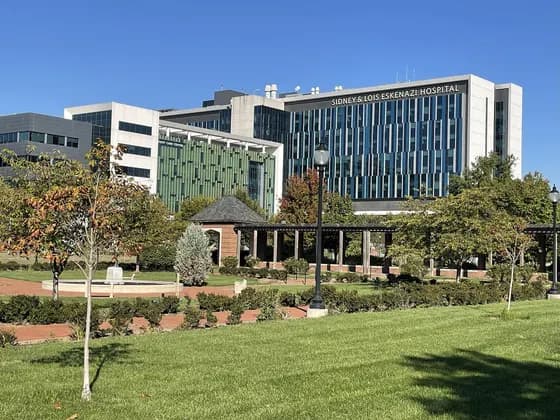
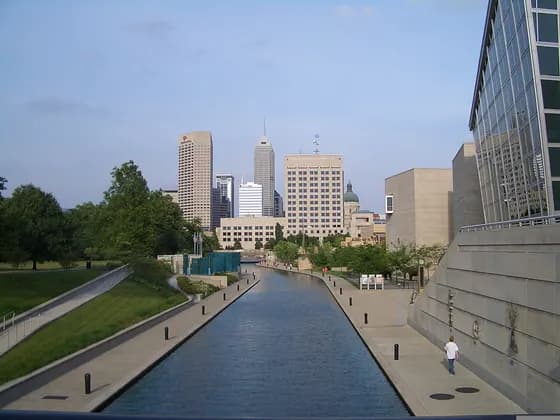
Photo: Sdkb · CC BY-SA 4.0 · cropped
Photo: Jaireeodell · CC BY 4.0 · Photo: User:Vmenkov · CC BY-SA 3.0 · Photo: Drew Tarvin · CC BY 2.0
The Indiana University School of Medicine MD program at a glance (2027 entry)
Indiana University School of Medicine (IU School of Medicine, or IUSM) awards the Doctor of Medicine (MD) after four years. It teaches one statewide curriculum on nine campuses: its largest campus in Indianapolis and regional campuses in Bloomington, Evansville, Fort Wayne, Muncie, Northwest-Gary, South Bend, Terre Haute and West Lafayette. About 370 students start each year. The regional campus system, begun in 1971, first taught only the first two years; all nine campuses now offer clinical training through the final year.
The first two years make up Phase 1, the pre-clerkship phase. Foundational courses in anatomy, cell biology and physiology come first, then courses that work through the body one organ system at a time. A clinical skills course runs alongside from the third week, so you practice histories and examinations on standardized patients, people trained to act as patients, while you learn the science. Anatomy is taught by cadaver dissection.
Phase 1 ends with about six weeks of dedicated study for Step 1 of the United States Medical Licensing Examination (USMLE), which you must take before clerkships, the core clinical rotations of Phase 2. Phase 3, the final year, prepares you for residency, the supervised specialty training every new doctor completes. Its required rotations include a sub-internship, in which you work close to the level of a first-year resident.
Where you train depends on your campus, assigned by lottery after acceptance. Three campuses also run four-year tracks in rural medicine, urban medicine and mental health care. Optional scholarly concentrations, most tied to a campus, add a mentored research project without adding time.
| Degree | MD, fully accredited by the Liaison Committee on Medical Education |
|---|---|
| Program length | 4 years; MD/PhD usually 7 to 8; MD/MBA adds a year |
| Class size | About 370 first-year students across nine campuses |
| Campuses | Indianapolis plus eight regional campuses, assigned by lottery after acceptance |
| Teaching style | Foundational, then organ-system courses, with clinical skills alongside all year |
| Anatomy | Cadaver dissection in Human Structure, the first science course |
| First patient contact | Standardized patients in clinical skills from week 3 of Year 1 |
| Step 1 timing | Before clerkships; February to April 2029 for 2027 entrants, on current calendars |
| Grading | Year 3 clerkships Honors to Fail; final year and electives Satisfactory/Fail |
| Clinical sites | Over 400 partner sites, including IU Health, Eskenazi and the Roudebush VA |
What makes the Indiana University School of Medicine MD program different
Nine campuses on one statewide curriculum
All nine campuses teach the same courses, and Phase 1 follows one statewide calendar of course and exam dates. Campus sizes differ: the school's fact sheet counts 802 MD students in Indianapolis and 62 to 99 on each regional campus, across all four years.
Four-year tracks in rural, urban and mental health care
Three campuses run tracks you ask to join when you apply. Terre Haute has the Rural Medical Education Program, and Northwest-Gary the Urban Medicine Program, which requires all four years there. Evansville's Mental Health in Medicine Track trains you to assess and treat mental health problems in primary care.
Scholarly concentrations rooted in each campus
Eighteen optional concentrations, from Rural Health in Terre Haute to Genetics in Medicine in Indianapolis, pair topic courses with a mentored project. Finishing earns eight weeks of elective credit and a transcript designation, and the school's 2025-26 annual report says about a third of students take part.
Your own handheld ultrasound for the clerkship year
Since April 2025, every student starting Phase 2 has been issued a point-of-care ultrasound (POCUS) device and an iPad mini. Four clerkships set POCUS coursework, a hands-on assignment and a self-assessment, and you hand the kit back at the end of the year.
Family medicine one-on-one, anywhere in Indiana
The four-week family medicine clerkship sends every student to work one-on-one with a family physician somewhere in Indiana, often in a smaller community. A survey beforehand helps the clerkship place you where it suits you, wherever possible.
A final year aimed at the first day of residency
Phase 3 requires a critical care selective, a required rotation in an intensive care unit you choose, plus a sub-internship, emergency medicine and radiology. Transitions 3 is a month-long residency-preparation course, and open blocks leave room for interviews and Step 2 CK, the second licensing exam.
How Indiana University School of Medicine teaches medicine
Statewide course directors work with site leaders on all nine campuses to build shared teaching and assessments. In Phase 1, each block course, such as Host Defense, runs alongside two courses that last the whole year: Foundations of Clinical Practice (FCP) and Health Systems Science (HSS).
Block courses mix lectures with small-group sessions built on clinical cases, labs, self-directed learning assignments and statewide grand rounds, such as the renal panels in Renal and Respiratory. Nutrition is threaded through several courses and taught most fully in Gastrointestinal System and Nutrition, which registered dietitians help teach.
In Phase 2 you learn mainly by caring for patients on clinical teams, and the school says most clerkships have one student per preceptor. In Phase 3 the emphasis shifts to responsibility: on emergency medicine, for example, you act as the primary caregiver, placing orders for a faculty co-signature.
The ways you will learn
| Statewide recorded lectures | Much of the core science comes in lectures recorded once for all nine campuses and revised after student and faculty feedback, with time set aside in course schedules to watch them. |
|---|---|
| Small-group sessions | Groups work through clinical cases and practice questions. In Host Defense, for example, your group researches immune diseases, then identifies them from short cases; Health Systems Science uses journal clubs and guided reflections. |
| Standardized patient sessions | In FCP you practice on standardized patients, with video review of your first practice encounter and of the fall OSCE, a circuit of timed clinical stations. Your communication is scored with a validated tool, the CARE measure. |
| Service learning | Every campus runs medical service-learning projects with community partners, each with an orientation, the service and a reflection. Curricular programs, offered through electives and global health programs in Kenya, Honduras, Mexico and elsewhere, appear on your academic record. |
How anatomy is taught at Indiana University School of Medicine
Anatomy is taught in Human Structure, a nine-week course from mid-August to mid-October of Year 1. It covers gross anatomy, histology and embryology, and trains you to explain the anatomical basis of common conditions and injuries. Embryology lectures follow the matching gross anatomy lectures, and surface anatomy is linked to the examination skills you learn in FCP.
You learn by dissecting donated bodies in assigned groups, using Grant's Dissector as the official instructions. Prosection videos, recordings of specimens already dissected, preview each lab, and peer-teaching guides set out what to cover when students teach each other. After student feedback, gross anatomy labs were lengthened from two hours to three.
The course includes an Introduction to Anatomical Donors session, with a video on the perspectives of donors and their families, and more than 500 practice questions. Anatomy returns in the final-year radiology rotation, which uses imaging to review anatomy, physiology and pathology.
When you first meet patients at Indiana University School of Medicine
Clinical skills start in the third week of Year 1, when Foundations of Clinical Practice 1 begins. You learn to take a history and examine a patient, practicing on standardized patients, and the course includes clinic visits that you debrief in your small group, plus POCUS and nutrition counseling. Summative OSCEs come in November and from late April to early May.
FCP 2 runs from August to February of Year 2 and builds communication skills before clerkships. Two campus tracks add real patients from the first semester. The rural track's page describes weekly work with a rural physician preceptor and a monthly free clinic. Urban Medicine Program students join a clinic team at a federally qualified health center, a community clinic for underserved patients, and follow the same patients for four years.
In the summer after Year 1, the Hospital Medicine Education program offers four to eight weeks at a community hospital, up to 40 hours a week. Student-led free clinics in Indianapolis, Fort Wayne, South Bend, Terre Haute and West Lafayette let you help care for uninsured patients under physician supervision.
The Indiana University School of Medicine curriculum, year by year
- Year 1
Foundations and the first organ systems
Year 1 runs from August to mid-May, after statewide orientation in late July. Foundational science fills the fall and early winter, then organ-system teaching starts with immunity and infection and ends with the brain and behavior. About 11 weeks of summer follow, when many students begin research or a scholarly concentration.
- Orientation for 2027 entrants, July 26 to 30, includes a convocation where you recite the Physician's Oath and a first meeting with your learning community, a small group of students with physician mentors.
- Transitions 1 (two weeks): your role as a novice member of the care team, learning skills and guidelines on using AI.
- Human Structure (nine weeks) and Molecules to Cells and Tissues (seven): anatomy by dissection, then molecular, cell and tissue biology and clinical genetics.
- Fundamentals of Health and Disease (six weeks, January to February): physiology, pathophysiology and pharmacology.
- Host Defense, then Neuroscience and Behavior (six weeks each): immunity and infection, then the brain, nervous system and mind-body links.
- FCP 1 and HSS 1 all year: clinical skills, plus health policy, economics, biostatistics and health systems improvement.
- Year 2
Organ systems, then Step 1
Year 2 classes run from August to late February in four six-week organ-system courses, covering how each system works, its diseases, pathology and drug treatment, with FCP 2 and HSS 2 alongside. About six weeks of Step 1 study follow, and Phase 2 begins in mid-April.
- Cardiovascular and Hematology (August to September), including a blood-banking session run as an escape room.
- Renal and Respiratory (September to October), with renal and pulmonary grand rounds.
- Endocrine, Reproductive, Musculoskeletal and Dermatologic (late October to December), which also covers ethical and psychosocial issues.
- The Comprehensive Basic Science Exam (CBSE), a 200-question practice exam for Step 1 from the National Board of Medical Examiners (NBME), in early January.
- Gastrointestinal System and Nutrition (January to February), the main nutrition course, from digestion and vitamins to malabsorption and obesity.
- FCP 2 adds a session on breaking bad news with standardized patients.
- Year 3
Phase 2: the core clerkships
The clerkship year runs from mid-April to the following April. It opens with Transitions 2, two weeks of lectures, small groups and cases on your home campus; in recent years the White Coat Ceremony and an orientation to clerkships have followed in Indianapolis. The order of rotations differs from student to student.
- Internal medicine (eight weeks), inpatient and community-based, building hypothesis-driven history taking and illness scripts, mental models of how diseases present.
- Surgery (eight weeks): four weeks of general surgery and four on one of nine subspecialty services.
- Pediatrics (eight weeks), about half inpatient and half outpatient; Spanish speakers may work in clinics run entirely in Spanish.
- Obstetrics and gynecology (six weeks, lengthened from four) paired with two weeks of anesthesia, which requires proficiency in bag-mask ventilation.
- Family medicine, neurology and psychiatry (four weeks each). Neurology is a combined neurology and neurosurgery clerkship: you rotate among adult neurology, child neurology and neurosurgery, with at least two weeks of adult neurology.
- A four-week open block and a winter break, plus Health Systems Science 3: Sessions to Enhance Physician Success (HSS3-STEPS), nine virtual days on topics such as death and dying.
- A clerkship month is 19 weekdays, or 25 or 27 days counting weekends.
- Year 4
Phase 3: advanced clinical work and residency preparation
Phase 3 begins in early May, after a short Step 2 study period, and runs in 12 four-week rotations before graduation the following May. The school tries to schedule a rotation in your intended specialty in the first five months, so you can earn a letter of recommendation for residency applications, which open in September. Match Day, when residency placements are announced, is in mid-March.
- Sub-internship (four weeks): internal medicine on every campus except Bloomington and South Bend, family medicine on seven campuses, and general surgery, obstetrics and gynecology or pediatrics only in Indianapolis. If your campus lacks the one you want, you may take it in Indianapolis or at another campus offering it.
- Critical care selective (four weeks) in an adult, pediatric or neonatal intensive care unit, or a neuro or cardiac critical care service.
- Emergency medicine (four weeks), opening in most months with a simulation, procedures and airway day; the department says students work about 14 nine-hour shifts.
- Radiology (two weeks): which scan to order and how common diseases look on different kinds of imaging.
- Transitions 3 (four weeks, in Rotation 10, 11 or 12), a pass/fail residency-preparation course in specialty tracks, with simulations, procedure practice and in-person sessions in Indianapolis.
How you are assessed at Indiana University School of Medicine
Phase 1 courses are examined several times each: Human Structure has four exam dates in nine weeks for 2027 entrants. Exam scores still count after Step 1 went pass/fail, because the school uses them, with clerkship grades, to decide who is eligible for Alpha Omega Alpha, the national medical honor society.
In FCP 1 the spring OSCE counts separately from the rest of the course grade: you need at least 75% on it and 70% overall to pass. A failed Phase 1 course means four weeks of study for a remediation exam or, if you fail the FCP spring OSCE, a bridge program and another OSCE. Successful remediation shows on your transcript as F/P, a remediated failure.
The CBSE, taken in person on your campus, shapes your Step 1 plan. Under the current Step 1 guide, students whose CBSE predicts a 50% or lower chance of passing get an open block at the start of Phase 2 for extra study. Everyone aims for a 99% predicted chance on two practice exams before sitting Step 1. You must take Step 1 before clerkships, and after a failure you must retake and pass it before going on.
Third-year clerkships are graded Honors, High Pass, Pass or Fail, combining clinical evaluations with an NBME subject exam, often called a shelf exam, at the end of each rotation. Pediatrics, for example, weights clinical evaluations at 50%, the exam at 25% and assignments at 25%. A mid-rotation practice quiz counts for 2 to 3%, and at the end of the year you may retake one shelf exam to raise a grade.
A failed shelf exam is remediated after at least four weeks of study and caps that clerkship at Pass. In late April everyone sits the Comprehensive Clinical Science Exam (CCSE), a practice exam for Step 2 CK, the USMLE's clinical knowledge test. Step 2 CK is a graduation requirement, due by the end of August of Year 4: Aug. 25, 2027 for the Class of 2028. Final-year clerkships, selectives and electives have been graded Satisfactory or Fail since 2023-24.
Step 1 has been reported only as pass or fail for exams taken since January 26, 2022. In August 2026 the USMLE program announced a move to designated testing dates from January 2029, with Step exams offered less often each year. Its June 2026 notice had named 2028.
- On the current schedule, a student entering in 2027 would take the CBSE on Jan. 8, 2029 and sit Step 1 in the study period from Feb. 24 to April 4, 2029. Step 2 CK would follow by about the end of August 2030, if the school's deadline pattern holds.
- Both Step dates fall after the switch, so the days you can book will depend on the USMLE's testing calendar. The USMLE says it will publish that calendar more than a year ahead, and school calendars may still change.
- The Clinical Performance Exam (CPX), an end-of-clerkship-year OSCE, is held between May and July at the IU Health Simulation Center at Fairbanks Hall in Indianapolis. It also scores your notes, oral presentation and POCUS; results stay off your transcript, but you must pass or remediate it to graduate.
- The Liaison Committee on Medical Education (LCME) accredits MD programs in the United States. IU received full accreditation for the maximum eight-year term on Nov. 13, 2025, and the LCME directory, updated Oct. 14, 2026, lists its next survey in 2032-33.
- For MD students, attending an LCME-accredited school is what makes you eligible to sit Step 1 and Step 2 CK. Students at osteopathic (DO) schools and at eligible schools outside the United States qualify through other routes.
Indiana University School of Medicine clinical rotations: where you will actually train
After acceptance you rank all nine campuses, and a computerized lottery assigns you based on applicants' rankings and each campus's capacity, with notifications from May. Early Decision Program students commit to their campus for the first three years, though they may be assigned up to three clerkships on another campus. Others can stay for all four years, space permitting, or ask to move for Years 3 and 4.
The school works with over 400 clinical partner sites statewide, and all third-year rotations are in Indiana. Students based in Indianapolis must do some clerkships at regional campuses, as many as four months not counting family medicine, with housing provided. Regional students may take one third-year clerkship in Indianapolis with housing paid, and campuses without inpatient pediatrics may send students elsewhere for it.
Within a clerkship, hospital sites are usually assigned about a month ahead, after the clerkship collects your preferences. In the final year you can transfer campuses if most of your rotations will be there, and regional students get housing for one rotation in Indianapolis. Student numbers below come from the school's fact sheet, which is updated each February.
802 MD students. Eskenazi is a county teaching hospital serving Marion County, and the VA serves Indiana's veterans. IU's pages say IU Health plans to open a new downtown hospital in late 2027 that combines Methodist and University hospitals. On that timeline, students entering in 2027 would do most of their Indianapolis IU Health adult clerkships there.
- IU Health Methodist and University hospitals
- Riley Hospital for Children at IU Health
- Sidney & Lois Eskenazi Hospital
- Richard L. Roudebush VA Medical Center
- Community Health Network facilities
94 MD students, taught beside the 365-bed IU Health Bloomington Hospital. Undated campus pages describe year-long longitudinal third-year clerkships for eight students a year, each specialty taught across the year by community mentors; confirm this still runs.
- IU Health Bloomington Hospital
- IU Health Morgan Hospital, Martinsville
- IU Health Bedford Hospital (building under construction)
99 MD students. Home of the four-year Mental Health in Medicine Track, run with the Stone Center for Child and Adolescent Psychiatry.
- Deaconess Midtown Hospital
- Deaconess Gateway Hospital, Newburgh
- Deaconess Women's Hospital, Newburgh
- Ascension St. Vincent Evansville
- Good Samaritan Hospital, Vincennes
- Deaconess Memorial Medical Center, Jasper
89 MD students, on the Purdue Fort Wayne campus, with clerkships through the Parkview and Lutheran systems in the city and nearby rural communities.
- Parkview Regional Medical Center
- Parkview Hospital Randallia
- Lutheran Hospital
- Lutheran Downtown Hospital
- Dupont Hospital
- Fort Wayne VA Medical Center
- Hospitals in Auburn, Columbia City, Huntington, Kendallville, Angola and Bluffton
62 MD students. The campus sits inside Ball Memorial Hospital, the only IU School of Medicine campus on hospital property, and the school says Muncie gives especially strong exposure to primary care.
- IU Health Ball Memorial Hospital
86 MD students, on the IU Northwest campus 25 miles from downtown Chicago. Urban Medicine Program students spend all four years here, often rotating in federally qualified health centers.
- Methodist Hospitals Northlake, Gary
- Methodist Hospitals Southlake, Merrillville
- Community Hospital, Munster
- Franciscan Health Crown Point, Dyer and Munster
- Northwest Health Porter, Valparaiso
- St. Catherine Hospital, East Chicago
- St. Mary Medical Center, Hobart
- Regional Health Systems, Merrillville
83 MD students, on the University of Notre Dame campus; students help run the Navari Student Outreach Clinic for uninsured and underserved patients.
- Beacon Memorial Hospital, South Bend
- Beacon Elkhart General Hospital
- Goshen Hospital
- Saint Joseph Regional Medical Center, Mishawaka
- Navari Student Outreach Clinic
79 MD students. The home campus for all four years of the Rural Medical Education Program, whose clerkships draw on a statewide network of clinical sites.
- Union Hospital
- Union Hospital Regional
- Union Hospital Clinton
- Greene County General Hospital, Linton
- Horizon Health, Paris, Illinois
- Mollie Wheat Memorial Clinic
65 MD students, on the Purdue University campus, with optional interprofessional sessions alongside Purdue pharmacy and nursing students.
- IU Health Arnett Hospital, Lafayette
- Franciscan Health, Lafayette
- River Bend Hospital, West Lafayette
Electives, selectives and away rotations at Indiana University School of Medicine
You need at least 20 weeks of electives, taken across Years 3 and 4, from a catalog of more than 500 courses. At least 12 weeks must be clinical, and at least 12 must be catalog courses rather than special electives you arrange yourself. Most electives last four weeks, and all are graded Satisfactory or Fail.
Catalog electives come in four types: Clinical Practice; Advanced Clinical, where you work as an integrated team member, a good source of residency letters; Advanced Science Research; and Professional Development. A completed scholarly concentration counts as eight weeks of non-clinical credit, and up to two career exploration electives, mostly shadowing, can count.
Using your Year 3 open block for an elective adds a month of open time to Year 4. Year 4 already has two four-week open blocks and one two-week block besides winter break, used for interviews, Step 2 CK or more electives.
Away rotations at other schools are optional, and the school says many of its students do none. You apply through the Visiting Student Learning Opportunities (VSLO) service of the Association of American Medical Colleges (AAMC) or directly to a host. A special elective request is due at least 30 days ahead, and a host's acceptance does not guarantee IU credit.
International electives are open only to fourth-year students, through approved courses: Medicine in Kenya, Healthcare in Developing Countries, International Research, a Latin America global health elective (ENLACE) and a global health elective in Ghana. The family medicine department describes ENLACE as four weeks in Nicaragua with Spanish classes, a host family and clinical shadowing.
Dual degrees and research years at Indiana University School of Medicine
The Medical Scientist Training Program (MSTP), run with Purdue's Weldon School of Biomedical Engineering, awards the MD and a PhD, usually in seven to eight years, and admits about eight students a year. After summer research rotations and Phase 1, you spend about years three to six on the PhD, then return for clerkships.
The MD/MPH with the Richard M. Fairbanks School of Public Health takes four years if you join at admission, starting with three courses the summer before Year 1, or five if you apply in Year 3. Its courses are online. The MD/MBA with the Kelley School of Business starts after Year 3 and adds a year, taken as one expedited year or over two years alongside rotations.
There are also an MD/JD with the McKinney School of Law, master's degrees in fields such as bioethics and biomedical engineering, and a Notre Dame master's in global health within a five-year MD. The Indiana University Medical Student Program for Research and Scholarship (IMPRS), the school's office for student research, supports summer research with mentors and funding. Fort Wayne also runs a nine-week summer research fellowship.
Scholarly concentrations are optional programs that run alongside the MD without adding time or cost, and you can join only one. Each combines an online research fundamentals course, topic courses, a mentored project, a manuscript submitted to a peer-reviewed journal (publication is not required) and a poster at Education Day. Most students start in the summer after Year 1 and must finish by Jan. 31 of Year 4.
You apply in December and January of Year 1, though some regional concentrations recruit on arrival, so the school encourages applicants to favor campuses hosting the ones they want. The 18 current concentrations are listed below.
- Bloomington: Human Sexuality and Health, with the Kinsey Institute; Medical Education.
- Evansville: Quality and Innovation in Health Care.
- Fort Wayne: Health Care Integration and Healthy Aging.
- Indianapolis: Biomedical Research, which requires an IMPRS summer after Year 1; Genetics in Medicine.
- Muncie: Health Promotion and Disease Prevention.
- Northwest-Gary: Urban Medicine and Health Care Disparities, required in the Urban Medicine Program.
- South Bend: Ethics, Equity and Justice.
- Terre Haute: Rural Health, open only to Terre Haute students.
- West Lafayette: Biomedical Engineering and Applied Medical Technology; Care of Hispanic/Latino Patients; One Health and Translational Research.
- Statewide and online: Artificial Intelligence in Medicine, Business of Medicine, Global Health, Public Health, and Religion and Spirituality in Medicine.
Facilities and support at Indiana University School of Medicine
Where you will learn
In Indianapolis, Phase 1 teaching is based in the Medical Education and Research Building, opened in 2025. It has two 200-seat classrooms, 24 small-group rooms, a gross anatomy lab for 210 students and 46 clinical skills rooms. Each of the 12 learning communities has a suite with lockers, a members-only study area and a kitchenette.
The IU Health Simulation Center at Fairbanks Hall, run by the school, the IU School of Nursing and IU Health, hosts the Clinical Performance Exam. The Ruth Lilly Medical Library serves all nine campuses and delivers print books to yours.
Evansville teaches in the Stone Family Center for Health Sciences, opened in 2018, with a large human structures lab, a virtual hospital and a 12-room virtual clinic. Muncie's Edmund F. Ball Medical Education Center has a 10,000 square foot simulation facility, and Terre Haute uses the Rural Health Innovation Collaborative Simulation Center at Union Hospital.
Support while you study
Support runs through the Mentoring and Advising Program (MAP): academic advising, career mentoring, wellness and connection. Your first-year campus assigns you a lead advisor, a full-time staff member you must meet one-on-one at least three times a year. Lead advisors track your progress, direct you to tutoring and, in Year 4, help prepare your Medical Student Performance Evaluation (MSPE), the school's summary letter for residency programs.
Career mentors, usually residency program directors or department heads, help plan Year 4, from electives to Step 2 timing and applications. The school says every student can get academic counseling from people with no role in grading or promoting them, and peer tutors are free.
Every student belongs to a Professional Learning Community, whose physician mentors lead discussions on professional identity and the emotional side of medicine. Indianapolis has 12, each named after a native Indiana tree such as Paw Paw or Redbud, with two physician mentors. In spring 2026 each had 36 students from Years 1 to 3, with plans to grow to 48 across all four years.
Mental Health Services offers confidential counseling on every campus, in person in Indianapolis and by video, with some local services on each regional campus and a 24-hour crisis line. A Wellness Coalition spans all nine campuses.
Is the Indiana University School of Medicine program right for you?
This program may suit you if
- You like the range of IU's settings, from Indianapolis and its large teaching hospitals to much smaller regional campuses, and want the option of staying on one campus for all four years.
- You already know you want rural, urban underserved or mental health work and would commit to a four-year track in Terre Haute, Northwest-Gary or Evansville.
- You want a mentored research project and manuscript, through a scholarly concentration, without adding a year.
- You like structured exam preparation: a required practice exam, set study time and advisors who adjust your Step 1 plan.
- You want hands-on ultrasound skills, with your own device through the clerkship year.
Things to think about
- Your campus comes from a lottery, so you may not get your first choice.
- If you are based in Indianapolis for Year 3, expect up to four months of clerkships on regional campuses.
- Step 1 must be taken in a set window before clerkships, and a delay can push a clerkship into Year 4 or postpone graduation.
- Third-year clerkship grades are tiered and weigh NBME exam scores, and a failed shelf exam caps that clerkship at Pass.
- Pediatrics, general surgery and obstetrics and gynecology sub-internships run only in Indianapolis.
Indiana University School of Medicine MD program — frequently asked questions
Applying to Indiana University School of Medicine?
How to get into Indiana University School of Medicine
Prerequisites, MCAT, AMCAS personal statement, secondaries and interview, step by step.
Open the guide →Indiana University School of Medicine admissions profile
MCAT and GPA profile, acceptance rate, interview format and key dates.
See the profile →Compare Indiana University School of Medicine with other schools
Put the teaching style, anatomy teaching and clinical sites next to another school.
Open the comparison →Prepare for the Indiana University School of Medicine interview
Format breakdown, school-specific sample questions and prep tips from tutors who interviewed here.
Read the guide →Where this Indiana University School of Medicine program guide came from
This guide was written from 141 official sources — Indiana University School of Medicine's own program pages and curriculum documents, plus the accreditor and the hospitals and health systems the school trains students in where they publish detail — read on 2026-10-24, then checked claim by claim against those sources.
- IU School of Medicine: MD Program
- IU School of Medicine: MD Curriculum
- IU School of Medicine: Curriculum Diagram (Phase 1-3 sample schedules)
- IU School of Medicine: MD Curriculum Year One
- IU School of Medicine: Transitions One
- IU School of Medicine: Human Structure course
- IU School of Medicine: Molecules to Cells and Tissues course
- IU School of Medicine: Fundamentals of Health and Disease course
- IU School of Medicine: Host Defense course
- IU School of Medicine: Neuroscience and Behavior course
- IU School of Medicine: Foundations of Clinical Practice One
- IU School of Medicine: Health Systems Science 1
- IU School of Medicine: MD Curriculum Year Two
- IU School of Medicine: Cardiovascular and Hematology course
- IU School of Medicine: Renal and Respiratory course
- IU School of Medicine: Gastrointestinal System and Nutrition course
- IU School of Medicine: Endocrine, Reproductive, Musculoskeletal and Dermatologic course
- IU School of Medicine: Foundations of Clinical Practice Two
- IU School of Medicine: MD Curriculum Year Three (Phase 2)
- IU School of Medicine: Year Three required clerkships
- IU School of Medicine: Anesthesia required clinical course
- IU School of Medicine: Family Medicine clerkship
- IU School of Medicine: Internal Medicine clerkship
- IU School of Medicine: Neurology clerkship
- IU School of Medicine: Obstetrics and Gynecology clerkship
- IU School of Medicine: Pediatrics clerkship
- IU School of Medicine: Surgery clerkship
- IU School of Medicine: MD Curriculum Year Four (Phase 3)
- IU School of Medicine: Year Four required rotations
- IU School of Medicine: Emergency Medicine clerkship
- IU School of Medicine: Radiology rotation
- IU School of Medicine: Sub-Internships
- IU School of Medicine: MD academic calendars 2026-27, 2027-28 and 2028-29
- IU School of Medicine: Curriculum governance and Curriculum Council Steering Committee bylaws
- IU School of Medicine: Scholarly Concentrations Program
- IU School of Medicine: Nutrition Curriculum
- IU School of Medicine Medical Student Portal: Electives information and FAQs
- IU School of Medicine Medical Student Portal: Phase 1 (Years 1 and 2)
- IU School of Medicine Medical Student Portal: Phase 1 statewide calendar 2026-27 and 2027-28
- IU School of Medicine Medical Student Portal: Step 1 Guide, Class of 2029
- IU School of Medicine Medical Student Portal: Phase 2 (Year 3)
- IU School of Medicine Medical Student Portal: Phase 2 curriculum
- IU School of Medicine Medical Student Portal: Phase 2 exam remediation, retakes and CCSE
- IU School of Medicine Medical Student Portal: Phase 2 rotation schedules 2026-27 and 2027-28
- IU School of Medicine Medical Student Portal: Step 2 CK Guide
- IU School of Medicine Medical Student Portal: Phase 2 scheduling and FAQs
- IU School of Medicine Medical Student Portal: Scheduling guidelines for Phase 2
- IU School of Medicine Medical Student Portal: Phase 3 curriculum and graduation requirements
- IU School of Medicine Medical Student Portal: Phase 3 scheduling, electives and away rotations
- IU School of Medicine Medical Student Portal: Scheduling guidelines for Phase 3
- IU School of Medicine Medical Student Portal: Phase 3 rotation schedules 2026-27 and 2027-28
- IU School of Medicine Medical Student Portal: Clinical Performance Exam (CPX)
- IU School of Medicine Medical Student Portal: Summer Remediation Program
- IU School of Medicine Medical Student Portal: Hospital Medicine Education Program
- IU School of Medicine Medical Student Portal: Hospital onboarding, 2026-27
- IU School of Medicine: LCME accreditation
- IU School of Medicine: Statewide campuses
- IU School of Medicine: Bloomington campus
- IU School of Medicine: MD education in Bloomington
- IU School of Medicine Bloomington: Longitudinal third-year clerkships (undated)
- IU School of Medicine: Evansville campus
- IU School of Medicine: MD education in Evansville
- IU School of Medicine: Fort Wayne campus
- IU School of Medicine: MD education in Indianapolis
- IU School of Medicine: Indianapolis clinical partners
- IU School of Medicine: Muncie campus
- IU School of Medicine: Muncie facilities
- IU School of Medicine: Northwest-Gary campus
- IU School of Medicine Northwest-Gary: Urban Medicine Program
- IU School of Medicine: South Bend campus
- IU School of Medicine: Terre Haute campus
- IU School of Medicine Terre Haute: Rural Medical Education Program
- IU School of Medicine: West Lafayette campus
- IU School of Medicine: MD education in West Lafayette
- LCME: Accredited programs directory (updated October 14, 2026)
- USMLE: Updated timeline for designated testing dates, transition in January 2029 (August 6, 2026)
- USMLE: Designated Testing Dates Information Hub
- USMLE: Transition to limited testing dates starting in 2028 (June 23, 2026 notice, since updated)
- USMLE: Designated Testing Dates FAQs (updated August 6, 2026)
- USMLE: Step 1 transition to pass/fail only score reporting
- USMLE Bulletin of Information: Eligibility
- IU School of Medicine: MD student support
- IU School of Medicine: Mentoring and Advising Program
- IU School of Medicine: Health and wellness services
- IU School of Medicine: Mentoring and Advising FAQ
- IU School of Medicine: Lead advisors
- IU School of Medicine Medical Student Portal: Academic success and tutoring services
- IU School of Medicine: Medical service learning
- IU School of Medicine: Mental Health Services
- IU School of Medicine: Ruth Lilly Medical Library
- IU School of Medicine: MD dual degree programs
- IU School of Medicine: Medical Scientist Training Program (MD/PhD)
- IU School of Medicine: MSTP curriculum
- IU School of Medicine: MD/MBA dual degree with the Kelley School of Business
- IU School of Medicine South Bend: Dual degrees with Notre Dame
- IU Richard M. Fairbanks School of Public Health: MD-MPH dual degree
- IU School of Medicine Medical Student Portal: Improving courses (action on student feedback)
- IU School of Medicine Medical Student Portal: Hospital resource guides and student space improvements
- IU School of Medicine: Campus placement
- IU School of Medicine: Early Decision Program
- IU School of Medicine Evansville: Mental Health in Medicine Track
- IU School of Medicine Medical Student Portal: POCUS in the clerkships
- IU School of Medicine Medical Student Portal: Scholarly Concentrations
- IU School of Medicine Medical Student Portal: Special, away and international electives
- IU Medicine magazine: Finding community in the Medical Education and Research Building (May 29, 2026)
- IU School of Medicine Medical Student Portal: First-year orientation, Class of 2031
- IU School of Medicine: MD Academic Bulletin
- IU School of Medicine Department of Obstetrics and Gynecology: Clerkship grading
- IU School of Medicine Department of Pediatrics: MD education and clerkship grading
- IU School of Medicine Medical Student Portal: Alpha Omega Alpha
- IU School of Medicine Department of Family Medicine: MD education
- IU School of Medicine Department of Medicine: MD education
- IU School of Medicine Department of Surgery: Medical student education
- IU School of Medicine Department of Emergency Medicine: Clerkship
- IU School of Medicine: Student outreach clinics
- IU School of Medicine: Artificial Intelligence in Medicine concentration
- IU School of Medicine: Biomedical Engineering and Applied Medical Technology concentration
- IU School of Medicine: Biomedical Research concentration
- IU School of Medicine: Business of Medicine concentration
- IU School of Medicine: Care of Hispanic/Latino Patients concentration
- IU School of Medicine: Ethics, Equity and Justice concentration
- IU School of Medicine: Genetics in Medicine concentration
- IU School of Medicine: Global Health concentration
- IU School of Medicine: Health Care Integration and Healthy Aging concentration
- IU School of Medicine: Health Promotion and Disease Prevention concentration
- IU School of Medicine: Human Sexuality and Health concentration
- IU School of Medicine: Medical Education concentration
- IU School of Medicine: One Health and Translational Research concentration
- IU School of Medicine: Public Health concentration
- IU School of Medicine: Quality and Innovation in Health Care concentration
- IU School of Medicine: Religion and Spirituality in Medicine concentration
- IU School of Medicine: Rural Health concentration
- IU School of Medicine: Urban Medicine and Health Care Disparities concentration
- IU School of Medicine: Fact sheet (statewide medical student body)
- IU School of Medicine: School history
- IU School of Medicine Medical Student Portal: IMPRS research program
- IU Health: The Simulation Center at Fairbanks Hall
- IU School of Medicine: Scholarly Concentrations Program Annual Report 2025-2026 (PDF)
- IU School of Medicine Department of Emergency Medicine: Residency training sites, including the new downtown IU Health hospital
- IU School of Medicine Department of Medicine: Internal medicine residency hospitals
- IU School of Medicine Department of Medicine: Pulmonary and critical care fellowship clinical locations
Curricula are restructured between cycles. Anything here that decides your application — how anatomy is taught, a clinical campus assignment, a required research year — should be confirmed against the official page for your entry year.
Applying to Indiana University School of Medicine?
We help US applicants with MCAT strategy, the AMCAS personal statement, secondary essays and interview prep — everything you need for a competitive Indiana University School of Medicine application.