
The FSU College of Medicine MD program
What you actually study, and where you will be
FSU College of Medicine's MD is a 4-year program taught through case-based learning in an integrated curriculum, with patient contact from Year 1 and clinical rotations in six Florida regional campuses, plus rural Florida and Georgia sites (2027 entry). FSU's MD is built around community practice. Years 1 and 2 are taught in Tallahassee through integrated body-system courses and case-based small groups, with cadaver dissection, standardized patients and visits to community physicians from Year 1. For Years 3 and 4 you move to one of six regional campuses across Florida, or a rural program, and learn one-on-one from community physicians on the college's faculty.
- Degree
- MD
- Length
- 4 years
- Teaching
- Integrated + Case-based learning
- Clinical contact
- Year 1

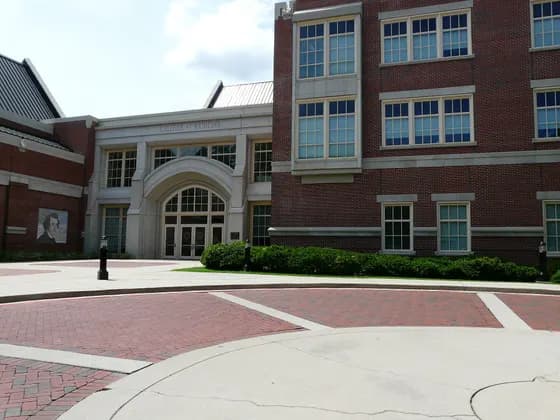
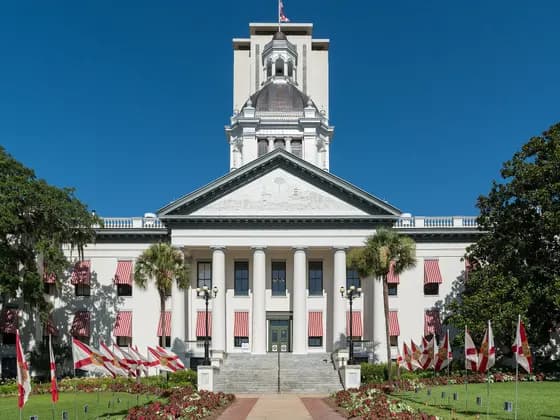
Photo: Ernie Stephens · CC0 · cropped
Photo: The Bushranger · CC BY-SA 4.0 · Photo: DXR · CC BY-SA 4.0 · Photo: (WT-de) Mistoffeles · CC BY-SA 4.0
The FSU College of Medicine MD program at a glance (2027 entry)
The Florida State University College of Medicine (FSU College of Medicine, or FSU COM) offers a four-year Doctor of Medicine (MD) program built on a community-based model. You spend Years 1 and 2 on FSU's main campus in Tallahassee, then move to one of six regional campuses across Florida, or to a rural program, for Years 3 and 4.
The college's mission centers on serving elder, rural, minority and underserved patients. The college sums up its model this way: students learn mostly in community clinics and other outpatient settings rather than a large academic medical center, directly from practicing physicians rather than residents. Even so, before graduating, every student must spend at least 4 weeks in a residency program, where doctors train in a specialty after medical school.
Years 1 and 2 are the pre-clerkship phase, the classroom-based stage before full-time clinical work. Integrated courses organized by body system teach science and clinical skills together, with case-based small groups and few formal lectures. You dissect a cadaver in your first course and, from the first weeks, practice on standardized patients, people trained to portray patients. Visits to community physicians also start in Year 1.
Clerkships, the core clinical rotations, begin in June after Year 2. Before they start, you must pass Step 1, the first exam of the United States Medical Licensing Examination (USMLE). Year 3 brings six core clerkships, a two-week community medicine course and Doctoring 3, a year-long course with a group quality-improvement project. Year 4 adds emergency medicine, geriatrics and a sub-internship, where you act as an intern under supervision. It also includes at least 16 weeks of electives, rotations you choose.
The Florida Legislature created the college in June 2000, building on the Program in Medical Sciences, which from 1971 taught the first year of medical school to 30 students a year. The law set a distributed, community-based model with a rural focus for Years 3 and 4. The Liaison Committee on Medical Education (LCME) accredits MD programs in the United States. Its directory lists the program's status as Full, with 2002 as the initial year of accreditation and 2026-27 as the next survey date (updated October 14, 2026).
| Degree | MD |
|---|---|
| Program length | 4 years, starting in late May; Years 1 and 2 in Tallahassee |
| Teaching style | Integrated body-system courses with case-based small groups |
| Anatomy | Cadaver dissection in lab teams, from the first course |
| First patient contact | Year 1: standardized patients, a senior mentor and community preceptors |
| Clinical sites | Six regional campuses, plus Marianna, Immokalee and Thomasville, Georgia |
| Grading | Pass/fail in Years 1 and 2; Honors to Fail in clerkships |
| Step 1 timing | End of Year 2, before clerkships; spring 2029 for 2027 entrants, on current schedule |
| Required scholarly work | Group quality-improvement project in Doctoring 3 |
What makes the FSU College of Medicine MD program different
Clinical years one-on-one at a regional campus
For Years 3 and 4 you move to a regional campus in Daytona Beach, Fort Pierce, Orlando, Pensacola, Sarasota or Tallahassee itself. There you are assigned to individual physicians with faculty appointments, rather than to a hospital service, and follow them wherever they work, including the hospital. Your schedule follows theirs, including weekends and holidays when they work.
A rural third year in Marianna
A limited number of students spend Year 3 in Marianna, in the Florida Panhandle, where the year is taught as a longitudinal integrated curriculum (LIC). After a boot camp at Jackson Hospital, you take all six core clerkships together across the year, following the same patients and faculty for months. Surgery and obstetrics and gynecology, though, each take one semester.
Older adults built in from Year 1
In Year 1 you and a classmate visit an older adult in the community as Senior Mentor partners. Doctoring 3 builds geriatric learning into its Year 3 cases, and the required Year 4 Primary Care Geriatrics clerkship has you follow at least two older patients as they move between care settings.
Rotations in the farm community of Immokalee
As places allow, students from any regional campus can take required or elective rotations at the Isabel Collier Read Medical Campus in Immokalee, a farm community on the edge of the Everglades. Its patients are mainly Latino, many of them Mexican migrant farm workers, and the college provides housing for rotating students.
How FSU College of Medicine teaches medicine
The pre-clerkship courses are integrated and organized by body system, grouped in the handbook as Foundations of Medicine, Human Systems in Health and Disease, and Preparation for Clinical Medicine. Each course integrates the basic, behavioral and clinical sciences, from anatomy to pharmacology, with medical humanities and the social sciences.
Teaching follows the biopsychosocial model, which considers the biological, psychological and social factors behind a patient's health. Formal lectures are limited. Before class you do readings and work through videos and notes on OnlineMedEd, an online teaching platform, then use class time to apply that knowledge to clinical cases. Whenever possible, real patients come to share their stories.
Evidence-based medicine runs through both years. Courses include journal clubs, and from the Year 1 Host-Defense course onward you complete PICO assignments, framing a clinical question by patient, intervention, comparison and outcome. In Year 1 you also review medications on a virtual case with pharmacy (PharmD) students from Florida A&M University.
From Year 3 you learn mainly alongside your clerkship faculty and meet your clerkship director weekly, while Doctoring 3 carries case-based teaching through the year.
The ways you will learn
| Interactive large groups | Large-group sessions apply what you prepared through questions, problems and peer discussion, with faculty input as the session unfolds. In the Year 2 Hematologic System course, online modules replace many traditional lectures. Weekly formative quizzes, practice tests that do not count toward your grade, help you track progress. |
|---|---|
| Case-based small groups | Small groups work through cases and problems, some revealed step by step and some built around data. In Jigsaw exercises, groups of five or six each analyze one case, then re-mix so that every member teaches their case to a new group. In Year 2, a group of 10 meets a clinician facilitator weekly to practice clinical reasoning. |
| Clinical Learning Center sessions | In the Clinical Learning Center (CLC) you interview and examine standardized patients in groups of two to four, with faculty and teaching assistants giving feedback on the spot. Encounters are recorded for review with clinical mentors, and later sessions add skills such as ultrasound of the aorta. |
| Doctoring 3 sessions | On Wednesday afternoons in Year 3, each campus meets for case presentations co-led by faculty and students and workshops on interpreting common tests. Grand Rounds are shared with physician assistant students, and three Patient-Centered Ethics (PACE) sessions cover ethics and the humanities. The course has no exams. |
A typical week on the FSU College of Medicine program
The 2025-26 course guide for Foundations of Medicine 1 gives a feel for Year 1. Each week has two mornings of physical exam practice in the CLC, a skills check on Thursday, and a Tuesday morning small group with a pair of clinical and behavioral science faculty. Friday mornings link anatomy to radiology, and large-group sessions, dissection and daily self-study fill the rest.
On a Year 3 block clerkship you work at least four full days a week with your clerkship faculty. One day goes to Doctoring 3: Wednesday afternoon sessions plus a half day alternating between your longitudinal clinic and your quality-improvement project. Call varies: surgery runs Monday to Saturday with overnight call twice a week, while psychiatry has no required overnight call.
In the Marianna LIC, a sample week starts each day with hospital time from 6:30 to 8 am, then a specialty each morning. Family medicine fills Tuesday afternoons and Doctoring 3 Wednesday afternoons, and the other afternoons are independent learning in hospital areas you choose, such as radiology.
How anatomy is taught at FSU College of Medicine
Anatomy is taught mainly in Foundations of Medicine 1: Organization and Structure, the summer course that opens Year 1. Alongside cadaver dissection it covers embryology, cross-sectional anatomy and radiologic imaging, tied to the physical exam you are learning. Histology, the study of tissue under the microscope, uses guided videos and a virtual microscope slide box.
Each lab team splits into two sub-teams that alternate days. One dissects while the other studies, practices the related physical exam in the CLC and views prosected specimens, which experts have already dissected. At the end of each lab day the dissecting team's captain shows the others what was found.
Bodies are donated through the Anatomical Board of the State of Florida, and everyone in the lab signs a Pledge of Respect. Practical exams ask you to identify tagged structures on cadavers, models, skeletons and images. The Year 2 Neuroscience course includes dissection lab sessions. Some students also return in the summer after Year 1 as teaching assistants.
When you first meet patients at FSU College of Medicine
Patient contact begins in a controlled setting: from the first weeks you practice the physical exam on classmates and standardized patients in the CLC, with weekly skills checks. The first week also introduces rural communities, one of the pillars of the college's mission.
In the fall of Year 1, the Senior Mentor Program pairs you and a classmate with an older adult who lives independently in the community. You visit three times to practice listening and history taking. From the spring you spend a half day about every other week with a preceptor, a community physician who teaches you in their office. Preceptor visits continue in Year 2.
Year 1 ends with the Summer Clinical Practicum: three weeks in May or June caring for patients under a primary care physician's direct supervision. Sites are rural, urban or geriatric settings across Florida and into southern Georgia. You take focused histories and exams, help patients quit tobacco and write a SOAP note, a standard clinical note. You also interview one patient with no set agenda, simply asking what they think you should know about their situation.
The FSU College of Medicine curriculum, year by year
- Year 1
Foundations and the first body systems
Year 1 runs a full twelve months, starting with orientation in late May: May 25-26, 2027 for the class entering in 2027. On the 2026-27 calendar, courses in Tallahassee run to the end of April. The three-week Summer Clinical Practicum follows in May or June, with a primary care physician anywhere in Florida or southern Georgia.
- Foundations of Medicine 1: Organization and Structure (about 10 and a half weeks): the biopsychosocial model, the physical exam, body structure and function through dissection, basic imaging and medical ethics.
- Foundations of Medicine 2: Molecules to Mechanisms (9 weeks): cell biology, cell signaling, microbiology, the autonomic nervous system and pharmacology, plus biostatistics, epidemiology and the medical interview.
- Host-Defense (9 weeks): immunology, immunopathology (immune-mediated disease) and neoplasia, the abnormal cell growth behind tumors.
- Cardiovascular and Pulmonary Systems (9 weeks), then Endocrine and Renal-Urinary Systems: the heart, lungs, hormones, kidneys and urinary tract in health and disease.
- Year 2
Finishing the systems, Step 1 and boot camp
On the 2025-26 curriculum map, the summer before Year 2 leaves you about 10 weeks outside the practicum for research, remediation or vacation. Year 2 itself runs nine months, from mid-August to mid-May on the 2026-27 calendar. You finish the body systems by early spring, then prepare for Step 1 and clerkships. To move up to Year 3 you must pass every Year 2 course and Step 1.
- Neuroscience: CNS and Behavior (9 weeks): the brain and spinal cord in cognition, behavior and neurological and psychiatric disease, with dissection lab sessions.
- Gastrointestinal System, including nutrition, and Musculoskeletal and Integumentary Systems, on bones, joints, muscles and skin (4 weeks each).
- Reproductive System, including pregnancy and childbirth, and Hematologic System, on diseases of the blood (4 weeks each).
- The National Board of Medical Examiners (NBME) Comprehensive Basic Science Exam, a 5.25-hour board-style test, at the end of the Hematologic course.
- A High Stakes OSCE (objective structured clinical examination), a circuit of timed clinical skills stations, that decides promotion to Year 3.
- USMLE Step 1 Independent Study (7 weeks), ending with the exam, then the Pre-Clerkship Preparation Boot Camp (3 weeks), where you practice the basic procedures and tasks used on clinical rotations.
- Year 3
Core clerkships at your regional campus
Year 3 starts in early June with a week of orientation at your regional campus and holds about 47 weeks of scheduled activities. Most students take six six-week block clerkships in one of six set orders; Marianna students take them as an LIC.
- Family medicine: office-based care of patients of all ages with a community family physician, emphasizing prevention.
- Internal medicine: inpatient and outpatient care of adults as an apprentice to an internal medicine faculty member.
- Obstetrics and gynecology: clinic, labor and delivery, and surgery, following your patients through pregnancy, delivery and the postpartum period.
- Pediatrics: one-on-one work in a general pediatrician's office, plus inpatient time with hospitalists or, where available, a residency team.
- Psychiatry: inpatient and outpatient programs, emergency departments, consultation services and correctional facilities, among other settings.
- Surgery: the operating room, clinic and office with a community general surgeon, plus the chance to arrange a half day with an anesthesiologist to learn airway management.
- Community Medicine (2 weeks): working with an agency such as a county health department, food bank or hospice, ending with a paper and a presentation to agency leaders and faculty.
- Doctoring 3 (year-long): Wednesday sessions, a longitudinal clinic with a panel of patients with chronic illness, the group quality-improvement project and a sealed letter to your future self, returned at year's end.
- Two four-week Flex electives, an OSCE in late January or early February, and a January meeting with your regional campus dean to plan Year 4.
- Year 4
Advanced clerkships, electives and the Match
Year 4 runs from late May to graduation in mid-May, in four-week blocks, with up to 8 weeks off for study, interviews and vacation. On the 2026-27 calendar, Match Day, when students learn where they will do residency, is March 19, 2027.
- Emergency Medicine (4 weeks): 128 hours of emergency department shifts, including at least three night and four weekend shifts.
- Primary Care Geriatrics (4 weeks): older adults in offices, hospitals, nursing and rehabilitation facilities and assisted living, following at least two patients as they move between settings.
- A sub-internship (4 weeks) in family or internal medicine: inpatient work as an acting intern, usually in a residency program.
- At least 16 weeks of electives, Step 2 Clinical Knowledge (CK), the second USMLE exam, and residency interviews, typically October to January.
- Residency Preparation Boot Camp (3 weeks) after Match Day: small groups, online modules and panels with residents and hospital leaders on the core tasks of a new resident.
How you are assessed at FSU College of Medicine
Years 1 and 2 are graded pass/fail, using specifications grading. You must earn a minimum number of points across exams, clinical skills checks, assignments and professionalism items, such as arriving on time and prepared, with an exam average of at least 70%. A lower average brings a temporary IR grade (incomplete, pending remediation), then remediation or repeating the course.
Exams mix faculty-written questions with customized NBME exams drawn from the national board's question bank, mostly set in clinical scenarios, and they are cumulative. Each pre-clerkship OSCE needs a score of at least 80%.
Year 3 and 4 required clerkships are graded Honors, High Pass, Pass or Fail; sub-internships Honors, Pass or Fail; and required courses such as Doctoring 3 pass/fail. Your education director grades each clerkship from faculty and clerkship director assessments, projects, patient and staff evaluations, your patient log and an end-of-clerkship exam. There are no grade quotas, so any student who meets the criteria can earn Honors.
Most clerkships end with an NBME clinical subject exam, or shelf exam, usually of 110 questions; the sub-internships have none. Honors needs at least the 75th percentile, High Pass the 60th and Pass the 10th, while geriatrics uses its own 74-question exam with cut-offs of 86%, 82% and 70%. Failing at the first attempt means a retake within 90 days and a grade no higher than Pass.
You log patients in the Encounter Tracking System (ETS), recording whether you observed, assisted or performed each encounter, against minimums from 25 in psychiatry to 110 in surgery. You also get formal feedback from your clerkship director at mid-rotation.
To graduate, you must pass every course and clerkship, Step 1, Step 2 CK and the graduation OSCE in Year 3, all within six years. You also complete required procedures and Advanced Cardiovascular Life Support (ACLS) and Basic Life Support (BLS) training. Step 1 tests the sciences basic to medicine and has been reported only as pass or fail since January 26, 2022; Step 2 CK tests clinical knowledge for supervised patient care.
- Step 1 is taken before the Pre-Clerkship Preparation Boot Camp at the end of Year 2. Step 2 CK must be taken by December 31 of the year before you graduate.
- On the current schedule, a student entering in May 2027 would take Step 1 in about March or April 2029 and start clerkships in June 2029. Step 2 CK would be due by December 31, 2030, before graduation in May 2031.
- In August 2026 the USMLE program announced a move to designated testing dates from January 2029, with Step exams offered less often each year. Its June 2026 notice had named 2028. Both exams for a 2027 entrant would fall after the change, and the program has asked schools to review rules on when students must test.
- For MD students, enrollment in an LCME-accredited program is what makes you eligible for Step 1 and Step 2 CK. Students of osteopathic medicine (DO) and of schools outside the United States qualify through other routes.
FSU College of Medicine clinical rotations: where you will actually train
The college calls itself community-based: clinical training uses hospitals, physicians' offices, clinics, nursing homes, residency programs and public health units rather than one teaching hospital. Each regional campus has offices, teaching rooms and student areas near its clinical sites, and local clerkship directors run its rotations in eight fields, from family medicine to emergency medicine.
In the summer of Year 1 you rank all eight sites: the six regional campuses, the Marianna rural program and Thomasville, Georgia. You can add up to a page explaining your choices, and a student affairs committee assigns places to match preferences as closely as it can, with results about a week later. Each site's number of places depends on its teaching resources.
Once assignments are final, you can swap with another student if you both request it in writing and the associate dean for student affairs approves. You move to your campus for Year 3, and student support coordinators there help with local housing. In Year 4 you can ask to take required clerkships at another campus or at Immokalee, if the host has a place and faculty free.
On the Daytona State College campus, with clerkship directors from the Volusia County area. Its family medicine residency affiliations include Mayo Clinic Jacksonville.
- Halifax Health
- AdventHealth Daytona Beach
- AdventHealth DeLand
- AdventHealth New Smyrna Beach
- AdventHealth Palm Coast
- Volusia County Health Department
- Stewart-Marchman-ACT Behavioral Health
On the Indian River State College main campus, with clerkship directors from the Treasure Coast. Its 2024 flyer says it typically hosts up to 20 third-year and 20 fourth-year students.
- HCA Florida Lawnwood Hospital
- HCA Florida St. Lucie Hospital
- Cleveland Clinic Indian River Hospital
- Cleveland Clinic Martin North Hospital
- Cleveland Clinic Martin South Hospital
- Cleveland Clinic Tradition Hospital
- Sebastian River Medical Center
- Jupiter Medical Center
- AdventHealth
- Orlando Health
- Orlando VA Medical Center
- Nemours Children's Hospital
- HCA Florida Lake Monroe Hospital, Sanford
- South Lake Hospital, Clermont
- St. Cloud Regional Medical Center
- Orange County Health Department
The campus also trains physician assistant students.
- Ascension Sacred Heart Health System
- The Studer Family Children's Hospital at Ascension Sacred Heart
- Baptist Health Care
- HCA Florida West Hospital
- Naval Hospital Pensacola
- Santa Rosa Medical Center, Milton
- South Baldwin Regional Medical Center, Foley, Alabama
- Thomas Hospital, Fairhope, Alabama
Over 300 community physicians serve as clerkship faculty, and the campus is home to the clinical training of the college's physician assistant program.
- Sarasota Memorial Health Care System
- HCA Florida Sarasota Doctors Hospital
- Manatee Memorial Hospital, Bradenton
- Lakewood Ranch Medical Center
- ShorePoint Health Venice
- DeSoto Memorial Hospital, Arcadia
Separate from the main campus where Years 1 and 2 are taught. It also runs the Thomasville site.
- Tallahassee Memorial HealthCare
- HCA Florida Capital Hospital
- Apalachee Center
- Bond Community Health Center
- Big Bend Hospice
- Doctors' Memorial Hospital, Perry
- Memorial Hospital and Manor, Bainbridge, Georgia
A rural program about an hour's drive west of Tallahassee, taught as an LIC since 2015. A limited number of students spend Year 3 here, with housing or help with housing, then choose a regional campus for Year 4 if space allows.
- Jackson Hospital
- Florida State Hospital, Chattahoochee
- Emerald Coast Behavioral Hospital, Panama City
About 30 minutes from Naples and Fort Myers, in a federally designated Health Professionals Shortage Area. Options include Year 3 family medicine, community medicine, Flex time and outpatient internal medicine, pediatrics and obstetrics and gynecology, plus Year 4 geriatrics and electives. The college keeps two furnished houses less than 10 minutes away and reimburses one round trip.
- Isabel Collier Read Medical Campus
- Healthcare Network of Southwest Florida
- Physicians Regional Healthcare System, Naples
- Florida Department of Health, Collier Immokalee Office
A rural training site 45 miles north of Tallahassee, run by the Tallahassee Regional Campus. Five third-year students a year take their required clerkships here, and it can also host five fourth-year students for electives.
- Archbold Medical Center
Electives, selectives and away rotations at FSU College of Medicine
In Years 1 and 2 you can take Medical Spanish, from elementary courses for beginners to an intermediate course built on interviews and role play with native speakers.
In Year 3, the two four-week Flex electives let you explore specialties early, strengthen skills or add inpatient time. They run at your home campus or Immokalee, are graded pass/fail, and can also be used to remediate a clerkship or retake a USMLE exam. Advanced Flex electives require the matching core clerkship first, except in emergency medicine.
Year 4 electives total at least 16 weeks, usually in four-week blocks, graded Honors, Pass or Fail. At least 8 weeks must be FSU College of Medicine electives, one must be in a core medicine topic, and no more than three, or 12 weeks, can be in one discipline. You also need at least 4 weeks in a residency program, through a required clerkship or an elective.
Away rotations, which the college calls externships, are electives outside its own campuses. They can be at other LCME-accredited schools, at residency programs approved by the Accreditation Council for Graduate Medical Education (ACGME) or abroad, with up to three, or 12 weeks, allowed in most years. Most externships take applications only through Visiting Student Learning Opportunities (VSLO), a common application run by the Association of American Medical Colleges (AAMC). For 2024-25, the clerkship-years manual put the number of participating institutions at over 300. A Year 4 International Medicine Elective is possible with approval.
The 2026-27 Bulletin lists the college's elective courses, from rural family medicine and hospice care to forensic pathology and wilderness medicine. Neurology builds on the Year 2 Neuroscience course through the Neurology, Pediatric Neurology, Neuropsychology and Medical Externship in Neurology electives.
Dual degrees and research years at FSU College of Medicine
The required scholarly work is the Doctoring 3 quality-improvement (QI) project. After five online modules from the Institute for Healthcare Improvement (IHI), groups of three to five pick an evidence-based, measurable problem with a clinical partner. Using Plan-Do-Study-Act cycles, a method of testing a change and measuring its effect, your group designs and measures an intervention, with a half day every other week for the work.
The group writes it up as a journal-style article and presents it to peers, faculty and community partners. Research beyond that is optional and encouraged, with program directors for medical student research in both the pre-clerkship and clerkship years.
Two fellowships run in the summer after Year 1. The Summer Research Fellowship funds 10 weeks of full-time research with an FSU faculty mentor, on an existing project or your own, and fits around either Summer Clinical Practicum session. The joint fellowship with Mayo Clinic in Jacksonville places you with a Mayo mentor for 10 weeks, ending with a written summary and talk. Both are competitive.
Other routes include the Tallahassee Orthopedic Clinic (TOC) Orthopedic and Sports Medicine Research Program and the research electives listed in the Bulletin. For time out to earn another degree, such as a Master of Public Health (MPH), PhD or MBA, or to do research, the clerkship-years manual describes an educational or research leave of absence.
Facilities and support at FSU College of Medicine
Where you will learn
Years 1 and 2 are taught in the John E. Thrasher Building on FSU's main campus. Its second floor holds the Learning Communities, student spaces open 24 hours a day with group study rooms, a kitchen, lounge, showers and lockers. The college describes them as encouraging group learning rather than competition, and each regional campus also has study areas and a learning community.
The Clinical Learning Center, on the Thrasher Building's lower level, has 14 examination rooms and two consultation rooms with audiovisual recording. Its adult and infant mannequins can simulate conditions from wheezing to cardiac arrest. The handbook also lists the Charlotte E. Maguire and Tallahassee Memorial HealthCare Center for Clinical Simulation, where you learn skills on patient simulators and models.
The anatomy laboratory, on the lower level of the Biomedical Sciences building, and its study room with models, skeletons and anatomy software are open around the clock during the semester. The Charlotte Edwards Maguire Medical Library delivers over 95% of its resources electronically. A 24-hour Wellness Center has exercise equipment, and every student receives a laptop.
Support while you study
You get a faculty advisor in Year 1 and meet them at least once a semester in Years 1 and 2. At your regional campus a new advisor helps with specialty choice, your Year 4 plan, Step 2 preparation and letters of recommendation. Regional campus deans meet each student individually in July and January of Year 3 and in July of Year 4.
Career advising runs through all four years, using the AAMC's Careers in Medicine program and required sessions from CV writing to residency applications. Student support coordinators help with personal, professional and academic needs in every year.
The Office of Student Counseling Services offers confidential, no-cost therapy and academic support, including Step exam preparation, from psychologists and learning specialists who play no part in grading. Regional campus students also get no-cost after-hours telepsychology: remote sessions with psychologists under contract to the office. No-cost telepsychiatry is available to them too, with referrals coordinated through the office. Faculty who evaluate you cannot be your doctor or counselor.
Before moving, the handbook advises setting up care with a primary care provider near your campus about three months ahead and bringing a three- to six-month supply of any regular medicines.
Is the FSU College of Medicine program right for you?
This program may suit you if
- You want to learn one-on-one from practicing community physicians, following them through their offices and hospital work, rather than on large hospital teams.
- You are drawn to primary care, older adults or rural and underserved communities, from the Senior Mentor visits to the required geriatrics clerkship.
- You would like a whole rural year with the same patients and physicians in the Marianna LIC.
- You learn well by preparing ahead and working through cases in small groups, with few traditional lectures.
Things to think about
- You move after Year 2 to the site you are assigned, and places are matched to preferences only as far as each site's capacity allows.
- Outside Marianna and Immokalee you arrange your own housing in Years 3 and 4, with help from campus staff.
- Clerkship hours follow your faculty physician, including weekends and holidays when they work, and some clerkships, such as surgery, include overnight call.
- On the current schedule, both Step exams for a 2027 entrant fall after the USMLE's January 2029 switch to designated testing dates.
- Clerkship grades are tiered, and Honors or High Pass needs a shelf exam at or above the 75th or 60th percentile, though there are no grade quotas.
FSU College of Medicine MD program — frequently asked questions
Applying to FSU College of Medicine?
How to get into FSU College of Medicine
Prerequisites, MCAT, AMCAS personal statement, secondaries and interview, step by step.
Open the guide →FSU College of Medicine admissions profile
MCAT and GPA profile, acceptance rate, interview format and key dates.
See the profile →Compare FSU College of Medicine with other schools
Put the teaching style, anatomy teaching and clinical sites next to another school.
Open the comparison →Prepare for the FSU College of Medicine interview
Format breakdown, school-specific sample questions and prep tips from tutors who interviewed here.
Read the guide →Where this FSU College of Medicine program guide came from
This guide was written from 73 official sources — Florida State University College of Medicine's own program pages and curriculum documents, plus the accreditor and the hospitals and health systems the school trains students in where they publish detail — read on 2026-10-19, then checked claim by claim against those sources.
- FSU College of Medicine: Curriculum Map (Years 1 to 4)
- FSU College of Medicine: Current Course Guides (AY2025-26 editions)
- FSU College of Medicine: Degree Requirements
- FSU College of Medicine Medical Student Handbook 2025-2026
- FSU College of Medicine: Academic Programs Calendar 2026-2027
- FSU College of Medicine: Pre-clerkship Curriculum Map AY2025-26
- FSU College of Medicine: Clinical Programs Rotation Calendar 2026-2027
- FSU College of Medicine: Clerkship Years Policies and Procedures Manual 2025-2026
- FSU College of Medicine: Clerkship Years Grading Policy 2025-2026
- FSU College of Medicine: Longitudinal Integrated Curriculum Student Guide 2025-2026
- FSU College of Medicine: Foundations of Medicine 1 course guide AY2025-26
- FSU College of Medicine: Foundations of Medicine 2 course guide AY2025-26
- FSU College of Medicine: Cardiovascular and Pulmonary Systems course guide AY2025-26
- FSU College of Medicine: Hematologic System course guide AY2025-26
- FSU College of Medicine: Reproductive System course guide AY2025-26
- FSU College of Medicine: Summer Clinical Practicum course guide AY2025-26
- FSU College of Medicine: Doctoring 3 course guide AY2025-26
- FSU College of Medicine: Community Medicine course guide AY2025-26
- FSU College of Medicine: Family Medicine Clerkship course guide AY2025-26
- FSU College of Medicine: Internal Medicine Clerkship course guide AY2025-26
- FSU College of Medicine: Obstetrics and Gynecology Clerkship course guide AY2025-26
- FSU College of Medicine: Pediatrics Clerkship course guide AY2025-26
- FSU College of Medicine: Psychiatry Clerkship course guide AY2025-26
- FSU College of Medicine: Surgery Clerkship course guide AY2025-26
- FSU College of Medicine: Emergency Medicine Clerkship course guide AY2025-26
- FSU College of Medicine: Primary Care Geriatrics Clerkship course guide AY2025-26
- FSU College of Medicine: Family Medicine Sub-Internship course guide AY2025-26
- FSU College of Medicine: Internal Medicine Sub-Internship course guide AY2025-26
- FSU College of Medicine: Residency Preparation Boot Camp course guide
- Florida State University College of Medicine 2026-2027 Bulletin: course listings
- Florida State University College of Medicine 2026-2027 Bulletin: college chapter
- FSU College of Medicine: Community-Based
- FSU College of Medicine: Primary-Care Focused
- FSU College of Medicine: Frequently Asked Questions
- FSU College of Medicine: Educational Program
- FSU College of Medicine Marianna Rural Program: What is Rural?
- FSU College of Medicine: Daytona Beach Regional Campus
- FSU College of Medicine: Daytona Beach Regional Campus partners
- FSU College of Medicine: Fort Pierce Regional Campus
- FSU College of Medicine: Fort Pierce Regional Campus partners
- FSU College of Medicine: Fort Pierce Campus at a Glance (2024)
- FSU College of Medicine: Orlando Regional Campus
- FSU College of Medicine: Orlando Regional Campus partners
- FSU College of Medicine: Pensacola Regional Campus
- FSU College of Medicine: Pensacola Regional Campus partners
- FSU College of Medicine: Sarasota Regional Campus
- FSU College of Medicine: Sarasota Regional Campus partners
- FSU College of Medicine: Tallahassee Regional Campus
- FSU College of Medicine: Tallahassee Regional Campus partners
- FSU College of Medicine: Marianna Rural Program and sample LIC schedule
- FSU College of Medicine: Marianna Rural Program partners
- FSU College of Medicine: Immokalee Health Education Site, Isabel Collier Read Medical Campus
- FSU College of Medicine: Immokalee educational opportunities
- FSU College of Medicine: About Immokalee
- FSU College of Medicine: Immokalee housing and travel
- FSU College of Medicine: Immokalee partners
- FSU College of Medicine: About the Thomasville Program
- FSU College of Medicine: Clinical Learning Center
- FSU College of Medicine: Student Learning Communities
- FSU College of Medicine: Medical Student Research
- FSU College of Medicine: Summer Research Fellowship Program
- FSU College of Medicine and Mayo Clinic Jacksonville Summer Research Fellowship Program
- FSU College of Medicine: Career Advising
- FSU College of Medicine: Office of Student Counseling Services
- FSU College of Medicine: M.D. admissions timeline, 2026-2027 cycle (orientation dates)
- Liaison Committee on Medical Education: Accredited Programs directory
- USMLE Designated Testing Dates Information Hub
- USMLE: Updated Timeline for Designated Testing Dates, Transition in January 2029
- USMLE: Transition to Limited Testing Dates Each Year Starting in 2028 (June 2026 notice, since updated)
- USMLE: Step 1 Transition to Pass/Fail Only Score Reporting
- USMLE Bulletin of Information: Eligibility
- USMLE: Step 1
- USMLE: Step 2 CK
Curricula are restructured between cycles. Anything here that decides your application — how anatomy is taught, a clinical campus assignment, a required research year — should be confirmed against the official page for your entry year.
Applying to FSU College of Medicine?
We help US applicants with MCAT strategy, the AMCAS personal statement, secondary essays and interview prep — everything you need for a competitive FSU College of Medicine application.