
The University of Iowa Carver College of Medicine MD program
What you actually study, and where you will be
University of Iowa Carver College of Medicine's MD is a 4-year program with an integrated, spiral curriculum, with patient contact from Year 1 and clinical rotations in Iowa City, Des Moines and community practices across Iowa (2027 entry). Iowa's MD follows the New Horizons curriculum: three preclinical semesters built around the mechanisms of health and disease, with full-body dissection in the first fall and clinic visits from the first weeks. Core clerkships start in January of Year 2, mostly in Iowa City at UI Health Care and the VA, though 24 students can spend that year in Des Moines. A study block for the US Medical Licensing Examination (USMLE) in January of Year 3 leads into three semesters of sub-internship, intensive care and electives.
- Degree
- MD
- Length
- 4 years
- Teaching
- Integrated + Spiral
- Clinical contact
- Year 1

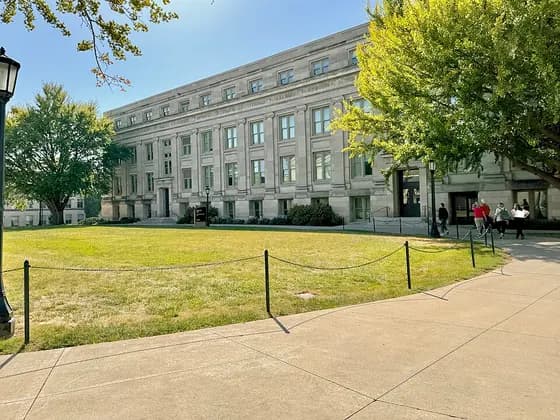
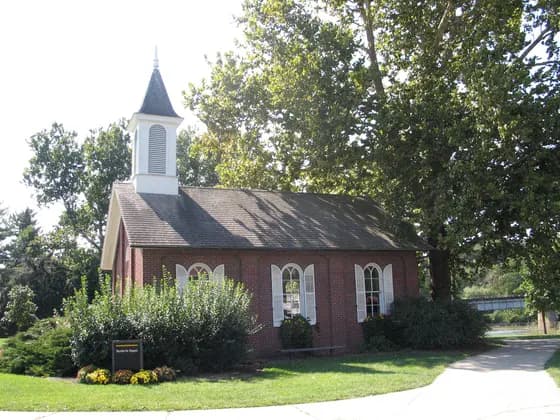
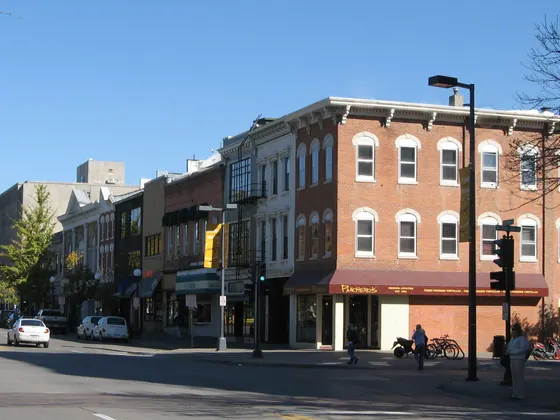
Photo: w_lemay · CC BY-SA 2.0 · cropped
Photo: w_lemay · CC BY-SA 2.0 · Photo: Андрей Романенко · CC BY-SA 4.0 · Photo: Billwhittaker ( talk ) · CC BY-SA 3.0
The University of Iowa Carver College of Medicine MD program at a glance (2027 entry)
The University of Iowa Roy J. and Lucille A. Carver College of Medicine (Iowa Carver, or CCOM in its own documents) runs a four-year, full-time Doctor of Medicine (MD) program in Iowa City. It is fully accredited by the Liaison Committee on Medical Education (LCME), which accredits MD programs in the United States, and calls itself the only LCME-accredited allopathic (MD) school in Iowa. The 2026-27 university catalog says it admits 152 new students a year; the 2026 entering class had 142 MD students, plus 11 MD/PhD students.
The college traces its first class of 37 students, eight of them women, to 1870, and introduced its current curriculum, New Horizons, in 2013-14. Three strands run through all four years. Mechanisms of Health and Disease (MOHD) is the science, Clinical and Professional Skills (CAPS) covers communication, examination and clinical reasoning, and Medicine and Society (MAS) covers prevention, public health and how care is organized. The school calls this a triple helix, because the strands wind together and keep returning to topics at greater depth.
Phase I, the preclinical (pre-clerkship) phase, lasts three semesters, about 18 months. Clerkships, full-time clinical rotations in the core specialties, start in January of Year 2, and by the end of your fifth semester the core requirements are done.
Clinical training centers on the University of Iowa Health Care Medical Center, on the university campus in Iowa City, and on the Iowa City VA. Course documents still call the medical center University of Iowa Hospitals and Clinics (UIHC). A branch campus in Des Moines also runs every core clerkship. Grading is tiered for the preclinical science courses and most clerkships (Honors, Near Honors, Pass or Fail); the CAPS and MAS courses are pass/fail.
| Degree | MD, fully accredited by the LCME |
|---|---|
| Program length | 4 years full time; MD/PhD normally 7 to 8 |
| Class size | 152 a year (2026-27 catalog); 142 MD plus 11 MD/PhD entered in 2026 |
| Curriculum | New Horizons: MOHD, CAPS and MAS strands over three phases |
| Campuses | Iowa City, plus a Des Moines branch campus for clerkships |
| Anatomy | Full-body dissection in Medical Gross Anatomy, fall of Year 1 |
| First patient contact | Clinic visits from the first weeks of Year 1 |
| Clerkships start | January of Year 2, after three preclinical semesters |
| Grading | Four tiers in science courses and most clerkships; CAPS and MAS pass/fail |
| First Step exam | Year 3 January study block; on the current schedule, January 2030 for 2027 entrants |
What makes the University of Iowa Carver College of Medicine MD program different
A short preclinical phase, then three flexible semesters
Because Phase I ends after three semesters, Phase III gets three: a sub-internship, critical care, three selectives and 32 weeks of advanced electives. You also have 16 flex weeks across the clinical years for Step 2 CK, residency interviews and personal time.
A full core year in Des Moines
The Des Moines Area Medical Education Consortium is the school's branch campus. All eight core clerkships run there, at hospitals including Iowa Methodist Medical Center and Blank Children's Hospital, and 24 students can spend the whole core year in the city, with free housing.
Family medicine in a community practice elsewhere in Iowa
The six-week family medicine clerkship takes most students out of Iowa City and Des Moines. You spend two weeks at a Regional Medical Education Center, within a residency program, and four with a community family physician. You join in their work, which can include call and emergency or obstetric cover.
Simulated patients and OSCEs from the first semester
Simulated patients, people trained to portray patients and give feedback, have worked with Iowa students since the mid-1960s. Specially trained Physical Exam Teaching Associates coach you on skills such as draping and asking permission. An Objective Structured Clinical Examination (OSCE), a circuit of timed clinical stations, ends every preclinical semester and six core clerkships.
Your first Step exam comes after the clerkships
After the core year comes a four-week USMLE study block in January of Year 3. You sit your first Step exam with a full clinical year behind you, and under the July 2026 Student Handbook it can be Step 1 or Step 2 CK.
How University of Iowa Carver College of Medicine teaches medicine
New Horizons rests on what the school calls the three I's. Innovation organizes the science around six fundamental mechanisms of health. Integration ties early clinical experience to the science you are learning. In the school's own example, heart anatomy, cardiac exam practice and a simulated patient with chest pain can follow one another. Individualization leaves much of the last three semesters for you to plan.
MOHD I and III cover oxygenation (how oxygen reaches and is used by the tissues), metabolism, and genetics and development. MOHD II and IV cover immunology and inflammation, locomotion and integument (the musculoskeletal system and skin), and neuropsychiatry. The earlier course in each pair teaches normal function and the later one disease. A basic scientist and a clinician co-direct each course, and the MOHD Keystone reworks all six mechanisms as common clinic problems.
CAPS builds communication, examination, clinical reasoning and ethics in steps that get harder each year, while MAS covers prevention, nutrition, substance use, epidemiology and how health services are organized. Both continue inside the clerkships. CAPS also brings you together with students from other health sciences colleges, and first-year schedules are shared with physician assistant (PA) students.
The ways you will learn
| Large-group sessions | These carry the core science of Foundations of Cellular Life and the MOHD courses, usually in the first two hours of the day. |
|---|---|
| Case-based small groups | Medicine and Society runs case-based learning (CBL) groups, MOHD courses use small-group case analysis, and MOHD III adds groups working through interactive virtual patients. |
| Clerkship teaching | Learning on the team, backed by education days, case conferences and simulated patient sessions. |
A typical week on the University of Iowa Carver College of Medicine program
On the fall 2026 first-year block schedule, every weekday opens at 8:00 to 9:50 with Foundations of Cellular Life for weeks 1 to 8, then MOHD I. The late-morning slot rotates: CAPS I on Monday, MAS I on Wednesday, small groups or clinic visits on Tuesday and Thursday, and anatomy and MOHD I on Friday.
Lunch is kept for student activities, with Tuesday noon reserved for events in your learning community, one of four student groups. Afternoons center on anatomy: your lab group meets on Monday or Tuesday, and Wednesday and Thursday bring an anatomy session at 1:00, then peer teaching. Communication, physical exam and MAS small groups fill other slots, and Friday afternoon varies or is free.
Exams come often: in fall 2026, Foundations exams in weeks 2, 4, 6 and 8, MOHD I exams in weeks 11, 13, 16 and 18, three anatomy exams and an OSCE in mid-November. MAS and CAPS written exams are taken in a flexible window. Scheduled activities average no more than 30 hours a week, with study time on top.
How anatomy is taught at University of Iowa Carver College of Medicine
Medical Gross Anatomy (ACB:8101) is a five-semester-hour course through the fall of Year 1, alongside Foundations of Cellular Life. It includes a complete dissection of the human body, region by region, and focuses on how each part's form and position relate to its function in a living patient. The course also gives you the anatomical terms you will use on the wards. The fall 2026 schedule puts its three exams in weeks 5, 10 and 18, each with a lab exam and a computerized exam.
Neuroanatomy comes in the spring in MOHD II, with neuro labs on the central nervous system. For revision, the Department of Anatomy and Cell Biology offers Cyber-Anatomy, 125 interactive 3D sessions that take you through the body one region or system at a time. Hardin Library for the Health Sciences also has an Anatomage virtual dissection table you can reserve.
When you first meet patients at University of Iowa Carver College of Medicine
Patient contact begins with Early Clinical Experiences (ECE), part of CAPS I. Experienced clinicians host you in outpatient clinics, at UI Health Care or in nearby communities. You start to see how doctors talk with patients, how specialties and patient groups differ, and who does what in a care team. The fall 2026 schedule gave each student three two-hour clinic visits, the first as early as week 2.
You also practice with simulated patients, in facilitator-led small groups on rapport, open-ended questions and empathy, in physical exam sessions, and one to one, with feedback from the patient's side. Your peers and the facilitators give feedback too. CAPS II continues the clinic visits. In the fall of Year 2 you shadow senior medical students on inpatient wards, and Transition to Clerkships, a required week of skills training, opens the core year.
In the summer after Year 1, you can apply for Medical Education Community Orientation (MECO), run by the Department of Family and Community Medicine. You spend part of the summer in an Iowa community hospital, working with teams across departments, from surgery to radiology. MECO is offered to about 30 students; in 2024, 21 took part at 14 hospitals, most of which provide housing and meals. The page for the college's rural track, the CCOM Rural Iowa Scholars Program (CRISP), describes the rural version of MECO as 4 to 12 weeks.
The University of Iowa Carver College of Medicine curriculum, year by year
- Year 1, fall
Anatomy, cells and the first mechanisms
The first semester carries 24 semester hours, from mid-August to mid-December. For 2027 entrants, orientation runs August 9 to 13, ending with the White Coat Ceremony, and classes start August 16.
- Medical Gross Anatomy (ACB:8101, 5 semester hours), with complete dissection.
- Foundations of Cellular Life (MED:8123, 5 hours): eight weeks of genetics, embryology, molecular biology, biochemistry, cell biology and histology.
- MOHD I (MED:8124, 8 hours), from week 9: oxygenation, metabolism, and genetics and development.
- CAPS I (MED:8121, 3 hours): clinical reasoning, communication, physical examination, evidence-based practice and ethics, plus Early Clinical Experiences.
- MAS I (MED:8122, 3 hours): social determinants of health, community resources, and health and risk assessment on nutrition, physical activity and substance use.
- Year 1, spring and summer
Systems in health and disease
The spring semester carries 26 semester hours, January to May; for 2027 entrants, January 10 to May 19, 2028. The summer after is open for research, clinical work in a community hospital, global health or a break.
- MOHD II (MED:8133, 7 hours): eight weeks on the central nervous system, how the immune system tells self from non-self, and inflammation and repair, with neuro labs and five exams.
- MOHD III (MED:8134, 11 hours), taught by faculty from 12 departments: disease in the major organ systems, cancer, treatment and drug classes, and reproduction and pregnancy.
- CAPS II (MED:8131, 4 hours): clinical reasoning with simulated patients, ethics and an interprofessional care plan, ending in a clinical skills exam.
- MAS II (MED:8132, 4 hours): public health and epidemiology, including screening, global health and environmental hazards.
- Year 2, fall
Finishing the mechanisms
The last preclinical semester carries 25 semester hours, August to December. You must pass every preclinical course to start the core year, and your winter break is shorter than other classes' because Transition to Clerkships starts in the first week of January.
- MOHD IV (MED:8223, 10 hours), ending in late October: disease in immunology and inflammation, locomotion and integument, and neuropsychiatry.
- MOHD Keystone (MED:8224, 7 hours): diagnostic and management decisions for problems commonly seen in clinics.
- CAPS III (MED:8221, 4 hours): advanced clinical reasoning through focused encounters and special patient populations.
- MAS III (MED:8222, 4 hours): health services organization and delivery, community practice and patient safety.
- Phase II, from January of Year 2
The core clerkship year
Transition to Clerkships opens the year, followed by 48 schedulable weeks in four 12-week blocks. On the current schedule, a 2027 entrant would do it from January to December 2029. The blocks pair family medicine with pediatrics; obstetrics and gynecology with surgery; internal medicine with a selective; and neurology, psychiatry and emergency medicine with a selective. The points below give both campuses where they differ. Clinical hours average no more than 65 a week and never exceed 80.
- Family Medicine (6 weeks), at a Regional Medical Education Center and with a community preceptor. Pediatrics (6 weeks): in Iowa City at UI Stead Family Children's Hospital, in Des Moines at Blank Children's Hospital; at both, two weeks are inpatient and four in clinics and the newborn nursery.
- Obstetrics and Gynecology (6 weeks), in three two-week segments, one of them in obstetrics. Most students are at UIHC, with day and night shifts on labor and delivery; three per block go to Broadlawns Medical Center in Des Moines, where students take turns on night and weekend call.
- Surgery (6 weeks): two three-week services. In Iowa City they come from 13 options, such as trauma, transplant or the VA, with two night shifts. In Des Moines you join two of three Iowa Methodist services (oncology and transplant, colorectal, vascular), with one night of call.
- Internal Medicine (10 weeks), plus a selective: clinic blocks and, on the wards, general medicine at UIHC and the Iowa City VA or at Iowa Methodist and the Des Moines VA. A weekly education half-day runs throughout, and there is no overnight call.
- Neurology and Psychiatry, 4 weeks each; psychiatry runs at UIHC and the Iowa City VA or at Broadlawns in Des Moines, and includes observing electroconvulsive therapy. Emergency Medicine is 2 weeks of seven shifts in the University of Iowa Emergency Department or a UnityPoint Health-Des Moines emergency department.
- Selectives are two-week rotations: you take five of eight (anesthesia, dermatology, ophthalmology, orthopedics, otolaryngology, pathology, radiology, urology), two now and three later.
- One flex day, a day of vacation, per 4-, 6- or 10-week core clerkship except emergency medicine.
- Phase III, from January of Year 3
Step exam, sub-internship and electives
A four-week USMLE study block in January of Year 3 comes first; on the current schedule, a 2027 entrant would have it in January 2030 and graduate in May 2031. The 16 flex weeks of the clinical years, usually saved for Phase III, cover Step 2 CK, interviews and personal time.
- Advanced Inpatient Sub-Internship (4 weeks), in Iowa: much of an intern's work, from admissions to orders and discharges, usually for two or three complex patients.
- Critical Care/ICU (4 weeks), such as the surgical and neurosciences, medical, pediatric or neonatal ICU.
- Three more selectives; these, the sub-internship and the ICU rotation are due by the end of the fall of Year 4.
- 32 weeks of advanced electives in 2- or 4-week blocks, planned with a Specialty-Specific Faculty Advisor you choose in August of Year 3.
- Three overnight calls, each a full 24-hour shift, usually on the sub-internship or ICU, and an online course in advanced clinical topics.
- Residency applications go out through the Electronic Residency Application Service (ERAS) in September, interviews run from late October to mid-December, and Match Day is in March.
How you are assessed at University of Iowa Carver College of Medicine
In Phase I, the science courses are graded Honors, Near Honors, Pass or Fail: Medical Gross Anatomy, Foundations of Cellular Life, MOHD I to IV and the MOHD Keystone. The CAPS and MAS courses are pass/fail, and most clerkships use the four tiers. The school's guideline is that about 30 to 40 percent of the class earn Honors or Near Honors in graded courses, with about 15 to 20 percent earning Honors. Grades feed your Medical Student Performance Evaluation (MSPE), the summary letter residency programs receive.
Professionalism is graded separately: Exceeds Expectations, Meets Expectations, Needs Improvement or Fail in preclinical courses, and Meets, Needs Improvement or Fail in clerkships. One Needs Improvement on a clerkship rules out Honors there, and more than one rules out Near Honors. Two or more anywhere mean a meeting with the Medical Student Promotions Committee, made up of seven faculty and two students.
Six core clerkships combine clinical evaluations, assignments, an OSCE and a National Board of Medical Examiners (NBME) shelf exam, a national multiple-choice subject test. They are family medicine, internal medicine, obstetrics and gynecology, pediatrics, psychiatry and surgery. Neurology uses a final exam, assignments and clinical evaluations, while emergency medicine and selectives such as orthopedics and urology set their own exams. In surgery, the shelf counts for 40 percent, clinical evaluations 35, the OSCE 10, a case presentation 10 and assignments 5.
Those same six clerkships hold multi-station OSCEs near their end, which you must pass to pass the clerkship; a missed one is made up in a later block. You must also log your Required Clinical Experiences (RCEs), the patients, conditions and skills each clerkship requires, by its last Friday, or you fail the clerkship.
The USMLE is the exam series used for medical licensure in the United States. Step 1 has been reported pass/fail since January 26, 2022; Step 2 CK (Clinical Knowledge) is still scored. Under the Student Handbook revised in July 2026, you sit Step 1 or Step 2 CK before Phase III, by March 31 of Year 3, and both by July 15 of Year 4. You must pass both to graduate.
In August 2026 the USMLE program announced a move to designated testing dates from January 2029, with Step exams offered less often each year. Its June 2026 notice had named 2028. On the current schedule, a student entering in August 2027 would have the study block in January 2030, the first Step exam by March 31, 2030, and both exams by July 15, 2030. All of these fall after the switch.
- Preclinical exams are computerized except anatomy lab and clinical skills exams, and you cannot resit one to raise a grade. Scoring less than 2 percent above a pass mark is recorded as a Marginal Pass.
- Fail an end-of-clerkship exam and you have six months and one retake to pass it, without Honors or Near Honors for that clerkship. Fail your first Step exam and you drop upcoming clerkships until you retake it, within four months.
- Honors hours, semester hours counted in full for Honors and half for Near Honors, decide who may apply to Alpha Omega Alpha, the medical honor society: the top 25 percent of the class.
- The LCME's directory, updated October 14, 2026, lists Iowa as fully accredited, first accredited before the LCME's founding in 1942, with its next survey in 2033-34.
- For MD students, attending an LCME-accredited school is what makes you eligible for Step 1 and Step 2 CK. Students at osteopathic (DO) schools and eligible schools outside the United States qualify through other routes.
University of Iowa Carver College of Medicine clinical rotations: where you will actually train
Most core and selective clerkships are in Iowa City, at the UI Health Care Medical Center (UIHC). Its campus also holds UI Stead Family Children's Hospital, where Iowa City students take pediatrics. In fiscal year 2025 the medical center recorded more than 40,000 inpatient admissions and 54,000 emergency visits. The Iowa City VA, a teaching hospital with 83 inpatient beds, hosts parts of internal medicine, surgery, psychiatry and several selectives.
The Des Moines Area Medical Education Consortium is the school's designated branch campus: 24 students can spend the whole core year there, and others take single clerkships as space allows. The school says smaller numbers mean more hands-on work, and Des Moines adds training in advanced cardiac life support, bedside ultrasound and EKGs. Housing is a free furnished apartment near Iowa Methodist Medical Center, with parking and meal support.
Family medicine is the one core clerkship that runs statewide, through five Regional Medical Education Centers (RMECs), a few places in Iowa City and preceptorships across Iowa. You give preferences in the fall of Year 2, but the clerkship team decides. You need a reliable car; housing is free at every RMEC and some preceptorship sites.
Clerkship schedules come from an online request system and lottery, because capacity is limited. The sub-internship must be in Iowa, from an approved list that includes Davenport, Sioux City and rural Algona as well as Iowa City and Des Moines. Advanced electives can be taken elsewhere in the US or abroad once approved.
CRISP, started in 2012, adds rural training without changing your clerkships or graduation requirements. You shadow a rural physician in Year 1, choose a physician mentor by spring of Year 2 and do MECO in a rural setting. You also attend monthly seminars and turn a community project into a Rural Capstone. Graduates are expected to practice for at least five years, starting right after residency, in an eligible Iowa community: one of under 26,000 people, at least 20 miles from a city of 50,000.
Base for Phase I and most core and selective clerkships.
- UI Health Care Medical Center (UIHC)
- UI Stead Family Children's Hospital
- Iowa City VA
- General pediatrics clinics at Iowa River Landing, North Liberty and Scott Boulevard
All eight core clerkships, plus 18 advanced pathway rotations in Phase III.
- Iowa Methodist Medical Center
- Blank Children's Hospital
- Broadlawns Medical Center
- Iowa Lutheran Hospital
- Des Moines VA Medical Center
- UnityPoint Health-Des Moines emergency departments
Two weeks of family medicine within a residency program, with community agency visits.
- Davenport
- Des Moines
- Mason City
- Sioux City
- Waterloo
Four-week preceptorships and Phase III options.
- Family medicine preceptors' practices
- Rural family medicine sub-internship, Algona
- Great River Medical Center, Burlington (rural emergency medicine)
- Emergency medicine electives in Cedar Rapids, Waterloo and Davenport
Electives, selectives and away rotations at University of Iowa Carver College of Medicine
Selectives are two-week introductions to specialties. Pathology splits into a week of clinical pathology and a week of anatomic pathology that includes observing an autopsy. Anesthesia places you in the operating rooms with seven problem-based learning discussions, and dermatology rotates through UIHC, Iowa River Landing, pediatric and VA clinics.
Phase III's 32 weeks of advanced electives draw on more than 200 courses in the 2027-28 course book, from Wilderness Medicine and Medical Toxicology to Editorial Writing for Medical Students and Advanced Human Anatomy. No more than 16 weeks of specialty electives may come from one department; sub-internships, ICU, research and continuity clinics are exempt. The Guide to Specialty-based Pathways suggests electives for each specialty.
A Continuity of Care (COC) clerkship gives you a regular clinic from July to May of your final two semesters, alongside other rotations, so you build relationships with patients over time. You attend 34 sessions, 80 percent of 42 schedulable weeks. COC options cover family medicine, internal medicine, obstetrics and gynecology, pediatrics and psychiatry.
Away rotations at other schools are optional, usually in the fall of Year 4, often as auditions for residency programs. They normally last four weeks and need an Individually Arranged Elective form at least four weeks ahead; some go through the VSLO service of the Association of American Medical Colleges (AAMC). Flex time lets you take them out of step with the Iowa calendar.
The Office of Global Health Programs offers one-credit courses in Years 1 and 2 and an arranged summer elective at home or abroad. It also runs medical Spanish and French classes each fall and spring for students who already speak some of the language. In Phase III, its Global Health Clerkship runs at least four consecutive weeks at an approved site and must be registered six weeks ahead. International electives require an orientation session.
In the preclinical semesters you can add up to two one-semester-hour electives per term, held at noon or after 5 p.m. Options include Community Health Outreach, a two-year service-learning course led by second-year students, The Examined Life on writing and medicine, and Clinical Skills for Responding to Sexual Violence. Students also staff the Mobile Clinic, a student-run free clinic for underserved patients in and around Iowa City, offering screening, basic care, prevention and health education.
Dual degrees and research years at University of Iowa Carver College of Medicine
The Medical Scientist Training Program (MSTP), the MD/PhD route, normally takes seven to eight years. You take the first three semesters with the MD class, plus summer laboratory rotations and physician-scientist seminars, then the core clerkships in semesters four and five. After the Step exams, you choose a thesis mentor in the spring of Year 3 and join a graduate program in the fall of Year 4.
During the PhD, the Clinical Connections course keeps you in touch with patients, and since 2014 trainees have needed a peer-reviewed first-author paper before returning for the final clinical years. The program lists more than 60 current students, and 11 joined in 2026. Trainees receive a stipend from a National Institutes of Health (NIH) training grant.
The MD/MBA, with the Tippie College of Business, and the MD/MPH, with the College of Public Health, follow five-year plans with the extra year after Year 3. The MD/JD, with the College of Law, takes six years and opens with a year of law school. You must be admitted to both programs, and 12 semester hours from each degree count toward the other.
Summer Research Fellowships, for admitted students before Year 1 and students after Year 1, generally last 12 weeks with a faculty mentor, on a proposal reviewed by a panel of scientists. The 2027 stipend is $6,000, and that summer NIH grants fund 16 places in heart, lung, blood and sleep research and 12 in diabetes, digestive and kidney disorders. Students present at the Medical Student Research Conference each September.
The Research Distinction Track needs at least 16 weeks of full-time research with one mentor, two presentations, a research CV and a first-author manuscript; you apply by May 28 of Year 2. Other tracks cover global health; healthcare delivery science, management and policy; humanities; service; and teaching, which asks for 60 hours of teaching. Tracks appear in your MSPE and on your transcript, and you may earn two at most.
A few students take a year out for research, through options such as the Sarnoff cardiovascular fellowship, the NIH Medical Research Scholars Program and year-long fellowships in pathology, otolaryngology and muscular dystrophy research.
Facilities and support at University of Iowa Carver College of Medicine
Where you will learn
The Medical Education and Research Facility (MERF), dating from 2002, holds lecture halls, the clinical skills suites, the learning community spaces, the Office of Student Affairs and Curriculum and the MSTP. Each community space has small-group rooms, study areas, computers and a kitchen, and first-floor study rooms can be booked by tutor groups.
The basic science departments, including anatomy and cell biology, are in the Bowen Science Building, opened in 1972. For overnight call in Phase III, two student call rooms each have four beds, a private bathroom with shower and a computer.
Support while you study
You join one of four learning communities for all four years. They are Bean, Boulware, Flocks and McCowen, named for figures from the college's past. Jennie McCowen was one of the first women to graduate from the university's Medical Department, in 1876. Each community mixes medical and PA students from every year, has two faculty directors and runs social, wellness and charity events. Within it, your NEST group, a small group from your class, meets each semester with a faculty director to talk about transitions, wellness and careers.
A second-year peer mentor is matched to you from the summer before Year 1. Tutor groups of 6 to 20, led by students who have passed the course, meet weekly or every other week for the anatomy, Foundations and MOHD courses. The school recommends one for every first-year student.
A Learning Specialist offers free one-to-one help with study methods, test anxiety, time management and Step preparation. The Medical Student Counseling Center gives free, confidential therapy to MD, PA and MSTP students, in person or online, and handles disability services.
Career advising includes a preclinical specialty fair where 18 clinical departments present, spring Specialty Choice Conversations, online requests for a career mentor and mock residency interviews in Year 4. The Writing and Humanities Program helps with personal statements and CVs.
Before Year 1, admitted students can apply for Introduction to Medical Education at Iowa (IMEI), a six-week summer program, June 14 to July 23 in 2027, with a $4,000 stipend. It previews anatomy, biochemistry, genetics, metabolism, oxygenation, CAPS and MAS through lectures, case-based groups, anatomy labs and weekly exams, and teaches study skills.
You have up to six years to finish the MD, and flex weeks can in some cases absorb up to six weeks of parental leave without delaying graduation.
Is the University of Iowa Carver College of Medicine program right for you?
This program may suit you if
- You want to reach clerkships quickly: Phase I is three semesters, and clerkships start in January of Year 2.
- You want to learn anatomy by dissecting: Medical Gross Anatomy includes complete dissection in your first fall.
- You would welcome a core year in Des Moines, which has 24 places, or six weeks of family medicine in a community elsewhere in Iowa.
- You like room to plan: Phase III has 32 weeks of electives, and the clinical years 16 flex weeks.
- You are drawn to rural Iowa practice: CRISP adds rural shadowing, a physician mentor, seminars and a rural MECO summer in a community hospital.
Things to think about
- The preclinical science courses are graded in tiers, not pass/fail, and the guideline puts about 30 to 40 percent of the class at Honors or Near Honors.
- Family medicine takes most students away from Iowa City and Des Moines for part of the clerkship, and you need a reliable car.
- Clerkship schedules come from a request system and lottery, so first choices are not guaranteed.
- On the current schedule, your Step exams come after the USMLE's switch to designated testing dates in January 2029.
- CRISP expects at least five years of practice in an eligible Iowa community after residency.
University of Iowa Carver College of Medicine MD program — frequently asked questions
Applying to University of Iowa Carver College of Medicine?
How to get into University of Iowa Carver College of Medicine
Prerequisites, MCAT, AMCAS personal statement, secondaries and interview, step by step.
Open the guide →University of Iowa Carver College of Medicine admissions profile
MCAT and GPA profile, acceptance rate, interview format and key dates.
See the profile →Compare University of Iowa Carver College of Medicine with other schools
Put the teaching style, anatomy teaching and clinical sites next to another school.
Open the comparison →Prepare for the University of Iowa Carver College of Medicine interview
Format breakdown, school-specific sample questions and prep tips from tutors who interviewed here.
Read the guide →Where this University of Iowa Carver College of Medicine program guide came from
This guide was written from 59 official sources — University of Iowa Roy J. and Lucille A. Carver College of Medicine's own program pages and curriculum documents, plus the accreditor and the hospitals and health systems the school trains students in where they publish detail — read on 2026-10-24, then checked claim by claim against those sources.
- Carver College of Medicine: MD Curriculum (with curriculum chart)
- Carver College of Medicine: Curriculum Overview
- Carver College of Medicine: Pre-Clinical phase
- Carver College of Medicine: This is Iowa Curriculum (preclinical courses and how each is graded)
- Carver College of Medicine: Core Clinical phase
- Carver College of Medicine: Advanced Clinical phase
- University of Iowa General Catalog 2026-27: Doctor of Medicine, MD
- Doctor of Medicine Curriculum 2026-2027 (curriculum summary)
- MD Program 2026-2027 Medical Student Calendar
- MD Program 2027-2028 Medical Student Calendar
- Clinical Years Requirements and Calendar, Class of 2029
- 2027 Core Course Descriptions (core and selective clerkships)
- Doctor of Medicine Program Student Handbook, revised July 2026
- Carver College of Medicine Registrar: Student Services (clerkship scheduling, away electives, Match)
- Carver College of Medicine Registrar: USMLE
- M1/PA1 Block Schedule, Fall 2026
- Fall 2026 Example Individual Student Schedule, M1/PA1
- M1/PA1 Exam Schedule, Fall 2026
- Course Descriptions, Spring Semester M1/PA1 Year, 2027
- Spring 2027 M1/PA1 Exam Schedule
- University of Iowa General Catalog 2026-27: Medicine (MED) course descriptions
- Carver College of Medicine: Clinical Skills Assessment Program
- Carver College of Medicine: Learning Communities, FAQ and Peer Mentoring Program
- Carver College of Medicine: Career Advising
- Carver College of Medicine: Combined Degree Programs (MD/MBA, MD/MPH, MD/JD)
- University of Iowa General Catalog 2026-27: Medical Scientist Training Program
- Iowa MSTP: Detailed Curriculum
- Iowa Medical Scientist Training Program home page
- Iowa MSTP: Overall Training Plan (2014 curriculum renewal)
- Carver College of Medicine: Distinction Tracks
- Carver College of Medicine: Research Opportunities and Summer Research Fellowship Program
- Carver College of Medicine: CRISP Program Description and overview
- Carver College of Medicine: This is Iowa Outside the Classroom (global health, CRISP)
- Department of Family and Community Medicine: Medical Education Community Orientation (MECO)
- Carver College of Medicine: Community Service (CRISP, MECO, learning communities)
- Carver College of Medicine: Des Moines Campus, clerkships and housing
- Carver College of Medicine: Global Health and global health electives
- Carver College of Medicine: Medical Spanish and Medical French Language Programs
- Phase III Advanced Clerkships Course Descriptions 2027-2028
- Advanced Inpatient Sub-Internship and Critical Care/ICU list, 2027-2028
- Guide to Specialty-based Pathways 2026-2027
- Summary of one semester-hour elective courses for MD students, 2026
- Carver College of Medicine: Academic Support and Tutoring, Counseling Center and Writing and Humanities Program
- Carver College of Medicine: Introduction to Medical Education at Iowa (IMEI)
- Carver College of Medicine: 2026 MD Entering Class Profile
- Carver College of Medicine: MD Program home page
- Carver College of Medicine: History of our College and timeline
- Department of Anatomy and Cell Biology: Educational Resources (Cyber-Anatomy)
- Hardin Library for the Health Sciences: Anatomage Table guide
- Core and Selective Clerkships Time-Off and Flex Days Policies, 2026
- UI Health Care: Basic Facts about the Medical Center on the University Campus
- UI Health Care: About Us
- UI Health Care: Medical Center on the University Campus (University of Iowa Health Care Medical Center)
- VA Iowa City Health Care: About Us
- LCME: Accredited Programs directory
- USMLE Designated Testing Dates Information Hub
- USMLE: Updated Timeline for Designated Testing Dates, transition in January 2029 (August 6, 2026)
- USMLE Step 1 Transition to Pass/Fail Only Score Reporting
- USMLE Bulletin of Information: Eligibility
Curricula are restructured between cycles. Anything here that decides your application — how anatomy is taught, a clinical campus assignment, a required research year — should be confirmed against the official page for your entry year.
Applying to University of Iowa Carver College of Medicine?
We help US applicants with MCAT strategy, the AMCAS personal statement, secondary essays and interview prep — everything you need for a competitive University of Iowa Carver College of Medicine application.