
The USF Health Morsani College of Medicine MD program
What you actually study, and where you will be
USF Health Morsani College of Medicine's MD is a 4-year program taught through case-based learning in an integrated curriculum, with patient contact from Year 1 and clinical rotations in Tampa, St. Petersburg and the wider Tampa Bay area (2027 entry). USF Morsani's Core MD program is based in Tampa for all four years. Years 1 and 2 are integrated organ-system courses taught in the college's downtown building and the CAMLS simulation center, alongside weekly Doctoring small groups and a required scholarly concentration. Year 3 is eight block clerkships, mainly at Tampa General Hospital, the James A. Haley VA, Moffitt Cancer Center and Johns Hopkins All Children's, and Year 4 follows a specialty track.
- Degree
- MD
- Length
- 4 years
- Teaching
- Integrated + Case-based learning
- Clinical contact
- Year 1

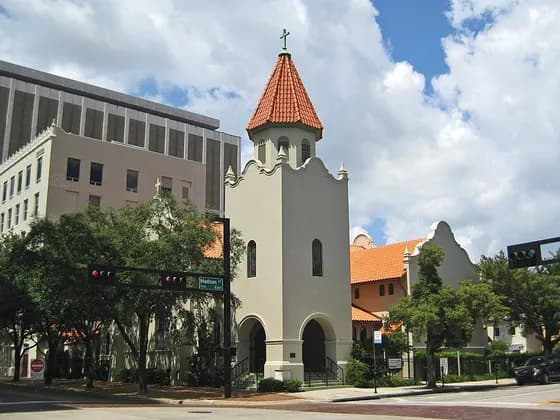
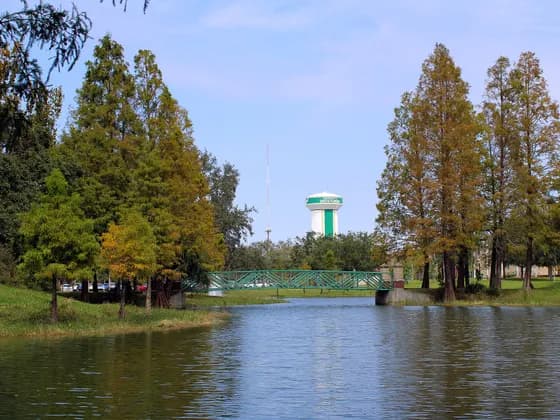

Photo: FightingRaven531 · CC BY-SA 3.0 · cropped
Photo: TampAGS , for AGS Media · CC BY-SA 3.0 · Photo: Trevorrrrvalent · CC BY 4.0 · Photo: Zeng8r · CC BY-SA 4.0
The USF Health Morsani College of Medicine MD program at a glance (2027 entry)
The USF Health Morsani College of Medicine at the University of South Florida, known as USF Morsani or MCOM, runs a four-year MD program in Tampa, Florida. Applicants now join the Core MD program, which is based in Tampa for all four years. The Liaison Committee on Medical Education (LCME), which accredits MD programs in the United States, lists the program as fully accredited.
Years 1 and 2 form the pre-clerkship (pre-clinical) phase: seven integrated Medical Science courses, each combining anatomy, physiology, pathophysiology, biochemistry, microbiology and pharmacology for one or more organ systems. Teaching happens in the college's building on Channelside Drive and at CAMLS, the Center for Advanced Medical Learning and Simulation, both in downtown Tampa.
Longitudinal courses run alongside them: Doctoring, small groups for history taking, examination, ethics and health systems; Evidence-Based Clinical Reasoning; and a required Scholarly Concentration Course. Year 2 ends with Step 1 of the United States Medical Licensing Examination (USMLE), the exams state medical boards use in licensing decisions.
Clerkships, the core clinical rotations, begin when Year 3 starts in late May, straight after Year 2's courses, with a two-week Introduction to the Clerkships. Year 3 is eight block clerkships, mainly at Tampa General Hospital (TGH), the James A. Haley Veterans' Hospital, Moffitt Cancer Center and Johns Hopkins All Children's Hospital in St. Petersburg. Year 4 follows a specialty track toward residency, the specialty training after medical school.
| Degree | MD |
|---|---|
| Program length | 4 years; the optional Research Track adds a fifth |
| Program | Core MD program, based in Tampa for all four years |
| Main teaching sites | Morsani College of Medicine building and CAMLS, downtown Tampa |
| Teaching style | Integrated organ-system courses with case-based engaged learning |
| Grading | Honors, Pass with Commendation or Pass in most courses |
| Anatomy | Already dissected cadavers (prosection), imaging and ultrasound (2026-27 syllabi) |
| First patient contact | Patient interviews in your first two weeks; clinic half-days in Year 2 |
| Clinical sites | Tampa General, James A. Haley VA, Moffitt, Johns Hopkins All Children's |
| Step 1 timing | Spring of Year 2; spring 2029 for 2027 entrants, on the current schedule |
What makes the USF Health Morsani College of Medicine MD program different
Clinical skills taught and tested at CAMLS
Much of your skills training happens at CAMLS, the college's 90,000-square-foot downtown simulation center, in its 18 video-recorded exam rooms with standardized patients: trained community members who play patients and give feedback. By the end of Year 4 you will have had more than 50 hours of direct clinical skills assessment there and more than 200 hours of skills teaching.
Four major teaching partners in one metro area
Year 3 runs mainly at Tampa General Hospital, which describes itself as the region's only Level I trauma center, the James A. Haley VA, Moffitt Cancer Center and Johns Hopkins All Children's. That puts trauma, transplant and veterans' care beside cancer surgery and pediatrics in one clerkship year.
A fourth year organized around specialty tracks
Year 4 follows one of 28 Core tracks for 2026-27, from anesthesia to vascular surgery. Each track sets an acting internship, four weeks doing the work of an intern (a first-year resident) under supervision, and an intensive care unit (ICU) or emergency rotation. It also names your selectives, the specialty rotations it requires, and a two-week Entrustable Professional Activity (EPA) course on the core tasks of a new intern.
Scholarly concentrations from AI in medicine to law
Every student takes the Scholarly Concentration Course in Years 1 and 2, in a concentration such as AI in Medicine, Health Systems Engineering, International Medicine or Law & Medicine. The optional four-year program that follows ends with a capstone project and an honor cord at commencement.
Service and teaching count toward graduation
To graduate you need 40 hours of community service, including a service-learning project, and 20 hours of teaching. Fourth-year students also help run Doctoring small groups alongside faculty, and some direct the BRIDGE Clinic, a multidisciplinary clinic held on Tuesday evenings at the Morsani Center.
How USF Health Morsani College of Medicine teaches medicine
The handbook describes Years 1 and 2 as mainly classroom and simulation based and Years 3 and 4 as mainly clinical. The Medical Science courses form one continuum, each covering one or more organ systems, with the emphasis shifting toward disease, diagnosis and treatment as they go.
In the 2026-27 syllabi, science courses mix in-person lectures with case-based engaged learning sessions, labs and, in several courses, simulation at CAMLS. Courses 1 and 2 ask you to treat anatomy, physiology and the other subjects as one integrated course, and regular USMLE-Rx quizzes of Step 1-style questions help you find gaps.
Doctoring runs through all four years: small groups on interviewing, examination, ethics, humanities and health systems in Years 1 to 3, then a Year 4 course mixing in-person events with online learning. Evidence-Based Clinical Reasoning applies study design and statistics to problem-based cases. Interprofessional sessions may bring in pharmacy, nursing, physical therapy, social work and athletic training students.
Nutrition teaching is growing: the college reports 36 hours of nutrition instruction in 2025-26 and 76 required hours, built into existing courses and clerkships, in 2026-27. A pilot culinary medicine experience is led by a chef educator.
The ways you will learn
| Lectures | In person in the downtown auditorium and recorded where possible. Faculty use them to explain difficult concepts and their clinical relevance rather than to recite textbooks. |
|---|---|
| Case-based engaged learning | Large-group sessions, often worked in small groups, where you prepare in advance, then apply the science to patient cases with faculty, using audience-response questions. Course 2 adds team presentations on the genetic basis of disease. |
| Labs and simulation | Anatomy, physiology and virtual microscopy pathology labs, plus CAMLS simulation labs where teams read ECGs, echocardiograms and real-time vital signs on patient simulators and standardized patients, then decide the next step. |
| Doctoring small groups | Groups of 7 to 10 in Year 1 and 7 to 8 in Year 2 meet weekly for an afternoon with a faculty member and a fourth-year student. You take turns interviewing and examining standardized patients, then write up and present cases. |
| Problem-based clinical problem solving | Two-hour small group sessions in Evidence-Based Clinical Reasoning, where faculty facilitate rather than teach. Each student researches a learning issue and reports back briefly at the next session. |
| Clerkship teaching | Ward and clinic teams, backed by didactics, case-based conferences, online Aquifer cases in Primary Care and surgical skills, trauma and ultrasound simulations at CAMLS. |
A typical week on the USF Health Morsani College of Medicine program
In Years 1 and 2, scheduled class time averages 26 contact hours a week over a semester, never more than 35 in a week. The college plans around a 7:30 am to 5:30 pm weekday and leaves about 15 hours a week for independent study and self-directed learning.
In Year 1, Doctoring I takes one afternoon a week, Tuesday or Thursday from 1 to 5 pm, and some Friday afternoons are kept for Scholarly Concentration sessions. In Year 2, Doctoring II moves to Monday or Wednesday afternoons, and problem-based groups meet on Thursday afternoons until late October.
Clinical years follow resident duty-hour rules: at most 80 hours a week averaged over four weeks, and one day in seven free. Primary Care clinics run Monday to Thursday, 8 am to 5 or 6 pm, and surgery teams round from 5:30 am.
How anatomy is taught at USF Health Morsani College of Medicine
The 2026-27 syllabi for Medical Science Courses 1 and 2 set eight anatomy lab exercises on the back and limbs, then five on the heart and lungs. Both say the labs focus mainly on prosections, cadavers that have already been dissected. Your group of six or seven rotates through three stations. At the prosection station at CAMLS, teaching assistants take you through the cadaver; the imaging and ultrasound stations are in the downtown building.
Before each lab you work through a virtual cadaver in 3D dissection software and an ultrasound module, and need 70% on a prelab quiz to attend. The Course 1 practical asks you to identify specimens, models, bones and X-ray, CT and MRI images, with about 60 seconds per question.
The two-week Advanced Human Anatomy elective in Years 3 and 4 lets you dissect two regions of a cadaver, or do ultrasound work or teach first-year students instead. Most surgical tracks in Year 4 also require a four-week Advanced Surgical Anatomy, Pathophysiology, and Skills selective.
When you first meet patients at USF Health Morsani College of Medicine
Professions of Health, the two-week opening course, includes interviews with patients, standardized patients and health professionals. Doctoring I small groups then meet each week to practice history taking and examination. You take turns interviewing a standardized patient or one of your group's leaders, and you practice examination on standardized patients. In Course 2, a CAMLS lab adds heart and lung sounds and cardiac ultrasound.
In Year 2, the six-week Doctoring Clinical Experience gives you six half-days with a community preceptor in Hillsborough, Pinellas or Pasco County. Each week you interview and examine a patient, and you write two reflection papers. A separate six-week block at CAMLS pairs you with a fourth-year student for three standardized patient sessions.
Full-time clinical work starts with Introduction to the Clerkships in late May, at the start of Year 3, and responsibility grows each year up to the Year 4 acting internship.
The USF Health Morsani College of Medicine curriculum, year by year
- Year 1
Foundations to the nervous system
Year 1 runs from late July to mid-May (July 27, 2026 to May 14, 2027 on the current calendar). After Professions of Health come four Medical Science courses, with Doctoring I, Evidence-Based Clinical Reasoning I and Scholarly Concentration Course I alongside.
- Professions of Health (2 weeks): curriculum, campus, teamwork, skills sessions, an anatomy lab, interviews with patients and standardized patients, and a group presentation.
- Medical Science Course 1 (8 weeks): genetics, biochemistry, cell biology, immunology and microbiology, with the musculoskeletal system, focused on the back and limbs.
- Medical Science Course 2 (10 weeks): the heart, lungs and blood, with ECG and spirometry labs, a CAMLS simulation lab and team presentations on the genetic basis of disease.
- Medical Science Courses 3 (8 weeks) and 4 (9 weeks): the gastrointestinal, endocrine, renal and reproductive systems, then the nervous system, from neuroanatomy to the motor and sensory systems.
- Doctoring I and Evidence-Based Clinical Reasoning I, with two three-week problem-based cases in Course 4. You choose your scholarly concentration by the end of September.
- The Year 1 Comprehensive Exam in May, from the National Board of Medical Examiners (NBME), which writes national medical exams. You must pass it to enter Year 2. The competitive Summer Research Elective follows (May 17 to July 9, 2027 on the current calendar).
- Year 2
Disease, treatment and Step 1
Year 2 starts in late July. Three Medical Science courses revisit the systems with the weight on disease and treatment, and Doctoring II adds clinical reasoning and your first regular clinic time. A seven-to-eight-week USMLE Prep Course and Step 1 close the year.
- Medical Science Course 5 (9 weeks), Infection and Immunity: immunology, infectious disease, hematology and gastroenterology, with virtual microscopy pathology labs.
- Medical Science Course 6 (10 weeks): cardiology, pulmonology and nephrology, including organ transplantation, with a CAMLS simulation lab.
- Medical Science Course 7 (11 weeks): neurology, endocrinology, reproductive health, rheumatology, dermatology, psychiatry and nutrition.
- Doctoring II: weekly small groups on differential diagnosis (listing the possible causes) and illness scripts (summaries of how each disease typically presents), point-of-care (bedside) ultrasound sessions and the six-week Doctoring Clinical Experience.
- Evidence-Based Clinical Reasoning II's problem-based groups meet on Thursday afternoons from August to late October. At the end of Scholarly Concentration Course II you decide whether to join the four-year program.
- After Course 7 ends in March, a Step Prep and Basic Life Support week comes first. The USMLE Prep Course follows (March 29 to May 21, 2027 on the current calendar), and you normally sit Step 1 during it.
- Year 3
Eight core clerkships
Year 3 starts in late May with the two-week Introduction to the Clerkships and runs to the following May in 12 four-week periods. A lottery sets the order of five clerkship blocks.
- Primary Care (6 weeks): outpatient family medicine, internal medicine and medicine-pediatrics clinics, Monday to Thursday, with an oral exam and a value-based care quiz.
- Pediatrics (6 weeks): wards, newborn nursery and well-child clinics at Tampa General Children's Hospital, Johns Hopkins All Children's and clinics such as 17 Davis. Doctoring III runs alongside this 12-week block, mostly on Fridays.
- Emergency Medicine (4 weeks): adult, pediatric and freestanding emergency departments, ultrasound, simulation and an emergency medical services ride-along, to see care before patients reach the hospital. Neurology and Psychiatry (4 weeks each): inpatient, consult and outpatient work, with stroke care in Neurology.
- Surgical Care (8 weeks): two three-week core rotations, such as Moffitt GI oncology or trauma, colorectal or transplant surgery at Tampa General. On the transplant rotation you can join organ retrievals from deceased and living donors. Two overnight trauma calls and a two-week elective complete it.
- Obstetrics and Gynecology (8 weeks): two-week rotations in obstetrics, including labor and delivery night shifts, ambulatory clinics and inpatient gynecology, plus a two-week elective.
- Adult Medicine (8 weeks): inpatient internal medicine on ward teams, one month at Tampa General and one at the James A. Haley VA.
- The Comprehensive Clinical Practice Exam, usually during your last clerkship, which you must pass to enter Year 4.
- Year 4
Specialty track and residency preparation
Year 4 runs from June to graduation in May and follows one of 28 Core tracks listed for 2026-27. It opens with a one-week Introduction to Doctoring IV, requires nine months of coursework and sets August 15 as the deadline for Step 2 CK, the USMLE's clinical knowledge exam.
- An acting internship (4 weeks), also called a sub-internship, in the specialty your track sets, such as internal medicine, pediatrics, emergency medicine or general surgery.
- Two track selectives, a general elective and an ICU or emergency selective, 4 weeks each. Critical Care Medicine, for example, puts you in an ICU at Tampa General or the VA as a sub-intern.
- Flexible time, typically used for Step 2 CK study, residency interviews or remediation.
- A two-week EPA course in your track's specialty in March, on tasks a new intern must be trusted to do unsupervised, graded Satisfactory or Unsatisfactory.
- Doctoring IV (14 weeks of credit, largely online): leadership, teaching, pain management and substance use disorder, patient safety, life support, disaster management and financial wellness.
- Rules: at least 18 weeks of clinical electives, at most 12 weeks of away rotations, scholarly work and independent study combined, and at most 24 weeks in one department.
- Match Day in March, then a Transition to Residency course and graduation in May.
How you are assessed at USF Health Morsani College of Medicine
Most courses and clerkships use tiered grades: Honors, Pass with Commendation or Pass, with Remediation, a provisional fail you must fix, and Fail below. Courses under four weeks, or without enough assessment for tiers, may be graded Satisfactory or Unsatisfactory instead. In 2026-27 these include Professions of Health, the fall half of Doctoring I, the Scholarly Concentration Course, Doctoring III and IV, and the Year 4 EPA courses. Evidence-Based Clinical Reasoning I grades its two parts pass or fail, then gives a tiered final grade, with Honors from 92%.
Medical Science Courses 1, 2, 5 and 6, whose 2026-27 syllabi are posted, each have three course tests and a comprehensive final. The finals come from the NBME; Course 1's has 120 retired Step 1-level questions. Courses 1 and 2 add an anatomy practical, and in Course 1 Honors needs 90% on all three parts.
Clinical skills are tested in clinical practice exams, which work like an objective structured clinical examination (OSCE): stations with standardized patients, scored on your history, examination, communication and written note. Year 3 ends with the all-day Comprehensive Clinical Practice Exam, which you must pass to enter Year 4.
Seven clerkships end with an NBME subject exam, or shelf exam, a national test in the specialty. Passing needs the 5th percentile and Honors the 75th to 85th, alongside preceptor ratings. Primary Care, Pediatrics and Obstetrics and Gynecology add oral exams; Emergency Medicine uses knowledge quizzes and an ultrasound exam.
USMLE Step 1 tests the basic sciences and has been reported only as pass or fail for exams taken since January 26, 2022. Step 2 Clinical Knowledge (CK) tests how you apply clinical knowledge. The handbook requires Step 1 at least two weeks before Introduction to the Clerkships and Step 2 CK by August 15 of Year 4. You must pass both to graduate.
In August 2026 the USMLE program announced a move to designated testing dates from January 2029, with Step exams offered less often each year. Its June 2026 notice had named 2028. On the current schedule, a student entering in summer 2027 would sit Step 1 in spring 2029 and Step 2 CK by August 2030, both after the change.
- Year 1 ends with an NBME comprehensive exam you must pass, and Year 2 checks your Step 1 readiness on the NBME Comprehensive Basic Science Exam or an equivalent.
- First-time takers can start Year 3 while awaiting a Step 1 result but need a pass for promotion. The college sponsors up to three attempts at each Step exam, the third only after a petition.
- You must finish the MD within six years of starting.
- The service and teaching hours required for graduation must be completed by the end of the fall semester of Year 4.
- For MD students, LCME accreditation is what makes you eligible to take the USMLE; osteopathic (DO) students and international graduates qualify through other routes.
- The LCME directory, updated October 14, 2026, lists full accreditation, first granted in 1971, with the next survey in 2030-31; the college was last reviewed in 2023.
- The USMLE program has encouraged schools to review rules that restrict when students take Step exams.
USF Health Morsani College of Medicine clinical rotations: where you will actually train
Core MD students do both clinical years from the college's central campus in Tampa. A lottery sets your clerkship order, taking your preferences into account, and clerkship directors assign sites. You arrange your own transport, and assignments are not changed for lack of it.
Tampa General Hospital (TGH), the primary teaching hospital, has been affiliated with the college since the school was created in the early 1970s. TGH says it is licensed for 1,354 beds, is the region's only Level I trauma center and trains more than 800 residents and fellows. Much of surgery, neurology, emergency medicine, labor and delivery and inpatient medicine happens there.
The James A. Haley Veterans' Hospital hosts half of Adult Medicine plus neurology, psychiatry, surgery and ICU rotations, and Moffitt Cancer Center hosts cancer surgery, gynecologic oncology and many Year 4 electives. Johns Hopkins All Children's Hospital in St. Petersburg is a Pediatrics site.
The college's SELECT MD program, which sends students to Lehigh Valley in Allentown, Pennsylvania, for Years 3 and 4, is closed to new students; its last full class graduates in 2027.
Years 1 and 2 teaching, anatomy labs and simulation, plus later Doctoring sessions.
- Morsani College of Medicine building (MDD)
- CAMLS
Surgery, emergency medicine, neurology, labor and delivery, pediatric wards, inpatient medicine and psychiatry. The USF South Tampa Center is a USF building next to the main hospital, used for USF clinics and clerkship teaching.
- Tampa General Hospital
- Tampa General Children's Hospital
- TGH Women's Center (labor and delivery)
- TGH Brandon and Kennedy emergency centers
- Tampa General Behavioral Health Hospital
- USF South Tampa Center
VA wards, clinics and ICUs; cancer surgery and gynecologic oncology at Moffitt; clinics and the BRIDGE Clinic at the Morsani Center.
- James A. Haley Veterans' Hospital
- Moffitt Cancer Center
- USF Health Morsani Center
Pediatrics clerkship site, with many Year 4 pediatric electives.
- Johns Hopkins All Children's Hospital
Primary care, pediatric and obstetrics and gynecology clinics, and the community preceptors of the Year 2 Doctoring Clinical Experience.
- 17 Davis
- HealthPark (TGH Family Care Center and Genesis)
- Judeo-Christian Clinic
- USF OB/Gyn Brandon Health Plex
- USF Ob/Gyn Wesley Chapel
- Turley Family Health Center at Morton Plant Hospital, Clearwater
- Community practices in Hillsborough, Pinellas and Pasco counties
Year 4 family medicine residency electives at hospitals in these cities, and at one in St. Petersburg.
- Daytona Beach
- Jacksonville
- Tallahassee
- Winter Park
Electives, selectives and away rotations at USF Health Morsani College of Medicine
Year 3 has two two-week electives, one each in the Surgical Care and Obstetrics and Gynecology blocks. Options on the 2026-27 list include introductions to dermatology, radiology, neurosurgery, orthopedics and pathology, research in emergency medicine, an online Culinary Medicine course and Advanced Human Anatomy.
In Year 4 you pick electives before visiting students can enroll and change them through drop/add at least 30 days ahead. Longitudinal options include Medical Spanish and the BRIDGE Clinic elective, whose student directors run the clinic for at least 150 hours a year, including telehealth sessions and a monthly clinic at AdventHealth.
Away rotations, which the college calls externships, let you spend up to three four-week periods elsewhere without prior approval, though not normally in Periods 10 and 11, around March and April. Most host schools use their own form or the Visiting Student Learning Opportunities (VSLO) service of the Association of American Medical Colleges (AAMC).
An International Health Elective and International Medical Spanish and Culture, four weeks each, run off campus. International travel requires registering with USF Health International and taking the university's travel insurance. Independent studies with a faculty supervisor usually happen on campus.
Dual degrees and research years at USF Health Morsani College of Medicine
Every student takes the Scholarly Concentration Course in Years 1 and 2. After an orientation, a round-robin event and time trying out meetings, you choose a concentration by the end of September of Year 1. You then attend at least 10 hours of its sessions a year; the course is graded Satisfactory or Unsatisfactory.
College pages disagree on the count: the overview and requirements pages say eleven concentrations, while the program menu and 2026-27 syllabus list twelve. Six are AI in Medicine; Biomedical Research; Community Health & Wellness; Health Systems Engineering; Innovation, Entrepreneurship & Business in Medicine; and International Medicine. The other six are Law & Medicine; Medical Education; Medical Humanities; Nutrition Research & Health; Public Health; and Sex-Based and Sociocultural Differences in Health & Disease.
The four-year Scholarly Concentrations Program is optional. It asks for at least 180 contact hours and a capstone project, such as original research, service or a case study, by February of Year 4. It also asks for a presentation at USF Health Research Day. Completion is noted in your Medical Student Performance Evaluation (MSPE), the letter that goes to residency programs, and marked with an honor cord at commencement.
Between Years 1 and 2, the competitive Summer Research Elective supports a full-time project with a mentor. The RISE (Research, Innovation & Scholarly Endeavors) office reviews proposals and helps students with mentors, study design and statistics. Separately, the one-year Research Track adds a mentored research year, making the MD five years.
The 2026-27 Graduate Catalog lists five dual degrees. The USF Morsani College of Medicine-Moffitt Cancer Center MD/PhD Program takes about seven to eight years: two preclinical years, about four of PhD research, then two clinical years. A seven-year MD/PhD in Biomedical Engineering starts with a non-thesis master's and requires at least one peer-reviewed publication.
The MD/MPH adds a Master of Public Health that shares 9 credits with the MD; you apply once enrolled and in good standing. The MD/MBA adds a Master of Business Administration on a suggested five-year plan, with a year of MBA courses after Year 3. The MD/JD adds a law degree through Stetson Law School. A seven-year BS/MD route with USF's Judy Genshaft Honors College leads into the same MD: three undergraduate years, then the four-year MD, with the bachelor's degree usually awarded after the first MD year.
Facilities and support at USF Health Morsani College of Medicine
Where you will learn
Years 1 and 2 are taught mainly in the Morsani College of Medicine building (MDD) at 560 Channelside Drive, in downtown Tampa's Water Street district. It also houses the Taneja College of Pharmacy and the Heart Institute. USF Health news reported its opening on January 8, 2020, with MD classes there from January 13.
The building holds the lecture auditorium, small group rooms and a suite for each of the Collegia, the learning communities described below. Its 5,000-square-foot Experiential Learning Lab has movable walls that switch between exam rooms and simulation spaces. The Florida Blue Health Knowledge Exchange, a largely digital library, lends SonoSim ultrasound devices.
CAMLS, at 124 South Franklin Street, holds the gross anatomy lab, a satellite Student Health Services clinic and the Center for Experiential Learning and Simulation. That center moved there in December 2016 and runs a program of more than 150 standardized patients.
On the USF Tampa campus, the Shimberg Health Sciences Library has a 3D printing lab and round-the-clock study space.
Support while you study
Every student is placed in one of nine Collegia, non-residential learning communities founded in 2012 that mix all four years. Each Collegium has about 15 students from each class year, about 60 in all. They are named for figures from medicine, such as Hippocrates, Galen, Osler or Paul Farmer, and each is led by a student chair. Physician assistant students join from 2026-27.
Each Collegium is paired with a faculty M.A.P.S. (Mentorship, Advising, Progress, and Support) advisor who stays with you for four years. You meet at least once a semester in Years 1 to 3 and three times in Year 4, following the AAMC's Careers in Medicine stages. By the end of Year 3 you also choose a specialty advisor.
The free Academic Support Center offers learning-skills advising, peer tutoring by senior students and a Step 1 board review course for second-years. Wellness support includes coaching, a trained Peer Support Network, free Headspace Premium and the confidential HELPS program for students and their families.
Is the USF Health Morsani College of Medicine program right for you?
This program may suit you if
- You want all four years in Tampa, with classes downtown and clerkships across Tampa Bay.
- You are drawn to trauma, transplant, cancer or veterans' care, given clerkships at Tampa General, Moffitt and the Haley VA.
- You like graded courses, with Honors possible and NBME finals from your first course.
- You want a structured scholarly project, from a required concentration to an optional four-year capstone.
- You want Year 4 organized around a specialty track that sets your acting internship and selectives.
Things to think about
- Most Year 1 and 2 courses are tiered rather than pass/fail, so performance counts from the start.
- First-year cadaver labs in Medical Science Courses 1 and 2 focus mainly on prosections led by teaching assistants, and an optional Year 3-4 elective lets you dissect. Ask how the labs run if dissecting matters to you.
- Sites range from downtown and the USF Tampa campus area to St. Petersburg, Brandon and Wesley Chapel, and you arrange your own transport.
- On the current schedule, your Step exams would fall under designated testing dates from 2029, and the USMLE program has asked schools to review their timing rules.
USF Health Morsani College of Medicine MD program — frequently asked questions
Applying to USF Health Morsani College of Medicine?
How to get into USF Health Morsani College of Medicine
Prerequisites, MCAT, AMCAS personal statement, secondaries and interview, step by step.
Open the guide →USF Health Morsani College of Medicine admissions profile
MCAT and GPA profile, acceptance rate, interview format and key dates.
See the profile →Compare USF Health Morsani College of Medicine with other schools
Put the teaching style, anatomy teaching and clinical sites next to another school.
Open the comparison →Prepare for the USF Health Morsani College of Medicine interview
Format breakdown, school-specific sample questions and prep tips from tutors who interviewed here.
Read the guide →Where this USF Health Morsani College of Medicine program guide came from
This guide was written from 64 official sources — USF Health Morsani College of Medicine's own program pages and curriculum documents, plus the accreditor and the hospitals and health systems the school trains students in where they publish detail — read on 2026-10-19, then checked claim by claim against those sources.
- USF Health MCOM: MD Curriculum, Core MD Program
- USF Health MCOM: MD Curriculum Maps, AY 2026-27 (Years 1 to 4)
- USF Health MCOM: Educational Programs overview (Core MD and SELECT sunset)
- MCOM MD Program Student Handbook, Academic Year 2026-2027
- MCOM MD Academic Calendar, AY 2026-27
- MCOM MD Academic Calendar, AY 2025-26
- MCOM Clinical Campus and Clinical Experience Assignment Guideline (reviewed April 2026)
- USF 2026-2027 Graduate Catalog: Medicine, M.D.
- USF 2026-2027 Graduate Catalog: Concurrent Degrees with the M.D.
- MCOM: Graduation and Track Requirements, AY 2026-27
- MCOM: 2026-2027 Electives Scheduling List
- MCOM: Electives Course Key (site codes)
- MCOM: Externships and Independent Studies
- MCOM: Service Learning and Teaching Graduation Requirements
- Syllabus 2026-27: Professions of Health (BMS 5005)
- Syllabus 2026-27: Medical Science Course 1 (BMS 6640)
- Syllabus 2026-27: Medical Science Course 2 (BMS 6633)
- Syllabus 2026-27: Doctoring I (BMS 6825)
- Syllabus 2026-27: Evidence-Based Clinical Reasoning I (BMS 6836)
- Syllabus 2026-27: Scholarly Concentration 1 (BMS 6991)
- Syllabus 2026-27: Medical Science Course 5 (BMS 6041)
- Syllabus 2026-27: Medical Science Course 6 (BMS 6042)
- Syllabus 2026-27: Doctoring II (BMS 6826)
- Syllabus 2026-27: Evidence-Based Clinical Reasoning II (BMS 6837)
- Syllabus 2026-27: Doctoring III (MDC 7063)
- Syllabus 2026-27: Primary Care Clerkship (MDC 7122)
- Syllabus 2026-27: Pediatric Medicine Clerkship (MDC 7403)
- Syllabus 2026-27: Emergency Medicine Clerkship (MDC 7710)
- Syllabus 2026-27: Neurology Clerkship (MDC 7800)
- Syllabus 2026-27: Psychiatry Clerkship (MDC 7830)
- Syllabus 2026-27: Surgical Care Clerkship (MDC 7600)
- Syllabus 2026-27: Obstetrics and Gynecology Clerkship (MDC 7180)
- Syllabus 2026-27: Adult Medicine Clerkship (MDC 7200)
- Syllabus 2026-27: Introduction to Doctoring IV and Doctoring IV (MDE 8090)
- Syllabus 2026-27: Critical Care Medicine (MDC 8340)
- Syllabus 2026-27: Acting Medicine Internship (MDI 8200)
- Syllabus 2026-27: Specialty EPA Course, Internal Medicine (MDS 8200)
- Syllabus 2026-27: BRIDGE Clinic Elective (MDE 8030)
- Syllabus 2026-27: Culinary Medicine Elective (MDE 8105)
- Syllabus 2026-27: Advanced Human Anatomy (BMS 8187)
- USF Health MCOM: Experiential Learning and Simulation (ELS)
- USF Health MCOM: Student-Centered Spaces (anatomy lab, Collegia suites, library)
- USF Health MCOM: Clinical Teaching Sites (undated; used for campus locations only)
- USF Health MCOM: LCME Accreditation
- USF Health MCOM: Collegia Program
- USF Health MCOM: M.A.P.S. advising
- USF Health MCOM: Academic Support Center
- USF Health MCOM: Student Wellness
- USF Health MCOM: Scholarly Concentrations Program overview, requirements and FAQ
- USF Health MCOM: Scholarly Concentrations Program concentration pages
- USF Health MCOM: RISE and the Summer Research Elective
- USF Health MCOM: Nutrition Education
- USF Morsani College of Medicine-Moffitt Cancer Center MD/PhD Program
- USF Health MCOM: 7-Year BS/MD Program
- USF Judy Genshaft Honors College: 7-Year B.S./M.D. Accelerated Program
- USF Judy Genshaft Honors College: 7-Year B.S./M.D. Frequently Asked Questions
- USF Health News, January 2020: downtown Morsani College of Medicine and Heart Institute opens
- LCME directory of accredited MD programs (updated October 14, 2026)
- USMLE Designated Testing Dates Information Hub
- USMLE, August 2026: Designated Testing Dates transition moves to January 2029
- USMLE, June 2026: transition to limited testing dates (originally 2028)
- USMLE: Step 1 transition to pass/fail only score reporting
- USMLE Bulletin: Eligibility
- Tampa General Hospital: About TGH
Curricula are restructured between cycles. Anything here that decides your application — how anatomy is taught, a clinical campus assignment, a required research year — should be confirmed against the official page for your entry year.
Applying to USF Health Morsani College of Medicine?
We help US applicants with MCAT strategy, the AMCAS personal statement, secondary essays and interview prep — everything you need for a competitive USF Health Morsani College of Medicine application.