
USF Health Morsani College of Medicine Interview
Format, Questions & Prep Tips
USF Health Morsani College of Medicine medicine interviews for 2027 entry are multiple mini interviews (MMI). Published figures: Annual MD class size ~130; Interview format MMI — 8–10 stations, ~8 min each; Curriculum Integrated 4-year MD; Research Scholars Track available.
- Institution
- USF Health Morsani College of Medicine
- Interview (2027 entry)
- October through February; invitations issued on a rolling basis after secondary review
- Decisions (2027 entry)
- Rolling decisions from November; final decisions by March 30; waitlist movement through summer

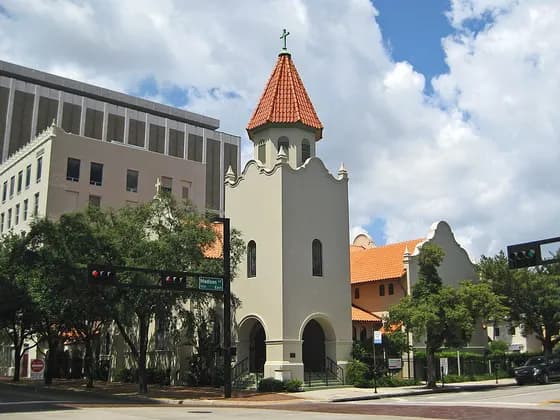


Photo: FightingRaven531 · CC BY-SA 3.0 · cropped
Photo: TampAGS , for AGS Media · CC BY-SA 3.0 · Photo: Trevorrrrvalent · CC BY 4.0 · Photo: Zeng8r · CC BY-SA 4.0
How to get into USF Health Morsani College of Medicine (MD) medicine
Step-by-step: entry requirements, admission tests, personal statement, interview format and the key deadlines.
Open the guide →USF Health Morsani College of Medicine (MD) entry requirements
Admission profile, interview format, decision dates and what makes USF Health Morsani College of Medicine (MD) different.
See the profile →The USF Health Morsani College of Medicine MD program
Integrated + Case-based learning, 4 years, clinical rotations across Tampa, St. Petersburg and the wider Tampa Bay area.
See the program →The USF Health Morsani College of Medicine (MD) medicine interview
USF Health Morsani College of Medicine uses a **Multiple Mini-Interview (MMI) format on its Tampa Health Sciences campus. Applicants rotate through approximately 8–10 stations of 8 minutes each, covering ethical reasoning, communication, healthcare policy, and professionalism scenarios. The 2021 relocation to Water Street Tampa** — co-located with Tampa General Hospital — gives the interview day a distinctive urban clinical flavour, with tours of the new facilities forming part of the experience.
USF Morsani is a research-intensive public medical school; the MMI reflects an expectation that applicants understand both community health challenges and translational research values. Tampa Bay’s diverse, fast-growing population provides the real-world backdrop for many scenarios.
The AAMC groups its 17 Premed Competencies into three categories: professional, science, and thinking and reasoning. Morsani interviewers weight thinking and reasoning alongside interpersonal skills. That is consistent with a research-active environment that values both analytical rigor and communication skill.
USF Health Morsani College of Medicine (MD) interview at a glance (2027 entry)
| Annual MD class size | ~130 |
|---|---|
| Interview format | MMI — 8–10 stations, ~8 min each |
| Application system | AMCAS |
| Curriculum | Integrated 4-year MD; Research Scholars Track available |
| In-state preference | Moderate — ~61% Florida residents (Class of 2028: 61% Florida, 39% out-of-state) |
| Interview window | October–February |
| Location | Water Street Tampa, Tampa, FL |
Interview format
- MMI format: 8–10 stations, each approximately 8 minutes with a 2-minute preparation window.
- Stations cover ethical dilemmas, role-play communication, healthcare policy, and motivation probes.
- Some stations incorporate Tampa Bay–specific health contexts: trauma, transplant, and underserved community scenarios.
- Tour of the Water Street Tampa campus and Tampa General Hospital affiliation sites.
- Informal student interactions and Q&A with faculty throughout the day.
- Financial aid and curriculum overview session included.
Working towards the MCAT score USF Health Morsani College of Medicine (MD) expects? Build a week-by-week plan from your test date — free for the first two weeks.
Sample interview questions
Why USF Morsani specifically — how does the Water Street Tampa campus and Tampa General Hospital affiliation shape your career goals?
Reference specific clinical strengths: Tampa General's Level I trauma, transplant program, Moffitt Cancer Center proximity. Connect to your specialty interest rather than just noting prestige.
A trauma patient arrives unconscious and without identification. You discover from a family member who arrives later that the patient is undocumented and fears deportation if their identity is known to authorities. How do you proceed?
Directly relevant to Tampa's diverse population. Address HIPAA, duty of care, patient confidentiality, the separation of medical care from immigration enforcement, and the treating team's obligations.
You are a third-year medical student and a patient tells you they trust you more than the attending physician and wants you to explain their diagnosis rather than the attending. How do you handle this?
What they are listening for:
- Navigate the trust relationship
- scope of practice
- the importance of not undermining the attending
Demonstrate patient-centered communication while respecting team hierarchy.
Describe an experience that deepened your understanding of Tampa Bay's healthcare landscape or the challenges facing Florida's growing, diverse population.
If you have local experience, use it concretely. If not, reference publicly known challenges: Florida's uninsured rate, hurricane preparedness, the region's large elderly and immigrant populations.
A pharmaceutical company offers your residency program a $50,000 grant for educational purposes. The grant has no explicit conditions but the company's drug is commonly prescribed in your specialty. Should the program accept?
Industry conflicts of interest in medical education. Discuss transparency, institutional COI policies, the AAMC guidelines on industry gifts, and the downstream effects on prescribing behavior.
USF is a major research university. If you were given a year of protected research time during your MD, what question would you investigate and why?
The Research Scholars Track signals USF values intellectual initiative. Choose a question connected to your genuine experience; show you understand hypothesis formation, not just lab tasks.
Florida has seen repeated public health crises — opioid epidemic, COVID surges, hurricane response. What does the physician's role in public health emergency response look like, and where does it conflict with individual patient duties?
Relevant state-specific context. Discuss triage ethics, public health authority, individual autonomy, and the tension between population-level and individual-level medicine.
You have just delivered a poor grade on a team presentation to a student colleague. They respond defensively and question your fairness. How do you navigate this conversation?
Feedback and professional communication. Show you can maintain composure, stay factual, invite dialogue, and separate the evaluation from the relationship.
What does it mean to be a physician-scientist, and how does the Morsani curriculum support that identity?
Reference the Research Scholars Track, USF's NIH funding profile, and Moffitt Cancer Center proximity. Show you understand the difference between bench research, translational research, and clinical research.
You learn that a fellow student has been falsifying data in a group research project. You are not a co-author but you know about it. What do you do?
Research integrity and professional obligation. Discuss the duty to report, the process for doing so (faculty mentor, research integrity office), and the potential consequences of silence.
Role-play: You are a third-year student on a Tampa General trauma rotation. The actor is the adult child of a patient who has just come out of emergency surgery and is demanding to know 'everything' immediately, while you do not yet have full information. Speak with them.
Acknowledge the fear, share what you can honestly, avoid speculation, and explain when the attending will provide a fuller update. The actor will press; staying calm and honest about uncertainty is the assessed skill.
An interviewer presents county data showing Hillsborough County's uninsured rate is roughly double the national average and that emergency-department visits for ambulatory-sensitive conditions are rising. What does this suggest, and how might a research-active school like USF respond?
Connect uninsurance and poor primary-care access to avoidable ED use; note Florida's Medicaid non-expansion context. Propose research-informed responses (community health partnerships, navigator programs) without overclaiming causation from a single dataset.
You are presenting preliminary research findings at a USF lab meeting and a senior faculty member challenges your methodology in front of the group. How do you respond?
USF is an R1 environment. Show intellectual humility, engage the critique substantively, distinguish what you can defend from what you would revisit, and treat the challenge as collaborative rather than adversarial.
USF Morsani values translational research. Explain the difference between bench, translational, and clinical research, and describe where your own interests would sit and why.
Demonstrate genuine understanding of the research pipeline (e.g. Moffitt's bench-to-bedside oncology model). Ground your answer in real experience rather than buzzwords, and connect it to the Research Scholars Track.
Tampa Bay faces recurring hurricane-season disruptions to healthcare delivery. What have you learned from any experience operating under unexpected pressure or disrupted conditions, and how does it prepare you for medicine here?
Use a concrete example of adapting under pressure. Connect it to the resilience and contingency thinking required of physicians in a hurricane-prone, high-acuity Gulf Coast environment.
Practise the USF Health Morsani College of Medicine (MD) interview
Rehearse the real format before the day — on demand with our AI interviewers, or live with a tutor.
Sit a mock with photoreal AI interviewers — any time
A timed MMI or panel interview on video — American & international voices — with interviewers who listen, react and press with follow-ups. Rubric-scored feedback and a replay the moment you finish.






Live mocks with a tutor who’s been in the room
A full USF Health Morsani College of Medicine (MD)-style mock with a medic or dentist tutor — honest scoring against real marking criteria, a station-by-station debrief and a written action plan.
Book a mock interviewHow to prepare for the USF Health Morsani College of Medicine (MD) interview
Common pitfalls to avoid
USF Health Morsani College of Medicine (MD) interview — frequently asked questions
Sources & official admissions information
Ready to nail your USF Health Morsani College of Medicine (MD) interview?
Book a mock interview with a tutor who knows the US interview formats, orpractice unlimited stations from our interview question bank.