
The Brody School of Medicine at East Carolina University MD program
What you actually study, and where you will be
Brody School of Medicine at East Carolina University's MD is a 4-year program with an integrated, spiral curriculum, with patient contact from Year 1 and clinical rotations in Greenville and communities across eastern North Carolina (2027 entry). Brody's MD opens with a 20-month foundational phase in Greenville: integrated science courses in year 1, organ-system courses in year 2, and preceptorships with practicing physicians, problem-based learning and clinical skills throughout. Clerkships, the core clinical rotations, start in April of year 2, after Step 1, the first licensing exam. From the Class of 2029, the clinical year is seven six-week clerkships plus an elective block. The final year then centers on electives, an ICU rotation and an acting internship that prepares you for intern duties.
- Degree
- MD
- Length
- 4 years
- Teaching
- Integrated + Spiral
- Clinical contact
- Year 1


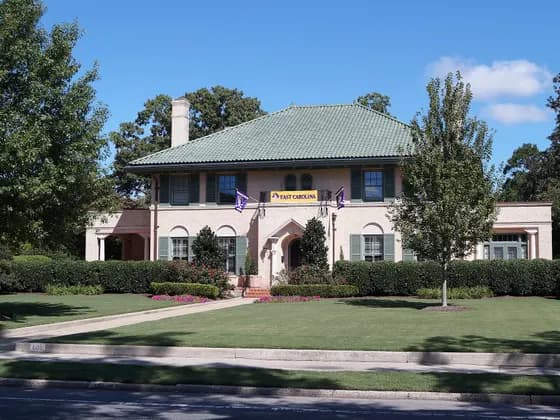
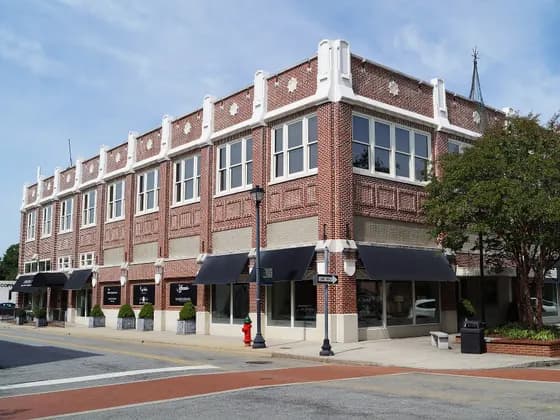
Photo: Brent Hoard · CC BY 2.0 · cropped
Photo: Tradewinds · CC BY-SA 3.0 · Photo: Tradewinds · CC BY-SA 3.0 · Photo: Tradewinds · CC BY-SA 3.0
The Brody School of Medicine at East Carolina University MD program at a glance (2027 entry)
The Brody School of Medicine at East Carolina University, usually shortened to ECU Brody or simply Brody, runs a four-year MD program in Greenville, North Carolina. The state legislature established the school in 1974 with a primary care focus, and its first four-year class arrived in 1977. Its mission is to increase the supply of primary care physicians serving the state, improve the region's health and train doctors for the state's needs.
The program has three phases, and the school numbers the years M1 to M4. A 20-month Foundational Phase teaches the basic sciences alongside clinical skills. A 12-month Clinical Phase is built around core clerkships, and a final 13-month Differentiation Phase lets you shape your training toward a specialty. The school calls the design a spiral: core topics come back several times, spaced out, and each time in more depth. It also treats health systems science, how care is delivered and improved, as a third pillar beside basic and clinical science.
Both ends of the program have changed recently. Year 1 was reorganized into two terms of integrated courses for the class that entered in 2025, the Class of 2029. From the Class of 2029, the clinical year becomes seven six-week clerkships, including a combined emergency medicine and physical medicine and rehabilitation (EM/PM&R) clerkship, plus a six-week elective block. A student entering in 2027 gets both new designs, so this guide follows the newer, dated policies and calendars over older year pages.
The first 20 months are based on ECU's Health Sciences Campus in Greenville. After study for Step 1 of the United States Medical Licensing Examination (USMLE), you start clerkships in April of year 2, with ECU Health Medical Center as the flagship teaching hospital. The Liaison Committee on Medical Education (LCME), which accredits MD programs in the United States, renewed full accreditation in February 2021 for eight years, and its next survey is due in 2027-28.
| Degree | MD |
|---|---|
| Program length | Four years, July orientation to May graduation, in three phases |
| Class size | 96 students in the Class of 2030, the largest so far |
| Main campus | Health Sciences Campus, Greenville, North Carolina |
| Teaching style | Integrated, spiral courses; Foundations of Doctoring adds clinical skills and problem-based learning |
| Anatomy | Cadaver dissection documented through 2024-25; anatomy lab items on every M1 fall exam |
| First patient contact | Year 1 preceptorships and required clinical activities; clerkships from April of year 2 |
| Teaching hospital | ECU Health Medical Center, Greenville, the flagship teaching hospital |
| Step 1 timing | End of the foundational phase, about March of year 2; pass needed for M3 |
| Grading | Pass/fail in years 1 and 2; clerkships graded Honors, A, B, C or Fail |
What makes the Brody School of Medicine at East Carolina University MD program different
Clerkships begin in April of your second year
The foundational phase lasts 20 months, so after Step 1 study in February and March you start full-time clerkships in early April of year 2. That leaves a full 12-month clinical phase, then 13 months of advanced rotations, electives and preparation for residency, the specialty training after medical school, before graduation in May.
Seven six-week clerkships, including EM/PM&R
From the Class of 2029, the clinical year is eight six-week periods. Seven are core clerkships: family medicine, internal medicine, pediatrics, surgery, psychiatry, obstetrics and gynecology, and EM/PM&R. The eighth is an elective block with required surgical skills and primary care skills electives.
Four learning-community houses, each with a dean
In 2026 the school introduced four learning communities, called houses, each led by a House Dean from the clinical faculty. The house names were chosen to reflect the culture of eastern North Carolina, ECU and Brody. You meet your House Dean one to one in years 1 and 2, and the new building includes four student house spaces for mixed groups of M1 to M4 students.
Five optional Distinction Tracks with a capstone
You can apply to one of five Distinction Tracks: health system transformation and leadership, medical education and teaching, medical humanities and ethics, service-learning, or research. Each pairs you with mentors on a project from the summer after year 1 to a capstone and a Distinction Day presentation in year 4.
A new education building due in 2027
The seven-story Brody Center for Medical Education is scheduled to open ahead of the 2027-28 academic year. It adds learning studios, small-group rooms, a 28-bed gross anatomy space and house common areas, and is meant to let classes grow toward 120 students.
How Brody School of Medicine at East Carolina University teaches medicine
The school's spiral model moves from structure, function, and disease and therapeutics in the foundational phase to core clerkships, then advanced clerkships and electives.
Year 1 combines related subjects into integrated courses. In the fall, System Structure and Function holds three threads, meaning subjects tracked separately inside the course: gross anatomy and embryology, histology and cell biology, and medical physiology. Molecular Basis of Medicine runs alongside it. In a course with threads, each exam covers them all, and failing one thread fails the course. Year 2 runs by organ system, each course with pharmacology, pathology and clinical application threads.
Foundations of Doctoring runs through both foundational years, combining preceptorships, problem-based learning and clinical skills. In problem-based learning (PBL), a small group works through a patient case, decides what it needs to learn, then researches those learning objectives. The course also carries career exploration, professional identity, wellness and reflection.
Health systems science runs through all four years, with emphasis on patient safety, population health and team-based care. School policy sets a minimum of a third of clinical-phase teaching time in outpatient settings and a third in inpatient settings. A radiology clerkship runs alongside the others, delivered online at your own pace.
The ways you will learn
| Lectures and flipped classrooms | Large-group sessions include lectures and flipped classrooms, where you complete a recording or module beforehand and use class time to apply it, plus interprofessional events with students from other health professions. |
|---|---|
| Problem-based and case-based small groups | PBL groups are part of Foundations of Doctoring. Case-based small-group lessons ask you to apply foundational science, and a facilitator who meets your group six or more times writes narrative feedback. |
| Simulation and standardized patients | Every student takes part in at least 26 simulation and skills sessions before graduating, from a first-year physiology simulation to clerkship skills such as ultrasound in family medicine. Standardized patients, people trained to portray patients, help you practice interviews. |
| Weekly blended quizzes | Low-stakes Friday quizzes mix questions from several courses and count for 5 to 20 percent of a course grade, to keep you studying steadily and flag early when you need help. |
| Clerkships | Full-time clinical rotations in which faculty or residents must directly observe you taking a history and examining a patient, with a mid-rotation feedback session and narrative comments on your final grade form. |
A typical week on the Brody School of Medicine at East Carolina University program
In years 1 and 2, required scheduled activities may not exceed 25 hours a week, averaged over a block or term. That includes lectures, small groups, labs, simulations, assessments, required pre-work, clinical experiences and scheduled House Dean meetings, but not independent study, tutoring or voluntary extras such as Distinction Track work.
You must still be available from 8 a.m. to 5 p.m. on class days and until 8 p.m. on assessment days. Most weeks end with a quiz that opens after Friday's last class and closes at 6 p.m. on Sunday, taken remotely with 90 seconds per question.
The 2026-27 plan for the fall of year 1 sets 14 Friday quizzes and four exams of about 100 questions, each in a four-hour slot. Year 2's Term 3 sets 13 quizzes of 33 questions and six 100-question exams between August and late January.
Clerkships have different limits. You work no more than 80 hours a week averaged over four weeks, and duty periods last at most 24 hours plus up to four for handoffs or teaching. After 24 hours of in-house call you get 14 hours off, and one day in seven is free on average.
How anatomy is taught at Brody School of Medicine at East Carolina University
Anatomy comes in the fall of year 1. Since the 2025 reorganization, gross anatomy and embryology has been a thread inside System Structure and Function. In the 2026-27 blueprint, each of the term's four exams has an anatomy lab section of 25 to 50 items on top of about 100 written questions.
The lab descriptions below date from before that change. The 2020 bulletin said most of the anatomy course took place in the cadaver laboratory, because, the course description said, anatomy is best learned by dissecting the human body. A 2023 student poster on the fall 2022 course reported required lab dissection and timed exams at cadaver stations.
A health systems science page for year 1, unchanged since at least February 2024, describes groups of three or four students dissecting together under a team charter. In a June 2025 ECU News story, a student finishing her first year called the cadaver lab her favorite part of the year.
Bodies come through the school's Anatomical Gift Program, according to the 2023 poster. The new Brody Center for Medical Education adds a gross anatomy space with 28 beds.
When you first meet patients at Brody School of Medicine at East Carolina University
Patient contact begins in year 1. Foundations of Doctoring I includes preceptorships, and the school's workload policy lists M1 Foundational Clinical Experiences among required activities. The M1 Capstone is a set of required clinical activities that are not assessed, and the school says many early experiences take place in rural and underserved communities in eastern North Carolina.
In 2022 the school described first-year interview practice with standardized patients whose stories are set in rural eastern North Carolina. In year 2, Foundations of Doctoring II continues and a full week in October is a clinical preceptorship. Outside the curriculum, students run two free clinics for uninsured people.
Full-time clinical work starts after Step 1. Since 2026, a white coat ceremony in late March or early April of year 2 marks the end of the foundational phase. For the class that entered in 2026, it falls on March 25, 2028, with clerkships from April 3.
The Brody School of Medicine at East Carolina University curriculum, year by year
- Year 1 (M1)
Foundational Phase: integrated science courses
Year 1 runs from orientation in late July to late May in two terms of about 20 weeks. The fall term covers the body's structure, function and molecular basis, and the spring term turns to the nervous system, behavior, and disease and treatment.
- Orientation and boot camp weeks in July; the 2026 orientation included Basic Life Support (CPR) certification.
- Fall Term 1 (August to December): Molecular Basis of Medicine, and System Structure and Function with its anatomy and embryology, histology and cell biology, and physiology threads.
- Spring Term 2 (January to May): Neurologic Systems (neuroscience and behavioral science), Foundations of Disease and Therapeutics (pharmacology, host-microbe interactions and pathology) and Ethics and Culture in Medicine.
- Foundations of Doctoring I and the M1 Capstone across both terms.
- Any exam scored below 70 percent can be retaken once; a passing retake counts as 70.
- An eight-week summer break, open for the Summer Scholars Research Program or a Distinction Track immersion.
- Year 2 (M2), July to March
Foundational Phase: organ systems and Step 1
Term 3 runs from late July to early February as six organ-system courses, alongside Society, Culture and Health Systems, Basic Psychiatry, Foundations of Doctoring II and the M2 Capstone. It ends with dedicated Step 1 study in February and March.
- Organ-system courses: Heme and Renal; Cardiopulmonary; Nervous and Sensory; Musculoskeletal and Skin; GI, Nutrition and Multi-System; Endocrine and Reproductive.
- Society, Culture and Health Systems: a 2022 project had students study one county's health system and its COVID-19 response.
- A fall Comprehensive Basic Science Exam (CBSE) from the National Board of Medical Examiners (NBME). A score more than two standard deviations below the national mean brings a recommendation to consider a six-week Clinical Foundations Seminar before Step 1.
- About 5.5 weeks of dedicated Step 1 study from early February.
- Clinical Phase (M3), April of year 2 to March of year 3
Seven core clerkships and an elective block
From the Class of 2029, the clinical year is a one-week orientation followed by eight six-week periods: seven core clerkships and an elective block. Each period can hold any of the eight. A radiology clerkship runs alongside all year.
- Core clerkships: family medicine, internal medicine, pediatrics, surgery, psychiatry, obstetrics and gynecology, and EM/PM&R.
- Elective block: three two-week electives, one surgical skills and one primary care skills elective from Brody's own lists, and one in any discipline.
- Required clinical experiences to log, such as a well-child visit, labor and a suicide-risk assessment, with simulation as the fallback for a few, such as laceration repair.
- A fall break and a two-week winter break.
- Differentiation Phase (M4), April of year 3 to May of year 4
Acting internship, ICU, electives and residency
The final 13 months open with a one-week Transitions to M4 course, including a Clinical Skills Assessment, and about six weeks of study for USMLE Step 2 Clinical Knowledge (CK). The rest runs in four-week blocks split into two-week halves, with Match Day, when residency places are announced, in March and graduation in May.
- A four-week acting internship, also called a sub-internship, at Brody or, with approval, another LCME-accredited school. It prepares you for the responsibilities of an intern, a first-year resident, in your chosen specialty.
- A four-week ICU rotation in a medical, surgical, pediatric, neonatal or cardiac intensive care unit.
- 28 weeks of electives and up to eight weeks of flex time, unscheduled time for Step 2 study, residency interviews or house hunting.
- A three-week Transition to Residency course in April and May.
- 179 credit hours across the MD: 51 in M1, 38 in M2, 50 in M3 and 40 in M4.
How you are assessed at Brody School of Medicine at East Carolina University
Courses in years 1 and 2 appear on your transcript as pass or fail, but each also reports a numeric grade out of 100, with 70 to pass. Those numbers and your clerkship grades, weighted by credit hours, set your class rank. It is reported by quartile in your Medical Student Performance Evaluation (MSPE), the school's letter for residency applications, and is used to judge eligibility for Alpha Omega Alpha, the medical honor society.
Foundational exams and quizzes use single-best-answer questions in the NBME style, alongside lab practicals, projects and assignments. In year 1, failing one course means repeating the year, and failing two can lead to dismissal. In Term 3 you must reach at least the 6th percentile nationally on NBME subject exams to pass the systems capstone course, with up to three attempts.
Clinical skills are tested in Objective Structured Clinical Examinations (OSCEs), timed stations where you take a history or examine a standardized patient while an examiner scores you. They appear in Foundations of Doctoring, core clerkships, Transitions to M4 and Transition to Residency.
Clerkships are graded Honors, A, B, C or Fail, and you must pass each part, including the OSCE and the NBME subject exam, called a shelf exam. A first shelf score below the 6th percentile for that quarter leaves the clerkship In Progress until you pass a retake, which caps your grade at B. Three failed attempts mean repeating the clerkship.
You must pass USMLE Step 1 before M3 and Step 2 CK before graduating, with at most three attempts at each. Since January 26, 2022, Step 1 has been reported only as pass or fail, while Step 2 CK still gets a three-digit score. In August 2026 the USMLE program announced a move to designated testing dates from January 2029, with Step exams offered less often each year. Its June 2026 announcement had named 2028.
On the current schedule, a student entering in July 2027, the Class of 2031, would study from early February 2029 and sit Step 1 by about mid-March 2029, shortly after that switch. Step 2 CK would follow early in M4, by about mid-May 2030. The school has not yet posted a calendar for the class entering in 2027, so these dates are projections from the Class of 2029 and 2030 calendars and its October 2026 USMLE procedure.
- Step 1 deadline: generally the first or second week of March of M2.
- Step 2 CK deadline: before Block 2b of M4, generally mid-May; it must be passed before any leave between M3 and M4.
- A first Step 1 failure means a six-week Clinical Correlations Seminar in place of your first clerkship. If you pass the retake before the seminar ends, you start clerkships in the second six-week period and stay with your class. The missed clerkship moves into your elective block, whose surgical skills and primary care skills electives move to M4.
- Electives and radiology are pass/fail; the acting internship and ICU rotation use the clerkship scale, but M4 grades do not count toward class rank.
- From 2027-28, falling three clerkships behind your class means restarting the clinical year with the next class, and the MD must be finished within six years.
Brody School of Medicine at East Carolina University clinical rotations: where you will actually train
ECU Health Medical Center in Greenville is the flagship teaching hospital for the Brody School of Medicine and a tertiary care referral center. It belongs to ECU Health, a system with an academic medical center on two campuses and eight community hospitals, serving more than 1.4 million people in 29 counties. In 2026 the school's dean was also ECU Health's chief executive.
The site descriptions below are dated. The 2020 bulletin placed obstetrics and gynecology and pediatrics teaching at Vidant Medical Center, now ECU Health Medical Center, and at the Brody School of Medicine Outpatient Center. It put surgery students on the medical center's general and specialty surgical services, at the SurgiCenter and in associated outpatient clinics. Some clerkships also used county health departments or approved pediatric practices in eastern North Carolina, and most family medicine clerkships were arranged with family physicians in the region.
The bulletin also placed four weeks of inpatient psychiatry at Cherry Hospital, the state psychiatric hospital in Goldsboro, or at the medical center's psychiatric unit. Cherry Hospital still lists itself as a teaching site for ECU's medical school. A 144-bed behavioral health hospital that ECU Health and Acadia Healthcare set to open in Greenville in fall 2025 is meant to train students and residents through partnerships with Brody.
A 2022 ECU News story said students spent up to half of their family medicine and pediatrics clerkships in rural, community settings. It also named a combined internal medicine and pediatrics acting internship at ECU Health Duplin Hospital in Kenansville or ECU Health Edgecombe Hospital in Tarboro. Both are still listed in an archived April 2026 copy of the M4 catalog, written for the older M4 layout.
Community physicians practicing in North Carolina can teach Brody students as ECU Health Affiliate Faculty in all four years, and you must have reliable transportation for clinical sites. For rotations around the region, the Eastern Area Health Education Center (Eastern AHEC) keeps furnished student apartments in eight eastern North Carolina towns, including Greenville. First priority goes to in-state students on primary care rotations, and ECU counts as an in-state affiliated school.
The flagship hospital and most of the named teaching sites.
- ECU Health Medical Center (flagship teaching hospital)
- ECU Family Medicine Center (Family Medicine M4 selectives, 2026)
- Brody School of Medicine Outpatient Center (2020 bulletin)
- ECU Health Behavioral Health Hospital (2025)
- VA ambulatory clinic, Greenville (archived April 2026 M4 catalog)
- Pitt County Health Department (archived April 2026 M4 catalog)
A teaching site for ECU's medical school.
- Cherry Hospital (state psychiatric hospital)
Combined internal medicine and pediatrics acting internships (2022 and April 2026).
- ECU Health Duplin Hospital, Kenansville
- ECU Health Edgecombe Hospital, Tarboro
- VA ambulatory clinic (archived April 2026 M4 catalog)
- Community practices of ECU Health Affiliate Faculty
- Eastern AHEC housing in Ahoskie, Beaufort, Elizabeth City, Edenton, Goldsboro, Greenville, Jacksonville and New Bern
Electives, selectives and away rotations at Brody School of Medicine at East Carolina University
Electives start in M3. The six-week elective block holds three two-week electives: one surgical skills and one primary care skills elective, both clinical and chosen from Brody's predefined lists, and a third in any discipline. You can also propose an individually designed elective (IDE) with a preceptor, 60 days ahead. M3 electives are pass/fail and cannot be international.
M4 holds 28 weeks of electives of two to four weeks each, at least 24 of them clinical. You schedule them in the fall and winter of M3, and without special permission may spend at most 16 weeks in one specialty and 16 weeks on away rotations at other schools. Away rotations need approval from the Associate Dean for Student Affairs, Clinical Sciences, and good academic standing.
The Association of American Medical Colleges (AAMC) runs Visiting Student Learning Opportunities (VSLO), the standard application for away electives. In M4 you can also go abroad: the April 2026 catalog listed a global health elective in Eswatini, a cultural immersion elective in Zambia and primary care and cardiology in Nicaragua. Family Medicine's 2026 selectives add women's health in rural Guatemala.
Other April 2026 electives, written for the older M4 layout, included Medicine and the Holocaust, Canopy Medical Spanish, forensic pathology and a pediatric diabetes camp, Camp Needle in the Pines. The school now posts elective information in a separate system called Quarterdeck.
You can take up to eight weeks of flex time, and four must fall in Blocks 8, 9 or 10 for residency interviews.
Dual degrees and research years at Brody School of Medicine at East Carolina University
The Summer Scholars Research Program (SSRP) is an eight-week research experience between years 1 and 2 with a faculty mentor, in clinical or basic science. From 2027 it has an Immersive Pathway of about 40 hours a week in person with a full stipend, and an Independent Pathway for mainly remote projects with a reduced stipend. Both end with a poster.
The Distinction Tracks are para-curricular, meaning they run alongside the required curriculum. You apply during or just after year 1 and are chosen by application and interview. Two of the five tracks are health system transformation and leadership, whose students are LINC Scholars (Leaders in Innovative Care), and medical education and teaching. The other three are medical humanities and ethics, added in 2025, service-learning with underserved and rural populations, and research.
The Research track requires SSRP first and ends with a manuscript of publishable quality, though publication is not required. Medical Humanities and Ethics students complete an eight-week, 40-hour-a-week summer immersion and earn a Certificate of Clinical Ethics. Every track ends with capstone elective time in M4, including a mandatory two-week block in Greenville, a poster and Distinction Day.
You can also add an MBA or an MPH. The 2026 promotion rules, which replace the timing on the school's older dual-degree page, expect the second degree between M3 and M4, on a leave of absence and in good academic standing. The MD/MBA with ECU's College of Business needs 14 classes instead of 18, usually with a GMAT waiver, and the MPH runs through the school's Department of Public Health.
Facilities and support at Brody School of Medicine at East Carolina University
Where you will learn
Classes currently meet in the existing Brody building on ECU's Health Sciences Campus, a locked building you enter with your ECU 1Card. The $265 million, state-funded Brody Center for Medical Education, joined to the Brody Medical Sciences Building, is due to be completed by August 2027 and to open ahead of the 2027-28 academic year.
The seven-story, 195,000-square-foot building adds two learning studios that seat up to 500 or convert to classrooms of up to 136 each, plus huddle rooms and small-group spaces. It also has a 144-seat lab classroom for neurology, pathology and immunology, a new gross anatomy space, a new home for simulation and standardized patients, and house areas with lockers and study carrels.
The Simulation Center offers on-demand skills practice and a self-directed ultrasound program for students in all four years, alongside its scheduled sessions. You also have the Laupus Health Sciences Library and the Health Sciences Campus Student Center, with study rooms and a fitness center.
Support while you study
Support runs partly through the four houses introduced in 2026: the Bertie Buccaneers, Roanoke Raiders, Pamlico Privateers and Cape Fear Corsairs. You meet your House Dean one to one for career advising in years 1 and 2, then also work with a clinical course advisor and a specialty advisor. Advising follows the AAMC's Careers in Medicine program, with mock residency interviews and application help.
The Office of Student Success and Wellness (OSSaW) offers academic coaching, USMLE study planning, peer tutoring, near-peer study groups and help with clerkship transitions and shelf exams. Two counselors from ECU's counseling center work full time inside the medical school, and Brody personnel cannot see their records.
Academic difficulty, such as failing the first exam of a term in year 1, a shelf exam or an OSCE, brings in the Academic Achievement Program. In years 1 and 2 your course director sends a notice within a week of a failed exam. For a failed clerkship OSCE or shelf exam, the clerkship director meets you within two weeks, and either director can refer you to OSSaW. Faculty or residents who treat you as patients may not assess you or take part in promotion decisions about you.
Is the Brody School of Medicine at East Carolina University program right for you?
This program may suit you if
- You want full-time clinical work to start in April of your second year.
- You are drawn to primary care and to rural and underserved communities in eastern North Carolina, where many early experiences take place.
- You like steady, low-stakes checks: blended quizzes most Fridays and exams every few weeks.
- You would value a house with its own dean, and perhaps a mentored Distinction Track project.
- You want surgical skills and primary care skills electives built into your clinical year.
Things to think about
- On the current schedule you would sit Step 1 in about March 2029, shortly after the USMLE starts offering Step exams less often each year.
- You would be among the first few classes on the redesigned clinical years, which begin with the Class of 2029.
- Years 1 and 2 are pass/fail on your transcript, but the numeric scores behind them count toward class rank.
- Dissection is documented through 2024-25; ask how the reorganized anatomy thread now uses the lab.
- Clinical sites can take you outside Greenville, so you need reliable transportation of your own.
Brody School of Medicine at East Carolina University MD program — frequently asked questions
Applying to Brody School of Medicine at East Carolina University?
How to get into Brody School of Medicine at East Carolina University
Prerequisites, MCAT, AMCAS personal statement, secondaries and interview, step by step.
Open the guide →Brody School of Medicine at East Carolina University admissions profile
MCAT and GPA profile, acceptance rate, interview format and key dates.
See the profile →Compare Brody School of Medicine at East Carolina University with other schools
Put the teaching style, anatomy teaching and clinical sites next to another school.
Open the comparison →Prepare for the Brody School of Medicine at East Carolina University interview
Format breakdown, school-specific sample questions and prep tips from tutors who interviewed here.
Read the guide →Where this Brody School of Medicine at East Carolina University program guide came from
This guide was written from 63 official sources — Brody School of Medicine at East Carolina University's own program pages and curriculum documents, plus the accreditor and the hospitals and health systems the school trains students in where they publish detail — read on 2026-10-31, then checked claim by claim against those sources.
- Brody School of Medicine: Curriculum Overview (with the July 2026 four-year curriculum graphic)
- Brody School of Medicine: Curriculum At A Glance (phases and spiral model)
- Brody School of Medicine: First Year Courses, Incoming Class of 2030
- Brody School of Medicine: Second Year Curriculum (Term 3)
- Brody School of Medicine: Third Year Curriculum
- Brody School of Medicine: Fourth Year Curriculum
- Planning Calendar, Class of 2030 (academic years 2026-27 to 2029-30)
- Planning Calendar, Class of 2029 (academic years 2025-26 to 2028-29)
- M3 Academic Calendar 2028-2029, Class of 2030
- M4 Academic Calendar 2029-2030, Class of 2030
- Brody School of Medicine: USMLE Step Procedure (SOP 9.9.2, October 2026)
- Step 1 Pathway Map (October 2026)
- Step 2 CK Pathway Map, On-Cycle (October 2026)
- Brody School of Medicine: Assessment System, Grading Architecture (SOP 9.6.2)
- Brody School of Medicine: Elective Opportunities (SOP 6.5.2, effective with the Class of 2029)
- M1 Term 1 Assessment Blueprint 2026-2027
- Term 3 (M2) Assessment Blueprint 2026-2027
- Brody School of Medicine: Foundational Phase Quizzes (SOP 9.7B.2)
- Brody School of Medicine: M1 Assessment (SOP 9.4.4)
- Brody School of Medicine: NBME Subject Exam Remediations (SOP 9.8.1.3)
- Brody School of Medicine: Academic Achievement Program (SOP 11.1.1)
- Brody School of Medicine: Student Promotion Guidelines (SOP 10.3.3, August 2026)
- Brody School of Medicine: Calculation of Credit Hours, with 2027-28 credit hour counts (SOP 8.8.2.3)
- Brody School of Medicine: Narrative Assessment (SOP 9.5.3)
- Brody School of Medicine: Direct Observation (SOP 9.4C.3)
- Brody School of Medicine: Inpatient and Outpatient Experiences in Clinical Training (SOP 6.4.2)
- Brody School of Medicine: Student Work Hour Restrictions (SOP 8.8.1, July 2026)
- Brody School of Medicine: Distinction Track Standard Operating Procedures (2026)
- Required Clinical Experiences, Class of 2027 and Beyond (2026-27)
- Brody School of Medicine Student Handbook
- Brody School of Medicine Bulletin 2020 (dated)
- Brody School of Medicine: Distinction Track Programs
- Brody School of Medicine: Health System Transformation and Leadership Distinction Track
- Brody School of Medicine: Medical Humanities and Ethics Distinction Track
- Brody School of Medicine: Service-Learning Distinction Track
- Brody School of Medicine: Research Distinction Track
- Brody School of Medicine: Summer Scholars Research Program
- Brody School of Medicine: Dual Degree Programs (2023 page)
- ECU College of Business: MD/MBA
- Brody School of Medicine: Health System Science M1 Year Curriculum (unchanged since 2024)
- Brody School of Medicine: Health System Science Curriculum
- Near-Peer Practice Laboratory Practicals in Gross Anatomy and Embryology (Brody poster, 2023)
- ECU News: Rebecca Cloninger felt Brody mission was perfect match (June 2025)
- Brody School of Medicine: New Brody Center for Medical Education
- ECU News: Topping-out ceremony for the Brody Center for Medical Education (June 2026)
- ECU News: Halfway to MD, white coat ceremony and new houses (April 2026)
- ECU News: Class of 2030 orientation (July 2026)
- ECU News: Rural health education across the health sciences (November 2022)
- Office of Clinical Simulation: Brody School of Medicine Curriculum
- Brody School of Medicine: Become a Preceptor (ECU Health Affiliate Faculty)
- Brody Office of Student Affairs: Who We Are, with House Deans
- ECU Department of Family Medicine: Fourth Year Selectives
- Brody School of Medicine: M4 Catalog and Course Descriptions (archived copy, April 12, 2026)
- Brody School of Medicine: LCME Accreditation
- LCME Directory of Accredited Programs
- USMLE: Examination Results and Scoring
- USMLE Designated Testing Dates Information Hub
- USMLE: Updated Timeline for Designated Testing Dates, Transition in January 2029 (August 2026)
- ECU Health: System of Care
- ECU Health: Hospital Locations
- ECU Health: Behavioral Health Hospital ribbon-cutting (August 2025)
- NCDHHS: State Psychiatric Hospitals, Cherry Hospital
- Eastern AHEC: Student Housing for Rotations in Eastern North Carolina
Curricula are restructured between cycles. Anything here that decides your application — how anatomy is taught, a clinical campus assignment, a required research year — should be confirmed against the official page for your entry year.
Applying to Brody School of Medicine at East Carolina University?
We help US applicants with MCAT strategy, the AMCAS personal statement, secondary essays and interview prep — everything you need for a competitive Brody School of Medicine at East Carolina University application.