
The University of Missouri-Columbia School of Medicine MD program
What you actually study, and where you will be
University of Missouri-Columbia School of Medicine's MD is a 4-year program taught through problem-based learning in an integrated curriculum, with patient contact from Year 1 and clinical rotations in Columbia, Springfield and rural Missouri communities (2027 entry). From the class entering in 2027, at both Columbia and Springfield, the school is moving to MOmentum, a new curriculum. A 19-month pre-clerkship phase of patient-centered cases and clinical skills ends with an eight-week Step 1 study block in January and February of year 2, and 12 months of core clerkships start that March. A 14-month Advanced Medicine phase follows, with a required emergency medicine clerkship, an acting internship and Transition to Residency.
- Degree
- MD
- Length
- 4 years
- Teaching
- Problem-based learning + Integrated
- Clinical contact
- Year 1

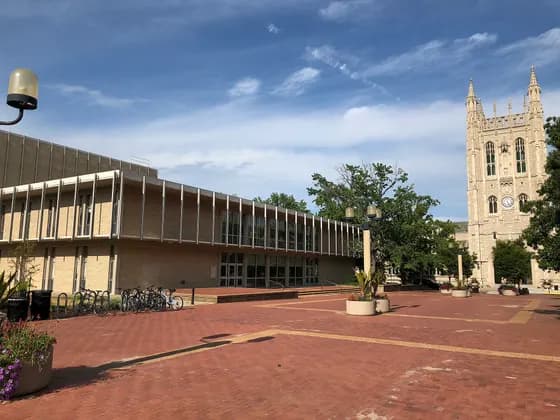
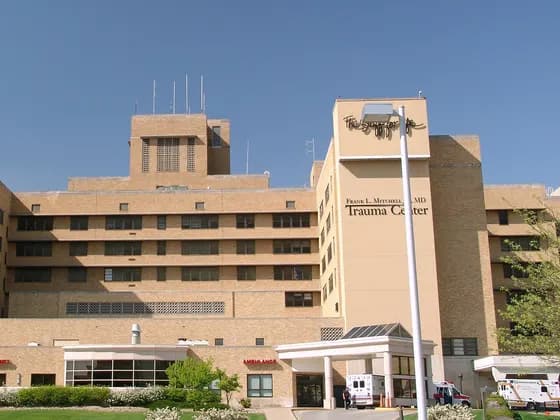

Photo: Fresaj · CC BY-SA 3.0 · cropped
Photo: Grey Wanderer · CC BY-SA 4.0 · Photo: BCFDFF · CC BY-SA 3.0 · Photo: mostateparks · Public domain
The University of Missouri-Columbia School of Medicine MD program at a glance (2027 entry)
The University of Missouri-Columbia School of Medicine, which calls itself the Mizzou School of Medicine or the MU School of Medicine, awards the MD after four years. It is based in Columbia, in the middle of the state, with a second campus in Springfield, in southwest Missouri. The Liaison Committee on Medical Education (LCME), which accredits MD programs in the United States, lists it as fully accredited, with its next survey due in 2031-32.
From the class entering in 2027, the program is moving to MOmentum, a redesigned curriculum. In June 2026 the school's dean told the University of Missouri Board of Curators, the university's governing board, that MOmentum will roll out for that class at both Columbia and Springfield. It shortens the pre-clerkship phase, the classroom-based stage before full-time clinical work, to 19 months, so clerkships start in March of year 2.
Teaching in the pre-clerkship phase builds on patient-based learning, the school's version of problem-based learning (PBL), which it adopted in 1993: you learn the science through patient cases rather than mainly through lectures. In MOmentum the cases, called Human Health and Disease, run beside a clinical skills thread from semester 1 and, from semester 2, a scholarly thread called Mizzou Scholars.
Clerkships are the full-time rotations through the main specialties, and MOmentum gives them a 12-month phase. A 14-month Advanced Medicine phase then adds a required emergency medicine clerkship and an acting internship, or sub-internship. In that rotation you take on close to the responsibility of a first-year resident, a new doctor in specialty training. Classes entering through 2026 follow the block curriculum set out in the 2026-27 catalog.
Springfield, a clinical campus for years 3 and 4 since 2016, becomes a four-year campus in 2027-28, and you state a campus preference when you apply. The Rural Scholars Program also takes up to 25 students a year for rural training, including part or all of the clerkship year in a rural Missouri community.
| Degree | MD (Doctor of Medicine), four years; semester 1 starts in late July |
|---|---|
| Curriculum | MOmentum, new for the class entering in 2027 at both campuses |
| Class size | Up to 136 at Columbia and up to 32 at Springfield each year |
| Campuses | Columbia; Springfield, a four-year campus from 2027-28 |
| Teaching style | Patient-based learning plus case-based and team-based learning (MOmentum) |
| Anatomy | Human donor dissection; Springfield students will use Missouri State's cadaveric lab |
| First patient contact | Year 1: clinical skills thread from semester 1 |
| Clerkships | Seven core clerkships over 12 months from March of year 2 |
| Step 1 timing | After an eight-week January-February study block in year 2 (MOmentum) |
| Accreditation | Full LCME accreditation; next survey in 2031-32 |
What makes the University of Missouri-Columbia School of Medicine MD program different
Patient-based learning since 1993, extended by MOmentum
Patient cases have driven the pre-clerkship years since the school replaced many lectures with problem-based learning. MOmentum builds on that approach rather than replacing it, adding more active formats such as team-based learning and flipped classes, in which you prepare before class and use class time to apply it.
Springfield becomes a full four-year campus in 2027
From 2027-28 Springfield takes up to 32 first-year students, in a 77,000-square-foot building on Battlefield Road. Until now its students have done years 1 and 2 in Columbia, then trained with CoxHealth and Mercy.
Rural Scholars: clinical training rooted in one rural region
Up to 25 first-year students a year join and are assigned a continuity region, a training site and a rural physician mentor. You spend four weeks there after year 1. During your core clerkships you take three of them there, or a longitudinal integrated clerkship following the same patients across specialties, then a rural elective in year 4.
Nutrition taught in every year
For 2026-27 the school maps 63 hours of required nutrition: 32 in year 1, 13 in year 2, 14 in year 3 and four in year 4. Topics run from metabolism to motivational interviewing and meal planning, and culinary medicine in a test kitchen falls in years 1 and 4. In June 2026 the school told the Board of Curators that an expanded nutrition curriculum will run at both campuses.
Patients and older adults as teachers
In year 1 you can join the Heyssel Senior Teacher Educator Partnership (STEP), which pairs you with an older adult for a year of monthly meetings. In year 3 you can honor a patient who taught you as a Legacy Teacher, with an essay, poem or artwork, at annual luncheons in Columbia and Springfield.
How University of Missouri-Columbia School of Medicine teaches medicine
MOmentum's pre-clerkship phase opens with Foundational Principles of Medicine. The sciences then come through Human Health and Disease (H2D), patient-centered cases that link the biomedical sciences to the structural, social and individual factors that shape health. The cases cover both how the body works or fails and what in a patient's circumstances affects their health.
MOmentum builds on the school's problem-based learning by adding more active formats. In case-based learning a facilitator steers a group through a case toward set goals, and in team-based learning (TBL) teams apply what they prepared to problems in class. In peer instruction students explain ideas to each other, and in the flipped classroom you study before class and use class time to apply it.
Alongside H2D, Professional and Clinical Excellence (PaCE) carries clinical skills and interprofessional education, meaning learning with students of other health professions. It also covers the societal influences on health and professional identity formation, how you grow into a doctor.
Some large-group classes will be shared between Columbia and Springfield by two-way video. The University of Missouri System said in September 2025 that some lectures would be livestreamed and recorded in both directions, and the school's June 2026 update to the Board of Curators repeated the plan.
For classes entering through 2026, the block curriculum splits each pre-clerkship block in two. In Basic Science and Patient-based Learning (BSci/PBL), your group works through one authentic case a week with a faculty facilitator trained to guide it toward a diagnosis and care plan. Introduction to Patient Care (IPC) carries the clinical skills, with a new theme each block, from interviewing and examination to psychopathology and the doctor as a person.
The ways you will learn
| Patient-centered cases | The core of the pre-clerkship phase, run through H2D in MOmentum. In the block curriculum, lectures and labs fill in the science around each small group's weekly case. |
|---|---|
| Simulation and role-play | You practice interviewing and diagnostic skills with people trained to play patients, and train on manikins at the Shelden Clinical Simulation Center. Clerkships add their own simulations, such as a stroke scenario at the start of neurology. |
A typical week on the University of Missouri-Columbia School of Medicine program
These details describe the block curriculum, which classes entering through 2026 follow. In a pre-clerkship week, BSci/PBL takes about 20 hours: roughly 10 on your group's case and 10 in lectures and other traditional teaching. IPC clinical skills sessions come on top.
Two half-days a week are protected for independent study, with no faculty-led activity allowed. Weeks one to eight of each block are for learning and week nine for exams. Attendance is expected at everything, with absences only in unusual circumstances.
How anatomy is taught at University of Missouri-Columbia School of Medicine
Anatomy is taught with human donors. Bodies donated through the school's Gift of Body program are used to teach medical, physical therapy and athletic training students. The pathology and anatomical sciences department lists human donor dissection among its teaching for medical students, and its faculty also teach histology, the study of tissue under the microscope.
Where you dissect depends on your campus. The Human Anatomy Facility is in the Patient-Centered Care Learning Center in Columbia. When the building opened in 2017, MU Health Care described anatomy labs where instructors can magnify and display their work so everyone can see. From 2027, Springfield students will learn anatomy in a cadaveric lab at Missouri State University, the school told the University of Missouri Board of Curators in June 2026.
In the block curriculum, there is no stand-alone anatomy course, since no course is run by a single department. Gross anatomy, the structures visible to the naked eye, sits in block 1 of year 1 with histology and embryology, tied to clinical correlates through patient examples and non-invasive techniques. Anatomy returns with the nervous system in block 3, and year 4 science course options include surgical anatomy, in Columbia or Springfield, and anatomical science teaching.
When you first meet patients at University of Missouri-Columbia School of Medicine
Under MOmentum, clinical skills start in semester 1 through the PaCE thread and continue through the pre-clerkship phase. Full-time clerkships begin in March of year 2. The school's 2026 admissions flyer says students are exposed to patient care from their first year.
In the block curriculum, you learn to interview and take a history in block 1 and to carry out a basic physical examination in block 2, practicing with people trained to play patients. The block 2 course includes basic life support certification.
The block curriculum also places you with practicing physicians. In the Ambulatory Clinical Experience (ACE), you spend a half-day three times per block with a faculty or community physician, in two of blocks 2 to 4. ACE is also an elective in blocks 6 to 8. In year 2, Advanced Physical Diagnosis (APD) pairs you with a clinician mentor for the last three blocks, ideally meeting at least twice a month, to build history taking, examination and clinical reasoning.
Outside the timetable, students help coordinate and deliver care at MedZou, a faculty-sponsored free clinic for uninsured people in central Missouri that opened in October 2008. It runs a primary care clinic every Thursday evening and specialty clinics, such as dermatology and diabetes care, on most Monday evenings.
After year 1, Rural Scholars spend four weeks with rural primary care physicians, taking focused histories and examinations under supervision. First-year students can also apply for paid summer externships in family medicine or medicine.
The University of Missouri-Columbia School of Medicine curriculum, year by year
- Pre-clerkship phase (19 months)
Foundations, Human Health and Disease, and Step 1
On the MOmentum plan, from the 2027 entering class, the pre-clerkship phase has three semesters. They run from late July of year 1 to December of year 2, followed by eight weeks of study for Step 1, the first part of the United States Medical Licensing Examination (USMLE). Foundational Principles of Medicine comes first, then H2D cases.
- Semester 1, late July to December: metabolism, nutrition and the gastrointestinal system; the cardiovascular, pulmonary and renal systems; and fluid balance.
- Semester 2, January to May: the musculoskeletal system and skin, blood and host defense, reproduction and embryology, the endocrine system, and neuroscience, brain and behavior.
- Semester 3, late July to December of year 2: genetic and developmental disorders, immunity and inflammation, cancer and other abnormal tissue growth (neoplasia), and metabolic and degenerative disease.
- PaCE, throughout: clinical skills, interprofessional education, societal influences on health, professional identity formation and student success.
- Mizzou Scholars, from semester 2: evidence-based medicine (using research to guide patient care), basic statistical skills, scholarly output, community integration projects, patient impact and tracks of distinction.
- January and February of year 2: an eight-week dedicated Step 1 study block, before clerkships start in March.
- Clerkship phase (12 months)
Seven core clerkships from March of year 2
From March of year 2, a clerkship bootcamp leads into the seven core clerkships, with elective opportunities, while the H2D, PaCE and Mizzou Scholars threads continue. The phase ends with a study period for Step 2 CK, the USMLE exam on clinical knowledge. You take clerkships in Columbia, in Springfield or at a rural site through the Rural Scholars Program. The points below are how each department runs its clerkship now, with lectures, case presentations and simulation alongside your clinical team.
- Family medicine: mostly ambulatory clinics in university and community practices, plus some emergency room, hospital and nursing home patients, many with problems not yet diagnosed.
- Internal medicine: inpatient teams caring for adults with acute and chronic illness. In Columbia you join VA or MU wards and should be ready for call on the first evening.
- Neurology: stroke, general inpatient, neuroscience intensive care and pediatric neurology days, with the rest in outpatient clinic, after an opening examination workshop and stroke simulation.
- Obstetrics and gynecology: a week each on day and night labor and delivery, gynecology clinic and operating room, and gynecologic oncology clinic and operating room, with some weekend shifts.
- Pediatrics: two weeks on the wards and one in the well-newborn unit at Children's Hospital in Columbia, three weeks of clinics and a week of academic activities.
- Psychiatry in Columbia: two three-week rotations in adult and child psychiatry at Truman Memorial Veterans' Hospital, Missouri Psychiatric Center or University Hospital's consultation service, plus outpatient clinics and emergency calls.
- Surgery: short periods on specialty services and a longer one on general surgery, taking call under surgical residents and assisting in operations.
- Advanced Medicine phase (14 months)
Emergency medicine, an acting internship and Transition to Residency
From mid-March of year 3 to graduation, the Advanced Medicine phase keeps the H2D, PaCE and Mizzou Scholars threads going around required clinical work. In the acting internship you take more responsibility for patients than in a clerkship.
- A required emergency medicine clerkship.
- A required acting internship.
- A required clinical elective in the spring semester of year 4.
- Required Transition to Residency (TTR) at the end, before graduation.
- Block curriculum (classes entering through 2026)
The current design, which MOmentum replaces
The 2026-27 catalog and calendar set out the block curriculum, which the class entering in July 2026 began. Years 1 and 2 have four nine-week blocks each, built on patient-based learning, and year 2 ends with a two-week Step 1 study block in May. Year 3, from early June, is the seven core clerkships, and you plan year 4 with an adviser.
- Year 3: five clerkships of seven weeks, psychiatry six and neurology five, then the Patient-Centered Care Objective Structured Clinical Evaluation (PCC-OSCE), timed clinical stations you must pass to graduate.
- Year 4: three four-week sub-internships, called advanced clinical selectives, 16 weeks of general electives and a four-week Advanced Biomedical Sciences (ABS) course.
- COMPASS small groups on professional formation run through all four years, each mixing students from every class with two faculty guides, and end with a year 4 capstone.
How you are assessed at University of Missouri-Columbia School of Medicine
MOmentum's published principles call for frequent formative assessments, low-stakes checks that give you feedback, and restructured summative exams, the ones that decide whether you progress. The grading rules the school currently publishes describe the block curriculum.
Under the school's 2024-25 academic progress policy, year 1 courses in the block curriculum are graded Satisfactory or Unsatisfactory, in effect pass/fail, and year 2 courses add Honors. Clerkships, sub-internships and clinical electives use four tiers: Honors, Letters of Commendation, Satisfactory and Unsatisfactory. Each block ends with an exam week. Before year 3 you must finish all year 1 and 2 work, including remediation, pass APD and show you can perform a complete history and physical examination.
The neurology clerkship's current grading shows how the tiers work. It combines faculty and resident ratings, professionalism and the National Board of Medical Examiners (NBME) clinical neurology subject exam, a national multiple-choice test known as a shelf exam. Honors needs half your ratings exemplary, none below expectations and a shelf score at the 80th percentile or higher.
The obstetrics and gynecology clerkship ends with an NBME clinical exam, taken online on its last Friday. In the block curriculum everyone also sits the PCC-OSCE at the end of year 3, which you must pass to graduate.
The USMLE is the three-step exam for medical licensure in the United States. Step 1, on the sciences basic to medicine, has been reported only as pass or fail since January 26, 2022, while Step 2 CK still gives a three-digit score. LCME accreditation is what makes students of an MD program like this one eligible to sit them. In the block curriculum, the 2026-27 catalog and 2024-25 policy require you to take Step 1 at the end of year 2 and pass it before year 4. Step 2 CK must be passed before you graduate.
In August 2026 the USMLE program announced a move to designated testing dates from January 2029, with Step exams offered less often each year. Its June 2026 announcement had named 2028. On the published MOmentum plan, the eight-week Step 1 study block would run in January and February 2029 for a student entering in 2027, so Step 1 falls shortly after the switch. Step 2 CK follows a study period at the end of the 12-month clerkship phase, around early 2030, so both exams would come after the switch.
- The USMLE has encouraged schools to review rules on when students must sit the Step exams, so these timings could change.
- Grades for rural clerkships are assigned by the School of Medicine and its clinical departments, through a process similar to the one on campus.
University of Missouri-Columbia School of Medicine clinical rotations: where you will actually train
Where you train depends first on your campus. Up to 136 students a year are admitted to Columbia and up to 32 to Springfield; you state a preference when you apply, and the admissions office runs the assignment. The school says both campuses deliver the same curriculum, with identical standards and assessments.
In Columbia you train mainly within MU Health Care, the university's academic health system, which runs seven hospitals and more than 50 outpatient clinics. They include University Hospital, home to a Level I trauma center, and a new Children's Hospital. Departments also name Truman Memorial Veterans' Hospital, the Missouri Psychiatric Center and the University Physicians Medical Building as clerkship venues.
Springfield has been a clinical campus since 2016, with up to 28 students per class in years 3 and 4. You train with CoxHealth, a six-hospital system serving 25 counties, and Mercy Springfield Communities, and more than 450 physicians on the campus serve as Mizzou faculty. Cox Medical Center South and Mercy Hospital Springfield are both Level 1 trauma centers.
From 2027-28 Springfield becomes a four-year campus. Its first class of 32 is due to start in the building at 3737 E. Battlefield Road, bought in late 2025, whose renovation is expected to finish in June 2027. The school's June 2026 update to the Board of Curators planned about 50,000 square feet for the medical school on two floors. Classrooms and student work areas take the second, and a simulation center and small-group rooms the third. By fall 2030 the campus expects 128 students across four classes.
The Rural Scholars Program spreads students across five continuity regions of Missouri. Rural Scholars take three of their core clerkships at their continuity site, or the rural longitudinal integrated clerkship (LINC) where the site runs one, taught one-on-one by community physicians appointed as MU faculty. The program's pages place these in year 3 of the current curriculum. Furnished housing is free, thanks to local health systems and the Missouri Area Health Education Centers.
A LINC replaces separate clerkship rotations. Attached to a local primary care physician, you follow your own patients for months across clinic, hospital, operating room, emergency department and even their homes. Along the way you meet every core clerkship's competencies over the clinical training year. The first LINC students started in Sedalia in June 2021, and it now runs in Sedalia, Hannibal and St. Joseph.
- Students admitted through the Lester R. Bryant Scholars Pre-Admissions Program, a pathway for applicants from rural backgrounds, join the Rural Scholars Program; 15 of the class entering in 2026 were Bryant Scholars.
- Rural Scholars are excused from clinical duties for 16 hours a month for their community integration project, which runs four to six months and ends in a poster and paper.
- Off-site students get recorded lectures on Canvas, Zoom streams of class meetings and regular coordinator check-ins, and the school advises keeping your campus housing too.
Up to 136 students a year, training mainly within MU Health Care.
- University Hospital, with the Frank L. Mitchell Jr., MD, Trauma Center
- Children's Hospital
- Missouri Psychiatric Center
- Truman Memorial Veterans' Hospital
- University Physicians Medical Building
Clinical campus since 2016; a four-year campus for up to 32 students a year from 2027-28.
- Cox Medical Center South
- Mercy Hospital Springfield
- Campus building at 3737 E. Battlefield Road (from 2027)
- Cadaveric anatomy lab, Missouri State University (from 2027)
Rural Scholars continuity region.
- Bothwell Regional Health Center, Sedalia (LINC)
- Lake Regional Health System, Osage Beach
Two Rural Scholars continuity regions, each with a LINC site.
- Hannibal Regional Hospital, Hannibal (LINC)
- Mosaic Life Care, St. Joseph (LINC)
Rural Scholars continuity region; the Rural Clerkship Program page also lists Sikeston.
- Parkland Health Center, Farmington
- St. Francis Medical Center, Cape Girardeau
Rural Scholars continuity region.
- Cox Health, Branson
- Citizens Memorial Healthcare, Bolivar
- Ozarks Medical Center, West Plains
Electives, selectives and away rotations at University of Missouri-Columbia School of Medicine
Electives are rotations you choose yourself, and away rotations are electives taken at another institution. MOmentum's plan has elective opportunities during the clerkship phase and a required clinical elective in the spring of year 4.
The Clinical Rotation Catalog listed 226 year 4 courses in October 2026: 156 in Columbia, 55 in Springfield and 15 at rural sites, including two-week electives. Most basic science and clinical departments also offer research rotations.
In the block curriculum, year 4 has three sub-internships, 16 weeks of general electives and the ABS course. Sub-internship options on the medical side include the coronary care unit, intensive care, neonatology and forensic psychiatry. Surgical ones include cardiothoracic, vascular, pediatric and plastic surgery, and burn surgery in Springfield, and rural family medicine selectives are offered too.
The block curriculum's ABS course revisits basic science through a patient, disease or problem. You might write a literature-based paper, do original research with a mentor, co-facilitate patient-based learning, write a case, tutor first- and second-year students, or take a global or public health experience. Catalog titles include cross-cultural medicine and county public health.
Away rotations at other institutions need approval. You submit an off-site agreement and the host's course description at least two weeks ahead, and your adviser, the MU course director and the associate dean for curriculum and evaluation must sign off. Only year 4 rotations at MU count toward the school's honors graduation calculation, and rural electives count as on-site courses.
First- and second-year students can apply each October to the Global Health Scholars Program. It combines faculty lectures and discussions, an approved immersion of at least 40 hours, such as global research or an observership abroad, and a capstone poster. The integrated residency program lets selected students learn a chosen residency program's responsibilities during year 4; it neither shortens training nor guarantees a residency place.
- Simulation Preparation for Internship, open with the simulation director's approval once your core clerkships are complete, rehearses situations common in the first year of residency and ends in a capstone project.
Dual degrees and research years at University of Missouri-Columbia School of Medicine
Under MOmentum, the Mizzou Scholars thread builds evidence-based medicine and scholarly work into the program from semester 2 to Transition to Residency. In the block curriculum, research is optional, as one way to complete the year 4 ABS course. Rising second-year students can apply for the Summer Research Fellowship, eight to 10 weeks on a faculty-proposed project with a $3,000 stipend.
The Tom and Anne Smith MD-PhD Program trains physician-scientists over seven to eight years. The program's page, written around the block curriculum, gives the usual path as the patient-based learning curriculum in years 1 and 2 and doctoral coursework in years 3 to 5. Clerkships then run alongside the dissertation in years 6 to 8, though scheduling is flexible.
PhD fields include translational biosciences, biochemistry, microbiology, immunology, pathology, and pharmacology and physiology. You rotate through labs to choose a supervisor and have co-mentors for the science and the clinical side. MD-PhD students entering in 2027 start on June 7, 2027, to join the Summer Research Fellowship and rotate with faculty seeking PhD students.
After acceptance to the medical school, a dual-degree committee can also approve a combined MD and MS or MD and PhD, in a School of Medicine program or elsewhere on campus. A zero-credit practicum keeps up the clinical skills of students away on research or fellowship leave.
The pathology department's Post-Sophomore Fellowship is currently a paid year out after year 2. On leave from the curriculum, you spend July to June in the pathology department with responsibility similar to a first-year pathology resident. You rotate through surgical pathology, autopsy, the blood bank, microbiology, hematology, chemistry and cytopathology.
Facilities and support at University of Missouri-Columbia School of Medicine
Where you will learn
The Patient-Centered Care Learning Center, the school's medical education building in Columbia, opened in July 2017. MU Health Care's account of the opening describes no traditional lecture hall. Instead there are flexible classrooms with movable furniture for discussion groups, and exam rooms where instructors can watch students talk with actors playing patients.
The Russell D. and Mary B. Shelden Clinical Simulation Center in Columbia uses manikins that breathe, have a pulse and react to drugs, along with simulated participants. You practice procedures, communication and teamwork with real-time feedback and no risk to patients.
Springfield's simulation center opened in 2020. A 2022 school story described 10,000 square feet with four simulation rooms, six clinic rooms for examining patient actors and two procedure rooms for laparoscopic training and suturing. A birthing simulator lets students rehearse a delivery right before a labor and delivery shift. The school's June 2026 update to the Board of Curators said the simulation center is due to move into the Battlefield Road building in June 2027.
Support while you study
The school's faculty liaison for student coaching, a psychiatrist, meets individually with every first- and second-year student for a wellness check-in, and offers coaching and referrals for treatment, testing or therapy. Each class elects two wellness representatives, who plan programs with the medical education office.
Health and Wellness Block Talks currently run every block, at noon with lunch, on topics from mental health and fitness to burnout, coping with failure and mindfulness. The student labs stock art supplies, exercise bikes and sports equipment. Events also mark Show Me Compassionate Medical Education Day, which Missouri recognized in law to raise awareness of medical student well-being.
Mentoring is built into the current curriculum: a clinician mentor in year 2, a resident mentor for each student on the neurology clerkship, and an adviser who helps plan year 4 and approves changes. Student interest groups, coordinated by the Medical Student Affairs Council, each have student leaders and a faculty adviser.
Is the University of Missouri-Columbia School of Medicine program right for you?
This program may suit you if
- You learn well through patient cases, with team-based learning and flipped classes alongside.
- You want to choose between MU Health Care in Columbia and CoxHealth and Mercy in Springfield, and to state that preference when you apply.
- You are drawn to rural practice and would live in a rural Missouri town for part or all of your core clerkships.
- You want clerkships from March of year 2 and a 14-month Advanced Medicine phase with an acting internship and emergency medicine.
- You want nutrition taught in every year of medical school, which the school says it is expanding at both campuses.
Things to think about
- The class entering in 2027 is the first to take MOmentum, so you would be among the first students through a new curriculum.
- Your Step 1 would fall shortly after the USMLE's January 2029 move to Step exams offered less often each year, and the USMLE has encouraged schools to review their timing rules.
- Patient-based learning puts much of the work on you and your group; if you want a mainly lecture-led course, weigh how much the cases drive the pre-clerkship phase.
- Choosing Springfield from 2027 means joining its first four-year class, in a building due to be ready in June 2027.
- Rural Scholars do all their rural training in one assigned region, and the school acknowledges that time away from loved ones is hard.
University of Missouri-Columbia School of Medicine MD program — frequently asked questions
Applying to University of Missouri-Columbia School of Medicine?
How to get into University of Missouri-Columbia School of Medicine
Prerequisites, MCAT, AMCAS personal statement, secondaries and interview, step by step.
Open the guide →University of Missouri-Columbia School of Medicine admissions profile
MCAT and GPA profile, acceptance rate, interview format and key dates.
See the profile →Compare University of Missouri-Columbia School of Medicine with other schools
Put the teaching style, anatomy teaching and clinical sites next to another school.
Open the comparison →Prepare for the University of Missouri-Columbia School of Medicine interview
Format breakdown, school-specific sample questions and prep tips from tutors who interviewed here.
Read the guide →Where this University of Missouri-Columbia School of Medicine program guide came from
This guide was written from 63 official sources — University of Missouri-Columbia School of Medicine's own program pages and curriculum documents, plus the accreditor and the hospitals and health systems the school trains students in where they publish detail — read on 2026-10-25, then checked claim by claim against those sources.
- Mizzou School of Medicine: Medical Education Curriculum
- Mizzou School of Medicine: MOmentum Curriculum Redesign
- University of Missouri Board of Curators: MU School of Medicine Program Update, Springfield Campus (board papers, June 25, 2026)
- University of Missouri System: Board of Curators public meeting notice, June 25, 2026
- University of Missouri System: Board of Curators votes to expand the Springfield medical program (September 4, 2025)
- Mizzou School of Medicine: First and Second Years
- Mizzou School of Medicine: Year One Blocks
- Mizzou School of Medicine: Year Two Blocks
- Mizzou School of Medicine: Third and Fourth Years
- Mizzou School of Medicine: Clerkships
- Mizzou School of Medicine: Campus Locations
- Show Me Mizzou: Springfield clinical campus expands to a full four-year program (April 2026)
- Show Me Mizzou: new Springfield campus building opens (June 2026)
- Mizzou School of Medicine: 2026-2027 Academic Calendar
- University of Missouri Academic Catalog 2026-27: MD in Medicine
- University of Missouri Academic Catalog 2026-27: Medicine program overview and course descriptions
- Mizzou School of Medicine: Clinical Rotation Catalog
- Mizzou School of Medicine: Rural Scholars Program
- Mizzou School of Medicine: Rural Clerkship Program
- Mizzou School of Medicine: Rural Clerkship Program FAQs
- Mizzou School of Medicine: Rural Clerkship Community Integration Program
- Mizzou School of Medicine: Rural Summer Community Program
- Mizzou School of Medicine: Rural Elective Program
- Mizzou School of Medicine news: LINC program gives students authentic rural health experience (July 2022)
- Mizzou School of Medicine: Bryant Scholars Pre-Admissions Program
- Mizzou School of Medicine: Satisfactory Academic Progress policy, 2024-2025
- Mizzou School of Medicine: Student Health and Wellness
- Mizzou School of Medicine: Student Resources
- Department of Neurology: Neurology Clerkship Evaluations
- Department of Neurology: Neurology Clerkships
- Department of Neurology: Neurology Clerkship Curriculum
- Department of Obstetrics, Gynecology and Women's Health: Medical Students
- Department of Pediatrics: Medical Students
- Department of Psychiatry: Psychiatry Clerkships
- Department of Surgery: Surgical Education for Medical Students
- Department of Medicine: Internal Medicine Clerkship
- Department of Emergency Medicine: Medical Students
- Department of Pathology and Anatomical Sciences: Education
- Department of Pathology and Anatomical Sciences: Human Anatomy Facility
- Department of Pathology and Anatomical Sciences: Gift of Body
- Department of Pathology and Anatomical Sciences: Post-Sophomore Fellowship Program
- Mizzou School of Medicine: Tom and Anne Smith MD-PhD Program
- Mizzou School of Medicine: Medical School Application Process (MD-PhD start date, 2027 entry)
- Mizzou School of Medicine: Research Education and Training
- Mizzou School of Medicine: Learning Experiences
- Mizzou School of Medicine: Summer Programs and Fellowships
- Mizzou School of Medicine: Global Health Scholars Program
- Mizzou School of Medicine: Legacy Teachers
- Mizzou School of Medicine: Nutrition Curriculum
- Mizzou School of Medicine: Heyssel Senior Teacher Educator Partnership (STEP) Program
- Mizzou School of Medicine: MedZou Community Health Clinic
- Mizzou School of Medicine: Shelden Clinical Simulation Center
- Mizzou School of Medicine news: Springfield simulation center (July 2022)
- MU Health Care: New learning space prepares students to become better physicians (2017)
- MU Health Care: Our Facilities
- University of Missouri School of Medicine: medical education flyer, 2026
- Mizzou School of Medicine news: Class of 2030 take first steps towards MD (July 2026)
- LCME: Accredited Programs directory
- USMLE: Designated Testing Dates Information Hub
- USMLE: Updated timeline for Designated Testing Dates, transition in January 2029 (August 6, 2026)
- USMLE Bulletin of Information: Eligibility
- USMLE: Step 1 pass/fail score reporting implementation date
- USMLE: Step 1
Curricula are restructured between cycles. Anything here that decides your application — how anatomy is taught, a clinical campus assignment, a required research year — should be confirmed against the official page for your entry year.
Applying to University of Missouri-Columbia School of Medicine?
We help US applicants with MCAT strategy, the AMCAS personal statement, secondary essays and interview prep — everything you need for a competitive University of Missouri-Columbia School of Medicine application.