
The University of Mississippi School of Medicine MD program
What you actually study, and where you will be
University of Mississippi School of Medicine's MD is a 4-year program with an integrated curriculum, with patient contact from Year 1 and clinical rotations in Jackson, Grenada, Lexington and family practices across Mississippi (2027 entry). Years 1 and 2 follow a systems-based curriculum, new in 2023, that teaches each organ system's anatomy, science and disease together. Year 3 is clerkships, the core clinical rotations, mostly at University of Mississippi Medical Center (UMMC) hospitals in Jackson and the Veterans Affairs (VA) medical center beside them. Year 4 brings selectives, electives and a residency preparation course.
- Degree
- MD
- Length
- 4 years
- Teaching
- Integrated
- Clinical contact
- Year 1



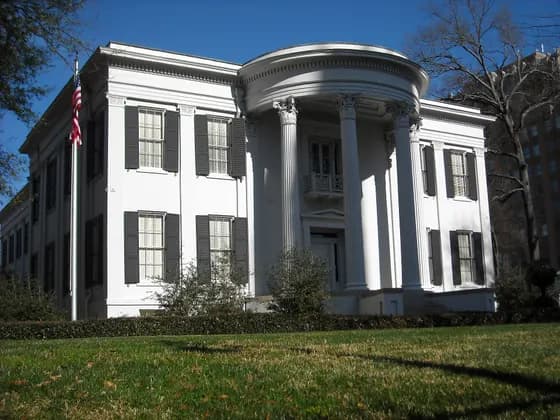
Photo: CHUCK KELLY · CC BY-SA 2.0 · cropped
Photo: Allstarecho · Public domain · Photo: Tom Beck · CC BY-SA 4.0 · Photo: /\ \/\/ /\ from Jackson Mississippi, USA · CC BY-SA 2.0
The University of Mississippi School of Medicine MD program at a glance (2027 entry)
The University of Mississippi School of Medicine, part of the University of Mississippi Medical Center (UMMC) in Jackson, runs a four-year Doctor of Medicine (MD) program. It is accredited by the Liaison Committee on Medical Education (LCME), which accredits MD programs in the United States. The LCME's directory, updated October 14, 2026, lists it as the one accredited MD program in Mississippi. In August 2026, 174 students started, up from 170 in 2025 and 165 in 2023.
The first two years are the preclerkship, or preclinical, phase of classroom, lab and clinical skills work. Since 2023 it has been systems-based: instead of separate anatomy, physiology or pathology courses, you study the body system by system, from structure to disease and treatment. Alongside, Introduction to the Medical Profession teaches history taking and examination, and you practice with standardized patients, people trained to portray patients.
Year 3 is built from clerkships, the core clinical rotations, where you work on a hospital or clinic team under supervision. Blocks range from two weeks in emergency medicine to eight weeks in surgery, mostly at UMMC's Jackson hospitals and the neighboring G.V. (Sonny) Montgomery VA Medical Center. Year 4 combines selectives, required rotations chosen from set lists, with electives and preparation for residency, the specialty training after medical school.
The school's stated mission is training doctors for Mississippi, and UMMC describes itself as the state's only academic medical center. Rural medicine runs through the program via the IMPACT the RACE Rural Track Program. Funded by the federal Health Resources and Services Administration (HRSA), it supports optional rural clerkships, rural scholarships and a yearly rural medicine symposium.
Step 1 of the United States Medical Licensing Examination (USMLE), the national licensing exam, covers the sciences behind medicine, and you must pass it before promotion to year 4. Step 2 CK, on clinical knowledge, must be passed to graduate.
| Degree | MD, four years; seven-year MD/PhD programs also offered |
|---|---|
| Class size | 174 entered in August 2026; 170 in fall 2025 |
| Curriculum | Systems-based preclinical years since 2023, then clerkships and selectives |
| Grading | Letter grades in years 1 to 3; honors, pass or fail in year 4 |
| Anatomy | Donor dissection within organ-system courses, plus 3D models and imaging |
| First patient contact | Standardized patients from year 1; a clinical preceptor during the preclinical years |
| Step 1 timing | Spring of year 2, in an April to May study period |
| Rural options | Optional rural clerkships in Grenada and Lexington; rural primary care scholarships |
| Accreditation | LCME, full accreditation; next survey visit January 24-26, 2028 |
What makes the University of Mississippi School of Medicine MD program different
A systems-based curriculum, new since 2023
The preclinical years were rebuilt around organ systems from fall 2023, and the first class to finish them began clerkships in summer 2025. The Curriculum Committee is still refining the courses and maps five societal topics through them: diabetes, obesity, substance abuse, sexually transmitted infections and interpersonal violence.
Four weeks of family medicine outside Jackson
Every student spends four weeks of the family medicine clerkship working one-to-one with a community family physician outside the Jackson area, with housing arranged if needed. Since December 2025, students who choose can spend these weeks at UMMC Holmes County in Lexington.
Optional rural clerkships with housing in the hospital
IMPACT the RACE turned unused patient rooms at UMMC Grenada and UMMC Holmes County into student dorm rooms. Students who choose can spend part of the surgery clerkship in Grenada or their family medicine weeks in Lexington.
A scholarly question of your own, from 2027
From summer 2027, the new Discovery Curriculum has students finishing year 1 investigate a question of their own with a mentor, in areas such as clinical research, public health or advocacy.
Nutrition taught in a teaching kitchen
The Culinary Medicine Program began in 2016 as a student club and is now the Bower Center for Culinary Medicine, an institutional center. In its teaching kitchen, preclinical students learn how food can prevent and manage disease, part of the school's response to new LCME expectations on nutrition.
How University of Mississippi School of Medicine teaches medicine
After Fundamentals of Biomedical Science, the main courses each cover one or two organ systems. Each first-year system course reviews the relevant embryology and anatomy, then introduces that system's diseases, focusing on diagnosis and treatment. In many courses the school has added sessions taught jointly by a scientist and a clinician.
Integration takes getting used to. The school's own review after two years noted that a topic introduced early may not return in depth for months, which is part of the design. In January 2026 it reported revising nervous system, behavioral health, multisystem and microbiology teaching after their first run.
Introduction to the Medical Profession I and II, which teach clinical and professional skills, run through both years. In year 2 you also train with nursing, pharmacy, dentistry and social work students. Examples include a domestic violence simulation with Jackson State University and a three-part pain management series.
In the clinical years you learn mostly through patient care on teams, with set teaching around it. Internal medicine, for example, pairs podcast lectures with live question sessions, and obstetrics and gynecology adds weekly problem-solving tutorials. Transition to Residency in year 4 mixes lectures, small groups, simulations and standardized patients.
The ways you will learn
| Lectures and podcasts | Lectures carry much of the core content, and a student-run group records them as podcasts. Whiteboard work and active sessions may not be recorded, but their content can still be examined. |
|---|---|
| POPS case sessions | Patient-Oriented Problem Solving (POPS), introduced with the new curriculum, is a problem-based format adapted from one developed at the University of Florida. Each session includes some content not yet taught in class, which you learn by researching it. As of December 2023, groups had four or five students, with a clinician or scientist as facilitator. Facilitators get a guide and the complete cases in advance, and attendance is mandatory. |
| Small groups | Faculty-led small groups in Introduction to the Medical Profession I and II cover topics from medical ethics and communication skills to behavior change, society and medicine, and history taking. |
| Standardized patients and simulation | Objective Structured Clinical Examinations (OSCEs) are timed, observed encounters, each testing a clinical task, usually with a standardized patient. The 2023 redesign set out to bring more of this simulated clinical experience into the first two years. The simulation center adds manikins and task trainers. |
A typical week on the University of Mississippi School of Medicine program
In years 1 and 2, classes are in the School of Medicine building. Course directors decide which sessions are mandatory, from labs and small groups to simulations, workshops, POPS cases and OSCEs. You must attend at least 80% of all other sessions in each course. A Career Development Series for first-year students meets on Thursdays at noon.
As described in December 2023, each POPS session works like this. You get a week to complete a 10-question open-book pre-test, and about a week and a half to research one of five cases. In the hour-long session, three groups share a room with the facilitator, and each student leads their group through their case. A five-question post-test follows that evening.
In clerkships the day changes. On internal medicine you see your patients and write notes before pre-rounds, catch a lecture or its podcast during morning report, then join attending rounds. After-hours call with your team comes every fourth night at the VA and every fifth night on University Hospital's general wards, and varies on its subspecialty wards. A fourth-year emergency medicine rotation runs on shifts instead: 10 to 11 eight-hour shifts in the month, plus Thursday morning resident conference.
How anatomy is taught at University of Mississippi School of Medicine
Anatomy is taught within the organ-system courses, and the Department of Advanced Biomedical Education reorganized the gross anatomy lab experience to fit the new curriculum. In 2023-24, first-year students dissected donor hearts in the cardiovascular course and donor kidneys in the renal and genitourinary course.
The bodies come from UMMC's body donation program, which in 2023 had about 10,000 registered donors and served about 170 medical students a year. Donors are honored at an Annual Ceremony of Thanksgiving, typically each April at the school cemetery, where their names are read and students thank the families.
Faculty photograph dissected organs to build photogrammetric 3D models, so students could revisit the very hearts and kidneys they had dissected, from anywhere online. The department has also expanded virtual reality systems for gross anatomy. The library's e-Anatomy atlas, described as new in October 2026, adds more than 27,000 CT, MRI, X-ray and ultrasound images and illustrations.
In year 4, Review of Human Anatomy is an elective that needs the course director's permission. The Department of Advanced Biomedical Education lists it for March, April, June and July.
When you first meet patients at University of Mississippi School of Medicine
Your first patient encounters are simulated. From year 1 you interview and examine standardized patients, and OSCEs are part of the preclinical courses. On Primary Care Day in January, clinical departments teach first-year students simulated procedures.
In a clinical preceptorship, a faculty member guides you in clinical practice. In May 2024 the school said it would move the preceptorship, until then entirely in year 2, to span the spring of year 1 and the fall of year 2. During the 2020-24 IMPACT the RACE grant, year 2 students also had to join the School of Nursing's Mercy Delta Express, screening children's health at a rural elementary school.
Outside the required courses, the Mississippi Rural Physicians Scholarship Program's Primary Care Exploration Program places students with rural preceptors in the summer after year 1. You can also volunteer at the Jackson Free Clinic, which UMMC medical students launched in 2002 and students still run. It gives free medical, dental and psychiatric care to people who cannot afford health insurance, with students supervised by physicians. Its medical clinic opens every Saturday.
Year 3 starts in late May with a two-week boot camp on the electronic medical record, advanced cardiac life support and the duties of a third-year student. A Student Clinician Ceremony marks the move to the wards, and clerkships begin in June.
The University of Mississippi School of Medicine curriculum, year by year
- Year 1 (M1)
Foundations and the first organ systems
Year 1 starts in August with orientation and a White Coat Ceremony; on the 2026-27 calendar, classes began August 10 and end in mid-May. It carries 57 credits.
- Fundamentals of Biomedical Science (16 credits): the structure, function and development of the body in health and disease.
- The Musculoskeletal and Integumentary Systems (6 credits), on bones, muscles and skin, and The Cardiovascular System (8 credits).
- The Hematologic, Lymphatic, and Immune Systems (6 credits) and The Renal and Genitourinary Systems (6 credits).
- Introduction to the Medical Profession I (12 credits): communicating with patients, taking and recording a history and examination, professional behavior, biostatistics, evidence-based medicine, and community and population health.
- Introduction to Evidence-Based Medicine (2 credits) and one 1-credit elective.
- An eight-week summer in June and July for optional research, clinical or service programs, and from 2027 the Discovery Curriculum project.
- Year 2 (M2)
The remaining systems, then Step 1
Year 2 finishes the organ systems and carries 56 credits. On the 2026-27 calendar, classes end on April 5 with the Comprehensive Basic Science Examination, a nationally normed exam. A wellness retreat follows, then a Step 1 study period from April 7 to late May.
- The Gastrointestinal System (7 credits), The Respiratory System (8 credits), The Endocrine and Reproductive Systems (10 credits) and The Neurological System and Human Behavior (8 credits).
- Foundations of Science for Clinical Practice (5 credits), Systems-Based Practice (3 credits) and one 1-credit elective.
- Introduction to the Medical Profession II (14 credits): communication, teamwork, history taking, physical examination and clinical reasoning, with ethics, population health and health systems science.
- Year 3 (M3)
Core clerkships
The clerkship year runs from June to late May and carries 136 credits, including two electives and Introduction to the Medical Profession III. Advanced cardiac life support and the required procedural skills must be completed and documented this year.
- Internal medicine: two four-week inpatient assignments with a resident team. You work either on general wards at both University Hospital and the VA, or on one general ward plus a University Hospital subspecialty ward in cardiology, geriatrics, hematology or oncology. Ward work is half the grade.
- Surgery (eight weeks): four weeks on a general surgery, transplant or VA service, assigned by the coordinator. The other four are on a subspecialty such as cardiothoracic, pediatric or trauma surgery, matched to your preferences where possible.
- Family medicine (six weeks): a day and a half of orientation, the four-week preceptorship outside Jackson, two weeks at the Flowood or Lakeland Family Medical Center and a final day of review and testing.
- Obstetrics and gynecology (six weeks): small groups rotate through services such as labor and delivery, high-risk obstetrics, OB-GYN emergency care and gynecology, and assist in selected surgical cases.
- Medical Neuroscience and Behavior III (six weeks, about 300 hours): psychiatry, neurology and neurosurgery, inpatient and outpatient.
- Pediatrics at Children's of Mississippi: the inpatient wards, newborn medicine, the general pediatric clinic and specialty electives.
- Emergency medicine (two weeks): first assessment and stabilization of undifferentiated, acutely ill or injured patients, with simulation, procedural and ultrasound training.
- Year 4 (M4)
Selectives, electives and the move to residency
Year 4 runs from early June to May, with Match Day in March, when residency places are announced. You need 95 credits: a course from each of four selective groups, at least 14 weeks of electives and Transition to Residency. A third-year class meeting explains the M4 schedule lottery.
- Ambulatory selective (12 options), such as a family medicine preceptorship with a community physician, ambulatory internal medicine in an economically underserved area, rural dermatology or pediatric emergency medicine.
- Critical care selective (5 options), from pulmonary and critical care medicine to neonatal medicine and surgical critical care.
- Procedural selective (21 options), including general surgery, where you spend a month as a sub-intern on one of four services, one of them at the VA. A sub-intern is a student doing much of an intern's job.
- General inpatient medicine selective (3 options): General Medicine at the VA or UMMC, a Pediatric Externship, or a Family Medicine Inpatient Service sub-internship at UMMC Madison in Canton.
- Transition to Residency (four weeks, spring): general topics for new doctors plus training for your chosen specialty.
- One-to-one meetings with the deans who prepare your Medical Student Performance Evaluation (MSPE), the summary letter sent with residency applications.
How you are assessed at University of Mississippi School of Medicine
Courses in years 1 to 3 are graded as a percentage of available points: A is 90% or more, B 80% to 89.99%, C 70% to 79.99%, and below 70% fails. Year 4 courses are honors (97% or more), pass or fail. First-attempt grades set your grade point average and class rank, which decide honors and awards. The top ten graduates receive diplomas cum laude or higher.
Preclinical exam questions are written in the style of Step 1. National Board of Medical Examiners (NBME) customized assessments, exams schools build from NBME questions, are also used. If you fail a year 1 or 2 course, you can show competency on an NBME re-test after two weeks of supervised summer study. Failing more than one course, or the re-test, can mean repeating the year.
In clerkships, faculty and residents rate you on a standard clinical performance form whose comments feed into your MSPE. Grades can include NBME subject exams, or shelf exams, national multiple-choice tests in each specialty. Fail one and you retake it within three months; fail twice and you may have to repeat the clerkship.
Clinical skills are tested with trained simulated participants at the Clinical Skills Assessment Core, for family medicine, internal medicine, surgery, pediatrics, OB-GYN, and psychiatry and neurology. In September 2023 the school described two cases at the end of each core clerkship. It also described a final clinical skills exam at the end of year 3 that had to be passed to enter year 4.
Two of the three USMLE Steps come during medical school. Step 1 has been reported only as pass or fail since January 26, 2022; Step 2 CK still has a three-digit score. Year 2 classes end in April for study time, and most students sit Step 1 in May. It must be scheduled before year 3 and passed before promotion to year 4. Most take Step 2 CK in the summer between years 3 and 4, and must pass it to graduate.
In August 2026 the USMLE program announced a move to designated testing dates from January 2029, with Step exams offered less often each year. Its June 2026 announcement had named 2028, so the date has already moved once, and the change reaches students entering in 2027. On the current schedule, a 2027 entrant would sit Step 1 in about April or May 2029, after the switch. Step 2 CK would follow around summer 2030, so both fall under the new model; these are projections, not published dates.
- UMMC's September 2026 newsletter says the school has begun planning how designated testing dates will affect scheduling, progression and remediation.
- After failing a Step you have one year to pass it, and three failures in total across Step and NBME exams bring a review that can end in dismissal.
- In clerkships each unexcused half day of absence costs 2.5% of the final grade.
University of Mississippi School of Medicine clinical rotations: where you will actually train
Most clinical training is on UMMC's main campus in Jackson. Its four hospitals there have 827 beds: University Hospital, Children's of Mississippi, Winfred L. Wiser Hospital for Women and Infants and Wallace R. Conerly Critical Care Hospital. UMMC says its locations serve as teaching sites. In its words, University Hospital has the state's only Level I trauma center, the highest level, and Children's of Mississippi is the state's only children's hospital.
The G.V. (Sonny) Montgomery VA Medical Center, beside the campus and affiliated with the school since 1955, is its principal teaching affiliate. It hosts internal medicine wards, the VA surgery service and fourth-year rotations. A primary care clinic run jointly by four departments is at the Jackson Medical Mall Thad Cochran Center.
Family medicine takes every student beyond Jackson for four weeks. In year 4 you can choose a family medicine preceptorship elsewhere in the state. Another option places you with a primary care physician in an economically underserved area; the internal medicine department lists it as Rural Internal Medicine Practice. Rural dermatology takes place in Louisville, Mississippi. The family medicine inpatient sub-internship is at UMMC Madison in Canton.
Rural training runs through the IMPACT the RACE Rural Track Program, short for Improved Primary Care for the Rural Community through Medical Education. It grew from a 2020 HRSA grant, and a February 2024 newsletter said a second grant funds it until 2027. It turned nine unused patient rooms at UMMC Grenada into student housing, with a lounge, kitchenette and video-linked classroom. At UMMC Holmes County, a 25-bed critical access hospital in Lexington, it converted three more.
Both rural options are voluntary. As of October 2025, students could spend part of the surgery clerkship in Grenada, with OB-GYN and pediatrics to follow in the near future. Since December 2025, interested third-year students can spend four weeks of family medicine in Lexington, living in the hospital. UMMC took over Greenwood Leflore Hospital in August 2026, and its leaders said UMMC Greenwood would add training sites for learners.
In February 2026, 25 students received one-year rural scholarships after pledging to practice primary care in rural Mississippi after residency. Separately, the state's Mississippi Rural Physicians Scholarship Program, created by the Legislature in 2007, offers scholarships and mentoring by rural primary care doctors. In return, its scholars practice primary care after residency in a community of 15,000 or fewer people, for as many years as they were funded.
Base for the preclinical years and most core clerkships.
- University Hospital
- Children's of Mississippi
- Winfred L. Wiser Hospital for Women and Infants
- Wallace R. Conerly Critical Care Hospital
- Jackson Medical Mall Thad Cochran Center
Principal teaching affiliate, beside the campus.
- G.V. (Sonny) Montgomery VA Medical Center
Two weeks of the third-year family medicine clerkship.
- Flowood Family Medical Center
- Lakeland Family Medical Center
The year 3 family medicine preceptorship and fourth-year ambulatory options.
- Family physicians' practices outside the Jackson area
- Primary care practices in economically underserved areas
Voluntary rural surgery time with on-site housing.
- UMMC Grenada
Optional four-week family medicine rotation, living in the hospital.
- UMMC Holmes County
Fourth-year family medicine inpatient sub-internship.
- UMMC Madison
Rural dermatology, with inpatient consults at Winston Medical Center.
- Louisville dermatology clinic
- Winston Medical Center
Electives, selectives and away rotations at University of Mississippi School of Medicine
Each preclinical year includes one 1-credit elective from 13 options, such as Medical Spanish, End-of-Life Care, Race and Medicine and Data Analysis in Medicine. When introduced in 2023-24, all were pass/fail and ended with a capstone project or reflective piece.
Year 3 includes two electives, typically two weeks each, from 38 options. They run from Survey of Anesthesia and Radiation Oncology to Trauma Surgery, where you can join the daytime team or night float. Independent Study can give credit for Step 1 preparation or an approved project.
Year 4 requires at least 14 weeks of electives, at least four of them at UMMC. Some are acting internships, in which you carry much of an intern's responsibility, such as the Clinical Neurology Acting Internship. Others include Medical 3D Printing, Medical Ethics and Ambulatory Medicine in the Amazon Jungles of Peru. The Peru elective is two weeks reviewing tropical medicine at UMMC, then two weeks giving primary care in Peru with UMMC faculty.
Away rotations, called extramural rotations, let you take senior electives at other institutions. In any one specialty you can take up to three away rotations, totaling 6 to 12 weeks. Sixteen departments offer extramural credit, and each rotation must be scheduled through the Office of Medical Education, with malpractice coverage confirmed, before you go.
Dual degrees and research years at University of Mississippi School of Medicine
From summer 2027, a scholarly project is built in for everyone through the Discovery Curriculum. Students finishing year 1 pick an area such as basic science or clinical research, community engagement, public health, advocacy or clinical care. With a mentor, they then frame and investigate an answerable question. The aim is practice in systematic inquiry, not formal research. Everyone submits an abstract, and the highest-scoring are presented at Discovery Day in the fall.
The optional Medical Student Research Program (MSRP) has two routes. The Summer Option is a competitive eight-week project with a faculty mentor after year 1, with a lecture series and a stipend. The Full Option runs from year 2 to year 4, with a required four-week research block in year 4, presentations in years 3 and 4, and a special distinction on your degree.
Two MD/PhD programs train physician-scientists over seven years in a 3-3-1 pattern: years 1 to 3 of medical school, three years of PhD study, then year 4. One runs with the School of Graduate Studies in the Health Sciences, the other with the John D. Bower School of Population Health. Both cover tuition and health insurance and pay a stipend.
According to the 2026-27 catalog, MD/PhD students do lab rotations in the summers before years 1 and 2 and choose a PhD program during year 3. Current first- and second-year students can also apply, and three students who entered in August 2026 joined the program.
The MD-MPH pathway, with the John D. Bower School of Population Health, took its first students in 2026. It starts with a summer Certificate Program in Population Health Science. The plan for UMMC students spreads the 44-credit Master of Public Health from the summer before year 2 to the spring of year 4, ending in a research capstone. The MPH page says accreditation by the Council on Education for Public Health (CEPH) will be pursued.
Facilities and support at University of Mississippi School of Medicine
Where you will learn
The school began in 1903 on the University of Mississippi's Oxford campus, teaching the first two years of medical training. It moved to Jackson in the summer of 1955, adding the third and fourth years, and its first class graduated in June 1957.
You are taught in a five-story School of Medicine building that opened in 2017. On its top floor, the Judith Gore Gearhart Clinical Skills Assessment Core sits beside the Simulation and Interprofessional Education Center. The core has 16 exam rooms, each with a door for students and another for standardized patients and faculty, plus a monitor room for observing encounters.
A 2023 description of the simulation center lists trainers for drawing blood, spinal taps, central lines and intubation, plus high-fidelity manikins that respond to what you do. The Rowland Medical Library is open around the clock with a UMMC badge, and the Bower Center for Culinary Medicine's teaching kitchen is in The Meridian Building on Lakeland Drive.
Support while you study
During welcome week you join one of eight houses with other first-year students, a physician mentor and a second-year buddy, and you stay in that house until graduation. Houses run wellness activities, deliver the AAMC's Careers in Medicine program and connect you with preclinical advising.
Each first-year student also has a preclinical faculty advisor. A 2023 newsletter describes meetings twice a year, with the advisor's narrative evaluation going into your MSPE. The Medical Student Success Network offers confidential academic counseling, learning strategies and Step preparation. A program called Testing Wisely builds test-taking skills across years 1 to 3.
The network's Academic Achievement System tracks results from the start. You must join it if you score below 65% on a first-semester test, below 60% on a later exam, or need remediation. Before year 1, students identified by admissions may take a six-week pre-matriculation course, two weeks online and four on campus.
The calendar builds in wellness retreats in years 2 and 3, and UMMC students get free counseling for up to 10 visits a semester.
Is the University of Mississippi School of Medicine program right for you?
This program may suit you if
- You want the sciences taught system by system, with anatomy, disease and treatment together and patient cases from year 1.
- You would value four weeks one-to-one with a family physician in a Mississippi community, as every student does in year 3.
- You are drawn to rural primary care and would use the optional Grenada or Lexington clerkships, the rural scholarships or the state's rural physicians scholarship program.
- You want to dissect donor organs in the lab; in 2023-24, first-year students could then revisit the same organs as 3D models online.
- You want research options ranging from a summer project to the three-year MSRP track, two MD/PhD programs or the new MD-MPH.
Things to think about
- Years 1 to 3 are letter-graded and count toward a class rank, so preclinical grades matter beyond simply passing.
- Attendance is enforced: mandatory sessions plus 80% of the rest in each preclinical course, and grade deductions for unexcused absences in clerkships.
- The curriculum is still young. The school's own review notes that topics can return only months later, and several areas were revised after their first run.
- Step 1 must be passed to enter year 4 and Step 2 CK to graduate. On the current schedule, a 2027 entrant would sit both after the USMLE moves to designated testing dates.
- The rural clerkships are voluntary and rely on IMPACT the RACE, whose current grant was described in 2024 as running until 2027, so check what is offered when you apply.
University of Mississippi School of Medicine MD program — frequently asked questions
Applying to University of Mississippi School of Medicine?
How to get into University of Mississippi School of Medicine
Prerequisites, MCAT, AMCAS personal statement, secondaries and interview, step by step.
Open the guide →University of Mississippi School of Medicine admissions profile
MCAT and GPA profile, acceptance rate, interview format and key dates.
See the profile →Compare University of Mississippi School of Medicine with other schools
Put the teaching style, anatomy teaching and clinical sites next to another school.
Open the comparison →Prepare for the University of Mississippi School of Medicine interview
Format breakdown, school-specific sample questions and prep tips from tutors who interviewed here.
Read the guide →Where this University of Mississippi School of Medicine program guide came from
This guide was written from 80 official sources — University of Mississippi School of Medicine's own program pages and curriculum documents, plus the accreditor and the hospitals and health systems the school trains students in where they publish detail — read on 2026-10-25, then checked claim by claim against those sources.
- UMMC School of Medicine home page
- UMMC School of Medicine: Prospective Students
- UMMC Office of Medical Education: Curriculum
- UMMC Catalog 2026-2027: School of Medicine home and history
- UMMC Catalog 2026-2027: School of Medicine academic calendar
- UMMC Catalog 2026-2027: School of Medicine programs of study (MD and MD/PhD)
- UMMC Catalog 2026-2027: School of Medicine course of study
- UMMC Catalog 2026-2027: School of Medicine course descriptions
- UMMC Catalog 2026-2027: School of Medicine student handbook
- SOM Policy and Procedure on Grading and Academic Status (revised December 2025)
- SOM Policy and Procedure on Medical Student Attendance
- SOM Policy on Academic Achievement
- UMMC School of Medicine: Medical Student Research Program
- UMMC News, August 2023: the curriculum redesign
- The Journey, May 2026: Curriculum Committee year in review
- The Journey, August 2023: welcome week and the house system
- The Journey, August 2023: Grenada student housing and rural clerkship
- The Journey, December 2023: UMMC Body Donation Program
- The Journey, December 2023: Lessons with POPS
- The Journey, November 2023: Simulation and Interprofessional Education Center
- The Journey, October 2023: Preclinical Advising Program
- The Journey, September 2023: Judith Gore Gearhart Clinical Skills Center
- The Journey, August 2024: photogrammetry and the anatomy lab
- The Journey, August 2024: electives in the preclinical curriculum
- The Journey, May 2024: the first year of the integrated curriculum
- The Journey, August 2025: class size
- The Journey, December 2025: the accreditation process
- The Journey, July 2025: reflections on the integrated preclinical curriculum
- The Journey, November 2025: Bower Center for Culinary Medicine
- The Journey, November 2025: interprofessional education
- The Journey, October 2025: UMMC Holmes County student housing and rural clerkship
- The Journey, September 2025: Class of 2029
- The Journey, August 2026: Class of 2030
- The Journey, January 2026: outcomes of the integrated curriculum
- The Journey, March 2026: summer opportunities for rising M2 students
- The Journey, March 2026: the 2026 Rural Medicine Education Symposium
- The Journey, May 2026: the Discovery Curriculum
- The Journey, October 2026: Discovery Curriculum and Discovery Day
- The Journey, October 2026: e-Anatomy at Rowland Medical Library
- The Journey, October 2026: the Clinical Skills Assessment Core
- The Journey, September 2026: preparing for the 2029 USMLE testing changes
- The Journey, February 2024: three years with IMPACT the RACE
- The Journey, November 2025: IMPACT the RACE 1.0 project summary
- UMMC Office of Medical Education: IMPACT the RACE Rural Track Program
- Mississippi Rural Physicians Scholarship Program
- Mississippi Rural Physicians Scholarship Program: medical school phase
- UMMC News, December 2025: Jackson Free Clinic beneficiary of WellsFest
- UMMC News, March 2025: Jackson Free Clinic students in the community
- UMMC School of Medicine: About Accreditation
- LCME: directory of accredited MD programs (updated October 14, 2026)
- USMLE Designated Testing Dates Information Hub
- USMLE: updated timeline, transition to Designated Testing Dates in January 2029 (August 6, 2026)
- USMLE: transition to limited testing dates (June 23, 2026, with August 2026 update)
- USMLE: examination results and scoring
- About the University of Mississippi Medical Center
- University of Mississippi Medical Center: History
- UMMC Hospitals and Clinics
- UMMC News, August 2026: UMMC Greenwood
- VA Jackson Health Care: history of the G.V. (Sonny) Montgomery VA Medical Center
- UMMC News, August 2026: the inaugural MD-MPH students
- John D. Bower School of Population Health: Master of Public Health for MDs
- John D. Bower School of Population Health: MPH plan of study
- UMMC Department of Family Medicine: third-year curriculum
- UMMC Department of Obstetrics and Gynecology: student curriculum
- UMMC Department of Surgery: medical students and the surgery clerkship
- UMMC Department of Psychiatry and Human Behavior: M3 year
- UMMC Department of Medicine: Internal Medicine Clerkship
- UMMC Department of Medicine: fourth-year internal medicine rotations
- UMMC Department of Emergency Medicine: student clerkship
- UMMC Department of Advanced Biomedical Education: medical school courses
- Judith Gore Gearhart Clinical Skills Assessment Core: facilities
- UMMC Simulation Program
- UMMC School of Medicine: career advising system and House Program
- UMMC School of Medicine career advising: M1 year
- UMMC School of Medicine career advising: M2 year and Step 1
- UMMC School of Medicine career advising: M3 boot camp and Step 2 CK
- UMMC School of Medicine: pre-matriculation course
- UMMC Medical Student Success Network
- UMMC Medical Student Success Network: Academic Achievement System
- UMMC Office of Medical Education: assessment of courses and students
Curricula are restructured between cycles. Anything here that decides your application — how anatomy is taught, a clinical campus assignment, a required research year — should be confirmed against the official page for your entry year.
Applying to University of Mississippi School of Medicine?
We help US applicants with MCAT strategy, the AMCAS personal statement, secondary essays and interview prep — everything you need for a competitive University of Mississippi School of Medicine application.