
The John A. Burns School of Medicine University of Hawaii at Manoa MD program
What you actually study, and where you will be
John A. Burns School of Medicine University of Hawaii at Manoa's MD is a 4-year program taught through problem-based learning, with patient contact from Year 1 and clinical rotations in Honolulu, the rest of Oʻahu and the neighbor islands (2027 entry). Six of the eight units in years 1 and 2 are built around problem-based learning tutorials, where five or six students work through patient cases twice a week. Lectures, labs, clinical skills and standardized patients support them. Year 3 runs six clerkships side by side, half in clinics and half on hospital blocks, and the clinic half can be on a neighbor island.
- Degree
- MD
- Length
- 4 years
- Teaching
- Problem-based learning
- Clinical contact
- Year 1

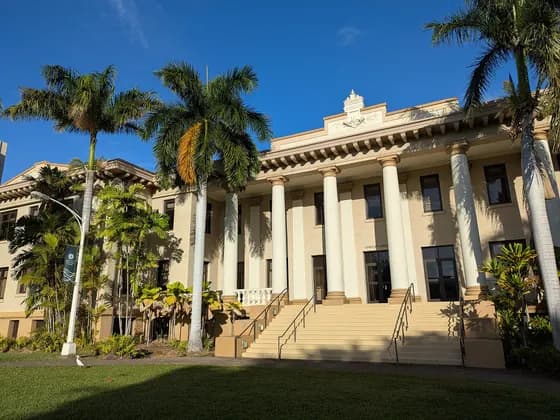
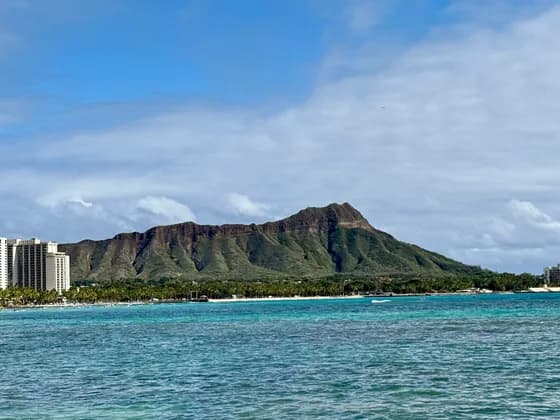
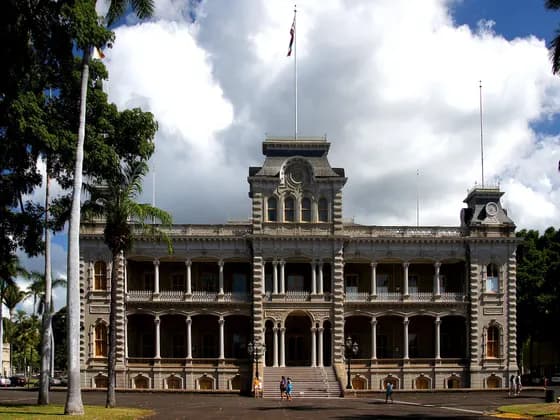
Photo: Scott Dahlem (Wikimedia user Lavishluau) · Public domain · cropped
Photo: Sdkb · CC BY-SA 4.0 · Photo: Farragutful · CC BY-SA 4.0 · Photo: Bernard Spragg. NZ from Christchurch, New Zealand · CC0
The John A. Burns School of Medicine University of Hawaii at Manoa MD program at a glance (2027 entry)
The John A. Burns School of Medicine (JABSOM) at the University of Hawaiʻi at Mānoa runs a four-year MD program from its Kakaʻako campus in Honolulu, beside Kakaʻako Waterfront Park. The school calls itself community-based: it partners with community hospitals and clinics rather than running its own university hospital.
The first two years are the pre-clerkship (pre-clinical) phase, split into eight units named MD 1 to MD 8. Six are built around problem-based learning (PBL), in which a small group works through patient cases with a faculty tutor. Lectures, labs, simulation and standardized patients (trained volunteers who play patients) support the cases. Courses are graded Credit or No Credit, in effect pass/fail.
Patients appear early. In year 1 you serve with a community organization all year, learn history-taking and examination in clinical skills courses and start visiting a community physician's practice. Year 3 brings the clerkships, the core clinical rotations, as a longitudinal integrated clerkship, with six specialties running side by side across the year.
Year 4 has required rotations in emergency medicine and in geriatric and palliative medicine, plus 20 weeks of electives. You also complete at least one sub-internship, a rotation in which you take on much of an intern's work. Neighbor-island options run through all four years, including the Kauaʻi Medical Training Track.
The school opened in 1965 as a two-year basic science program, after which students finished at mainland schools. The Liaison Committee on Medical Education (LCME), which accredits MD programs in the United States, lists 1966 as the school's initial year of accreditation. The school dates its four-year MD to 1973 and says it was one of the first US medical schools to make PBL its core method.
| Degree | MD |
|---|---|
| Program length | 4 years: two pre-clerkship years, then two clinical years |
| Class size | 77 in the first-year class that entered July 13, 2026 |
| Main campus | Kakaʻako, Honolulu; years 1 and 2 in the Medical Education Building |
| Teaching style | PBL tutorials of five or six students, twice a week |
| Anatomy | Cadaver dissection in years 1 and 2, per the anatomy department |
| First patient contact | Year 1: clinical skills, community health and a community preceptor |
| Clinical sites | Affiliated community hospitals on Oʻahu; neighbor-island clinic semesters available |
| Step 1 timing | Before year 3: around May 2029 for 2027 entrants, on current schedule |
| Grading | Pass/fail years 1 and 2; clerkships Honors, High Pass, Credit or No Credit |
What makes the John A. Burns School of Medicine University of Hawaii at Manoa MD program different
Six clerkships side by side through year 3
Since June 2020, year 3 has run as a longitudinal integrated clerkship. For half the year you work in outpatient clinics, ideally seeing patients again at follow-up and sometimes following them into hospital. The other half brings hospital blocks, such as about four weeks on an internal medicine team.
Neighbor-island training in every year
The Rural Health Program offers time on Kauaʻi, Maui, Lānaʻi and the Big Island in all four years. You can live on a neighbor island for a pre-clerkship unit, take your third-year clinic semester there and add neighbor-island electives in year 4.
A track that trains you on Kauaʻi
The Kauaʻi Medical Training Track takes six students in each class. They live and train on Kauaʻi for several months throughout all four years, including their third-year clinic semester, and commit to practicing there for four years after residency. The first cohort, which started in 2022, graduated in 2026.
Learning communities named for Oʻahu's moku
Every student joins one of six learning communities named for Oʻahu's six moku, the island's traditional land divisions: Waialua, Waiʻanae, ʻEwa, Kona, Koʻolaupoko and Koʻolauloa. Each splits into mauka (mountain-side) and makai (sea-side) groups mixing all four classes, and each moku's two physician mentors and director stay with their students for all four years.
Native Hawaiian health built into the program
The Department of Native Hawaiian Health leads cultural competency training in the first two years. One graduation objective asks you to understand Native Hawaiian and other Indigenous views of health and illness. In year 4 you can work in Native Hawaiian Health Care Systems on five islands, alongside traditional healers when available.
How John A. Burns School of Medicine University of Hawaii at Manoa teaches medicine
PBL is the backbone of years 1 and 2, and the 2026-27 catalog dates JABSOM's problem-based curriculum to fall 1989. Each tutorial group has five or six students and a faculty member who acts as facilitator. Groups meet twice a week, usually for about three hours. A patient case is the starting point, and you learn the basic sciences mainly in the context of solving it.
From each case, your group draws up learning issues: the questions it cannot yet answer. You choose and research them, pull the findings together and apply them to the patient in your case, with feedback on your skills. MD 1 also teaches you to write learning-issue handouts, so the school expects that unit to take more time outside class.
Each unit pairs its tutorials with a course of integrated basic science lectures, labs and colloquia (lecture-discussion sessions), plus a clinical skills course. In year 1 a community health course runs alongside. Content experts act as resources rather than leading the learning. Most pre-clerkship sessions are compulsory, but lectures generally are not unless a course says so.
Teaching moves to the bedside in year 3, supported by Third Year Colloquia. Year 4 is shaped by your choice of electives, with Transition to Residency weeks to prepare you for internship.
The ways you will learn
| PBL tutorials | Small-group sessions in which a patient case sets the agenda and a faculty tutor guides the discussion rather than lecturing. |
|---|---|
| Lectures, labs and colloquia | Integrated basic science sessions in each unit, planned to widen what the tutorial cases raise. MD 7 adds evidence-based medicine. |
| Anatomy lab | Dissection of donor bodies in the anatomy department's gross anatomy lab during years 1 and 2. |
| Clinical skills courses | A course in every PBL unit teaches the history and examination skills for that unit's problems, from a screening exam in MD 1 to newborn examination in MD 7. |
| Standardized patients and simulation | Every unit includes simulation scenarios and standardized patient sessions. The encounters are video recorded for review, and the same format is used in exams. |
A typical week on the John A. Burns School of Medicine University of Hawaii at Manoa program
In the pre-clerkship years, your two PBL tutorials anchor the week, with clinical skills, community health and learning community sessions around them. The week follows the school's policy on self-directed learning and protected study time. A half-day means four hours, usually 8am to noon or 1pm to 5pm. Required, structured sessions are capped at seven half-days (28 hours) a week, averaged over a course, not counting electives in MD 2 to MD 7.
Required assignments done outside class are capped at three half-days (12 hours) a week, except in MD 1. The rest of your time is protected and unscheduled, which the school considers critical to self-directed learning. Each semester you may miss at most three calendar days, including no more than one PBL session, and you should not miss exams.
Weeks change in year 3. During the clinic semester, internal medicine usually leaves your weekends free, and you leave clinic for Friday afternoon teaching. On its hospital block you take call until 10pm at the latest and get one day off a week.
How anatomy is taught at John A. Burns School of Medicine University of Hawaii at Manoa
JABSOM's anatomy department says that in the first two years on the Kakaʻako campus, you learn the gross anatomy of the entire body by dissecting human cadavers in its gross anatomy lab. The program calls the donors silent teachers. Anatomy is examined partly through practical exams; the retake rules mention a combined practical and multiple-choice exam.
Donated bodies come through the University of Hawaiʻi Willed Body Program, which the department runs. Each year medical students and staff take part in a memorial service honoring donors and their families. MD students also paddle donors' remains out by canoe for scattering off Magic Island, as a final mahalo, or thank-you.
You can return to anatomy later. Once you have started clerkships, ANAT 545 offers advanced dissection and observation of surgical procedures. ANAT 599 offers independent study in gross anatomy, histology or anatomy research, and surgery offers a surgical anatomy elective.
When you first meet patients at John A. Burns School of Medicine University of Hawaii at Manoa
Community work starts in orientation week, at a Community Health Fair where local organizations invite you to join them. You then work with your chosen organization for all of year 1 in the Community Health courses (MDED 581 to 584). Sites choose students according to how many they can take. One option, the WISH program, links first-years with residents of care homes for the elderly.
The clinical skills courses give you regular practice in taking histories and doing physical exams, supervised by clinical skills faculty, through lectures, skills labs and standardized patient sessions. In MD 1 you learn the Basic Physical Exam Sequence (BPES), a head-to-toe screening exam you must perform on a standardized patient, observed by faculty, by the end of year 1.
Alongside these courses, the Longitudinal Clinical Preceptorship (LCP) gives you some of your first encounters with real patients. It pairs you with one community physician from September of year 1 to March of year 2. The LCP began in 2020-21, replacing an older structure in which preceptors taught by organ system.
The LCP's 2025-26 preceptor page sets six clinic days in year 1 and five in year 2, when you take histories and examine patients under your preceptor's guidance. About 114 preceptors teach 156 students, mostly in general internal medicine, family medicine or pediatrics.
The catalog also lists required experiences in the Hawaiʻi Houseless Outreach through Medical Education (HOME) clinics. The student-run Hawaii H.O.M.E. Project, founded in 2005, holds several free clinics a week for sheltered and unsheltered houseless people across Oʻahu and takes a mobile health van to others.
The John A. Burns School of Medicine University of Hawaii at Manoa curriculum, year by year
- Year 1 (MD 1–4)
Health and illness, then three pairs of body systems
Year 1 runs from July to June in four units, each combining PBL tutorials with lectures and labs, clinical skills and community health. Electives open from MD 2.
- MD 1, Health and Illness (9 weeks): your first PBL cases, basic communication and history-taking, the BPES, and how to write up and present a case.
- MD 2, Cardiovascular and Pulmonary Problems (12 weeks): reading a 12-lead EKG and chest X-rays, taking a chest pain history and a first look at point-of-care ultrasound (POCUS).
- MD 3, Renal and Hematologic Problems (11 weeks): urinalysis, volume status and blood counts, plus examining the shoulder and knee.
- MD 4, Gastrointestinal and Endocrine Problems (12 weeks): thyroid, diabetic foot and abdominal examination. You can spend this unit, March to June, living in Hilo or Waimea on the Big Island.
- Year 2 (MD 5–8)
Summer selectives, neurology, the life cycle and Step 1
Year 2 opens with MD 5, an eight-week summer session, then two more PBL units. It ends with MD 8 and United States Medical Licensing Examination (USMLE) Step 1, the first exam of the national licensing series. You must take it before Transition to Clerkship and pass it to continue in clerkships, though you may start one while your score is pending.
- MD 5 selectives (MDED 595) include a rural health preceptorship, health issues of the Pacific Basin, manikin simulations, clinical skills preceptors and global health perspectives. You can also do research or the Pacific Basin Experience in Japan.
- MD 6, Locomotor, Neurological and Behavioral Problems (15 weeks): joint and sports examinations, the screening neurological exam, cranial nerves, the eye and the mental status exam.
- MD 7, The Life Cycle (11 weeks): newborn examination, adolescent depression screening, breast and pelvic examination technique, team communication and evidence-based medicine. You can spend it, January to March, on Lānaʻi.
- MD 8, Consolidation and Transition (10 weeks): a review of the foundational sciences, with lectures, workshops, simulations and clinical experiences to prepare you for clerkships.
- Year 3
Longitudinal integrated clerkships
From June to May you take all six clerkships at once, about half the year in outpatient clinics and half on hospital blocks. You may be assigned a site on a neighbor island. Third Year Colloquia run alongside, and the year includes a two-week elective.
- Internal medicine (MED 532): three and a half to four weeks on a hospital team at The Queen's Medical Center, Kuakini or Kaiser. Clinics add 21 half-days, 19 in internal medicine and two with a neurologist.
- Surgery (SURG 532): one day a week for six months at a community ambulatory care site, plus four weeks in an acute-care hospital.
- Obstetrics and gynecology (OBGN 532): a weekly half-day with an outpatient preceptor and four hospital weeks, two in obstetrics at Kapiʻolani, including four nights of night float, and two in gynecologic surgery.
- Family medicine (FMCH 532): a 5.5-month ambulatory clerkship covering behavioral care, care of the underserved, sports medicine, prevention and common acute and chronic problems.
- Pediatrics (PED 532) and psychiatry (PSTY 532): year-long ambulatory clerkships that include inpatient and emergency room experience, according to the 2026-27 catalog.
- Each clerkship ends with a National Board of Medical Examiners (NBME) shelf exam, a national test in the specialty, or a departmental exam. Internal medicine adds an emergency simulation with nursing and pharmacy students.
- Year 4
Senior rotations and the move to residency
The four-year chart sets four weeks each of emergency medicine, geriatric and palliative medicine and a sub-internship, plus 20 weeks of electives. The MD Program page's figure of up to 24 weeks of senior electives includes the sub-internship, since sub-internships are chosen from departmental elective lists.
- Emergency Medical Care (SURG 541), run by the Department of Surgery: urgent medical, surgical and psychiatric problems.
- Geriatric and Palliative Medicine (GERI 541), required since July 2005, in outpatient, inpatient, home care and long-term care settings.
- At least one four-week sub-internship, which students try to place early in the year because many recommendation letters come from it.
- Three one-week Transition to Residency blocks on the chart; the catalog's Senior Seminars, also run as three one-week courses, review topics for the start of internship.
- Eight weeks of interview time to spread through the year, which you can also use earlier on to prepare for and take USMLE Step 2 Clinical Knowledge (CK).
How you are assessed at John A. Burns School of Medicine University of Hawaii at Manoa
In years 1 and 2, courses are graded Credit, No Credit or Incomplete, and you must pass each unit to move on. Fail one exam in a unit with a score of at least 50% and you are normally offered a retake in the same format within a week. Failing two exams in a unit, or scoring under 50%, means the retake is not automatic. Exams are taken on iPads under rules modeled on NBME testing.
Clerkships are graded Honors, High Pass, Credit or No Credit on knowledge, skills and professionalism, with a written narrative. Some include an Objective Structured Clinical Examination (OSCE), in which you rotate through timed stations with standardized patients. In internal medicine, Credit needs a shelf score of at least 60; Honors needs 79 plus Honors recommendations from both the hospital block and the clinics.
A failed shelf exam or clerkship OSCE normally brings one retake. Passing it caps that clerkship at Credit; failing it means at least four weeks of clinical remediation before a third attempt. Fourth-year rotations are graded Credit or No Credit, though emergency medicine and geriatrics can also award Honors or High Pass.
To graduate you must pass every course and required activity, including OSCEs, required autopsies and learning community activities, and show consistent professionalism. That includes several multi-station standardized patient exams, and year 4 brings the Clinical Skills Assessment (MDED 541), a required multidisciplinary assessment. You must finish within seven years, not counting time in a dual-degree program.
The USMLE is the exam series state medical boards use in licensing decisions. Step 1 has been reported only as pass or fail since January 26, 2022. JABSOM requires you to pass Step 1 and Step 2 CK to graduate. You may start clerkships with a Step 1 score pending, but failing it during a clerkship means leaving for the semester until you pass.
In August 2026 the USMLE program announced a move to designated testing dates from January 2029, with Step exams offered less often each year. Its June 2026 notice had named 2028. On the current schedule, a student entering in July 2027 would take Step 1 around May 2029, after the switch, and Step 2 CK in year 4, in 2030-31. This estimate rests on JABSOM's published policies, its four-year chart and a 2026 handbook's mention of Step 1 in May.
- Delaying Step 1 beyond the start of Transition to Clerkship means taking the next semester off, and three USMLE failures in total can lead to dismissal.
- The USMLE program has asked schools to review rules that restrict when students take Step exams, so JABSOM's timing rules may change.
- Your Medical Student Performance Evaluation (MSPE), the school's letter to residency programs, quotes end-of-course comments from PBL tutorials, clerkships and electives word for word, and notes exam failures.
- The LCME directory, updated October 14, 2026, lists JABSOM as fully accredited, with its next survey in 2032-33. For MD students, LCME accreditation is what makes you eligible to sit the USMLE; DO students and international graduates qualify through other routes.
John A. Burns School of Medicine University of Hawaii at Manoa clinical rotations: where you will actually train
The 2026-27 catalog lists JABSOM's clinical affiliates, from Hawaiʻi Pacific Health, The Queen's Health System and Hawaiʻi Permanente (Kaiser) to military, VA and community health center sites. Students also rotate through many private physician practices across the state.
Clerkship directors assign third-year sites. Internal medicine's hospital block is at The Queen's Medical Center, Kuakini Medical Center or Kaiser Permanente Medical Center. Its clinics include Queen Emma Clinics, community health clinics and private offices on Oʻahu or neighbor islands. Every obstetrics student works on labor and delivery at Kapiʻolani Medical Center for Women and Children; gynecologic surgery is at Hawaiʻi Pacific Health or Queen's.
Changing an assigned site is rare. You must ask within three business days, on grounds such as your own health or supervision by a relative or your own doctor. Switching sites with classmates is not allowed. Rotations cap work at 80 hours a week, averaged over the rotation, with at least eight hours off between shifts.
Living on a neighbor island for a pre-clerkship unit is elective, and if you choose it, local faculty lead your tutorials in person while lectures are streamed live. In year 3 you can take the clinic semester in Hilo, Waimea, Kona, Maui or Kauaʻi, working in local clinics across the six core fields with physician preceptors. You may also be assigned a clerkship site on a neighbor island. Fourth-years can add neighbor-island electives, including geriatrics and emergency medicine.
The Kauaʻi Medical Training Track's FAQ, written for the 2024-25 application cycle, says its students live on Kauaʻi for two to five months each year, about 15 months in all. They stay in a program house in Lihue, about five minutes' drive from Wilcox Medical Center, their main clinical site, with housing, utilities, airfare and car shipping covered. Kauaʻi physicians lead their tutorials and clinical skills workshops, and the FAQ credits them with giving students more clinical learning in years 1 and 2 than on Oʻahu.
Further afield, the Hawaiʻi/Pacific Basin Area Health Education Center (AHEC) offers month-long rural training in US-Affiliated Pacific Island communities, in teams with social work, pharmacy, nursing and public health students. It also helps with travel and shared lodging.
Home of the Kakaʻako campus. The catalog also lists Queen's West Oʻahu and Queen's Wahiawā.
- The Queen's Medical Center
- Kuakini Medical Center
- Kaiser Permanente Medical Center
- Kapiʻolani Medical Center for Women and Children
- Pali Momi Medical Center
- Straub Benioff Medical Center
- Queen Emma Clinics
- Adventist Health Castle Medical Center
- Spark Matsunaga VA Medical Center
- Tripler Army Medical Center
- Kalihi-Palama Health Center
- Kōkua Kalihi Valley Health Center
- Waimānalo Health Center
- Waikīkī Health Center
Kauaʻi Medical Training Track base and a third-year clinic-semester site.
- Wilcox Medical Center
Elective MD 4 unit in Hilo or Waimea; clinic semester in Hilo, Waimea or Kona.
- Hilo Benioff Medical Center
- North Hawaiʻi Community Hospital
Third-year clinic-semester site.
- Maui Memorial Medical Center
Elective MD 7 unit, January to March.
Month-long AHEC rural training.
- American Samoa
- Republic of Palau
- Guam
- Federated States of Micronesia
- Republic of the Marshall Islands
Electives, selectives and away rotations at John A. Burns School of Medicine University of Hawaii at Manoa
Pre-clerkship electives run from MD 2 to MD 7, with sign-ups after each mid-unit exam. They earn credit but do not count toward graduation requirements. The 2026-27 catalog lists options such as projects in medical education, the healer's art, an introduction to student research, health and wellness, quality improvement and an introduction to ultrasound.
The 2024-25 electives handbook added departmental options such as pediatric seminars and research in neurology, pathology or Native Hawaiian health, each worth one credit, with at most two per unit. Students run a Social Justice in Medicine elective each spring, and the Department of Native Hawaiian Health offers a clinical skills preceptorship in its Lau Ola clinic.
International options start in the MD 5 summer with the Pacific Basin Experience, two weeks at medical schools in Kochi, Osaka or Saga, Japan. Students who take Step 1 early enough in May can add a one- or two-week observation at selected schools in Japan and Korea.
Fourth-year electives range from subspecialties and sub-internships to rural internal medicine, rural child psychiatry, bedside ultrasound, laparoscopic skills and a junior PBL course director role. They are allotted by lottery in March or April of year 3, and a specialty advisor must sign off your schedule. The required emergency medicine and geriatrics rotations are placed by an earlier class lottery, usually in January.
Away rotations at other schools go through the Association of American Medical Colleges' Visiting Student Learning Opportunities (VSLO) service, and most host deadlines fall in April or May. Not every student does one. Family medicine, internal medicine and surgery offer one-month electives in Asia through partner institutions in countries including Japan, Korea, Taiwan and Thailand.
The Native Hawaiian Health Care elective (NHH 545) takes one to five students per four-week block. You care for Native Hawaiian patients under a community physician and write an essay on how Native Hawaiian healing and Western medicine come together.
Dual degrees and research years at John A. Burns School of Medicine University of Hawaii at Manoa
JABSOM says more than 90% of its medical students take part in research. Routes include the Research Interest Group, research electives in the pre-clerkship and clerkship years, local or extramural projects in the MD 5 summer, and departmental contacts who match students with mentors. Student affairs funds help with travel to present research at national conferences and with publication fees.
The Dean's Certificate of Distinction in Research is the most structured route. Online modules adapted from a graduate course, Introduction to Clinical Research, sit alongside a faculty-mentored project, conference presentations, co-authored manuscripts and mentoring of first- and second-years. Most students start in year 1 and finish in December of year 4, three to three and a half years later.
The Graduate Certificate in Tropical Medicine is a one-year program offered to medical students, with hands-on experience in settings around the world. It meets the academic requirements to sit the CTropMed exam of the American Society of Tropical Medicine and Hygiene, which leads to a certificate in clinical tropical medicine and travelers' health. JABSOM also awards Dean's Certificates of Distinction in other focus areas, including rural health.
A 2022 school policy covers other degrees. It strongly encourages finishing any graduate program before starting the MD, generally discourages concurrent graduate study during it, and bars MD courses from counting toward another degree. Time off to complete graduate work needs approval from the Student Standing and Promotion Committee. The assessment policy lists a research year among the breaks your MSPE records.
Facilities and support at John A. Burns School of Medicine University of Hawaii at Manoa
Where you will learn
JABSOM moved in 2005 to a 9.9-acre waterfront complex in Kakaʻako, between Waikīkī and downtown Honolulu, built with state tobacco settlement funds. Years 1 and 2 are taught in the Medical Education Building (MEB) and in community health sites. The Biomedical Sciences Building, the UH Cancer Center and the UH Clinics at Kakaʻako share the campus.
The Center for Clinical Skills, on the MEB's second floor, has a suite of examination rooms for standardized patient sessions. It has trained community volunteers for this role since 1989 and draws on more than 200. It runs third-year clinical skills evaluations in pediatrics, internal medicine and family medicine, the standardized patient exams in fourth-year geriatrics and the comprehensive fourth-year clinical skills exam.
The SimTiki Simulation Center, in MEB room 212, runs manikin and virtual surgery simulation and is accredited by the Society for Simulation in Healthcare. It says it trains more than 3,000 learners a year, from high school students to military personnel.
The Māla Lāʻau Lapaʻau, completed in 2005 by the Department of Native Hawaiian Health, serves as the piko, or center point, of the school. Its 35 indigenous and endemic plants were used in Native Hawaiian medicine and cultural practice. It is used as an outdoor classroom and a quiet space open to all.
Support while you study
Learning communities, launched in July 2020, give you a home group for all four years. Each mauka or makai group has six or seven students from each class and one physician mentor, who acts as advisor, coach, clinical skills teacher and small-group facilitator. Mentors do not supervise or grade you. Sessions cover professionalism and professional identity, ethics, wellness and resiliency, clinical skills, culture and community, and health systems science.
The Office of Student Affairs (OSA) offers academic, personal and career counseling, connects you with specialty advisors and runs career nights and residency application sessions. A learning specialist builds individual study plans, including USMLE preparation. If you get a borderline or failing result, your course or clerkship director meets you, and the Evaluation, Remediation and Review Committee designs any remediation plan.
You can see a licensed clinical therapist for free, confidential counseling, by telehealth unless you ask to meet in person. Longer-term care moves to your health insurance. Ka Malu A Waʻahila offers culturally responsive counseling for Native Hawaiian and Pacific Islander students. The attendance policy sets no academic penalty for time away to access health care.
Is the John A. Burns School of Medicine University of Hawaii at Manoa program right for you?
This program may suit you if
- You learn best by working through patient cases in a small group and researching answers yourself, with lectures in a supporting role.
- You want patient contact from year 1, through a year of community service, clinical skills courses and a two-year community preceptor.
- You would like to train on a neighbor island, or to commit to Kauaʻi through the Kauaʻi Medical Training Track.
- You want to serve Native Hawaiian and Pacific Islander communities and would use electives in Native Hawaiian Health Care Systems or the Pacific islands.
- You value continuity: the same learning community mentors for four years, and a third year spent following patients over months.
Things to think about
- PBL puts much of the work on you: a lot of your learning happens in your own research between twice-weekly tutorials.
- Clerkships are graded from Honors to No Credit partly on NBME shelf exams, and passing a retake caps that clerkship at Credit.
- Step 1 is a hard gate: you must take it before Transition to Clerkship, and delaying it costs you the next semester.
- Clinical training is spread across community hospitals and clinics rather than one university hospital, and year 3 may place you on another island.
- If you want a second degree, the 2022 policy generally discourages concurrent graduate study, so you would usually finish it first or take approved time off.
John A. Burns School of Medicine University of Hawaii at Manoa MD program — frequently asked questions
Applying to John A. Burns School of Medicine University of Hawaii at Manoa?
How to get into John A. Burns School of Medicine University of Hawaii at Manoa
Prerequisites, MCAT, AMCAS personal statement, secondaries and interview, step by step.
Open the guide →John A. Burns School of Medicine University of Hawaii at Manoa admissions profile
MCAT and GPA profile, acceptance rate, interview format and key dates.
See the profile →Compare John A. Burns School of Medicine University of Hawaii at Manoa with other schools
Put the teaching style, anatomy teaching and clinical sites next to another school.
Open the comparison →Prepare for the John A. Burns School of Medicine University of Hawaii at Manoa interview
Format breakdown, school-specific sample questions and prep tips from tutors who interviewed here.
Read the guide →Where this John A. Burns School of Medicine University of Hawaii at Manoa program guide came from
This guide was written from 69 official sources — John A. Burns School of Medicine University of Hawaii at Manoa's own program pages and curriculum documents, plus the accreditor and the hospitals and health systems the school trains students in where they publish detail — read on 2026-10-19, then checked claim by claim against those sources.
- MD Program: curriculum overview
- Four Year Curriculum chart (Rev 6-28-26)
- PBL: Problem-based Learning
- Clinical Skills
- Community Health
- Graduation Objectives
- UH Mānoa Catalog 2026-2027: John A. Burns School of Medicine
- UH Mānoa Catalog 2026-2027: MDED course descriptions
- UH Mānoa Catalog 2026-2027: clinical department course descriptions
- Rural Health Education
- Rural Health Education: Pre-Clinical Programs
- Rural Health Education: Clinical Rotations
- Kauai Medical Training Track
- UH News, June 2026: first Kauaʻi Medical Training Track cohort graduates
- UH News, August 2022: first students start the Kauaʻi Medical Training Track
- Learning Communities
- Longitudinal Clinical Preceptors (LCP)
- Center for Clinical Skills
- Standardized Patient Program
- SimTiki Simulation Center
- Policy for the Assessment of Medical Student Performance (June 2024)
- Evaluation, Remediation and Review Committee Operational Guidelines (October 2024)
- Pre-Clerkship Examination Conduct Rules (January 2026)
- Self-Directed Learning and Protected Study Time Policy (August 2025)
- Late To or Absence From a Required Session (May 2025)
- Clinical Rotation Student Workload Policy (September 2025)
- Guidelines to Request an Alternative Site Assignment (December 2022)
- Admissions Policy for Dual Degree (MD/Graduate and Professional) Students (October 2022)
- Third-Year Clerkship in Internal Medicine handbook 2026-2027
- Department of Surgery: Surgery Clerkship, Third Year
- Department of Surgery: fourth-year surgery electives
- Department of Surgery: Emergency Medicine Clerkship
- Department of Obstetrics, Gynecology and Women's Health: Medical Student Program
- Department of Geriatric Medicine: Medical Student Program
- Department of Native Hawaiian Health: Health Professional Student Programs
- Affiliated Healthcare Facilities
- The Queen's Health Systems: Queen Emma Clinics
- The Queen's Health Systems: Hale Pūlama Mau at Kuakini Medical Center
- Kaiser Permanente: Moanalua Medical Center
- Hawaiʻi Pacific Health: Kapiʻolani Medical Center for Women and Children
- Hawaiʻi Pacific Health: Straub Benioff Medical Center
- Hawaiʻi Pacific Health: Wilcox Medical Center, Līhuʻe
- Kalihi-Palama Health Center: locations and hours
- Kōkua Kalihi Valley Comprehensive Family Services
- Waimānalo Health Center
- Waikiki Health
- Department of Anatomy, Biochemistry and Physiology: gross anatomy teaching
- Department of Anatomy, Biochemistry and Physiology: courses
- University of Hawaiʻi Willed Body Program
- Pre-clerkship Electives Handbook 2024-2025
- Office of Student Affairs: MS1 and MS2 services and resources
- Office of Student Affairs: Career Advising
- Office of Student Affairs: Contacts for Support
- Global Health and International Medicine
- Global Health and International Medicine MD Student Handbook 2025-2026 (revised May 2026)
- American Society of Tropical Medicine and Hygiene: CTropMed exam
- Medical Students and Research
- Dean's Certificate of Distinction in Research
- Hawaii H.O.M.E. Project (linked from jabsom.hawaii.edu)
- Kakaʻako Campus
- Facts and Figures
- History
- 2026 Admitted Class Profile
- LCME directory of accredited programs (updated October 14, 2026)
- USMLE Designated Testing Dates Information Hub
- USMLE, August 2026: designated testing dates transition will take place in January 2029
- USMLE, June 2026: transition to limited testing dates starting in 2028
- USMLE Step 1 transition to pass/fail score reporting
- USMLE Bulletin of Information: eligibility
Curricula are restructured between cycles. Anything here that decides your application — how anatomy is taught, a clinical campus assignment, a required research year — should be confirmed against the official page for your entry year.
Applying to John A. Burns School of Medicine University of Hawaii at Manoa?
We help US applicants with MCAT strategy, the AMCAS personal statement, secondary essays and interview prep — everything you need for a competitive John A. Burns School of Medicine University of Hawaii at Manoa application.