
The University of Nebraska College of Medicine MD program
What you actually study, and where you will be
University of Nebraska College of Medicine's MD is a 4-year program with an integrated curriculum, with patient contact from Phase 1 (Years 1–2) and clinical rotations in Omaha and smaller Nebraska communities (2027 entry). The program runs in three phases, taught in Omaha and, since fall 2026, on a regional campus in Kearney. An 18-month, pass/fail Phase 1 covers the body one organ system at a time and ends with seven weeks of Step 1 study. Phase 2 is a year of six required clerkships, including eight weeks with a family medicine preceptor in a rural Nebraska community, and Phase 3 is built around the specialty track you choose.
- Degree
- MD
- Length
- 4 years
- Teaching
- Integrated
- Clinical contact
- Phase 1 (Years 1–2)



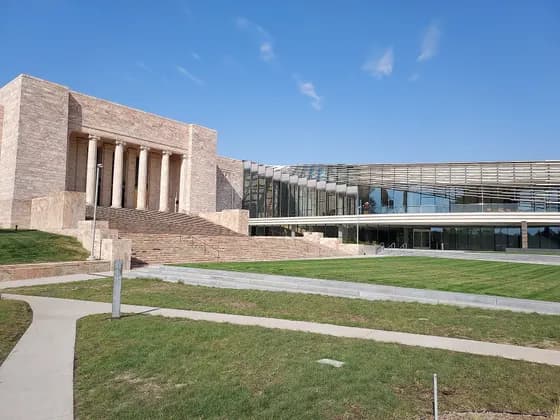
Photo: JonClee86 · CC BY-SA 3.0 · cropped
Photo: Collinulness · CC BY-SA 3.0 · Photo: Ryan Renner · CC BY 2.0 · Photo: Bubudu57 · CC0
The University of Nebraska College of Medicine MD program at a glance (2027 entry)
The University of Nebraska College of Medicine, also known as the UNMC College of Medicine after the University of Nebraska Medical Center it belongs to, offers a four-year, full-time MD program. Its home is the medical center's campus in Omaha, shared with Nebraska Medicine, its primary clinical partner. Since fall 2026 the program has also been taught on a regional campus in Kearney, in central Nebraska, as one class with one curriculum.
The curriculum has three phases. Phase 1, Foundations of Medicine, is the 18-month pre-clerkship phase and teaches the body one organ system at a time. Each block combines basic science, clinical skills and health systems science, the study of how care is organized, paid for and kept safe. Phase 2, Clinical Applications, is a 12-month clerkship year; clerkships are the core clinical rotations. Phase 3, Career Preparation, lasts 13 months and is planned around the specialty you hope to enter.
Clinical skills start in the first block with standardized patients, actors trained to play patients. Phase 1 is graded pass/fail. It ends with seven weeks of study for USMLE Step 1, the first exam of the United States Medical Licensing Examination, before clerkships start in the spring of year 2. Every student spends eight weeks of the clerkship year in a rural Nebraska community. The final phase centers on electives and sub-internships, rotations with close to the responsibilities of an intern, a first-year resident.
The Liaison Committee on Medical Education (LCME), which accredits MD programs in the United States, granted the college full accreditation for eight years after a 2021-22 survey. Its directory, updated October 14, 2026, lists the next survey for 2029-30.
| Degree | MD, fully accredited by the LCME |
|---|---|
| Program length | 4 years; MD-MPH and MD-MBA 5 years; MD-PhD 7 to 8 |
| Campuses | Omaha, plus a regional campus in Kearney since fall 2026 |
| Class size | 153 entered in fall 2026, 10 of them in Kearney (UNMC news) |
| Phases | Foundations of Medicine, Clinical Applications, Career Preparation: 18, 12, 13 months |
| Grading | Pass/fail in Phase 1; Honors, High Pass, Pass or Fail in clerkships |
| Anatomy | Dissection in the year 1 musculoskeletal block; practical exams in six blocks |
| Clinical experience | Standardized patients from the first block; clerkships from April of year 2 |
| Step 1 timing | Before Acute Care and Clinical Transitions opens Phase 2, around late February, year 2 |
| Rural requirement | Eight-week family medicine clerkship in a rural Nebraska community |
What makes the University of Nebraska College of Medicine MD program different
Eight weeks of family medicine in rural Nebraska
The required family medicine clerkship is an immersion in a rural Nebraska community. Your preceptor, the local physician who teaches you, directly supervises your care of patients in the office, the hospital and extended care facilities. You also write a report on a community health project, and the clerkship begins and ends with a half-day in the family medicine department on campus.
A new regional campus in Kearney
The Kearney campus took its first class in fall 2026. The curriculum, exams and graduation requirements match Omaha's. Small groups, labs and clinical skills sessions happen in person, while lectures are streamed from whichever campus the lecturer is on.
A final phase planned around your specialty
Phase 3 is 13 four-week rotations, mostly electives. You join one of 23 career specialty tracks, from anesthesiology to urology, whose director approves your schedule. Sub-internships, away rotations at other schools and unstructured time for interviews or Step 2 CK (Clinical Knowledge), the second licensing exam, fit inside it.
More than two dozen optional tracks
Enhanced Medical Education Tracks let you study one field in depth without adding time. Examples include Biocontainment and Biopreparedness, with hands-on training alongside the Nebraska Biocontainment Unit team; CUIDAR, which builds clinical Spanish; and Prehospital Medicine.
A simulated hospital across the street
The Davis Global Center, across the street from the college, holds iEXCEL, the medical center's simulation program, and a virtual hospital with a full-size operating room, a labor-and-delivery suite, trauma units and biocontainment rooms. Medical students practice simulated procedures in iEXCEL, and fourth-year students rehearse procedures in simulation to prepare for residency.
How University of Nebraska College of Medicine teaches medicine
Phase 1 presents basic science and clinical material together in organ-system blocks, instead of separate courses run by departments such as anatomy or biochemistry. Each block starts with how a system normally works, then covers its diseases, how they show up in patients and how they are prevented, diagnosed and treated, for individual patients and whole populations. The college says this mirrors how a physician approaches patients.
Large lectures sit alongside small groups that work through patient scenarios, plus labs, simulation and clinical skills practice on patient simulators. The college says interactive sessions make up about 40% of contact hours in each course and happen in person on both campuses. Lectures are streamed to the other campus from wherever the lecturer is based.
Some subjects run through all three phases as threads the catalog calls coils, each with its own director: communication, epidemiology, health systems sciences, inquiry, interprofessional education, point-of-care ultrasound (POCUS) and physical examination. Nutrition is spread the same way; the college counts at least 21 hours of nutrition instruction and assessment across your training.
From Phase 2 you learn mainly by caring for patients on clerkship teams, backed by seminars, conferences and rounds that students at other sites can join remotely. The three-phase design began with the class that entered in August 2017, when UNMC news called it Training the Physicians of Tomorrow.
The ways you will learn
| Small groups, PBL and TBL | Phase 1 uses case-based small groups and problem-based learning (PBL), where your group works through a patient case. In team-based learning (TBL) you prepare beforehand, take a quiz alone and then with your team, and apply the ideas to problems. Flipped classrooms have you study the material first and spend class time applying it. |
|---|---|
| Anatomy lab | Lab sessions in the blocks that teach anatomy, including dissection in the musculoskeletal and integument block, with practical exams alongside the written ones. |
| Clinical skills and simulation | You practice history taking and examination on standardized patients, manikins and task trainers, in the Sorrell Center's simulation spaces in Omaha or the simulation center in Kearney. Several year 1 blocks include an Objective Structured Clinical Examination (OSCE) near their end, a circuit of timed stations that each test one clinical task. |
| Clerkships | Clerkships put you on a hospital or clinic team for 6 to 12 weeks, caring for patients at your level of training under residents, attending physicians or community preceptors. |
How anatomy is taught at University of Nebraska College of Medicine
Anatomy is taught inside the organ-system blocks rather than as a stand-alone course. The catalog says the musculoskeletal and integument block, the third block of year 1, teaches through dissection, virtual histology, small groups and lectures. It also trains you in surface anatomy, locating structures on a living body, to sharpen your physical examination.
Later blocks cover the anatomy of their own region: respiratory looks at the nose, throat and lungs through gross anatomy, imaging and histology, and neurosciences teaches neuroanatomy. The 2026-27 exam calendar lists practical exams in six blocks: musculoskeletal and integument (two), circulatory, respiratory, neurosciences, gastrointestinal and GU/reproductive/developmental.
In May 2026 UNMC named its gross anatomy lab the Drs. Shailendra and Sandhya Saxena Gross Anatomy Laboratory. Bodies come from people who donated them through UNMC's anatomical donor program. At an April 2025 memorial service, students honored 101 donors, whom anatomy faculty describe as students' first patients.
Kearney has its own gross anatomy lab, and the college says anatomy facilities and instruction are identical on both campuses. UNMC news in December 2025 said the Kearney faculty would include a full-time anatomist. In Phase 3 you can return to the lab as a teacher through the Senior Teaching Elective in Anatomy.
When you first meet patients at University of Nebraska College of Medicine
Clinical skills start in Fundamentals, the first block, which includes standardized patient encounters. Later blocks add the skills for each system, such as examining the nervous system in neurosciences or taking a full history and physical in respiratory, with attention to social and environmental factors. Phase 1 also requires eight Longitudinal Clinical Experience visits, which the catalog lists among its precepting activities; ask the school how these are arranged on your campus.
Formal patient care begins in Phase 2. The four-week Acute Care and Clinical Transitions block, mostly classroom-based, refreshes your examination skills through simulated patient encounters and teaches the first workup of common complaints, with emphasis on emergencies. You also practice using interpreters and telemedicine and learn common procedures in skills labs. Basic Life Support (BLS) certification and Epic electronic medical record training come before your first clerkship.
On clerkships you log each required patient encounter, noting the setting, the patient's age group and your role, from full (your own history, examination and reasoning) to partial or observing. Directors review the logs at mid-clerkship and at the end, so they can steer you toward patients you have not yet seen.
Clinical time on clerkships is capped at 80 hours a week on average, with on-call stretches of no more than 24 hours plus 4 for wrap-up. You average one day off a week and are never on call the night before an exam.
Responsibility grows in Phase 3. On the general medicine inpatient sub-internship at UNMC, for example, you admit, manage and discharge three to five patients as part of the resident team and work one to three overnight shifts. The student-run SHARING clinics offer free and low-cost care to underserved people in Omaha, and seniors can join them as a longitudinal elective of at least 24 evening clinic sessions.
The University of Nebraska College of Medicine curriculum, year by year
- Phase 1, year 1
Fundamentals and the first organ systems
Year 1 runs from late August to mid-May in seven blocks, followed by summer break until late August. For students entering in 2027, the tentative calendar lists orientation from August 16 and the White Coat Ceremony on August 20. The week before, August 9 to 13, it lists the Academic Preparedness Program, which UNMC news described in 2025 as a voluntary week on study skills and wellness, ending with an ungraded practice quiz.
- Fundamentals (5 weeks): biochemistry and cell biology, genetics, embryology, histology, general pathology and basic pharmacology, plus population health, clinical skills and health systems quality.
- Blood, Defenses and Invaders (6 weeks): the immune system; bacterial, viral, fungal and parasitic infections; anemia, leukemia, transfusion and clotting.
- Musculoskeletal and Integument (6 weeks): bones, muscles, joints and skin, with dissection and surface anatomy, ending with an OSCE and the final exam in December.
- Circulatory (5 weeks) and Respiratory (4 weeks), each with an OSCE: heart and vessel disease from hypertension to heart failure, then breathing mechanics, gas exchange, lung disease and sleep-disordered breathing.
- Renal (3 weeks) and Neurosciences (6 weeks): kidney function, electrolyte and acid-base disorders and kidney failure, then neuroanatomy, neurophysiology and the neurological examination.
- Phase 1, year 2
The remaining systems, then Step 1 study
Year 2 starts in late August with four more blocks, then closes Phase 1 with a block of Step 1 study.
- Gastrointestinal (6 weeks): the gut, liver and pancreas from development to disease, nutrition and digestion, and history and examination skills for the abdomen.
- Endocrine (3 weeks): the pituitary, thyroid, adrenal and parathyroid glands, metabolic bone disease, diabetes and obesity.
- GU/Reproductive/Developmental (6 weeks): the genitourinary and reproductive systems, fertility, pregnancy and menopause, and a closing review of embryology.
- Multi-Organ Systems (2 weeks, December): a case-based review of infectious disease, rheumatology and immunology that draws the earlier blocks together, with many practice USMLE-style questions.
- USMLE Board Exam Review (7 weeks): independent study for Step 1, from early January to late February on the current calendars.
- Phase 2
Clinical Applications: the clerkship year
Phase 2 lasts 12 months from March of year 2. It opens with the four-week Acute Care and Clinical Transitions block, split around spring break, followed from April by six required clerkships of 6 to 12 weeks. A lottery sets your order, after you give your preferences.
- Internal medicine (12 weeks): half on an inpatient team at Nebraska Medical Center or the Omaha VA Medical Center, half in subspecialty and outpatient clinics you choose.
- Family medicine (8 weeks): a rural Nebraska community with your preceptor.
- Surgery (8 weeks): five weeks of general surgery at Nebraska Medicine, the VA or Methodist Hospital, three weeks in a surgical subspecialty, and lectures and skills workshops.
- Pediatrics (8 weeks): two inpatient weeks at Nebraska Medical Center or Children's Nebraska, plus outpatient and subspecialty time, in Omaha or with community preceptors outside it.
- Obstetrics and gynecology (6 weeks): following patients through labor and assisting at operations at Nebraska Medical Center or the Methodist hospitals, plus obstetric, gynecology and family planning clinics.
- Psychiatry (6 weeks): two three-week rotations at two sites, from inpatient units to consult services, plus the Clinic for Outpatient Psychiatric Education (COPE).
- Phase 3
Career Preparation: the specialty year
Phase 3 lasts 13 months, from April of year 3 to graduation in May of year 4, in four-week rotations. You declare a career specialty track in July, and its director approves the rest of your schedule. Match Day, when you learn where you will train as a resident, comes in March, and the Residency Preparatory Course fills April.
- At least six clinical electives, at least three of them sub-internships, with one in each segment: April to July, August to December and January to March.
- Up to three unstructured blocks for Step 2 CK study or residency interviews, though seminars and online assignments continue.
- Curriculum Enhancement Seminars, usually monthly, in three parts, on topics from palliative care and evidence-based medicine to personal finance and neurology skills. They include Advanced Cardiovascular Life Support (ACLS) certification and an interdisciplinary mock code, a simulated cardiac arrest.
- Comprehensive Clinical Skills Exam Part 2, taken within the seminar series, and five Enrichment Experiences chosen from at least 11, covering clinical, wellness and research or health systems topics.
- Residency Preparatory Course (4 weeks, April): two weeks for everyone on order entry, handoffs, delivering difficult news and teaching skills, then two weeks set by your track.
How you are assessed at University of Nebraska College of Medicine
Phase 1 blocks are graded Pass or Fail. The grade comes from a composite of medical knowledge exams (multiple-choice, short-answer and essay), application exams such as OSCEs and lab activities, and rubrics that score your small-group work and reflections. Each block's pass mark is recalculated every year from the previous three years' results and published in the syllabus.
Pass/fail does not mean your scores disappear. The college keeps your percentage scores to award scholarships and nominate students to Alpha Omega Alpha (AOA), the medical honor society. They also feed your Medical Student Performance Evaluation (MSPE), the letter that summarizes your record for residency programs. A failed block is remediated by retaking the weak assessments, but the first Fail stays on your transcript.
Most blocks set an exam about every two weeks, usually on a Friday, taken on your own device through the Examplify software.
Clerkships are graded Honors, High Pass, Pass or Fail from clinical evaluations, a National Board of Medical Examiners (NBME) subject exam, an OSCE, professionalism, attendance and assignments. Honors goes to the top 20% in each clerkship and High Pass to the next 30%. Subject exams, often called shelf exams, are national multiple-choice tests in each specialty. A score below the 5th percentile fails the clerkship; you can retake once within 90 days, but the best grade after a retake is Pass.
Acute Care and Clinical Transitions is pass/fail and needs a final grade of 80% and attendance that meets the Phase 2 policy. Departments grade Phase 3 electives Honors, High Pass, Pass, Marginal or Fail, or simply Pass/Fail, and the Residency Preparatory Course is pass/fail. Graduation also requires passing Comprehensive Clinical Skills Exam Part 2 and the mock code, current ACLS certification and registering for Step 2 CK.
Step 1 of the USMLE tests the science behind medicine and has been pass/fail since January 26, 2022; Step 2 CK tests clinical knowledge and decision-making. At UNMC you apply for Step 1 before the clerkship lottery in December of year 2. Miss that deadline and you are left out of the lottery and given a schedule from the places still open. You must sit Step 1 before the Acute Care and Clinical Transitions block that opens Phase 2, around late February of year 2. A passing result must reach the college by the last day of your first clerkship for you to continue.
- In August 2026 the USMLE program announced a move to designated testing dates from January 2029, with Step exams offered less often each year. Its June 2026 announcement had named 2028.
- The college's 2028-29 calendar is not yet published. On the current schedule, a 2027 entrant would study for Step 1 in January and February 2029 and sit it by about late February 2029, shortly after the switch.
- You sit Step 2 CK during Phase 3 at a time you choose and can request two days off a rotation to take it. For a 2027 entrant it would also fall after the switch.
- Comprehensive Clinical Skills Exam Part 1, an OSCE, is required during Acute Care and Clinical Transitions, before your first clerkship.
- Each year you also log your community service and complete a survey of extracurricular and scholarly activities; both are graduation requirements.
- You can graduate with Distinction by ranking in the upper 10 to 15% of your class or by earning honors on the optional MD thesis. High Distinction needs the upper 5%, or the upper 10 to 15% plus an honors thesis. Highest Distinction needs the upper 3 to 5% and an honors thesis.
- For MD students, attending an LCME-accredited school is what makes you eligible to sit the USMLE; students of osteopathic (DO) and eligible international schools qualify through other routes.
University of Nebraska College of Medicine clinical rotations: where you will actually train
Phase 1 is campus-based, in Omaha or Kearney. You cannot switch campuses during Phase 1, and Kearney students are not required to travel to Omaha during it.
After acceptance you state a campus preference, and the college assigns campuses as closely to preferences as fairness allows. The Rural and Kearney Health Opportunities Programs (RHOP and KHOP) are UNMC's undergraduate pathway programs for students from rural Nebraska, at the Nebraska state colleges and the University of Nebraska at Kearney. If you come through one, that status is taken into account but does not guarantee Kearney, and you are not required to go there.
The catalog names Omaha sites for five of the six required clerkships. The main ones are Nebraska Medical Center, the Omaha VA Medical Center, Children's Nebraska (the catalog's Children's Hospital and Medical Center) and Methodist Health System hospitals. Rural Nebraska is part of the required year too: family medicine is spent with a rural preceptor, and some pediatrics students do their outpatient weeks with community preceptors outside Omaha.
A lottery in December of year 2 sets your clerkship schedule. For sites and teams, directors take your stated preferences into account and assign the rest randomly, and you can trade with a classmate within 7 days if the director approves.
The first Kearney class reaches clerkships in spring 2028. The college says every clerkship and department offers training at sites around the state, and that Kearney students will be able to do almost all clinical rotations outside the Omaha and Lincoln area. Kearney students are not limited to primary care: the full range of residency options is open to them. In September 2026 the dean wrote that community physicians in central Nebraska teach in Phase 1 or will teach in Phases 2 and 3.
For Kearney students, the college provides housing when a rotation site is more than about 30 minutes from where you already have housing, and offers housing in Omaha for rotations there. It advises having your own transportation for rotations in communities around the state, where patient care can run outside standard hours.
Main campus and the base for most required clerkships, and the only place for some specialized rotations, such as transplant surgery.
- Nebraska Medical Center (Nebraska Medicine)
- Omaha VA Medical Center
- Children's Nebraska
- Methodist Hospital and Methodist Women's Hospital
- Lasting Hope Recovery Center
- Community Alliance and Douglas County psychiatric services
- Nebraska Medicine clinics, including the COPE clinic
- SHARING student-run clinics
Nebraska Medicine's second hospital, used for Phase 3 family medicine and emergency medicine rotations.
- Bellevue Medical Center (Nebraska Medicine)
Every student's eight-week family medicine clerkship, part of some students' pediatrics clerkship, and Phase 3 preceptorships arranged with volunteer faculty.
- Family medicine clerkship preceptors
- Community pediatrics preceptors outside Omaha
- Off-campus preceptorships at regional private clinics
Regional campus for Phase 1 since fall 2026.
- Douglas A. Kristensen Rural Health Education Complex
Phase 3 options; the Grand Island rotation is reserved for Primary Care Program students or those heading into internal medicine.
- Lincoln Family Medicine Program sub-internship (Lincoln General)
- Community pediatric hospital medicine sub-internship, Lincoln
- Traditional internal medicine sub-internship, Grand Island
Electives, selectives and away rotations at University of Nebraska College of Medicine
You need nine Phase 3 electives, at least six of them clinical and at least three of those sub-internships, and the rest can be any catalog course, including non-clinical ones. On the advanced emergency medicine sub-internship you work 16 shifts as an intern in the emergency departments at Nebraska Medical Center or Bellevue. Clinical neurology mixes inpatient and outpatient work with weekly conferences, and others include critical care, cardiology consults and the neonatal intensive care unit.
You can take up to three away rotations at other institutions, applied for through the Visiting Student Learning Opportunities (VSLO) service; a clinical away rotation counts as a sub-internship. Off-campus preceptorships, course 764 in every department, are four-week rotations with a volunteer faculty physician, usually at a private clinic in Nebraska. They also count as sub-internships but take at least eight weeks to set up.
International options include the International Health Elective, arranged through the Office of Global Engagement, a surgical global health elective in February and a pediatric global health elective in a low- or middle-income country. Intensive Spanish Language and Social Determinants of Health pairs three weeks of one-on-one online Spanish with University of Xalapa instructors in Mexico with a week in South Omaha.
Some electives leave the hospital. Field Epidemiology at Cedar Point is a three-week summer course at a University of Nebraska–Lincoln field station near Ogallala and Lake McConaughy, with about two-thirds of the time in the field and lab. You can also write a problem-based learning case for Phase 1 students, work as a teaching assistant, study literature and film, or train at the Nebraska Poison Center.
Two special clinical programs change the final year. The Primary Care Program, called the UNMC Primary Care Track by the internal medicine department, takes up to eight students a year, chosen in year 3. It aims to train primary care physicians for rural and underserved Nebraska.
The second is the Advanced Family Medicine Training Program. A family medicine department page, unchanged since at least early 2024, gives it four to six places a year for UNMC seniors. It requires a rural procedures fellowship and a commitment to practice in rural Nebraska.
Dual degrees and research years at University of Nebraska College of Medicine
UNMC offers three dual degrees. The MD-PhD Scholars Program, which holds a Medical Scientist Training Program (MSTP) award from the National Institutes of Health, takes seven to eight years. Training starts the summer before medical school with lab rotations to choose a research mentor. The program describes the PhD as beginning after the second year of medical school and lasting three to four years, followed by two years of clinical training.
MD-PhD students choose from seven interdisciplinary basic science programs in the College of Medicine and Eppley Cancer Institute, or programs in the colleges of pharmacy and public health. Some have earned PhDs at the University of Nebraska–Lincoln, in fields such as biomedical engineering. During the PhD years you follow a clinical mentor each semester, for four full days or eight half-days, and take part in the SHARING clinics.
The MD-MPH (Master of Public Health) and MD-MBA (Master of Business Administration) each take five years and need a separate application. The MPH has seven concentrations, from biostatistics and epidemiology to maternal and child health, all offered online or on campus. The MBA comes from the University of Nebraska at Omaha's College of Business Administration: 33 hours of graduate coursework, with some Phase 1 blocks counting toward a concentration in Health Care Management.
Research is open to every student. The paid Medical Student Summer Research Program gives rising second-year students eight weeks of research at about 40 hours a week. Each year during orientation, second- to fourth-year students can present at the Medical Student Research Showcase in the Davis Global Center, and students with an accepted conference abstract can apply for travel funding.
The MD honors thesis is your own research project under a faculty sponsor. You need to rank in the upper half of your class, with no grade below Pass after the first two years. The proposal is due by the first Monday of January in year 3 and the thesis by the same date in year 4, and a thesis awarded honors can earn graduation with distinction.
Enhanced Medical Education Tracks (EMETs) are optional concentrations in one field. You apply in your first semester, follow seminars, preceptorships or research with faculty mentors through years 1 to 3, and produce a capstone, such as a poster, in year 4. Tracks do not lengthen the program, completion is recorded on your transcript and in your MSPE, and dual-degree students are not eligible.
Facilities and support at University of Nebraska College of Medicine
Where you will learn
In Omaha the college is based in the Michael F. Sorrell Center. Across the street, the Dr. Edwin G. and Dorothy Balbach Davis Global Center is the headquarters of iEXCEL. Besides the virtual hospital, iEXCEL has replicated clinics and home care units, so you can practice moving a patient from home to hospital and back.
For complex anatomy, physiology and equipment, iEXCEL adds 3D CADWalls, interactive 2D iWalls, a holographic theater, head-mounted displays and a five-sided immersive CAVE. The Leon S. McGoogan Health Sciences Library serves both campuses, with an on-site library liaison in Kearney.
In Kearney, medical students learn in the Douglas A. Kristensen Rural Health Education Complex, shared with other UNMC and University of Nebraska at Kearney health programs. Its three-story Health Science Education Center II opened in January 2026, and the complex was formally opened in May 2026. Medical students there have large classrooms, small-group rooms, a gross anatomy lab, study space and a clinical simulation center with the same capabilities as Omaha's.
Support while you study
Each entering student is assigned a Director of Academic Advising (DAA), a practicing physician not involved in assessing students, who stays your academic advisor through Phases 1 and 2. You meet in the first weeks to go over a learning inventory and study plans, and again at set points. In Phase 3 your career specialty track director takes over most advising, though your DAA stays available.
At least once a year you also meet the associate dean or an assistant dean for student affairs to review your progress and talk about careers. Peer tutors from years 2 to 4 are assigned when advisors spot a need, or on request, and Counseling and Psychological Services helps with test anxiety, stress and academic difficulties.
In Kearney, advising meetings are mostly remote for now, backed by on-campus student affairs staff, a faculty academic advisor and tutoring. The campus has its own full-service student health clinic, staffed by professionals not involved in teaching medical students, and a wellness advocate. Elected class representatives meet faculty leaders several times a month, and a community leadership program pairs students with local mentors.
You can ask to change a supervisor, team, small group or site if you face mistreatment, unequal treatment, inadequate supervision, a conflict of interest or substantial hardship. Duty hour violations can be reported anonymously.
Is the University of Nebraska College of Medicine program right for you?
This program may suit you if
- You like learning one organ system at a time, with science and clinical skills together and pass/fail grades for the first 18 months.
- You would welcome eight weeks in a rural Nebraska community, caring for patients with a family medicine preceptor.
- You want a small cohort in central Nebraska: Kearney's first class had 10 students.
- You want a 13-month final phase shaped around a specialty track, with sub-internships, away rotations and time for interviews.
- You would like to go deeper through an optional Enhanced Medical Education Track, or add a PhD, MPH or MBA.
Things to think about
- Phase 1 is pass/fail, but percentage scores are kept for scholarships, AOA nominations and your MSPE, and clerkship Honors goes to the top 20%.
- Kearney is new and its first class reaches clerkships in 2028, so ask which sites Kearney students will use; the college advises having your own transportation.
- You cannot switch campuses during Phase 1, and campus assignment follows your preference only as far as fairness allows.
University of Nebraska College of Medicine MD program — frequently asked questions
Applying to University of Nebraska College of Medicine?
How to get into University of Nebraska College of Medicine
Prerequisites, MCAT, AMCAS personal statement, secondaries and interview, step by step.
Open the guide →University of Nebraska College of Medicine admissions profile
MCAT and GPA profile, acceptance rate, interview format and key dates.
See the profile →Compare University of Nebraska College of Medicine with other schools
Put the teaching style, anatomy teaching and clinical sites next to another school.
Open the comparison →Prepare for the University of Nebraska College of Medicine interview
Format breakdown, school-specific sample questions and prep tips from tutors who interviewed here.
Read the guide →Where this University of Nebraska College of Medicine program guide came from
This guide was written from 75 official sources — University of Nebraska College of Medicine's own program pages and curriculum documents, plus the accreditor and the hospitals and health systems the school trains students in where they publish detail — read on 2026-10-25, then checked claim by claim against those sources.
- UNMC College of Medicine: Curriculum
- UNMC College of Medicine: MD Program
- UNMC College of Medicine: Kearney Campus Questions and Answers
- UNMC College of Medicine: Accreditation
- UNMC College of Medicine: Clinical Partners
- UNMC College of Medicine: Education
- UNMC College of Medicine: Academic Assistance
- UNMC College of Medicine: Community Service and SHARING Clinic
- UNMC College of Medicine: Nutrition in the curriculum
- UNMC College of Medicine: Enhanced Medical Education Tracks
- UNMC College of Medicine: MD Honors Thesis
- UNMC College of Medicine: Research opportunities for current medical students
- UNMC College of Medicine: MD-PhD Program
- UNMC College of Medicine: About the MD-PhD Program
- UNMC College of Medicine: MD-PhD clinical training
- UNMC College of Medicine: MD-MPH Program
- UNMC College of Medicine: MD-MBA Program
- UNMC Catalog 2026-27: College of Medicine curriculum
- UNMC Catalog 2026-27: MD Program
- UNMC Catalog 2026-27: MD graduation requirements
- UNMC Catalog 2026-27: Degrees and honors
- UNMC Catalog 2026-27: Phase 1, Foundations of Medicine
- UNMC Catalog 2026-27: Phase 1 block descriptions
- UNMC Catalog 2026-27: Phase 1 exam dates
- UNMC Catalog 2026-27: Phase 2, Clinical Applications
- UNMC Catalog 2026-27: Phase 2 block and clerkship descriptions
- UNMC Catalog 2026-27: Phase 3, Career Preparation
- UNMC Catalog 2026-27: Career specialty track directors
- UNMC Catalog 2026-27: Phase 3 family medicine courses
- UNMC Catalog 2026-27: Phase 3 internal medicine courses
- UNMC Catalog 2026-27: Phase 3 interdepartmental courses
- UNMC Catalog 2026-27: Phase 3 neurological sciences courses
- UNMC Catalog 2026-27: Phase 3 emergency medicine courses
- UNMC Catalog 2026-27: Phase 3 surgery courses
- UNMC Catalog 2026-27: Phase 3 pediatrics courses
- UNMC Catalog 2026-27: Away rotations
- UNMC Catalog 2026-27: Off-campus preceptorships
- UNMC College of Medicine academic calendar 2026-27
- UNMC College of Medicine academic calendar 2027-28
- UNMC Catalog 2026-27: USMLE Step 1 procedural policy
- UNMC Catalog 2026-27: Grading policies
- UNMC Catalog 2026-27: Exam and quiz policy
- UNMC Catalog 2026-27: Attendance and absence policy
- UNMC Catalog 2026-27: Phase 3 scheduling policy
- UNMC Catalog 2026-27: Student assignment policy
- UNMC Catalog 2026-27: Requesting alternative assignment policy
- UNMC Catalog 2026-27: Duty hour policy
- UNMC Catalog 2026-27: Patient encounter log policy
- UNMC Catalog 2026-27: Requesting a new clinical site
- UNMC Catalog 2026-27: Coil directors
- UNMC Catalog 2026-27: Dual-degree programs
- UNMC Department of Family Medicine: Medical student education
- UNMC Department of Family Medicine: Advanced Family Medicine Training Program
- UNMC Department of Internal Medicine: Primary care tracks
- UNMC Office of Health Workforce Initiatives: Health Opportunities Programs (RHOP, KHOP, UHOP)
- UNMC news, September 20, 2017: A new way of learning medicine
- UNMC news, May 9, 2025: Anatomical donor program memorial service
- UNMC news, August 4, 2025: New weeklong program aids incoming med students
- UNMC news, September 8, 2025: New med students praise preparedness program
- UNMC news, December 15, 2025: College of Medicine Kearney update
- UNMC news, March 27, 2026: iEXCEL simulation program
- UNMC news, May 13, 2026: Gross anatomy laboratory named for the Saxenas
- UNMC news, May 15, 2026: Opening of the Kristensen Rural Health Education Complex
- UNMC news, August 18, 2026: Dean on the 153-student entering class
- UNMC news, September 8, 2026: Fall 2026 enrollment census
- UNMC news, September 8, 2026: Dean on the first Kearney class and community faculty
- USMLE, August 6, 2026: Transition to designated testing dates will take place in January 2029
- USMLE Designated Testing Dates information hub
- USMLE: Step 1 transition to pass/fail score reporting
- LCME directory of accredited MD programs
- Nebraska Medicine: About us
- Children's Nebraska: About us
- VA Nebraska-Western Iowa Health Care: Omaha VA Medical Center
- Methodist Health System: About
- CHI Health: Lasting Hope Recovery Center
Curricula are restructured between cycles. Anything here that decides your application — how anatomy is taught, a clinical campus assignment, a required research year — should be confirmed against the official page for your entry year.
Applying to University of Nebraska College of Medicine?
We help US applicants with MCAT strategy, the AMCAS personal statement, secondary essays and interview prep — everything you need for a competitive University of Nebraska College of Medicine application.