
The Creighton University School of Medicine MD program
What you actually study, and where you will be
Creighton University School of Medicine's MD is a 4-year program taught through team-based learning in an integrated curriculum, with patient contact from Year 1 and clinical rotations in Omaha or Phoenix, depending on your campus (2027 entry). You state a campus preference when you apply, then stay at your assigned campus, Omaha or Phoenix, for all four years, apart from fourth-year electives at the other campus and away rotations. Both campuses teach the same New ERA Curriculum, with two years of organ-system blocks, cadaver dissection and team-based learning. From early March of year 2 you review for Step 1 of the United States Medical Licensing Examination (USMLE). Clerkships, the core clinical rotations, start in May of year 3, and most of year 4 is electives you choose.
- Degree
- MD
- Length
- 4 years
- Teaching
- Integrated + Team-based learning
- Clinical contact
- Year 1



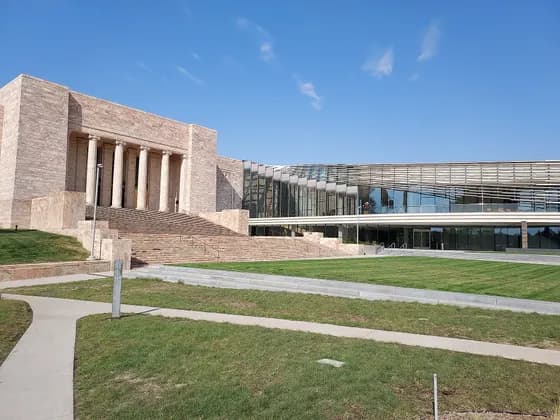
Photo: Bluejayscholar · CC BY-SA 3.0 · cropped
Photo: Troy Johnson from USA · CC BY 2.0 · Photo: Shannon Ramos from Swanton, Nebraska, U.S.A. · CC BY-SA 2.0 · Photo: Bubudu57 · CC0
The Creighton University School of Medicine MD program at a glance (2027 entry)
Creighton University School of Medicine (Creighton SOM) runs a four-year Doctor of Medicine (MD) program on two campuses: Omaha, Nebraska, and Phoenix, Arizona, where a full four-year regional campus opened in 2021. You apply once and say which campus you prefer, or either. The school's July 2025 news story put that year's entering class at 250 students across both campuses.
The curriculum is called the New ERA Curriculum, and each year is one Component. The first two years are the pre-clerkship (pre-clinical) phase, built from Clinically Integrated Blocks that mostly take one organ system at a time. Each block teaches the science, clinical skills and professional development together, through lectures, team-based learning, case-based small groups, simulation and dissection of donated bodies.
Both campuses teach the same required courses with the same graded assessments. The school says the Liaison Committee on Medical Education (LCME), which accredits MD programs in the United States, requires the experience to be essentially the same. What differs is the setting: Omaha students train mainly in CHI Health hospitals, and Phoenix students at Dignity Health St. Joseph's Hospital and Medical Center, Valleywise Health and Phoenix Children's.
Year 2 ends with a review block, starting in early March, for USMLE Step 1, the first of the national licensing exams. The clerkships then run from May of year 3 to the following April. Year 4 combines critical care, a capstone, electives and a sub-internship, where you take on an intern's duties.
Creighton is a Jesuit, Catholic university, and the school builds its approach on cura personalis, care for the whole person. In the curriculum you meet it in selectives on the humanities, Ignatian spirituality and mission outreach, and in community clinics such as the student-run Magis Clinic in Omaha. The school dates Creighton physicians' healing and teaching to 1892.
| Degree | MD (Doctor of Medicine), four years |
|---|---|
| Curriculum | New ERA Curriculum, in four one-year Components |
| Campuses | Omaha, Nebraska, or Phoenix, Arizona, with the same required courses |
| Class size | 250 students entered in 2025, across both campuses |
| Teaching style | Organ-system blocks with lectures, team-based and case-based learning |
| Anatomy | Cadaver dissection in groups of up to six, years 1 and 2 |
| First patient contact | Year 1: simulation lab, early inpatient and primary care exposure |
| Clinical sites | CHI Health hospitals in Omaha; St. Joseph's and Valleywise in Phoenix |
| Step 1 timing | End of year 2, after review that starts in early March |
| Grading | Honors, Satisfactory or Unsatisfactory; clerkship Honors at 90 of 100 points |
What makes the Creighton University School of Medicine MD program different
Two campuses with one curriculum and the same exams
After each in-house written exam, the school compares the two campuses' results question by question. A question whose campus averages differ by more than two standard deviations is reviewed, and dropped on both campuses if one campus was not taught its content.
A full four-year campus in Phoenix
Phoenix students are based in Arizona for all four years, learning in the Virginia G. Piper Charitable Trust Health Sciences Building, opened in 2021. The Creighton University Arizona Health Education Alliance gives them priority access to clinical training.
Clerkship grades split between clinical work and the shelf
Half of each required clerkship's grade comes from clinical work, mostly supervisors' evaluations. The other half comes from your percentile on the shelf exam, a national subject exam from the National Board of Medical Examiners (NBME). Honors takes 90 of 100 points, so even a top clinical score needs at least the 75th percentile on the shelf.
Global health through ILAC and the Arrupe program
The Arrupe Global Scholars and Partnerships program is a five-year MD/MPH with five international immersions, at partner sites in Rwanda, Ecuador, Nepal and the Dominican Republic. Outside it, you can take fourth-year electives in the Dominican Republic with the Institute for Latin American Concern (ILAC), a faith-based program affiliated with Creighton.
How Creighton University School of Medicine teaches medicine
The school describes the New ERA Curriculum as integrated in two directions: vertically, by organ system, and horizontally, across disciplines. In the cardiovascular block, for example, you study the heart's structure, diseases and drugs while learning to read electrocardiograms and echocardiograms and to listen to the heart.
Formats vary by block, and year 2 puts more weight on small-group, case-based and team-based sessions. Reproductive System combines lectures and lab sessions with case-based small groups and team-based learning. Life Cycle adds pre-recorded videos and flipped classrooms, where you study the material beforehand and use class time to apply it.
In years 3 and 4 you learn mainly on clinical teams under attending physicians and residents. Pediatrics adds web-based simulated patient cases, and the fourth-year capstones return to lectures, small groups and simulation.
The ways you will learn
| Lectures | Lectures carry much of each block's science, some live and some pre-recorded. |
|---|---|
| Team-based learning (TBL) | You prepare before class, then take a short multiple-choice readiness test alone and again with your team. Teams get instant feedback and keep answering until they are right, earning less credit with each try, then apply the material to new problems. You get an individual score and a team score. |
| Case-based small groups | Small groups work through patient cases, sometimes as the preparation for a TBL session. Courses whose groups have eight or fewer students and keep the same facilitator for at least four sessions give you written narrative feedback. |
| Clinical skills and simulation | The Clinical Skills Training Curriculum covers interviewing, clinical skills simulation, self-directed learning and supervised time in clinics and hospitals. |
| Interprofessional education (IPE) | IPE 500, an online course in the fall of year 1, introduces teamwork across the health professions. You also complete three activities through the Center for Interprofessional Practice, Education and Research (CIPER), at least one of them an ethics course. |
A typical week on the Creighton University School of Medicine program
A handbook guideline on pre-clerkship workload, first issued in 2019 and still listed in the handbook, sets the shape of a week in years 1 and 2. Scheduled activities, including lectures, small groups, case-based and team-based learning and clinical preceptorships, average no more than 26 hours a week. Required preparation for sessions averages no more than 12 hours a week.
The timetable also leaves an average of 12 hours a week for self-study between 8 a.m. and 5 p.m., and no mandatory session runs between noon and 1 p.m.
In years 3 and 4, the school's clerkship work-hours policy, in a version revised in December 2021, sets the limits. A shift lasts at most 24 hours, plus up to four for handing over patients, and after 24 hours of call you get 14 hours off. You work no more than 80 hours a week, with one day in seven free, both averaged over four weeks.
Overnight call depends on the clerkship and hospital; an undated call guideline lists none in family medicine on either campus.
How anatomy is taught at Creighton University School of Medicine
Anatomy is taught inside the pre-clerkship blocks, each covering the structures of its own system or region, and the gross anatomy lab runs through years 1 and 2. You learn by dissecting donated bodies. Under a handbook policy revised in 2024, both campuses have no more than six students per donor, four to six faculty in each scheduled lab and a standard three hours per lab.
Outside scheduled hours the lab is open for independent study, where building access allows. In Omaha, fourth-year students on the anatomy teaching practicum help prosect the donors for each session, preparing dissected specimens, and teach in the lab. Phoenix has its own practicum and a 20-station human anatomy lab, and its simulation center has Anatomage tables for virtual dissection in 3D.
In Omaha, donated bodies come through Creighton's Deeded Body Program and the Anatomical Board of the State of Nebraska. After the year the bodies spend in the lab, the program holds a memorial service where students can talk with the donors' families and share their gratitude.
Gross anatomy has lab practical exams. If you need a make-up practical, you first pass an online readiness quiz with at least 80%, then complete a supervised review of one to two hours in the lab. You get one attempt at the make-up exam, and a score below 60% means failing the course.
Anatomy returns in year 4. Gross Anatomy electives offer two or four weeks of regional study in Omaha and two weeks of regional dissection in Phoenix, and the Omaha surgery capstone includes cadaver dissection.
When you first meet patients at Creighton University School of Medicine
The school says you start seeing patients in year 1, in the simulation lab and through early inpatient and primary care experiences. The Clinical Skills Training Curriculum begins in year 1 and continues in year 2 with an Ambulatory Clinic Experience and an Early Hospital Experience. The Office of Medical Education assigns you to these pre-clerkship clinical experiences.
Community clinics add more contact. Creighton offers its health sciences students interprofessional community practice at the Magis Clinic and the Monen Healthcare Clinic at Heart Ministry Center in Omaha, and at the Virginia G. Piper Medical Clinic at St. Vincent de Paul in Phoenix. The Magis Clinic gives free care to people experiencing homelessness and people without insurance.
Full-time clinical work begins with the clerkships in May of year 3, after orientation and clinical skills training for year 3 at the end of year 2. You certify in Basic Life Support (BLS) in year 1 and in Advanced Cardiac Life Support (ACLS) in year 3, and keep both current through your clinical coursework.
The Creighton University School of Medicine curriculum, year by year
- Year 1
Component I: foundations and the first organ systems
If you enter in 2027, orientation runs July 26 to 30, with White Coat Ceremonies on July 29 in Omaha and July 30 in Phoenix. The year opens with the five-week Foundational Science block, on both social and basic sciences, then seven blocks generally organized by organ system. You also start the clinical skills curriculum and GOLD selectives, short courses in the humanities, research, careers and service.
- Immunology and Hematology: how the immune system works and fails, then blood cells, bone marrow, lymph nodes and spleen in health and disease.
- Infectious Disease: how bacteria, viruses, fungi and parasites cause disease, and how infections are diagnosed, treated and prevented.
- Musculoskeletal and Integumentary Systems (bones, muscles and skin), and Neuroscience, which teaches you to think like a neurologist by working out where in the nervous system a problem lies.
- HEENT (head, eyes, ears, nose and throat, including the special senses), Cardiovascular System, with ECG and echocardiogram reading, and Respiratory System, with hands-on spirometry, the breathing test of lung function.
- Options such as The Healer's Art, five evening sessions designed by physician Rachel Remen on meaning in medical work, and summer research after the year.
- Year 2
Component II: more systems, then Step 1
Year 2 opens with the renal system and works through six more blocks. On the 2025-26 and 2026-27 calendars, the Step 1 Guided Review and Study block starts on the first Monday of March. Review ends with your Step 1 sitting in late April, followed by a spring break and orientation for year 3 in early May.
- Renal-Urinary, Gastrointestinal, Endocrine and Reproductive System blocks, each joining normal structure and function to disease and treatment; Reproductive System covers normal pregnancy and delivery.
- Life Cycle: prenatal development, childhood and old age, genetic disorders, and end-of-life and palliative care.
- Brain and Behavior: psychiatric syndromes and their diagnostic criteria in the DSM-5-TR, the standard diagnostic manual, and how to assess patients and recommend treatment.
- Multisystem Disease/Clinical Decision Making: nutritional deficiencies, toxins, environmental extremes, trauma and drug reactions, plus social determinants of health and interviewing patients from different cultures.
- Step 1 Guided Review and Study (CIB 214): ten weeks in all, counting the spring break and orientation. Review opens with the Comprehensive Basic Science Exam, a shelf-style test of the basic sciences, then online lectures, practice questions, weekly quizzes and self-directed study until your Step 1 sitting.
- Year 3
Component III: the core clerkships
Year 3 runs from early May to April, then ends with IDC 370, a two-week review for Step 2 CK, the USMLE exam on clinical knowledge. You rotate in one of seven student groups through eight clerkships and two electives. Each clerkship ends with an NBME shelf exam, which you can sit only after passing Step 1.
- Internal Medicine, eight weeks of inpatient care in two four-week sessions, and Surgery, six weeks on the basics of procedural medicine.
- Pediatrics, six weeks. The catalog's description, built around Omaha hospitals, gives three inpatient weeks at Children's Nebraska and in a neonatal intensive care unit (NICU), then three weeks in community outpatient pediatrics. It adds a week of mornings in Bergan Mercy's newborn nursery.
- Obstetrics and Gynecology, six weeks of normal and high-risk obstetrics and office and surgical gynecology. You observe or take part in vaginal deliveries and assist at cesarean deliveries; Phoenix students spend all six weeks at St. Joseph's.
- Psychiatry, six weeks in a range of care settings, and Neurology, four weeks; in Omaha, two outpatient weeks and two inpatient weeks that include stroke and general neurology.
- Family Medicine, six weeks in primary care clinics, where you see patients on your own before seeing them with the physician. Emergency Medicine: two weeks of day and night shifts, with patients of all ages.
- Two two-week electives, which share an eight-week block with neurology, in fields such as dermatology, radiology or orthopedic surgery.
- Year 4
Component IV: getting ready for residency
Year 4 prepares you for residency and lets you explore your own interests. You need at least 42 credits and may take up to 46. Fourteen credits are set and you choose the other 28, with the capstone in the final block before commencement in May.
- A critical care selective, caring for inpatients with life-threatening illness, sometimes with overnight and weekend call.
- A sub-internship, or a second critical care selective. As a sub-intern you act as an intern with fewer patients and closer supervision, in medicine, pediatrics, family medicine, obstetrics and gynecology, surgery, psychiatry or neurology.
- A capstone that rehearses the first year of residency. Omaha's obstetrics and gynecology capstone, for example, has you act as a first-year resident through weeks on labor and delivery, night float, ultrasound and high-risk clinic.
- IDC 464 runs across fall and spring. You prepare your CV and personal statement and work with a specialty advisor. A dean then holds your Medical Student Performance Evaluation (MSPE) interview, which doubles as a mock residency interview; the MSPE is the school's letter for residency applications.
- Electives for the other 28 credits. You also set aside one interviewing month for residency interviews, which must fall between October and January.
How you are assessed at Creighton University School of Medicine
Courses are graded Honors (SH), Satisfactory (SA) or Unsatisfactory (UN). In years 1 and 2, Satisfactory needs an overall course average of 70%. Between 65% and 70% you may sit a make-up exam, in up to two courses a year, and below 65% the grade is Unsatisfactory. Where a course offers Honors, its syllabus sets the criteria. At graduation, Honors in at least 50%, 60% or 75% of the courses that offer it earns cum laude, magna cum laude or summa cum laude.
Every required course gives you formative feedback, such as a quiz or practice exam, at or near its midpoint; it counts little toward grades and stays out of your MSPE. Faculty write narrative comments in small-group and lab courses, clerkships of four weeks or more and Student Interest Selectives, and each clerkship's 200-word summary goes into your MSPE.
Some subjects run through all the pre-clerkship blocks as Horizontally Integrated Disciplines. You earn no credit for them, but your scores in each are reported every semester, and you need an average of at least 65% in each by the end of year 2. Fall short and you work through a study or remediation plan, then show mastery on an exam before you sit Step 1.
Clerkship grades have two halves of 50 points. The clinical half comes mostly from your evaluators' ratings on a five-point scale, with other activities worth up to a fifth. The other half comes from your shelf percentile against national results. Honors takes 90 points and Satisfactory 70. You can retake a failed shelf within four weeks, in no more than two clerkships, but a retake rules out Honors.
USMLE Step 1 tests the science behind medicine and has been reported only as pass or fail since January 26, 2022. Step 2 CK (Clinical Knowledge) tests how you apply clinical knowledge to patient care. You sit Step 1 within the school's designated dates and must pass it to advance officially to year 3, though you can begin clerkships in May while your result is pending. You take Step 2 CK by July 1, after passing every year 3 course. Graduation requires a posted score, though not a pass.
In August 2026 the USMLE program announced a move to designated testing dates from January 2029, with Step exams offered less often each year. Its June 2026 announcement had named 2028. On the current schedule, a student entering in 2027 would begin Step 1 review in early March 2029 and sit the exam in late April, a few months after the switch. Step 2 CK would be due by July 1, 2030, so both exams would fall under the new model.
- These dates are projections from the 2025-26 and 2026-27 calendars, the latest the school has published.
- You must pass the school's Clinical Skills Examinations, which the grading policy calls OSCE/CSE, to graduate. An objective structured clinical examination (OSCE) is a practical exam, generally a circuit of timed stations that each test one clinical task.
- Step 1 allows three attempts, all within nine months of the end of the school's designated exam period, and a third failure means referral for dismissal. A failure reported after clerkships start takes you off your clerkship until you retake the exam.
- In every clerkship you log required clinical experiences, and a faculty member must confirm watching you take a history and examine a patient, and give you feedback halfway through.
- Graduation also requires ACLS certification and the interprofessional activities, with everything finished within six years of starting, or longer on a dual degree.
- The LCME directory, updated October 14, 2026, lists Creighton as fully accredited, with its next survey in 2027-28, and marks the program as accredited before the LCME was founded in 1942. Students in LCME-accredited MD programs are eligible to sit the USMLE.
Creighton University School of Medicine clinical rotations: where you will actually train
You remain at your assigned campus for all four years, except for Creighton fourth-year electives at the other campus and away rotations. Every year 3 clerkship is at Creighton-affiliated hospitals and clinics. A lottery sets your clerkship order and fourth-year elective picks, clerkship directors assign your sites, and you cannot swap assignments with classmates.
A guideline issued in September 2026 adds that some clerkships let you rank sites, but preferences are not guaranteed, and you arrange your own transport. You can ask to move for documented health needs, family or dependent care, accessibility needs or other exceptional circumstances, though most sites run at or near capacity.
In Omaha, CHI Health is the school's primary academic health system. CHI Health Creighton University Medical Center – Bergan Mercy, a Level I trauma center, is the school's main academic medical center. University Campus, next to Creighton's campus, is an 80,000-square-foot community health center with a 20-bed emergency department. Catalog courses also use the Omaha VA Medical Center, CHI Health Immanuel and the children's hospital, Children's Nebraska, which lists Creighton among its partner schools.
An undated handbook guideline on overnight call also lists CHI Health Lakeside, CHI Health Mercy Council Bluffs in Iowa, CHI Health Midlands in Papillion and Methodist Hospital as Omaha clerkship sites. In year 4, the Omaha campus's Rural Family Medicine Sub-Internship places students with family physicians in western Iowa, western and central Nebraska and eastern Wyoming, mostly in outpatient clinics.
In Phoenix, the Creighton University Arizona Health Education Alliance has joined Creighton, Dignity Health St. Joseph's Hospital and Medical Center, Valleywise Health and District Medical Group since 2017, giving Creighton students enrolled in Phoenix priority access to clinical training. St. Joseph's, where Creighton medical students have rotated since 2005, is a 576-bed hospital with a Level I trauma center, a Level III NICU and the Barrow Neurological Institute.
Valleywise Health has sites across Maricopa County. They include an acute care hospital with the Diane & Bruce Halle Arizona Burn Center and Level I trauma care, three behavioral health hospitals and 11 community health centers. District Medical Group's more than 650 providers staff them. Fourth-year electives also run at Phoenix Children's, which the undated call guideline lists among Phoenix clerkship sites, and in Chandler and Prescott.
Omaha campus clinical training; Bergan Mercy is the school's main academic medical center.
- CHI Health Creighton University Medical Center – Bergan Mercy
- CHI Health Creighton University Medical Center – University Campus
- Omaha VA Medical Center
- CHI Health Immanuel
- Children's Nebraska
Listed as Omaha clerkship sites in an undated handbook guideline.
- CHI Health Lakeside
- CHI Health Mercy Council Bluffs, Iowa
- CHI Health Midlands, Papillion
- Methodist Hospital
Fourth-year Rural Family Medicine Sub-Internship, an Omaha course.
- Family physicians in western Iowa
- Family physicians in western and central Nebraska
- Family physicians in eastern Wyoming
Phoenix campus clinical training; St. Joseph's and Valleywise Health are Alliance partners, so Creighton's Phoenix students have priority access there.
- Dignity Health St. Joseph's Hospital and Medical Center
- Valleywise Health
- Phoenix Children's
Electives, selectives and away rotations at Creighton University School of Medicine
Choice starts in year 1 with GOLD selectives, short courses in four groups: Student Interest Selectives in the humanities and special topics, Guided Research Selectives, Career Exploration Selectives and Mission Outreach Selectives. Each is worth 0.5 to 1 credit, and you need 1.5 credits before year 3, including at least one Student Interest Selective.
The Student Interest lists differ by campus. Omaha's include Creative Writing Workshop for Future Physicians, Communicating in Spanish for Medical Professionals and the Physician's Vocation Program, an introduction to Ignatian spirituality through reading, prayer and reflective writing. Phoenix's include Photography and Medicine, Drumming Cultures of the World, Opera and Disease and Foundations of Homelessness and Street Medicine. Mini Medical School selectives are local service projects of at least 30 contact hours.
In year 4, after the required courses, you choose 28 credits from sub-internships, critical care selectives, clinical electives, up to 8 credits of non-clinical electives and up to 12 credits of extramural (away) electives. Away electives must be at LCME-accredited medical schools, residency programs accredited by the Accreditation Council for Graduate Medical Education (ACGME) or military sites.
Fourth-year choices reflect each city. Phoenix offers Street Medicine, Respite Care for the Homeless at the Circle the City Medical Respite Center and a St. Vincent de Paul clinic elective, where you carry your own panel of patients. Omaha offers Medicine and the Law, Planetary Health and a Domestic Violence Practicum with community agencies and shelters.
International options center on the Dominican Republic. Fourth-year ILAC electives cover rural outpatient medicine, women's healthcare and blindness-prevention screening, and ILAC's three-week Summer Health Program each July places students in rural communities. The school's FAQ, unchanged since at least 2022, says 30% to 40% of students go on an international rotation. It also names Project Cura, an Omaha student organization, with sites including Gambia, Ghana, Cambodia, Peru, India and Romania.
Dual degrees and research years at Creighton University School of Medicine
Dual degrees run with Creighton's Graduate School. The 2026-27 catalog and the handbook's dual degree policy list an MD with an MA in Medical Humanities and Ethics, an MS in Biomedical Sciences, an MBA or an MPH. They also list an MD with a PhD in Biomedical Sciences, Medical Microbiology and Immunology, or Pharmacology and Neuroscience. You need good academic standing, and you are never enrolled in both programs at once.
For a master's, you can start coursework in the summer after year 1, then spend a full year on it after year 2, once you have passed Step 1. The MBA, offered with the Heider College of Business, is completed mostly as full-time study in that year. Up to 8 credits of master's coursework in year 4 count as non-clinical electives, and both degrees must be finished within seven years.
The Arrupe Global Scholars and Partnerships program is a five-year MD/MPH in global health and health equity, which you apply for through the MD secondary application. It opens with an orientation and immersion at ILAC about three weeks before year 1. A three-week research immersion abroad comes before year 2, then a year of mostly MPH study with eight weeks abroad on your practicum and capstone.
You then complete clerkships in Omaha or Phoenix, and in year 5 you present your capstone findings at your partner site and take a four-week clinical elective there. Partner sites are in Rwanda, Ecuador, Nepal and the Dominican Republic, and a five-year Ignatian formation program of seminars, reflections and retreats runs alongside.
The MD/PhD trains physician-scientists. You are admitted with your MD place or during years 1 and 2, and take PhD coursework in the summers before and during them. After passing Step 1, you spend at least three full academic years on PhD coursework and research before returning for clerkships, and both degrees must be finished within 10 years.
Research without a second degree is also possible. The Guided Research Selectives take you from a grant proposal and Institutional Review Board (IRB) approval, the ethics sign-off for research on people, to a poster, presentation or submitted paper by year 2. In the summer after year 1, IDC 797 supports a mentored project and the Summer Medical Student Fellowship Program offers research. Directed Independent Research earns up to 8 credits in year 4.
Facilities and support at Creighton University School of Medicine
Where you will learn
Omaha teaching is based in the CL and Rachel Werner Center for Health Sciences Education, a 145,000-square-foot building opened in 2023 for future physicians, nurses, therapists, physician assistants and EMS technicians. It has study lounges and a dedicated medical student locker room. Its simulation center includes 15 clinical exam rooms, 10 single-patient hospital rooms, an operating room, a nine-bed acute care lab, a task training lab and a virtual reality space.
Omaha's high-fidelity simulators range from premature infants to adults, and task trainers let you practice airway management, vascular access, lumbar punctures, joint injections and point-of-care ultrasound.
Phoenix students learn in the Virginia G. Piper Charitable Trust Health Sciences Building, a seven-story, 195,000-square-foot building at Park Central in midtown Phoenix, reachable by Valley Metro Rail. Nearly 1,000 students in six health programs share it. Its simulation center has 16 clinical exam rooms, nine single-patient hospital rooms, an operating room and trauma bay, an ambulance simulation suite and the anatomy lab, plus manikins that breathe, blink and bleed.
Support while you study
Each campus has its own student affairs team, led by an associate dean, with learning specialists who help you plan your studies, including for Step 1. Academic support includes individual consultations, free tutoring on request, review sessions and practice questions from older students, and a Study Buddies scheme that matches first- and second-year students with study partners.
The school says its formal mentoring program involves both students and faculty. The Omaha-based Vital Signs program, whose description is unchanged since at least 2022, pairs each first-year student with a second-year buddy. Four or five pairs form a group with third- and fourth-year peer mentors and a faculty mentor. In years 3 and 4 you choose a career mentor from nearly 100 clinicians, and nearly 500 alumni can be reached by email and phone.
A Wellness Council of two elected students from each class organizes wellness events and a quarterly publication, the Wellness Chronicle. Counseling services are available on both campuses, and the school recommends that any psychiatric care come from a professional not involved in assessing or promoting students.
Is the Creighton University School of Medicine program right for you?
This program may suit you if
- You want to train in Omaha or Phoenix, with the same curriculum and graded exams on both campuses.
- You like organ-system blocks taught through lectures, team-based learning and cases, and want to dissect donated bodies in small groups.
- You want the humanities, spirituality or service in your schedule, through selectives such as medical Spanish, creative writing or street medicine.
- You are drawn to global health, through the five-year Arrupe MD/MPH or fourth-year ILAC electives in the Dominican Republic.
- You want a large say in year 4, with 28 credits of your own choosing, including up to 12 credits of away rotations.
Things to think about
- Your campus is fixed: apart from fourth-year electives at the other campus and away rotations, you stay where you are assigned.
- Courses are graded Honors, Satisfactory or Unsatisfactory, and half of each clerkship grade rests on a national shelf exam percentile.
- You must pass Step 1 to advance to year 3, though you can start clerkships in May while your result is pending. On the current schedule, a 2027 entrant would sit it a few months after the USMLE moves to designated testing dates.
- You arrange your own transport to clinical sites, and clerkship site preferences are not guaranteed.
Creighton University School of Medicine MD program — frequently asked questions
Applying to Creighton University School of Medicine?
How to get into Creighton University School of Medicine
Prerequisites, MCAT, AMCAS personal statement, secondaries and interview, step by step.
Open the guide →Creighton University School of Medicine admissions profile
MCAT and GPA profile, acceptance rate, interview format and key dates.
See the profile →Compare Creighton University School of Medicine with other schools
Put the teaching style, anatomy teaching and clinical sites next to another school.
Open the comparison →Prepare for the Creighton University School of Medicine interview
Format breakdown, school-specific sample questions and prep tips from tutors who interviewed here.
Read the guide →Where this Creighton University School of Medicine program guide came from
This guide was written from 74 official sources — Creighton University School of Medicine's own program pages and curriculum documents, plus the accreditor and the hospitals and health systems the school trains students in where they publish detail — read on 2026-10-25, then checked claim by claim against those sources.
- Creighton University School of Medicine: home page
- Creighton University: School of Medicine Programs
- Creighton School of Medicine: Medicine MD
- Creighton University: Medicine MD (Doctor of Medicine) program details
- Creighton School of Medicine: MD Program Frequently Asked Questions
- Creighton School of Medicine: MD Application Process (one application for both campuses)
- Creighton School of Medicine: Admitted MD Students, 2027 orientation and White Coat Ceremonies
- Creighton News: Creighton School of Medicine welcomes the MD Class of 2029 (July 21, 2025)
- 2026-27 Creighton University Catalog: Doctor of Medicine (MD) Curriculum, Components I to IV
- 2026-27 Creighton University Catalog: All Courses, School of Medicine
- 2026-27 Creighton University Catalog: Academic Calendar, School of Medicine
- Academic Calendar, School of Medicine, 2025-26 edition (archived copy, February 2026)
- 2026-27 Creighton University Catalog: Doctor of Medicine Dual Degree Programs
- 2026-27 Creighton University Catalog: MD/PhD Dual Degree Program
- 2026-27 Creighton University Catalog: MD/MBA Dual Degree Program (with the Heider College of Business)
- Creighton School of Medicine: MD/MPH Arrupe Global Scholars and Partnerships Program
- Creighton School of Medicine: MD Student Handbook index
- MD Student Handbook: Component I (first year)
- MD Student Handbook: Component II (second year)
- MD Student Handbook: Component III (third year)
- MD Student Handbook: Component IV (fourth year)
- MD Student Handbook: USMLE Step 1 and Step 2 CK Policy (revised July 28, 2026)
- MD Student Handbook: Clinical Campus and Clinical Experience Assignment Policy (revised January 28, 2025)
- MD Student Handbook: Clinical Site Assignment and Reassignment Guideline (issued September 22, 2026)
- MD Student Handbook: Comparability of Anatomy Education Policy (revised November 26, 2024)
- MD Student Handbook: Pre-clerkship Campus Comparability Guideline
- MD Student Handbook: Comparability of Assessment Policy
- MD Student Handbook: Grading Policy (revised June 23, 2026)
- MD Student Handbook: Clerkship Grading Components Guideline
- MD Student Handbook: Pre-Clerkship Retest and Remediation Guideline (revised September 22, 2026)
- MD Student Handbook: Horizontally Integrated Discipline Assessment Policy
- MD Student Handbook: Team-Based Learning Guideline (revised November 25, 2025)
- MD Student Handbook: Required Clinical Experiences Policy (revised July 28, 2026)
- MD Student Handbook: Call for Required Clerkships Guideline (undated)
- MD Student Handbook: Dual Degree Programs Policy (revised July 22, 2025)
- MD Student Handbook: Graduation Requirements Policy (revised July 28, 2026)
- MD Student Handbook: Basic Life Support and Advanced Cardiac Life Support Policy
- MD Student Handbook: Review of Students' Performance Policy
- MD Student Handbook: Examinations Policy
- MD Student Handbook: Pre-Clerkship Student Scheduled Time and Workload Guideline (issued 2019)
- Creighton School of Medicine: Medical Student Work Hours During Clerkship and Clinical Electives Policy (revised December 14, 2021)
- MD Student Handbook: Formative Assessment Policy (revised March 24, 2026)
- MD Student Handbook: Narrative Assessment Policy (revised March 24, 2026)
- MD Student Handbook: Wellness
- Creighton School of Medicine: Vital Signs Mentoring
- Creighton School of Medicine: Academic Success
- Creighton School of Medicine: Student Affairs Office (Omaha and Phoenix staff)
- Creighton University in Phoenix
- Creighton University in Omaha
- Creighton University Arizona Health Education Alliance
- Creighton Health Sciences: Clinical Education (CHI Health and Arizona partnerships)
- Creighton School of Medicine: Omaha Affiliated Training Sites
- Creighton Health Sciences: Simulation in Omaha
- Creighton Health Sciences: Simulation in Phoenix
- Creighton Health Sciences: Interprofessional Education and the Center for Interprofessional Practice, Education and Research (CIPER)
- Creighton School of Medicine: Deeded Body Program
- CHI Health Creighton University Medical Center – Bergan Mercy
- CHI Health Creighton University Medical Center – University Campus
- CHI Health Immanuel, Omaha
- CHI Health Lakeside, Omaha
- CHI Health Mercy Council Bluffs, Iowa
- CHI Health Midlands, Papillion
- Methodist Hospital, Omaha
- Children's Nebraska: Educating the Next Generation of Caregivers
- VA Nebraska-Western Iowa Health Care System: Omaha VA Medical Center
- Dignity Health St. Joseph's Hospital and Medical Center, Phoenix
- Dignity Health Arizona: residency programs and the Creighton partnership
- Phoenix Children's: Medical Education
- District Medical Group, Phoenix
- LCME: Accredited Programs directory (updated October 14, 2026)
- USMLE Bulletin of Information: Eligibility
- USMLE: Step 1 pass/fail score reporting implementation date
- USMLE: Updated timeline, transition to Designated Testing Dates in January 2029 (August 6, 2026)
- USMLE Designated Testing Dates Information Hub
Curricula are restructured between cycles. Anything here that decides your application — how anatomy is taught, a clinical campus assignment, a required research year — should be confirmed against the official page for your entry year.
Applying to Creighton University School of Medicine?
We help US applicants with MCAT strategy, the AMCAS personal statement, secondary essays and interview prep — everything you need for a competitive Creighton University School of Medicine application.