
The USU Hébert School of Medicine MD program
What you actually study, and where you will be
USU Hébert School of Medicine's MD is a 4-year program with an integrated curriculum, with patient contact from Week 1 and clinical rotations in the Washington, DC area and military hospitals nationwide (2027 entry). In USU's Molecules to Military Medicine curriculum, a 16-month organ-system phase with cadaver dissection and clinical skills from week one leads to clerkships at military hospitals across the US from January of year 2. Step 1 of the US Medical Licensing Examination (USMLE) follows in January of year 3, and military training runs through all four years. You study as an active-duty officer on full pay, then owe seven years of service after residency (ten in the Public Health Service).
- Degree
- MD
- Length
- 4 years
- Teaching
- Integrated
- Clinical contact
- Week 1

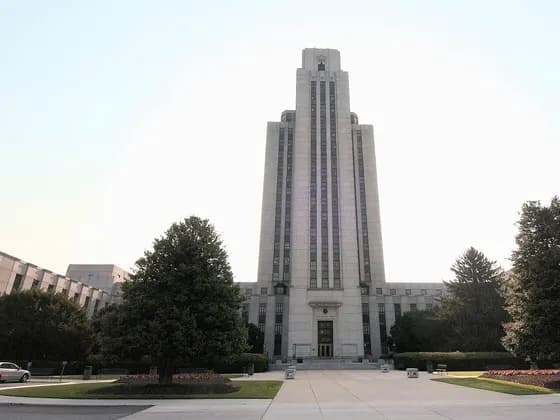

Photo: Unknown author (U.S. Government / DoD) · Public domain · cropped
Photo: U.S. Navy photo by Chief Warrant Officer 4 Seth Rossman. · Public domain · Photo: Judy Gallagher · CC BY 2.0 · Photo: AgnosticPreachersKid · CC BY-SA 3.0
The USU Hébert School of Medicine MD program at a glance (2027 entry)
The Uniformed Services University of the Health Sciences (USU) F. Edward Hébert School of Medicine runs a four-year MD program in Bethesda, Maryland, for future physicians in the uniformed services. Congress chartered USU in 1972, and the School of Medicine, named for the Louisiana congressman who championed it, opened in 1976. The campus is on Naval Support Activity Bethesda, next door to Walter Reed National Military Medical Center and across the street from the National Institutes of Health.
You become an officer before your first class, commissioning into the Army, Navy, Air Force, Coast Guard or Public Health Service. Throughout the program you serve on active duty in grade O-1, as a second lieutenant or ensign, on that grade's full pay and allowances. If you have served before, you keep the pay and benefits of your highest earlier rank, but everyone gets the O-1 housing allowance. In return you owe seven years of active duty after residency, or ten in the Public Health Service.
The curriculum, Molecules to Military Medicine (M2MM), runs year-round in three periods. The 16-month pre-clerkship phase teaches the basic sciences and clinical medicine together, one body system at a time. Core clerkships, the required clinical rotations, follow from January of year 2 to December of year 3 at military hospitals around the country. The post-clerkship period runs from January of year 3 to graduation in May of year 4. It opens with Step 1 of the United States Medical Licensing Examination (USMLE), the first of the national licensing exams.
A military curriculum of field medicine, military medical practice and leadership runs through all four years, with a field exercise every year. USU's own pages count between 500 and more than 700 hours of military-unique training, depending on what each count includes.
Each class has 178 places. The Class of 2030, which began in August 2026, matriculated 177 students: 65 Army, 53 Navy, 54 Air Force, four Coast Guard and one Public Health Service. Forty-two percent had served in the military before. The program is accredited by the Liaison Committee on Medical Education (LCME), which accredits MD programs in the United States.
| Degree | MD, four years on a year-round calendar |
|---|---|
| Curriculum | Molecules to Military Medicine (M2MM), in three periods |
| Places per class | 178; 177 started in August 2026 |
| Main campus | Bethesda, Maryland, next door to Walter Reed |
| Student status | Active-duty O-1 officers with full pay and allowances |
| Service obligation | Seven years after residency; ten in the Public Health Service |
| Grading | Honors/Pass/Fail for most modules and clerkships; some units pass/fail |
| Anatomy | Cadaveric dissection with prosections, within the organ-system modules |
| Step 1 timing | January of year 3, after the core clerkship year |
| Accreditation | LCME, full; next survey in 2031-32 |
What makes the USU Hébert School of Medicine MD program different
Officer training and leadership alongside the MD
A leadership curriculum runs from day one to graduation, covering emotional intelligence, crisis communication, team building and performance under stress. More senior students help lead its small groups. Army students also complete the Basic Officer Leader Course, the Army Medical Department's follow-on course for new officers, within the four years.
A field exercise every year, ending with Bushmaster
Medical Field Practicum 101, the Advanced Combat Medical Experience and Operation Gunpowder lead to Operation Bushmaster, a simulated deployment in Pennsylvania in year 4. Each builds on the last, from basic self-aid to leading a unit's care for simulated casualties.
Step 1 after the clerkship year, not before
USU says students remember the basic sciences better when they can link them to real patients, and that Step 1 increasingly uses clinical vignettes.
Clerkships at military hospitals across the country
Your core rotations take you to military hospitals from Hawaii and Alaska to Virginia, and to VA and civilian sites near Washington. Core clerkships are nested with military residency programs, giving you early exposure to residency training in the services.
A summer of operational training after year 1
In the seven-week summer after year 1 you spend about two to three weeks on a Summer Operational Experience with your service. Options include about three weeks aboard a Navy aircraft carrier. Air Force students take a two-week aerospace medicine course that includes an hour flying a Cirrus aircraft. Public Health Service students spend two weeks with the Indian Health Service.
How USU Hébert School of Medicine teaches medicine
After the Foundation in Medicine module, the six remaining pre-clerkship modules are organized by organ system, so science and clinical medicine are taught side by side. Across the seven modules, basic science faculty teach histology, cell biology, physiology, neuroscience, gross anatomy and embryology, stressing each topic's clinical and military relevance. Sessions range from lectures to labs, small-group problem solving and cadaveric dissection, with case-based learning throughout, though its share varies by module.
Clinical skills run alongside. Integrated Clinical Skills teaches you to take a history and examine a patient. Introduction to Clinical Reasoning uses lectures and small groups to build a differential diagnosis, the list of conditions that could explain a patient's problem. Point-of-care ultrasound, scanning at the bedside, is built into the modules, and about 25 hours of nutrition teaching sit mainly in the gastrointestinal module.
Military Medicine 100, which the MD program page calls Military Medical Practice and Leadership, runs through the whole pre-clerkship phase. It covers field medicine, military medical practice and leadership, from force health protection to team building and the military decision-making process. It also includes a full day of field training and military history at Antietam National Battlefield.
On the wards, clerkships use an apprentice model: you work directly with physicians in each specialty. The post-clerkship period follows the RIME model, moving you from reporting and interpreting clinical information to managing and educating patients.
USU's 2026 guide for prospective students says the curriculum will be modernized in coming years, with AI tools for self-paced pre-clerkship learning and more competency-based assessment. It says a pilot has started in the Neuroscience and Behavior module.
The ways you will learn
| Lectures | Most are recorded, so you can attend in person or watch later. |
|---|---|
| Standardized patients | People trained to act as patients, in filmed practice and test encounters in the Clinical Skills Lab, after which you and the patient both assess how it went. |
| Simulation | Between 25 and 35 sessions at the Val G. Hemming Simulation Center, with manikins, task trainers and virtual reality. |
A typical week on the USU Hébert School of Medicine program
In the pre-clerkship phase, formal coursework, such as labs, lectures, small groups and clinical work, takes up to 26 hours a week. That generally leaves at least two, and typically three, half-days a week for independent study.
Officer life shapes the week too. You wear the uniform of the day to class, and your service tests your physical fitness twice a year. You get 30 days of leave a year but can take it only during official breaks, such as winter recess, spring break and summer leave.
On clerkships the week follows the hospital, with some fixed teaching. Medicine has weekly small-group sessions with a preceptor, psychiatry has weekly meetings with a psychiatrist and standardized-patient interview practice, and neurology has required virtual sessions on Wednesday afternoons.
How anatomy is taught at USU Hébert School of Medicine
Gross anatomy is taught inside the organ-system modules, so you study each region alongside the physiology and diseases of that system. The curriculum chart places an anatomy block, marked as dissection, in five modules: musculoskeletal, cardiopulmonary-renal, neuroanatomy and gastrointestinal in year 1, then reproductive and endocrine in year 2.
Teaching takes place in the Department of Surgery's Anatomical Teaching Laboratory, on the ground floor of Building A. First- and second-year students dissect cadavers there. The lab combines dissection with prosections, specimens that have already been dissected. It also uses computer-based teaching, simulation-lab models, interactive clinical discussions and focused-interest boot camps.
After the clerkships, senior electives include an advanced cadaver dissection review tailored to your planned specialty, an anatomical variations course for up to 20 fourth-years, and a neuroanatomy elective with head and neck dissection. In the anatomy teaching elective you teach dissection to first- and second-years as a junior faculty member and prepare prosections for them.
When you first meet patients at USU Hébert School of Medicine
Clinical skills training and patient-care activities begin in the first week. Your first patients are standardized patients in the Clinical Skills Lab: in year 1 you learn to take their histories and examine them, and in year 2 you add clinical reasoning to each encounter.
The field practicums add a different kind of patient contact. Medical Field Practicum 101, in October of year 1, lets you experience being a patient in a simulated field setting. In later exercises you treat volunteers wearing cut suits, prosthetics that let you perform real procedures, such as inserting an IV line or making incisions, without harming them.
Full-time clinical work starts in January of year 2, after the week-long Transition to Clerkship course on your role in inpatient and outpatient care. From then on you look after active-duty service members, military retirees and their families, along with veterans at VA sites.
The USU Hébert School of Medicine curriculum, year by year
- Summer before year 1
Officer training and orientation
Unless you already have qualifying officer service, you start with your service's officer training, typically in June and July. There you learn the service's customs and courtesies, how to wear the uniform and an officer's responsibilities. You then report to Bethesda, where the Brigade, the campus office that helps students balance their military and academic roles, runs a general orientation in the first week of August. Academic orientation follows in the second week.
- Army: the Army Medical Department Direct Commission Course, four weeks at Fort Sill, Oklahoma.
- Navy: Officer Development School, five weeks in Newport, Rhode Island.
- Air Force: officer training lasting 5.5 weeks at Maxwell Air Force Base's Gunter Annex in Montgomery, Alabama.
- Coast Guard: Direct Commission Officer School, four weeks at the US Coast Guard Academy in New London, Connecticut.
- Public Health Service: the Officer Basic Course, two weeks in Maryland.
- Year 1
Foundations and the first organ systems
Year 1 runs from August to July. After the seven-week Foundation in Medicine module you work through four organ-system modules while Military Medicine 100 runs alongside. The year ends with the Summer Operational Experience in July.
- Foundation in Medicine: principles from biochemistry, physiology, anatomy, cell biology, histology, microbiology, immunology, pharmacology and pathology, plus how to interview and examine a patient.
- Musculoskeletal and Integument, covering bones, muscles and skin, from October to December, then the nine-week Cardiopulmonary-Renal module in January and February.
- Neuroscience and Behavior in March and April, with weight on military topics such as traumatic brain injury, post-traumatic stress disorder, pain, suicide and sleep disorders.
- Gastrointestinal, Hepatobiliary, Hematologic, Metabolism and Nutrition, ending in June, including nutrition in military settings.
- Medical Field Practicum 101 in October: four days of casualty evacuation, land navigation, tactical movement, weapons familiarization and team problem solving, with evening talks from senior officers.
- Combat Medical Skills from January: battlefield first aid, such as controlling severe bleeding, airway management and splinting, taught in small groups.
- A Total Force Fitness decision brief on nutrition, supplements, hydration and field rations for a military mission.
- Year 2, August to December
Finishing the pre-clerkship modules
Year 2 opens with the Advanced Combat Medical Experience, then the last two modules. In December the week-long Transition to Clerkship prepares you for the wards.
- Advanced Combat Medical Experience (Medical Field Practicum 102): a refresher in Tactical Combat Casualty Care, the military's battlefield trauma guidelines, plus battlefield pain management and a panel with wounded warriors. Field exercises follow, in which small teams treat simulated casualties.
- Reproduction and Endocrinology, August to October: reproduction, pregnancy and childbirth, child growth and development, and disorders of the endocrine glands, with medical simulation.
- Multi-System and Complex Diseases, October to December: illnesses that affect several organ systems, global and military medicine, and the advanced clinical skills you will need on clerkships.
- Clerkship year
Core clerkships, January of year 2 to December of year 3
The core clerkships run as three trimesters of three rotations. Each trimester starts with a week of teaching on campus and ends with a week of leave. Two more weeks of leave come at the end of the year.
- Internal medicine: 10 weeks across inpatient wards and outpatient clinics.
- Surgery: 10 weeks, made up of five weeks of general surgery and two 2.5-week subspecialty rotations you choose, with overnight call.
- Five weeks each of family medicine, pediatrics, psychiatry, and gynecologic surgery and obstetrics.
- A four-week selective, a rotation you choose from more than 30 options, such as military community psychiatry. You can use it for the required neurology or anesthesia clerkship instead.
- A four-hour online nutrition course from the Gaples Institute before family medicine.
- Year 3, from January
Step 1, B3 and advanced rotations
The post-clerkship period opens with six weeks of dedicated study and Step 1 in January of year 3. Next comes Bench to Bedside and Beyond (B3), six weeks of advanced teaching that ties the basic sciences to clinical cases. Advanced clinical rotations then start in early spring, and you sit Step 2 Clinical Knowledge (CK) between April and September.
- B3 teaches patient safety, team-based care, professionalism and evidence-based decisions through cases. It includes Basic, Advanced and Advanced Trauma Life Support training, the medical response to sexual trauma, a culinary medicine lab and a dietary supplement session.
- Operation Gunpowder is part of B3. The military medicine department describes it as a 36-hour exercise in prolonged casualty care in a simulated austere combat setting, with students leading teams of six to eight.
- Advanced clinical rotations: 12 four-week blocks, made up of required emergency medicine, neurology and anesthesia clerkships, two sub-internships and seven electives. In a sub-internship you take on an intern's duties under supervision.
- Year 4
Bushmaster, final rotations and graduation
In October you take Military Contingency Medicine: two weeks of classes, small-group discussions and table-top exercises, then Operation Bushmaster. The rest of the year is advanced rotations and electives, including any Capstone research project, ending with a Transition to Practice and graduation week in May.
- Operation Bushmaster: five days at Fort Indiantown Gap, Pennsylvania, a day of planning then four of operations. It simulates a month-long deployment with mortar attacks, mass casualties, ethical dilemmas and care under fire. You rotate through roles from medic to leader of a 20- to 25-person unit.
- Faculty and volunteers assess your leadership and care. Nursing and international students take part, and veterinarians teach care of military working dogs on a canine simulator.
- During the final year you learn your residency specialty and location through the military match, based on service needs and your preferences.
- Graduation is on Armed Forces Day, the third Saturday in May, at DAR Constitution Hall in Washington, DC, where you receive the MD and are promoted from O-1 to O-3.
How you are assessed at USU Hébert School of Medicine
USU replaced letter grades with an Honors, Pass or Fail scale in 2011, so the pre-clerkship years are not simply pass/fail. All pre-clerkship modules except Foundation in Medicine, the required clerkships and the sub-internships are graded Honors, Pass or Fail. Foundation in Medicine, B3, post-clerkship electives and the Capstone are graded pass or fail only.
Each required activity has written grading criteria, and missing mandatory labs or small groups can be grounds for failing a course. Faculty also assess officer bearing, attitude and professionalism. Under a 2020 dean's policy, you receive narrative feedback in each required module and clerkship, wherever the teaching format allows. A Student Promotions Committee monitors progress, and you have 46 months from matriculation to finish.
On clerkships, a substantial part of your grade rests on how you care for patients and work in the ward team. Your histories and examinations, differential diagnoses, notes, communication and professionalism also count. So do shelf exams, national subject exams from the National Board of Medical Examiners (NBME).
The MD program FAQ says core shelf exams come at the end of each five-week rotation. The Psychiatry Department adds a combined assessment week after psychiatry and the two medicine rotations. In it you take the NBME subject exam and an objective structured clinical examination (OSCE), a circuit of timed stations with standardized patients. Each required advanced clerkship also ends with a shelf exam, usually on the last day at the rotation site.
To graduate you must pass USMLE Step 1 and Step 2 CK. Step 1 tests how you apply the basic sciences and has been reported only as pass or fail since January 26, 2022. Step 2 CK tests clinical knowledge, and your transcript shows it as a three-digit score. In August 2026 the USMLE program announced a move to designated testing dates from January 2029, with Step exams offered less often each year. Its June 2026 announcement had named 2028.
On the current schedule, a student entering the four-year MD in 2027 would sit Step 1 around January 2030 and Step 2 CK around April to September 2030, both after the switch. These are projections from the 2026-27 catalog and USU's curriculum chart, not published dates. Under the new model, the USMLE plans to publish Step exam dates more than a year before each calendar year.
- You must pass every part of the military medicine and emergency medicine curricula. Leadership is assessed by you, your peers and faculty, including in the field exercises. Operation Bushmaster is the culminating assessment of the military-unique curriculum.
- Third-year students are tested with standardized patients on specialty skills in pediatrics, obstetrics and gynecology, family medicine, psychiatry and surgery.
- Neurology requires nine core patients, a written assignment on two of them, a written exam and a clinical evaluation. Anesthesia uses a multiple-choice exam, graded observed encounters and the site director's evaluation.
- Early in your final year, the Office for Student Affairs prepares your Medical Student Performance Evaluation (MSPE), the summary letter sent with residency applications. You can contribute to it.
- The LCME directory, updated October 14, 2026, lists the program's accreditation as full, first granted in 1976, with the next survey in 2031-32. USU says the LCME renewed it for eight years in July 2024.
- LCME accreditation is what makes the program's students eligible to sit the USMLE.
USU Hébert School of Medicine clinical rotations: where you will actually train
The pre-clerkship phase is based in Bethesda, but the clerkship year takes every student to military hospitals around the country. You select the order and location of your core rotations through a lottery.
The school pays travel, lodging and, where authorized, per diem for core clerkships, core selectives and the required advanced clerkships. Sub-internships and advanced electives are not covered, except one interview rotation, paid apart from a rental car.
Walter Reed National Military Medical Center was formed in 2011 when Walter Reed Army Medical Center merged with the National Naval Medical Center. The Alexander T. Augusta Military Medical Center at Fort Belvoir, Virginia, was Fort Belvoir Community Hospital until its renaming in 2023.
Sites vary by specialty. Psychiatry sites include the Washington, DC area, Hawaii, San Diego, San Antonio, coastal Virginia, Fort Hood in Texas and Camp Lejeune in North Carolina, usually with two to four students per site. Every family medicine site is co-located with a full-service hospital that trains family medicine residents. The required emergency medicine clerkship uses military emergency departments plus civilian hospitals such as those in Columbia and Baltimore, Maryland, and Fairfax, Virginia.
Walter Reed and Fort Belvoir host most core specialties. The VA hospital takes medicine, neurology and psychiatry students, Malcolm Grow pediatrics, the Psychiatric Institute of Washington psychiatry, and Howard County, Inova Fairfax and Union Memorial emergency medicine.
- Walter Reed National Military Medical Center, Bethesda
- Alexander T. Augusta Military Medical Center, Fort Belvoir, Virginia
- Washington DC VA Medical Center
- Psychiatric Institute of Washington
- Malcolm Grow Medical Clinic, Maryland
- Howard County General Hospital, Columbia
- Inova Fairfax Hospital
- MedStar Union Memorial Hospital, Baltimore
Between them they host all six core clerkships. Cape Fear Valley is a pediatrics site listed with Womack.
- Naval Medical Center Portsmouth
- Womack Army Medical Center, Fort Bragg
- Cape Fear Valley Medical Center
- Naval Medical Center Camp Lejeune
Eisenhower hosts surgery and family medicine. The others take students in specialties such as family medicine, obstetrics, medicine, neurology and anesthesia.
- Eisenhower Army Medical Center, Fort Gordon
- Martin Army Community Hospital, Fort Benning
- Eglin Air Force Base hospital
- Naval Hospital Jacksonville
- Pensacola Naval Hospital
- Keesler Medical Center, Biloxi
San Antonio hosts every core clerkship except family medicine. Darnall hosts four core clerkships and Beaumont two.
- Brooke Army Medical Center, Joint Base San Antonio-Fort Sam Houston
- Wilford Hall Ambulatory Surgical Center, San Antonio
- Carl R. Darnall Army Medical Center, Fort Hood
- William Beaumont Army Medical Center, Fort Bliss
Air Force sites for medicine, pediatrics and neurology, with Dayton Children's as a pediatrics partner and family medicine at Offutt.
- Wright-Patterson Medical Center, Dayton
- Dayton Children's Hospital
- Offutt Air Force Base hospital
San Diego and Madigan each host five of the six core clerkships.
- Naval Medical Center San Diego
- Naval Hospital Camp Pendleton
- David Grant USAF Medical Center, Travis Air Force Base
- Mike O'Callaghan Military Medical Center, Nellis Air Force Base, Las Vegas
- Madigan Army Medical Center, Joint Base Lewis-McChord
- Bremerton Naval Hospital
Tripler hosts all six core clerkships. Alaska offers pediatrics, neurology and anesthesia.
- Tripler Army Medical Center, Honolulu
- Joint Base Elmendorf-Richardson hospital, Anchorage
Used for some rotations, such as the neurology clerkship, a 12-day rotation at Landstuhl and family medicine operational rotations.
- Landstuhl Regional Medical Center, Germany
- Military sites in Korea, Japan, Guam, Italy, the UK and Belgium
Electives, selectives and away rotations at USU Hébert School of Medicine
In the clerkship year, the four-week core selective lets you try a specialty early, from options such as dermatology, radiology, urology, sports medicine, operational family medicine and several psychiatry selectives. An emergency medicine selective runs at Eglin and Keesler Air Force Bases, Womack Army Medical Center and Kaiser Permanente in San Diego.
After the clerkships, seven of the 12 advanced clinical rotation blocks are electives, or eight if you used your core selective for neurology or anesthesia. USU lists more than 140 course options at more than 40 sites worldwide. You can use the blocks for audition rotations at programs where you hope to train, civilian rotations, research or a Capstone, anatomy teaching, global health, international or operational medicine, or selected military schools.
You choose your two sub-internships with an adviser in the Office for Student Affairs. Any approved specialty that offers one counts, from family medicine and pediatric intensive care to trauma surgery and neurosurgery. Electives include Military and Operational Space Medicine, Disaster Medicine and Mass Casualty, Tropical Medicine, Forensic Anthropology, Forward Operating Pediatrics, and Foundations in Artificial Intelligence and Machine Learning in Healthcare.
Operational electives include two-week mountain medicine courses in Vermont or Washington State, a two-week dive medicine course in Key West and the six-week Army Flight Surgeon Course. Clinical options include the Naval Special Warfare Center in Coronado, California, and the Special Operations Combat Medic course at Fort Bragg. A 12-day rotation at Landstuhl Regional Medical Center in Germany follows casualty care from the battlefield back to the US.
In 2025-26, 52 students did family medicine operational and deployed rotations at 18 sites. Thirty-one of them went to eight sites outside the continental US, from Korea and Guam to Aviano Air Base in Italy and RAF Lakenheath in the UK. Surgery offers advanced rotations at 20 military hospitals in the US and overseas, plus trauma, burn and surgical critical care rotations through Washington Hospital Center and the University of Maryland Shock Trauma Center.
Dual degrees and research years at USU Hébert School of Medicine
The Capstone is an optional research project of your choosing, with up to three months of the post-clerkship period set aside for it, not necessarily in one stretch. You line up a faculty mentor, a study design and approvals beforehand. Projects fall into four areas: laboratory research, clinical research, global health and military leadership, and educational research. The mentor grades it pass/fail, and more than 80% of the 2025 graduating class completed one.
The MD/PhD Physician Scientist program takes seven to eight years, and the program says more than 85% of students finish in seven. According to the 2026-27 catalog and the 2026 brochure, MD/PhD students are commissioned as O-1 officers on entry and owe nine years of active duty after residency, rather than seven. The PhD can be in emerging infectious diseases, molecular and cell biology, neuroscience or public health.
MD/PhD students complete two four-week lab rotations and the pre-clerkship curriculum, then take Step 1 before starting graduate work. On the current schedule, going by the program's 2022-23 handbook, a 2027 MD/PhD entrant would sit Step 1 around January or February 2029, just as the USMLE's move to designated testing dates takes effect.
Three or four years of research follow, with monthly return-to-clinic sessions and, in the first 18 months, advanced courses and a qualifying exam. You then rejoin the medical curriculum for Transition to Clerkship and the core clerkships.
Through the Department of Health Professions Education, selected students can earn a master's alongside the MD within four years on the MD/Master Joint Track. The options are a Master of Health Professions Education (MHPE) or a Master of Education in Health Professions Education (MEd-HPE), and medical students can also earn certificates in the field. USU's May 2026 commencement conferred MD/PhD, MD/MHPE, MD/MEd-HPE and MD/MPH degrees.
Facilities and support at USU Hébert School of Medicine
Where you will learn
USU's 100-acre campus is about three miles from Washington, DC, near the National Library of Medicine. The MD program FAQ says there is no base housing for students: you find your own. USU strongly advises living as close to campus as you can.
Simulation happens at the Val G. Hemming Simulation Center, founded in 1999, at the Forest Glen Annex in Silver Spring, Maryland, rather than on the Bethesda campus. Its Clinical Skills Lab has 16 furnished exam rooms, each with three video cameras and microphones, around a central observation area. About 75 standardized patients, from infants to professional actors and retired teachers, can wear makeup, called moulage, to mimic illness or injury.
The Surgical and Procedural Skills Laboratory uses a full-scale operating and emergency room mock-up with manikin simulators. The center also has a Virtual Medical Environments lab and the Wide Area Virtual Environment (WAVE), an immersive space for training teams in combat and disaster skills. In all, the center delivers more than 38,000 hours of instruction to students, physicians and other health personnel.
Support while you study
The Office for Student Affairs supports you from orientation to graduation, with personal, academic and career advising, residency application advice for military and civilian matches, and a well-being program. It also oversees student government; each class elects officers, including two well-being representatives.
The Longitudinal Coaching Program pairs you with a faculty coach, civilian or active duty, for one-to-one meetings at regular intervals through all four years. Members of the Class of 2026, the first participants, said having a coach helped their well-being, their use of feedback on clinical skills and their accountability for their goals.
Within each class, students are organized into small teams that help and encourage one another. Through the student-created Rising Physicians Program, each first-year can find a mentor among the interns and residents at Walter Reed to guide them through the pre-clerkship phase.
Academic support includes peer and faculty tutoring, testing support and dashboards that show your progress in real time, plus counseling services. All medical students enroll with the University Family Health Center, run by the Department of Family Medicine, as their primary care clinic.
Is the USU Hébert School of Medicine program right for you?
This program may suit you if
- You are committed to a career as a uniformed physician and want to train as an officer, in uniform and on full pay, from your first day.
- You would enjoy a multi-day field exercise every year, ending with Operation Bushmaster.
- You are happy to travel for clerkships at military hospitals around the country.
- You want room for research or operational medicine, with up to three months for a Capstone and seven elective blocks.
Things to think about
- The commitment is long: seven years of active duty after residency, or ten in the Public Health Service, and residency years do not count toward it.
- Leaving is costly. Students who withdraw owe service equal to their time in training, at least one year, and may have to repay the cost of their education.
- Your preferred service is not guaranteed: you rank the services, and you are offered your choice only if seats are available.
- The calendar is full and year-round, with officer training before year 1, a summer operational experience and leave only in official breaks.
USU Hébert School of Medicine MD program — frequently asked questions
Applying to USU Hébert School of Medicine?
How to get into USU Hébert School of Medicine
Prerequisites, MCAT, AMCAS personal statement, secondaries and interview, step by step.
Open the guide →USU Hébert School of Medicine admissions profile
MCAT and GPA profile, acceptance rate, interview format and key dates.
See the profile →Compare USU Hébert School of Medicine with other schools
Put the teaching style, anatomy teaching and clinical sites next to another school.
Open the comparison →Prepare for the USU Hébert School of Medicine interview
Format breakdown, school-specific sample questions and prep tips from tutors who interviewed here.
Read the guide →Where this USU Hébert School of Medicine program guide came from
This guide was written from 61 official sources — Uniformed Services University of the Health Sciences F. Edward Hébert School of Medicine's own program pages and curriculum documents, plus the accreditor and the hospitals and health systems the school trains students in where they publish detail — read on 2026-10-24, then checked claim by claim against those sources.
- USU School of Medicine: MD Program and the Molecules to Military Medicine curriculum
- USU School of Medicine: Clerkships, locations, timeline, expenses and advanced clerkships
- USU School of Medicine: Commissioning, officer training and service obligation
- USU School of Medicine: MD FAQ
- USU School of Medicine: Pick a Branch (officer training and summer experiences by service)
- USU School of Medicine: Academic Policies (grading, promotion, graduation, withdrawal)
- USU School of Medicine: Medical Nutrition Curriculum
- USU School of Medicine: MD/PhD Physician Scientist program
- USU MD/PhD Physician-Scientist Training Program Handbook 2022-2023 (older document; Step 1 timing for MD/PhD students)
- USU 2026-2027 Academic Catalog: Doctor of Medicine (M.D.)
- USU 2026-2027 Academic Catalog: Licensing (USMLE timing)
- USU 2026-2027 Academic Catalog: Military, Professional and Academic Orientation
- USU 2026-2027 Academic Catalog: Admission Process and Service Obligation
- USU 2026-2027 Academic Catalog: USU History
- USU 2026-2027 Academic Catalog: School of Medicine course descriptions
- Unlike Any Other Medical School: USU School of Medicine Guide for Prospective Students (2026)
- USU Department of Military and Emergency Medicine: Upcoming Military Field Practicum Dates
- USU School of Medicine Dean's Policy Memorandum SOM-DPM-025-2020: Narrative Assessment (December 2020)
- USU Military Readiness: Military Specific Curriculum and Medical Field Practicums
- USU Military Readiness: Medical Field Practicum 101
- USU Military Readiness: Advanced Combat Medical Experience (ACME)
- USU Military Readiness: Operation Gunpowder
- USU Military Readiness: Operation Bushmaster
- USU Military Readiness: Summer Operational Experiences
- USU Military Readiness: Operational Courses
- USU Department of Military and Emergency Medicine: Education
- USU Department of Military and Emergency Medicine: Military-Unique Pre-Clerkship Curriculum
- USU Department of Military and Emergency Medicine: Military-Unique Post-Clerkship Curriculum
- USU Department of Military and Emergency Medicine: Field Experiences
- USU Department of Military and Emergency Medicine: Emergency Medicine Clerkships and Sites
- USU Department of Military and Emergency Medicine: Leadership Education and Development
- USU School of Medicine: Basic science teaching in the pre-clerkship modules
- USU Department of Surgery: Education and the Anatomy Teaching Laboratory
- USU Department of Surgery: Clerkships
- USU Department of Medicine: Pre-clerkship clinical skills and reasoning courses
- USU Department of Medicine: Internal Medicine Clerkship locations
- USU Department of Pediatrics: Clerkship locations
- USU Department of Psychiatry: Clerkship and combined assessment week
- USU Department of Family Medicine: Clerkships and electives
- USU Department of Neurology: Clerkships
- USU Val G. Hemming Simulation Center: home, history and facility
- USU Val G. Hemming Simulation Center: Clinical Skills Lab
- USU School of Medicine: Office for Student Affairs
- USU School of Medicine: Resources and the Rising Physicians Program
- USU Department of Health Professions Education: Graduate Programs and MD/Master Joint Track
- USU Brigade: What we do (the Brigade's role for students)
- USU Brigade: Military Benefits for students
- USU: About and history
- USU School of Medicine: Accreditation
- USU News, August 18, 2026: USU Welcomes 177 Future Military Physicians in the Class of 2030
- USU News, October 20, 2026: How to Become a Military Doctor at the Uniformed Services University
- USU News, May 19, 2026: Commencement for the Class of 2026
- USU News, July 28, 2026: Family Medicine operational and deployed rotations
- US Army garrison home pages: current names of Fort Hood, Fort Bragg, Fort Benning and Fort Gordon
- LCME: Accredited Programs directory (updated October 14, 2026)
- USMLE: Updated Timeline for Designated Testing Dates, transition in January 2029 (August 6, 2026)
- USMLE: Designated Testing Dates Information Hub
- USMLE: Transition to Limited Testing Dates Each Year Starting in 2028 (June 23, 2026, since updated)
- USMLE: Designated Testing Dates FAQs (updated August 6, 2026)
- USMLE: Step 1 Transition to Pass/Fail Only Score Reporting
- USMLE Bulletin of Information: Eligibility
Curricula are restructured between cycles. Anything here that decides your application — how anatomy is taught, a clinical campus assignment, a required research year — should be confirmed against the official page for your entry year.
Applying to USU Hébert School of Medicine?
We help US applicants with MCAT strategy, the AMCAS personal statement, secondary essays and interview prep — everything you need for a competitive USU Hébert School of Medicine application.