
Creighton University School of Medicine Interview
Format, Questions & Prep Tips
Creighton University School of Medicine medicine interviews for 2027 entry are a traditional interview. Creighton University School of Medicine describes the format as: Two 30-minute virtual open-file interviews, one of them with a Creighton medical student. Published figures: Annual MD class size ~250; Interview format Traditional — faculty + student, ~30–45 min each.
- Institution
- Creighton University School of Medicine
- Interview (2027 entry)
- October through February; rolling invitations after secondary review
- Decisions (2027 entry)
- Rolling decisions; final offers by late March; campus placement discussed separately

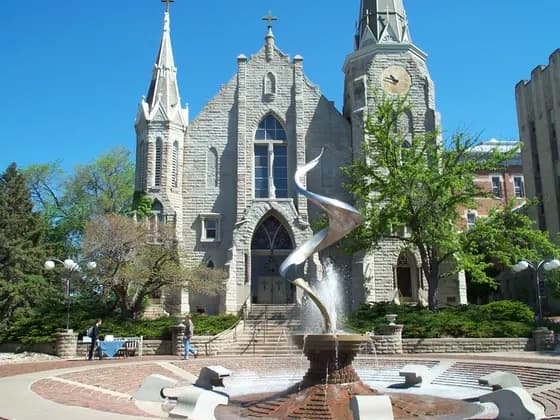
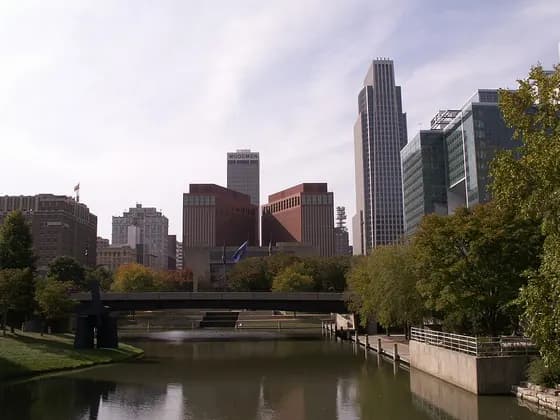
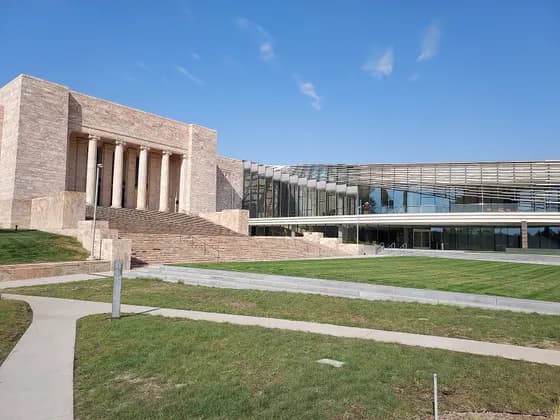
Photo: Bluejayscholar · CC BY-SA 3.0 · cropped
Photo: Troy Johnson from USA · CC BY 2.0 · Photo: Shannon Ramos from Swanton, Nebraska, U.S.A. · CC BY-SA 2.0 · Photo: Bubudu57 · CC0
How to get into Creighton University School of Medicine (MD) medicine
Step-by-step: entry requirements, admission tests, personal statement, interview format and the key deadlines.
Open the guide →Creighton University School of Medicine (MD) entry requirements
Admission profile, interview format, decision dates and what makes Creighton University School of Medicine (MD) different.
See the profile →The Creighton University School of Medicine (MD) medicine interview
Creighton University School of Medicine uses a traditional interview format with one-on-one sessions with a faculty physician and a medical student, each approximately 30–45 minutes. Like SLU, Creighton is a private Jesuit medical school, and its admissions culture is shaped by the Ignatian principle of cura personalis — care for the whole person.
Expect questions that probe the AAMC Premed Competencies, with emphasis on service orientation, values alignment with the Jesuit mission, and primary care commitment. Creighton’s 2021 Phoenix campus expansion at Valleywise Health adds a second interview pathway for applicants specifically interested in training at Arizona’s largest safety-net and trauma hospital.
With approximately 200 seats across two campuses and a national applicant pool, Creighton is competitive among private Jesuit medical schools. Interviewers look for candidates whose service history and values narrative are genuine rather than performed.
Creighton University School of Medicine (MD) interview at a glance (2027 entry)
| Annual MD class size | ~250 |
|---|---|
| Interview format | Traditional — faculty + student, ~30–45 min each |
| Application system | AMCAS + Creighton secondary |
| Interview window | October–February |
| Clinical training | CHI Health (CommonSpirit) — Omaha; Valleywise Health — Phoenix |
| Mission | Jesuit — cura personalis, service, global health |
Interview format
- Traditional one-on-one interviews: one faculty physician and one medical student in separate sessions.
- Sessions approximately 30–45 minutes; open-ended and conversational.
- Interviewers have read the full application in advance.
- Interview day at Omaha campus: CHI Health Creighton University Medical Center tour, admissions briefing, student Q&A.
- Phoenix campus interview day: Valleywise Health overview, Phoenix campus facilities, student panel.
- Jesuit mission alignment explicitly and implicitly assessed throughout.
Working towards the MCAT score Creighton University School of Medicine (MD) expects? Build a week-by-week plan from your test date — free for the first two weeks.
Sample interview questions
Creighton is a Jesuit institution guided by cura personalis — care for the whole person. Give me a specific example from your life that demonstrates this principle in action.
Concrete, specific personal story. The Jesuit screen is genuine — candidates who answer with abstract principles rather than lived experience are identified quickly.
Creighton opened a Phoenix campus in 2021 at Valleywise Health — Arizona's largest safety-net hospital. Are you applying for the Omaha or Phoenix track, and why?
Show genuine research into both campuses. If Phoenix: know Valleywise Health, Maricopa County's uninsured population, and the Arizona climate/immigration health context. If Omaha: know CHI Health and the Nebraska healthcare landscape.
Creighton is affiliated with CHI Health, a Catholic health system. If a patient requests emergency contraception after sexual assault and the hospital's policy prohibits it, what do you do?
This is a direct values-meets-institution question. Address emergency exception protocols, duty to refer (even in Catholic facilities for emergency conditions), patient rights, and your personal ethical position.
Phoenix, Arizona has significant numbers of undocumented immigrants who fear seeking medical care due to deportation concerns. As a physician at Valleywise Health, how do you approach their care?
Phoenix campus specific. Address confidentiality, EMTALA protections, the ethics of asking immigration status, and the physician's duty to care regardless of legal status.
Tell me about a time you served a community or individual in need in a sustained, long-term way — not just a one-off volunteer event.
STAR. The Jesuit screen looks for a practiced, habitual service ethic — not a volunteer resume compiled for applications. Longitudinal commitment is valued over aggregate hours.
Omaha has a significant Latinx immigrant population with distinct healthcare access challenges. What do you know about health disparities in the Omaha metro, and how should physicians respond?
Relevant for Omaha campus. South Omaha Latinx community, South O FQHC presence, language access barriers. Shows local knowledge beyond the medical school.
A patient from a deeply religious background refuses a blood transfusion for their 14-year-old child, citing faith. The child is critically ill. What do you do?
Parental rights vs. best interests of the child. Courts have consistently held that parents' religious objections do not override a child's right to life-saving care. Describe the legal and ethical pathway (court order, ethics consultation).
A medical student on their Phoenix rotation is treating a patient who speaks only Somali. The hospital has a Somali interpreter available by phone but the resident says "it takes too long, just use Google Translate." What do you do?
Patient safety and legal language access requirements. Google Translate is not acceptable for clinical communication. Stand firm on the professional interpreter requirement and explain why.
Creighton has strong global health traditions through its Jesuit international network. If you had the opportunity to pursue a global health elective, where would you go and what would you learn?
Shows Jesuit mission alignment and global curiosity. Have a specific destination and health challenge in mind (not just "Africa" or "a developing country" — be specific).
Should medical schools affiliated with religious institutions be permitted to limit the scope of care their students are trained to provide (e.g., abortion, contraception, MAT)? What are the implications for patients and physicians?
Directly relevant to Creighton's institutional context. Balanced answer: acknowledge scope limitation concerns for student training and patient access, and the religious freedom claims on the other side. This is a live debate — engage it thoughtfully.
Maricopa County, where Creighton's Phoenix campus sits, records dozens of heat-associated deaths every summer, concentrated among the unhoused, the elderly, and outdoor workers. How should the healthcare system respond to a climate-driven health threat like extreme heat?
Treat heat as a social and environmental determinant: identify at-risk groups, cooling-center and outreach strategies, ED surge planning, and medication risks (diuretics, antipsychotics) in heat. Phoenix-campus applicants especially should show local awareness.
Role play: you are a student at Valleywise Health. An undocumented patient needs follow-up imaging but is terrified that engaging further with the hospital will expose them to immigration enforcement. They are considering leaving against advice. Talk to them.
Lead with reassurance about confidentiality and that care is not contingent on immigration status, address EMTALA-protected emergency care, and connect to safety-net resources and sliding-scale options. Build trust before pushing the clinical plan.
Tell me about a time you sustained a commitment to a person or community over months or years, even when it was inconvenient or unrewarding. What kept you in it?
STAR. The Jesuit screen values longitudinal, habitual service over a tally of one-off events. Emphasize relationship, perseverance, and what the sustained commitment revealed about your values.
Creighton's mission is rooted in care for the whole person and social justice. In your view, what is the most significant gap between that ideal and the realities of the US healthcare system today, and where could a physician realistically make a difference?
Name a concrete gap (coverage, maldistribution, structural bias, cost) and argue it. Then ground the physician's role in something achievable — advocacy, community partnership, practice-location choices — rather than abstract aspiration.
You will train on either the Omaha or Phoenix campus, in very different communities and health systems. Walk me through how you decided which fits you, and what you would miss about the other.
Show genuine, researched reasoning for the chosen campus (CHI Health and south-Omaha Latinx community vs. Valleywise and Maricopa County safety-net) and self-awareness about the trade-off. 'Either is fine' reads as under-prepared.
Practise the Creighton University School of Medicine (MD) interview
Rehearse the real format before the day — on demand with our AI interviewers, or live with a tutor.
Sit a mock with photoreal AI interviewers — any time
A timed MMI or panel interview on video — American & international voices — with interviewers who listen, react and press with follow-ups. Rubric-scored feedback and a replay the moment you finish.






Live mocks with a tutor who’s been in the room
A full Creighton University School of Medicine (MD)-style mock with a medic or dentist tutor — honest scoring against real marking criteria, a station-by-station debrief and a written action plan.
Book a mock interviewHow to prepare for the Creighton University School of Medicine (MD) interview
Common pitfalls to avoid
Creighton University School of Medicine (MD) interview — frequently asked questions
Sources & official admissions information
Ready to nail your Creighton University School of Medicine (MD) interview?
Book a mock interview with a tutor who knows the US interview formats, orpractice unlimited stations from our interview question bank.