
The WMed MD program
What you actually study, and where you will be
WMed's MD is a 4-year program taught through team-based learning in an integrated curriculum, with patient contact from Year 1 and clinical rotations in Kalamazoo, St. Joseph, Southwest Michigan and Northern Indiana (2027 entry). WMed's MD opens with about 18 months of Foundations of Medicine: 12 integrated courses built around the body's functions and organ systems, with weekly team-based learning, labs and clinical skills. Clinical Applications starts in January of year 2 with Step 1 study, then six core clerkships in Kalamazoo or at the Corewell Health Lakeland regional campus in St. Joseph. Advanced clerkships and 20 weeks of electives follow.
- Degree
- MD
- Length
- 4 years
- Teaching
- Integrated + Team-based learning
- Clinical contact
- Year 1

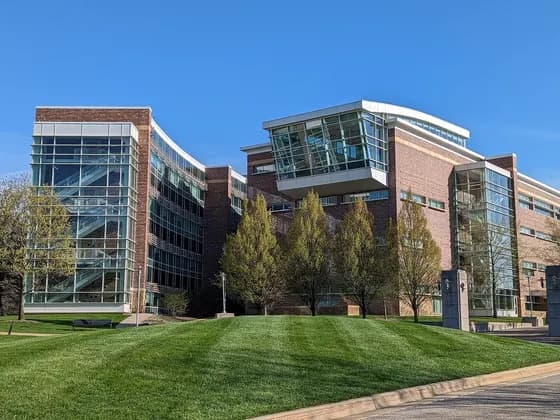
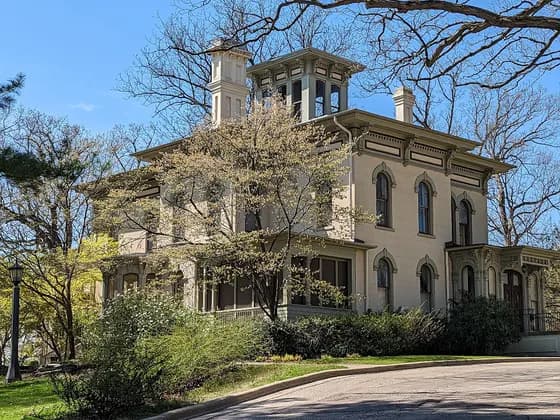
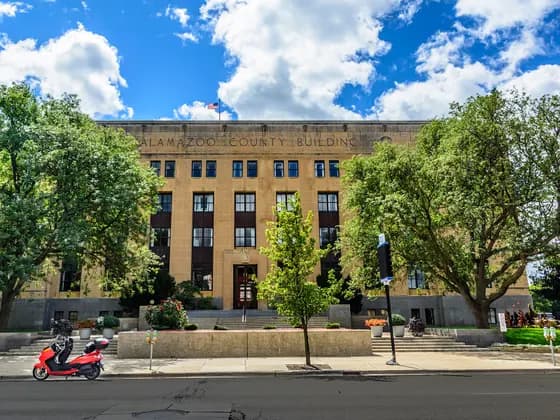
Photo: MSwierenga · CC BY-SA 4.0 · cropped
Photo: MSwierenga · CC BY-SA 4.0 · Photo: MSwierenga · CC BY-SA 4.0 · Photo: Charles W. Chapman · CC BY-SA 4.0
The WMed MD program at a glance (2027 entry)
Western Michigan University Homer Stryker M.D. School of Medicine, known as WMed, runs a four-year Doctor of Medicine (MD) program in Kalamazoo, Michigan. It enrolls 86 students a year, and the Class of 2031 starts on June 28, 2027. The program runs continuously, eight terms over about 45 months, with vacation weeks spread through each year.
Foundations of Medicine is the pre-clerkship phase, the roughly 18 months before full-time clinical training, spent mostly at the downtown W.E. Upjohn M.D. Campus. Its 12 biomedical courses follow the body's functions and organ systems, anchored to clinical cases. Alongside them you practice clinical skills with standardized patients, people trained to portray patients, and work through cases in team-based learning (TBL) sessions.
Clinical Applications begins in January of year 2, and its core clinical phase runs in seven blocks. The first is seven weeks of study for Step 1 of the United States Medical Licensing Examination (USMLE), the first of the national licensing exams. The other six are core clerkships, the main clinical rotations in specialties such as medicine and surgery. On the current calendar they start in early March 2029.
WMed is a private nonprofit corporation, formally affiliated with Western Michigan University (WMU) but governed separately. WMU and Kalamazoo's two health systems, Borgess (now part of Beacon Health System) and Bronson Healthcare, created it. In a September 2026 interview the dean said it was founded in 2011. The Liaison Committee on Medical Education (LCME), which accredits MD programs in the United States, has granted it full accreditation, and the LCME's directory lists its next accreditation survey for 2030-31.
A $100 million gift announced on March 22, 2011 funded its start. WMed says it was then the largest gift ever made to a Michigan college or university. The donors were Ronda Stryker and her husband, William Johnston. At their wish the school was named in 2014 for her grandfather, Dr. Homer H. Stryker, a WMU alumnus who founded Stryker Corporation. The first class of 54 students arrived that August, and a $300 million gift commitment followed in 2021.
| Degree and length | MD, four years: eight terms over about 45 months |
|---|---|
| Class size | 86 students a year |
| Curriculum | Foundations of Medicine (about 18 months), then Clinical Applications |
| Teaching style | Integrated organ-system courses with weekly TBL, lectures, labs and Clinical Skills |
| Anatomy | Prosected cadavers, student dissection, plasticized specimens, virtual dissectors and models |
| First patient contact | Standardized patients in your first weeks; clinical sites from early in year 1 |
| Clinical bases | Kalamazoo campus or Corewell Health Lakeland regional campus, St. Joseph |
| Grading | Pass/fail in Foundations; honors, high pass, pass or fail in core clerkships |
| Step 1 timing | After Foundations; around February 2029 for June 2027 entrants |
| Accreditation | LCME full accreditation; next survey in 2030-31 |
What makes the WMed MD program different
First responder training in your first two months
Two one-week Medical First Responder courses run in July and August of year 1. Their instruction meets the requirements of the Michigan Department of Health and Human Services and the National Registry of Emergency Medical Technicians. You learn patient assessment, simple emergencies and basic cardiac life support. On the capstone day your team handles simulated emergencies, including a mass-casualty exercise with standardized patients.
Simulation in every year, from your first weeks
Simulation starts in your first few weeks and runs through all four years, and WMed says its curriculum includes more than 100 hours of it. You practice procedures, team scenarios on high-fidelity manikins and standardized patient encounters in a center accredited by the Society for Simulation in Healthcare.
An ethics and advocacy thread through all four years
Meaning in Medicine, four online courses in years 1 and 2, asks what counts as disease and examines health disparities, social justice and health equity. In the clinical years Support and Policy turns this into advocacy for patients, within institutions and through policymaking. The year 4 Capstone ends with mock malpractice and professional misconduct hearings prepared with the local legal community.
Up to two of nine Academic Distinction Programs
Optional distinctions cover basic research, clinical or translational research, clinical informatics, patient safety and quality improvement, global and public health, interprofessional community health, medical ethics, humanities and law, medical education, and well-being in medicine. You can take up to two, and each includes scholarship such as a publication or a project.
Nutrition and lifestyle medicine through all four years
Nutrition teaching starts in your first week and runs through the program, from dietary guidelines and food labels to food security and dietary treatment of diabetes and hypertension. The pre-clinical phase includes teaching kitchen sessions with Kalamazoo Valley Community College. From the graduating class of 2030, the Well-Being in Medicine distinction adds a Lifestyle Medicine Concentration.
How WMed teaches medicine
WMed calls its curriculum systems-based and integrated: the basic and clinical sciences are taught together throughout all four years. It is organized as a spiral, so each new course or activity builds on earlier ones. Disciplines from anatomy, biochemistry and physiology to nutrition, ethics and health systems science are embedded across courses and clerkships, returning in different phases.
The 12 Foundations courses take you from normal processes to disease and treatment, one body system or function at a time, and basic science and clinical faculty design and teach them together. Four longitudinal courses run alongside each term. Clinical Skills is one; Principles of Medicine covers health systems science, ethics, law, patient safety, research design and epidemiology; Engagement and Discovery is service learning; and Meaning in Medicine explores health equity.
After the Step 1 block, the teaching moves into clinical settings. Each core clerkship block opens with simulation and standardized patient preparation and closes with capstone experiences and assessments. In the advanced phase you take more responsibility for patients, and Transition to Residency ends the program with training for your chosen specialty.
The ways you will learn
| Lectures and active learning | Basic science and clinical faculty share the teaching, with an integrative active learning session every Friday. Lectures are live-streamed and recorded. |
|---|---|
| Team-based learning (TBL) | You prepare from the week's coursework and reading, take an individual readiness test, then answer the same questions with your team of about six. Faculty review the answers and lead exercises on realistic clinical scenarios. |
| Clinical Skills | Clinical Skills Educators coach you in communication, history taking, physical examination, teamwork and simple procedures, with standardized patients and high-fidelity simulators. You are tested in OSCEs, objective structured clinical examinations, where you move through timed stations, each testing a clinical task. |
| Simulation | Sessions range from practicing procedures to full team scenarios on high-fidelity patient simulators; in Cardiovascular System, for example, you manage shock and bradycardia. Advanced cardiac life support (ACLS) certification opens your advanced clerkships. |
| Independent learning modules | Required online modules of videos, diagrams, articles, e-textbooks and quizzes let you choose when you study and give you material to review. |
| Clinical teams | The curriculum has you learn alongside residents and professionals in nursing, therapy, nutrition and social work. WMed has more than 250 residents and fellows in 10 residency programs and five fellowships. In September 2026 the dean said most physicians who teach are community doctors at Beacon, Bronson or private practices, most of them volunteers. |
A typical week on the WMed program
A Foundations week, as WMed outlines it, has four half-days of lecture and active learning, including the Friday integrative session, and on average one TBL session. An anatomy, histology and pathology lab takes about half a day, and Clinical Skills is scheduled for four hours.
Each week also carries several required independent learning modules, which you fit in when it suits you. Some time is left unscheduled every week for individual or group study, student interest groups or the on-site fitness center, which students use free.
How anatomy is taught at WMed
Gross anatomy is taught longitudinally: you study each region as its organ system comes up, in labs held about once a week for half a day. Each lab ties gross anatomy, microscopic anatomy and pathology to the course you are in, and microscopic anatomy and pathology are taught with virtual microscopy. Anatomy exams count toward your Foundations grades.
WMed uses a mix of materials: prosected cadavers, student dissection, plasticized specimens, virtual dissectors and models. Prosected cadavers have already been dissected by experts to display the structures. Human dissection is an integral part of Musculoskeletal System, the five-week course that opens the second half of year 1. In that course you also teach your classmates. WMed runs its own Body Donation Program, which says most donated bodies are used to teach medical students.
Two electives add more. Advanced Anatomy Dissection is a one-week early elective, taken before clerkships, that needs prior approval. At 20 to 30 hours a week, you dissect a designated body region and present a clinical case study built on it. Enhanced Musculoskeletal Anatomy, a year 4 elective for students drawn to orthopaedic surgery, revisits limb anatomy with anatomy and orthopaedic faculty, including dissection and practicing surgical approaches on cadavers.
When you first meet patients at WMed
Your first patients are simulated. Simulation begins in your first few weeks, and Clinical Skills puts you with standardized patients from year 1. Clinical Skills 1 builds your interviewing using the Calgary-Cambridge model, a framework for structuring a medical consultation. Clinical Skills 2 adds the comprehensive core physical exam, with heart examination practiced on standardized patients and simulators to learn abnormal heart sounds.
Real clinical settings come early too. WMed says the curriculum takes you to clinical sites from early in year 1. Most are within a couple of miles of the downtown campus, including WMed Health clinics, Beacon Kalamazoo, Bronson Methodist Hospital and Senior Care Partners, which provides all-inclusive care for older people. Some students have occasional experiences farther out, at Bronson Battle Creek, Bronson LakeView in Paw Paw or Beacon Plainwell.
In Engagement and Discovery, your team works with a community organization that serves the health and well-being of Kalamazoo County residents, and may design a project for it. In the fall of year 2, Clinical Skills 3 adds inpatient experiences, written histories and physicals with a problem list, and oral presentations.
The WMed curriculum, year by year
- Year 1
Foundations: groundwork and the first organ systems
You start on June 28, 2027 with Transition to Medical School, then alternate two one-week Medical First Responder courses with two four-week Fundamentals of Biomedical Sciences courses. Courses of four to six weeks follow, mostly with a vacation week between them and three weeks off in winter. A term final closes the year in late June 2028.
- Transition to Medical School: wellness, leadership, teamwork, health equity, study strategies and support services.
- Fundamentals of Biomedical Sciences 1 and 2: cells, nutrition and energy metabolism, and the genetic basis of disease, plus introductions to lifestyle medicine, pharmacology, epidemiology and biostatistics.
- Fall: Immunology and Infectious Diseases, then Hematology and Oncology.
- From January 2028: Musculoskeletal System, Nervous System, Cardiovascular System and Pulmonary System.
- All year: Clinical Skills, Principles of Medicine, Engagement and Discovery, and Meaning in Medicine.
- Year 2
Last Foundations courses, Step 1 study and first clerkships
Foundations ends in December 2028 with four more courses, while Clinical Skills 3 prepares you for the wards. Term 2 starts on January 2, 2029 with Clinical Reasoning 1, a seven-week Step 1 course, and on the current calendar your first core clerkship rotation begins on March 5, 2029.
- Renal and Genitourinary Systems, Gastrointestinal System, Endocrine and Reproductive Systems, and Behavioral Medicine, on common psychiatric disorders and their treatment.
- Clinical Skills 3: advanced communication, such as negotiating a treatment plan, inpatient experiences and written histories and physicals, ending in a comprehensive final OSCE.
- Clinical Reasoning 1: with the course director you plan 50 or more hours of study a week, using question banks and review resources.
- Transition to Clinical Applications is a one-week course. It opens with the CBSE, a comprehensive exam on Foundations content from the National Board of Medical Examiners (NBME), which co-sponsors the USMLE. Simulation, workshops and basic life support recertification follow.
- Core Clerkship Rotations 1 and 2 run from March 5 to June 1, 2029.
- Year 3
Core clerkships, then into the advanced phase
Rotation blocks 3 to 6 run from June 11 to December 14, 2029, completing the six core clerkships. Two four-week courses and a transition week follow in early 2030. From March you are in the advanced phase, with elective or flexible weeks and two vacation weeks to place between March 4 and April 26.
- Core clerkships: Family and Community Medicine, Obstetrics and Gynecology, Pediatric and Adolescent Medicine and Psychiatry, six weeks each; Medicine and Surgery, seven weeks each.
- Medicine includes hospitalist medicine and night shifts. Surgery includes operating rooms, the surgical trauma intensive care unit and on-call shifts. Pediatrics includes newborn care, and Psychiatry includes community mental health settings. In Family and Community Medicine you spend the clinical weeks in one office.
- Health Systems Science, taught virtually: how health systems work and the roles physicians play in them.
- Clinical Reasoning 2: preparation for Step 2 CK, the licensing exam on clinical knowledge, with weekly advanced communication sessions and otherwise independent study.
- Transition to Advanced Clinical Management: fourth-year expectations, care of critically ill patients and dedicated Step 2 CK study time.
- Year 4
Advanced clerkships, electives and Transition to Residency
From late April 2030 you complete the required advanced clerkships, which must come before the Capstone, along with electives and flexible weeks for residency interviews. In March 2031 all students are in Kalamazoo for the Capstone and for Match Week, when graduating students learn where they will train in residency. Graduation is on May 8, 2031.
- Required advanced clerkships: Advanced Emergency Medicine, Advanced Critical Care and Advanced Hospital Medicine, four weeks each, plus Advanced Neurology (two weeks) and Advanced Anesthesiology (one week).
- On advanced hospital rotations you care for one or two patients at a time, write orders, hand over patients and help teach third-year students.
- In the catalog's four-week critical care rotations, in medicine, neurology, pediatrics, neonatal care or trauma surgery, you function as a sub-intern, taking on much of an intern's work alongside interns and residents.
- Capstone: ethics, health law, professionalism and the humanities, with nursing, social work and law students.
- Transition to Residency: procedures and topics for your chosen specialty, through cases, role play and simulation, in March and again before graduation.
How you are assessed at WMed
Every Foundations of Medicine course is graded pass/fail, on multiple-choice exams, anatomy exams, standardized patient exams, simulation-based testing and professionalism. Each course ends with a summative exam, preceded by capstone review sessions with faculty. Weekly formative exams give you feedback as you go but do not count toward grades. OSCEs run within the Clinical Skills courses, and Clinical Skills 3 ends with a comprehensive one. Standardized patients may fill in a checklist on each encounter and give feedback on your communication, but WMed says they do not decide whether you pass.
The six core clerkships are graded honors, high pass, pass or fail, on multiple-choice exams, standardized patient exams, clinical faculty evaluations and professionalism. The obstetrics and gynecology clerkship builds to the NBME shelf exam, a national multiple-choice test in the specialty. Family and Community Medicine opens with a formative exam to guide your study, and Surgery includes bioskills assessments. In the 2026-27 catalog most fourth-year courses are pass/fail, but Advanced Emergency Medicine and Advanced Orthopaedic Surgery use the four-level scale.
Professionalism is assessed throughout in a Professional Development strand, and commendations can go into your Medical Student Performance Evaluation (MSPE), the dean's letter sent with residency applications. To graduate you must show all 58 competencies in WMed's eight domains, earn 182 credits and be signed off on all 13 Core Entrustable Professional Activities. These are tasks a new resident must be trusted to do without direct supervision, such as taking a patient's history and examining them, or entering orders and prescriptions. You must also pass Step 1 and Step 2 CK.
USMLE Step 1 tests the science behind medicine and has been reported only as pass or fail since January 26, 2022; Step 2 CK still has a three-digit score. LCME accreditation is what makes students in MD programs like this one eligible to sit both; DO students and international medical students and graduates qualify by other routes. You take Step 1 after Foundations, once you meet a competency standard on an NBME practice exam, the CBSSA self-assessment or the CBSE. You need the same standard to start the core clerkships.
In August 2026 the USMLE program announced a move to designated testing dates from January 2029, with Step exams offered less often each year. Its June 2026 announcement had named 2028. On the current schedule, a student starting in June 2027 takes Clinical Reasoning 1 from January 2 to about mid-February 2029. Step 1 would then come around mid-to-late February 2029, shortly after the switch.
On the current schedule, Step 2 CK preparation runs from late January to the start of March 2030. You would sit it from about March 2030, under the new model, on whichever dates the USMLE designates. Both sittings are projections from WMed's calendar, not published test dates.
WMed clinical rotations: where you will actually train
For the clinical phase, students are assigned to the Kalamazoo campus or the Corewell Health Lakeland regional campus in St. Joseph, 48 miles away. Rotations run across Southwest Michigan and Northern Indiana at more than 190 training sites of WMed's major affiliates: Beacon Health System, Bronson Healthcare and Corewell Lakeland. You need reliable transportation throughout the program.
In Kalamazoo the teaching hospitals are Bronson Methodist Hospital, the tertiary care flagship of Bronson Healthcare, and Beacon Kalamazoo, which Beacon Health System describes as a 422-bed acute care hospital. Tertiary care means specialist treatment, often for patients referred by other doctors and hospitals. Beacon Kalamazoo was Ascension Borgess until Beacon's acquisition took effect on July 1, 2025, and some WMed pages still use the Borgess name. Bronson Children's Hospital hosts advanced pediatric rotations, including its pediatric intensive care unit.
WMed Health, the school's own practice, runs five primary care and more than 20 specialty practices and is a medical home for historically underserved and underinsured patients. Pediatric clerkship students may do their outpatient time at its General Pediatric Clinic. Other affiliates include Grace Health, the Battle Creek VA Medical Center, Goshen Health, Kalamazoo Psychiatric Hospital and Pokagon Health Services.
The St. Joseph regional campus grew out of a partnership signed in August 2024, under which the first cohort was scheduled to begin rotations in March 2025. Students based there can complete all core and advanced rotations at Corewell Health Lakeland's hospitals in St. Joseph, Niles and Watervliet, which also train emergency, family and internal medicine residents. Corewell says most rotations there have no residents on service, giving students one-on-one time with preceptors.
Corewell also lists an accredited simulation center, a meal allowance and free parking. Students can live at Lookout Point in St. Joseph, resident and student housing two miles from downtown with views of Lake Michigan. Students from Michigan State University's College of Osteopathic Medicine also rotate at Corewell's Southwest Michigan hospitals.
Home of the downtown campus and the Kalamazoo clinical base.
- Bronson Methodist Hospital
- Bronson Children's Hospital
- Beacon Kalamazoo (formerly Ascension Borgess)
- WMed Health clinics, Oakland Drive Campus and Crosstown Parkway
- Kalamazoo Psychiatric Hospital
- Senior Care Partners P.A.C.E.
The regional campus, where assigned students can complete all core and advanced rotations.
- Corewell Health Lakeland Hospitals St. Joseph Hospital
- Corewell Health Lakeland Hospitals Niles Hospital
- Corewell Health Watervliet Hospital
Hospitals of the Bronson and Beacon systems and other affiliates.
- Bronson Battle Creek
- Battle Creek VA Medical Center
- Grace Health, Battle Creek
- Bronson LakeView, Paw Paw
- Bronson South Haven
- Beacon Plainwell
- Beacon Allegan
- Beacon Dowagiac
- Three Rivers Hospital
Beacon Health System's Indiana hospitals.
- Memorial Hospital of South Bend
- Beacon Children's Hospital
- Elkhart General Hospital
- Beacon Granger Hospital
- Community Hospital of Bremen
- Epworth Hospital
Electives, selectives and away rotations at WMed
One-week breaks spread through Foundations and the core clinical phase can be used for vacation, electives or catching up. Early electives depend on faculty availability, are assigned by lottery, and some are required for an Academic Distinction. Catalog options include Emergency Medicine Introduction, with three eight-hour emergency department shifts, and Forensic Pathology Introduction, five days in a medical examiner's office. Others cover the history of medicine and mind-body medicine.
The advanced phase requires 20 weeks of advanced electives. It also gives you 13 weeks of flexible time, which covers residency interviews, and nine weeks of vacation to build into your schedule. The 2026-27 catalog lists 153 advanced courses and electives. They range from cardiology, palliative care and point-of-care ultrasound to street medicine, emergency medical services in Yellowstone National Park and serving as medical officer at Pretty Lake Camp.
Some rotations are sub-internships: Advanced Hospital Family Medicine at Bronson Methodist Hospital can be taken as a required sub-internship or as an elective. Faculty select Student Chiefs, who orient and support students starting a core clerkship. After your first core clerkship you can also earn up to 8 credits of independent study with a faculty supervisor.
Away rotations, electives taken at another institution, are optional. You can spend up to 12 weeks of fourth-year electives at sites not affiliated with WMed, such as other LCME-accredited schools, with at most six weeks at sites without LCME accreditation. Each needs the associate dean's prior approval and is graded pass/fail.
Global health electives that are run with WMed faculty take students to the Peruvian Amazon, to Palawan and Manila in the Philippines, and to JFK Memorial Medical Center in Monrovia, Liberia. Study programs run with the University of Minho in Braga, Portugal, and Seoul National University in South Korea. Among the early electives, one takes you to India for a project with a rural health institute, and a Puerto Rico health equity course offers an optional San Juan trip, with limited places.
Dual degrees and research years at WMed
A dual degree adds a second qualification to the MD. WMed's MD-PhD runs with the Van Andel Institute Graduate School in Grand Rapids, an eight-year program with a PhD in Cellular and Molecular Biology, or with Western Michigan University, which awards the PhD itself. Either way you complete the preclinical curriculum, then the PhD, which typically takes about four years, and return for the clinical curriculum.
The five-year MD-MBA runs with WMU's Haworth College of Business. The recommended plan is three years of medicine, a 12-month fourth year of eight MBA courses (24 credits), then a final year at WMed. Twelve credits of MD coursework count toward the MBA. You can apply with your WMed application or after you start, and you need only the MCAT.
The course catalog also names a 3 Year Accelerated Doctor of Medicine degree and a Doctor of Medicine to Master of Science in Biomedical Sciences pathway among WMed's degree programs.
Each Academic Distinction Program involves about 30 to 40 hours of curriculum, such as electives and co-curricular work. It also includes scholarship: a publication, a curriculum or quality improvement project, or a project linked to an international trip. You can join at any stage while in good academic standing, and completed distinctions are noted in your MSPE.
The research distinctions set clear targets. Basic Research asks for at least 200 hours in a full-time investigator's lab, mostly in years 1 and 2. It also asks for a four-week lab elective in year 4 and a draft manuscript or grant application. Clinical or Translational Research takes up to 15 students a year. It asks for at least 300 mentored hours, a protocol submitted to the Institutional Review Board (IRB), which approves research on people, and a first-author presentation at WMed Research Day.
Outside the distinctions, departments from anesthesiology to surgery offer research electives of 4 to 8 credits. Through the Pilot Research Project Support Program, students work on projects that could attract outside funding. Students present at the annual Kalamazoo Community Medical and Health Sciences Research Day in April. WMed counts 72 peer-reviewed articles by 47 student authors from the Class of 2026.
Facilities and support at WMed
Where you will learn
You spend most of your first 18 months at the W.E. Upjohn M.D. Campus, an eight-story building at 300 Portage Street in downtown Kalamazoo. Five of its eight floors were renovated for $68 million in 2014, and two more were renovated for clinical and laboratory research in 2016. Inside are two team-based learning halls, six classrooms, 27 small-group rooms, gross anatomy, multipurpose and procedure labs, an auditorium, the learning commons and medical library, research labs and a fitness center.
The Simulation Center covers more than 24,000 square feet. It includes a 13-bed virtual hospital with a large operating room and three debriefing rooms, a 12-room ambulatory clinic, two procedure labs, an ultrasonography suite and a virtual endoscopic surgery room. It is accredited for teaching by the Society for Simulation in Healthcare and is an American Heart Association training center for basic, advanced cardiac and pediatric life support.
William U. Parfet, great-grandson of W.E. Upjohn, donated the 350,000-square-foot building to WMU in December 2011. WMed says it once housed the Upjohn research facility where drugs such as Motrin, Xanax and Rogaine were discovered. WMed Health's clinics fill a 60,000-square-foot building on the Oakland Drive Campus, 1.3 miles away. Some researchers work at the Innovation Center on the Parkview Campus, about 5 miles from downtown.
Support while you study
In your first year you are assigned to one of four learning communities, and you stay in it for all four years. The communities connect students with advisors for mentoring, advising and career counseling. They are named for physicians Virginia Apgar, Elizabeth Blackwell, Harvey Cushing and Charles Drew. Each year they compete for the College Cup in the Learning Community Olympics, with challenges such as trivia and a scavenger hunt.
Your academic advisor, assigned by learning community, is your first point of contact, with mandatory check-ins twice a year on progress, study strategies, USMLE preparation and wellness. A learning skills specialist helps with study plans and tutoring. Career development advisors work with you from Foundations, with required meetings in all four years. Near the middle of year 2 you are matched with a mentor, usually a physician in the specialty you are considering.
Free, confidential counseling for school-related problems such as anxiety comes from independent licensed counselors, and WMed pays for up to six sessions. The Wellness Initiative, launched in 2019, brings wellness topics into the transition courses and offers electives such as Mind-Body Medicine. Student interest groups, the student council and medical school committees give you ways to get involved.
Is the WMed program right for you?
This program may suit you if
- You want early, hands-on training: Medical First Responder weeks in your first two months and simulation in every year.
- You learn well in teams and like weekly accountability: a TBL readiness test most weeks, taken alone and then with your team.
- You want clerkships to start in year 2, leaving a long advanced phase for electives, flexible time and residency interviews.
- You would like recognized depth in research, ethics, informatics, global health or another interest through up to two Academic Distinction Programs.
- You are interested in nutrition and lifestyle medicine, which run through all four years, with teaching kitchen sessions.
Things to think about
- You need a car: reliable transportation is required in all four years, and some clinical experiences are outside Kalamazoo.
- For the clinical phase you are assigned to Kalamazoo or the St. Joseph regional campus, 48 miles away, so you could be based away from the main campus.
- Attendance is required at most curriculum events, such as TBL sessions and clinical experiences, even though lectures are recorded.
- The program runs year-round: year 1 starts in late June and year 2 in early July, with vacation weeks spread through the year.
- On the current calendar, 2027 entrants would sit Step 1 around February 2029, shortly after the USMLE moves to designated testing dates.
WMed MD program — frequently asked questions
Applying to WMed?
How to get into WMed
Prerequisites, MCAT, AMCAS personal statement, secondaries and interview, step by step.
Open the guide →WMed admissions profile
MCAT and GPA profile, acceptance rate, interview format and key dates.
See the profile →Compare WMed with other schools
Put the teaching style, anatomy teaching and clinical sites next to another school.
Open the comparison →Prepare for the WMed interview
Format breakdown, school-specific sample questions and prep tips from tutors who interviewed here.
Read the guide →Where this WMed program guide came from
This guide was written from 50 official sources — Western Michigan University Homer Stryker M.D. School of Medicine's own program pages and curriculum documents, plus the accreditor and the hospitals and health systems the school trains students in where they publish detail — read on 2026-10-25, then checked claim by claim against those sources.
- WMed: MD Program
- WMed: MD Curriculum
- WMed: Foundations of Medicine
- WMed: Clinical Applications
- WMed: Curriculum Calendar for the class starting June 2027 (updated August 27, 2026)
- WMed Course Catalog: home page and degree programs
- WMed Course Catalog: Pre-Clerkship Phase 1, Class of 2030 courses
- WMed Course Catalog: Pre-Clerkship Phase 1, Class of 2029 courses (Professional Development)
- WMed Course Catalog: Phase 2 courses and core clerkships, Class of 2028
- WMed Course Catalog: Phase 3 advanced courses and electives, 2026-27
- WMed Course Catalog: Pre-Clerkship Phase 1 elective courses
- WMed: FAQs (curriculum, grading, class size, transportation)
- WMed: Application Process (first day for the Class of 2031)
- WMed: Academic Distinction Programs
- WMed: Student Research Activities
- WMed: MD-PhD Program
- WMed: MD-MBA Program
- WMed: MD-MBA Curriculum
- WMed: Simulation Center
- WMed: Standardized Patient Program
- WMed: Campus and Safety Information
- WMed: Affiliates
- WMed news, October 28, 2024: Corewell Health Lakeland regional campus partnership
- Corewell Health Lakeland Graduate Medical Education: WMed students
- Beacon Health System, July 1, 2025: acquisition of Ascension Southwest Michigan completed
- WMed: Learning Communities and Mentorships
- WMed: Student Services
- WMed: Wellness
- WMed: Global Engagement Opportunities
- WMed: Medical Nutrition Education
- WMed: Domains of Competency
- WMed Registrar: Credits
- WMed: Student Achievement (updated October 13, 2026)
- WMed: Our History
- WMed: Accreditation
- WMed: Board of Directors
- WMed: From the Dean
- WMed news, September 29, 2026: Dean J. Adrian Tyndall Q&A
- WMed news, September 23, 2026: the Class of 2030 arrives
- Western Michigan University: Medicine (affiliation with WMed)
- WMed: Empowering Futures in Medical Education
- WMed: Body Donation Program
- WMed: Body Donation Program FAQs
- LCME: Accredited Programs directory (updated October 14, 2026)
- USMLE: Designated Testing Dates Information Hub (August 6, 2026 update)
- USMLE: Updated timeline, transition to designated testing dates in January 2029
- USMLE: June 23, 2026 announcement of limited testing dates, with August 2026 update
- USMLE: Designated Testing Dates FAQs (updated August 6, 2026)
- USMLE: Step 1 pass/fail score reporting implementation date
- USMLE Bulletin of Information: Eligibility for the USMLE Steps
Curricula are restructured between cycles. Anything here that decides your application — how anatomy is taught, a clinical campus assignment, a required research year — should be confirmed against the official page for your entry year.
Applying to WMed?
We help US applicants with MCAT strategy, the AMCAS personal statement, secondary essays and interview prep — everything you need for a competitive WMed application.