
The Oakland University William Beaumont School of Medicine MD program
What you actually study, and where you will be
Oakland University William Beaumont School of Medicine's MD is a 4-year program with an integrated curriculum, with patient contact from Year 1 and clinical rotations in Royal Oak, Troy and Grosse Pointe in southeast Michigan (2027 entry). Year 1 opens with cadaveric dissection and biomedical science. Organ-system courses then run into year 2, with clinical skills, ethics, health promotion, mentoring and the required Embark research project alongside. You meet standardized patients, people trained to portray patients, in your first semester, and real patients in physicians' offices in your second. Clerkships, the core clinical rotations, fill years 3 and 4 at three Corewell Health hospitals in Royal Oak, Troy and Grosse Pointe.
- Degree
- MD
- Length
- 4 years
- Teaching
- Integrated
- Clinical contact
- Year 1

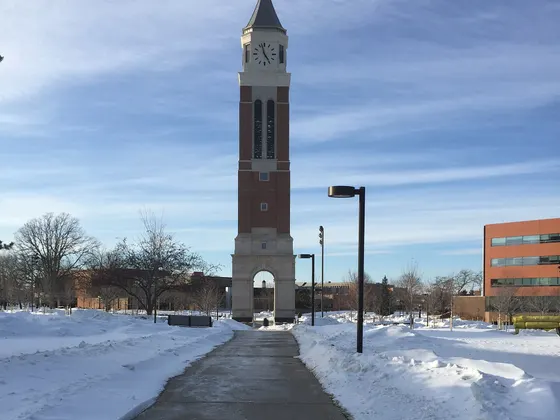
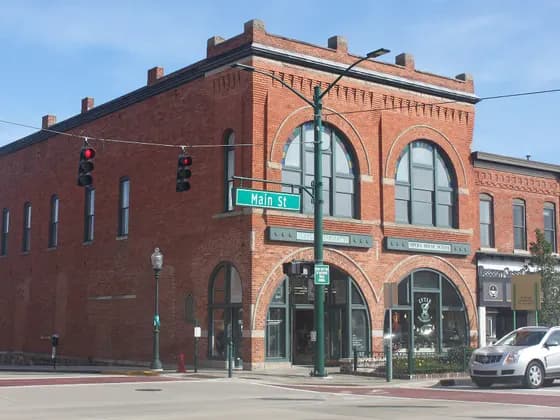
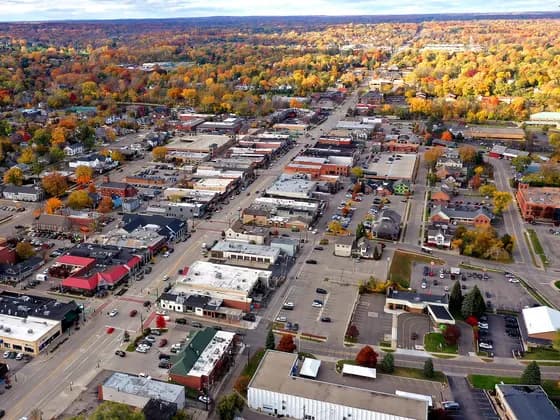
Photo: Kelocyde · CC BY-SA 4.0 · cropped
Photo: Local hero · CC BY-SA 4.0 · Photo: Darren56brown · CC BY-SA 4.0 · Photo: Lrgjr72 · CC BY-SA 4.0
The Oakland University William Beaumont School of Medicine MD program at a glance (2027 entry)
Oakland University William Beaumont School of Medicine (OUWB) runs a four-year Doctor of Medicine (MD) program from O'Dowd Hall on Oakland University's campus in Rochester, Michigan. The school is a partnership between Oakland University and Beaumont Health, now Corewell Health. OUWB describes itself as a privately funded medical school, although Oakland is one of Michigan's 15 public universities.
The admissions pages give a class size of 125 seats; the Class of 2030, the school's 16th, started in August 2026 with 124 students. The first class, 50 students, arrived in 2011. The Liaison Committee on Medical Education (LCME), which accredits MD programs in the United States, lists OUWB as fully accredited, with its next survey due in 2027-28.
The first two years form the pre-clerkship phase, which OUWB calls the preclinical curriculum. A semester of anatomy and biomedical science leads into organ-system courses that teach each body system's science and diseases together. Five longitudinal courses in clinical skills, ethics, health promotion, mentoring (PRISM) and research (Embark) run alongside.
Patient encounters start in the first semester with standardized patients and move to real patients in physicians' offices in the second. Years 3 and 4 are clerkships at Corewell Health hospitals in Royal Oak, Troy and Grosse Pointe. Corewell Health lists the Royal Oak hospital as a Level I adult trauma center, the top level, and a Level II pediatric one.
You take Step 1 of the United States Medical Licensing Examination (USMLE), the first national licensing exam, at the end of year 2, before clerkships begin. Year 4 adds emergency medicine, anesthesiology, diagnostic medicine, 16 weeks of electives and a sub-internship, a four-week rotation working at intern level under supervision.
| Degree and length | MD, four years full time, with a six-year maximum |
|---|---|
| Class size | 125 seats; the Class of 2030 started with 124 students |
| Main campus | O'Dowd Hall, Oakland University, Rochester, Michigan |
| Clinical partner | Corewell Health, formerly Beaumont Health; affiliation extended through 2041 |
| Teaching style | Organ-system courses plus longitudinal skills, ethics, mentoring and research courses |
| Anatomy | Cadaveric dissection in the first-semester anatomy courses (AFCP 1 and 2) |
| First patient contact | Standardized patients in semester 1; physicians' offices from semester 2 |
| Clinical sites | Corewell Health hospitals in Royal Oak, Troy and Grosse Pointe |
| Step 1 timing | End of year 2; must be taken before clerkships start |
| Grading | Honors, P1 (first-time pass), P2 (pass after retest) or Fail; quartile ranking for residency |
| Research and dual degree | Required four-year Embark project; optional five-year MD/MPH |
What makes the Oakland University William Beaumont School of Medicine MD program different
A required research project that runs all four years
Embark has you choose a mentor in year 1 and builds in protected research time, ending with a capstone poster that every student must present. The Class of 2026's projects led to 93 conference presentations and 20 journal publications.
A physician mentor group that meets every month
PRISM runs through all four years. Each month brings a session on one aspect of becoming a physician and a meeting of your small mentor group, led by a Corewell Health physician.
Cadaver dissection from the start of year 1
Anatomy fills the first semester, taught through lectures and dissection of donated bodies, with imaging alongside. In 2026, three students who had just finished year 1 dissected a donor as a reference for the incoming class and made video tutorials.
Standardized patients in semester 1, real patients in semester 2
Art and Practice of Medicine starts you with standardized patients in your first semester. In the second, Clinical Integration 1 sends you into physicians' offices to interview and examine real patients under supervision.
Medical humanities and ethics through three years
Medical Humanities and Clinical Bioethics runs from year 1 to year 3. In year 2 you choose two seven-week seminars, on topics such as narrative medicine, film and bioethics or medicine at the opera. In year 3 your small group discusses an ethics issue from each clerkship.
How Oakland University William Beaumont School of Medicine teaches medicine
OUWB describes its curriculum as vertically integrating the basic and clinical sciences. The organ-system courses that fill most of years 1 and 2 each combine one system's science with its diseases and treatment. Respiratory, for example, covers lung physiology and pathology, drug treatment, and how to run and read pulmonary function tests.
The first semester lays foundations. Biomedical Foundations of Clinical Practice (BFCP) 1 covers biochemistry, cell and molecular biology, genetics, nutrition, pharmacology and physiology, and BFCP 2 adds immunology, microbiology and pathology. These topics return in more depth in the system courses. Anatomy runs in parallel in Anatomical Foundations of Clinical Practice (AFCP) 1 and 2.
Five longitudinal courses run beside the system courses. Art and Practice of Medicine (APM) teaches clinical skills in years 1 and 2, and Medical Humanities and Clinical Bioethics (MHCB) runs through year 3. Promotion and Maintenance of Health (PMH) covers disease prevention, health promotion and population health in years 1 and 2, and PRISM and Embark last all four years.
Nutrition is threaded through all four years, and in 2024 OUWB gained a bronze curriculum certification from the American College of Lifestyle Medicine. In year 3, alongside clerkships, Interdisciplinary Studies 1 and 2 cover topics relevant across specialties through interactive lectures, small-group discussion and team-based learning.
The ways you will learn
| Team-based and case-based learning | You prepare before class, then work through problems as a team. The Hematopoietic and Lymphoid course combines them with lectures and lab exercises, as does Renal and Urinary. The year 2 clinical ethics course is built on team-based cases. |
|---|---|
| Dissection labs | AFCP 1 and 2 pair lectures with cadaveric dissection labs. |
| Standardized patient sessions | In APM, clinical faculty supervise your interviews and examinations of standardized patients at the Clinical Skills Training & Simulation Center. |
| Seminars and ethics small groups | MHCB uses seminars you choose in year 2 and small-group ethics discussions during year 3 clerkships. |
A typical week on the Oakland University William Beaumont School of Medicine program
A school policy last updated in 2020 shapes the pre-clerkship week. Scheduled teaching is capped at seven hours a day and an average of 24 hours a week over a semester. Required work outside class, such as set reading or team-based learning preparation, brings the average to no more than 30 hours a week, not counting your own study.
Teaching stays between 8 a.m. and 6 p.m., with a one- to two-hour midday break, and every five-day week has at least one unscheduled afternoon. PRISM's monthly sessions fall on Tuesday afternoons in years 1 and 2 and Friday afternoons in year 3, going by the commitments it asks of mentors.
In clerkships, a policy last updated in 2018 applies the duty-hour limits that the Accreditation Council for Graduate Medical Education (ACGME) sets for residents. You work at most 80 hours a week, averaged over four weeks, with one day in seven free. Shifts last no more than 24 hours, with at least eight hours off between them and no more than six night-float nights in a row.
Under an attendance policy updated in July 2026, planned absences are capped at three days in any year 3 or 4 rotation of four weeks or more, and extra days must be made up. In a four-week elective, those days can go to residency interviews or to sitting Step 2 CK, the second USMLE exam. Time off in one- and two-week rotations is discouraged.
How anatomy is taught at Oakland University William Beaumont School of Medicine
Anatomy is taught in AFCP 1 and 2, two nine-week courses that fill the first semester of year 1 alongside BFCP. AFCP 1 covers the back, upper limb, thorax and abdomen, and AFCP 2 the pelvis, perineum and lower limb, through integrated lectures and cadaveric dissection labs. Both apply the anatomy to clinical scenarios and introduce radiologic imaging.
AFCP also covers surface landmarks, embryology up to organ formation, and histology, the microscopic structure of tissues. Neuroanatomy comes in Neuroscience 1 and 2. You work with classmates on an assigned donor, and course objectives ask you to keep confidentiality, take part in donor care and handle specimens with dignity.
The lab, on the third floor of the Hannah Hall of Science, opened in 2013 and has more than 30 down-draft tables, each with a donor, plus a room for advanced dissection. In 2025-26 OUWB students worked with 22 donors, 20 from the University of Toledo and two from OUWB's own Body Donation Program. Oakland University's physical therapy program, which shares the lab, used 11 more.
In June 2026, three students who had just finished year 1 prosected a donor through the Clinical Anatomy Summer Internship, dissecting it in advance as a reference for the incoming class. They also recorded one-minute video tutorials on single structures. An annual Anatomy Memorial honors the donors; at the May 2026 ceremony, families of donors from OUWB's program attended for the first time.
When you first meet patients at Oakland University William Beaumont School of Medicine
APM 1 begins in your first semester at the Clinical Skills Training & Simulation Center. With clinical faculty supervising, you practice interviewing and taking a medical and social history with standardized patients. You also learn to take vital signs and to obtain consent for, and give, a flu vaccine.
APM 2 adds physical examination, system by system, and ends with an OSCE (Objective Structured Clinical Examination), a circuit of timed stations at which examiners score specific skills. In the second semester, Clinical Integration 1 places you in physicians' offices and multidisciplinary settings to interview and examine patients, present a verbal summary and write a brief progress note.
Clinical Integration 2 continues in the first semester of year 2. APM 3 and 4 add bedside case presentations and clinical reasoning. APM 5, the last course before clerkships, covers hospital and clinic routines, records, patient safety, life support, leading a resuscitation team and breaking bad news. APM also includes teaching a Michigan Model for Health lesson at a local elementary school.
In the fall of year 1 you can apply for paid internships at Corewell Health hospitals in Royal Oak and Troy, held in the June after year 1. In 2026 nearly 40 students took part, from about 200 applications.
The Oakland University William Beaumont School of Medicine curriculum, year by year
- Year 1
Anatomy, foundations and the first organ systems
Year 1 starts in early August with orientation week, which ends with the White Coat Ceremony. On the 2026-27 calendar, classes run from August 10 to May 28, with retest exams in early June.
- Semester 1: AFCP 1 and 2 (anatomy) alongside BFCP 1 and 2 (biomedical science), nine weeks each.
- Semester 2: Hematopoietic and Lymphoid (5 weeks, including basic oncology), Neuroscience 1 (3 weeks), Cardiovascular (6 weeks) and Respiratory (5 weeks).
- APM 1 and 2, ending with an OSCE, and Clinical Integration 1 in physicians' offices.
- MHCB 1 and 2: the history and theory of bioethics, a framework for clinical decisions, then justice, public health and ethics across specialties. The Class of 2030's first session, on August 13, 2026, covered medicine in the Holocaust.
- Embark 1 and 2: research design, information literacy and human-subjects compliance training, then choosing a mentor and getting your project proposal approved.
- Optional in June: internships at Corewell Health hospitals, the Clinical Anatomy Summer Internship, community internships through Compass, or Oakland University's three-week Public Health in Ghana program (June 4 to 27 in 2026).
- Year 2
More organ systems, then Step 1
Year 2 runs from early August to late June. After the organ-system courses, it closes with USMLE review, Embark research and APM 5, the last course before clerkships, and you sit Step 1 before APM 5 begins.
- Semester 1: Renal and Urinary (5 weeks), Gastroenterology and Hepatology (5 weeks), Endocrinology (3 weeks) and Male and Female Reproductive (5 weeks), plus Clinical Integration 2.
- Semester 2: Neuroscience 2 (3 weeks); Musculoskeletal, Connective Tissue and Skin (5 weeks); Behavioral Medicine and Psychopathology (4 weeks); and Integrative Evidence Based Medicine (2 weeks).
- APM 3 and 4, with standardized patients, bedside presentations and an OSCE at the end of APM 4.
- MHCB 3 and 4: two seven-week seminars of your choice, such as disability studies, pediatric ethics or narrative medicine, then team-based cases on decision-making capacity and surrogate decision-makers.
- Embark 3 and 4: data visualization, abstract writing and an oral progress presentation with peer feedback.
- End of year: USMLE Review (6 weeks), Embark 5 (3 weeks), APM 5 (3 weeks) and Diagnostic Medicine 1, one day each in pathology and radiology.
- Year 3
Core clerkships
Year 3 starts in early July with orientation and eight required clerkships. The curriculum page's sample schedule puts internal medicine, pediatrics and surgery in the first semester and the rest in the second. Lengths below follow the 2026-27 course catalog.
- Internal Medicine (8 weeks): four weeks on the wards with an attending, senior resident and intern, then a subspecialty week, a night-float week and two weeks with a primary care physician.
- Surgery (8 weeks), all inpatient, covering pre-operative evaluation, the operation and post-operative care.
- Pediatrics (8 weeks; 7 on the sample schedule): general pediatrics, an outpatient clinic or office, the newborn nursery and a subspecialty clinic.
- Family Medicine (5 weeks, at Troy), Psychiatry (5 weeks, including the emergency center and the Psychiatric Assessment Center) and Obstetrics and Gynecology (5 weeks).
- Neurology (4 weeks): a week each with a private neurologist, on hospital consults, on specialty units and in lectures. Ophthalmology (1 week): the screening eye exam and red-flag findings.
- A two-week elective and Embark 6 to 8, including a focused research week, to finish data collection and analysis.
- Interdisciplinary Studies 1 and 2, and MHCB 5 and 6, with an ethics discussion per clerkship and an asynchronous exam on the ethics content of Step 2 CK.
- A formative (practice) mid-year OSCE, then the summative end-of-year clinical skills OSCE, which you must pass to graduate, and a three-week Step 2 CK review.
- Year 4
Required rotations, a sub-internship and electives
Year 4 combines four required clerkships with 16 weeks of electives and open time, scheduled by a lottery in the winter of year 3. On the 2026-27 calendar, classes run from July 6 to May 9, with Match Day on March 19 and commencement on May 14.
- Emergency Medicine (4 weeks, Royal Oak): adult and pediatric emergencies, with point-of-care ultrasound, wound care, lumbar puncture, central lines, suturing, splinting and EKG reading.
- Anesthesiology and Pain Medicine: local and regional anesthesia, acute and chronic pain, and labor pain; four weeks in the 2026-27 catalog, two on the sample schedule.
- Diagnostic Medicine 2 (2 weeks): choosing and using imaging, with radiology and pathology components.
- A four-week sub-internship on a hospital team; the 2026-27 catalog lists them in family medicine, internal medicine, pediatrics and surgery.
- Embark 9 and 10: final analysis, abstract and poster for the Embark Capstone Colloquium.
- PRISM 7 and 8 on residency applications, interviews and the rank order list. Step 2 CK is due by December 31.
How you are assessed at Oakland University William Beaumont School of Medicine
Under grading policies last revised in 2022 and 2023, pre-clerkship courses are graded against set standards, not on a curve. Each uses either P1, P2 and Fail or Honors, P1, P2 and Fail, as approved by the Curriculum Committee and stated in the syllabus. P1 is a pass on the first attempt and P2 a pass after a retest. The longitudinal courses use the same scales.
P1 needs 70% overall, a 70% average on high-stakes exams and at least 60% on each; Honors starts at 90% and can carry an attendance requirement. You may retest only with at least a 60% average on high-stakes exams. Exams are written, with multiple-choice, short-answer or essay questions, or practical, testing knowledge of specimens or images of them.
Under a 2019 policy, required courses and clerkships give formal feedback by their midpoint, in time to improve; those under four weeks offer other ways to check your progress. Retest weeks follow each semester, and failed courses can be repeated over the summer to stay with your class. Failing more than two fall courses, or both parts of AFCP or of BFCP, stops you moving on to the winter semester.
Clerkship grades, under a 2022 policy, combine an OSCE, a Clinical Performance Evaluation and a National Board of Medical Examiners (NBME) shelf exam, a multiple-choice test in the specialty. Honors needs a first-time OSCE pass, a performance rating above expectations and a shelf score at or above the 80th percentile; below that come High Pass, P1, P2 and Fail. Electives are graded Honors, P1 or Fail. The school also ranks students in quartiles by academic performance for the Medical Student Performance Evaluation (MSPE), the letter sent with residency applications.
USMLE Step 1, on the science behind medicine, has been reported only as pass or fail since January 26, 2022; Step 2 CK, on clinical knowledge, still has a three-digit score. Under OUWB's progress policy, updated June 15, 2026, you must take Step 1 before APM 5 starts, with an exception period to June 30, and cannot start clerkships until you have. Step 2 CK is due by December 31 of year 4. To graduate you must pass both exams, complete the Embark capstone and finish within six years.
In August 2026 the USMLE program announced a move to designated testing dates from January 2029, with Step exams offered less often each year. Its June 2026 announcement had named 2028. On the current schedule, a student entering in 2027 would sit Step 1 in spring 2029, at the end of year 2. Step 2 CK would fall between spring 2030, when year 3 ends, and December 31, 2030, so both come after the switch. These are projections from the current calendar and policies, not published dates.
- If you have not sat Step 1 by June 30, you join a Directed Independent Study of at least eight weeks, up to the whole fall of year 3, noted in your MSPE.
- Sitting Step 1 during APM 5 brings a formal reprimand, recorded in your MSPE as unprofessional behavior.
- Fail Step 1 after starting a clerkship and you finish it, but cannot start another until you retake the exam, which you must do by November 15. You must pass Step 1 within 12 months of finishing year 2.
- OUWB's graduation standards require a summative Gateway OSCE and list its 2016 clinical skills assessment policy as related. Under that policy, the end-of-year OSCE comes within four to eight weeks of your last year 3 clerkship and must be passed to graduate. Its standardized patient cases come from the year 3 disciplines, each followed by a written note.
Oakland University William Beaumont School of Medicine clinical rotations: where you will actually train
OUWB names three Corewell Health hospitals in southeast Michigan where its students train: Corewell Health William Beaumont University Hospital in Royal Oak, Corewell Health Beaumont Troy Hospital and Corewell Health Beaumont Grosse Pointe Hospital. In March 2021 Oakland University and William Beaumont Hospitals extended their affiliation through 2041. Beaumont is now Corewell Health, and the student handbook names the partner as Corewell Health East.
All required clerkships are done at OUWB. The 2026-27 course catalog lists seven of the eight year 3 clerkships at the Royal Oak hospital and family medicine at Troy. For year 4 it lists emergency medicine at Royal Oak and the family medicine sub-internship at Grosse Pointe and Troy.
Electives spread a little wider: some at Troy, and others at outpatient sites such as Beaumont Medical Center in St. Clair Shores and the Corewell Health Weight Control Center. One inpatient internal medicine elective is at the John D. Dingell VA Medical Center, where you are assigned your own patients and learn illness patterns specific to veterans.
The year 3 schedule on the curriculum page is labeled an example. Your year 4 schedule comes from a lottery in the winter of year 3, after the school reviews your proposed plan, and later changes need an add/drop request at least 30 days ahead.
Oakland University's campus, the base for most pre-clerkship courses.
- O'Dowd Hall, Oakland University
- Hannah Hall of Science Anatomy Lab
- OUWB Medical Library, Kresge Library
Listed in the 2026-27 catalog for most year 3 clerkships, emergency medicine, three of the four sub-internships and most electives.
- Corewell Health William Beaumont University Hospital
- Simulation Learning Institute
Clinical skills teaching, the year 3 family medicine clerkship and several year 4 electives.
- Corewell Health Beaumont Troy Hospital
- Clinical Skills Training & Simulation Center
Listed with Troy for the year 4 family medicine sub-internship.
- Corewell Health Beaumont Grosse Pointe Hospital
VA and outpatient sites listed for single electives in the 2026-27 catalog.
- John D. Dingell VA Medical Center
- Beaumont Medical Center, St. Clair Shores
- Corewell Health Weight Control Center
- Comprehensive Dermatology Center
- Dermatology elective site in West Bloomfield
Electives, selectives and away rotations at Oakland University William Beaumont School of Medicine
Year 3 has one two-week elective on the sample schedule. The 2026-27 catalog lists options in diagnostic and interventional radiology, radiation oncology, neurosurgery, physical medicine and rehabilitation, dermatology, and anatomic and clinical pathology.
Year 4 requires 16 weeks of electives, at least 12 of them clinical, meaning at least half the time in patient care. No more than 12 weeks in one specialty count, and up to four weeks can be non-clinical, such as research, basic science or virtual electives. Electives are credited in two- or four-week blocks, and paid externships cannot count.
OUWB's catalog ranges from a medical intensive care elective to a neonatal intensive care unit (NICU) elective in which you function as an intern. Others include a student chief role teaching year 3 students on internal medicine, Medical Spanish with Spanish-speaking standardized patients and families, Lifestyle Medicine and a two-week Transition to Residency course. Integrated Clinical Anatomy offers four to six self-directed dissections tailored to your intended specialty.
A 2018 policy also lets you design your own elective. A directed research elective runs four weeks of at least 40 hours a week and cannot reuse Embark work. Clinical and non-clinical versions run two or four weeks, and only at OUWB. Proposals are due at least five weeks before the start.
Away electives at other schools or teaching hospitals are arranged through the Visiting Student Learning Opportunities (VSLO) system of the Association of American Medical Colleges (AAMC), or directly with the host. Domestic ones must be at LCME- or ACGME-accredited institutions with an OUWB affiliation agreement, and you file OUWB's application at least three months ahead. There is no limit on away weeks.
International away electives need an application to the Global Health Directors at least four months ahead, and stipends help with costs. Through Child Family Health International, OUWB students have gone to countries including Mexico, India, Taiwan and Ghana. One student presenting in May 2026 had spent four weeks at Princess Marie Louise Children's Hospital in Accra. Separately, the Holocaust and Medicine program runs an annual Study Trip to Auschwitz, which took 20 students in 2026.
Dual degrees and research years at Oakland University William Beaumont School of Medicine
Embark is OUWB's required scholarly concentration, a four-year research program. Structured coursework in research design, compliance, communication and presentation comes with protected time for a mentored project, which can be clinical or basic science research, medical education, community engagement or the humanities. Completing and presenting the capstone project is a graduation requirement.
Your mentor can come from OUWB, Oakland University or Corewell Health. Many students aim to finish collecting data by the end of year 2, and year 3 builds in protected time, including a focused research week. Year 4 ends with a poster at the Embark Capstone Colloquium.
Third-year students can enter a mini-manuscript competition for partial year 4 scholarships, and travel funds can help you present at meetings. Research outside Embark must be registered with the school before it starts, under a September 2026 policy. To count as OUWB research, it needs an OUWB faculty mentor or co-mentor who is also a co-author.
The MD/MPH dual degree is offered with Oakland University's School of Health Sciences. You apply during year 1, then take a leave from the MD between years 2 and 3 for core public health courses, from epidemiology and biostatistics to health policy, ending with a capstone. Completing both degrees takes five years.
OUWB's research focus areas are clinical bioethics and medical humanism; medical education; neurosciences, neurotoxicology and neurodegeneration; population health, community health and health equity; and vision science and ophthalmology.
Facilities and support at Oakland University William Beaumont School of Medicine
Where you will learn
OUWB is based in O'Dowd Hall at the center of Oakland University's 1,441-acre campus, with a medical student lounge, lockers and breakout rooms. The school occupies all of two floors of the five-story building and parts of the rest, and a grand reopening on July 12, 2024 marked the end of a $9.7 million renovation and addition. The OUWB Medical Library, in Kresge Library, has group and individual study rooms and a silent room with 30 carrels.
The Clinical Skills Training & Simulation Center at Corewell Health Beaumont Troy Hospital is used in all four years. It occupies the former Beaumont Troy Family Medicine clinic and is laid out like one, with 16 exam rooms equipped with video cameras and computer workstations. A Harvey cardiovascular mannequin can be programmed to reproduce the examination findings of many conditions.
At the Royal Oak hospital, the Simulation Learning Institute hosts curriculum sessions and student-run skills nights. In 2026 students practiced airway management and central lines at an anesthesiology skills night, and forceps deliveries at a birthing simulation.
Support while you study
PRISM (Promoting Reflection and Individual growth through Support and Mentoring) is a required course in every year. Each month brings a session on professional identity, a reflection assignment and a meeting of your mentor group, facilitated by a Corewell Health physician on the OUWB faculty, plus a yearly one-on-one meeting. Each class has six or seven mentors, some of them OUWB graduates.
Sample PRISM topics include imposter syndrome, preparing for Step 1, the business of medicine and alternative careers. Career guidance builds from year 1 to the residency match, and mentors join the White Coat Ceremony and Match Day and hood their students at commencement. New students also get partners through the Big Sib/Little Sib program; in 2026 they learned who their partners were on the first day of orientation.
The Academic Success Team offers an online toolkit before you arrive, then workshops and one-on-one coaching for all four years, including Step 1 preparation in year 2 and Step 2 in year 3. Peer tutoring, at no extra cost, runs weekly reviews and clinical skills practice. Career advisers run workshops mapped to the AAMC's Careers in Medicine model.
Two embedded mental health counselors offer confidential counseling, workshops and support groups at no extra cost, separate from school records and residency evaluations. An optional Early Alert text service checks in weekly. Compass, the community engagement center, runs service days and links students with programs such as Street Medicine Oakland, a student-led group serving people experiencing homelessness.
Is the Oakland University William Beaumont School of Medicine program right for you?
This program may suit you if
- You want research built in: Embark runs all four years, with a mentor, protected time and a required capstone poster.
- You want to dissect: dissection fills the first semester's anatomy, and a year 4 elective adds dissections for your specialty.
- You would value steady mentoring: PRISM groups led by physician mentors meet monthly through all four years.
- Ethics and humanities appeal to you: MHCB runs through year 3, with seminars you choose in year 2.
- You want to train in one region: clerkships are at Corewell Health hospitals in Royal Oak, Troy and Grosse Pointe.
Things to think about
- Pre-clerkship courses are not simple pass/fail: they can award Honors, a pass after a retest is recorded as P2, and the school ranks students in quartiles for the MSPE.
- The Step 1 deadline is firm: miss June 30 and you face a Directed Independent Study noted in your MSPE.
- Teaching moves between the Rochester campus, the skills center in Troy and hospitals in Royal Oak, Troy and Grosse Pointe, so plan your transport.
- All required clerkships are done at OUWB, so time at other institutions comes through year 4 away electives.
Oakland University William Beaumont School of Medicine MD program — frequently asked questions
Applying to Oakland University William Beaumont School of Medicine?
How to get into Oakland University William Beaumont School of Medicine
Prerequisites, MCAT, AMCAS personal statement, secondaries and interview, step by step.
Open the guide →Oakland University William Beaumont School of Medicine admissions profile
MCAT and GPA profile, acceptance rate, interview format and key dates.
See the profile →Compare Oakland University William Beaumont School of Medicine with other schools
Put the teaching style, anatomy teaching and clinical sites next to another school.
Open the comparison →Prepare for the Oakland University William Beaumont School of Medicine interview
Format breakdown, school-specific sample questions and prep tips from tutors who interviewed here.
Read the guide →Where this Oakland University William Beaumont School of Medicine program guide came from
This guide was written from 71 official sources — Oakland University William Beaumont School of Medicine's own program pages and curriculum documents, plus the accreditor and the hospitals and health systems the school trains students in where they publish detail — read on 2026-10-25, then checked claim by claim against those sources.
- OUWB: About OUWB Curriculum
- OUWB: Curriculum Maps, M1 to M4 (M3 and M4 shown as example schedules)
- OUWB: Academic Calendar, 2026/2027
- OUWB OASIS public course catalog, M1 courses, 2026-2027
- OUWB OASIS public course catalog, M2 courses, 2026-2027
- OUWB OASIS public course catalog, M3 courses, 2026-2027
- OUWB OASIS public course catalog, M4 courses, 2026-2027
- OUWB SOM 1080: Graduation Requirements
- OUWB SOM 1150: Standards for Graduation
- OUWB SOM 7090: Satisfactory Academic Progress to Maintain Enrollment Eligibility (Step 1 and Step 2 CK milestones, June 2026)
- OUWB SOM 7120: USMLE Step Exam Failures
- OUWB SOM 1090: M1 and M2 and Longitudinal Course Grading
- OUWB SOM 1180: Student Grading, Progress, and Retests in the Preclinical Curriculum
- OUWB SOM 1100: M3 and M4 Clerkship Grading
- OUWB SOM 1020: Clinical Skills Assessment
- OUWB SOM 1060: Formative Assessment and Feedback (midpoint feedback, updated February 20, 2019)
- OUWB SOM 1120: M4 Elective Requirements
- OUWB SOM 1110: M4 Away Electives
- OUWB SOM 1040: Directed Independent Electives
- OUWB SOM 3030: M4 Add/Drop and Schedule Changes (M4 lottery)
- OUWB SOM 1190: Student Workload in the Preclinical Curriculum
- OUWB SOM 1170: Student Duty Hours
- OUWB SOM 1010: Attendance and Class Participation (absence limits in years 3 and 4, updated July 15, 2026)
- OUWB SOM 7080: Quartile Authority (MSPE quartiles)
- OUWB SOM 2550: Student Research Mentorship
- OUWB Handbook for Medical Students, June 2026
- OUWB: Embark scholarly concentration program
- OUWB: PRISM, Promoting Reflection and Individual growth through Support and Mentoring
- Oakland University School of Health Sciences: MD/MPH Dual Degree
- OUWB: Global Health
- OUWB: The Holocaust, Medicine, and Becoming a Physician (Study Trip to Auschwitz)
- OUWB: Clinical Skills Training & Simulation Center
- OUWB: Our Campus (O'Dowd Hall, Medical Library, Anatomy Lab)
- OUWB: About OUWB (Corewell Health hospitals, partnership, accreditation)
- OUWB: Course and Clerkship Personnel
- OUWB: Nutrition Curriculum at OUWB
- OUWB Student Affairs: Academic Support
- OUWB Student Affairs: Career Development
- OUWB: Student Health and Wellbeing Support
- OUWB: Major OUWB Events
- OUWB: Compass, Center for Community Engagement
- OUWB: Research focus areas
- OUWB Admissions: Frequently Asked Questions (class size, privately funded status)
- OUWB Admissions: Class of 2030 profile
- OUWB Admissions: Interview Day (entering class size)
- OUWB News, March 2021: Oakland University and Beaumont add 20 years to the affiliation agreement
- OUWB News, September 2022: Meet the manager of OUWB's Anatomy Lab (charter class of 50)
- OUWB News, August 2026: Orientation begins for the Class of 2030
- OUWB News, May 2026: Anatomy Memorial attended by donor families for the first time
- OUWB News, June 2026: Clinical Anatomy Summer Internship
- OUWB News, June 2026: Nutrition Focused Physical Exam session at the Clinical Skills Training & Simulation Center, Corewell Health Beaumont Troy Hospital
- OUWB News, August 2026: First Medical Humanities and Clinical Bioethics class for the Class of 2030
- OUWB News, May 2026: Embark projects by the Class of 2026
- OUWB News, July 2026: Summer internships at Corewell Health
- OUWB News, May 2026: International opportunities and away electives
- OUWB News, September 2026: Public Health in Ghana program
- OUWB News, May 2026: Birthing simulation at the Simulation Learning Institute
- OUWB News, February 2026: Anesthesiology skills night at the Simulation Learning Institute
- OUWB: Our Culture (Class of 2030 size)
- OUWB: Information for Student Away Electives
- OUWB Admissions: Admissions Events (official address, O'Dowd Hall, Rochester)
- Corewell Health: Graduate Medical Education in Southeast Michigan (teaching hospital network)
- Corewell Health: Corewell Health William Beaumont University Hospital, Royal Oak (Level I adult and Level II pediatric trauma center)
- Corewell Health: Level 1 Trauma Center and Trauma Care (Royal Oak among the Level 1 trauma-care locations)
- Corewell Health: Corewell Health Beaumont Troy Hospital, Troy
- Corewell Health: Corewell Health Beaumont Grosse Pointe Hospital, Grosse Pointe
- LCME: Accredited Programs directory
- USMLE: Updated timeline for designated testing dates, transition in January 2029 (August 6, 2026)
- USMLE: Designated Testing Dates Information Hub
- USMLE: Transition to limited testing dates starting in 2028 (June 23, 2026; since updated)
- USMLE: Common Questions (Step 1 pass/fail reporting)
Curricula are restructured between cycles. Anything here that decides your application — how anatomy is taught, a clinical campus assignment, a required research year — should be confirmed against the official page for your entry year.
Applying to Oakland University William Beaumont School of Medicine?
We help US applicants with MCAT strategy, the AMCAS personal statement, secondary essays and interview prep — everything you need for a competitive Oakland University William Beaumont School of Medicine application.