
The CMU College of Medicine MD program
What you actually study, and where you will be
CMU College of Medicine's MD is a 4-year program taught through team-based learning in an integrated curriculum, with patient contact from Year 2 and clinical rotations in Saginaw, Detroit, Midland and community practices in Michigan and Ohio (2027 entry). Years 1 and 2 are course blocks, most built around organ systems: small groups work through patient cases in problem-based learning, and a team-based learning session follows each case. Year 3 pairs a 16-week primary care clerkship in a rural or urban underserved practice with five hospital clerkships, and most students are based at the Saginaw campus. CMU plans to bring all four years to Saginaw, where a new building is due to welcome students in fall 2028.
- Degree
- MD
- Length
- 4 years
- Teaching
- Integrated + Team-based learning
- Clinical contact
- Year 2

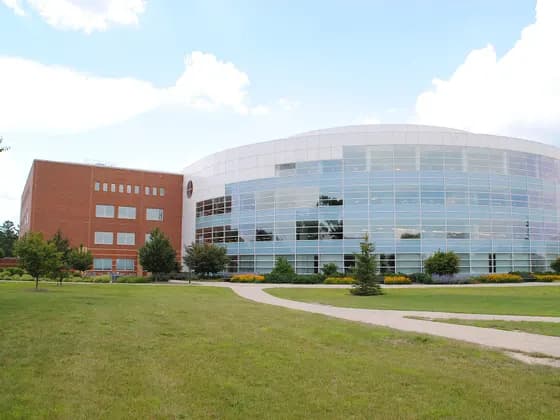
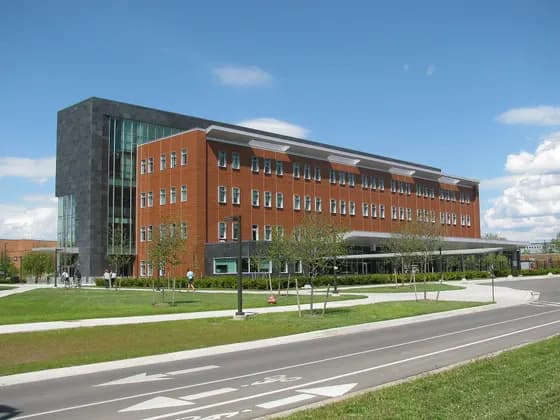
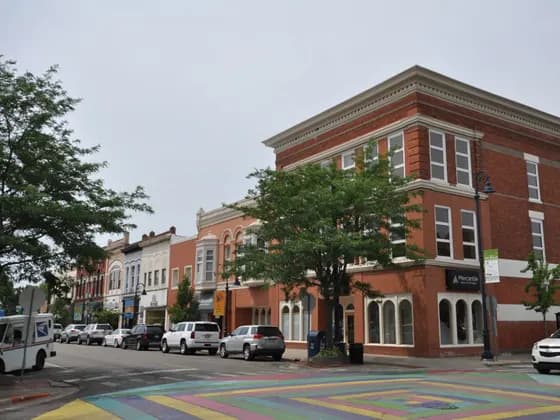
Photo: Cjh1452000 · Public domain · cropped
Photo: Cjh1452000 · Public domain · Photo: cjh1452000 · Public domain · Photo: Magicpiano · CC BY-SA 4.0
The CMU College of Medicine MD program at a glance (2027 entry)
The Covenant HealthCare College of Medicine at Central Michigan University (CMU) awards the MD after four years of full-time study. Until November 2025 it was the CMU College of Medicine. It took the Covenant HealthCare name after the university's two largest clinical partners, Covenant HealthCare and MyMichigan Health, each pledged $40 million, gifts CMU calls the largest in its history. A new Saginaw building will carry the MyMichigan Health name. The college remains part of CMU, which confers the degree. Each entering class has 104 seats.
Years 1 and 2 form the pre-clerkship (preclinical) phase, taught in Mount Pleasant under a curriculum the school calls StAGES, introduced with the class entering in fall 2024. Most course blocks cover one or two organ systems, so the physiology, pathology and drugs of, say, the urinary system come together in the same weeks. The core small-group format is problem-based learning (PBL), and a team-based learning (TBL) session after each case tests what you learned, first alone and then as a team.
Years 3 and 4 form the clerkship phase. Clerkships are the core clinical rotations, where you work on hospital and clinic teams under supervision. Year 3 combines five hospital-based clerkships with the Comprehensive Community Clerkship (CCC). The CCC is a longitudinal integrated clerkship: you spend 16 weeks with one rural or urban underserved primary care practice and follow its patients over time. Most students are based at the Saginaw campus, and the rest at regional campuses in Detroit and Midland.
CMU plans to bring all four years to Saginaw, where ground was broken for the new building on September 22, 2026. The college expects to welcome students for the fall 2028 semester, when a student entering in August 2027 would be starting year 2 on the current calendar. Treat that timing as a plan, and ask the college which class years it will teach in Saginaw from fall 2028.
The college was set up in response to physician shortages in Michigan, and it recruits mainly Michigan students, especially those aiming for primary care for the medically underserved. Its first class of 64 started in 2013, and its first MDs graduated in 2017. The Liaison Committee on Medical Education (LCME), which accredits MD programs in the United States, lists the program as fully accredited, with its next survey due in 2030-31.
| Degree and length | MD, four years full time, conferred by Central Michigan University |
|---|---|
| Class size | 104 seats in each entering class |
| Pre-clerkship curriculum | StAGES: integrated organ-system blocks taught through PBL, TBL and peer instruction |
| Where you study | Today: Mount Pleasant in years 1-2; most students in Saginaw for years 3-4 |
| First patient contact | Standardized patients in year 1; early clinical experience in primary care in year 2 |
| Anatomy | Six-week Introduction to Human Structure opens year 1; graded lab sessions |
| Community clerkship | 16 weeks in a rural or urban underserved primary care practice |
| Grading | Pass/No Pass in years 1-2; Honors, Pass or No Pass in clerkships |
| Step 1 timing | End of year 2, after four weeks of dedicated study |
| Accreditation | LCME, full accreditation; next survey in 2030-31 |
What makes the CMU College of Medicine MD program different
Sixteen weeks inside one community primary care practice
In the CCC you join a rural or urban underserved primary care practice in Michigan or Northern Ohio for 16 weeks. You work there 2.5 days a week with a family medicine or internal medicine physician and plan a quality improvement project. More than 300 volunteer faculty physicians host CCC students.
PBL groups that hand you more independence each year
In your first semester a faculty facilitator sits in your PBL room and cases come with guiding questions. From spring of year 1 the facilitator leaves, with faculty experts on call through Microsoft Teams. In year 2 cases arrive as patient charts without guiding questions, and your group writes its own learning objectives.
A new Saginaw building meant to unite all four years
The college says splitting the class years between Mount Pleasant and Saginaw has made student engagement harder. One location should help peer mentoring and contact with faculty. The new building beside MyMichigan Medical Center Saginaw is due to welcome students in fall 2028, sized for up to 130 students per class, pending clinical capacity.
Rural electives as far north as Sault Ste. Marie
Rural electives train you to care for patients where resources are limited. You can take emergency medicine, surgery or OB/GYN in rural communities, rural pediatrics, or Rural Community Health with a rural preceptor, at sites from Lapeer and Owosso to Petoskey and Sault Ste. Marie.
Bridge Weeks between the pre-clerkship blocks
Week-long Bridge Weeks sit between the course blocks in years 1 and 2. They hold time for assessment and sessions on academic success, career advising, wellness, financial literacy, and diversity, equity and inclusion. You also evaluate the block you have just finished, feedback the college uses to improve the curriculum.
How CMU College of Medicine teaches medicine
In years 1 and 2 you are always enrolled in three courses: one course block plus Essentials of Clinical Skills and Medicine and Society, which run through both years. The ten blocks last 4 to 10 weeks. The first two, on human structure and on cells and molecules, give everyone a common base, since students arrive with different science backgrounds. Most of the rest take one or two organ systems from healthy function to disease, with physiology, pathology, pharmacology and genetics taught together through patient presentations.
Each organ-system block runs as a cycle of PBL cases, each followed by a TBL session, with large-group peer instruction alongside. Essentials of Clinical Skills teaches history taking, examination and diagnostic skills for the organ system you are studying, using simulation and standardized patients, people trained to act as patients. Medicine and Society covers public health, ethics, law, culture, professionalism, the humanities, self-care and research methods. Interprofessional sessions with students from other health professions come up across all four years.
Teaching changes shape in years 3 and 4. In the CCC you meet a faculty facilitator and classmates weekly by video to present patients and teach each other core primary care topics. A weekly one-hour session covers high-yield primary care knowledge. Hospital clerkships center on inpatient work, with bedside teaching rounds and clerkship teaching sessions in person and online.
The ways you will learn
| Problem-based learning (PBL) | Groups of eight or nine work through a patient presentation in an assigned small-group room, learning the basic science behind it. You join five different groups across years 1 and 2, named alpha to echo, each tied to one or two blocks. |
|---|---|
| Team-based learning (TBL) | You answer five or six exam-style questions on the PBL case just finished, first alone and then as a team, with partial credit for second and third attempts. A harder group exercise, discussed with faculty, comes last. |
| Peer instruction | After set pre-work, faculty pose seven or eight exam-style questions to the class, answered by clicker. If roughly 30 to 80 percent answer correctly, you debate with neighbors and vote again, and a student picked at random explains. Devices are not allowed. |
| Standardized patient sessions | In the Clinical Skills and Simulation Suite you interview and examine standardized patients, wearing a white coat. Classmates evaluate each other at every session, and open practice times let you rehearse with task trainers. |
| Simulation | Essentials of Clinical Skills uses low- and high-fidelity simulation, Transition to Clerkships adds simulation exercises before the wards, and years 3 and 4 offer further training in the simulation centers. |
A typical week on the CMU College of Medicine program
During a pre-clerkship block your timetable combines PBL case sessions, TBL sessions, peer instruction, anatomy lab and clinical skills, with Medicine and Society alongside. An optional formative quiz, a practice test that does not count, closes each week. The week before each summative exam, one that counts toward your grade, brings a required practice exam from the National Board of Medical Examiners (NBME). The NBME co-sponsors the United States Medical Licensing Examination (USMLE), which MD graduates must pass for a US license.
The 2025-26 handbook capped scheduled contact hours at 25 a week, averaged over each course, and 8 a day. It put total workload, including directed study, at no more than 60 hours a week. The 2026-27 handbook keeps an Academic Workload Policy and lists protected self-study time in the weekly schedule among its teaching principles.
Each syllabus gives you a Personal Time Allowance, a set number of absences from mandatory sessions that do not affect your grade, for illness, religious holidays, bereavement or research travel.
How anatomy is taught at CMU College of Medicine
Anatomy opens the curriculum: Introduction to Human Structure (MED 625), a six-week, eight-credit block, covers gross anatomy, microanatomy and histology, embryology, and the imaging used to see anatomy in living patients. The topics are taught together, with their clinical relevance stressed throughout.
In the 2026-27 handbook, participation and performance in anatomy lab sessions count toward pre-clerkship course grades. The 2024-25 handbook described lab sessions that reinforce clinical anatomy across the first two years. Its lab rules referred to both cadavers and prosections, specimens dissected in advance, and gave every student round-the-clock lab access.
The labs are in the College of Medicine building in Mount Pleasant, where the Orthopedic Surgery and Sports Medicine interest group runs an annual review in which second-year students tutor first-years. The new Saginaw building's plans include anatomy teaching spaces.
When you first meet patients at CMU College of Medicine
Your first patients are standardized patients, who let you learn and make mistakes without harming anyone. They feature in Essentials of Clinical Skills from year 1. Year 1 also brings a team service-learning project under Community and Clinical Engaged Learning (CCEL), identifying community assets that can improve health.
In year 2 a scheduled early clinical experience in a primary care practice becomes your clinical laboratory. You start by observing the practice and its team from the patients' side as well as the team's, then begin interacting with patients as your skills improve. Transition to Clerkships then prepares you for the wards.
Full-time clinical work starts in early July of year 3, after an orientation of five to seven days at your campus. Depending on the clerkship, schedules can include nights, weekends and overnight call, within the duty hours policy. The handbook expects hundreds of clinical encounters during the CCC.
The CMU College of Medicine curriculum, year by year
- Year 1
Foundations, then the first organ systems
Year 1 runs from an orientation week in August to early June. Two foundation blocks come first, then four organ-system blocks. A Bridge Week follows each of the six, and you get three weeks off in winter and one in spring.
- Introduction to Human Structure (6 weeks, 8 credits): gross anatomy, histology, embryology and imaging.
- Cellular and Molecular Principles of Medicine (4 weeks): cell function and division, metabolism, basic pharmacology and human pathogens.
- Hematopoietic, Lymphatic and Immune Systems (5 weeks), then Musculoskeletal and Integumentary Systems (4 weeks), covering bones, muscles and skin.
- Urinary System (4 weeks), then Reproductive and Endocrine Systems (9 weeks), which also covers human growth and development.
- Health Equity and Social Justice (HESJ) Thread requirements, which you must complete in year 1 and again in year 2 to move up.
- An 11-week summer break, when paid Summer Research Scholars do mentored research.
- Year 2
Brain, gut, heart and lungs, then Step 1
Year 2 starts in mid-August with three organ-system blocks, then Transition to Clerkships in spring and four weeks of dedicated study for USMLE Step 1.
- Neurobehavioral System (10 weeks, 14 credits): the nervous system and the clinical basis for examining and treating its disorders.
- Digestive and Excretory Systems (6 weeks), then Cardiopulmonary Systems (9 weeks), on the heart and lungs.
- Transition to Clerkships (4 weeks): lectures, simulation exercises, workshops and small-group activities.
- Directed Independent Study of Medicine I (DISM I): four weeks of dedicated time and structured support for Step 1, mid-April to mid-May on the 2026-27 calendar.
- Chances to sit the NBME's Comprehensive Basic Science Self-Assessment and Comprehensive Basic Science Examination, practice exams for Step 1.
- The campus lottery in December and the year 3 track and CCC site lottery in March.
- Year 3
The community clerkship and five hospital clerkships
Year 3 starts in early July and runs as thirteen four-week blocks, one of them a winter break. Your track sets the order, but everyone completes the CCC and five hospital-based clerkships, with one block set aside for an elective, and must pass every clerkship to move up.
- Comprehensive Community Clerkship (16 weeks): 2.5 days a week in a primary care practice, in one run or two eight-week halves around winter break.
- Surgery (8 weeks): mostly in the operating suite, emergency department and inpatient unit, with the rest in outpatient settings.
- Hospital Medicine (8 weeks): admitting and managing acutely ill patients, coordinating their care and planning discharge.
- Obstetrics and gynecology, pediatrics and psychiatry (4 weeks each), focused mainly on inpatient care; OB/GYN centers on labor and delivery and gynecologic surgery.
- One four-week elective, which counts toward your 28 elective weeks, or the block can go on Step preparation.
- Year 3 ends with the M3 OSCE (timed, observed stations with standardized patients) and the Comprehensive Clinical Science Exam in mid-July, as year 4 begins, on one or two assigned days in Mount Pleasant.
- Year 4
Emergency medicine, a sub-internship, then electives
Year 4 runs from July to early May. The 2026-27 calendar places emergency medicine and a sub-internship, scheduled at your home campus, in the first two blocks, and sets the rest aside for electives while you apply for residency.
- Emergency Medicine (4 weeks): telling sick from not-sick patients, basic procedures, and caring for people who rely on emergency departments as a safety net.
- A sub-internship, also called an acting internship, in pediatrics, surgery or medicine (4 weeks): you manage patients more independently, and the surgery and medicine versions aim for the level of a first-year resident.
- Electives toward the 28-week total, with up to 12 weeks away at other institutions.
- Residency applications, supported by your Medical Student Performance Evaluation (MSPE), the school's summary letter, and mock interviews with recorded video. Match Day comes in spring, and commencement on the Friday before CMU's undergraduate ceremonies.
How you are assessed at CMU College of Medicine
Pre-clerkship courses, electives and the sub-internship are graded Pass or No Pass. Required clerkships are graded Honors, Pass or No Pass, with Honors criteria set in each clerkship syllabus. The admissions FAQ describes the same scale as credit, no credit, or credit with honors.
In each pre-clerkship block, peer instruction, TBL and anatomy lab count toward your grade. The number of summative exams depends on block length: one for a 4-week block, two for 5- or 6-week blocks and three for 9- or 10-week blocks. Grades come out within 14 business days.
Fail any part of a course and you receive an Incomplete. You then complete self-study planned with the Director of Academic Success and take a remediation exam, normally 4 to 8 weeks after the year's last course. You can remediate one Incomplete a year without committee approval; a second goes to the Student Performance and Conduct Committee first. A remediated course shows as Pass on your transcript.
Each required clerkship ends with a clinical performance evaluation, with formative feedback near the midpoint. Where available, an NBME subject exam, often called a shelf exam, tests your knowledge of the specialty against a minimum score the clerkship sets. Clerkships may also grade OSCEs, oral presentations or written history and physical notes.
USMLE Step 1 tests the basic sciences and has been reported only as pass or fail since January 26, 2022. LCME accreditation is what makes students in MD programs like this one eligible to sit it; DO students and international medical students and graduates qualify by other routes. You must take Step 1 to be promoted to year 3, and deferring it needs approval. Passing Step 1 and Step 2 CK, the clinical knowledge exam, is required to graduate.
In August 2026 the USMLE program announced a move to designated testing dates from January 2029, with Step exams offered less often each year. Its June 2026 announcement had named 2028. On the current schedule, a student entering in 2027 would sit Step 1 in about May or June 2029, after the switch. That timing follows the four-week dedicated study block and comes before year 3 starts in early July. Years 3 and 4 would follow from July 2029, so Step 2 CK would also come under the new model. These are projections from the 2026-27 calendar, not published dates.
- Directed Independent Study of Medicine II to V give time and support for Step 1 or Step 2 study in years 3 and 4. If you have no rotation in block 1 of year 3 or 4, you are enrolled automatically.
- A shelf score below the minimum means retaking the exam. Any remediation rules out Honors, and year 3 Incompletes must be cleared before year 4.
- Your MSPE compares your performance with your classmates' in each required clerkship, but carries no overall comparison, because students do not receive a class rank.
- Alpha Omega Alpha, the national medical honor society, invites the top 30% of the fourth-year class to apply, scored on year 1-2 course averages, shelf exam averages and year 3 Honors. About 20% of the class is inducted.
- You must finish within six years of starting.
CMU College of Medicine clinical rotations: where you will actually train
Today years 1 and 2 are taught on CMU's main campus in Mount Pleasant. For years 3 and 4 most students move to the Saginaw campus, whose Saginaw Education Building stands on the Covenant HealthCare campus. You rotate at Covenant HealthCare and MyMichigan Medical Center Saginaw, the region's referral centers for most complex care, and at HealthSource Saginaw, a psychiatric and rehabilitation hospital. Some rotations use McLaren Bay Region and Children's Hospital of Michigan.
Some Saginaw campus students are assigned instead to Henry Ford Genesys Hospital in Grand Blanc or University of Michigan Health Sparrow Hospital in Lansing for their hospital clerkships. The alternatives to Saginaw are two regional campuses: Henry Ford St. John Hospital in Detroit and MyMichigan Medical Center Midland, whose students take pediatrics at Children's Hospital of Michigan in Detroit.
Campuses and sites are allocated by a preference-based lottery in December of year 2. Names are drawn in random order, each student picks from the places left, and the choice is final, with no trading. Students with extenuating circumstances can ask for special consideration beforehand. A second lottery in March sets your year 3 track, the order and sites of your clerkships, and your CCC site; afterward you may trade within your campus.
For the CCC you live for 16 weeks in a rural or urban underserved community in Michigan or Northern Ohio. The Mid Central Area Health Education Center (AHEC), part of a program Congress created in 1971, works with the college to find short- and long-term housing for clinical rotations.
If a required inpatient clerkship is more than 30 miles from your primary campus and you pay for two homes, you can apply for a flat monthly housing stipend, prorated by days. Students based away from Saginaw are paid flat-rate mileage for required simulation and academic sessions there.
Today's base for years 1 and 2, and a site for rural emergency medicine, surgery and pediatrics electives.
- College of Medicine building, CMU main campus
Home campus for most year 3 and 4 students. Covenant HealthCare has a Level II adult and pediatric trauma center; MyMichigan Medical Center Saginaw, formerly Ascension St. Mary's of Michigan, has 268 beds. Residents train here in specialties including emergency medicine, family medicine, general surgery, internal medicine, OB/GYN and psychiatry.
- Covenant HealthCare
- MyMichigan Medical Center Saginaw
- HealthSource Saginaw
- Saginaw Education Building
Hospital clerkship sites for some Saginaw campus students.
- Henry Ford Genesys Hospital, Grand Blanc
- University of Michigan Health Sparrow Hospital, Lansing
- McLaren Bay Region
Regional campus at Henry Ford St. John, a 714-bed teaching hospital and Level I trauma center. It trains residents in eight specialties, including internal medicine, surgery, pediatrics and OB/GYN. Children's Hospital of Michigan, part of the Detroit Medical Center, also hosts many pediatric electives.
- Henry Ford St. John Hospital
- Children's Hospital of Michigan
Regional campus at MyMichigan Health's 328-bed flagship hospital, clinically affiliated with the University of Michigan. You train alongside residents from family medicine residencies in Midland and Alma.
- MyMichigan Medical Center Midland
Where the 16-week CCC takes place, at the site you secure in the March lottery.
- Rural and urban underserved primary care practices in Michigan and Northern Ohio
Electives, selectives and away rotations at CMU College of Medicine
You need 28 weeks of electives, in blocks of two or four weeks, counting the year 3 block. No more than 12 weeks may be in one specialty, and no more than 12 away at other institutions. You need at least four weeks of patient-care electives in both medical and surgical disciplines, and can count up to four weeks of research and eight of non-patient-care electives.
The electives catalog, updated April 20, 2026, lists about 100 options across the network and online. They range from Emergency Point of Care Ultrasound and Foundations of Simulation to Health Policy in Lansing and a four-week multi-specialty elective caring for veterans at the Aleda E. Lutz VA Medical Center in Saginaw.
Emergency Medicine - Rural runs in Lapeer, Mount Pleasant, Standish, Owosso, Petoskey, Sault Ste. Marie and Clare or Gladwin. Rural surgery, in Mount Pleasant or Sault Ste. Marie, and rural OB/GYN, in Sault Ste. Marie, follow the matching year 3 clerkship. Fourth-years can take rural pediatrics, with an office in Mount Pleasant and newborn care in Alma.
Year 3 electives are chosen from a list sent about 10 weeks ahead, with fourth-years getting priority. Your year 4 schedule is set in four phases from February to May, starting with emergency medicine and the sub-internship.
Away rotations, electives at other schools' hospitals, come mainly in year 4, as year 3 students are generally not approved for them. You apply through the Association of American Medical Colleges (AAMC) Visiting Student Learning Opportunities (VSLO) service, opened to you in January of year 3, with approval needed 30 days ahead. International electives go through CMU's Office of Study Abroad, with approval 60 days ahead.
Dual degrees and research years at CMU College of Medicine
CMU's 2026-27 Graduate Bulletin sets out an MD/MBA for students in good standing, with six MD credit hours counting toward the MBA. The college recommends adding a year for the MBA courses, between years 2 and 3 or between years 3 and 4, but it will not approve that extra year once year 3 has started. MBA applications are due at least a month before the extra year begins. MBA classes can be on campus, online or both.
CMU's Master of Public Health page also mentions a dual MD and MPH degree. The 2023-24 College of Medicine handbook described a five-year path, with a full-time MPH year after year 2 and an MPH field placement in the final year. Students applied by April 1 of year 2. Check the current arrangements with the college.
Research is encouraged but not required. Everyone completes CITI research ethics training in Medicine and Society. The paid Summer Research Scholars program funds 12 to 16 students a year for up to 230 hours of mentored research between years 1 and 2. Scholars are chosen on a short proposal written with a faculty mentor and present at the spring Student Research Forum and Research Symposium.
In years 3 and 4 you can take four-week research electives, though only four weeks count toward the elective requirement and case reports do not qualify. Limited funding covers conference travel, posters and publication fees, and current projects range from neuroscience and opioid use disorder to maternal and child health.
Facilities and support at CMU College of Medicine
Where you will learn
In Mount Pleasant the college occupies a 60,000-square-foot addition to the Health Professions Building, with clinical exam rooms, group study rooms, simulation rooms and anatomy labs. Your mobile CMU ID opens the building, study rooms, student lounge and the Opperman Learning Commons around the clock.
The Learning Commons, an annex of the University Libraries, offers 32 seats of 24-hour study space and an eight-seat group room. The medical library is almost entirely electronic, with a faculty medical librarian on site, and Knowledge Services supports students in Saginaw.
The Institute for Medical Simulation's facilities in Mount Pleasant and Saginaw, where it includes the Covenant HealthCare Simulation Center, are accredited by the Society for Simulation in Healthcare. Its lab has virtual operating room, obstetrics, intensive care, emergency department and pediatric environments, and high-fidelity manikins that can sweat, bleed, cough and talk.
The new MyMichigan Health CMU Medical Education Building covers about 90,000 square feet over four floors in Saginaw's Medical Diamond development. Its mass timber nods to the city's lumber history, and the dean has said it will honor the history of the Saginaw Chippewa people through art. Plans include PBL classrooms, a standardized patient suite, simulation rooms, student commons and a fitness center.
Support while you study
From your first semester you have a faculty academic advisor, with required one-to-one meetings at the start of each pre-clerkship semester. In years 3 and 4 a Faculty Career Advisor, matched to your specialty interests, helps with electives, personal statements and residency applications. Career planning uses the AAMC's Careers in Medicine program from year 1.
The Director of Academic Success offers confidential consultations in Mount Pleasant, Saginaw or online, on study and test-taking strategies and board exam preparation. Free peer tutoring with trained, paid second- to fourth-year students runs up to three hours a week.
Incoming students can join the Big Sib/Little Sib program, which pairs you with a second-year student for advice on workload, study and life in Mount Pleasant. Each class elects a Medical Student Council, a Student Senate links classes and campuses, and there are more than 40 student interest groups. CMU Street Medicine has served people experiencing homelessness since 2018.
The Wellness and Well-Being Program runs events from therapy dog visits to a Thanksgiving potluck. The Office of Student Affairs refers students to the CMU Counseling Center and CMU Health services. First-generation college graduates are invited to a First-Gen Student Retreat in the fall of year 1.
Is the CMU College of Medicine program right for you?
This program may suit you if
- You learn best by working through cases with a small group, since PBL and TBL are the core of years 1 and 2.
- You want a long stretch in primary care: the CCC puts you in one community practice for 16 weeks.
- You hope to practice in Michigan, especially in primary care for underserved communities, which is what the college recruits for.
- You prefer Pass or No Pass grading before clerkships and an MSPE without an overall class rank.
- You want structure around Step 1, with four weeks of dedicated study and practice exams in year 2.
Things to think about
- Your base will probably change, since CMU plans to bring all four years to Saginaw.
- A December lottery decides your clinical campus; if your name comes up late, you choose from the places left, and the choice is binding.
- The CCC means living for 16 weeks in an assigned community, possibly far from your campus, though the Mid Central AHEC helps with housing.
- Peer instruction and TBL sessions count toward grades and ban devices, and absences beyond your allowance carry academic consequences.
- If you want a second degree, check current details: the MD/MPH description dates from the 2023-24 handbook.
CMU College of Medicine MD program — frequently asked questions
Applying to CMU College of Medicine?
How to get into CMU College of Medicine
Prerequisites, MCAT, AMCAS personal statement, secondaries and interview, step by step.
Open the guide →CMU College of Medicine admissions profile
MCAT and GPA profile, acceptance rate, interview format and key dates.
See the profile →Compare CMU College of Medicine with other schools
Put the teaching style, anatomy teaching and clinical sites next to another school.
Open the comparison →Prepare for the CMU College of Medicine interview
Format breakdown, school-specific sample questions and prep tips from tutors who interviewed here.
Read the guide →Where this CMU College of Medicine program guide came from
This guide was written from 50 official sources — Covenant HealthCare College of Medicine at Central Michigan University's own program pages and curriculum documents, plus the accreditor and the hospitals and health systems the school trains students in where they publish detail — read on 2026-10-25, then checked claim by claim against those sources.
- Covenant HealthCare College of Medicine at CMU: Medical Curriculum
- Covenant HealthCare College of Medicine at CMU: Pre-Clerkship Years 1 and 2
- Covenant HealthCare College of Medicine at CMU: Clerkship Years 3 and 4
- Covenant HealthCare College of Medicine at CMU: M.D. Program
- Covenant HealthCare College of Medicine at CMU: College of Medicine Campuses
- Academic Year 2026-2027 Curriculum Calendar (published December 3, 2025)
- Medical Student Handbook 2026-2027 (revised September 28, 2026)
- Student Handbook 2025-2026 (revised October 29, 2025): academic workload limits
- Student Handbook 2024-2025 (revised February 18, 2025): anatomy session guidelines
- Student Handbook 2023-2024 (revised October 27, 2023): dual degree options
- CMU 2026-2027 Graduate Bulletin: Medicine, M.D. program requirements
- CMU 2026-2027 Graduate Bulletin: MED course descriptions
- CMU 2026-2027 Graduate Bulletin: College of Medicine, including the MD/MBA dual degrees
- CMU 2026-2027 Graduate Bulletin: Business Administration, M.B.A. (MD/MBA plan of study)
- Medical Student Electives Catalog (updated April 20, 2026)
- Covenant HealthCare College of Medicine at CMU: Affiliations
- Covenant HealthCare College of Medicine at CMU: Main Campus Locations
- Covenant HealthCare College of Medicine at CMU: Our new name
- Covenant HealthCare College of Medicine at CMU: Our new home
- CMU News: CMU receives $80 million in commitments from Covenant HealthCare and MyMichigan Health (November 21, 2025)
- CMU News: Trustees approve partnership and new name (November 21, 2025)
- CMU News: A new vision for medical education at CMU (August 3, 2026)
- CMU News: Breaking ground on a new home for medical education (September 22, 2026)
- CMU Clarke Historical Library: Existing Buildings, College of Medicine
- CMU medical school accreditation history (archived copy, February 25, 2024; page no longer live)
- Covenant HealthCare College of Medicine at CMU: About the College of Medicine
- Covenant HealthCare College of Medicine at CMU: Admissions FAQ (class size and grading)
- Covenant HealthCare College of Medicine at CMU: Medical Simulation
- Covenant HealthCare College of Medicine at CMU: Office of Student Affairs
- Covenant HealthCare College of Medicine at CMU: Career Advising
- Covenant HealthCare College of Medicine at CMU: Academic Success
- Covenant HealthCare College of Medicine at CMU: Peer Tutoring Program
- Covenant HealthCare College of Medicine at CMU: Alpha Omega Alpha Honor Medical Society
- Covenant HealthCare College of Medicine at CMU: Big and Little Sib Program
- Covenant HealthCare College of Medicine at CMU: Medical Student Interest Groups
- Covenant HealthCare College of Medicine at CMU: Wellness
- Covenant HealthCare College of Medicine at CMU: Milestone Events
- Covenant HealthCare College of Medicine at CMU: Engagement and Enrichment Programs and Events
- Covenant HealthCare College of Medicine at CMU: Student Research
- Covenant HealthCare College of Medicine at CMU: Central and Western Area Health Education Centers
- Covenant HealthCare College of Medicine at CMU: Street Medicine
- CMU: Master of Public Health program page (mentions the dual MD and MPH)
- LCME: Accredited Programs directory (updated October 14, 2026)
- USMLE: Updated Timeline for Designated Testing Dates, transition in January 2029
- USMLE: Designated Testing Dates Information Hub (dates the announcement August 6, 2026)
- USMLE: Transition to Limited Testing Dates Each Year Starting in 2028 (June 23, 2026; since updated)
- USMLE: Common Questions (Step 1 pass/fail since January 26, 2022)
- USMLE Bulletin of Information: Eligibility
- NBME: Comprehensive Basic Science Examination content outline
- NBME: Comprehensive Basic Science Self-Assessment
Curricula are restructured between cycles. Anything here that decides your application — how anatomy is taught, a clinical campus assignment, a required research year — should be confirmed against the official page for your entry year.
Applying to CMU College of Medicine?
We help US applicants with MCAT strategy, the AMCAS personal statement, secondary essays and interview prep — everything you need for a competitive CMU College of Medicine application.