
The LSU Health Shreveport School of Medicine MD program
What you actually study, and where you will be
LSU Health Shreveport School of Medicine's MD is a 4-year program with an integrated curriculum, with patient contact from Year 1 and clinical rotations in Shreveport and Monroe, plus rural and community sites in Louisiana (2027 entry). LSU Health Shreveport's MD moves from foundational science to organ-system courses taught in a flipped classroom, with a doctoring course that puts you with patients from your first semester. Year 3 is seven core clerkships and two electives, mainly at a Level 1 trauma center beside the school. Year 4 centers on a sub-internship and 22 weeks of electives.
- Degree
- MD
- Length
- 4 years
- Teaching
- Integrated
- Clinical contact
- Year 1


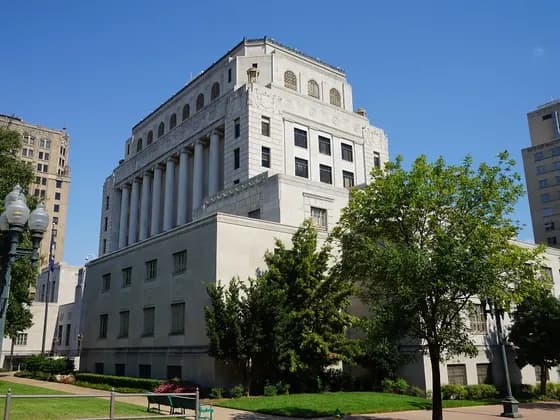
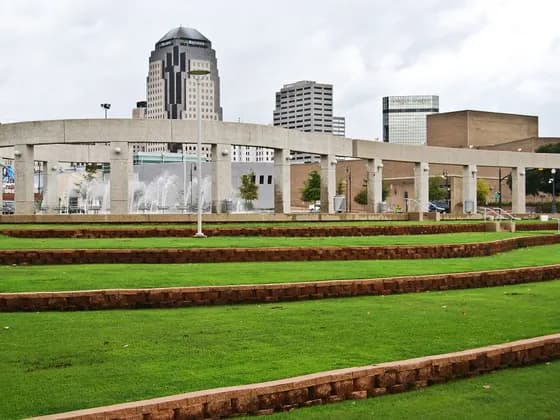
Photo: Billy Hathorn · CC BY-SA 3.0 · cropped
Photo: Shreveport-Bossier Convention and Tourist Bureau · CC BY 2.0 · Photo: Michael Barera · CC BY-SA 4.0 · Photo: Lindsay Hickman from Shreveport, US · CC BY-SA 2.0
The LSU Health Shreveport School of Medicine MD program at a glance (2027 entry)
The Louisiana State University School of Medicine in Shreveport, usually called LSU Health Shreveport School of Medicine (LSUHS), offers a four-year Doctor of Medicine (MD) program in the northwest corner of Louisiana. Each entering class has 150 students. The school's first class of 32 enrolled in September 1969 at Shreveport's Veterans Administration Hospital, its temporary home while its own buildings went up. Those buildings adjoin its main teaching hospital, now the Ochsner LSU Health Shreveport Academic Medical Center.
The curriculum runs 164 weeks in three phases. Phase 1, years 1 and 2, is the pre-clerkship (preclinical) phase: foundational science leads into organ-based courses taught in a flipped classroom, where you prepare beforehand and use class time to apply it. Phase 2, year 3, is spent in clerkships, the core clinical rotations in each specialty, plus two electives. Phase 3, year 4, brings a sub-internship, a rotation at the level of an intern (first-year resident), electives at home or away and your residency applications.
Patients come early, from your first semester. Skills teaching is based in the Clinical Skills Center inside the Center for Medical Education. Anatomy combines cadaveric dissection with virtual reality, and nutrition is taught in every phase.
The Academic Medical Center is a Level 1 trauma center, the highest level of trauma care. It is run by Ochsner LSU Health, a 50/50 partnership of LSU Health Shreveport and Ochsner Health formed in 2018. The program is accredited by the Liaison Committee on Medical Education (LCME), which accredits MD programs in the United States. LCME accreditation is what makes the program's students eligible to sit the United States Medical Licensing Examination (USMLE), whose Step 1 you take at the end of year 2.
| Degree | MD, a four-year program of 164 weeks |
|---|---|
| Class size | 150 students a year |
| Main campus | Shreveport, beside the Ochsner LSU Health Shreveport Academic Medical Center |
| Teaching style | Flipped classroom with team-based, case-based and peer learning |
| Anatomy | Cadaveric dissection plus a 25-station virtual reality lab |
| First patient contact | First semester, through the Longitudinal Clinical Experience |
| Clinical sites | Shreveport hospitals and Monroe, plus rural Louisiana electives |
| Grading | Pass/fail in years 1, 2 and 4; clerkships graded honors to fail |
| Step 1 timing | End of year 2, after a dedicated review course |
| Accreditation | Full LCME accreditation; next survey in 2029-30 |
What makes the LSU Health Shreveport School of Medicine MD program different
Patients from your first semester
The Longitudinal Clinical Experience, a doctoring course running through years 1 and 2, gives you standardized patients (people trained to portray patients) and real patients from the first semester.
Clerkships centered on a Level 1 trauma center
Year 3 is based mainly at the Ochsner LSU Health Shreveport Academic Medical Center, a Level 1 trauma center with a burn unit. Fourth-year sub-internships there include emergency medicine, the medical intensive care unit, and trauma and surgical critical care.
Two electives inside year 3
Year 3 pairs the seven core clerkships with two four-week pass/fail electives. The school's aim is early exposure to subspecialties, so you can settle on a specialty before year 4 and your residency applications.
Nutrition taught in every phase
Nutrition runs from biochemistry and the organ-system courses, through nutrition history-taking in early clinical training, to set objectives in four core clerkships. A fourth-year Lifestyle and Culinary Medicine elective teaches counseling with hands-on cooking.
How LSU Health Shreveport School of Medicine teaches medicine
Phase 1 runs on a flipped classroom, so class time goes to applying what you prepared, with classmates and faculty. School policies name the formats: team-based learning with individual and group readiness tests, case-based and problem-based learning, and peer instruction, where you answer a question, discuss it and answer again.
Year 2 takes the organ systems one by one; the cardiovascular course, for example, spans anatomy, histology, physiology, pharmacology, pathology, cardiology and surgery. Lectures, small groups, standardized patient exercises and simulation continue throughout.
In early clinical skills training, nutrition teaching includes motivational interviewing, a counseling style that helps patients find their own reasons to change. In the family medicine, internal medicine, pediatrics, and obstetrics and gynecology clerkships, you assess patients' dietary history and interpret metabolic markers. In March 2026 the school joined a federal nutrition education initiative, which commits schools to at least 40 hours of nutrition education or an equivalent.
In years 3 and 4 learning moves to the wards and clinics. You work on teams with residents, doctors in specialty training, and attending physicians, the senior doctors in charge. You present patients on rounds and take call, staying on to admit and care for patients after hours. As a sub-intern in year 4 you carry much of an intern's workload under supervision.
The ways you will learn
| Active learning sessions | The core of Phase 1: after assigned preparation, you work through readiness tests, application questions and cases with a team. |
|---|---|
| Laboratories | Gross anatomy labs in anatomy, neuroscience and the cardiovascular and pulmonary courses, plus histology labs, the study of tissue under the microscope. |
| Standardized patients | You interview and examine trained patient actors in rooms with cameras and microphones, so sessions can be watched live and reviewed, then debrief. |
| Simulation | Manikins that breathe, bleed and speak, and a simulated hospital ward where you care for several patients at once. |
| Clerkship teaching | Attending rounds, conferences, clinics, call and the operating room, where you present patients and log the cases and procedures you see. |
A typical week on the LSU Health Shreveport School of Medicine program
The school's workload policy describes a pre-clerkship week. On average you have about 16 hours of in-person teaching, plus no more than 4 hours of other scheduled sessions such as small groups, simulation or the Longitudinal Clinical Experience. Contact time should not pass 20 hours in any week, averaged across weeks without exams.
The rest of the week is for study. The policy assumes an extra hour of study per contact hour, plus assigned work such as readings, practice questions and preparation for team sessions, all within a 60-hour weekly total.
Clerkship weeks are capped at 80 hours, counting patient care, call, conferences and up to 45 minutes of pre-rounding a day, but not reading at home. You get one day in seven free, averaged over four weeks, at least 8 hours off between shifts (ideally 10) and no more than six overnight shifts in a row. A shift can run 16 hours plus up to 4 to finish rounds and teaching, but only once in seven days, and home call counts toward your hours.
How anatomy is taught at LSU Health Shreveport School of Medicine
Anatomy starts with Medical Anatomy, a six-credit year 1 course of lectures and labs in gross anatomy and embryology. It surveys the body region by region, introduces how nerves control the internal organs and how structures form before birth, and links topics to patients through clinical correlation lectures. On the 2025-26 curriculum chart it runs in January and February.
Anatomy continues inside later courses. Musculoskeletal Biology covers the back and limbs, and Neuroscience II includes lab study of the brain, spinal cord, cranial nerves and head and neck. In year 2 the cardiovascular and pulmonary courses add gross anatomy and histology labs.
The school describes its teaching as a blend of traditional cadaveric dissection and virtual reality. A $3 million renovation over the past few years gave the Gross Anatomy Laboratory 34 workstations, with adjustable tables and monitors that relay the instructor's demonstration. A closed-circuit ventilation system reduces formaldehyde exposure, and the lab holds more than 150 students.
Next door, the Virtual Reality Anatomy Lab has 25 workstations with headsets running VH Dissector XR software, in use since January 2026. You can dissect a virtual cadaver layer by layer, rotate it and see cross-sections in the same view. An anatomy professor describes it as reinforcement between lab sessions, since nothing replaces hands-on dissection.
In year 4, students heading for fields such as surgery, pathology, obstetrics and gynecology (OB/GYN), radiology or anesthesiology can apply, with permission, to take Three Dimensional Anatomy. This two-week elective has up to eight students per block. You fully dissect one of five regions, such as the thorax or the pelvis, and match it to cross-sectional images.
When you first meet patients at LSU Health Shreveport School of Medicine
You meet patients in your first semester. The Longitudinal Clinical Experience, four one-credit courses across years 1 and 2, is a doctoring strand that runs alongside the science, stressing a humanistic approach and the basic clinical skills every doctor needs. It uses standardized patients and real ones, including hands-on outpatient work in the newly developed clinic run by hospitalists, doctors who specialize in hospital care, for patients recently discharged from hospital.
Clinical Skills courses in years 1 and 2 teach communication, history-taking and full and focused examinations on standardized patients. Clerkships begin in early July of year 3, after the Transition to Clerkship course.
Outside the timetable, MeSCO, the Medical Student Charity Outreach Organization, runs a free clinic led by students and physicians for the Shreveport-Bossier community. In the summer after year 1 you can apply to the Primary Care Rural Preceptorship Program, working alongside primary care doctors in rural or underserved parts of Louisiana. Applications close on January 31, and preceptorships can start in June.
The LSU Health Shreveport School of Medicine curriculum, year by year
- Year 1 (Phase 1)
Foundations, anatomy and neuroscience
Year 1 runs for 41 weeks from late July or early August, and every course is pass/fail. Foundational science fills the fall semester. After the winter break come anatomy, the musculoskeletal system and neuroscience, with clinical skills alongside.
- Introduction to Medical School Curriculum: six days on educational software, library research skills and CPR practice on manikins.
- Medical Biochemistry (7 credits): the molecular basis of disease and its treatment.
- Fundamentals of Health, Disease and Drug Action (5 credits): how physiology, environment, lifestyle, prevention and social conditions shape health, with core pharmacology and toxicology, the study of drugs and poisons.
- Fundamentals of Immunology and Medical Microbiology (4 credits): tissue injury, cancer as a model of disease, immunity, the microbes behind infection and antimicrobial drugs.
- Medical Anatomy (6 credits), then Musculoskeletal Biology (4 credits), which brings in radiology, rheumatology and orthopedic surgery.
- Neuroscience I (6 credits), on the brain and spinal cord, pain, anesthesia and the senses, then Neuroscience II and Behavioral Science (5 credits).
- Clinical Skills 1 (3 credits), in two blocks on the 2025-26 chart, and Longitudinal Clinical Experience I and II.
- Year 2 (Phase 1)
Organ systems and Step 1
Year 2 runs for 45 weeks from mid-July and is also pass/fail. After a pathophysiology course you study the organ systems one at a time, each moving from normal function to disease, diagnosis and treatment.
- Foundations in Pathophysiology and Mechanisms of Disease (3 credits): cellular and molecular pathology, neoplasia (tumors) and toxicology, based on the Robbins and Cotran textbook and taught with peer instruction.
- Fall courses: Endocrine System (3 credits), Gastrointestinal System (5), Blood, Lymph and Neoplasia (3) and Cardiovascular System (6).
- Spring courses: Renal System (4, including the male genitourinary tract), Pulmonary System (4) and Reproductive System (4), which covers pregnancy, labor, the pelvic exam and breast disease.
- Clinical Skills II (1 credit) and Longitudinal Clinical Experience III and IV run alongside.
- Integrated Process and Basic Science Review (4 credits), April to early June on the 2025-26 chart: a test-taking workshop, then mostly independent study, ending with Step 1.
- Transition to Clerkship and Clinical Toxicology in the last week: operating room scrubbing, gowning and gloving, electronic records, an Advanced Cardiac Life Support overview, a hospital tour, and treating poisonings.
- The comprehensive physical exam on a standardized patient, at the end of the year.
- Year 3 (Phase 2)
Core clerkships and two electives
Year 3 starts in early July and runs 44 weeks: seven core clerkships totaling 36 weeks plus two four-week electives. Clerkships are graded honors, high pass, pass or fail, and electives pass/fail. Each student's order of rotations differs.
- Medicine (8 weeks): ward team work, histories and examinations on a limited number of patients, procedures under close supervision and regular faculty rounds.
- Surgery (6 weeks): a general and a specialty service, 14 to 16 lectures, clinics, call, the operating room, knot-tying and suturing simulation, and case and procedure logs.
- Obstetrics and gynecology (OB/GYN, 6 weeks): a week on Labor and Delivery and, as the 2026-27 catalog describes it, an alternate obstetrics week in Monroe. The other four weeks are two in the Women's Clinic and one each on benign gynecology and gynecologic oncology.
- OB/GYN also brings Labor and Delivery call, gynecologic oncology surgeries at Willis-Knighton Medical Center, practice on the NOELLE birth simulator, and small groups on topics such as high-risk obstetrics.
- Pediatrics (4 weeks): newborns to 18-year-olds with acute and chronic illness, preventive care and the general pediatrician's role.
- Psychiatry (4 weeks): inpatient, emergency, consultation-liaison (seeing patients on other hospital services) and outpatient services, plus grand rounds and case conferences.
- Family medicine (4 weeks): university clinics plus one community primary care physician for the whole rotation, with web-based clinical cases.
- Neurology (4 weeks): inpatient and outpatient services with mostly bedside teaching, clinics, time observing in the operating room and few formal lectures.
- Year 4 (Phase 3)
Sub-internship, electives and the Match
Year 4 starts in early July and runs 34 weeks, all pass/fail. As the 2026-27 catalog sets it out, you complete one sub-internship, three other required selectives and 22 weeks of electives. You also take Step 2 CK, the USMLE exam on clinical knowledge, and apply for residency.
- One four-week sub-internship, or acting internship, in one of 16 specialties from internal medicine to radiology.
- Passport Transition to Residency (4 weeks, Clinical Skills Center): hands-on practice of the skills you need as a first-year resident.
- Two online selectives of two weeks each: Foundations of Quality Improvement and Patient Safety, which is self-paced, and a Radiology Selective on choosing imaging and recognizing critical findings.
- 22 weeks of electives at LSU Health Shreveport, its partner sites or other schools.
- Step 2 CK, alongside residency applications in August and September, interviews from November to February and a rank list in February.
- Match Day, when you learn where you will train as a resident, in the third week of March, then commencement in early May.
How you are assessed at LSU Health Shreveport School of Medicine
Every course in years 1 and 2 is pass/fail, with a pass mark of 70%. The seven core clerkships are graded honors (89.5% or more), high pass (79.5% or more), pass (69.5% or more) or fail, while all electives and all of year 4 are pass/fail. Each syllabus sets out how the grade is built, and faculty add a written narrative where they can.
Pre-clerkship courses of four weeks or more give you formative assessment, feedback that does not count toward your grade, by their midpoint. Tools include practice quizzes, readiness tests, standardized patient feedback and formative OSCEs (objective structured clinical examinations), timed stations with standardized patients. Each core clerkship has a mid-clerkship meeting with the director, who checks your log of required diagnoses and procedures.
Written exams, including those from the National Board of Medical Examiners (NBME), are taken on your laptop in a proctored Testing Center. Clerkship assessment includes NBME subject examinations, or shelf exams, which are national multiple-choice tests in clinical subjects. At the end of year 2 you perform a comprehensive physical exam on a standardized patient, scored against a checklist of core techniques. You must pass it to graduate, retaking it after remediation if needed.
USMLE Step 1 covers the basic sciences and has been reported only as pass or fail since January 26, 2022. Early in the spring of year 2 every student sits the NBME Comprehensive Basic Science Exam (CBSE), an ungraded, shorter timed version of Step 1. Step 1 follows when the review course ends, and the school's Roadmap to Residency, its year-by-year planning guide, places it in June and July.
You must pass Step 1 within three attempts and by August 1 of year 4, but a late or failed attempt does not stop you starting year 3. Step 2 CK must be taken by October 1 of year 4 and passed, again within three attempts, by December 1. You need both to graduate.
In August 2026 the USMLE program announced a move to designated testing dates from January 2029, with Step exams offered less often each year. Its June 2026 announcement had named 2028. On the current schedule, a student entering in August 2027 would sit Step 1 in about June or July 2029, after the switch. Step 2 CK would follow by October 1, 2030, so both exams would fall under the new model. These are projections from the school's calendars and policies, not published dates.
- A first CBSE score below 70% means building a study plan with the learning specialist and retaking the CBSE or an equivalent practice exam.
- A student who fails Step 1 stays in their clerkship and plans the next attempt with the Senior Associate Dean for Medical Education.
- Failed courses are remediated within 12 weeks of the semester's end, with at most three remediations in the program and one per semester. A failed remediation can mean repeating the year.
- You must finish within six years of enrolling, and a June 2026 policy update made clear that leave of absence time counts toward the limit.
- After its 2025 review the LCME granted full accreditation. Its directory, updated October 14, 2026, shows full accreditation, first granted in 1968, with the next survey in 2029-30.
LSU Health Shreveport School of Medicine clinical rotations: where you will actually train
Most clinical training is in Shreveport. The primary year 3 site is the Ochsner LSU Health Shreveport Academic Medical Center at 1541 Kings Highway, an acute care hospital with a 24-hour emergency department. It is a Level 1 trauma center and has a burn unit. From 2013 to 2018 these hospitals were run under the name University Health, which still appears in the catalog description of one fourth-year surgery sub-internship.
Other Shreveport sites cover specialties. St. Mary Medical Center has a women's and children's inpatient wing and hosts the pediatrics sub-internship, and the Shreveport psychiatry sub-internships run at Louisiana Behavioral Health. Willis-Knighton hosts gynecologic oncology surgeries and some surgery and urology rotations, and Christus Highland a community neurology elective. The otolaryngology sub-internship includes the Overton Brooks VA Medical Center.
The catalog names Ochsner LSU Health Monroe Medical Center, in northeast Louisiana, as the school's other primary teaching hospital. It has 244 beds, a 24-hour emergency department and Level III trauma verification from 2023, and more than 40 LSU Health Shreveport faculty teach rotating students and residents there. Fourth-year sub-internships in Monroe cover family medicine, OB/GYN, psychiatry and surgery, with electives in OB/GYN, emergency and consultation psychiatry and community surgery.
Other fourth-year rotations reach further. A rural family medicine sub-internship runs at North Caddo Medical Center in Vivian, and a family medicine sub-internship with the school's residency program in Alexandria, where students need a car to get around town. Area Health Education Center (AHEC) electives place you with physicians in communities across Louisiana. The Rural Primary Care elective requires an application and takes up to seven students per site per block.
The school assigns clerkship sites centrally and lets you state preferences for their order and location. With a good reason, such as an accommodation or a conflict of interest, you can request a different site or sequence before third-year registration. Daily travel to sites more than 20 miles from the Academic Medical Center counts toward duty hours, except travel to Monroe.
Base for all four years.
- Ochsner LSU Health Shreveport Academic Medical Center
- Ochsner LSU Health Shreveport St. Mary Medical Center
- Louisiana Behavioral Health
- Overton Brooks VA Medical Center
- Willis-Knighton Health System
- Christus Highland Medical Center
- Shriners Hospitals for Children
- Comprehensive Care Clinic
- Primary Care Family Medicine Clinic
One OB/GYN clerkship week, plus fourth-year sub-internships and electives.
- Ochsner LSU Health Monroe Medical Center
A family medicine sub-internship and a community hospital primary care elective.
- LSU Health Shreveport Family Medicine Residency, Alexandria
A rural family medicine sub-internship.
- North Caddo Medical Center
Fourth-year AHEC electives and the optional summer preceptorship after year 1.
- AHEC community preceptors
Electives, selectives and away rotations at LSU Health Shreveport School of Medicine
Year 3 includes two four-week pass/fail electives. The catalog lists 17 areas, from ophthalmology, urology and neurosurgery to pathology, radiology, anesthesiology, emergency medicine and seven medicine subspecialties. The emergency medicine elective, in a Level 1 trauma center, pairs you with an emergency medicine resident and is, for many students, their first time assessing patients without a known diagnosis.
In year 4 you choose one four-week sub-internship, many with caps and set blocks. Most are based at the Academic Medical Center, including emergency medicine and the medical intensive care unit. The ophthalmology sub-internship runs in blocks 1 to 3 and is reserved for students applying in ophthalmology. Surgery offers six tracks: elective surgery, surgical oncology, trauma and surgical critical care, vascular, cardiothoracic and pediatric surgery.
The 22 weeks of electives draw on 85 elective courses in the 2026-27 catalog, including point-of-care ultrasound, palliative care, sleep medicine, child protection medicine and research. Lifestyle and Culinary Medicine (4 weeks, up to 10 students) teaches nutrition counseling with hands-on cooking. Medical Education has you help teach clinical skills sessions, and Clinical Science Review gives 2, 4 or 6 weeks of independent study for Step 2 CK.
In year 4 you can also take up to four away rotations, or extramural electives, at other institutions, not counting the global health elective. You must first finish all core clerkships and be in good standing. Most are arranged through the Visiting Student Learning Opportunities (VSLO) service of the Association of American Medical Colleges (AAMC), with an approval request at least six weeks ahead.
International electives are allowed only through the school's own global health electives, which the 2026-27 catalog lists in western Kenya (four weeks) and Honduras (two weeks, up to 10 students). In Kenya, Department of Family Medicine faculty supervise mobile clinics for about 30 to 40 hours a week, where you see 10 to 20 patients a day through translators. A student group, Support for Humanitarianism through Intercontinental Projects (SHIP), raises funds for the trip and for medicines.
Dual degrees and research years at LSU Health Shreveport School of Medicine
The MD-PhD Program trains physician-scientists through the School of Medicine and the LSU Health Shreveport School of Graduate Studies. You complete the first three years of the MD, take Step 2, spend three to four years on PhD research, then return for the final clinical year. There are six PhD programs, from biochemistry and molecular biology to pharmacology, toxicology and neuroscience.
You can apply through the MD-PhD option on your application or, once enrolled, by the end of your fourth semester. The School of Medicine's home page adds that joint PhD programs also run with Louisiana Tech.
LSU Shreveport (LSUS) is a separate university in the city. Under an agreement announced on August 18, 2026, students completing their second preclinical year can take an LSUS Master of Business Administration (MBA), Master of Health Administration (MHA) or Master of Public Health (MPH). You finish it in about a year before the clinical phase. The MBA and MHA are online and the MPH runs in evening classes, with nine of its credit hours earned through MD electives in the clinical phase.
Without an extra degree, the Medical Student Research Program pairs you with a faculty mentor for a paid, part-time summer project of about five weeks, usually after year 1. It ends with a poster at the fall symposium. The Research Distinction Track asks for at least eight weeks of mentored research, two presentations, a submitted first-author manuscript and a grant proposal. Completing it is noted on your diploma and in your Dean's letter, the evaluation sent with residency applications.
You declare the track by June 30 of year 3, and research electives taken for credit do not count toward its eight weeks. Medical students also founded the American Medical Student Research Journal in 2013.
Facilities and support at LSU Health Shreveport School of Medicine
Where you will learn
Teaching centers on the Center for Medical Education, a four-level, 155,000-square-foot building completed in 2023. It holds the 500-seat W. Clinton Rasberry Jr. Auditorium, built in the round, two 250-seat classrooms and active learning classrooms designed for group work.
Its Clinical Skills Center, accredited by the American College of Surgeons as a Comprehensive Education Institute, covers 27,000 square feet over two floors. The Standardized Patient Lab has 15 recorded exam rooms watched from a 15-station grading room. Seven simulation rooms include a four-bay hospital ward, emergency, adult, pediatric, neonatal and obstetric rooms, and an ultrasound suite.
Simulators include an obstetric manikin for deliveries and emergencies, newborn and child manikins, and HARVEY, which reproduces heart sounds, plus task trainers for central lines, intubation, lumbar puncture and thoracentesis. The center also has a procedural skills lab, a six-bay ultrasound training room and a simulated operating room. Its Technical Skills Lab is a test center for the Fundamentals of Laparoscopic Surgery and Fundamentals of Endoscopic Surgery programs.
The Bakowski Center for Culinary Medicine is a 911-square-foot teaching kitchen for up to 50 people, and more than 25,000 square feet go to wellness, including a fitness center and meditation rooms. Students can use 8,600 electronic journals and more than 2,400 electronic books, and research projects can take you to the Biomedical Research Institute.
Support while you study
Six academic societies, named after former deans and chancellors such as Edgar Hull, the school's first dean, provide mentoring and coaching across all four years, with faculty chairs. The faculty and staff who formally advise you do not assign your summative grades.
The Medical Education Learning Consultants, a team of learning specialists, help at no cost with study plans, NBME and shelf exam results, Step readiness and content tutoring. The Office for Medical Education keeps an open door for academic advising, and SEAM, Student Educators Academic Mentors, pairs older and younger students, including during Step preparation.
The school provides study resources including UWorld, AMBOSS, Board Vitals, First Aid, Pathoma and, in years 1 and 2, Boards and Beyond. A Director of Career Advising meets students one to one, and more than 25 medical interest groups and specialty faculty advisors help you explore fields.
The Student Counseling Center offers counseling and a 24-hour crisis line, and the Office of Student Affairs is the first stop for academic and non-academic problems.
Is the LSU Health Shreveport School of Medicine program right for you?
This program may suit you if
- You want patient contact from your first semester, including a clinic for recently discharged patients.
- You like preparing before class and working problems with classmates, as the flipped classroom expects.
- You want clinical training centered on a Level 1 trauma center with a burn unit.
- You would like to try two electives in year 3 before committing to a specialty.
- Nutrition, rural primary care or global health appeal to you, given the culinary medicine elective, the Vivian sub-internship and the Kenya and Honduras electives.
Things to think about
- Clerkships are graded honors to fail, so year 3 is tiered after two pass/fail years.
- The Step 2 CK deadline comes early: you must sit it by October 1 of year 4.
- Some rotations take you out of Shreveport, such as the OB/GYN week in Monroe and optional rotations in Alexandria, Vivian or smaller communities.
- International electives are limited to the school's own programs in Kenya and Honduras.
- You must finish within six years, and leave of absence time counts toward that limit.
LSU Health Shreveport School of Medicine MD program — frequently asked questions
Applying to LSU Health Shreveport School of Medicine?
How to get into LSU Health Shreveport School of Medicine
Prerequisites, MCAT, AMCAS personal statement, secondaries and interview, step by step.
Open the guide →LSU Health Shreveport School of Medicine admissions profile
MCAT and GPA profile, acceptance rate, interview format and key dates.
See the profile →Compare LSU Health Shreveport School of Medicine with other schools
Put the teaching style, anatomy teaching and clinical sites next to another school.
Open the comparison →Prepare for the LSU Health Shreveport School of Medicine interview
Format breakdown, school-specific sample questions and prep tips from tutors who interviewed here.
Read the guide →Where this LSU Health Shreveport School of Medicine program guide came from
This guide was written from 52 official sources — Louisiana State University School of Medicine in Shreveport's own program pages and curriculum documents, plus the accreditor and the hospitals and health systems the school trains students in where they publish detail — read on 2026-10-24, then checked claim by claim against those sources.
- LSU Health Shreveport School of Medicine: Curriculum (MD program phases)
- Curriculum Schematic, Academic Year 2025-26 (PDF)
- LSUHS Catalog 2026-2027: Doctor of Medicine program and course descriptions
- LSUHS Catalog 2026-2027: elective and selective course descriptions
- LSUHS Catalog 2026-2027: School of Medicine policies and procedures
- LSUHS Catalog 2026-2027: Profile of LSUHS and clinical affiliations
- LSUHS Catalog 2026-2027: School of Medicine history
- Grading System Policy v.2
- USMLE Step 1 Eligibility Policy v.4
- USMLE Step 2 CK Examination Policy v.3
- Examination Policy and Procedures v.1
- Oversight Extramural Elective Policy v.2, including the Global Health Elective
- MS2 Comprehensive Physical Exam Policy v.2
- Requirements for Graduation Policy v.2
- Student Workload Policy v.2
- Requesting Alternate Assignments Policy v.1
- Academic Progress Policy v.3 (revised June 30, 2026)
- Course-Clerkship Remediation Policy v.3 (revised June 30, 2026)
- Formative Assessment and Feedback Policy v.2
- School of Medicine Academic Calendar 2026-2027
- School of Medicine Academic Calendar 2025-2026 (PDF)
- MD Program Handbook and Policy Manual
- LSU Health Shreveport School of Medicine: Clinical Skills Center
- LSU Health Shreveport School of Medicine: Center for Medical Education
- LSU Health Shreveport press releases, 2026 (anatomy wing, nutrition education and the Ochsner LSU Health partnership)
- Medical Education Nutrition Curriculum Framework
- Medical Student Research, MSRP and Research Distinction Track
- LSU Health Shreveport School of Graduate Studies: MD-PhD Program
- LSU Shreveport: LSUS and LSU Health Shreveport partner on dual graduate degrees (August 18, 2026)
- LSU Health Shreveport School of Medicine: Academic Societies
- Learning Resource Services, Advising and Career Development, and Roadmap to Residency
- LSU Health Shreveport School of Medicine home page
- LSU Health Shreveport School of Medicine: History
- LSU Health Shreveport: full LCME accreditation announcement (March 7, 2025)
- LSU Health Shreveport School of Medicine: Accreditation
- LSU Health Shreveport: institutional and program accreditations (MD last reviewed 2025)
- School of Medicine Admissions: Frequently Asked Questions (class size)
- 150 LSU Health Shreveport Medical Students Receive White Coats at Ceremony (August 2026)
- LSU Health Shreveport: Faculty at Monroe Medical Center
- LSU Health Shreveport Department of Family Medicine
- Family Medicine Residency, Alexandria: Medical Student Clerkships
- Medical Student Charity Outreach Organization (MeSCO)
- Area Health Education Center (AHEC) at LSU Health Shreveport
- Ochsner LSU Health: Academic Medical Center
- Ochsner LSU Health: Monroe Medical Center
- Ochsner LSU Health: St. Mary Medical Center
- VA Shreveport Health Care: Overton Brooks VA Medical Center
- LCME directory of accredited MD programs (updated October 14, 2026)
- USMLE Designated Testing Dates Information Hub
- USMLE: Updated Timeline for Designated Testing Dates, transition in January 2029 (August 6, 2026)
- USMLE: Step 1 Transition to Pass/Fail Only Score Reporting
- USMLE Bulletin of Information: Eligibility
Curricula are restructured between cycles. Anything here that decides your application — how anatomy is taught, a clinical campus assignment, a required research year — should be confirmed against the official page for your entry year.
Applying to LSU Health Shreveport School of Medicine?
We help US applicants with MCAT strategy, the AMCAS personal statement, secondary essays and interview prep — everything you need for a competitive LSU Health Shreveport School of Medicine application.