
The LSU Health New Orleans School of Medicine MD program
What you actually study, and where you will be
LSU Health New Orleans School of Medicine's MD is a 4-year program taught through a traditional, lecture-led structure and team-based learning, with patient contact from Year 1 and clinical rotations in New Orleans, Baton Rouge, Lafayette and other Louisiana communities (2027 entry). LSU Health New Orleans teaches mostly single-subject sciences in year 1, with full-body cadaver dissection in gross anatomy, then organ-system courses in year 2. Year 3 is seven core clerkships and a career planning elective, in New Orleans, at the Baton Rouge regional campus or, on the Rural Scholar Track, in Lafayette. Year 4 brings two acting internships, a critical care course, four electives and three months of flexible time.
- Degree
- MD
- Length
- 4 years
- Teaching
- Traditional / lecture-led + Team-based learning
- Clinical contact
- Year 1

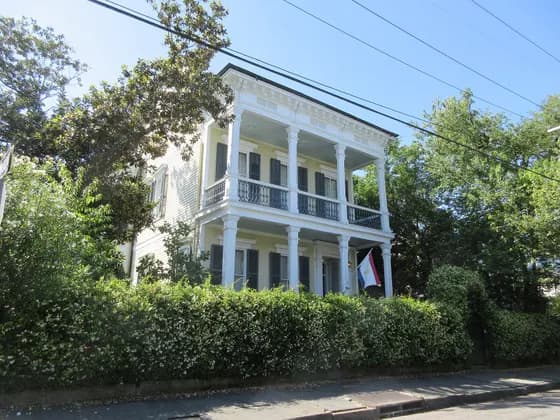


Photo: Infrogmation of New Orleans · CC BY-SA 3.0 · cropped
Photo: Infrogmation of New Orleans · CC BY-SA 4.0 · Photo: Reading Tom · CC BY 2.0 · Photo: APK · CC BY-SA 4.0
The LSU Health New Orleans School of Medicine MD program at a glance (2027 entry)
The LSU Health Sciences Center School of Medicine in New Orleans, known as LSU Health New Orleans School of Medicine or LSU School of Medicine New Orleans, offers a four-year MD. It sits in downtown New Orleans, beside University Medical Center New Orleans (UMC), its primary teaching hospital for adult care. The school expects about 200 new students for 2027; 195 entered in fall 2025.
The LSU Board of Supervisors voted to establish the school on January 3, 1931, at a meeting in Governor Huey Long's suite at the Roosevelt Hotel. Its first students arrived on October 1 that year. Its first dean, Arthur Vidrine, was also superintendent of Charity Hospital. The school still states its founding dual mission: training doctors committed to caring for the underserved, and providing healthcare for the people of Louisiana.
The first 21 months form the preclerkship, or pre-clinical, phase, taught in New Orleans and largely in the classroom. Year 1 is built mainly from single sciences; year 2 works through the body one organ system at a time. Lectures sit alongside team-based learning (TBL) and small groups. Clinical work starts in small doses, with skills labs from the first semester and a week with a primary care physician in January.
Year 3 follows a preparation period for Step 1 of the United States Medical Licensing Examination (USMLE) and brings seven core clerkships, the required clinical rotations. You take them in New Orleans, at the Baton Rouge regional campus, or in Lafayette on the Rural Scholar Track for future rural primary care doctors. The Liaison Committee on Medical Education (LCME), which accredits MD programs in the United States, has given the program full accreditation; its next full survey is due in 2033-34.
| Degree and length | MD, four years; optional full-time research year |
|---|---|
| Class size | About 200 expected for 2027; 195 entered in fall 2025 |
| Main campus | Downtown New Orleans, beside University Medical Center New Orleans |
| Teaching style | Discipline-based year 1, organ systems in year 2; lectures plus TBL |
| Anatomy | Full-body cadaver dissection in the fall of year 1 |
| First patient contact | Year 1: skills labs, then a primary care preceptorship in January |
| Grading | Honors, High Pass, Pass or Fail; some courses pass/fail |
| Step 1 timing | After year 2, ideally before year 3 begins in late June |
| Regional campuses | Baton Rouge (about 25 per class); Lafayette for Rural Scholar Track |
| Accreditation | LCME, full accreditation, next full survey in 2033-34 |
What makes the LSU Health New Orleans School of Medicine MD program different
Two clinical years at a regional campus in Baton Rouge
About 25 students per class spend years 3 and 4 in Baton Rouge, taking every third-year clerkship at Our Lady of the Lake Regional Medical Center, its children's hospital and Woman's Hospital.
Rural Scholar Track: Lafayette and a weekly rural preceptor
Up to 8 students per class who plan rural primary care careers in Louisiana spend years 3 and 4 in Lafayette. One day a week through year 3 and into year 4, each works with a rural primary care physician in or near their hometown or future practice location.
Whole-body dissection and procedures on cadavers
In the fall of year 1 you dissect an entire embalmed cadaver over a 203-hour course and practice procedures such as lumbar puncture and intubation on cadavers.
An eight-week health policy fellowship after year 1
Students working toward Honors in Health Policy spend eight weeks of the summer after year 1 in a policy office. Options include the US House or Senate, Washington, D.C. organizations and offices in New Orleans or Baton Rouge. The track ends in year 4 with a 20-page policy brief and a paper suitable for a peer-reviewed journal.
Medicine in Spanish, at home and in Guatemala
The four-year Latine Health Scholars Honors Program, for students with at least intermediate Spanish, adds medical Spanish courses, rotations with Spanish-speaking physicians and a capstone project. A Medical Spanish clinical elective also takes students to a primary care clinic in Antigua, Guatemala.
How LSU Health New Orleans School of Medicine teaches medicine
Year 1 courses are mostly single disciplines, such as gross anatomy, biochemistry and physiology, with longitudinal courses in clinical and communication skills alongside. Year 2's organ-system courses each teach one system's pathology, microbiology and pharmacology together with screening, examination, diagnosis and treatment.
Sessions mix large and small groups: lectures, TBL, small-group discussions and clinical skills labs. The curriculum goals call for basic and clinical science to be integrated across all four years. In year 2, the clinical skills small groups take up the system you are studying. The last major curriculum revision came in 2015-16, with regular smaller changes since.
Threads run alongside: population medicine and health systems in year 1, and a four-part health equity seminar series across both years. TEAM UP mixes first- and second-years from all six LSU Health schools in interprofessional team projects. In March 2026 the school said its required courses and clerkships already meet a federal benchmark of 40 hours of nutrition teaching.
The ways you will learn
| Team-based learning (TBL) | You prepare beforehand, take a short quiz alone and then with your team, and apply the material to problems. TBL runs through the year 2 systems courses and parts of year 1, and returns in clerkships such as obstetrics and gynecology (OB/GYN), where it counts toward the grade. |
|---|---|
| Clinical forums and DxR cases | In year 1, Clinical Skills Integration puts you in groups of 12 to 13 with clinical faculty to discuss professionalism, communication and culture, often by role-play. Weekly DxR computer cases build clinical problem solving. |
| Skills labs | Small-group procedure sessions. You must complete an online pretest, your ticket into the lab, and attend a review session before practicing with focused feedback. Missing a session can mean writing a five- to seven-page research paper. |
| Standardized patients | In year 3, you meet professional actors trained to play patients, relatives or colleagues. Sessions run in camera-equipped exam rooms with face-to-face feedback, and you can watch your recording afterward, except for the end-of-year Objective Structured Clinical Examination (OSCE). |
A typical week on the LSU Health New Orleans School of Medicine program
In years 1 and 2, scheduled teaching averages no more than 23 hours a week over a semester, with 25 at most in any week. That counts lectures, labs, small groups, TBL and skills sessions. With few exceptions you get at least two half-days a week with nothing scheduled.
Preparation for TBL, workshops and anatomy labs is capped at 5 hours a week, including 45 minutes before each anatomy lab. In year 2 the clinical selective and hospital rounds add up to about 5 more hours. The policy plans for at most 30 hours a week of classes, preparation and clinical work, before your own study.
On clerkships the limit is 80 hours a week averaged over the rotation, with overnight call no more than every third night and one day in seven free. After overnight call, patient care ends by 1 PM. On the internal medicine wards, call comes every fourth night and ends by 11 PM, with one to three admissions per call night. Internal medicine consult and clinic weeks have no scheduled call. Surgery teaching fills Thursday mornings, from morbidity and mortality conference at 7:30 to Cohn's Conference at 9:30.
Rotations stop for school holidays, including Mardi Gras Monday and Tuesday, Thanksgiving from Thursday to Sunday and two weeks around Christmas. Seniors on acting internships, where they work as interns, may have to work some of them.
How anatomy is taught at LSU Health New Orleans School of Medicine
Gross and Developmental Anatomy (ANAT 100) fills much of the first semester: 203 hours of lectures and lab from August to December. Students dissect an entire embalmed cadaver, and students in each dissection group get written narrative feedback from faculty.
The course stays close to the clinic. Clinicians run clinical correlations and hands-on exercises, a community radiologist lectures on imaging, and a staff surgeon discusses clinical issues tied to each dissection. In Cadaver Procedure Labs each student can perform lumbar puncture, oral intubation, chest (thoracostomy) tube insertion and urinary catheterization.
Cell Biology and Microanatomy (86 hours) follows in the spring, using virtual and glass microscope slides. Year 2's 144-hour neuroscience course adds small-group labs and imaging, including MRI. In year 4, a Surgical Anatomy elective aimed at future surgeons reviews the whole body, with students simulating open and minimally invasive operations.
When you first meet patients at LSU Health New Orleans School of Medicine
Clinical Skills Integration 101 starts in the fall of year 1 with Basic Life Support, vital signs, universal precautions and surgical scrubbing. You also learn to examine the heart, lungs, head, neck and abdomen. The spring course adds cardiac monitoring, a Stop the Bleed course and emergency assessment.
Real patients come at the start of the spring semester, in a one-week preceptorship you arrange with a primary care physician. On the current calendar it starts on January 4, 2027. Your first-year TEAM UP team also meets a Health Partner, a community volunteer, three times online to learn about their health and goals.
In year 2, history taking, examination and clinical reasoning move into clinical settings, and you choose a clinical selective to explore careers. Procedure labs across both years teach skills such as lumbar puncture, IV placement and intubation. For earlier contact, an optional four-week Primary Care Elective lets you observe primary care physicians in a rural or urban underserved practice.
The LSU Health New Orleans School of Medicine curriculum, year by year
- Year 1
Discipline-based foundations
Year 1 runs 39 weeks and 710 scheduled hours, from August 3, 2026 to May 14, 2027 on the current calendar. Most courses are single sciences, with clinical skills, health equity and interprofessional sessions alongside.
- Fall: Gross and Developmental Anatomy (203 hours), Biochemistry (70 hours), Human Behavior and Development (18 hours) and Foundations of Population Medicine and Health Systems I (20 hours).
- Spring: Human Physiology (86 hours), Cell Biology and Microanatomy (86 hours), Introduction to Medical Genetics (15 hours), Introduction to Medical Immunology (30 hours) and Population Medicine II (20 hours).
- Clinical Skills Integration 101 and 102 (78 and 60 hours): skills labs, clinical forums, weekly DxR cases and multiple-choice exams, with the primary care preceptorship opening the spring semester.
- Health Equity Leadership for Physicians Parts 1 and 2 (12 hours each): seminars led by second-year students on topics such as social determinants of health and implicit bias, with a reflection after each.
- Optional electives include Primary Care, Medical Spanish Clinical Practice, first-year Health Policy and Research electives, and Clinical Translational Science I and II.
- Year 2
Organ systems and Step 1 preparation
Year 2 runs 40 weeks and 658 scheduled hours, from late July (July 27, 2026 on the current calendar) to mid-May. A dedicated Step 1 preparation period follows in May and June.
- Fall: Foundations of Disease and Therapy (5 weeks), Neuroscience and Diseases of the Neurological-Psychiatric Systems (8 weeks, 144 hours), then the renal and cardiovascular systems (4 weeks each).
- Spring: pulmonary (4 weeks), endocrine and reproductive (5 weeks), hematologic (3 weeks), gastrointestinal (4 weeks), and musculoskeletal and dermatologic systems (3 weeks).
- Systems courses grade quizzes, TBL sessions, professionalism and, in most, skills labs, and each ends with a customized subject exam from the National Board of Medical Examiners (NBME).
- Clinical Skills Integration 201 (pass/fail) and 202: full histories and physicals, write-ups, journal club, motivational interviewing role-plays, quality improvement and a clinical selective.
- Health Equity Leadership for Physicians Parts 3 and 4 (8 hours each), led by faculty and guests, on disability, incarceration, immigration and language justice.
- Electives include Nutrition and Health, Humanities in Medicine, Introduction to Social Medicine, Peer Tutoring, and an ear, nose and throat (ENT) elective with three clinic and three operating room half-days at UMC.
- Year 3
Core clerkships
Year 3 starts with Clerkship Preparation in late June and runs as four blocks of about 12 weeks, 1,848 hours in all. Each clerkship lists core conditions whose care you must take part in and skills a faculty member must sign off, and ends with an NBME subject exam.
- Clerkship Preparation (24 hours): the electronic medical record, progress notes for a simulated patient, working with interpreters, common X-rays and eye problems, and basic surgical skills.
- Internal medicine (10 weeks): four weeks on an inpatient ward, two in outpatient clinics and four on two subspecialty consult services, plus small groups on chest X-rays and EKGs.
- Surgery (9 weeks): six weeks of general surgery and three on a subspecialty. The 2025-26 guide puts New Orleans students on trauma for three weeks and on surgical oncology, bariatric, colorectal or Cohn's service for three.
- Pediatrics (8 weeks): wards, newborn nursery or neonatal intensive care, and clinics and emergency departments.
- Obstetrics and gynecology (6 weeks), with rotating night and weekend call and a weekly half-day in a preceptor's private practice.
- Psychiatry (6 weeks), in New Orleans on inpatient, emergency and consult services.
- Family medicine (4 weeks) in a preceptor's practice.
- Neurology (3 weeks) in child neurology, epilepsy and faculty clinics, and in inpatient settings.
- A two-week, pass/fail Career Planning Elective.
- Year 4
Acting internships, electives and the Match
Year 4 runs in four-week blocks from early July to early May and is managed by the Office of Student Affairs. Besides four required courses, you take four electives and have three months of flex time for interests and residency interviews. On the current calendar, Match Day, when students learn their residency matches, is March 19, 2027, and commencement is May 13.
- Critical Concepts (4 weeks): emergency department and intensive care work, simulations and procedures, required of every senior whatever their specialty.
- A primary acting internship (4 weeks) in family medicine, internal medicine, OB/GYN, pediatrics or surgery, where you work as an intern under close supervision.
- A secondary acting internship (4 weeks) in one of those fields or in areas such as anesthesiology, emergency medicine, neurology, ophthalmology, orthopedics, psychiatry or urology.
- Four four-week electives; up to four rotations can be in one discipline, but your last elective must be in a different field.
- Special Topics (1 week, pass/fail, early May): alcoholism and drug abuse, human sexuality, nutrition, office management and financial planning.
How you are assessed at LSU Health New Orleans School of Medicine
Courses are graded Honors, High Pass, Pass or Fail, including in the preclerkship years, so most first- and second-year courses are not pass/fail. A few are, such as Clinical Skills Integration 201 and the health equity seminars. A Fail stays on your transcript even after you make it up.
Preclerkship courses give practice questions before exams, as formative feedback that does not count toward grades. In year 2, a final average below 69.5 fails a course; failing only its NBME exam earns an Incomplete and one retake.
Each third-year clerkship combines clinical evaluations, didactic grades such as TBL, and an NBME subject exam, or shelf exam: a national multiple-choice test in that specialty. Failing only the shelf earns an Incomplete, and passing the retake makes the grade a Pass. Clerkships of four weeks or more include mid-clerkship feedback, and faculty narratives feed your Medical Student Performance Evaluation (MSPE), the summary letter sent with residency applications.
Clinical skills are tested with standardized patients. After a half-day of three scenarios during year 3, you sit a six-scenario OSCE at the end of the year. Completing it is a graduation requirement.
The USMLE is the national exam series for a US medical license. Step 1, on the science behind medicine, has been pass/fail only since January 26, 2022. You prepare for it after second-year classes end in mid-May, and the school's USMLE Guidebook recommends sitting it before year 3 begins, usually at the end of June. Step 2 CK, on clinical knowledge, comes after year 3, at least four weeks before your residency application deadline.
In August 2026 the USMLE program announced a move to designated testing dates from January 2029, with Step exams offered less often each year. Its June 2026 announcement had named 2028. On the current schedule, a student entering in 2027 would sit Step 1 in about May or June 2029, a few months after the switch. Step 2 CK would follow after year 3 ends in June 2030, so both would fall under the new model. These are projections from the 2026-27 calendar, not published dates.
- You must pass Step 1 before senior rotations other than flex blocks, and within a year of your first attempt. Both Step 1 and Step 2 CK must be passed to graduate, and a third failure of either means dismissal. The preclerkship and clinical phases must each be finished within three calendar years, not counting leaves of absence.
- Surgery clerkship (2025-26 guide): shelf 30%, general surgery evaluation 25%, subspecialty evaluation 15%, and 10% each for a suture skills lab, didactics and professionalism.
- OB/GYN clerkship (from July 1, 2026): shelf 50%, TBL 30%, preceptor evaluation 15%, professional responsibility 5%; you need at least 62 on the shelf to pass.
- Psychiatry clerkship (department page): shelf 40%, TBL quizzes 40%, clinical skills evaluation 10%, attendance and professionalism 10%; the shelf must be passed.
LSU Health New Orleans School of Medicine clinical rotations: where you will actually train
Everyone spends years 1 and 2 in New Orleans. For years 3 and 4 you are based in New Orleans, at the Baton Rouge regional campus, or, on the Rural Scholar Track, in Lafayette. The curriculum pages name Baton Rouge and Lafayette as regional campuses whose students take all third-year rotations there. New Orleans-based students do most rotations in the city but can do some at regional sites.
In New Orleans the anchor is University Medical Center New Orleans (UMC), part of LCMC Health. UMC opened on Canal Street in August 2015 and has 446 licensed inpatient beds. The dean describes it as the replacement for Charity Hospital and the school's primary teaching hospital for adult care. Pediatrics is based at Manning Family Children's Hospital (formerly Children's Hospital New Orleans). The New Orleans VA Medical Center lists an LSU teaching affiliation, and LSU's physical medicine and rehabilitation section says many students rotate through its VA clinic.
Baton Rouge became a full regional campus in 2014-15. About 25 students per class are assigned there for years 3 and 4: applicants can ask for it, and if fewer than 25 do, a lottery at admission assigns the rest. Other students rotate there for internal medicine, surgery and OB/GYN.
Students assigned to Baton Rouge take all third-year clerkships there, so most relocate. In year 4 they may rotate elsewhere, except for Critical Concepts, which they take in Baton Rouge. The admissions page says these students are required to arrange their housing in Baton Rouge. The Baton Rouge campus page says a student who moves back to New Orleans for year 4 remains a Baton Rouge campus student and is not eligible for free student housing in Baton Rouge.
Rural Scholar Track students have taken all their clerkships in Lafayette since 2003, and other New Orleans students rotate there for internal medicine, surgery, family medicine and OB/GYN. For the four-week family medicine clerkship you join a preceptor's practice in the state and may live in that community, with free housing in the Bogalusa, Lafayette, Lake Charles and Alexandria areas. Assignments follow the clerkship's educational needs, not your preference.
The Primary Care Programs offer extra options for students interested in primary care. Their pages add that New Orleans-based students in them enter the clerkship lottery and can be given preference for Lafayette, Baton Rouge, Bogalusa or Lake Charles.
UMC hosts the psychiatry clerkship's adult inpatient units and behavioral health emergency room, and Touro hosts senior rotations, including in its neonatal intensive care unit. Ochsner Medical Center-Kenner hosts internal medicine acting internships and electives, a family medicine secondary acting internship and a family medicine clinic.
- University Medical Center New Orleans (UMC)
- Manning Family Children's Hospital and its Calhoun Campus
- Touro Infirmary
- Ochsner Medical Center-Kenner
Pediatrics moved to the children's hospital when it opened in 2019, and Woman's Hospital hosts OB/GYN. Family medicine uses Baton Rouge practices too, but you need your own housing. The campus also lists Baton Rouge General among its clinical sites.
- Our Lady of the Lake Regional Medical Center
- Our Lady of the Lake Children's Hospital
- Woman's Hospital
- Baton Rouge General
Rural Scholar Track base; the last two are psychiatry clerkship sites.
- Ochsner University Hospital & Clinics
- Ochsner Lafayette General Medical Center
- Genesis Behavioral Health Hospital
- Acadiana Area Human Services District
Family medicine clerkship sites. Bogalusa and Lake Charles also host family medicine acting internships.
- Our Lady of the Angels Hospital, Bogalusa
- Lake Charles Memorial Health System
- Family medicine preceptors around Alexandria
Electives, selectives and away rotations at LSU Health New Orleans School of Medicine
Year 3's two-week, pass/fail Career Planning Elective lets you try a field you might choose for residency. Options include fields year 3 otherwise leaves out, such as ophthalmology, emergency medicine, radiology, pathology, dermatology and anesthesiology, or a second surgical subspecialty.
In year 4 you pick four four-week electives. The 2026-27 list runs from cardiology and the medical intensive care unit to burn and reconstructive surgery, interventional radiology, addiction psychiatry and narrative medicine. Some prepare you for internship, such as an OB/GYN Boot Camp and Launchpad, an intern preparedness course for internal medicine. A few are for Rural Scholar Track students only.
Away rotations are possible: the catalog lists out-of-state electives in 17 fields, and the 2026-27 offerings add an External Clinical Experience of one to four weeks. Rotations outside Louisiana need an affiliation agreement requested at least two months ahead, and you buy liability insurance if the host requires it.
Family medicine runs the Global Health and Social Medicine electives: a two-week, pass/fail course in year 3 and a longer senior version, both with supervised clinical work abroad. The department lists programs in Peru, Chile, Honduras, Guatemala and Brazil. In 2026 the Medical Spanish clinical elective in Antigua, Guatemala ended with a community health screening run in Spanish.
Closer to home, the DIME elective puts medicine, nursing, pharmacy and social work students together to manage patients with uncontrolled diabetes in an LSU clinic, half a day a week.
Dual degrees and research years at LSU Health New Orleans School of Medicine
The MD/PhD takes seven or more years: the first two years of medical school, about three to four years of graduate research for the PhD, then years 3 and 4. You usually pick a mentor and program in year 2. PhD fields range from biochemistry and genetics to neuroscience and interdisciplinary oncology, and the school counts 40 MD/PhD students.
The four-year MD/MPH with the LSU School of Public Health adds 37 credit hours. It starts with an MPH summer semester before year 1. In 2026 that semester ran from May 20 to July 10. A practice experience follows in the second summer, and a culminating experience comes in spring of year 4. Concentrations are Community Health Science and Policy; Environmental Health, Climate and Sustainability; and Epidemiology and Population Health. The school counts 60 MD/MPH students.
Without a second degree, you can take an optional full-time research year at LSU or elsewhere, with the deans' approval. The Honors Research Program is for students who did well in year 1 and have research experience. You research part-time through years 2 to 4 and publish or submit a thesis by spring of year 4, graduating with Honors in Research.
About 30 students a year join a seven-week summer research internship, with mentors at LSU Health, UMC, Pennington Biomedical or Manning Family Children's Hospital. Research electives in years 1 to 3 teach you to plan a project, write a protocol and present results, and a four-week senior research elective follows.
A separate Integrated OMS MD Program admits 4 oral and maxillofacial surgery residents a year directly into year 2, counting their dental education in place of year 1.
Facilities and support at LSU Health New Orleans School of Medicine
Where you will learn
Skills training starts early in year 1 in the Isidore Cohn, Jr., MD Student Learning Center, which has four simulation and demonstration labs and eight small-group teaching rooms. Flooded by Hurricane Katrina in 2005, it reopened in 2009 above the Russell C. Klein Center for Advanced Practice, which has simulation classrooms, a simulation operating room and a 32-station cadaveric surgery classroom.
The Center for Advanced Learning and Simulation (CALS) opened in December 2023 in the former Hotel Dieu, the Interim LSU Hospital after Hurricane Katrina until UMC opened in 2015. It holds 16 standardized patient exam rooms, six simulation rooms, a simulated emergency department with 10 bed spaces and a 16-station fresh-tissue lab.
Baton Rouge's Medical Education and Innovation Center has a 100-seat lecture hall that divides into four rooms, a medical library and an 8,800-square-foot simulation center with three high-fidelity simulation labs. In New Orleans, the John P. Isché Library fills three floors of the Resource Center Building.
Support while you study
The Office of Student Affairs helps with academic and personal problems, and its deans are among those you can contact about clinical supervision or work hours. Its learning specialists offer 30- or 60-minute one-on-one appointments, in person or online, on study plans, test-taking, time management, test anxiety and Step preparation.
Second-years who earned Honors or High Pass in a first-year course can apply to tutor it through the Peer Tutoring Elective. The Student Government Association runs freshman peer groups, and Primary Care Programs students get primary care faculty mentors.
The free Campus Assistance Program offers counseling, with a counselor on call 24 hours a day, and the Student Health Clinic provides primary care and mental health help. Doctors who treat you play no part in grading you.
The Aesculapian Society, elected by each class, collects student evaluations of every required course and clerkship. If a weather emergency closes a campus, students on rotations there are excused. Those on rotations elsewhere with family or property in the area get up to 48 hours to deal with it.
Is the LSU Health New Orleans School of Medicine program right for you?
This program may suit you if
- You want to dissect a whole cadaver in your first semester and try procedures such as lumbar puncture and intubation on cadavers.
- You would welcome clinical years outside New Orleans, at the Baton Rouge regional campus or on the Rural Scholar Track in Lafayette.
- You are aiming at primary care in Louisiana, which the Rural Scholar Track, the Primary Care Programs and a statewide family medicine clerkship all support.
- You want public health and policy in your training, through the MD/MPH or the eight-week health policy fellowship after year 1.
- You speak Spanish, or want to use it with patients, through the Latine Health Scholars program or the clinical elective in Guatemala.
Things to think about
- Year 1 is mostly single-subject sciences taught largely in the classroom, and full-time clinical work waits until year 3.
- Preclerkship courses are graded Honors, High Pass, Pass or Fail rather than pass/fail, and the Honors Research Program looks at first-year performance.
- If fewer than 25 applicants ask for Baton Rouge, a lottery at admission assigns the rest, so you could spend years 3 and 4 there.
- Family medicine assignments follow educational need, not preference, so you may spend four weeks living in Bogalusa, Lafayette, Lake Charles or Alexandria.
- Rural Scholar Track places carry a contract: a tuition waiver in return for practicing primary care in rural Louisiana, 15 months for each year waived.
LSU Health New Orleans School of Medicine MD program — frequently asked questions
Applying to LSU Health New Orleans School of Medicine?
How to get into LSU Health New Orleans School of Medicine
Prerequisites, MCAT, AMCAS personal statement, secondaries and interview, step by step.
Open the guide →LSU Health New Orleans School of Medicine admissions profile
MCAT and GPA profile, acceptance rate, interview format and key dates.
See the profile →Compare LSU Health New Orleans School of Medicine with other schools
Put the teaching style, anatomy teaching and clinical sites next to another school.
Open the comparison →Prepare for the LSU Health New Orleans School of Medicine interview
Format breakdown, school-specific sample questions and prep tips from tutors who interviewed here.
Read the guide →Where this LSU Health New Orleans School of Medicine program guide came from
This guide was written from 78 official sources — LSU Health Sciences Center School of Medicine in New Orleans's own program pages and curriculum documents, plus the accreditor and the hospitals and health systems the school trains students in where they publish detail — read on 2026-10-24, then checked claim by claim against those sources.
- LSU Health New Orleans School of Medicine: School of Medicine Curriculum
- Office of Undergraduate Medical Education: the MD program
- LSUSOM Curriculum Schematic 2025-26
- Office of Admissions: Curriculum Overview for Applicants, including Baton Rouge campus assignment
- LSUHSC New Orleans Catalog/Bulletin 2026-2027: Doctor of Medicine program
- LSUHSC New Orleans Catalog/Bulletin 2026-2027: Doctor of Medicine curriculum, hours and course descriptions
- Catalog/Bulletin 2026-2027: Grading and Evaluation of Performance
- Catalog/Bulletin 2026-2027: Graduation requirements
- Catalog/Bulletin 2026-2027: Standards, promotion and USMLE requirements
- Catalog/Bulletin 2026-2027: School of Medicine calendar
- LSU School of Medicine Academic Year 2026/2027 Calendar
- 2026-2027 senior (L4) block dates
- School of Medicine Student Handbook 2026-2027
- LSU School of Medicine USMLE Guidebook 2026-2027
- Clinical Handbook for Faculty, Residents and Fellows, AY 2026-2027 (revised April 2026)
- Policy on Preclerkship Phase Workload, approved June 2024
- Policy on Clerkship Failures and Remediations, approved June 2023
- LSU School of Medicine Curriculum Goals
- Clinical Skills Integration 101 and 102
- Clinical Skills Integration 101 and 102 skills labs
- Clinical Skills Integration skills lab policies
- LSU Health New Orleans School of Medicine Standardized Patient Project
- Learning Center: Standardized Patient Project facility
- Center for Advanced Learning and Simulation (CALS)
- Learning Centers fact sheets
- Isidore Cohn, Jr. MD Student Learning Center
- Russell C. Klein M.D. Center for Advanced Practice
- LSU Department of Medicine: medicine clerkship and acting internships
- Department of Medicine: MED 300 Student Expectations (revised December 2025)
- Department of Surgery: students and weekly didactics
- LSUHSC Surgery Clerkship Information and Resources, AY 2025-26
- Department of Pediatrics: student education and clerkship
- Department of OB/GYN: Obstetrics and Gynecology 300 (third year)
- Department of OB/GYN: clerkship grading policy, effective July 1, 2026
- Department of Psychiatry: student clerkship
- Department of Family Medicine: third-year clerkship
- Department of Family Medicine: fourth-year courses
- Department of Family Medicine: affiliated hospitals and clinics
- Senior Rotation Offerings 2026-2027 (electives and acting internships)
- Baton Rouge Regional Campus
- Baton Rouge Regional Campus: medical student curriculum
- Baton Rouge Regional Campus: clinical sites
- Baton Rouge Regional Campus: Medical Education and Innovation Center
- Baton Rouge Regional Campus: Simulation and Innovation Center
- LSUHSC Lafayette medical education: letter from the Associate Dean
- LSUHSC Lafayette: Rural Scholars Track
- Primary Care Programs: Rural Scholar Track
- Primary Care Programs, Department of Family Medicine
- Global Health and Social Medicine electives (FMMD 310 and 410)
- Diabetes Interprofessional Medical Education (DIME) elective
- Office of Admissions: MD/PhD, MD/MPH, Integrated OMS MD, Honors and other programs
- LSU Health New Orleans School of Graduate Studies: MD/PhD Program
- MD/MPH four-year curriculum
- MD/MPH admission information and Summer 2026 dates
- Office of Medical Student Research: research programs
- Latine Health Scholars (LHS) Honors Program
- The Pulse, June 2026: medical students travel to Guatemala with the Clinical Medical Spanish Elective
- Aesculapian Society
- Office of Student Affairs: academic support
- LSU Health New Orleans School of Medicine home page (mission and student numbers)
- Dean's welcome letter
- Office of Admissions: campus description, with the teaching hospital adjacent to the academic campus
- Timetable of application for the 2027 first-year class (estimated new entrants)
- Office of Admissions: fall 2025 entering class
- The Pulse, June 2026: School of Medicine graduates 195
- LSU Health New Orleans School of Medicine: accreditation
- LSU Health New Orleans School of Medicine: LCME accreditation
- LCME directory of accredited programs (updated October 14, 2026)
- LSU Health New Orleans IPECP: TEAM UP overview
- LSU Health New Orleans IPECP: Health Partner Project
- LSU Health New Orleans news, March 18, 2026: nutrition training for future physicians
- University Medical Center New Orleans (LCMC Health): about us
- VA Southeast Louisiana Health Care: teaching affiliations of the New Orleans VA Medical Center
- LSU Department of Medicine, Physical Medicine and Rehabilitation: rotations
- USMLE: Step 1 pass/fail only score reporting from January 26, 2022
- USMLE announcement: Designated Testing Dates transition will take place in January 2029
- USMLE Designated Testing Dates Information Hub (lists the August 6, 2026 announcement)
- USMLE announcement of June 23, 2026, naming 2028 (since updated)
Curricula are restructured between cycles. Anything here that decides your application — how anatomy is taught, a clinical campus assignment, a required research year — should be confirmed against the official page for your entry year.
Applying to LSU Health New Orleans School of Medicine?
We help US applicants with MCAT strategy, the AMCAS personal statement, secondary essays and interview prep — everything you need for a competitive LSU Health New Orleans School of Medicine application.