
The University of Illinois College of Medicine MD program
What you actually study, and where you will be
University of Illinois College of Medicine's MD is a 4-year program taught through case-based learning in an integrated curriculum, with patient contact from Year 1 and clinical rotations in Chicago, Peoria, Rockford and rural communities across Illinois (2027 entry). The University of Illinois College of Medicine teaches one MD curriculum at three campuses, Chicago, Peoria and Rockford, and you spend all four years on the campus you are assigned after acceptance. A 20-month pre-clerkship phase of block courses, cadaver dissection and clinical skills, with patients from your first block, ends with USMLE Step 1. Clerkships start in late April of Year 2, and Year 4 adds a sub-internship, acute care and electives.
- Degree
- MD
- Length
- 4 years
- Teaching
- Case-based learning + Integrated
- Clinical contact
- Year 1

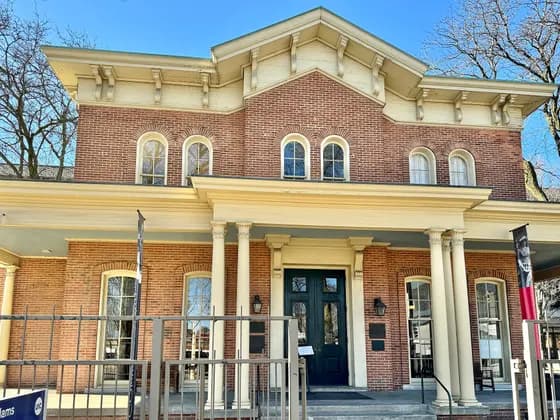
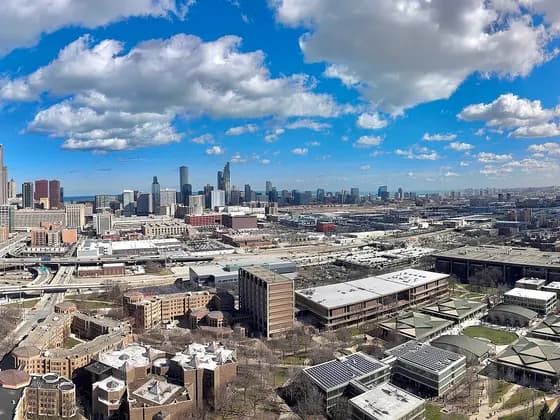
Photo: Teresa Grau Ros · CC BY-SA 2.0 · cropped
Photo: w_lemay · CC BY-SA 2.0 · Photo: Wiknown77 · CC0 · Photo: Ron Cogswell · CC BY 2.0
The University of Illinois College of Medicine MD program at a glance (2027 entry)
The University of Illinois College of Medicine (UI COM), part of the University of Illinois Chicago (UIC), awards the MD after a four-year program taught at three campuses: Chicago, Peoria and Rockford. Each campus provides all four years, and the 2026-27 UIC catalog says the curriculum and assessments are identical across them. You are assigned to one campus after you accept an offer and stay there for the whole program.
The curriculum is called the Illinois Medicine Curriculum and runs in three phases. Phase 1 is the 20-month pre-clerkship stage, before clinical rotations begin: block courses, most of them organized by organ system, with a Doctoring and Clinical Skills course running alongside. It ends with Step 1 of the United States Medical Licensing Examination (USMLE), the national licensing exam series. Phase 2, from late April of Year 2, brings the seven core clerkships, the required clinical rotations. Phase 3, in Year 4, adds a sub-internship, where you take on much of an intern's role, plus acute care, electives and a course on the move to residency.
Phase 1 is pass/fail and mixes cases, team-based learning, labs and small groups, with patient contact from your first block and cadaver dissection from Block 3. Clerkships are graded Honors, High Pass, Pass or Fail.
Chicago's campus is in the Illinois Medical District, with UI Health, the university's own health system, and affiliates across Chicagoland. Peoria's downtown campus is within six blocks of more than 900 hospital beds, a Level I trauma center and a children's hospital. Rockford shares its campus with nursing and pharmacy colleges and the National Center for Rural Health Professions. The college's undated admissions FAQ lists first-year classes of 180 in Chicago, 65 in Peoria and 55 in Rockford.
| Degree | MD, accredited by the Liaison Committee on Medical Education (LCME) |
|---|---|
| Program length | 4 years; MD/MPH within 4, other joint degrees 5, MD/PhD about 8 |
| Curriculum | Illinois Medicine Curriculum: Phase 1 pre-clerkship, Phase 2 clerkships, Phase 3 senior year |
| Campuses | Chicago, Peoria or Rockford, assigned after acceptance, for all four years |
| Class size | About 300: Chicago 180, Peoria 65, Rockford 55 (admissions FAQ) |
| Teaching style | Organ-system blocks with case-based and team-based learning |
| Anatomy | Cadaver dissection, Block 3 (January, Year 1) to Block 7 (December, Year 2) |
| First patient contact | Block 1 of Year 1, in Doctoring and Clinical Skills |
| Grading | Pass/fail in Phase 1; Honors, High Pass, Pass or Fail in clerkships |
| Step 1 timing | By late March of Year 2; about March 2029 for 2027 entrants (projected) |
What makes the University of Illinois College of Medicine MD program different
Three campuses, each teaching all four years
Chicago, Peoria and Rockford each run the whole MD with the same curriculum and assessments. You are assigned to one after accepting, and stay there.
Two structured routes into rural medicine
Rockford's Rural Medical Education Program adds rural seminars, field trips and projects through all four years and a 16-week rural preceptorship. Peoria's Rural Student Physician Program places each student in one rural Illinois town for 24 weeks of Year 3.
Ten optional concentrations that add no time
Scholarly concentrations run alongside the MD for four years. Three are offered on every campus, in clinical executive leadership, medical education and artificial intelligence in medicine; others, such as Innovation Medicine in Chicago, belong to one or two campuses.
A three-part course that bridges to residency
Clinical Connections and Competencies has three parts: Transition to Clerkships at the end of Year 2, five Clinical Intersections days in Year 3 and Transition to Residency in Year 4. It drills procedures and tracks your progress on the tasks a new intern must handle.
How University of Illinois College of Medicine teaches medicine
Phase 1 has seven block courses of 5 to 10 weeks. Blocks 1 and 2 cover how the body works and how disease develops. From Block 3, each block takes a set of related organ systems, so the anatomy, physiology, disease and drug treatment of the heart and lungs, for example, are learned together.
The college says most in-person time is active learning. Scheduled sessions include lectures and flipped classrooms, core cases, team-based learning, labs, small-group discussions, encounters with standardized patients (people trained to play patients) and clinical experiences. Chicago's Phase 1 page says pre-work is often assigned from ScholarRx, an online platform of short interactive modules and practice questions that the college has provided since 2024-25.
Three themes run through Phase 1: Professional Development; Health, Illness and Society; and Health Care Systems. Week-long Synthesis periods between blocks pause new material, using cases that cross organ systems and mentored small groups on professional identity, wellness and careers.
The ways you will learn
| Team-based learning | You prepare before class, take a short readiness test on your own, then retake it with your team for immediate feedback. Team-based sessions continue in Clinical Intersections and Transition to Residency in Years 3 and 4. |
|---|---|
| Case-based learning | Block courses deliver much of their content through cases in classroom or lab sessions, called core cases in the college's workload policy. Every block asks you to build and rank a differential diagnosis, the list of possible causes, from a patient's history, examination and test results. |
| Doctoring and Clinical Skills (DoCS) | This course runs through Phase 1, following the same organ-system order as the blocks. It mixes small-group discussion, practice with patient-instructors and classmates, simulation for teaching and assessment, and clinical experience in hospitals and primary care offices. In Peoria it includes the Early Longitudinal Immersion Interprofessional Team Experience (ELI²TE), two years in an assigned primary care practice. |
| Medical Colloquia | Lectures, seminars and short talks by faculty, students and guest speakers on medicine in the news, other health professions and health systems. You write periodic reflective reports, with written faculty feedback at least once a year. |
A typical week on the University of Illinois College of Medicine program
College policy caps Phase 1 at 28 hours of scheduled activities in a seven-day week and expects total coursework, including preparation and quizzes, to stay under 60 hours. Each week must include at least two half-days of protected study time. Sessions are marked attendance-mandatory or attendance-recommended.
Each week of a block brings a closed-book quiz of about 20 questions, including material from earlier blocks. Credit comes from completing the quiz and then reviewing it, not from your score. Each block also has one or two checkpoint tests of about 30 questions.
College rules cap required clinical hours at 80 a week averaged over a month, limit shifts to 16 hours and give you a full day to study before each clerkship exam. On Chicago's internal medicine clerkship, weekdays start around 7 a.m. and end around 5 p.m. when you are not on call, with one day off a week on average.
How anatomy is taught at University of Illinois College of Medicine
Anatomy is taught through dissection of donated bodies in the gross anatomy lab. Lab work starts in Block 3, Skin, Muscle and Movement, in January of Year 1 and runs through Block 7 in December of Year 2. The block order partly follows the logic of dissection, starting with skin and muscles and finishing with the pelvic floor and reproductive organs.
Blocks 3 to 6 each include an anatomy lab practical. Because donor tissue is perishable, an excused absence gets a make-up within 10 days, and there is no other chance to sit it after that. Imaging runs alongside, with block objectives asking you to read X-rays, CT and MRI scans and match them to anatomy and examination findings.
Anatomy ends with a Service of Gratitude for the donors and their families during Year 2. On the Rockford campus, a 2017 remodel of the East Building added a Gross Anatomy Laboratory, a Virtual Anatomy Laboratory and a team-based learning classroom. In Peoria, fourth-year students on the Advanced Anatomy elective dissect again and help teach in the cadaver lab.
When you first meet patients at University of Illinois College of Medicine
Patient contact begins in Block 1, when you meet your first patients as a medical student and practice communication, history taking and vital signs. Through Phase 1, Doctoring and Clinical Skills builds up to complete histories and examinations on hospital patients.
Peoria's ELI²TE assigns you at the start of Year 1 to an internal medicine, medicine-pediatrics, pediatrics or family medicine practice within 50 miles of Peoria. You work with the whole team, from receptionist and phlebotomist to physician, rooming patients and taking focused histories and examinations. The college says Chicago students go on rounds and take patient histories from their first year.
In Rockford, students who shadow UI COM faculty and log the visit may interview and examine patients under supervision. Block 9 adds a hospital immersion with feedback from residents or senior students, just before clerkships start in late April.
The University of Illinois College of Medicine curriculum, year by year
- Year 1
Foundations, then the body systems
Year 1 opens with orientation in early August and two broad blocks on the healthy body and disease, then turns to the organ systems in January. Doctoring and Clinical Skills runs all year and Medical Colloquia through fall and spring, with a Synthesis week after most blocks. Classes end in June, leaving an eight-week summer.
- Block 1, Body Systems and Homeostasis 1 (7 weeks): normal structure and function, the foundational sciences, epidemiology and biostatistics, and how large language models work and where they fall short in patient care.
- Block 2, Pathogenesis (8 weeks): how disease starts and progresses, microbiology, immunology and infection, and an introduction to cancer and its treatment.
- Block 3, Skin, Muscle and Movement (6 weeks): skin, muscle and bone, orthopedic and rheumatologic problems, pain management and your first weeks of dissection.
- Block 4, Circulation and Respiration (9 weeks), then Block 5, Digestion and Homeostasis 2 (7 weeks): heart and lung disease, followed by the gut, kidneys, diabetes and nutrition.
- Peoria's 2026-27 calendar shows a history-taking OSCE (objective structured clinical examination, a timed circuit of standardized-patient stations) in the fall. Exams from the National Board of Medical Examiners (NBME), which co-sponsors the USMLE, fall in the December and May Synthesis weeks.
- Year 2
Brain, hormones, then Step 1
Year 2 completes the organ systems by December. The spring belongs to Block 8, the Synthesis Capstone, built around USMLE Step 1, and a two-week course that readies you for the wards before clerkships begin in late April.
- Block 6, Brain and Behavior (10 weeks): the central nervous system, special senses, development across the lifespan and psychiatric disorders.
- Block 7, Regulation and Reproduction (5 weeks): endocrine and reproductive systems, finishing anatomy with the pelvic floor and reproductive organs.
- Block 8 part 1 (4 weeks, January): cases that tie the systems together, plus the NBME's Comprehensive Basic Science Self-Assessment and Comprehensive Basic Science Examination.
- Eight weeks of dedicated Step 1 study, then two final weeks of Block 8 after the exam.
- Block 9, Transition to Clerkships (2 weeks): procedures such as IV placement, phlebotomy, nasogastric tubes and blood gases, plus note writing, electronic records and a hospital immersion.
- Year 3
Seven core clerkships
Phase 2 runs from late April to the next April. You rotate through the seven core clerkships, 44 weeks in all, plus elective time, with short breaks in October and over the winter holidays.
- Internal medicine and surgery, 8 weeks each; family medicine, obstetrics and gynecology, pediatrics and psychiatry, 6 weeks each; neurology, 4 weeks.
- Each clerkship ends with an NBME subject exam, often called a shelf exam: a national multiple-choice test in that specialty. You must pass it as well as your clinical evaluations.
- Required clinical experiences for every clerkship, such as at least 30 scrubbed operations and 30 logged skills in surgery.
- Elective time: Peoria schedules at least four weeks, and Chicago offers two-week introductory electives in fields such as dermatology, transplant surgery and urology.
- Five Clinical Intersections days, with small-group sessions on the challenges facing physicians and practice in basic procedures.
- The Graduation Competency Examination at the end of the year; on the Chicago campus it is four standardized-patient encounters and a hospital admission case.
- Year 4
Sub-internship, electives and the Match
Phase 3 starts in late April. You take more responsibility for patients, explore specialties, sit Step 2 CK, the licensing exam on clinical knowledge, and apply and interview for residency. You must finish your graduation requirements by early June to receive a May diploma and take part in that year's residency Match.
- A 4-week sub-internship, mostly inpatient, with primary responsibility for your patients under a resident or attending physician; since 2025-26 every sub-internship must be done within UI COM.
- Four weeks of acute care in emergency medicine or an intensive care unit.
- Twelve weeks of physician-assessed, patient-facing electives.
- Open electives to complete the 16 weeks required across Years 3 and 4.
- Transition to Residency, a 2-week spring course that reviews core knowledge and skills and your progress on entrustable professional activities, the tasks a new intern should do without direct supervision.
- Rockford's rural program replaces the patient-facing electives and part of the open electives with its 16-week preceptorship, and its students may take Transition to Residency in December.
How you are assessed at University of Illinois College of Medicine
Every Phase 1 course is graded Pass, Pass after Initial Fail or Fail. A block grade combines attendance (10%), weekly quizzes and team-based learning scores (30%), checkpoint tests (10%), anatomy practicals in Blocks 3 to 6 (5%) and a final exam. The final, about 100 questions in the format of national board exams, carries 45 to 50% and must be passed on its own.
Core clerkships are graded Honors, High Pass, Pass or Fail, as are other clinical courses of four weeks or more; shorter courses are Satisfactory or Unsatisfactory. On the 2026-27 scales, a clerkship grade adds clinical points (6 for Pass, 8 for High Pass, 10 for Honors) to points for your NBME exam (up to 6, or 5 in internal medicine). Honors needs 14, so it takes strong exams as well as strong ward work.
The USMLE is the exam series state medical boards use in licensing. Step 1, on the sciences behind medicine, has been pass/fail since January 26, 2022; Step 2 CK is still scored. At UI COM you sit Step 1 by a college deadline in late March of Year 2 and must pass it to be promoted to Year 3. You must also pass Step 2 CK to graduate, sitting it once at least six core clerkships are done.
In August 2026 the USMLE program announced a move to designated testing dates from January 2029, with Step exams offered less often each year. Its June 2026 notice had named 2028. The USMLE says each year's testing dates will be published more than a year in advance.
On the current schedule, a student entering in August 2027 would begin dedicated Step 1 study around the start of February 2029 and sit by late March 2029. Step 1 would therefore come soon after the switch, so you would sit it on one of the designated testing dates. Step 2 CK would also be taken on a designated date, once the clerkship year ends in late April 2030. The college reminds students to allow time for a score before residency applications reach programs in late September. These dates are projected from the Class of 2029 calendar, the latest posted.
The Liaison Committee on Medical Education (LCME) accredits MD programs in the United States. Its directory, updated October 14, 2026, lists the college's accreditation status as full, first granted in or before 1942, with its next survey shown as 2025-26. The college scheduled its latest full survey visit for April 20 to 22, 2026. For MD students, an LCME-accredited school is what makes you eligible for Step 1 and Step 2 CK; students at osteopathic (DO) schools and graduates of eligible schools abroad qualify through other routes.
- An unmet requirement is a failed first attempt that you can retake. Three in Year 1, or two in Year 2, halt your progress, and the college may then allow one repeat year.
- Doctoring and Clinical Skills is graded pass/fail each term on clinical skills, standardized-patient encounters, OSCEs, attendance and professionalism. Peoria's calendar shows a mock OSCE in the fall of Year 2 and an OSCE in the spring.
- Clerkships can begin while you wait for your Step 1 result, but a fail stops you starting new clinical courses until you pass.
- Fail a shelf exam but pass clinically, and you retake it after directed study; passing the retake passes the clerkship, but not with Honors. A clinical failure means repeating the whole clerkship, with Pass as the top grade.
- Every clerkship of four weeks or more includes a formal midpoint feedback meeting, and each core clerkship includes at least one observed history and one observed physical or mental status exam.
- Your class quartile in the Medical Student Performance Evaluation (MSPE), the summary sent with residency applications, is based on a 100-point score. Pass/fail Phase 1 gives 44, reduced only for setbacks, and the seven clerkship grades give up to 56.
- You must pass the Graduation Competency Examination to graduate; it uses standardized patients to test communication, history taking, examination, diagnosis and documentation.
- If you start in 2026 or later, you must finish Phase 1 and pass Step 1 within three years, and complete the MD within six.
University of Illinois College of Medicine clinical rotations: where you will actually train
Your campus decides where you train, because you stay on it for all four years. Peoria students do their Year 4 sub-internship in Peoria.
Chicago students rotate at UI Health's University of Illinois Hospital and at affiliates across Chicagoland, including Jesse Brown VA Medical Center, Cook County Health's Stroger Hospital and three Advocate hospitals. You arrange your own transport. The campus cannot give site preference to students without a car, and the family medicine sites at Mile Square and LaGrange Memorial Hospital say you need a car. Two students on the same clerkship can swap sites if both ask at least six weeks ahead.
At University of Illinois Hospital, students on the internal medicine clerkship join one of five general medicine teams or the cardiology or oncology service, and obstetrics and gynecology splits into three weeks of each. Surgery there is two weeks of general surgery plus three two-week specialty blocks, such as transplant or pediatric surgery. At Jesse Brown VA, the surgery clerkship is eight weeks of general surgery, with night call every fifth night.
Peoria's clerkships take place mainly at OSF Saint Francis Medical Center and Carle Health. OSF Saint Francis is a Level I trauma center that contains OSF HealthCare Children's Hospital of Illinois, and Carle's Methodist Hospital stands next to campus. In Peoria's family medicine clerkship, as the department describes it, you spend three weeks with a community preceptor. You then spend a week each in the residency clinic, on the inpatient service and on the maternal-neonatal-pediatric service at Carle Health Methodist.
Rockford's own clinical operations include Mile Square Health Center–L.P. Johnson Rockford, MERIT (the Medical Evaluation Response Initiative Team, a pediatric forensics program) and correctional health care services. Affiliates include UW Health SwedishAmerican Hospital and Mercy Health. Rockford's rural program sends students to rural hospitals across Illinois, with options in tribal regions of Northern California and Wyoming. Peoria's Rural Student Physician Program is a longitudinal integrated clerkship: for 24 weeks of Year 3 you cover six specialties at once in one rural town, with local physician mentors.
Clerkship sites across Chicagoland; you arrange your own transport.
- UI Hospital and Clinics (UI Health)
- Jesse Brown VA Medical Center
- Cook County Health (John H. Stroger, Jr. Hospital)
- Advocate Christ Medical Center
- Advocate Illinois Masonic Medical Center
- Advocate Lutheran General Hospital
- St. Joseph Hospital (Ascension Illinois)
- St. Francis Hospital, Evanston
- Mount Sinai Hospital
- Lurie Children's Hospital
- Madden Mental Health Center
- Hartgrove Mental Health Center
- Mile Square Health Center clinics
- University Village Family Medicine
More than 900 hospital beds within six blocks of campus.
- OSF Saint Francis Medical Center
- OSF HealthCare Children's Hospital of Illinois
- Carle Health Methodist Hospital
- Jump Simulation
- ELI²TE primary care practices within 50 miles of Peoria
Based on the UIC Rockford campus.
- Mile Square Health Center–L.P. Johnson Rockford
- UW Health SwedishAmerican Hospital
- Mercy Health
- Rosecrance Health Network
- Beloit Health System (Wisconsin)
Towns on Peoria's rural program list, not all active every year, plus the hospitals that host Rockford's 16-week rural preceptorship.
- Breese
- Canton
- Effingham
- Galesburg
- Geneseo
- Gibson City
- LaSalle-Peru
- Macomb
- Mattoon
- Ottawa
- Pontiac
- Silvis
- Rural Medical Education Program (RMED) hospitals across Illinois
Electives, selectives and away rotations at University of Illinois College of Medicine
You need 16 weeks of open electives, which you can take in Year 3 or Year 4, in any mix of clinical, research, non-clinical and individualized courses. Offerings differ by campus, but the three campuses run Years 3 and 4 on parallel calendars, so you can choose electives on any of them.
In Year 4, 12 weeks must be physician-assessed, patient-facing electives, which must be catalog courses at UI COM or another LCME-accredited school. Diagnostic radiology and pathology courses generally do not count, though Chicago accepts interventional radiology. Each campus allocates places its own way: Chicago and Rockford use lotteries, and Peoria uses the E*Value Optimizer scheduling system. Chicago's non-clinical options range from Clinical Medical Spanish and Health Humanities to a course called How We Die.
Away rotations at other medical schools are allowed only in Year 4, once all core clerkships are done, and at most 12 credit hours of outside coursework count toward the MD. International electives need approval from the college's Office of International Education; Peoria says they usually last four to eight weeks, and Chicago's Class of 2027 checklist counts work abroad only as open electives.
Research electives need a UI COM faculty supervisor and approval in advance. A two-week research elective ends with an abstract or project summary, and a four-week one with a manuscript intended for publication. Research credit is capped at 6 credit hours, or 12 for MD/PhD students. Individualized electives of up to four weeks can be arranged outside UI COM with approval.
Rockford also runs the Integrated Family Medicine Residency Program, a competitive fourth-year track that prepares students for a family medicine residency. It combines a longitudinal clinic at Mile Square Health Center–L.P. Johnson Rockford with mentoring by a faculty member and a resident. Participants also take a required obstetrics and family medicine rotation at UW Health SwedishAmerican Hospital, which may include a sub-internship.
Dual degrees and research years at University of Illinois College of Medicine
Scholarly concentration programs are optional four-year pathways that run alongside the MD without adding time. Three are offered on every campus: the Clinical Executive Medicine Program (CEMED), the Education Medicine Program (EdMED) and Artificial Intelligence in Medicine (AI-Med). Chicago adds Innovation Medicine (IMED), Global Medicine (GMED) and the Patient-centered Medicine Scholars Program. Urban Medicine (UMED) runs in Chicago and Peoria, Peoria adds Equity Innovation Medicine (EquIMED) and the Rural Student Physician Program, and Rockford runs the Rural Medical Education Program (RMED).
Several have their own entry routes and demands. IMED takes 12 Chicago students a year and pairs them with biomedical engineering students to design medical devices. UMED expects at least 200 hours with a community partner over four years; in Peoria its students run a mini medical school for local fifth and sixth graders. RMED is applied for alongside the MD itself.
The MD part of the MPH, MBA and MS joint degrees can be done on any campus. The MD/MPH, with UIC's School of Public Health, fits 42 graduate credits, mostly online 8-week courses, into the four years, and you apply in the fall of Year 1. The MD/MBA, MD/MS in Clinical and Translational Science and MD/MS in Biomedical Engineering each add a graduate year after Year 3, making five years, with applications typically in the spring of Year 3.
The Medical Scientist Training Program (MSTP), the MD/PhD route, is based in Chicago and has its own admissions pathway. Its sample timeline runs eight years: two medical school years with summer lab rotations, Step 1, about four years of PhD research with continuing clinical sessions, then the clinical years. It had 97 students and 12 places funded by the National Institutes of Health for 2026-27.
Research programs sit outside the concentrations. Craig Scholars spend the summer after Year 1 on a full-time project with a faculty mentor from any campus, ending in a poster at the College of Medicine Research Forum. The James Scholar Program supports a three- to four-year project starting in Year 2, and James Scholars make up less than 10% of each class.
Facilities and support at University of Illinois College of Medicine
Where you will learn
Chicago's Simulation and Integrative Learning Institute (SAIL), running since 1987, has 22 clinic rooms for standardized-patient encounters and seven manikin suites. It also posts the procedural skills videos and checklists used in the clinical skills courses. Chicago classes meet in the College of Medicine Learning Center, with auditoriums seating 174 and 226, two large active-learning rooms and 18 small-group classrooms.
Peoria students train at Jump Simulation, a collaboration between the campus and OSF HealthCare, with a virtual hospital, a simulated outpatient clinic, a regional transport center and innovation labs. Rockford's A Building, added in 2009, holds the Crawford Library of the Health Sciences, a Simulation Center and a Clinical Skills Center. The campus also runs a Prometric testing center where students can sit USMLE exams.
Rockford's North Building opened in 1916 as a tuberculosis sanitarium. The University of Illinois bought the site in 1971, and the first medical students arrived in 1972. Since that first class, students have used a 1927 cottage nearby, known as the Green House, for study and events.
Support while you study
Each campus runs its own advising. In Chicago you join one of eight COM-Unities, named for college alumni and former faculty. Each has two physician house advisors and four houses, one per class. Your advisor coaches you, leads small groups for the curriculum and checks in about monthly, without any effect on your grades. Peoria divides students from all four classes into five Medical Student Manors with house advisors, and Rockford's curriculum contacts include professionalism house advisors.
Academic learning specialists on every campus help with study plans for blocks, Step 1, Step 2 CK and shelf exams, and peer educators run review sessions and tutoring. Every student receives First Aid for the USMLE Step 1, a six-month UWorld subscription for Step 1, a one-year UWorld subscription for Step 2 CK, and NBME self-assessment vouchers for both exams.
A four-year career advising program modeled on the Association of American Medical Colleges' Careers in Medicine adds specialty advisors in Year 3 and mock interviews in Year 4. For mental health, Chicago's Resiliency Center uses clinicians who play no part in evaluating students, Peoria has the Center for Wellbeing, and Rockford's Student Health and Wellness offers on-site counseling and psychiatry.
Is the University of Illinois College of Medicine program right for you?
This program may suit you if
- You would be glad to train in any of three settings: big-city Chicago, hospitals within six blocks of campus in Peoria, or a community-based campus in Rockford.
- You want patients from your first block and, in Peoria, two years in an assigned primary care practice.
- You want to learn anatomy by dissection, spread across five blocks.
- You are drawn to rural medicine and want a structured route, such as Rockford's 16-week rural preceptorship or Peoria's 24-week rural clerkship.
- You would like to add a concentration, a research program or an MD/MPH without lengthening your degree.
Things to think about
- Campus is assigned after acceptance and is final; Innovation Medicine and the Rural Student Physician Program depend on it.
- Chicago's clerkship sites are spread across the metro area and you arrange your own transport; site preference is not given to students without a car.
- Under Class of 2029 rules, a score of 45 or lower on January's Comprehensive Basic Science Examination removes you from your first clerkship. You may add it back if you sit Step 1 by the late-March deadline and a place is free.
- Clerkship grades blend ward evaluations with national shelf exams and supply 56 of the 100 points behind your MSPE class quartile.
University of Illinois College of Medicine MD program — frequently asked questions
Applying to University of Illinois College of Medicine?
How to get into University of Illinois College of Medicine
Prerequisites, MCAT, AMCAS personal statement, secondaries and interview, step by step.
Open the guide →University of Illinois College of Medicine admissions profile
MCAT and GPA profile, acceptance rate, interview format and key dates.
See the profile →Compare University of Illinois College of Medicine with other schools
Put the teaching style, anatomy teaching and clinical sites next to another school.
Open the comparison →Prepare for the University of Illinois College of Medicine interview
Format breakdown, school-specific sample questions and prep tips from tutors who interviewed here.
Read the guide →Where this University of Illinois College of Medicine program guide came from
This guide was written from 118 official sources — University of Illinois College of Medicine's own program pages and curriculum documents, plus the accreditor and the hospitals and health systems the school trains students in where they publish detail — read on 2026-10-24, then checked claim by claim against those sources.
- UI College of Medicine: Doctor of Medicine (MD)
- UI College of Medicine: MD Curriculum
- UI College of Medicine: Phase 1 (Year 1 and Year 2) Curriculum
- UI College of Medicine: Phase 1 Curriculum Map, AY 2025-26 (spreadsheet)
- UI College of Medicine: Phase 2 (Year 3) Curriculum
- UI College of Medicine: Phase 3 (Year 4) Curriculum
- UI College of Medicine: Electives
- UI College of Medicine: Curricular Requirements, Class of 2027 and Beyond
- UI College of Medicine: Student Academic Policies and Professional Standards (AY 2025-26)
- UI College of Medicine: Step 1 Deferral Procedures (Classes of 2028 and 2029)
- UI College of Medicine: Phase 1 Assessment Policies and Procedures in the Illinois Medicine Curriculum
- UI College of Medicine: Phase 1 Student Workload Policy
- UI College of Medicine: Phase 1 Attendance and Late Arrival Policy
- UI College of Medicine: Clinical Experiences: Phase 2-3 Participation Expectations
- UI College of Medicine: Clinical Intersections and Transition to Residency: Participation Expectations
- UI College of Medicine: Curricular Requirements for Students Graduating in More than Four Years
- UI College of Medicine: Policy on Narrative Assessment in Phase 1 Courses
- UI College of Medicine: Policy on Formative Assessment (Required Clerkships)
- UI College of Medicine: Policy on Direct Observation of Clinical Skills
- UI College of Medicine: Policy on Course Definition
- UI College of Medicine: Campus Assignments
- UI College of Medicine: Campuses
- UI College of Medicine: Hospitals and Training Affiliates
- UI COM Office of Educational Affairs: LCME Accreditation
- UI COM Chicago: College of Medicine Chicago
- UI COM Chicago: Phase 1 (Years 1 and 2) Curriculum
- UI COM Chicago: Phase 2 (Year 3) Curriculum
- UI COM Chicago: Reporting/Orientation Instructions for Core Clerkships
- UI COM Chicago: Family Medicine Clerkship Orientation Information
- UI COM Chicago: Medicine Clerkship Orientation Information
- UI COM Chicago: Obstetrics and Gynecology Clerkship Orientation Information
- UI COM Chicago: Surgery Clerkship Orientation Information
- UI COM Chicago: Sub-Internships
- UI COM Chicago: Patient Facing Electives FAQs
- UI COM Chicago: Non-Clinical Electives
- UI COM Chicago: Graduation Competency Examination
- UI COM Chicago: Electives Catalog
- UI COM Chicago: Hospitals and Training Affiliates
- UI COM Chicago: Year 3 Clerkship Track Calendar, AY 2026-27 (Class of 2028)
- UI COM Chicago: Year 4 Calendars, AY 2026-27 and AY 2027-28
- UI COM Chicago: Class of 2027 Graduation Requirement Tracking Sheet
- UI COM Peoria: Phase 1 (Year 1 and Year 2) Curriculum
- UI COM Peoria: M1 Important Dates, AY 2026-27
- UI COM Peoria: M2 Important Dates, AY 2026-27
- UI COM Peoria: Doctoring and Clinical Skills (DoCS)
- UI COM Peoria: Early Longitudinal Immersion (ELI²TE)
- UI COM Peoria: Phase 2 (Year 3) Curriculum
- UI COM Peoria: Phase 3 (Year 4) Curriculum
- UI COM Peoria: Rural Student Physician Program
- UI COM Peoria: RSPP Curriculum
- UI COM Peoria: Rural Student Physician Program locations
- UI COM Peoria: Applying to the Rural Student Physician Program
- UI COM Peoria: Urban Medicine Program (UMED)
- UI COM Peoria: Training Affiliates
- UI COM Peoria: OSF Saint Francis Medical Center
- UI COM Peoria: Children's Hospital of Illinois
- UI COM Peoria: Carle Health – Methodist Hospital
- UI COM Peoria: Jump Simulation
- UI COM Peoria: Peer Education Program
- UI COM Peoria: Student Life
- UI COM Peoria: Craig Scholars Program
- UI COM Peoria: James Scholar Program for Independent Study
- UI COM Rockford: Doctor of Medicine (MD)
- UI COM Rockford: MD Curriculum
- UI COM Rockford: Phase 2 (M3 Year) Curriculum
- UI COM Rockford: Phase 3 (Year 4) Curriculum
- UI COM Rockford: Integrated Family Medicine Residency Program
- UI COM Rockford: Rural Medical Education Program
- UI COM Rockford: Electives Catalog
- National Center for Rural Health Professions: RMED Academic Program
- UI COM Rockford: Student Health and Wellness
- UI COM Rockford: UIC Rockford campus and buildings
- UI COM Rockford: Shadowing and Career Exploration
- UI College of Medicine: Scholarly Concentration Programs
- UI College of Medicine: Clinical Executive Medicine Program (CEMED)
- UI College of Medicine: Education Medicine Program (EdMED)
- UI College of Medicine: Urban Medicine Program (UMED)
- UI College of Medicine: Artificial Intelligence in Medicine (AI-Med)
- UI College of Medicine: Joint Degree Programs
- UI College of Medicine: MD/MS in Biomedical Engineering
- UI College of Medicine: MD/MS in Clinical and Translational Science
- UI College of Medicine: MD/MPH Joint Degree Program
- UI College of Medicine: MD/MBA Program
- UI COM Chicago: Medical Scientist Training Program (MSTP)
- UI COM Chicago: Physician Advising COM-Unity Program
- UI COM Chicago: Innovation Medicine Program (IMED)
- UI COM Chicago: IMED Curriculum
- UI COM Chicago: Craig Scholars Program
- UI COM Chicago: James Scholar Program
- UI College of Medicine: Student Services & Support
- UI College of Medicine: International Education
- UI College of Medicine: Frequently Asked Questions
- UI College of Medicine: Accepted Applicants
- UIC 2026-27 Academic Catalog: Medicine (Professional Program: MD)
- UI College of Medicine: University of Illinois College of Medicine Urbana
- LCME: Accredited Programs directory (updated October 14, 2026)
- USMLE: Designated Testing Dates Information Hub
- USMLE: Updated Timeline for Designated Testing Dates, transition in January 2029 (August 6, 2026)
- USMLE: Transition to Limited Testing Dates Starting in 2028 (June 23, 2026; updated August 6, 2026)
- USMLE: Designated Testing Dates FAQs (updated August 6, 2026)
- USMLE: Step 1 Transition to Pass/Fail Only Score Reporting
- USMLE: Examination Results and Scoring
- USMLE Bulletin of Information: Eligibility
- UI College of Medicine: Medical Student Performance Evaluation (MSPE) quartile algorithm
- UI COM Chicago: Simulation and Integrative Learning Institute (SAIL)
- UI COM Chicago: SAIL resources for medical students
- UI COM Chicago: Resiliency Center
- UI COM Peoria: Advanced Anatomy
- UI COM Rockford: Office of Medical Education and Evaluation
- UI COM Peoria: Center for Wellbeing
- UI College of Medicine: Year 3 Core Clerkship Grade and Score Information
- UI College of Medicine: Core Clerkship Grade Scales, AY 2026-27
- UI College of Medicine: Academic Support
- UI College of Medicine: Longitudinal Career Development Program
- UI COM Peoria: Family Medicine Clerkships & Electives
- UI COM Chicago: MSTP Timeline (AY 2025-26 schematic)
- UI COM Chicago: Longitudinal Clinical Courses (LCC)
- UI COM Chicago: Facilities/Room Reservations
Curricula are restructured between cycles. Anything here that decides your application — how anatomy is taught, a clinical campus assignment, a required research year — should be confirmed against the official page for your entry year.
Applying to University of Illinois College of Medicine?
We help US applicants with MCAT strategy, the AMCAS personal statement, secondary essays and interview prep — everything you need for a competitive University of Illinois College of Medicine application.