
The University of Kentucky College of Medicine MD program
What you actually study, and where you will be
University of Kentucky College of Medicine's MD is a 4-year program with an integrated curriculum, with patient contact from Year 1 and clinical rotations in Lexington, Bowling Green, Northern Kentucky, Morehead and rural Kentucky (2027 entry). The Kentucky Integrated Curriculum runs as one program at four campuses: Lexington, Bowling Green, Northern Kentucky and the Rural Physician Leadership Program in Morehead. Years 1 and 2 are pass/fail blocks, mostly organized by organ system, with anatomy from prosected cadavers and standardized patients from the first course. Year 3 is eight clerkships taken one at a time, and year 4 is eight four-week courses, including two acting internships, built around your chosen specialty.
- Degree
- MD
- Length
- 4 years
- Teaching
- Integrated
- Clinical contact
- Year 1

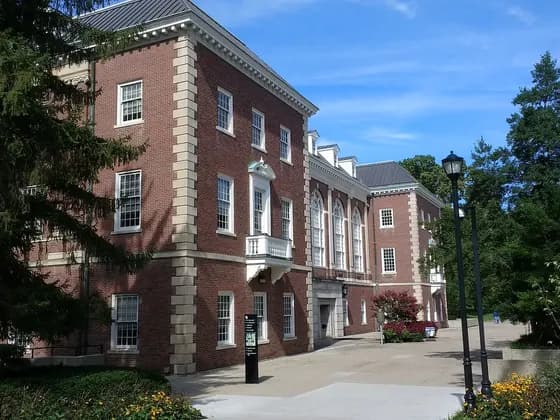


Photo: w_lemay · CC BY-SA 2.0 · cropped
Photo: StewartIM · CC BY-SA 4.0 · Photo: TheLexingtonTimes · CC BY-SA 4.0 · Photo: w_lemay · CC BY-SA 2.0
The University of Kentucky College of Medicine MD program at a glance (2027 entry)
The University of Kentucky College of Medicine (UK College of Medicine) offers a four-year MD program built on the Kentucky Integrated Curriculum. It is one program taught at four campuses: Lexington, where the MD program began in 1960, plus Bowling Green, Northern Kentucky and the Rural Physician Leadership Program (RPLP) in Morehead. Courses share the same objectives and assessments everywhere, and the University of Kentucky confers the degree at every campus.
The curriculum has three phases. Years 1 and 2 are the Core Principles Phase, the pre-clerkship (preclinical) stage. It opens with anatomy and the mechanisms of disease, then teaches the body one organ system at a time in a block schedule. Year 3, the Application Phase, is spent in clerkships, the core clinical rotations in each specialty. Year 4, the Advanced Development Phase, is shaped around the specialty you plan to enter.
Clinical skills begin in the first course, which pairs anatomy from prosected cadavers, bodies already dissected by an anatomist, with imaging and physical examination of standardized patients, people trained to act as patients. Every course has been graded pass or fail since August 2018. The program is accredited by the Liaison Committee on Medical Education (LCME), which accredits MD programs in the United States.
Your campus decides where you train: mainly with UK HealthCare in Lexington, Med Center Health in Bowling Green, St. Elizabeth Healthcare in Northern Kentucky or, for RPLP students, UK St. Claire in Morehead. Every student also completes one rotation through a Kentucky Area Health Education Center (AHEC), most often in a rural community.
| Degree | MD, a four-year program |
|---|---|
| Curriculum | Kentucky Integrated Curriculum, in three phases |
| Class size (white coat count) | 215 entered in 2026: Lexington 131, Northern Kentucky 40, Bowling Green 32, RPLP 12 |
| Campuses | Lexington, Bowling Green, Northern Kentucky (Highland Heights) and RPLP in Morehead |
| Teaching style | Integrated organ-system blocks with large groups, small groups and simulation |
| Anatomy | Cadaver prosection in year 1; dissection elective in year 4 |
| First patient contact | Standardized patients from the first course of year 1 |
| Grading | Pass/fail in every course since August 2018 |
| Step 1 timing | Spring of year 2, before third-year clerkships begin |
| Accreditation | Full LCME accreditation; October 2026 survey decision pending |
What makes the University of Kentucky College of Medicine MD program different
Four campuses, one curriculum
Bowling Green and Northern Kentucky are full four-year campuses, with 32 and 40 students in the class that entered in 2026. Large-group sessions are shared across campuses, while small groups and clinical teaching come from local faculty and physicians.
Rural clerkships in Morehead through the RPLP
The Rural Physician Leadership Program takes 12 students a year. After two years in Lexington, you take all eight core clerkships in Morehead and nearby communities, mainly at UK St. Claire. Training centers on common conditions, outpatient and continuity care and rural community health, with small-group and one-to-one teaching from on-site faculty.
An AHEC rotation for every student
For one clinical rotation you live in a medically underserved community and learn from a local preceptor, a practicing clinician who mentors you, with help toward housing and mileage.
Prosection first, a specialty dissection elective later
Year 1 anatomy uses prosected cadavers. Dissection comes later, in a fourth-year elective where you work on the region of your future practice, such as the chest for cardiothoracic surgery.
A clinical coach through the third year
Entrustment in Clinical Medicine spans year 3 and includes OSCEs, timed clinical-skills stations with standardized patients. A faculty clinical coach leads your group of five to eight students, meets you individually at least three times during the year and helps with clinical skills and career planning.
How University of Kentucky College of Medicine teaches medicine
The college describes its teaching as integrated: foundational science is tied to clinical application from the first course. Each organ-system block runs from normal structure and function to disease, diagnosis and treatment. Neurosciences, for example, combines neuroanatomy, physiology, pathology and pharmacology with working out a diagnosis from a patient's history and examination.
Teaching methods can vary by site. Interactive large-group sessions stream live to the Lexington, Bowling Green and Northern Kentucky campuses, and most are recorded. At Bowling Green and Northern Kentucky, faculty with University of Kentucky appointments also run local lectures, labs, case presentations and small groups. They use flipped classroom sessions too, where you study the material beforehand and use class time to apply it.
Three curricular threads run through all four years instead of sitting in one course: health disparities science, health systems science and nutrition. The nutrition thread, for example, brings in registered dietitians, hands-on culinary medicine sessions and community work on food access.
In year 3 the wards and clinics take over. You complete each clerkship in turn as an active member of the team, assessing patients, discussing plans and joining rounds under faculty and residents. Some classroom teaching continues: surgery, for example, adds weekly protected learning sessions, case discussions and skills workshops.
The ways you will learn
| Interactive large-group sessions | Lectures with built-in interaction. |
|---|---|
| Small groups | The main venue in some courses, such as Introduction to Clinical Medicine, where physicians and behavioral science faculty lead weekly groups. |
| Standardized patients | People trained to portray patients from varied backgrounds. You take histories, examine and counsel them, and get feedback against set rubrics and checklists. |
| Clinical simulation | Low- and high-fidelity simulators at each four-year campus, used for learning the physical exam, practicing clinical skills and managing a deteriorating patient as a team. |
How anatomy is taught at University of Kentucky College of Medicine
Anatomy is taught in MD 814 Clinical Anatomy and Radiology, a 9-credit-hour course that opens year 1; the college's 2022-23 curriculum chart ran it from August to September. It covers core gross anatomy in a clinical context, matching the structures you see on cadavers with radiology images and with what you find when examining standardized patients.
The labs use prosection: an experienced anatomist dissects the cadavers in advance, and you examine and work with them to understand the body in three dimensions. A trauma surgeon, a diagnostic radiologist, an internist and a pediatrician helped the anatomy faculty design the course. Bodies are donated through the college's Willed Body Program, and each year faculty, staff and students attend an interfaith memorial service for the donors.
The college's view is that dissection is a skill students cannot master in a first-year course. It cites the American College of Surgeons, the Association of Program Directors in Surgery and the Association for Surgical Education, which recommend operative anatomy dissection at the end of medical school for future surgeons. Its fourth-year anatomy elective therefore lets you dissect your future field's region, from the brain and spinal cord for neurosurgery to the eye for ophthalmology.
The catalog lists the elective as ANA 850 Applied Human Anatomy, with a Northern Kentucky version, ANA 963 Anatomy-NKY. In 2026-27 it is offered in Block 7, from November 16 to December 13, 2026.
When you first meet patients at University of Kentucky College of Medicine
Your first patients are standardized patients, for physical examination in Clinical Anatomy and Radiology and for interviewing in Introduction to Clinical Medicine, which runs through most of year 1. Its weekly small groups and practice sessions build the skills and confidence to interview real patients, and the course also covers the social and economic side of health.
Introduction to Clinical Medicine includes clinical experiences, and in its second semester interprofessional ones, alongside students from other health professions. Faculty evaluations in years 1 and 2 cover your interactions with actual patients as well as standardized ones.
Students interested in family medicine can apply for FamTrack, an 18-month program run by the Department of Family and Community Medicine. From January of year 1 to the end of year 2, you are paired with a family physician and spend a half day a month in clinic. You follow one patient or family over time, meet on Monday evenings to discuss cases, and spend 10 days with a mentor in the summer between years 1 and 2.
Students also run free clinics. Volunteers from every class staff the UK Salvation Army Clinic, which has served uninsured people in Lexington since 1986, with urgent care visits on Tuesday and Thursday evenings. Northern Kentucky students run the CCRU Clinic for overnight guests at the Emergency Shelter of Northern Kentucky.
The University of Kentucky College of Medicine curriculum, year by year
- Year 1
Core Principles Phase: foundations and the first systems
Year 1 begins with an orientation week, then takes one block course at a time while two longitudinal courses run alongside. In 2026-27, first-year classes run from August 3, 2026 to May 28, 2027, with a spring break from March 27 to April 4.
- MD 814 Clinical Anatomy and Radiology (9 credit hours): anatomy by prosection.
- MD 810 Foundations of Infection, Disease and Therapeutics (10 credit hours): biochemistry, genetics, infection, immunity, inflammation and neoplasia (tumor growth), plus how drugs move through and act on the body.
- MD 816 Hematologic and Lymphatic Systems (4 credit hours), MD 817 Neurosciences (8) and MD 818 Musculoskeletal and Integumentary Systems (5), the last covering muscles, bones and skin.
- MD 813 Behavioral Basis of Medicine (3 credit hours): psychiatry, pharmacology and behavioral science, including how psychiatric diagnoses are made and treated with medicines, psychotherapy and psychosocial care.
- MD 811 and MD 815 Introduction to Clinical Medicine 1 and 2 (4 and 2 credit hours): patient-centered interviewing, ethics, health equity and behavior change, with simulated patients.
- MD 812 Contemporary Practice of Medicine (2 credit hours), later in the year: epidemiology, statistics, evidence-based medicine and public health, taught through current public health issues.
- Year 2
Core Principles Phase: the remaining systems and Step 1
Year 2 completes the organ systems and ends with a capstone that ties them together. You must take USMLE Step 1, the first exam in the United States Medical Licensing Examination series, before year 3 begins. In the college's 2022-23 curriculum chart, coursework ran from August to about March, leaving March to May for Step 1 preparation, research, clinical electives and vacation.
- MD 827 Respiratory System (5 credit hours), MD 825 Renal and Urinary Systems (4), MD 826 Cardiovascular System (5) and MD 828 Gastrointestinal System and Nutrition (5).
- MD 824 Endocrine and Reproductive Systems (6 credit hours), which also covers the change from fetus to newborn and disorders of newborns.
- MD 829 Multisystem and Integrative Concepts (3 credit hours), the capstone in which you apply organ-by-organ knowledge to problems that cross several systems.
- MD 821 Advanced Clinical Medicine (6 credit hours), running through most of the year: fuller histories and examinations, building and narrowing a differential diagnosis, and note writing. A required summative OSCE comes at the end.
- Year 3
Application Phase: the core clerkships
Year 3 starts in late June (June 22 in 2026). You take eight specialty clerkships one at a time in hospitals, operating rooms and outpatient clinics (lengths below are from the curriculum overview and the 2025-26 catalog). The college counts Entrustment in Clinical Medicine as a ninth required clerkship. On the 2022-23 curriculum chart, it has an orientation week and four Entrustment weeks: one at the start of the year, two between clerkship blocks and one at the end.
- Internal medicine (MD 835, 8 weeks), inpatient and outpatient. At UK HealthCare, many hospitalists, doctors who care for hospital inpatients, also lead FIRM groups, the part of the clerkship where you hone clinical skills in a small group.
- Pediatrics (MD 830, 7 weeks): caring for children on inpatient wards, in the newborn nursery and in primary care.
- Surgery (MD 837, 7 weeks): adult and pediatric surgery on at least two services, a continuity clinic throughout and night call for every student.
- Obstetrics and gynecology (MD 838, 4 weeks): every site covers inpatient, surgical and outpatient gynecology, labor and delivery, postpartum care and prenatal clinics.
- Psychiatry (MD 833, 4 weeks): acute and chronic disorders and psychiatric emergencies. In Lexington, the department's rotation gives two weeks on the inpatient unit at UK Good Samaritan, a consult week at Good Samaritan or UK Chandler, and an outpatient week at Fountain Court.
- Family medicine (MD 834, 4 weeks) in urban and rural settings, where you see patients before the attending physician does and get feedback on your interviewing, examination and decisions.
- Emergency medicine (MD 831, 4 weeks, 25 to 30 clinical hours a week) and neurology (MD 832, 2 weeks).
- Entrustment in Clinical Medicine (MD 839, 5 credit hours): large and small groups, simulation and standardized patients, plus a clinical coach. Its summative OSCEs, tied to the clerkships you have done, come before year 4.
- Year 4
Advanced Development Phase: preparing for residency
Year 4 is built around the specialty you plan to enter, focusing on skills you will use on day one as an intern, a first-year resident. You complete eight four-week courses, 32 weeks in all, plus three flex months with no educational requirements for residency interviews, vacation or USMLE study. In 2026-27 the year runs from June 1, 2026 to April 23, 2027, with graduation on May 8, 2027.
- At least two four-week acting internships, in which you act as an intern: first assessments, placing orders, coordinating care, official documentation and managing care transitions.
- Acting internships are offered in emergency medicine, family medicine, internal medicine, neurology, neurosurgery, obstetrics and gynecology, otolaryngology, pediatrics, psychiatry, rehabilitation medicine, surgery and urology.
- Five electives, which can be patient-care rotations, rotations without patient care, or research.
- MD 840 Transition to Residency, a four-week capstone in small groups by intended specialty, using workshops, simulation and standardized patients, with an OSCE.
- In 2026-27, ten four-week blocks run until March 28, 2027, and Transition to Residency starts on March 29.
- Residency applications are due in September, interviews run from October to January, and Match Day, when residency placements are announced, comes in March of your final year.
How you are assessed at University of Kentucky College of Medicine
Every course and clerkship is graded pass or fail. Formative assessments give feedback during a course without counting toward the grade, while summative assessments at the end check that you meet the competency standard. All students are assessed against six program objectives, modeled on the core competencies used in residency training: patient care, medical knowledge, practice-based learning and improvement, interpersonal and communication skills, professionalism and systems-based practice.
In years 1 and 2 you are assessed through multiple-choice exams and quizzes, written assignments, evidence-based medicine projects, faculty ratings of your small-group work and patient interactions, and observed clinical skills. Objective structured clinical evaluations (OSCEs), timed stations where you interview or examine standardized patients, run through all four years. Standardized patients score you on communication rubrics and examination checklists, and the communication rubric builds year on year.
Internally written mile-marker exams start with the year 2 OSCE in Advanced Clinical Medicine. Year 3 adds a skills check-off and the Entrustment in Clinical Medicine OSCEs, which you must take before year 4 and which test the skills you need to progress. In year 4, the Transition to Residency OSCE tests intern tasks such as cross-cover, teaching, defusing anger, breaking bad news, informed consent and goals-of-care conversations.
In the clerkships, faculty and residents evaluate and directly observe your clinical work, using tools built on Entrustable Professional Activities (EPAs), the core tasks a new resident should be trusted to do. Every student has a required mid-clerkship feedback meeting before final evaluations. You also sit shelf exams, national multiple-choice subject exams from NBME, a co-sponsor of the USMLE. Third-year clerkship comments go word for word into your Medical Student Performance Evaluation (MSPE), the letter sent with residency applications, which ends without a one-word summary rating.
USMLE Step 1, the licensing exam on the basic sciences behind medicine, has been reported only as pass or fail since January 26, 2022. You must take it before starting year 3, and you take Step 2 CK, on clinical knowledge, during year 4. To graduate you must pass both, within at most four attempts each. In August 2026 the USMLE program announced a move to designated testing dates from January 2029, with Step exams offered less often each year. Its June 2026 announcement had named 2028.
On the current schedule, a student entering in 2027 would sit Step 1 in about March to May 2029, after the switch. Step 2 CK would fall in year 4, between June 2030 and April 2031. These are projections from the college's calendar and curriculum chart, not published dates. Both exams would come under the new model, whose dates the USMLE plans to publish more than a year ahead.
- The LCME directory, updated October 14, 2026, lists the program's accreditation as full, first granted in 1960, with the next survey in 2026-27. The LCME last continued its accreditation in 2019, for eight years.
- The LCME survey team visited on October 5 and 6, 2026. In an October 16, 2026 update, the college said the formal report and the LCME's official determination would follow in the coming months.
- All four campuses come under that single accreditation, because the LCME does not accredit the campuses of a medical school separately.
- LCME accreditation is what makes the program's students eligible to sit the USMLE.
University of Kentucky College of Medicine clinical rotations: where you will actually train
You choose your campus when you apply, ranking a first and second choice. You interview at your first-choice campus, offers are for a seat there, and accepting binds you to that campus.
Lexington students rotate mainly through UK HealthCare, the University of Kentucky's hospitals and clinics. Its central hospital, UK Albert B. Chandler Hospital, is an 800-bed acute care hospital opened in 1962, with a Level I adult trauma center. Golisano Children's at UK sits inside UK Hospital, UK Good Samaritan Hospital has 180 licensed beds, and the Kentucky Clinic next to Chandler is the main outpatient clinic.
Bowling Green students spend all four years there and train with Med Center Health. Its flagship, The Medical Center at Bowling Green, is a 337-bed acute care hospital, and rotations also reach rural clinics and the critical access hospitals, small rural hospitals, in Scottsville and Franklin. Northern Kentucky students spend the preclinical years on the Northern Kentucky University campus in Highland Heights and the clinical years in St. Elizabeth Healthcare facilities and local practices.
RPLP students move to Morehead, about an hour from Lexington, for years 3 and 4. Rotations are mainly at UK St. Claire, which the college's Morehead FAQ describes as a 159-bed rural referral hospital, with an ICU, a hospitalist service and specialists such as cardiologists and oncologists. In year 4, many students take a rotation or two in Lexington or elsewhere; others stay at UK St. Claire all year.
Wherever you are based, one rotation goes through the Kentucky AHEC program, run jointly by the University of Kentucky and the University of Louisville. Sites are physicians' offices or hospitals in federally designated underserved or shortage areas, and you live in the community. AHEC can arrange housing with a $100-a-week allowance and pays mileage on qualifying rotations, generally those more than 30 miles from your home base and at least three weeks long.
Home campus for Lexington students. The Lexington VA Health Care System, whose primary affiliation is with the University of Kentucky hospital, is the setting for a fourth-year VA mental health elective.
- UK Albert B. Chandler Hospital
- Golisano Children's at UK
- UK Good Samaritan Hospital
- Kentucky Clinic
- UK Psychiatry Outpatient building at Fountain Court
Four-year campus with Med Center Health and Western Kentucky University, announced in 2017; its first class graduated in 2022.
- The Medical Center at Bowling Green
- Medical Center at Scottsville
- Medical Center at Franklin
Four-year campus with Northern Kentucky University and St. Elizabeth Healthcare, which runs six facilities in Northern Kentucky. The first class started in 2019 and graduated in 2023.
- Northern Kentucky University campus, Highland Heights
- St. Elizabeth Healthcare facilities
- Local physician practices
Clinical training for RPLP students, taught by College of Medicine clinical faculty based in Morehead and nearby communities.
- UK St. Claire
- Pediatric practices in Mount Sterling, South Shore and Maysville
- Family medicine practices in the region
- Neurology in Richmond
The eight regional centers behind the required AHEC rotation. The University of Kentucky directs the first four and the University of Louisville the rest, and students from either university can use any of them.
- Northeast AHEC (Morehead)
- Southern AHEC (Mount Vernon)
- Southeast AHEC (Hazard)
- North Central AHEC (Covington)
- South Central AHEC (Bowling Green)
- Jackson Purchase AHEC (Murray)
- West AHEC (Madisonville)
- Northwest AHEC (Louisville's West End)
Electives, selectives and away rotations at University of Kentucky College of Medicine
Electives begin in the second semester of year 1, in free afternoons. The 2022-23 curriculum chart also leaves the summer after year 1 for vacation, research or clinical electives. The Lexington campus FAQ lists an Introduction to Clinical Research elective and a Global Health Elective in years 1 and 2. It also says many students join the Shoulder-to-Shoulder brigades, helping provide care at a year-round clinic in Santo Domingo, Ecuador, each spring break.
In year 4 you pick five electives. The catalog's list runs from pain management and forensic pathology to legislative advocacy, community engagement and the narrative basis of patient care. Many courses have campus versions, such as community anesthesia in Morehead, sports medicine in Bowling Green and palliative care in Northern Kentucky, and one acting internship is in rural family medicine in Hazard. The RPLP lists five acting internship options and more than 15 electives.
You can also rotate away: the catalog includes extramural electives, rotations at other institutions, in most specialties, plus an international extramural rotation. An optional class meeting on away rotations is held each January of year 3. The college points students to the Visiting Student Learning Opportunities (VSLO) service of the Association of American Medical Colleges (AAMC).
Dual degrees and research years at University of Kentucky College of Medicine
The MD/PhD program, based in Lexington, averages 7.3 years. You complete two research rotations, in the summers before years 1 and 2 or during term, and sit Step 1 in the spring of year 2. On Track A you then move into PhD research and return for years 3 and 4; students still choosing a lab can do a third rotation and year 3 first (Track B).
Two five-year MD/MPH routes add a Master of Public Health. With the UK College of Public Health, you take most public health courses in the third of the five years, enrolled only in that college, and some courses can count toward both degrees. Through the Bowling Green Campus, an MD/MPH with the Department of Public Health at Western Kentucky University (WKU) usually takes five years. Its core courses fill one year after year 2 or 3, on campus or online.
Also through Bowling Green, an MD/MBA with WKU's Gordon Ford College of Business adds a year of business study after year 2 or 3, which most students finish in five years in total. It covers topics such as marketing, managerial finance, data analytics and organizational behavior.
The voluntary Scholarly Concentration Program earns a special designation on your MSPE. You apply in the fall of year 1 to one of five concentrations: Bioethics and Clinical Ethics, Global Health, Rural Health, Primary Care, or Clinical and Translational Research. Each takes 12 credit hours of electives, at least eight in years 1 and 2 and at least four in year 4; Rural Health takes 14 in all. A capstone project runs across all four years.
Rural Health adds a year 4 community project and a second AHEC rotation. Primary Care includes four weeks shadowing a community primary care provider between years 1 and 2 and a primary care acting internship. Clinical and Translational Research ends in a project through MD 851 Research in Medicine.
The Director of Medical Student Research helps any student find mentors and projects. The Lexington campus FAQ says about two-thirds of students do research during medical school, and that the competitive Professional Student Mentored Research Fellowship takes about 30 students a year, each with a $3,000 stipend.
Facilities and support at University of Kentucky College of Medicine
Where you will learn
Standardized patient exam rooms at every campus are set up like ordinary clinic rooms. Cameras and built-in computers let you and faculty review encounters, and you write up each one afterward, as in practice. The program dates from the 1980s, and other University of Kentucky colleges rely on it for their own training.
Northern Kentucky students train in Northern Kentucky University's simulation center, and Bowling Green has its own simulation lab, with full access to WKU facilities. In Lexington, the Center for Advanced Training and Simulation (CATS) lab copies an operating room's laparoscopic setups, and any medical student can use it to practice hand skills.
The Michael D. Rankin MD Health Education Building, a 509,000-square-foot building at University and Huguelet drives on the University of Kentucky campus, will house programs of the colleges of Medicine, Public Health, Health Sciences and Nursing. A UK news story from October 2025 put its completion in spring 2027.
Support while you study
Every student joins a learning community, called a house, named after a horse breed such as Thoroughbred, Clydesdale or Appaloosa, in honor of Kentucky's horse racing tradition. The ten houses are split by campus: six for Lexington and RPLP students, two in Bowling Green and two in Northern Kentucky. Each has elected student leaders and its own faculty advisors, and partners with a local service organization, such as Hope House or God's Pantry food bank.
Your house's Learning Community Advisor meets you several times a year for career, wellness and academic advice, as part of Career Pathways, the college's advising program, which follows the AAMC's Careers in Medicine program. In years 3 and 4 you must also meet the Advanced Development Director, a specialty advisor, for your intended field.
Academic success staff help with study strategies, time management and multiple-choice technique, including Step 1, Step 2 CK and shelf exam preparation. Lexington and Bowling Green each have an academic advisor, and Northern Kentucky and Morehead share one. Peer learning mentors, second- to fourth-year students trained by the team, act as coaches and tutors in person or by video, phone or text.
For well-being, the college offers 12 free counseling sessions a year through the Woodland Wellness Group, run with the Lexington Medical Society, and a Medical Student Support Program with the Department of Psychiatry. Regional students can use free counseling at WKU and Northern Kentucky University, and RPLP students can use Morehead State University's services and the St. Claire Counseling Center. Resilient, a student-led group, works to prevent burnout and destigmatize mental health.
Is the University of Kentucky College of Medicine program right for you?
This program may suit you if
- You want a small cohort in a shared curriculum, at the Bowling Green or Northern Kentucky campus.
- You are drawn to rural medicine: the RPLP puts every core clerkship in and around Morehead, and all students do an AHEC rotation, most often in a rural community.
- You like structured career guidance: a house advisor from year 1, a clinical coach in year 3 and a specialty advisor for year 4.
- You want public health or business training alongside the MD: a five-year MD/MPH, or an MD/MBA through Bowling Green.
Things to think about
- Your campus is fixed when you accept, and it decides where you take your clerkships.
- At the regional campuses many lectures come by live stream or recording from Lexington, so check that suits how you learn.
- Year 1 anatomy uses prosection, so if hands-on dissection matters to you, plan on the fourth-year anatomy elective.
- The RPLP means moving from Lexington to Morehead, about an hour away, after year 2.
- Neurology is a two-week clerkship, so plan a neurology elective or acting internship in year 4 if the field interests you.
University of Kentucky College of Medicine MD program — frequently asked questions
Applying to University of Kentucky College of Medicine?
How to get into University of Kentucky College of Medicine
Prerequisites, MCAT, AMCAS personal statement, secondaries and interview, step by step.
Open the guide →University of Kentucky College of Medicine admissions profile
MCAT and GPA profile, acceptance rate, interview format and key dates.
See the profile →Compare University of Kentucky College of Medicine with other schools
Put the teaching style, anatomy teaching and clinical sites next to another school.
Open the comparison →Prepare for the University of Kentucky College of Medicine interview
Format breakdown, school-specific sample questions and prep tips from tutors who interviewed here.
Read the guide →Where this University of Kentucky College of Medicine program guide came from
This guide was written from 60 official sources — University of Kentucky College of Medicine's own program pages and curriculum documents, plus the accreditor and the hospitals and health systems the school trains students in where they publish detail — read on 2026-10-24, then checked claim by claim against those sources.
- UK College of Medicine: MD Curriculum Overview
- UK College of Medicine: Kentucky Integrated Curriculum chart (course listing captioned AY 2022-2023)
- UK College of Medicine: Curricular Threads
- UK College of Medicine: Assessment System
- UK College of Medicine news, LCME Update: April 2026: How We Support Learning, Safety, and Fairness
- UK College of Medicine MD Degree Program Academic Catalog 2025-2026 (updated March 2026)
- University of Kentucky Registrar: College of Medicine Calendar 2026-2027
- UK College of Medicine: Fourth-year rotation dates, 2026-27
- UK College of Medicine: Class of 2029 profile
- UK College of Medicine news, July 31, 2026: Class of 2030 welcomed at three White Coat Ceremonies
- UK College of Medicine: FAQs, general and campus specific
- UK College of Medicine: Campuses and Programs
- UK College of Medicine: Campuses
- UK College of Medicine: Clinical Partnerships
- UK College of Medicine: Lexington Campus
- UK College of Medicine: MD programs at the Lexington Campus (founded in 1960)
- UK College of Medicine: Bowling Green Campus
- UK College of Medicine: Training at the Bowling Green Campus
- UK College of Medicine: Northern Kentucky Campus
- UK College of Medicine: Northern Kentucky Campus partners, St. Elizabeth Healthcare and NKU
- UK College of Medicine: Morehead Campus
- UK College of Medicine: About Our Rural MD Training (Rural Physician Leadership Program)
- UK St. Claire: Rural Physician Leadership Program
- About UK HealthCare
- About Lexington VA Health Care System
- UK College of Medicine: How to Apply (campus choice)
- UK College of Medicine: Standardized Patient Program
- UK College of Medicine: About the Willed Body Program
- UK Department of Surgery: Third-Year Surgery Clerkship
- UK Department of Obstetrics and Gynecology: Third-Year Clerkship (MD 838)
- UK Department of Psychiatry: Psychiatry Clerkship (MD 833) and fourth-year courses
- UK Department of Family and Community Medicine: FamTrack
- UK Department of Internal Medicine: Division of Hospital Medicine education
- Kentucky Area Health Education Centers (AHEC) Student Guidebook
- UK Center for Interprofessional and Community Health Education: AHEC rotation information
- UK College of Medicine: Scholarly Concentration Program
- UK College of Medicine: Medical Student Research
- UK College of Medicine: MD/PhD Program Curriculum
- UK MD/PhD Program: Lab Rotations and Transitions
- UK College of Medicine: MD/MPH Programs
- UK College of Public Health: MD/MPH
- UK College of Medicine: Combined MD/MBA with WKU's Gordon Ford College of Business
- UK College of Medicine: Learning Communities
- UK College of Medicine: House Leadership
- UK College of Medicine: Career Pathway Planning, with the M1 to M4 pages
- UK College of Medicine: Academic Success
- UK College of Medicine: Peer Learning Program
- UK College of Medicine: Wellness
- UK College of Medicine: UK Salvation Army Clinic
- UK College of Medicine: CCRU Clinic, Northern Kentucky
- UK College of Health Sciences news, October 20, 2025: Rankin Health Education Building
- UK College of Medicine: LCME Accreditation
- UK College of Medicine news, October 16, 2026: Reflecting on our LCME site visit
- LCME directory: Accredited programs (updated October 14, 2026)
- LCME: About the school directory
- USMLE announcement, August 6, 2026: Designated Testing Dates transition will take place in January 2029
- USMLE Designated Testing Dates Information Hub, with the June 23 and August 6, 2026 announcements
- USMLE Designated Testing Dates FAQs (updated August 6, 2026)
- USMLE announcement, June 23, 2026: transition to limited testing dates starting in 2028 (since updated)
- USMLE: Step 1 transition to pass/fail only score reporting
Curricula are restructured between cycles. Anything here that decides your application — how anatomy is taught, a clinical campus assignment, a required research year — should be confirmed against the official page for your entry year.
Applying to University of Kentucky College of Medicine?
We help US applicants with MCAT strategy, the AMCAS personal statement, secondary essays and interview prep — everything you need for a competitive University of Kentucky College of Medicine application.